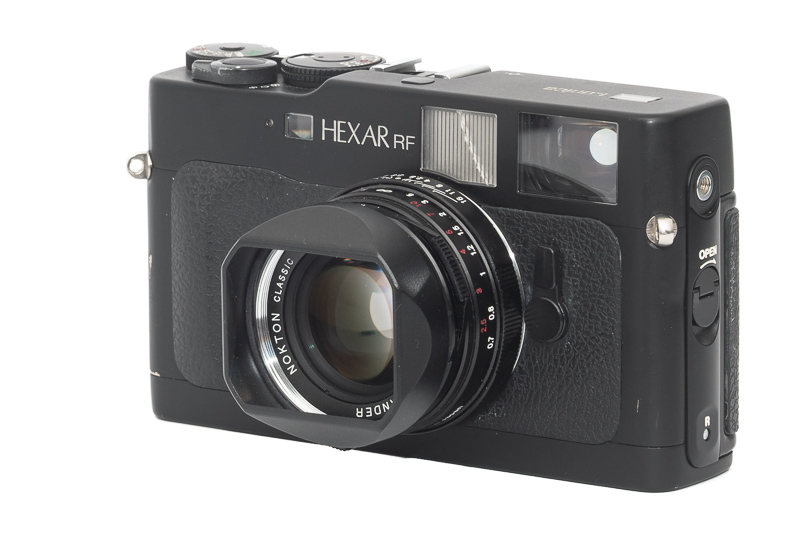
Released in 1999, the Konica Hexar RF is the most advanced analogue M-mount rangefinder camera ever made, far surpassing the Minolta CLE and all of Leica’s analogue cameras that came after. Let’s have a closer look!

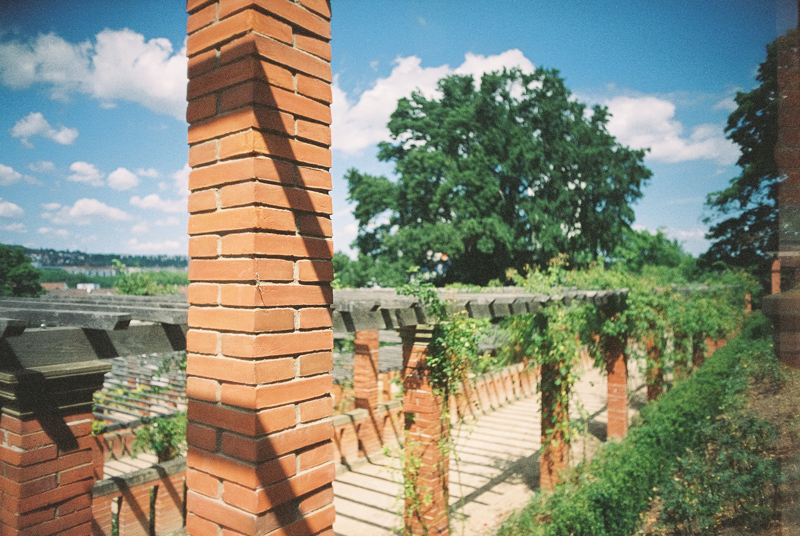




Handling
Of all the analogue M-mount cameras the Hexar RF is probably the easiest one to use as it features aperture priority mode as well as automatic film transport.
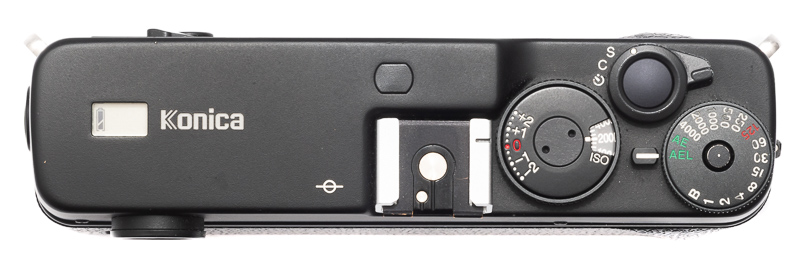
Looking at the shutter speed dial you may notice something else: a minimum shutter speed of 1/4000s which is another stand out feature among the analogue M-mount cameras (Leica M: 1/1000s, Minolta CLE: 1/1000s, Zeiss Ikon ZM: 1/2000s).
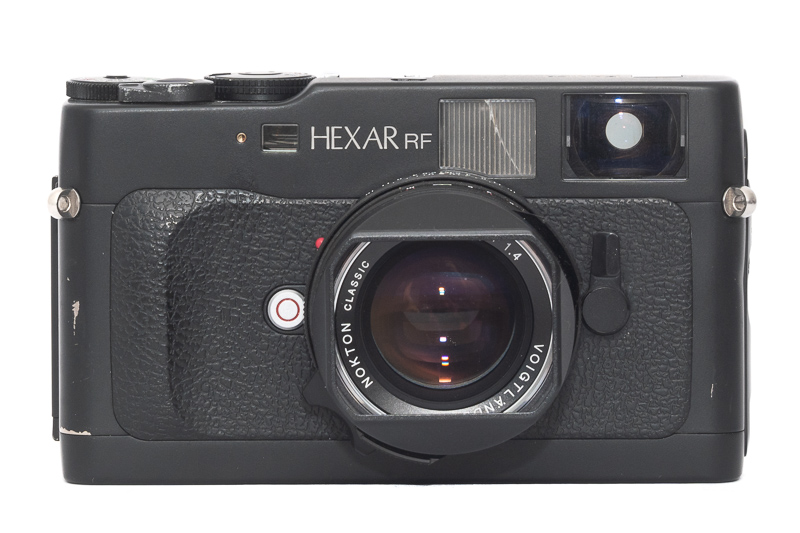
At the front you have the frameline preview lever as well as the lens release button. With the lens release button you have to be careful though: it is not recessed as on e.g. the Leica M6, meaning it is more likely you accidentally press it.
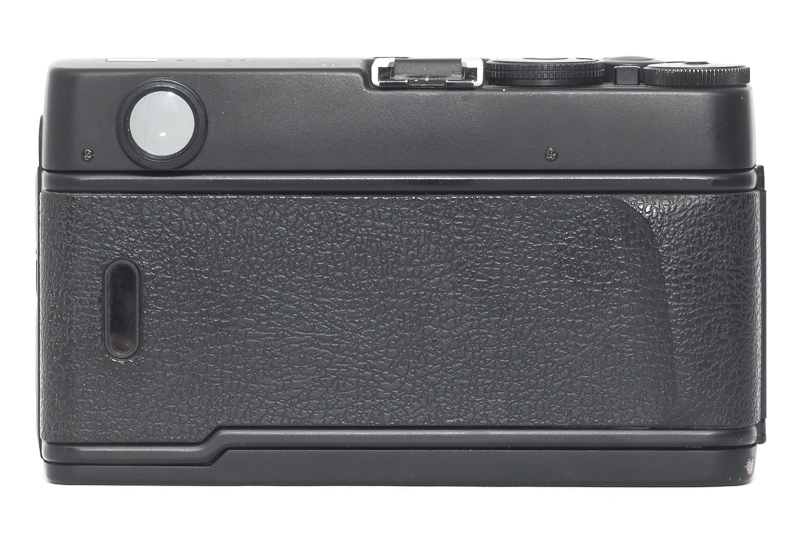
The back is extremely minimalistic with no controls at all. There is a small window telling you which film you loaded. Talking about film loading: it is also very simple here, way easier than on the Leica M cameras.
The rangefinder features the same frameline pairings (28/90, 35/135 and 50/75) as Leica’s recent M cameras.
Impressions
Some of you may remember: I already considered getting a Hexar RF before, but I didn’t get one, as it was said they are pretty much unrepairable. A reader of mine found someone in China who does seem to be able to repair these and decided to take the risk.
I am well aware the limitations of Leica’s M-mount cameras and that them being mostly mechanical is part of the fun for many owners, but I still think there would also be place for a technologically advanced alternative like this. I am pretty sure one day a Chinese company will step in, until then this Hexar RF will remain the most advanced analogue M-mount camera and it sure is a lot of fun to use.
buy a Hexar RF from ebay.com | ebay.de (advertisement/affiliate links) starting at $1100
Sample pictures

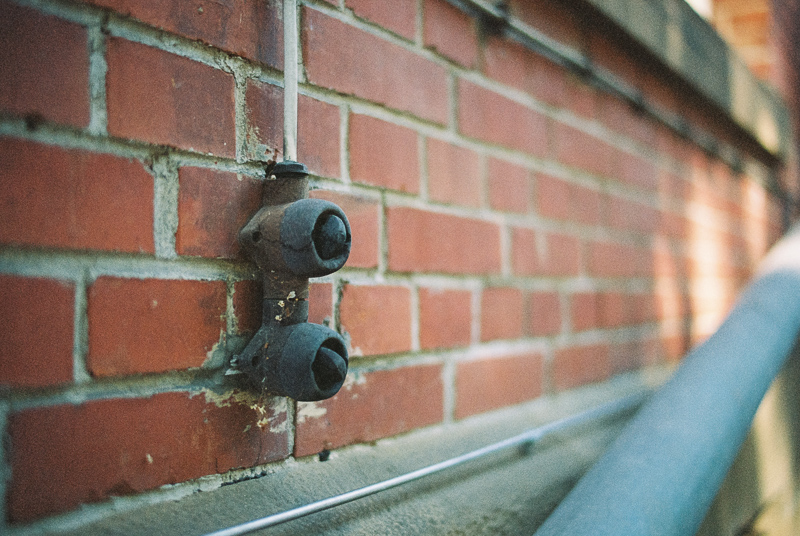




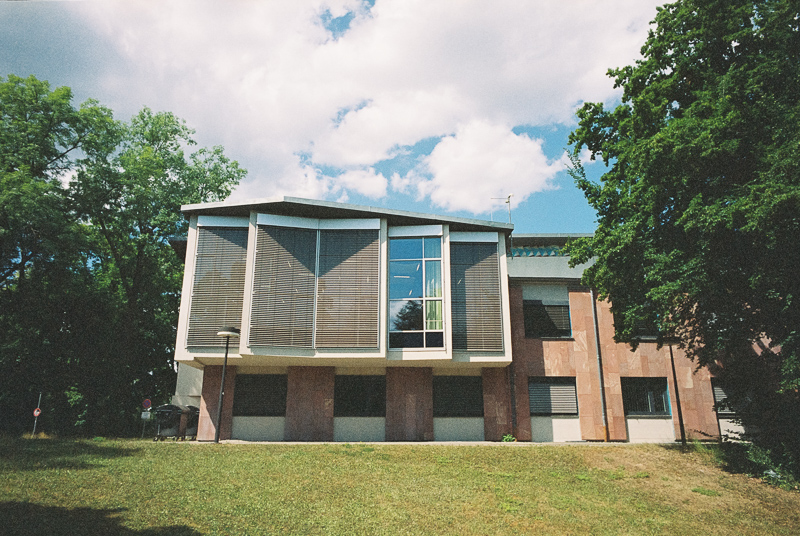


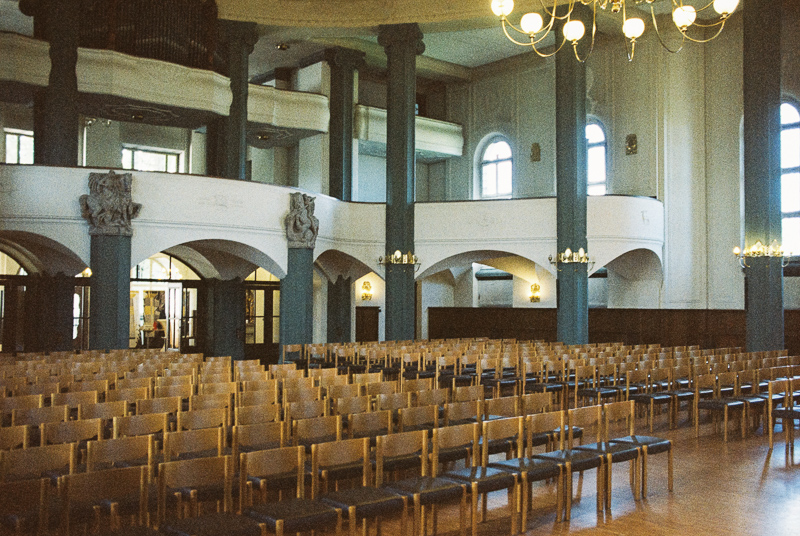
Further Reading
Support Us
Did you find this article useful or just liked reading it? Treat us to a coffee or a roll of film!

 via Paypal
This site contains advertisement/affiliate links. If you make a purchase using any of the links marked as advertisement/affiliate links, I may receive a small commission at no additional cost to you. This helps support the creation of future content.


Latest posts by BastianK (see all)
- Review: 7Artisans 40mm 2.5 AF - March 28, 2026
- Analogue Adventures – Part 50: What I learned from Shooting Film (so far) - March 18, 2026
- Review: 7Artisans 75mm 1.25 II - March 14, 2026
Very cool! I own a Hexar RF too and it is my only interchangeable lens film body. On top of all those advanced techs, the x0.6 magnification viewfinder is really friendly to ppl who wear glasses like me. I can finally see the 28mm frameline!
Hexar RF have always been tempting to me and the irrepairability put me off too.
I am a bit confused though. Is it your camera does it belong to reader of yours?
Nice subtle colours from those negative films btw!
Was a reader’s!
It’s an incredible camera that served me well and has always been reliable.
I also own some Leicas, but I’d say that the Hexar RF perfectly combines Leica’s “Das Wesentliche” approach with some comfort-features.
The result is a camera that gets in your way even less than an M7.
Last sentence is exactly what I just told another reader.
Bastian, I really appreciate the effort you’ve put into the article (all your articles) and it looks like you enjoyed your time with the camera. But was the film outdated? Why the milky shadows and poor dynamic range? Your normally exceptional photography skills are really undercut when the film performs so poorly…
What type of battery is powering the camera and where is it housed? How about a photo with the camera back open so we can see the auto-transport mechanism? What’s the address of the camera repair person in China that fixes the Hexar RF?
Both films were long expired, yes.
Camera needs two CR2 batteries.
When you open the back you don’t see anything fancy, looks like every somewhat modern film camera.
Thank you for the added info and the Hexar fixer link.
I can’t help myself here…why are you using outdated film? A fetish? Why spend your energy shooting images that will disappoint after development? Why spend money to develop and scan it? Are you actually seeking outdated film to purchase??
Sorry if I’m overly blunt – but I don’t get it…you are too smart and too talented to waste your time with trash film. It’s kind of like purchasing decades old canned food to consume for video clicks…
Why is it so hard to imagine that some people may like what you dislike? Why does someone have to be stupid (“you’re too smart to…”) to like something you dislike? I know you didn’t want to say that (directly), but you definitely did indirectly.
And by the same analogy, why use small format film at all?
I won’t go into further argument here and pollute this site and its comment section, but live and let live. Maybe he likes the look? Maybe he took a gamble on some old film, feeling ready to experiment and just have fun?
Personally I kinda like the look, it feels very nostalgic, and I am able to appreciate subtlety in colour and contrast. It’s still “punchier” than most famous paintings, from the times when painters were limited in colour choice (availability, price…). Does it even have to be “serious”? Not every shot we take is a part of some “project” or work.
Dogmas belong to the church. Elitism belongs to… I don’t know, but nobody likes it.
These photos are like impressions. Do you know what impressionism is? It’s a technique. If it doesn’t please your eyes, it will please others. These photo impressions are garnering exactly the same response right now that the very first impressionists gave to the public all those years ago, many who could not understand this new convention in the painting sphere of the late 1800’s to the early 1900’s. Maybe Bastian is now showing some real art skill, mate. I think so and many will do so. What is strange and backwards comment? Thank you.
Funny, I think the films look great!
Truly? How does flattened imaging with both blown out highlights and milky shadows appeal to you? I’m not understanding. To me they look like old magazine photos – that poor printing quality from 70+ years ago? Do you like watching unevenly faded old prints in movie theaters too?
I’m not trying to be insulting – I’m trying to understand the esthetic here – what’s making you say ‘wow’ with this color rendering?
Really can’t help yourself huh…
The photos rendered by these optics are like little oil paintings. The look of these photographs make me want to shoot film. Thanks for sharing these!
There is a long history of photographers embracing imperfection as an aesthetic and artistic goal. One can look at the earliest works of the pictorialists to see how the use of soft and out of focus become powerful tools. Or, you can look at Sally Mann’s “Motherland” project to see how important the use of imperfect equipment is in that seminal work. More recently, you can see the rise of vintage analog equipment as a counter to the technical perfection of digital capture. Film is imperfect, especially when one uses out of date film. There is no multiple capture, stacking, RAW corrections. It is one shot, one unique image. The use of old film also takes predictability out of the act of shooting. There is a revelation with each image. Often, the desaturation of color harkens back to the first color images, autochromes, with unique color profiles and softness. If you are searching for more answers, try googling “Aesthetics of using old film”. There a quite a few interesting articles and interviews to be found. As someone who was a film photographer longer than digital, I applaud Bastian’s foray into the analog world.
I used to have one, really loved it.
Until I noticed, when I wanted to be quick, there was a shutterbutton delay. Not so much, but enough to make me miss the shot. Did never happen with my Leica. So, I sold the Hexar.
How did you find the hexar RF viewfinder? Particularly in terms of brightness and eye relief? And how does it compare to the Minolta CLE? Being a glasses wearer these factors are often a dealbreaker. Thanks for your wonderfully informative reviews!
Didn’t compare them in great detail in that regard, so I am afraid I cannot really help you with that question.
I didn’t notice meaningful difference in viewfinder brightness in th field between all of these.
I very strongly recommend “Amsterdam Camera Repair” for any maintenance or repair on the Konica Hexar RF. They did an excellent job with my camera although it had a almost destroyed rangefinder.
Very strongly recommended.
I asked Alan 2 years ago and he told me he doesn’t accept Hexar RFs. Interesting.
hey there! Are you able to provide the person in chinas site or contact info? Ive had my Rf for a couple of years now and love it however, I lost the eye diopter and have been looking for replacements everywhere. I tried clicking on a link in your article but it doesn’t work. let me know! thank you!