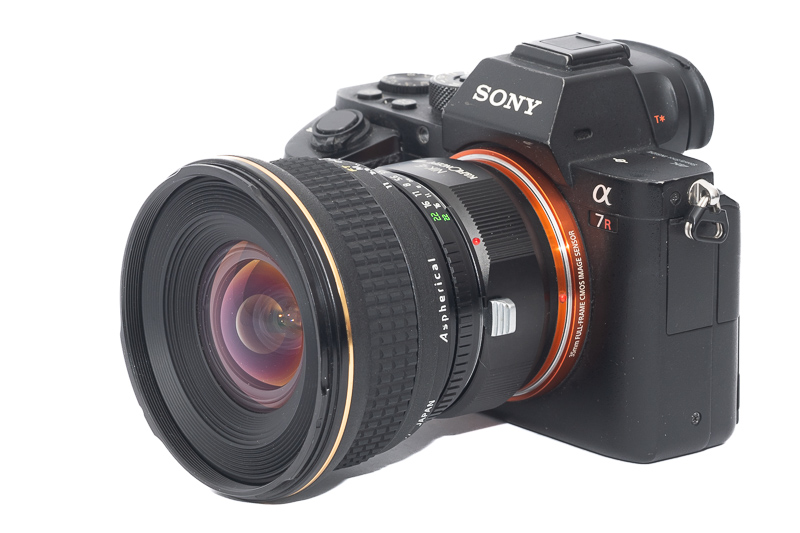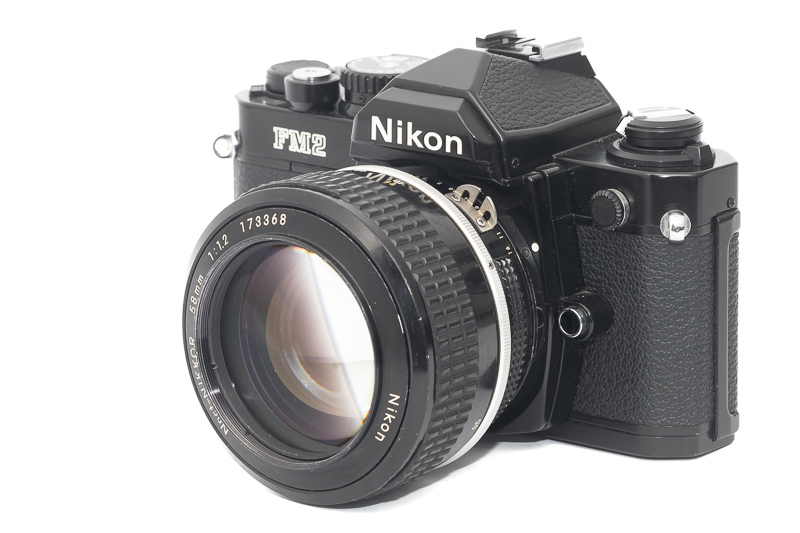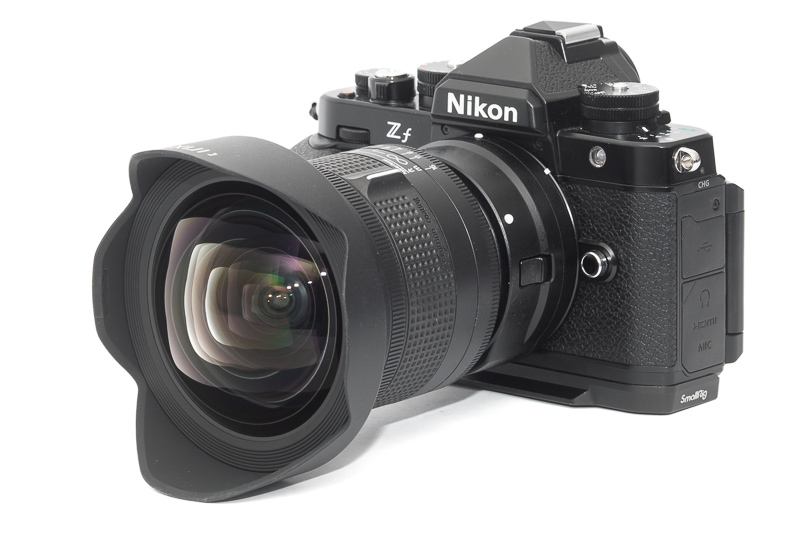
Zeiss offered a wide variety of manual focus lenses for Nikon F-mount and Canon EF. Many of these lenses have been famous not only for being purely manual focus lenses, but also for being pretty big compared to the competition. Sitting inbetween the huge Zeiss 15mm 2.8 and 21mm 2.8, this Zeiss 18mm 3.5 was Zeiss’ “compact” ultra wide angle prime. It also has a reputation for being the worst of them, is that justified? Let’s find out in this review!
In my recent quest to review some of the zoom lenses in the Nikon Z series, we’ve arrived at the NIKKOR Z 14-30mm f/4 S — an ultra-wide-angle zoom and one of the first in the “S” line after the 24-70mm f/4 S. The other two f/4 S zoom lenses I reviewed (24-70mm f/4 and 24-120mm f/4) delivered impressive performance, but this one is an ultra-wide — a category that has historically been more challenging to get right. That said, Nikon has marketed it as part of the “S” line, which promises higher quality. Let’s see how it performs!
Nikon Z 24-120mm f/4 S is often said to be one of the best all-around midrange zooms Nikon has made. It offers a versatile zoom range and a fixed aperture, and it’s part of Nikon’s premium S-line series. It’s also newer than the Nikon Z 24-70/4 S I reviewed recently — a lens I liked quite a bit. With its broader zoom range, Nikon Z 24-120/4 S promises more flexibility. But is it the better lens overall? Let’s dive into this review and see how it compares to the Z 24-70mm S!
In the Fujichrome world, Provia is supposed to be the more neutral slide film compared to Velvia. I wasn’t a huge fan of Velvia 100, so let’s see how this Provia 100F worked out for me. Processing (E-6) and scanning was done at urbanfilmlab in Germany. The pictures you see in this article are from one roll.
The Nikon AF-S Nikkor 70-200mm f/4G ED VR was Nikon’s latest enthusiast-level telephoto zoom lens with a constant aperture. Before its release, Nikon had long offered both professional 70-200mm and 80-200mm f/2.8 lenses, as well, a prosumer-grade fixed F4 70-210 and consumer grade variable-aperture telephoto zooms. With this lens, they aimed to provide a more budget-friendly alternative to their latest high-end 70-200mm f/2.8 VR. To achieve this, Nikon incorporated their latest advancements in coating technology, autofocus (AF), vibration reduction (VR), and optical design to create this lens by the end of 2012.
Sony α | Leica M | Nikon F/Z New article every week
This website uses cookies to improve your experience. We'll assume you're ok with this, but you can opt-out if you wish.AcceptRead More
Privacy & Cookies Policy
Privacy Overview
This website uses cookies to improve your experience while you navigate through the website. Out of these, the cookies that are categorized as necessary are stored on your browser as they are essential for the working of basic functionalities of the website. We also use third-party cookies that help us analyze and understand how you use this website. These cookies will be stored in your browser only with your consent. You also have the option to opt-out of these cookies. But opting out of some of these cookies may affect your browsing experience.
Necessary cookies are absolutely essential for the website to function properly. This category only includes cookies that ensures basic functionalities and security features of the website. These cookies do not store any personal information.
Any cookies that may not be particularly necessary for the website to function and is used specifically to collect user personal data via analytics, ads, other embedded contents are termed as non-necessary cookies. It is mandatory to procure user consent prior to running these cookies on your website.