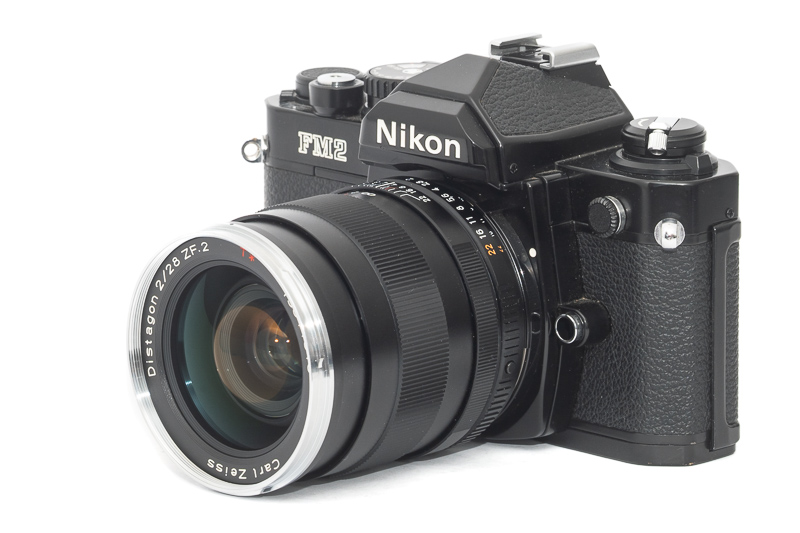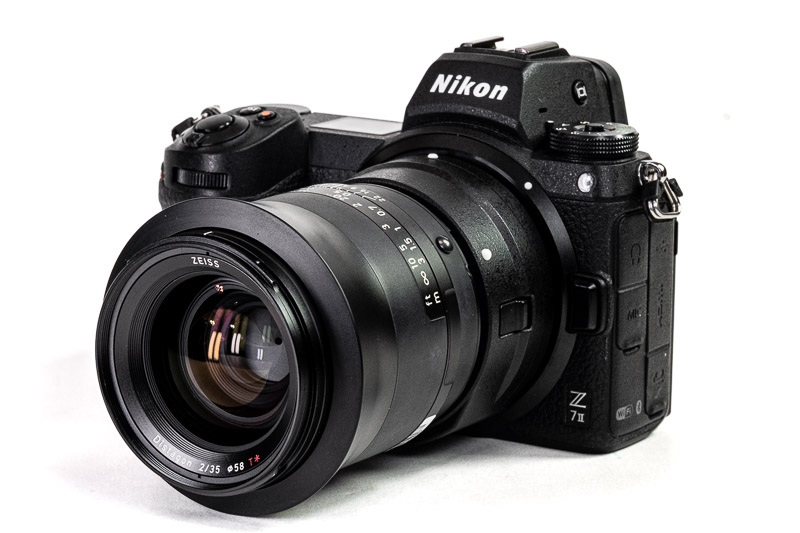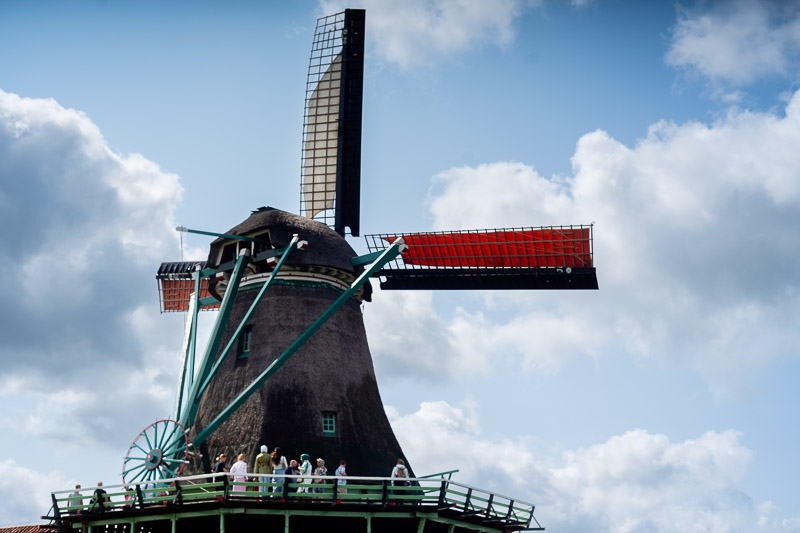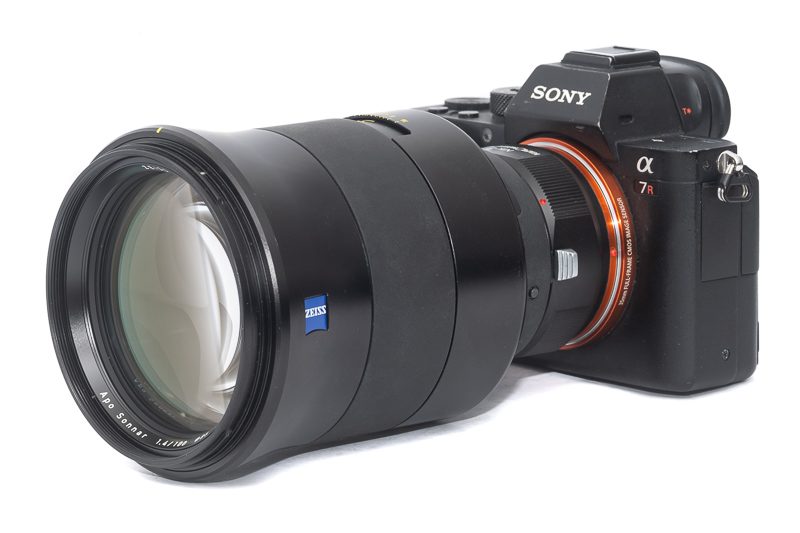
Today I’m looking at another Carl Zeiss lens from the Milvus series—the 35mm f/2. A lens that is popular for street, travel, and everyday photography. As Zeiss’s final DSLR-era lineup, the Milvus lenses benefited from decades of optical experience, aiming to deliver high image quality in a more practical, less bulky package than the no-compromise Otus line. I was impressed by the Milvus 21mm’s build and manual handling. Let’s see how it performs.
Zeiss Jena designed the first Pancolar 50mm with a maximum aperture of f/2 in 1960, partly to offer a faster and better-performing alternative to the Tessar 50mm f/2.8. As competitors began designing and releasing standard 50mm lenses with f/1.8 apertures, Zeiss found it necessary to respond with a lens of similar specification. The result was the Pancolar 50mm f/1.8, which was designed and produced starting in 1964. It was considered one of the best lenses of its era and remains quite popular today. When this lens was around, I was using Japanese cameras and lenses, so I’ve often wondered whether it was better than what I had. Let’s see how it actually performs by modern standards.
Zeiss Milvus 25mm 1.4 via Sigma MC-11 on Sony A7rII
About a year after the release of the Zeiss Otus 28mm 1.4 Distagon – to the surprise of many – Zeiss released this Zeiss Milvus 25mm 1.4 Distagon. Almost as complex optical design, almost as big, almost as heavy, but “only” half the price – making it the most expensive lens of the Milvus lineup. What are you giving up in terms of performance compared to the 28mm Otus? Let’s try to find out in this review.
Martin recently reviewed Lomo’s replica of a Petzval lens. I commented, perhaps slightly snidely, that vintage Petzval lenses are still around, often for less money, and often with better centre sharpness – and certainly with a vast choice of models and thus rendition nuances.
Martin suggested I share my knowledge in an article. And like an inverse Spice Girl, one became two. This one seeks to introduce you to the weird magic of Petzval lenses and their widespread availability from old cinema film projectors. The next will look at adapting them, and indeed any old projection lens, to a modern-day camera.
So here we go, I guess.
All pictures were taken on full-frame evils: a Sony a7r2 and an a7cr. Some were cropped; all were adjusted for proper blacks and whites according to ancient darkroom principles. None had additional sharpening or aberration correction applied.
Sample Images
Meyer Görlitz Kinon Superior 50/2.2.Meopta Meostigmat 50/1.3, 617-inspired 1:3 crop out of 3:2 full frame image.Meyer Görlitz Kinon Superior 50/1.6 – A characteristic of Petzval lenses is the swirly bokeh, which also results in lentilesque distortion of highlights (some call it cat’s eyes; you’d need a pretty deformed cat to see that analogy).Meopta 50/1.3The Meyers date from the 1930s! This 50/1.6 cost someone 6 pound sterling in 1938, according to an old advert.
Zeiss offered a wide variety of manual focus lenses for Nikon F-mount and Canon EF. Many of these lenses have been famous not only for being purely manual focus lenses, but also for being pretty big compared to the competition. Sitting inbetween the huge Zeiss 15mm 2.8 and 21mm 2.8, this Zeiss 18mm 3.5 was Zeiss’ “compact” ultra wide angle prime. It also has a reputation for being the worst of them, is that justified? Let’s find out in this review!
Sony α | Leica M | Nikon Z/F New articles every week
This website uses cookies to improve your experience. We'll assume you're ok with this, but you can opt-out if you wish.AcceptRead More
Privacy & Cookies Policy
Privacy Overview
This website uses cookies to improve your experience while you navigate through the website. Out of these, the cookies that are categorized as necessary are stored on your browser as they are essential for the working of basic functionalities of the website. We also use third-party cookies that help us analyze and understand how you use this website. These cookies will be stored in your browser only with your consent. You also have the option to opt-out of these cookies. But opting out of some of these cookies may affect your browsing experience.
Necessary cookies are absolutely essential for the website to function properly. This category only includes cookies that ensures basic functionalities and security features of the website. These cookies do not store any personal information.
Any cookies that may not be particularly necessary for the website to function and is used specifically to collect user personal data via analytics, ads, other embedded contents are termed as non-necessary cookies. It is mandatory to procure user consent prior to running these cookies on your website.