Introduction
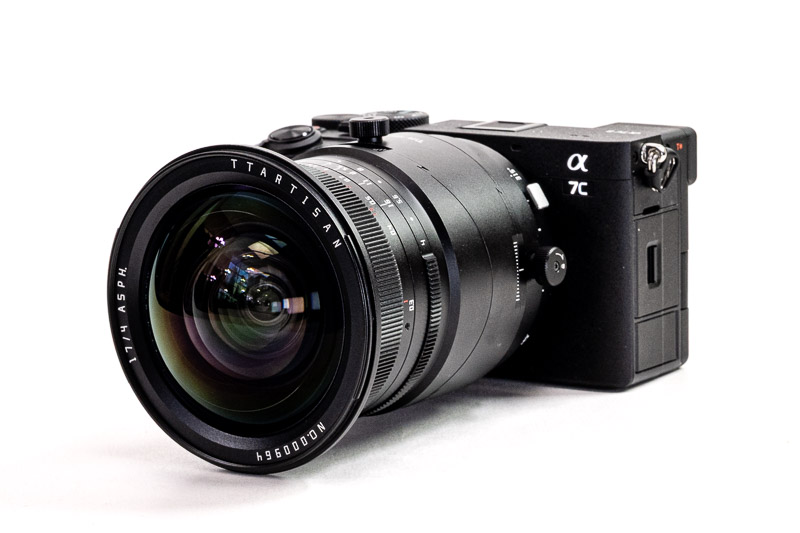
TTArtisan has released three tilt-related lenses to date: a tilt-only 35mm APS-C, a tilt-only 50mm full-frame, and a 100mm tilt-and-shift full-frame — none of which are well suited to architectural photography.
This lens changes that: a 17mm full-frame tilt-and-shift with a complex, sophisticated optical and mechanical design. Despite that, it costs just $550.
On paper, that sounds like a bargain — assuming the performance delivers. Let’s find out.
 I tested this lens on a 33 MP Sony a7C II.
 You can see this review as a YouTube video here!
 Sample images in high resolution here.
Sample Images

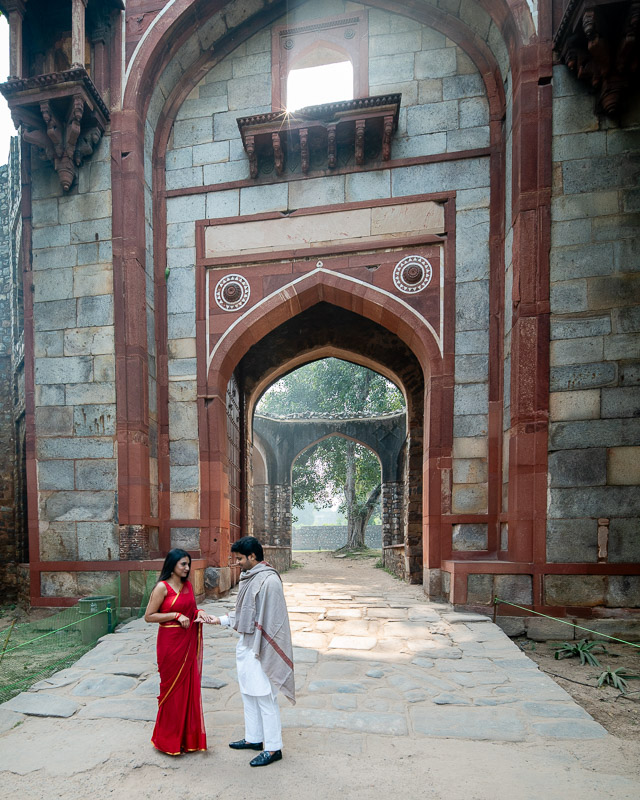
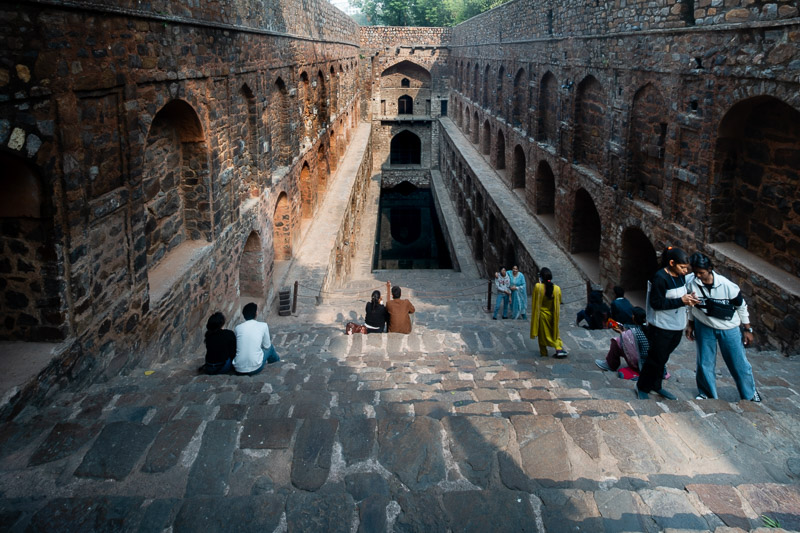
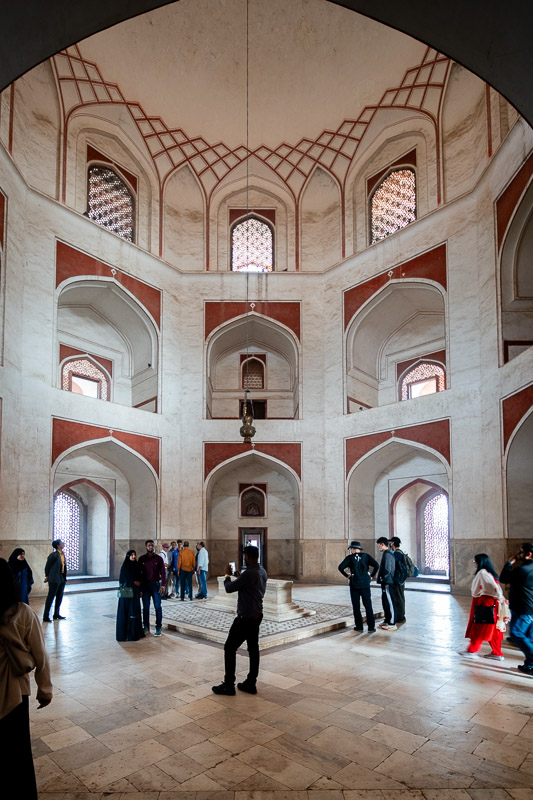
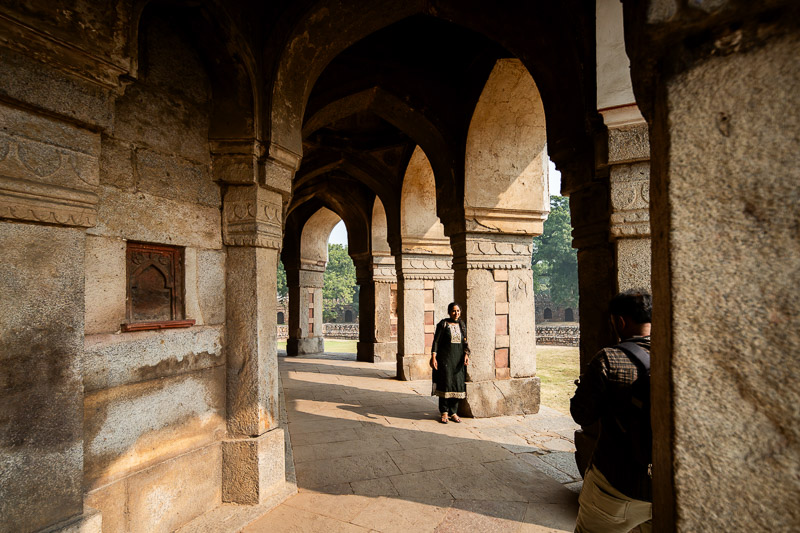






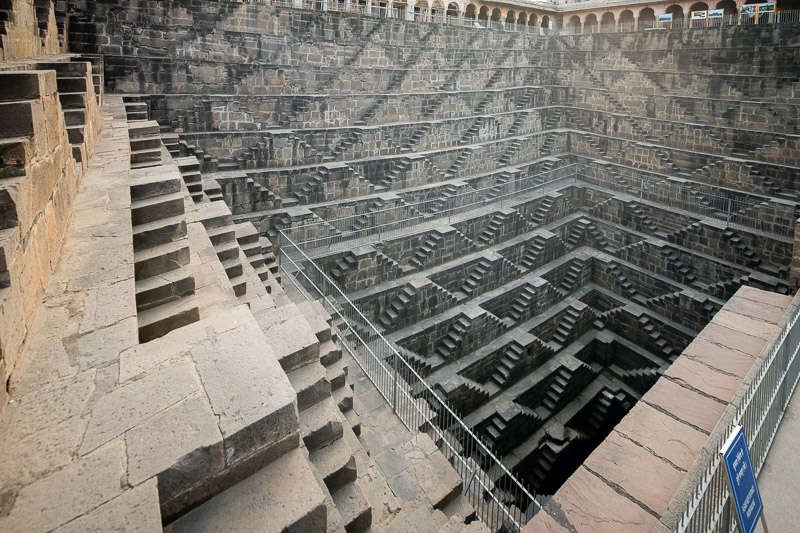
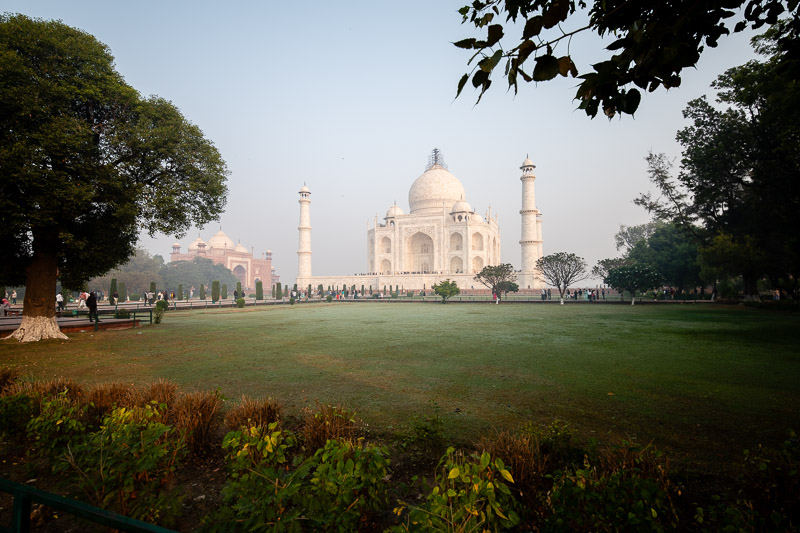
Most of the sample images in this review and many more can be found in higher resolution here.
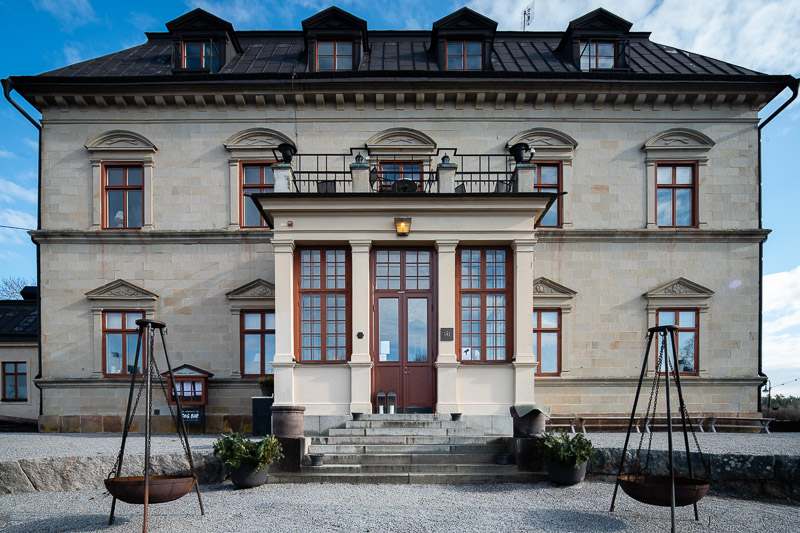
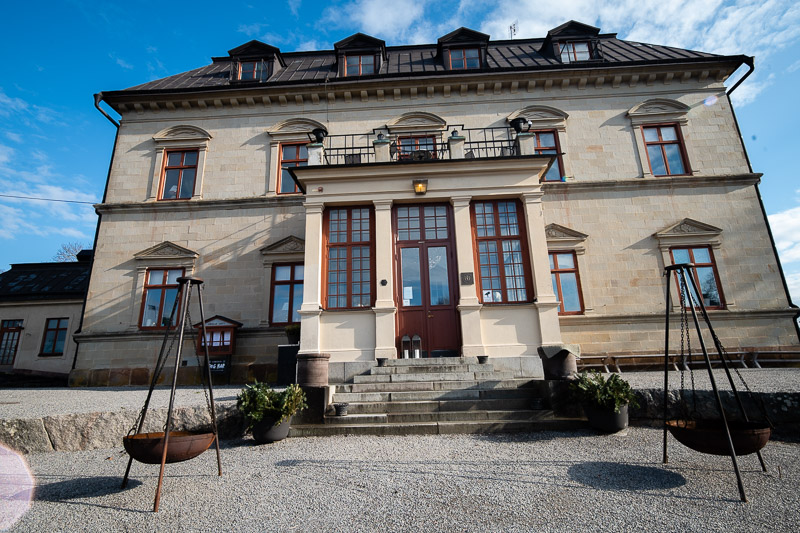
Note: No digital geometry corrections were applied to any images in this review in post. Whenever perspective correction was needed, it was performed optically using the lens’s shift function at the time of capture, like in the following example
Specifications
| Focal Length | 17mm |
| Angle of View | 8° |
| # of Aperture Blades | 10pcs |
| Max Aperture | f/4 |
| Min Aperture | f/16 |
| Min Focus Distance | 0.3 m |
| Filter Size | N/A |
| Lens Mount | Sony E, Fujifilm GFX |
| Weight | ≈ 1051~1056g |
| Tilt angle | ± 8° |
| Shift | ± 8 mm |
| Size (D x L) | 88 mm x 120 mm (Z), 107 mm (E) 100 mm (GFX) |
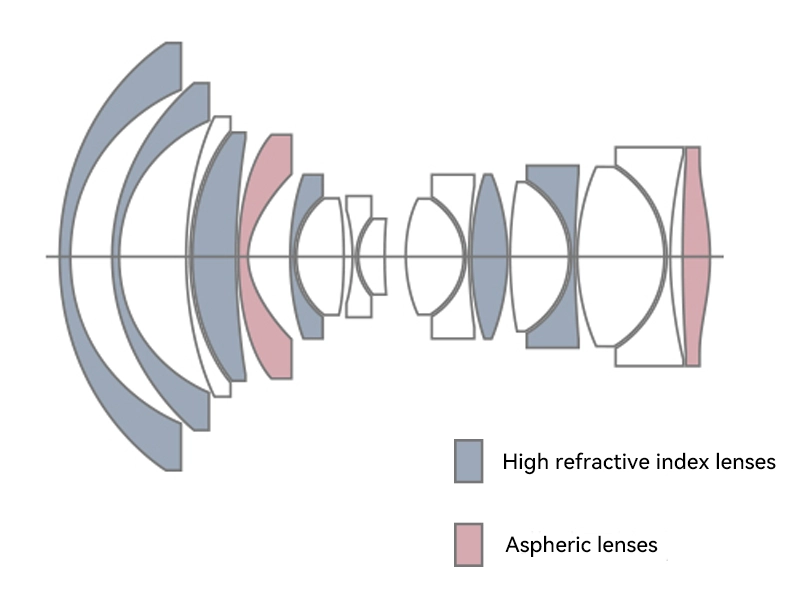
| Elements/Group | 17 / 11 |
| Buy new: TTArtisan Store, B&H, Amazon (anywhere) for $550 (Affiliate links) |
Disclosure
TTArtisan kindly provided this lens for test and review purposes.
Handling and Build Quality

This is a fully manual lens built entirely of metal and glass, with no electronic contacts for communication with the camera. As expected from TTArtisan’s all-metal manual lenses, the build quality is solid. It is both bulky and heavy at over 1 kg, and its bulbous front element prevents the use of front-mounted filters. The lens appears almost disproportionate on the compact Sony a7C II, and it still looks oversized even on a Nikon Z body. This is perhaps not surprising, given that it is fundamentally a medium-format lens.
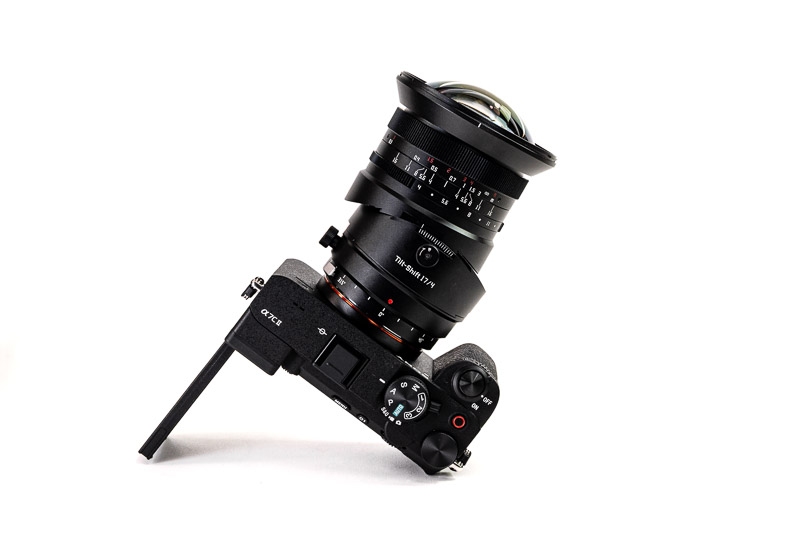
Closest to the front element is a metallic focusing ring marked in both feet and meters, with the scales distinguished by different colors. The lens uses an external focusing mechanism, meaning it extends slightly at close focus distances. This is followed by a depth-of-field scale and then a thin but easy-to-grip metallic aperture ring. The aperture ring is clearly marked and clicks distinctly at full- and half-stop increments. The aperture markings are equidistant, which I prefer.
Tilt-Shift
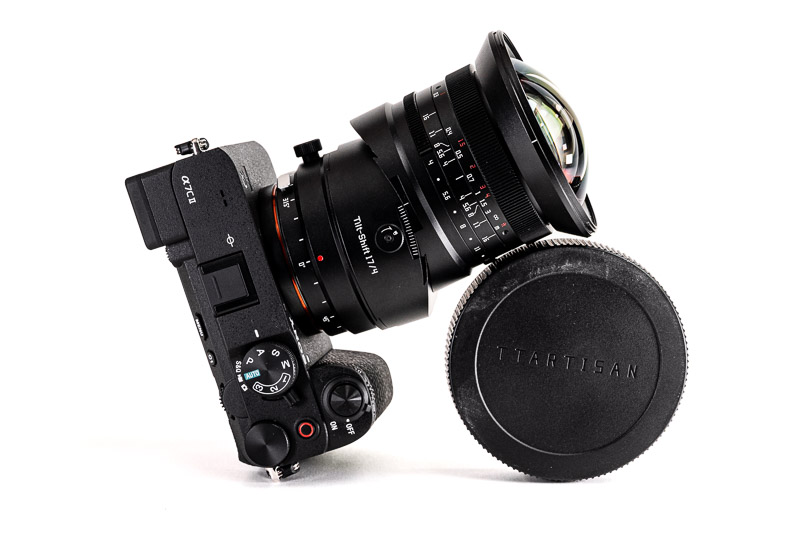
The lens can be shifted 8mm in each direction and tilted 8° in each direction.

Adjustments for tilt and shift are made entirely by hand, as there are no geared racks or control wheels for fine movements. The lens must be physically repositioned to apply either movement. Both mechanisms can be locked via dedicated knobs.

The lock knobs feel somewhat undersized and not especially robust. If tightened firmly enough to support the lens’s weight, their small size makes them difficult to loosen again, and repeatedly applying that level of force over time could place unnecessary stress on the locking mechanism. If not tightened sufficiently, the lens can abruptly fall to its mechanical limit under its own weight.
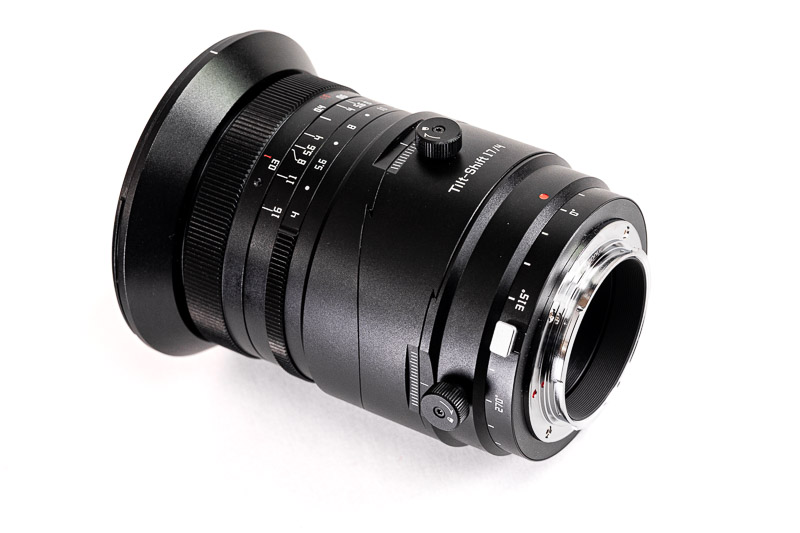
On the Sony E-mount version, the entire lens can rotate 360° around the mount in 15° increments. This means that you can shift and tilt the lens in practically any direction.
This feature is not available on the GFX version. The diagram below illustrates the lens’s image circle coverage and the maximum shift range for full-frame and medium format sensors.

The image circle is considerably larger than what a medium format sensor requires to accommodate shift movements. On full-frame cameras, this oversized image circle offers clear advantages: reduced vignetting and improved corner sharpness, even when shifted.
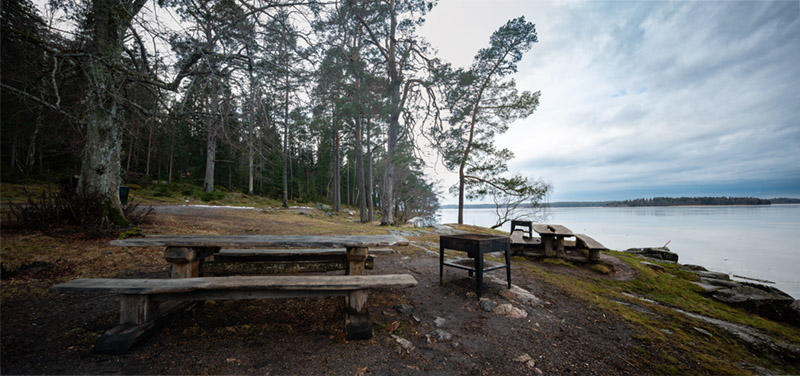
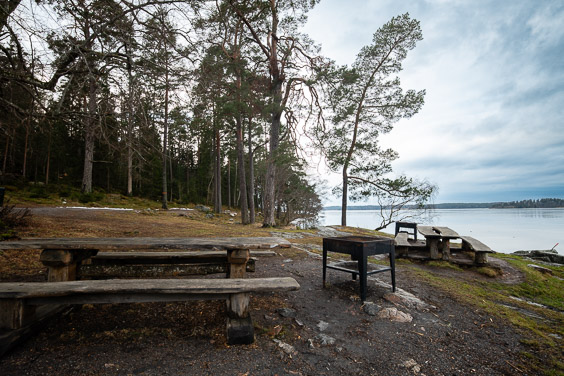
In theory, TTArtisan could have allowed for a greater shift range on the Sony version—around 12mm, as offered by most competitors—which would have significantly improved usability. However, they chose not to. Here is an example of the panorama ratio you can get with this amount of shift.
Optical Features
Sharpness (Infinity)
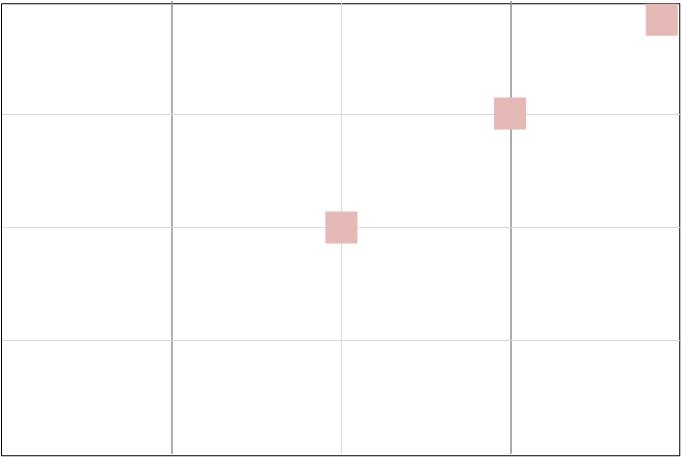
For the infinity sharpness test, we look at three areas of the image, centre, mid-frame, and corner, see highlighted areas in the image below!
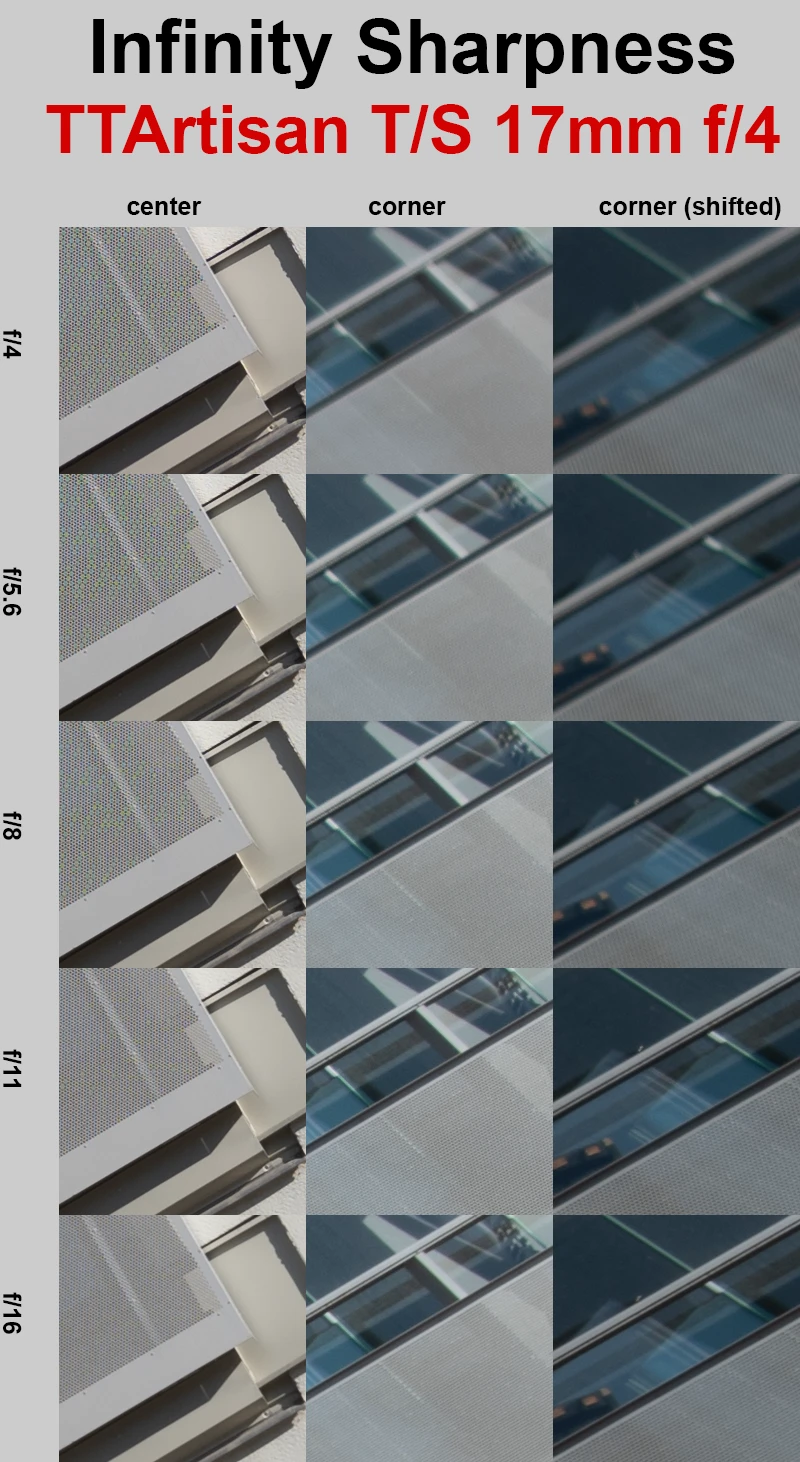
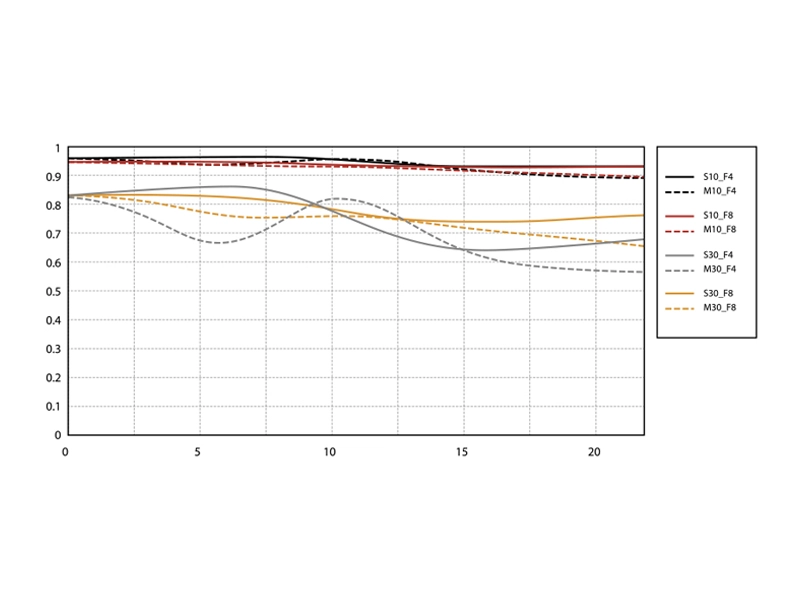
Sharpness is excellent in the center right from wide open at f/4, but the corners require some stopping down. Closing the aperture to f/5.6 brings an improvement, though not enough to fully satisfy. At f/8, the corners reach a very good level of sharpness. For the best overall performance, f/11 delivers excellent sharpness both in the normal position and in the corners when shifted.
Sharpness (Close-up)
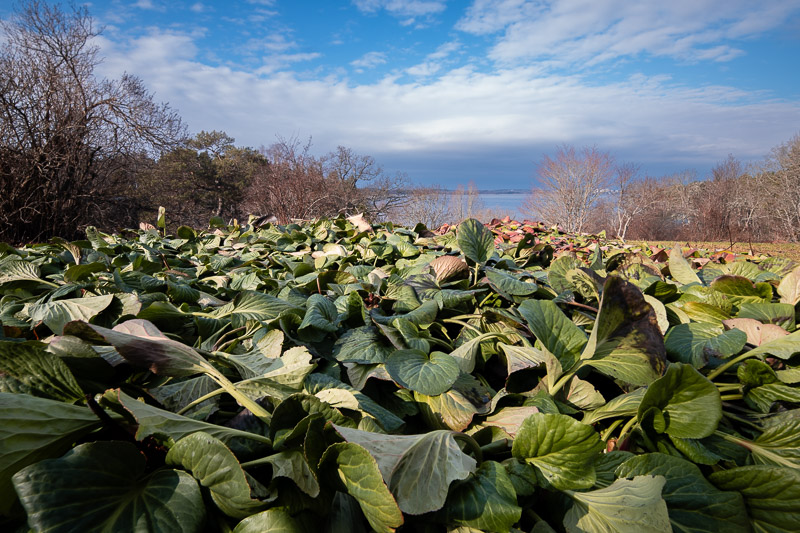
Close-up sharpness isn’t a huge deal for architecture, but if you’re shooting landscapes with foreground details, this lens has you covered. It’s impressively sharp right from f/4 and stays strong all the way to f/11, with only the tiniest dip. By f/16, you start to notice it a bit more, but even then, it’s still very sharp.





Lens Distortion
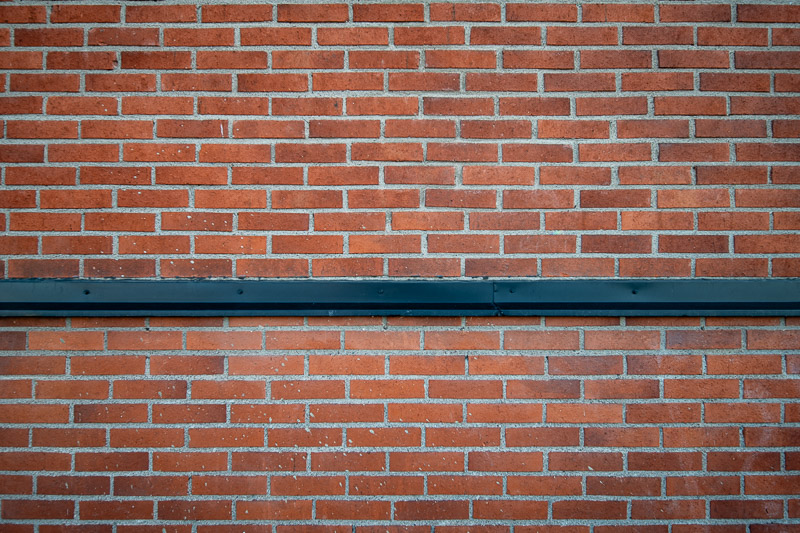
Distortion is very well controlled, with only a trace of barrel distortion visible under close inspection, but that is easy to ignore.
Vignetting
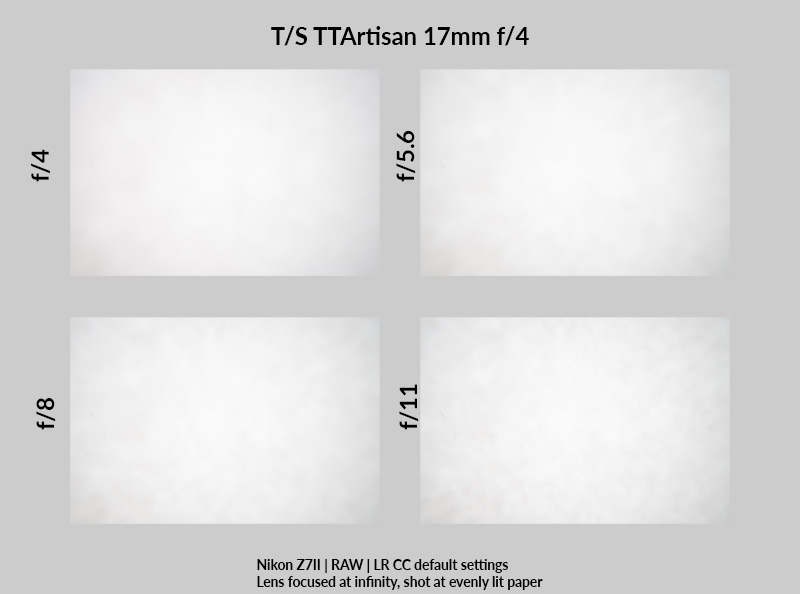
Vignetting is moderate in the centered position and slightly stronger, as well as asymmetrical, when the lens is shifted. Despite this, it remains extremely well controlled for a 17mm lens, pushing the practical limits of optical design. This is made possible by TTArtisan’s engineers through the use of a massive retrofocus optical formula. The large, bulging front element allows the lens to project light as if from a virtual point located much farther from the sensor plane. The generous 64mm image circle coverage also plays a significant role in keeping vignetting under control.

| f-stop | Centered | Shifted |
|
|
|
Focus Shift & Aberrations
Longitudinal chromatic aberration is very well controlled and essentially invisible in real-world shooting.
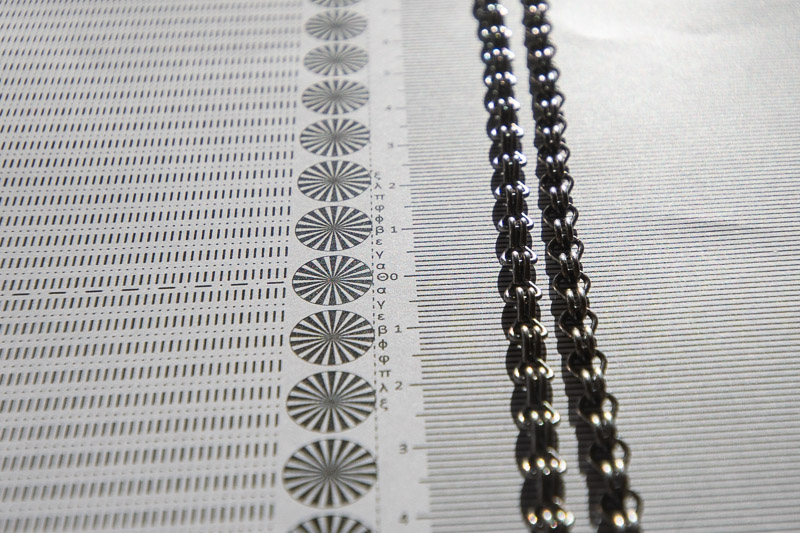
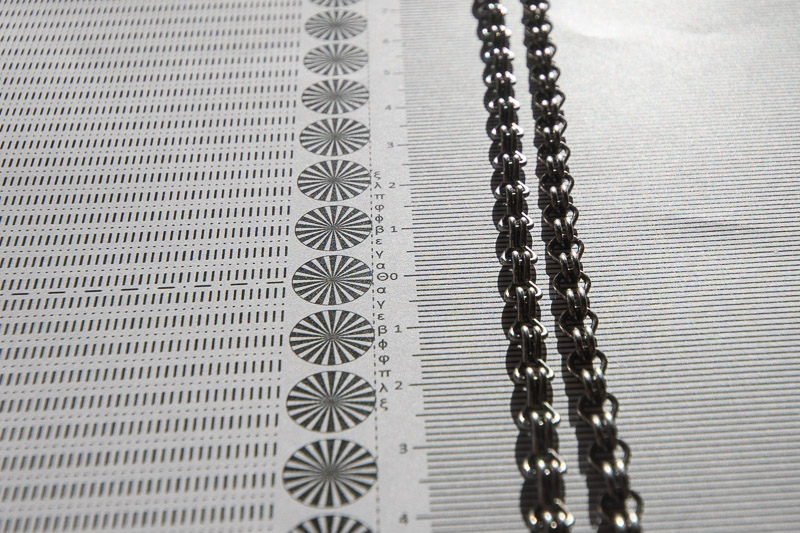
There is a very small lateral chromatic aberration visible, as shown in the 100% crop of the corner below, but it is negligible in most normal situations.

Flare Resistance
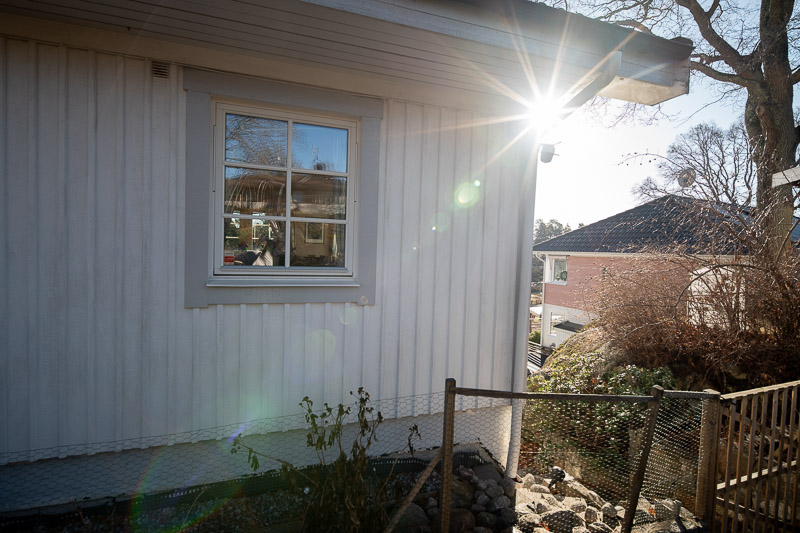
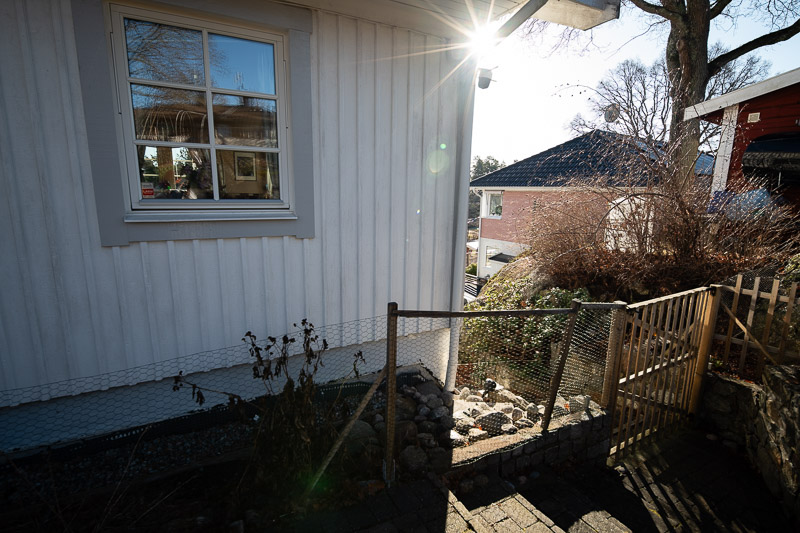
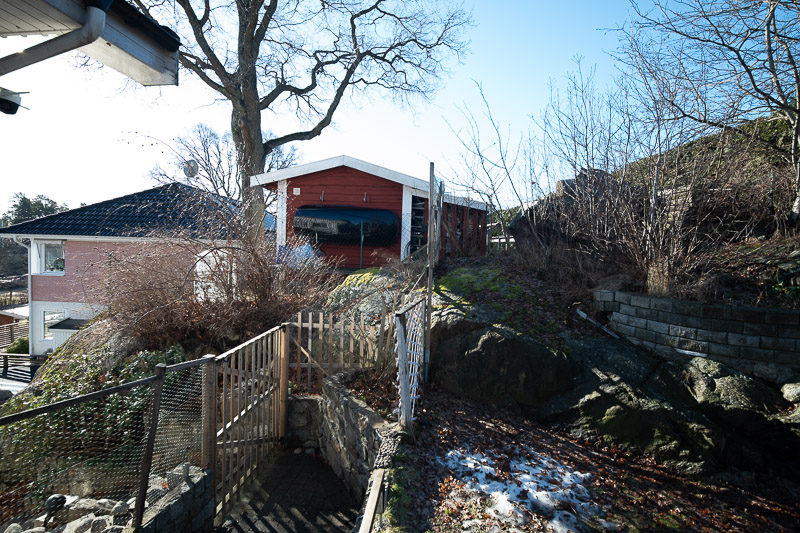
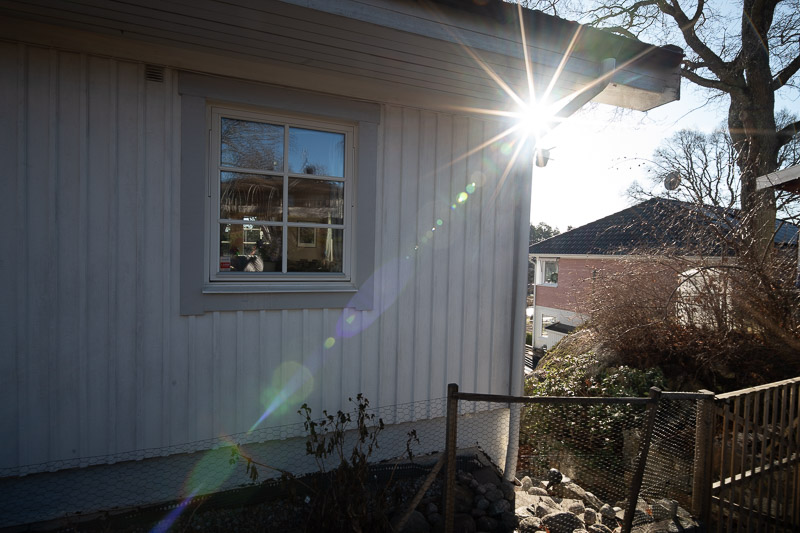
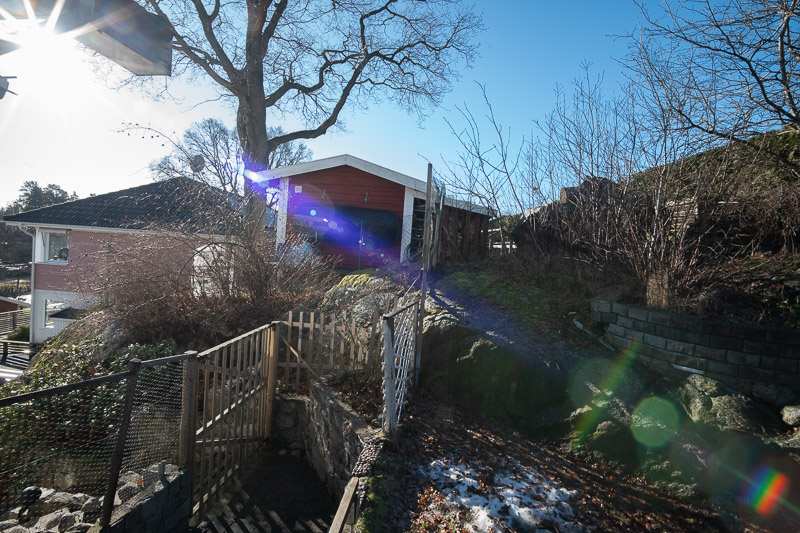
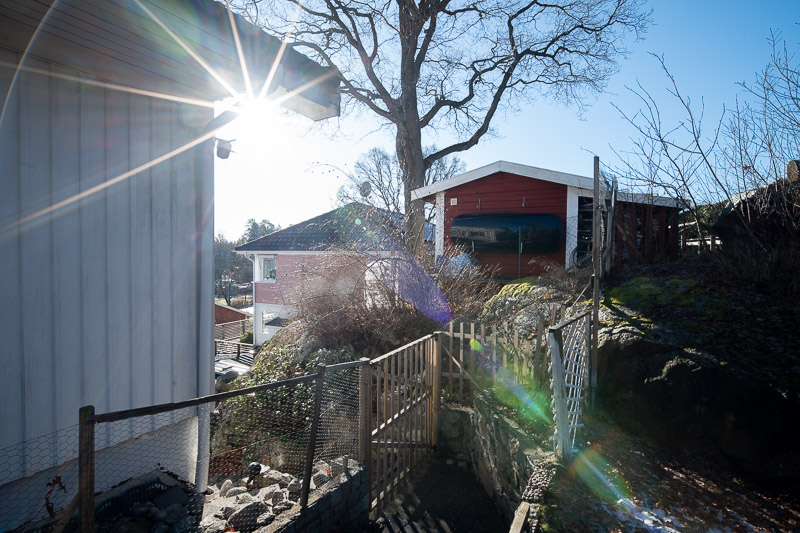
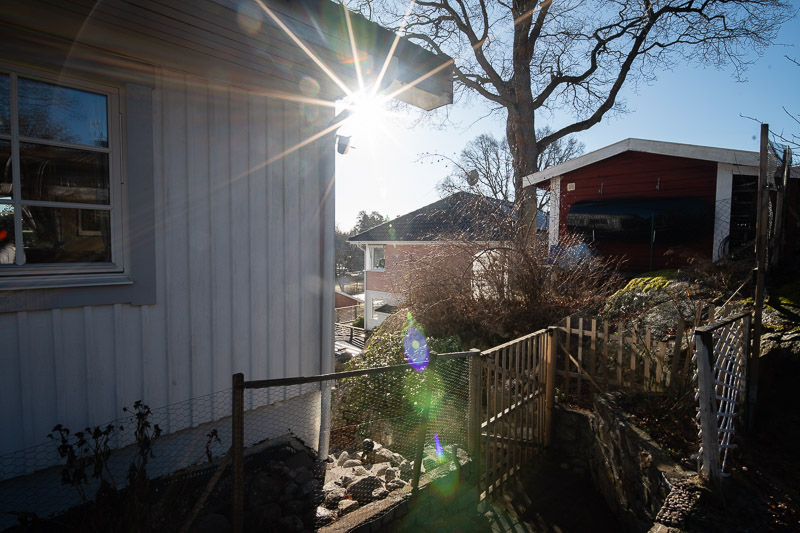
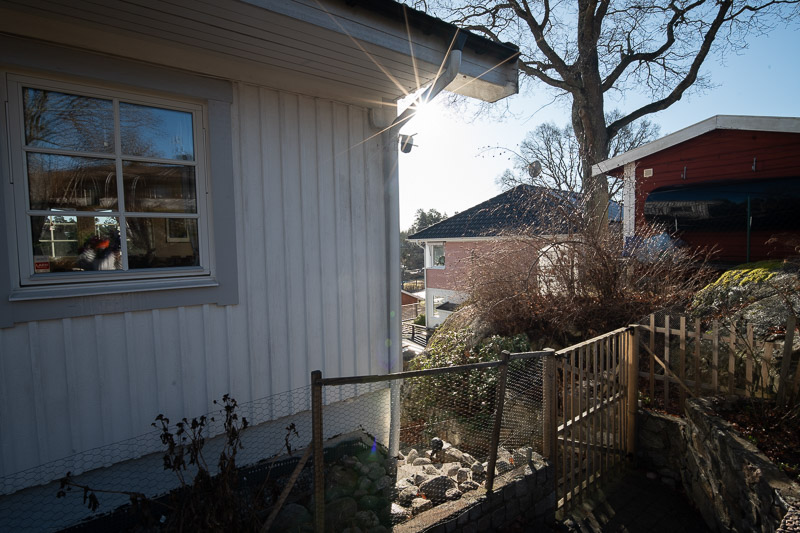
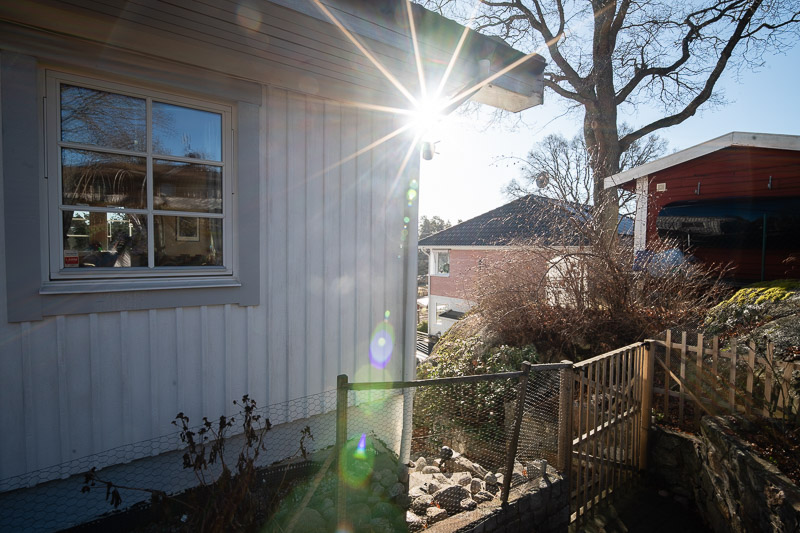
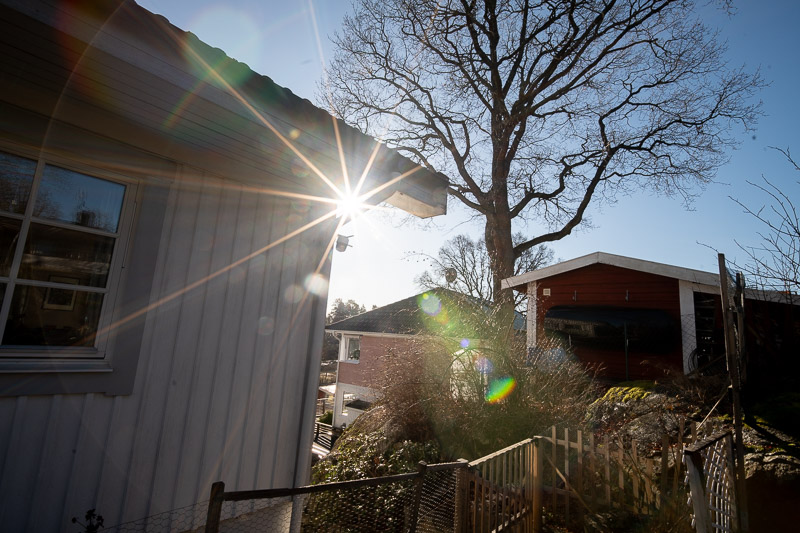
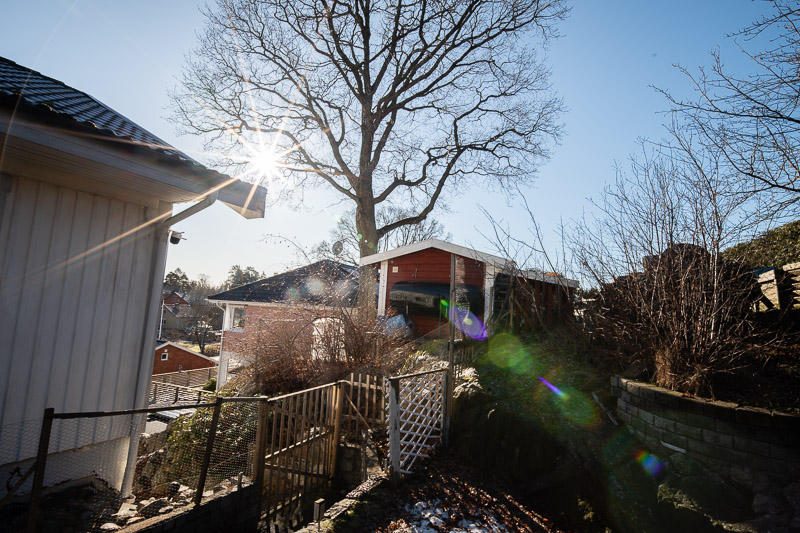
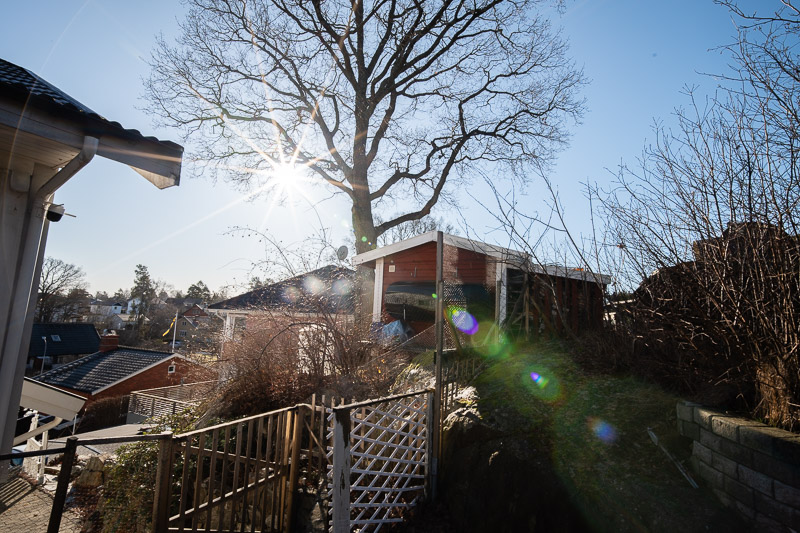
It’s great that this lens can easily produce sunstars even at wider apertures when the sun is in the frame. Unfortunately, ghosting flare is a consistent issue. Contrast remains fairly strong against direct light, but internal reflections frequently spoil the image unless you’re deliberately using them for creative effect.

Coma
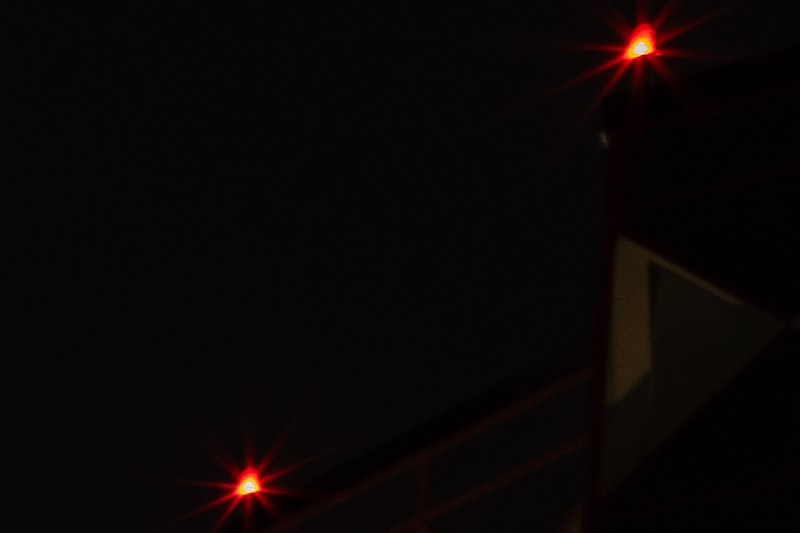
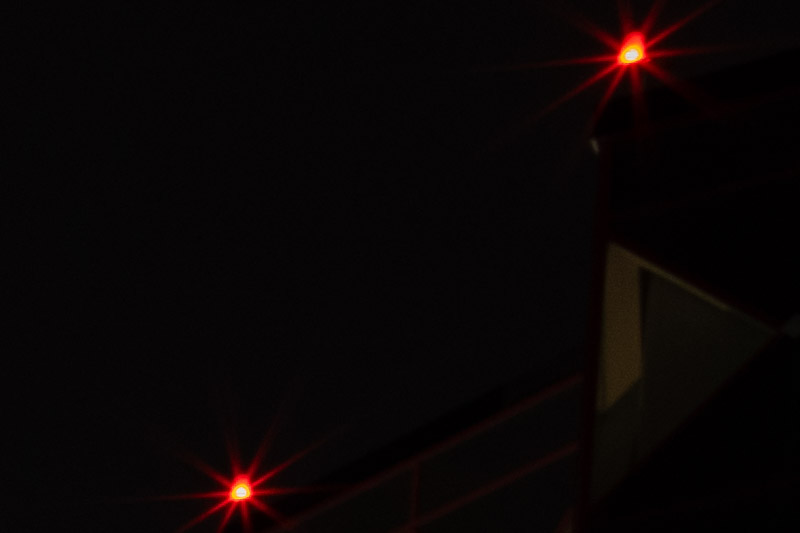
There is no coma visible, which is very good.
Sunstars
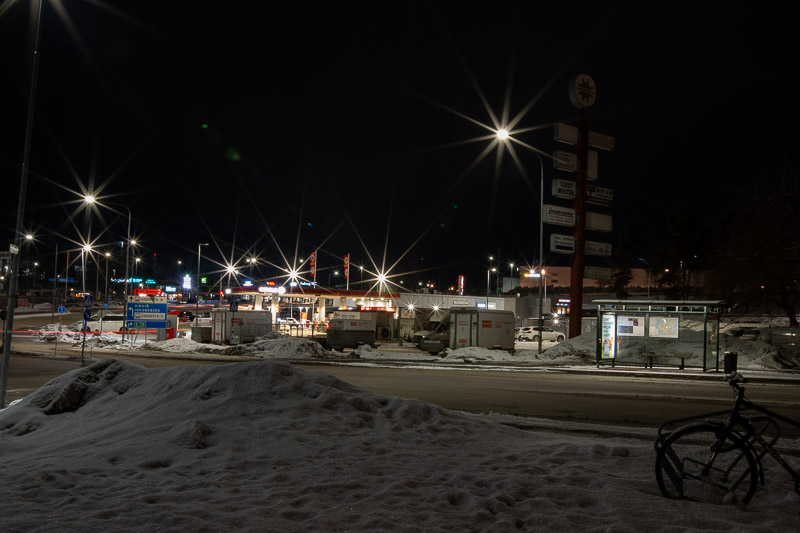
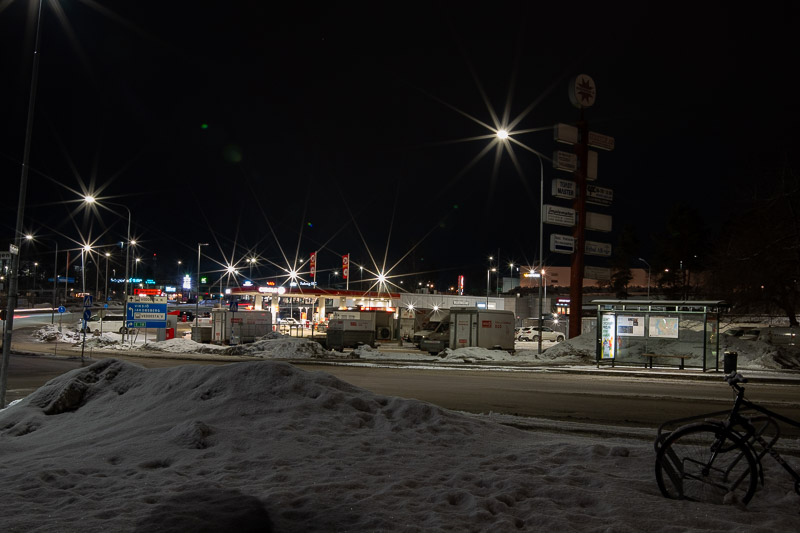
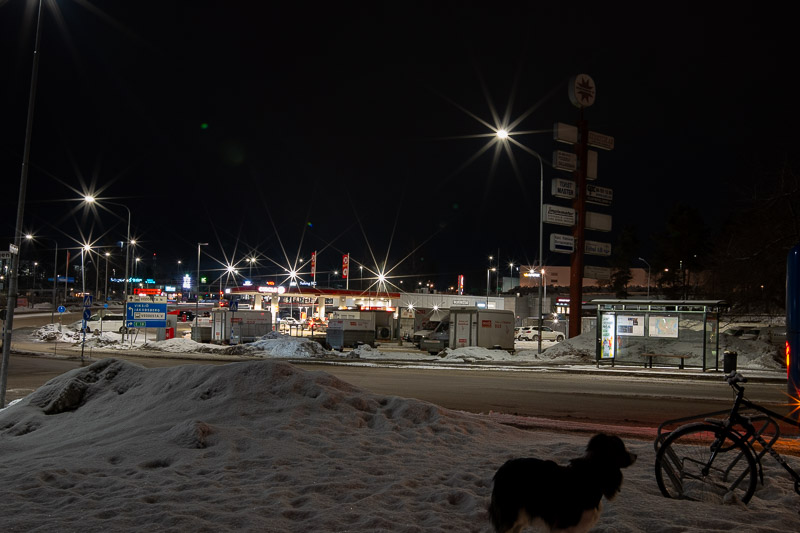
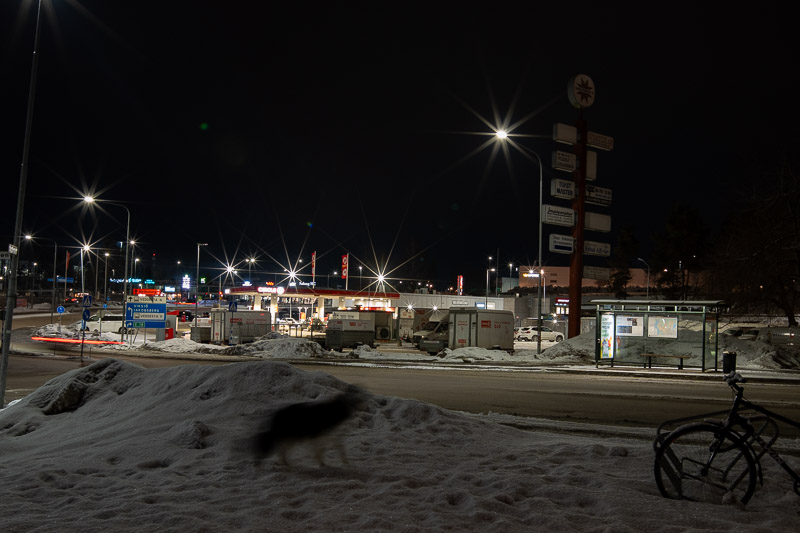
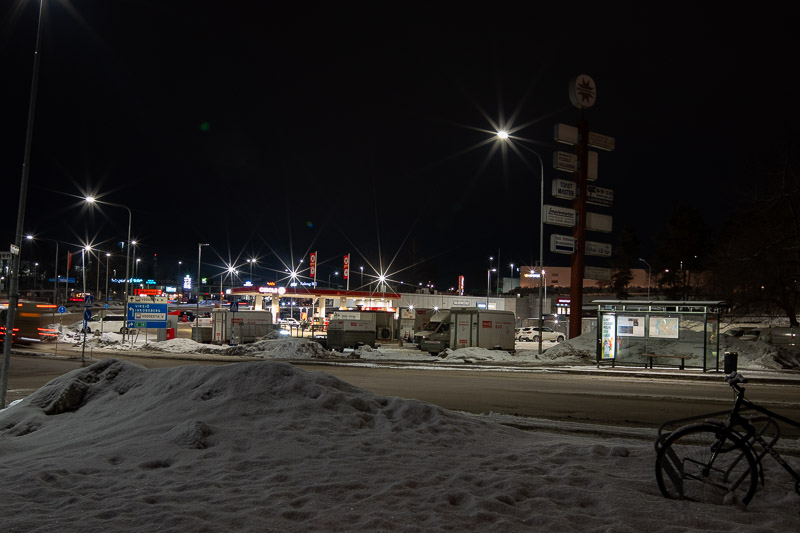
This lens produces strong sunstars at all aperture settings — even wide open at f/4, they are well-defined and attractive, with a clean 10-point shape. another of this lens’s strengths.
Conclusion
| I LIKE | AVERAGE | I DON’T LIKE |
|
|
|
I tested this lens on a full-frame camera, and there its optical performance is excellent. Sharpness remains very good out to the shifted corners when stopped down, which is typically how the lens is used for architectural or landscape photography anyway. Chromatic aberrations, vignetting, and coma are very well controlled. Sunstars are also well defined. The only area that could use some improvement is flare resistance.
In terms of build and handling, the lens is quite large, but that is not unusual for tilt-shift designs, especially those that cover medium format. The amount of shift is somewhat limited, and I would have preferred a bit more. The locks are slightly underdimensioned, which makes the lens prone to sagging even when secured. I also wish there were geared controls to allow more precise tilt and shift adjustments.
That said, considering the price, expecting all of that may be asking too much. This is a very good lens for anyone looking to get into architectural or landscape photography with tilt and shift, especially since it is far more budget-friendly than the alternatives.
Writing articles like this one is both time-consuming and costs us a lot of money. If you found this article helpful and decided to buy one of these lenses, please consider using one of the affiliate links.
If you are not interested in buying any of the lenses, but you still found this article useful, interesting, or it saved you a lot of money, treat us to a coffee (donate)!
| Buy new: TTArtisan Store, B&H, Amazon (anywhere) for $550 (Affiliate links) |
Alternatives
Here, while there are a few other T/S lenses, I only list those with focal lengths close to the reviewed lens.
Laowa 15mm f/4.5 Zero-D Shift
Shift Only ± 11mm for FF, ± 8mm for GFX. No tilt mechanism. You can get this lens with almost every possible mount: Canon EF, Canon RF, Nikon F, Nikon Z, Sony E, Pentax K, L mount, Fujifilm G, and Hasselblad XCD.
Buy new: Amazon (anywhere) for $1199 (Affiliate links)
Laowa 20mm f/4 Zero-D Shift
Shift Only ± 11mm for FF, ± 8mm for GFX. No tilt mechanism. Also available in all possible mounts. Canon EF, Canon RF, Nikon F, Nikon Z, Sony E, Pentax K, L mount, Fujifilm G, and Hasselblad XCD.
Buy new: Amazon (anywhere) for $1099 (Affiliate links)
Laowa 15mm f/4 Wide Macro
shifts ± 6mm. No tilt mechanism. Available in Canon EF, Nikon F, Sony A, Pentax K, Sony FE, and L mount. Well, this one has even less shift and no tilt, but a little cheaper than the reviewed TTArtisan. I’d go with the TTArtisan instead of this.
Buy new: Amazon (anywhere) for $499 (Affiliate links)
Canon TS-E 17mm f/4L
Tilts ± 6.5°, shifts ± 12mm. This is only available in Canon EF mount, but can be adapted to Sony E and Nikon Z cameras.
Buy new: Amazon (anywhere) for $2399 (Affiliate links)
Buy used: ebay.com, ebay.de, ebay.co.uk from $ (Affiliate links)
Nikon PC NIKKOR 19mm f/4E ED
Tilts ± 7.5°, shifts ± 12mm. This is only available in Nikon F mount, but can be adapted to Sony E and Nikon Z cameras, and Canon RF.
Buy new: Amazon (anywhere) for $3799 (Affiliate links)
Buy used: ebay.com, ebay.de, ebay.co.uk from $ (Affiliate links)
AstrHori 18mm 8.0 Shift
Shift range: ±6 mm (no tilt). The most affordable option at $119, available in E/FX/L/Z mounts. In practice, the usable shift appears to be closer to ±2 mm, max, despite the ±6 mm specification. As a result, it’s not a particularly convincing option for serious shift use, and I do not recommend it.
More Sample Images
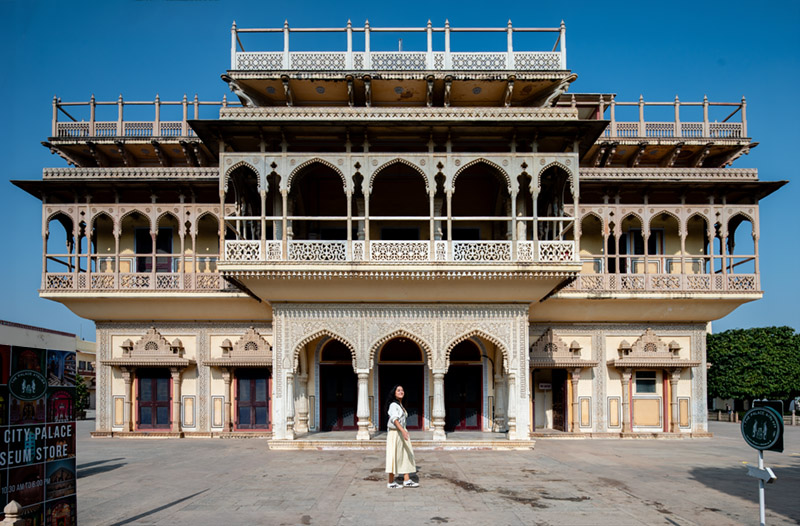


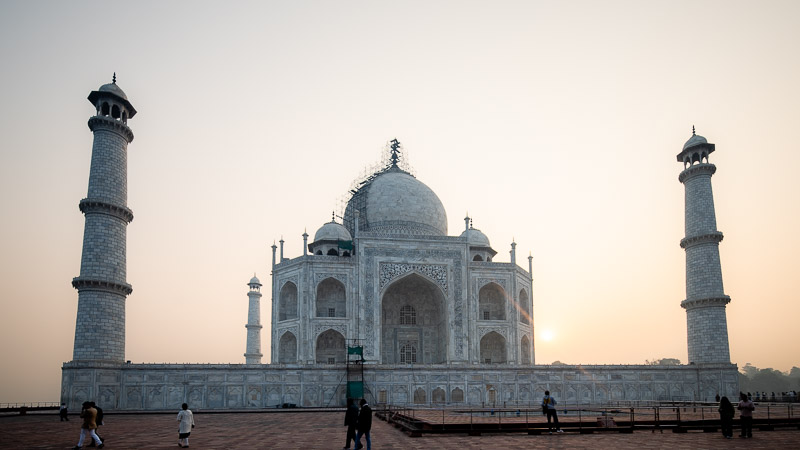

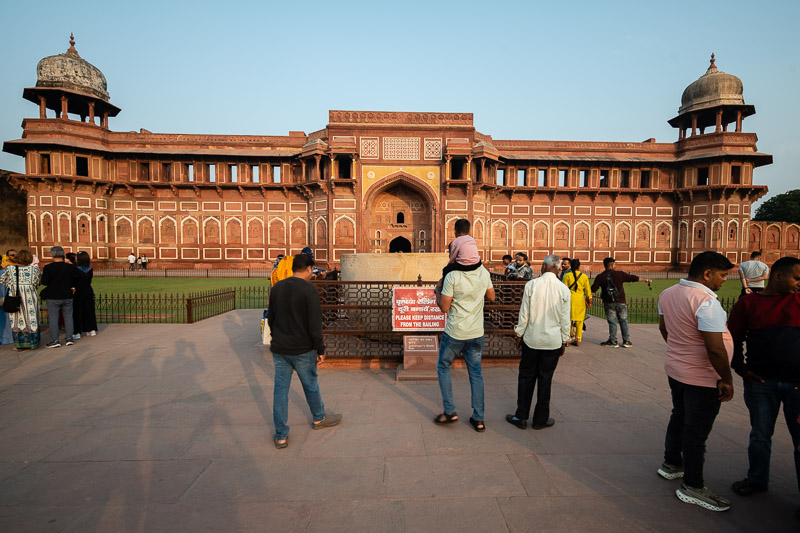

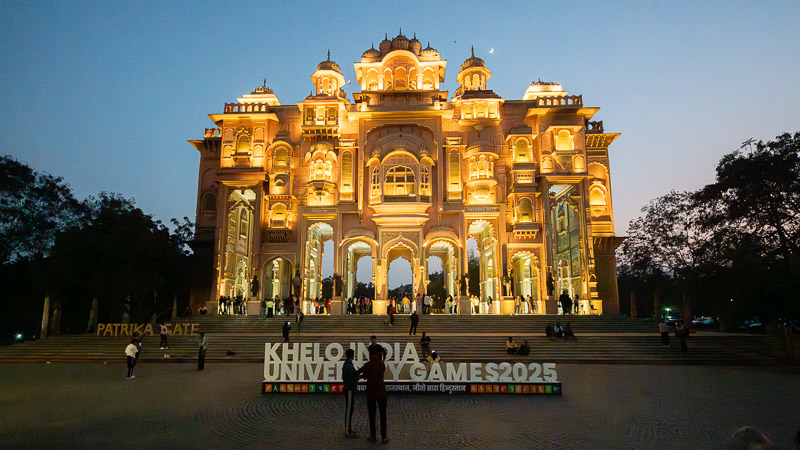



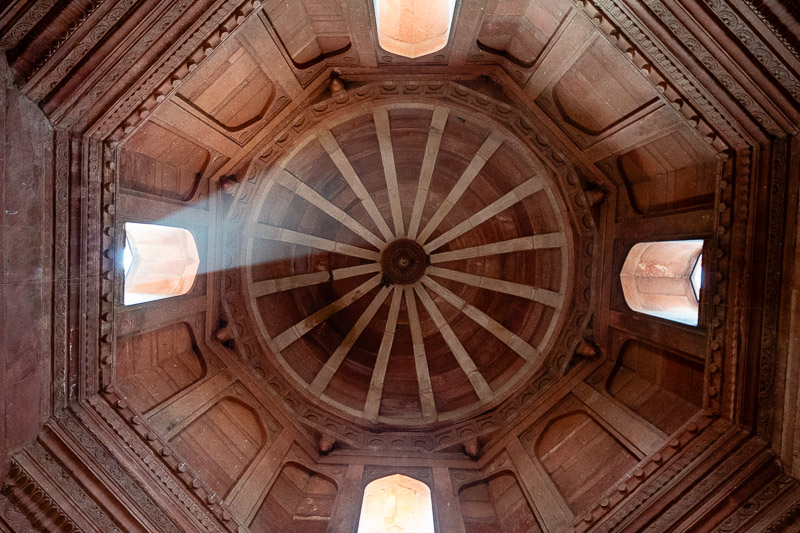


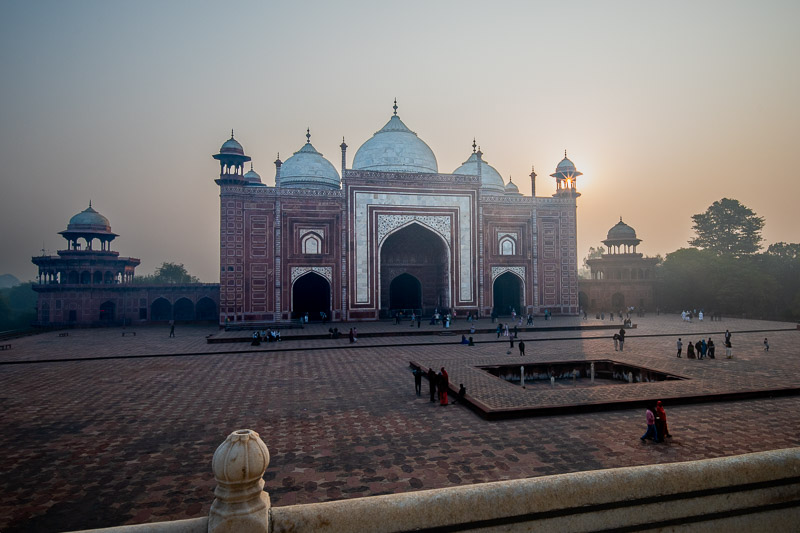

Most of the sample images in this review and many more can be found in higher resolution here.
Further Reading
- What camera gear and accessories do I use most frequently?
- REVIEW/COMPARISON: Laowa FF II TS 55mm & 100mm f/2.8 Macro 1X
- Review: TTArtisan 100mm f/2.8 Macro 2x TS – A Jack of All Trades
- Review: Laowa 15mm 4.5 Zero-D Shift
- Review: Laowa 20mm 4.0 Shift
- Review: AstrHori 18mm 8.0 Shift
Support Us
Did you learn something new, find this article useful, or simply enjoy reading it? We’ve put a lot of time and resources into creating it, and your support helps us keep going. If you’d like to show your appreciation, please consider clicking the Donate button!



(Donations via Paypal or bank card)
What’s in my camera bag? MY 2024 KIT!!
- Main camera : https://amzn.to/3TsGtKg
- Camera grip : https://amzn.to/4e0G3CR
- Memory Card 1: https://amzn.to/47pA20i
- Memory Card 2 : https://amzn.to/3XHYxlZ
- Camera 2 : https://amzn.to/3Xifou8
- Camera grip: https://amzn.to/4dYYpV9
- Memory card 1: https://amzn.to/4e5h2H0
- Memory card 2: https://amzn.to/3zu7W7n
- Small travel tripod: https://amzn.to/4goIX68
- Mini tripod: https://amzn.to/4e09XXX
- Small shoulder bag: https://amzn.to/47tPMiY
- Medium shoulder bag: https://amzn.to/4ej4bjY
This site contains affiliate links, for which I may receive a small commission if you purchase via the links at no additional cost to you. This helps support the creation of future content.


Martin
Latest posts by Martin (see all)
- Review: Nikon Z 24-200mm f/4-6.3 - March 22, 2026
- Analogue Photography: Part 6 – Kodak Gold 200 - March 11, 2026
- REVIEW: TTArtisan Tilt-Shift 17mm F4 ASPH. - March 4, 2026
For Canon users, the old version (I) of the TS-E 24 may also be an alternative. It’s a longer focal width, still may be an option, as used offerings are relatively moderately priced.
It has some vignetting when fully shifted, still is fully usable for many purposes, at a fraction of the costs of the TS-E 17
I deliberately excluded that lens because I thought the focal length difference was too much.
Fantastic images, Martin! You do a good job of showing the magic of a lens like this, that can tame the wide angle’s sensitivity to angle which ruins architecture shots. The way all the angles line up on so many of these shots is incredibly satisfying. And at times, it feels almost surreal. At first I wouldn’t think of such a heavy lens as a travel lens – but when the travel includes magnificent buildings it seems like it must be considered.
Thanks, Josh. Yes, this is a fantastic lens for architecture, and you’re right that it’s not the first lens you’d pack for a vacation.
In my case, three factors made me do it:
1. I had the lens for review, and this was the only trip I had planned at the time.
2. I knew my destination was practically made for this lens, with so many incredible architectural subjects.
3. I had my very kind daughter with me, who carried the lens attached to the camera in a dedicated bag at all times, so I could carry my normal kit.
Does the lack of a tripod mount mean that you get parallax errors in stitched pano shots when you shift the lens while the camera body/sensor is stationary (on the tripod mount)? Also seems strange to not have a tripod mount when it weighs over 1kg.
Theoretically that coud lead to stitching errors, but with only 8mm of Shift that will rarely if ever happen.
Nikon’s and Canon’s TS lenses also do not come with a tripod pount.
A nodal rail is pretty much a necessity anyway if your client’s needs are critical enough where parallax could have a real tangible impact on whether the finished photo is useable.
It depends on your foreground: with a 17mm lens, parallax is negligible if all objects are at least 8–10 meters away. If you have a clear foreground with no close subjects, you can ignore parallax entirely and stitch with peace of mind.
Greetings Martin,
I acquired this lens for Sony when it was first announced and my experience with it matches your review. Optically, the lens is quite good, much better than one would expect at this price point. Mechanically, it leaves something to be desired. As you stated, the locking nuts are too small and require too much force to hold position. I’ve had several instances where the lens suddenly drops under its own weight. The other thing I’ve noticed and wondered if you encountered is the shift alignment is off about 1.5 degrees and when you stitch shifted images together you will need to crop the frame to square the edges. Overall, far more positives than negatives and I would purchase this lens again.
I haven’t measured the field of view, but I can confirm that shifting changes the horizontal framing slightly, causing a small vertical misalignment in panoramas. This means you have to crop the image slightly at the top and bottom to remove the white strips.
That 8mm shift is a fatal limitation for me.
And unnecessary at that.
Luckily Venus Optics is soon coming up with a Laowa 17mm T/S that will have 12mm shift. I hope it’s good.
While competitors offer more shift, I found 8 mm to be plenty for a 17mm lens. At this focal length, even 8 mm makes a big difference. Of course, having 12 mm is better, but it’s not always required.
I really like the pictures! They do a good job in showing what is possible with this lens.
Thanks for the review, looks like a nice TS option.
Tilt mechanism appears to mimic rear tilt, which is nice to stay on central axis, but it mean you have to reframe when you adjust tilt since the “back” is on the tripod (instead of the lens). After reframing, you probably need to readjust tilt, and reframe… The Canon TS lenses are nice in that the tilt mechanism also shifts the lens such that it compensates for the framing, makin setup easier. But it does eat into your shift range.
Just bought the Sony version, seems great except the knobs of course 🙂
One thing that is not advertised but I had a hunch from earlier reviews – the plastic hood (that is quite flimsy) has a thin filter thread and 105mm filter can be mounted, I’ve tried some UV in the store just to test it. No idea if there’s slightly more vignetting in some extreme shift yet, but may be handy for some.
I actually never tried the hood, not sure if I have got it.