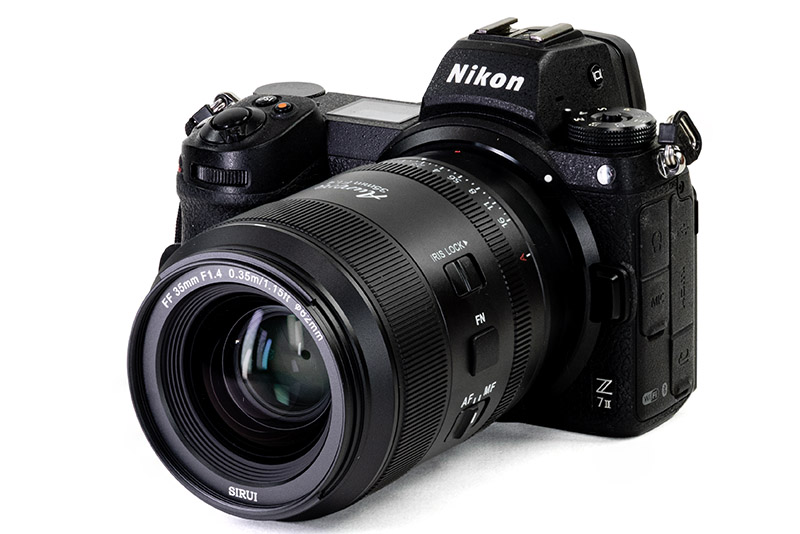
Introduction
Sirui entered the AF stills lens market in 2023, after having already established itself with a range of anamorphic lenses. We reviewed the AF Aurora 85mm last year, thanks to a reader who loaned his lens to Bastian. We were impressed by its overall performance, and especially by its bokeh.
The 35mm f/1.4 is the second lens in the Aurora series, and at $549, it appears to be fairly priced. However, 35mm f/1.4 is also one of the most competitive categories in the lens market, with numerous alternatives from both established manufacturers and smaller brands.
In this review, we take a closer look at how the Sirui Aurora 35mm f/1.4 performs, and how it compares with its competition.
 I tested this lens on a 46 Mp Nikon Z7ii (Sample images were taken with a Nikon Zf)
 You can see this review as a YouTube video here!
 Sample images in high resolution here.
Disclosure
Sirui kindly loaned us this lens for a couple of weeks so we could test and review it.
Sample Images

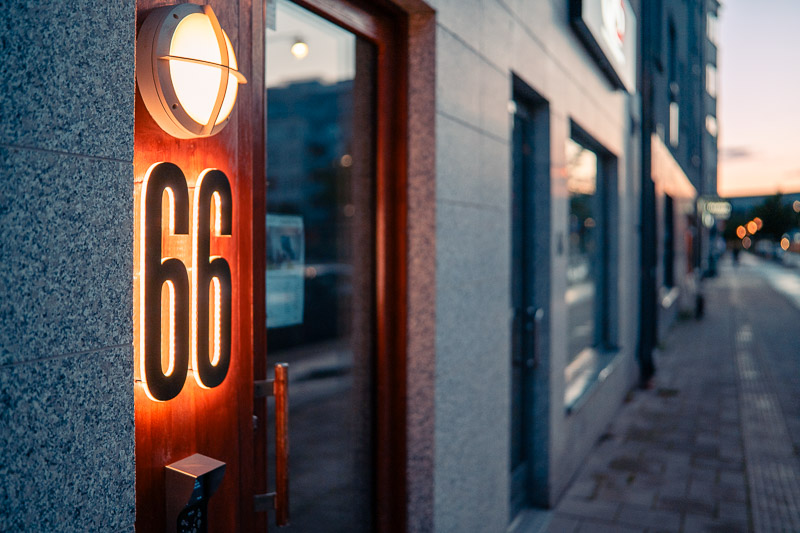
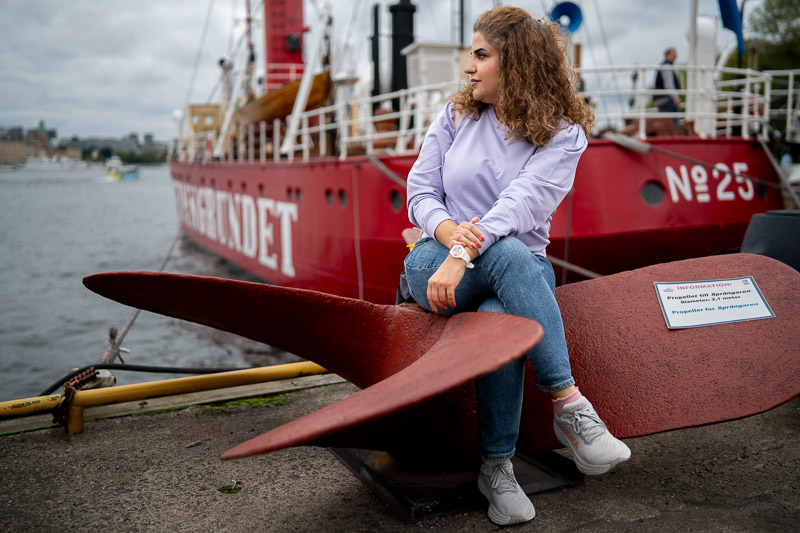
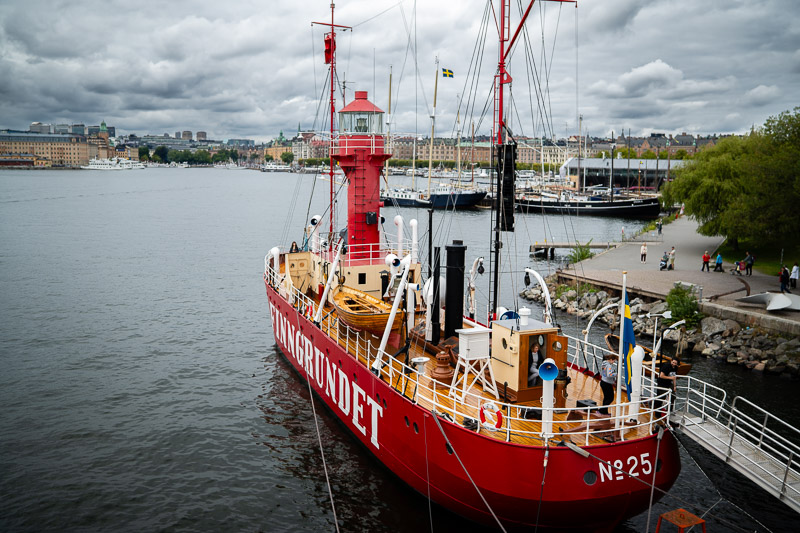




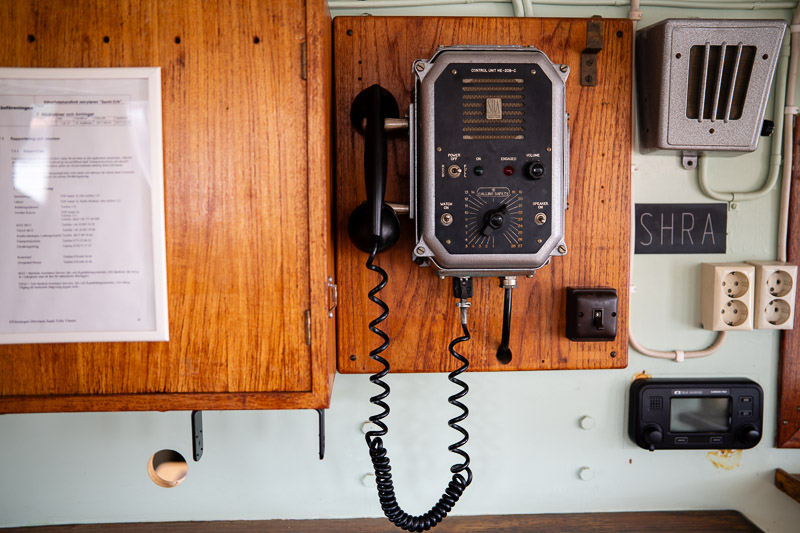
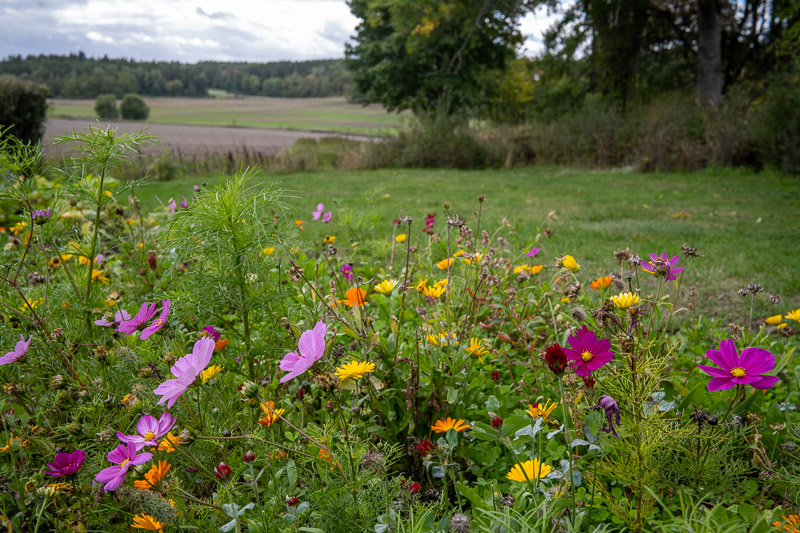


Most of the sample images in this review and many more can be found in higher resolution here.
Specifications
| Focal Length | 35 mm |
| Angle of View | 65.7° |
| # of Aperture Blades | 13 |
| Max Aperture | f/1.4 |
| Min Aperture | f/16 |
| Min Focus Distance | 0.35 m |
| Filter Size | 62 mm |
| Lens Mount | E / L / X / Z |
| Weight | E Mount: 490g/1.08lb L Mount: 495g/1.09lb X Mount: 490g/1.08lb Z Mount: 505g/1.11lb |
| Size (D x L) | E Mount: 76 x 102.9 mm L Mount: 76 x 100.9 mm X Mount: 76 x 103.2 mm Z Mount: 76 x 104.9 mm |
| Elements/Group | 16 Elements in 11 Groups |
| Where to Buy:
New: Sirui Store, Amazon (anywhere), B&H for $466 (Affiliate links) |
Variations
Handling and Build Quality
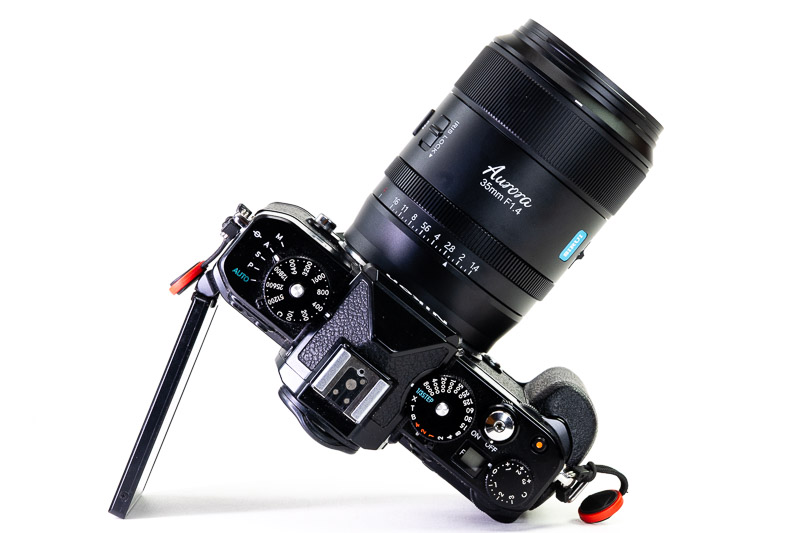
This Aurora 35mm lens is all metal, with an average size and weight for a 35mm f/1.4 lens. There is a USB-C port on the lens mount for firmware updates.
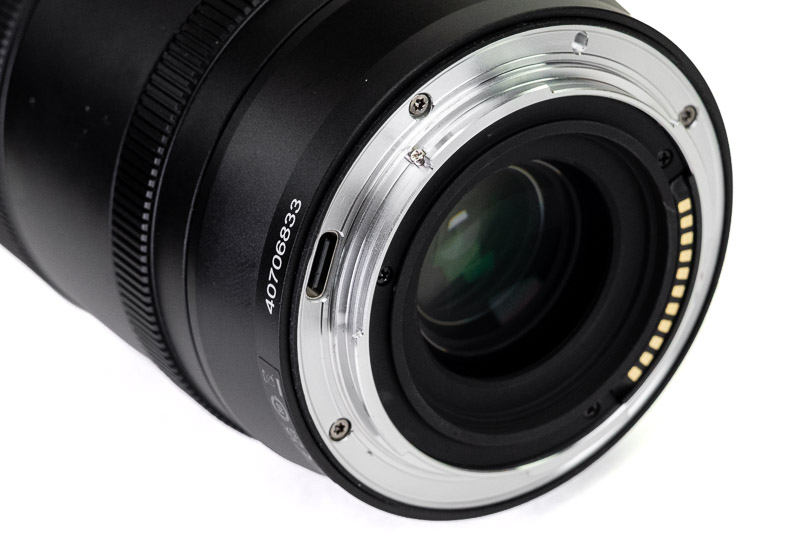
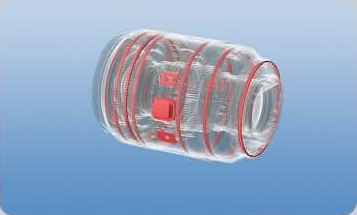
A weather-sealing gasket is visible around the lens mount, which is just one of the 13 sealing points incorporated into the lens, making it well dust-resistant.
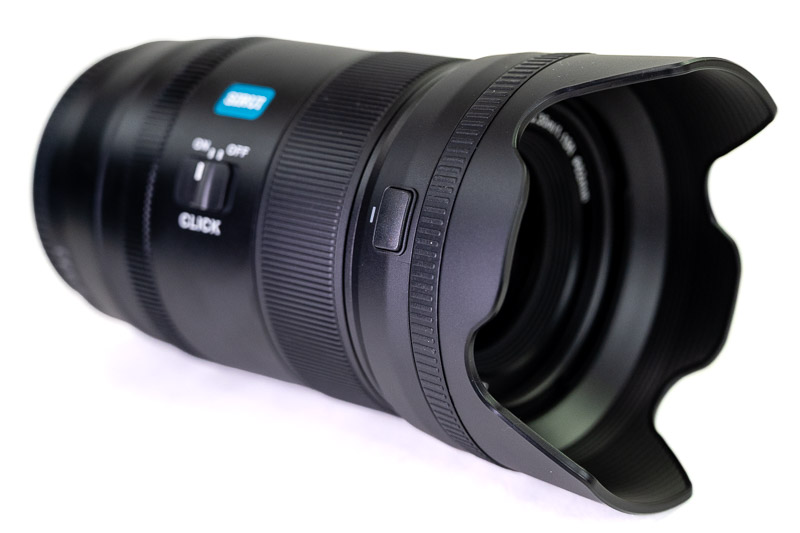
The lens has a switch on the right side that allows you to put the aperture ring in click or declick mode.

The aperture ring has one-third-stop clicks when CLICK mode is ON, as well as an A position for automatic aperture control from the camera. All lens markings are engraved and filled with paint.
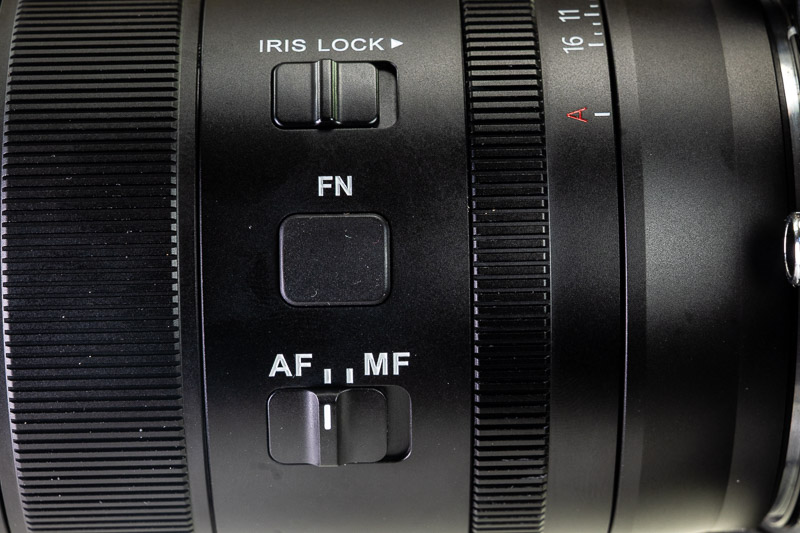
On the left side of the lens, there is an AF/MF switch, a function button, and an Iris Lock switch. The latter is very useful, as it prevents the aperture ring from accidentally being moved into or out of the A position.
The manual focus ring has full-time manual override on Nikon cameras, at least, which is good. It is precise, without any jumps, which is also a good trait, but it turns a little too smoothly and feels almost loose.
The autofocus is OK for still subjects and portrait work, but in general, it is quite slow on Nikon cameras and not suitable for fast moving subjects.
A substantial petal-shaped lens hood is included, which is a step up from the usual simple hoods. It has a rubberized section in the middle, providing a secure grip when attaching and detaching it. There is also a locking button built into the lens hood to prevent accidental movement.
Besides the lens hood and the usual front and rear caps, the package includes a carrying pouch and a lens cleaning cloth. I have to praise Sirui for this, as the packaging and included accessories feel very nice and somewhat exclusive.

Optical Features
Sharpness (Infinity)
For the infinity sharpness test, we’ll look at three areas of the image — center, mid-frame, and corner — as highlighted below. Focus was set on the center of the image!
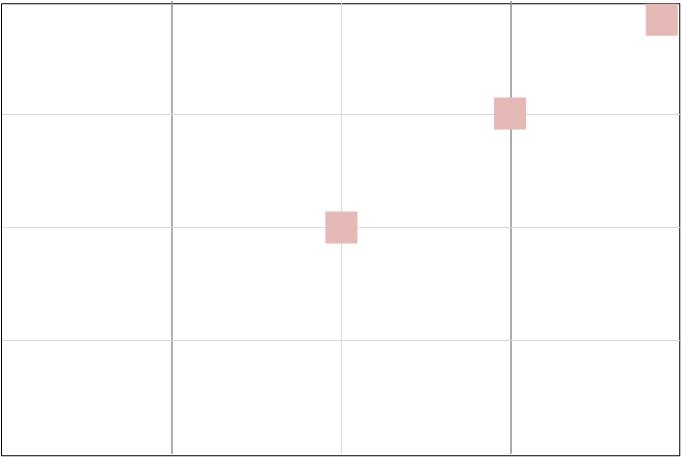
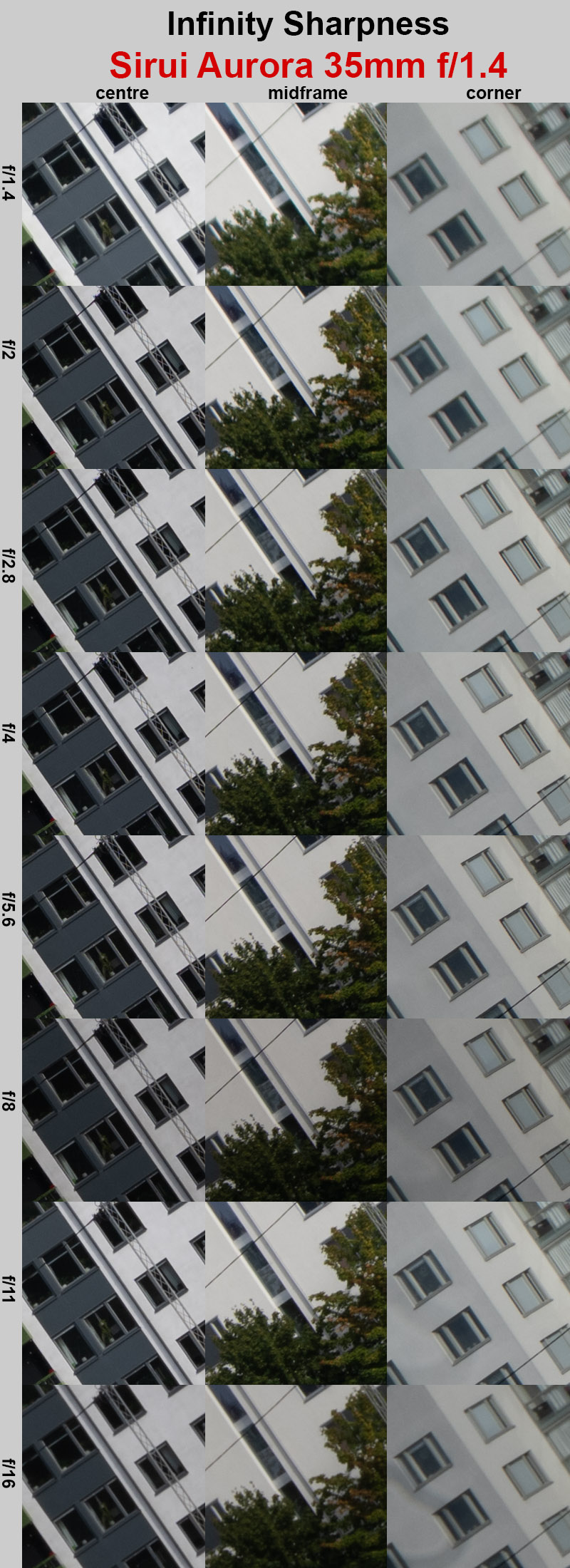
I focused on the center of the image.
The center is already very sharp at f/1.4, while the corners are good wide open but lag behind.
The center becomes excellent after stopping down just one stop to f/2, while the corners improve only marginally.
To get good corner sharpness, you need to stop down to around f/4 to f/5.6. Although the corners reach a very good level of sharpness, they never quite reach the excellent sharpness of the center and midframe.
Faint green and purple fringing is visible at wider apertures but disappears between f/2.8 and f/4.
Sharpness (Portrait)
Let’s look at the points of interest for portraits at the portrait distance: the very centre, the centre’s inner periphery (1/3 rule intersection), and the centre’s outer periphery (1/4th intersection).
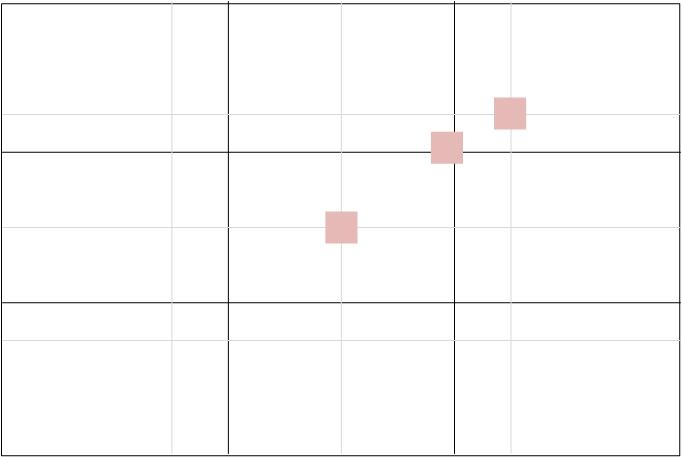
Here, I focused independently on the center, mid-frame, and corner areas to account for field curvature.

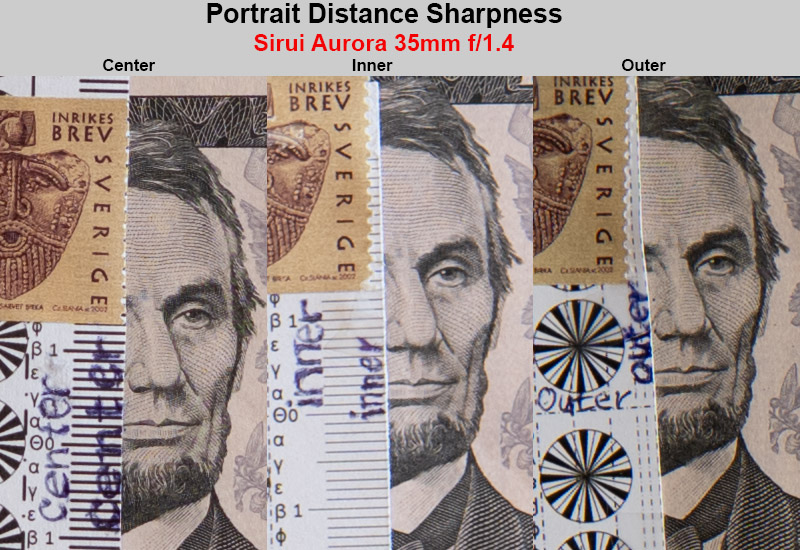
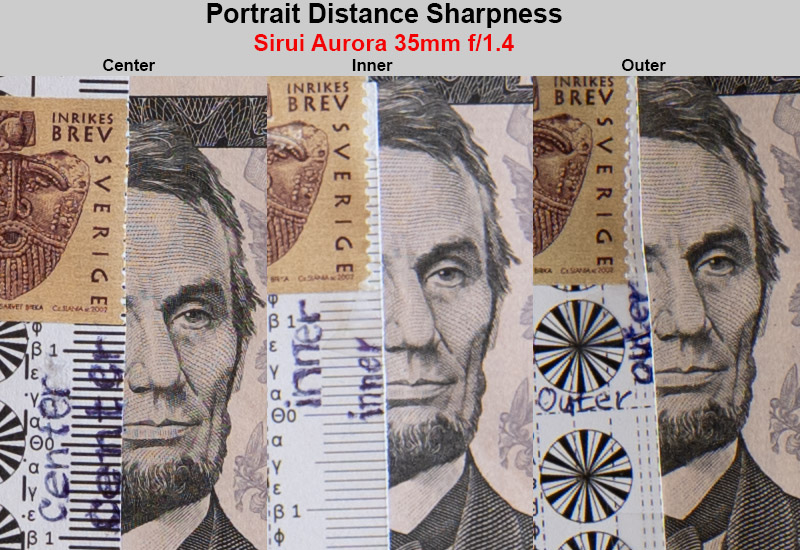
Very good sharpness across all measured areas, but contrast is a little low. Stopping down one stop to f/2 results in excellent sharpness and contrast across the frame.
Sharpness (Close-up)
For close-up testing, I focused on the center and only included a 100% center crop.
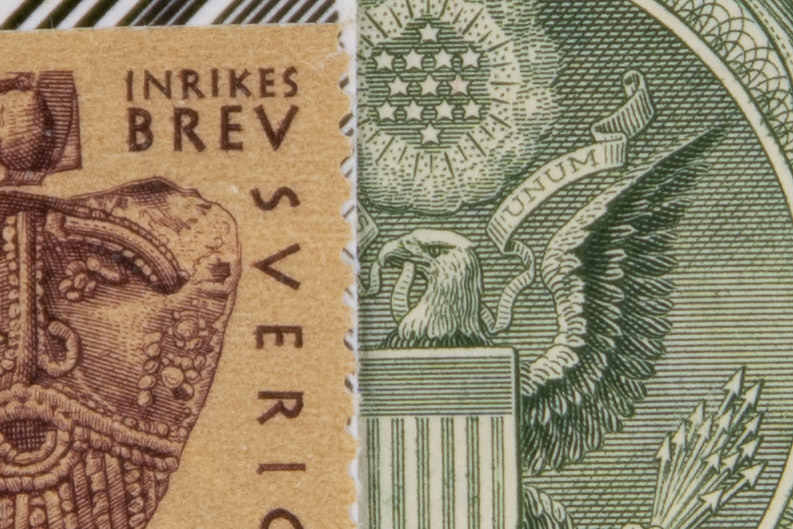
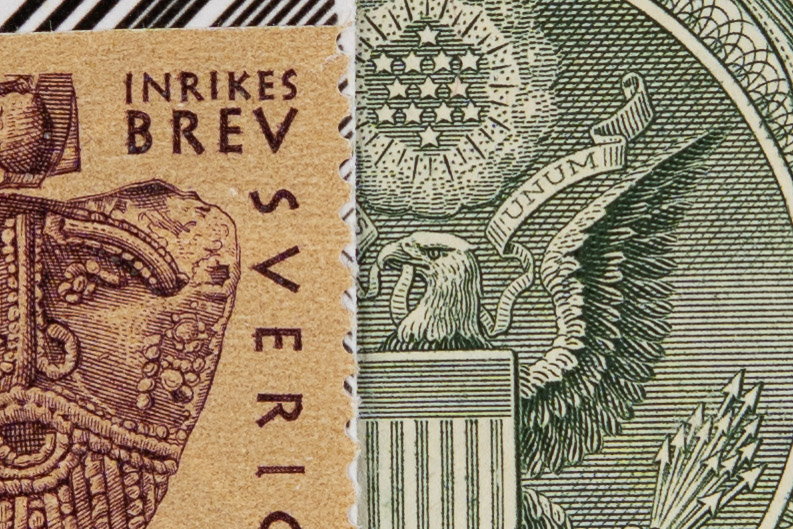
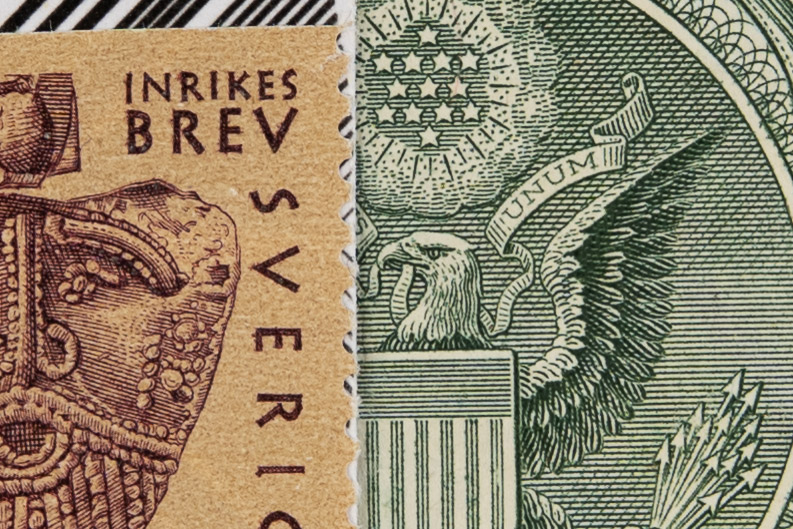
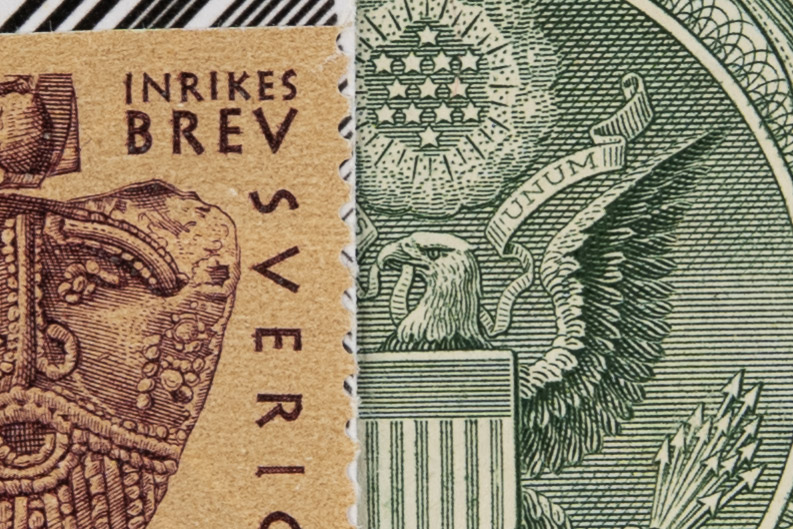
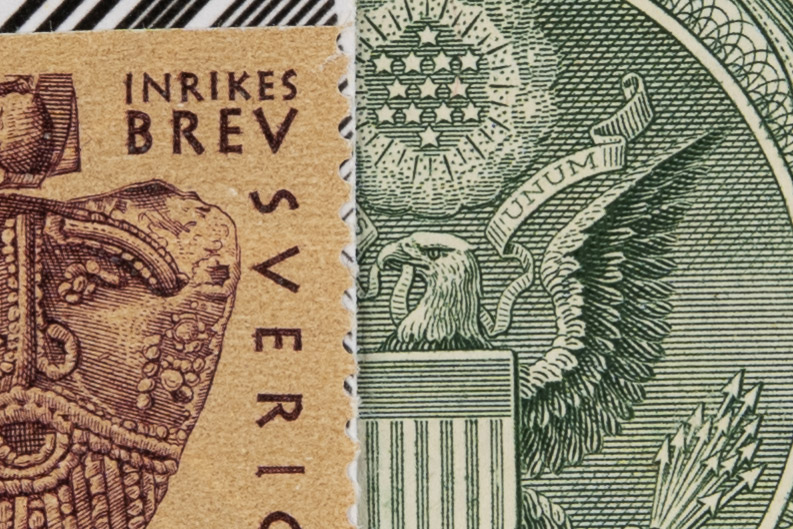
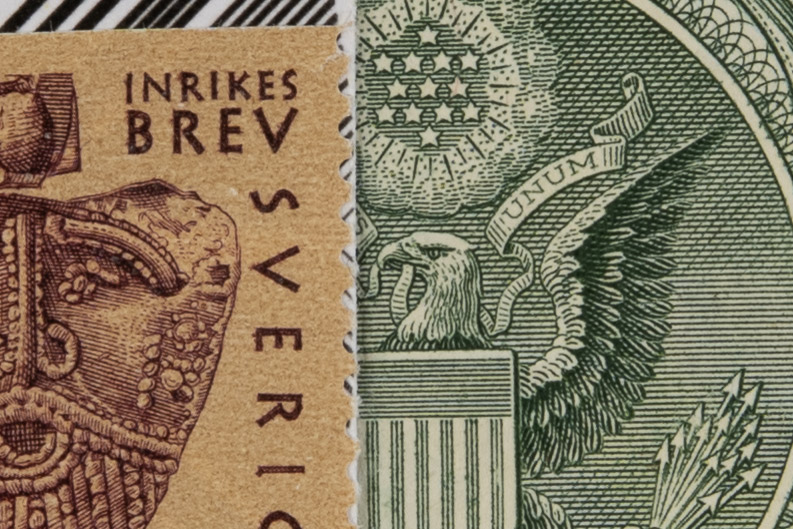
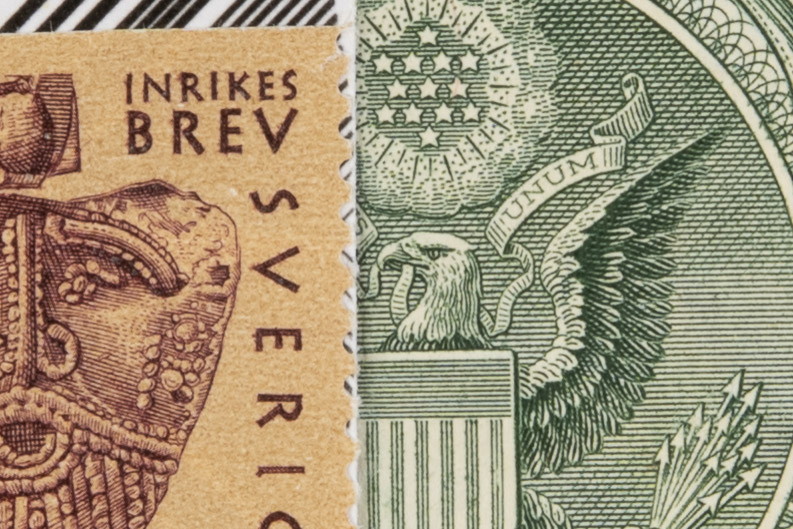
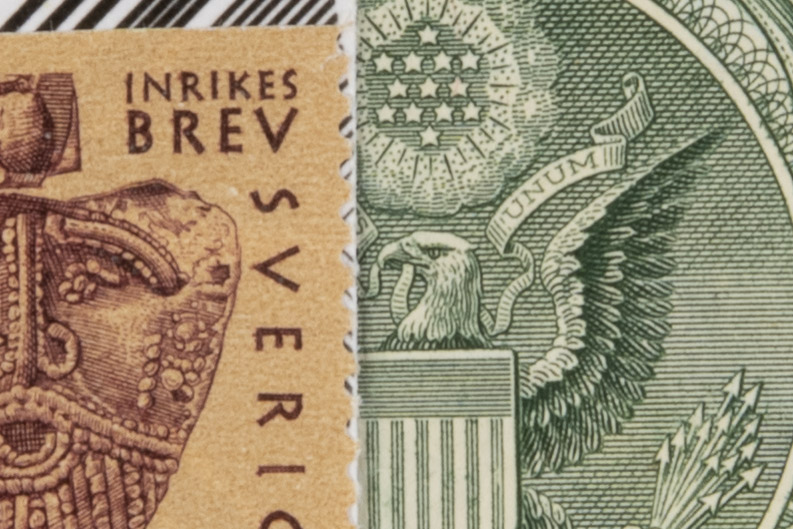
The close-up sharpness is good wide open at f/1.4, but the contrast is a little low. At f/2 you get very good sharpness and higher contrast. At f/2.8 it reaches excellent sharpness and contrast. Note, though, that the 0.35 m minimum focusing distance is not very close for a 35mm lens, not even average, which is about 0.3 m.
Lens Distortion
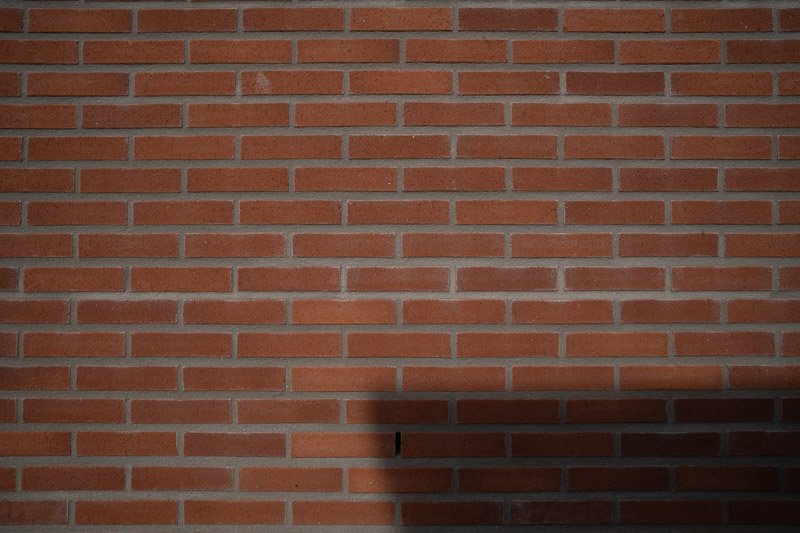
The lens exhibits a very small wavy distortion in the corners, but it is so small that I wouldn’t bother correcting it.
Vignetting
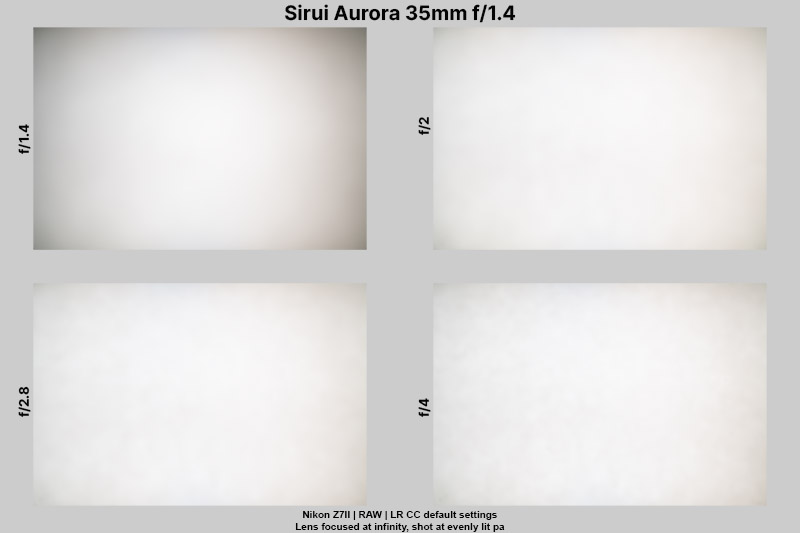
The Sirui 35mm Aurora shows quite high vignetting wide open, which is normal for a 35mm f/1.4, so there are no surprises so far. It becomes moderate at f/2 and then improves only marginally, reaching a low level at f/5.6, but is never negligible, not even at f/11. It is on par with or slightly better than most other 35mm f/1.4 lenses, such as the Leica Summilux FLE II, Sony GM, Sony FE ZA, and Voigtländer Nokton Classic. However, the Nikon Z and Sigma Art have cleaner corners when stopped down.
- F/1.4: 2.5 EV
- F/2.0: 1.7 EV
- F/2.8: 1.6 EV
- F/4.0: 1.4 EV
- F/5.6: 1.2 EV
- F/8.0: 1.2 EV
- F/11: 1.2 EV
Chromatic Aberrations
There may be a small amount of LoCA at f/1.4, but it is negligible.

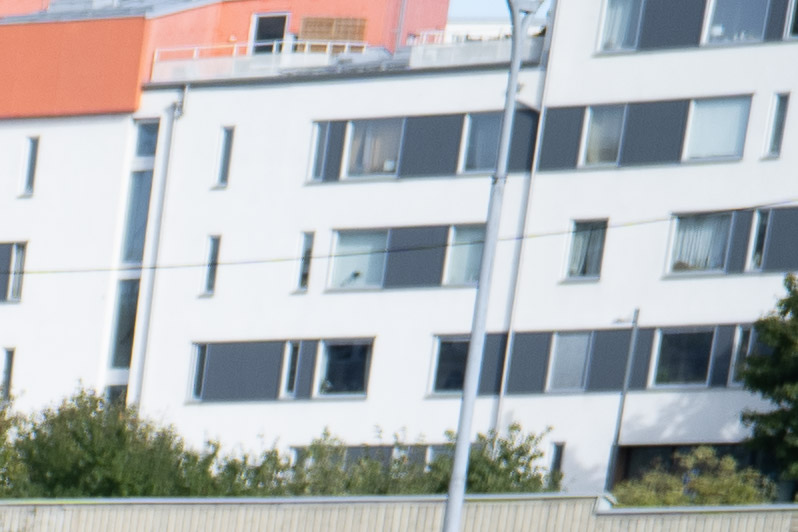
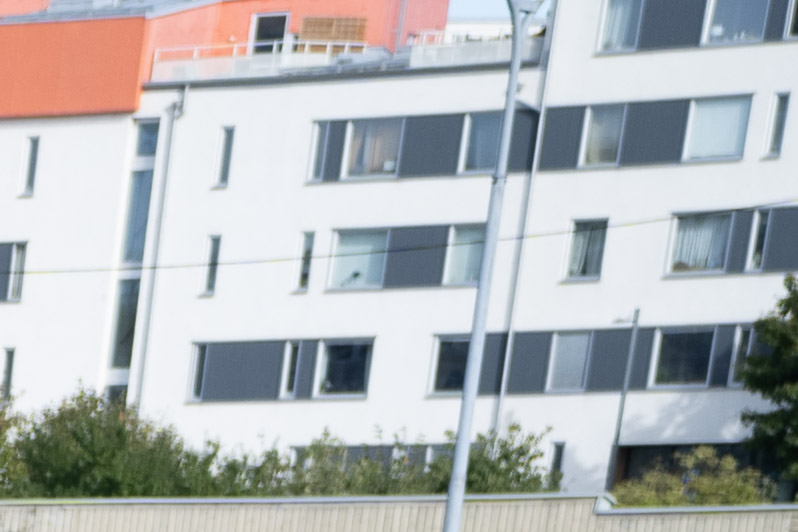
There is also a small amount of lateral chromatic aberration. You probably won’t notice it easily, but in some extreme situations, if you look at the image under magnification, you can find it.
Flare Resistance
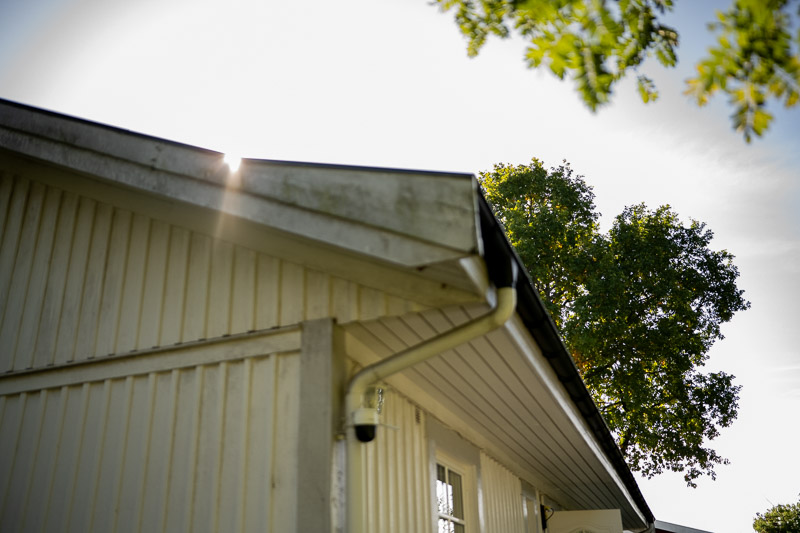
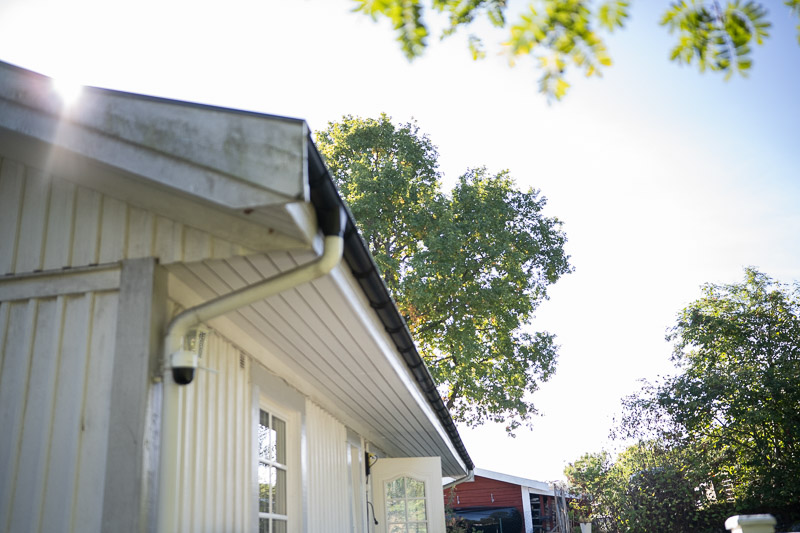
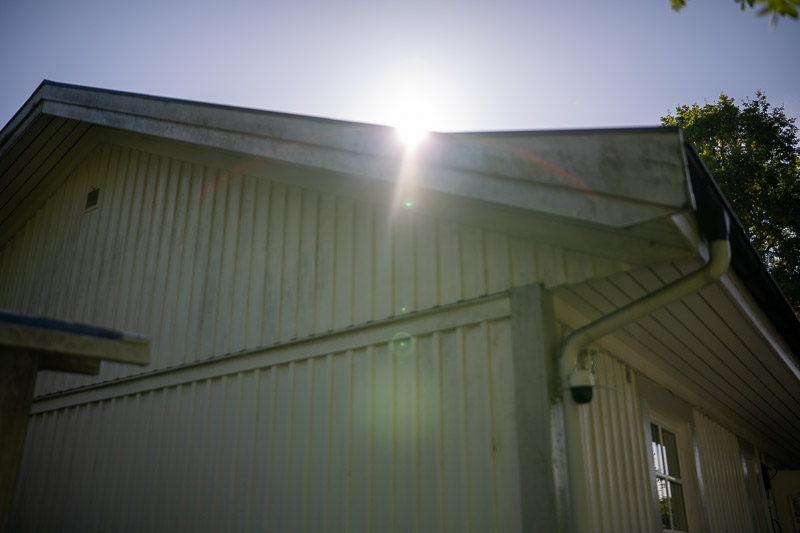
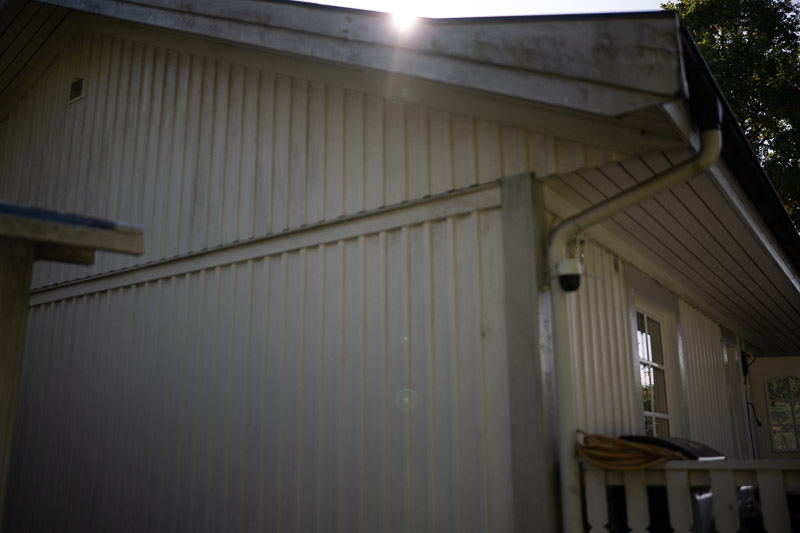
Flare is present and can be an issue, especially at smaller apertures, but contrast remains good even when flare appears in the image.
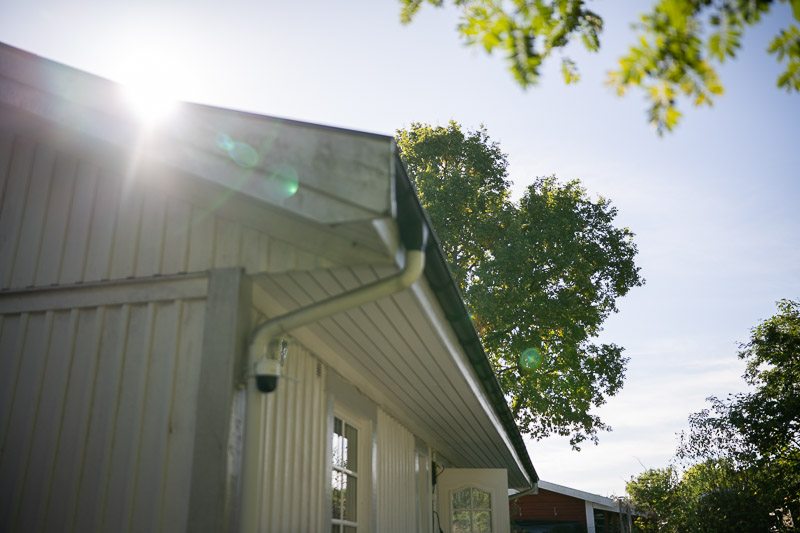
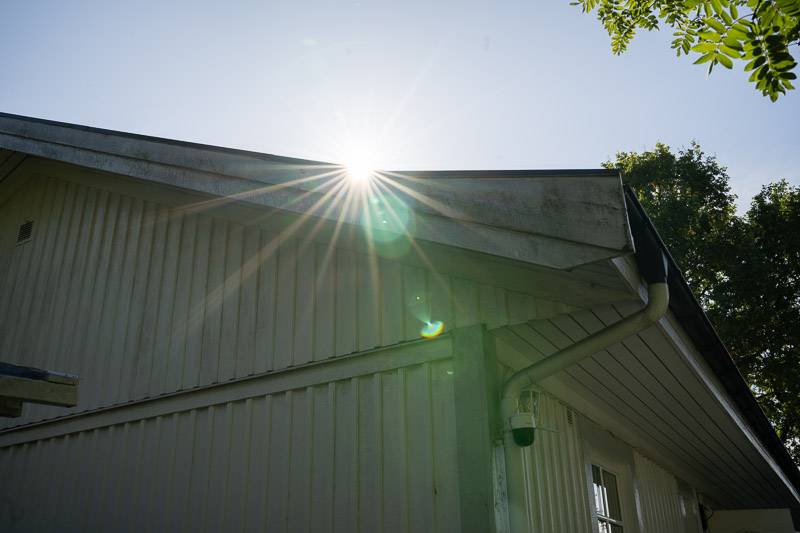
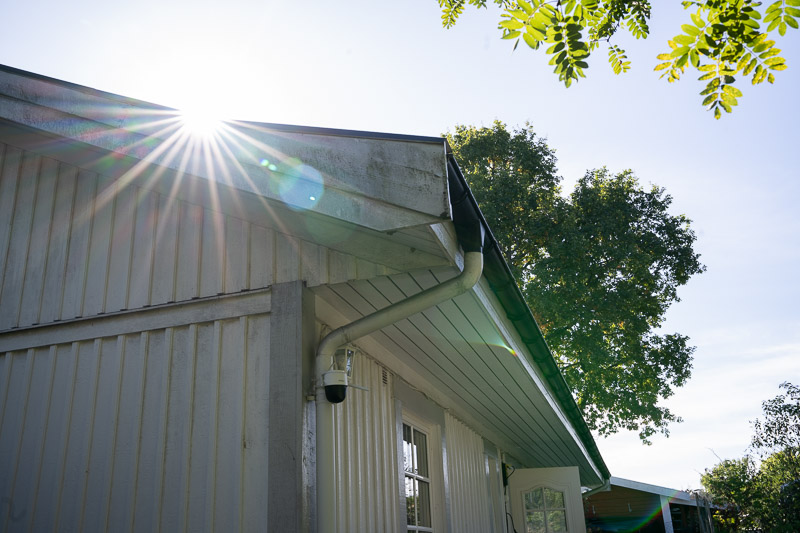

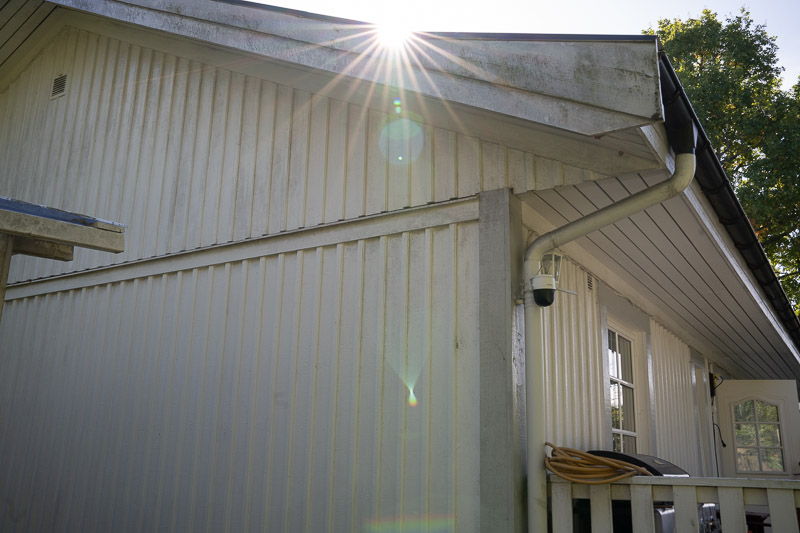
Coma
There is very little coma, which is negligible even wide open at f/1.4. At f/2, the corners are completely free of coma.
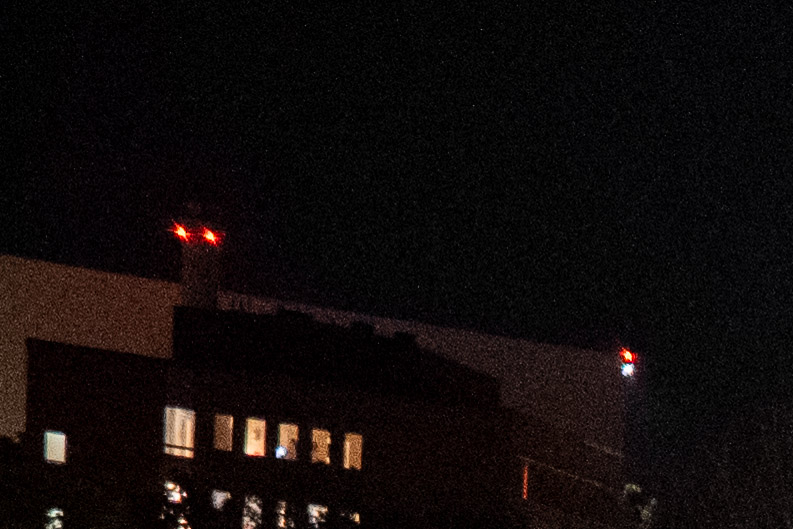
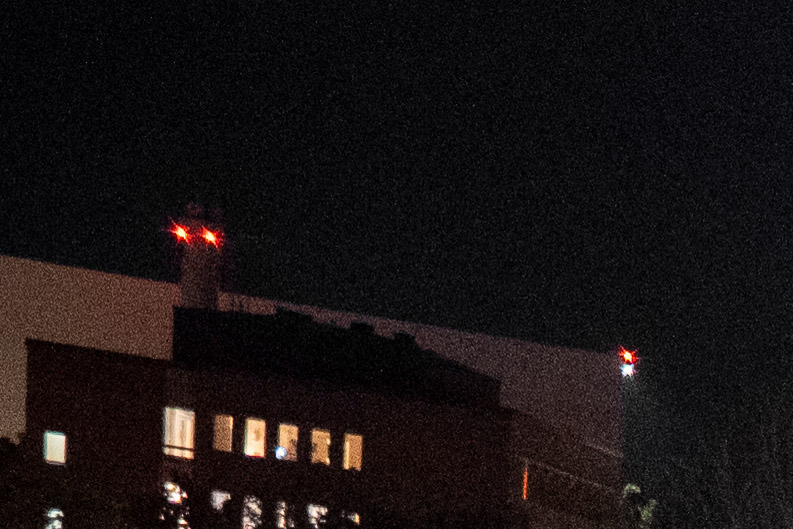
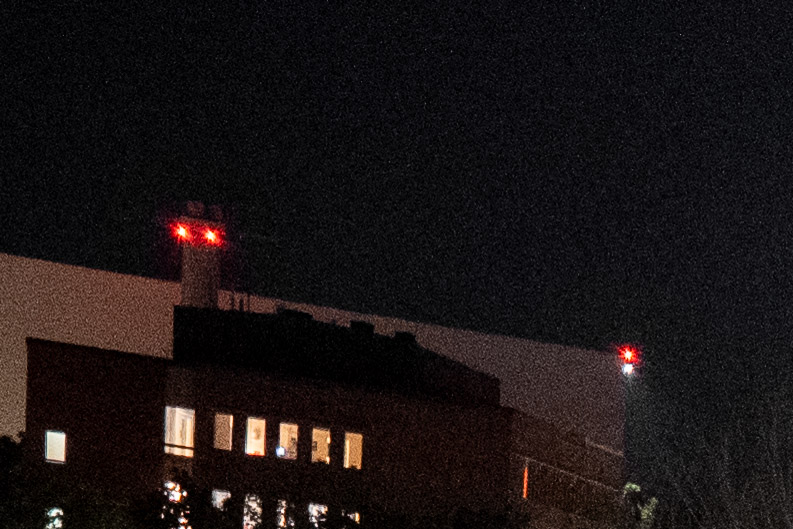
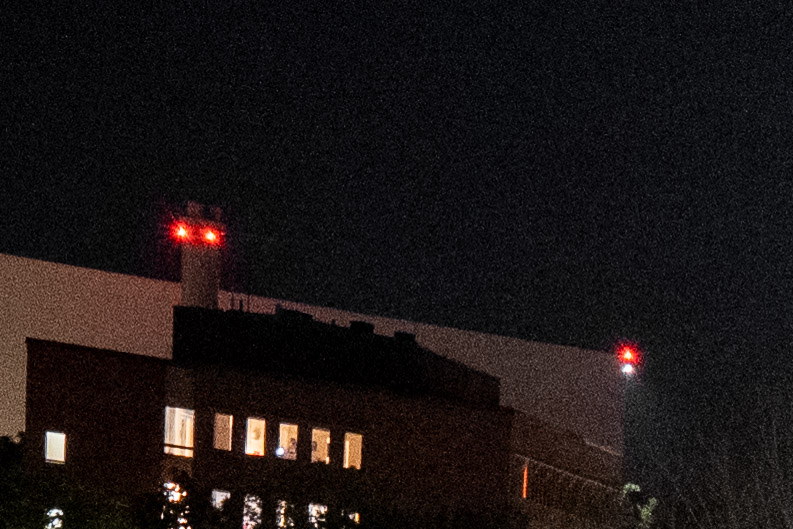
Sunstars
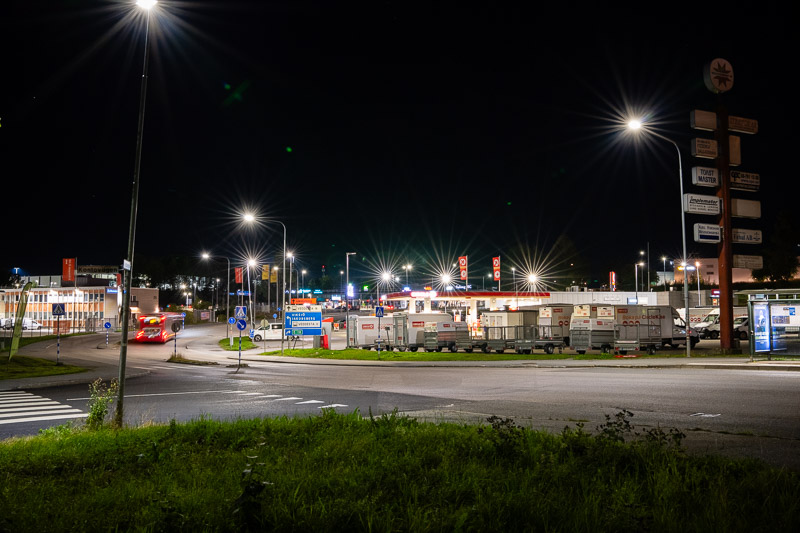
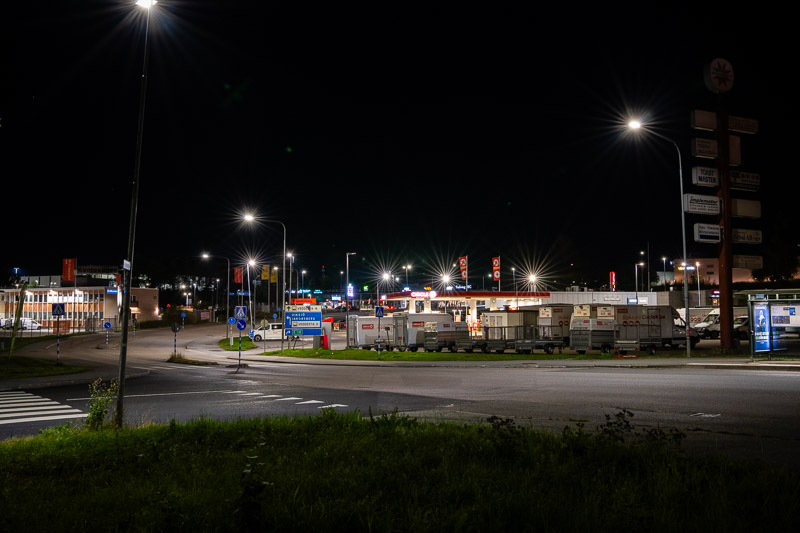
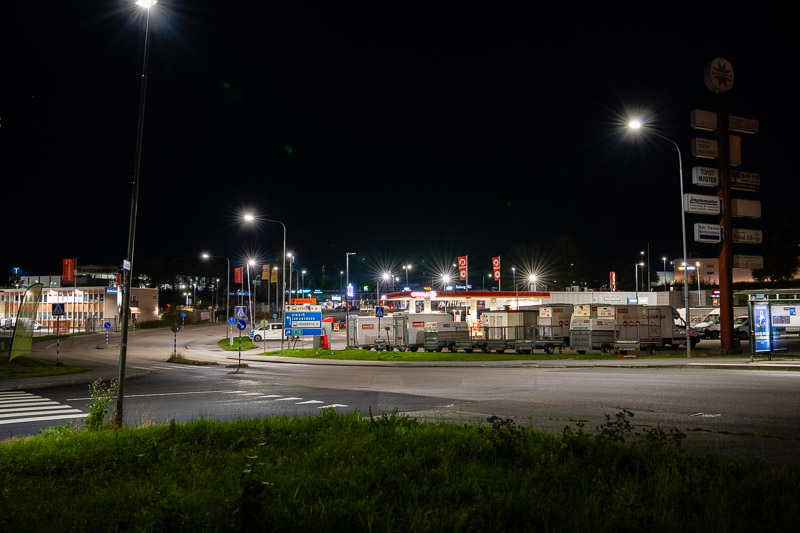
Sunstars start showing up at f/5.6 and become spectacular at f/11 and f/16. The beauty of sunstars is subjective, and I’m not sure I like the 26 rays with their varying lengths. Despite being well-defined, they look a little uneven and untidy.

Focus Breathing
There’s a small amount of focus breathing, which might bother videographers.
Bokeh

The Aurora 35mm has 13 rounded aperture blades, which should help produce nice bokeh even when stopped down slightly.
Looking at the bokeh balls, we can see a hint of onion-ring texture in the highlights, but the transitions are soft. Toward the corners, the highlights take on a distinct cat’s-eye shape, and we can clearly see the green fringing we noted earlier in the Infinity Sharpness section.

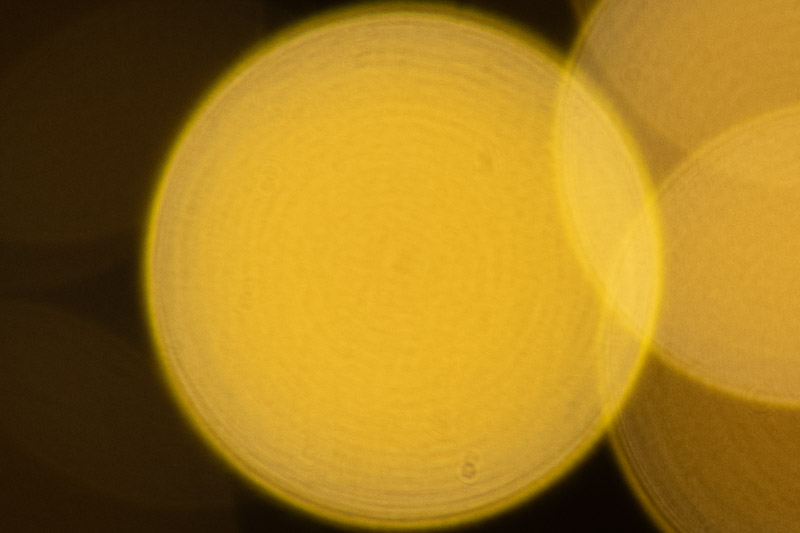
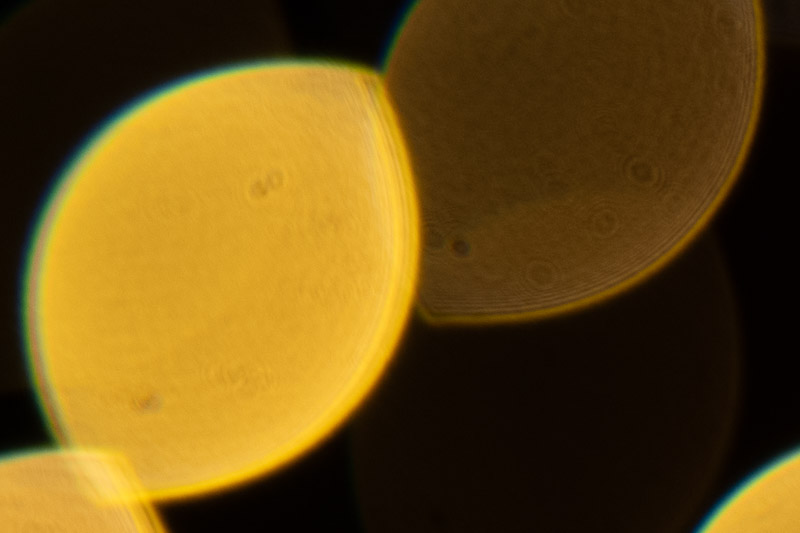
Now let’s take a closer look at how the background blur changes at different distances!
Short Distance
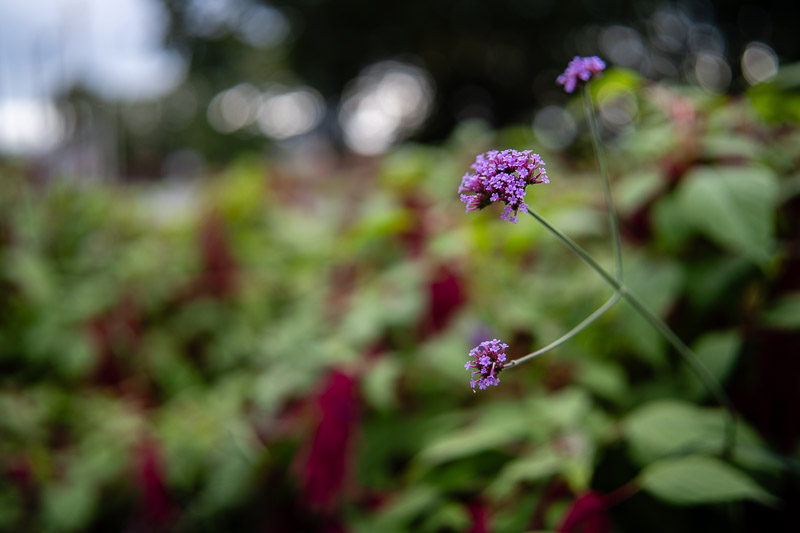

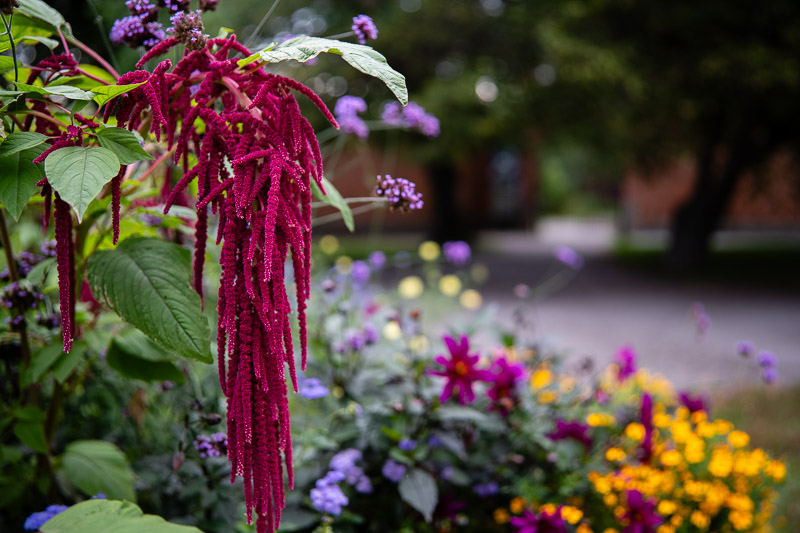

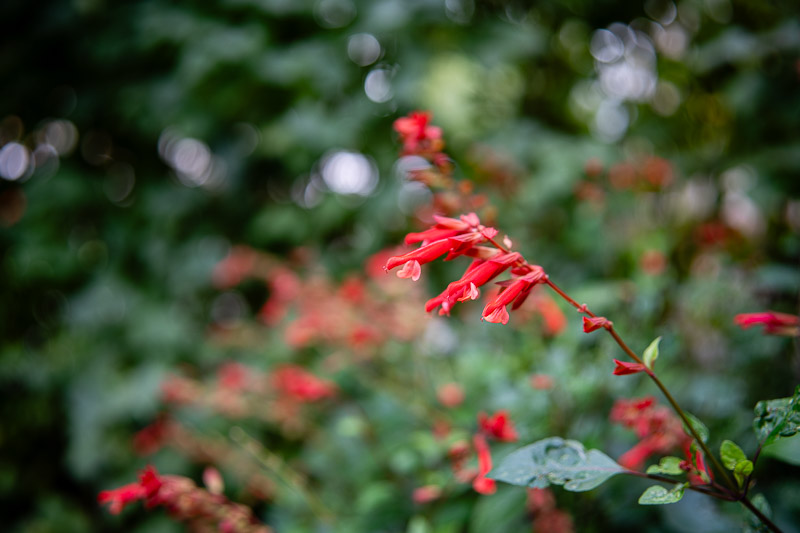
At close distances, the Aurora 35mm can create a soft, dreamy background blur.
Mid-Distance
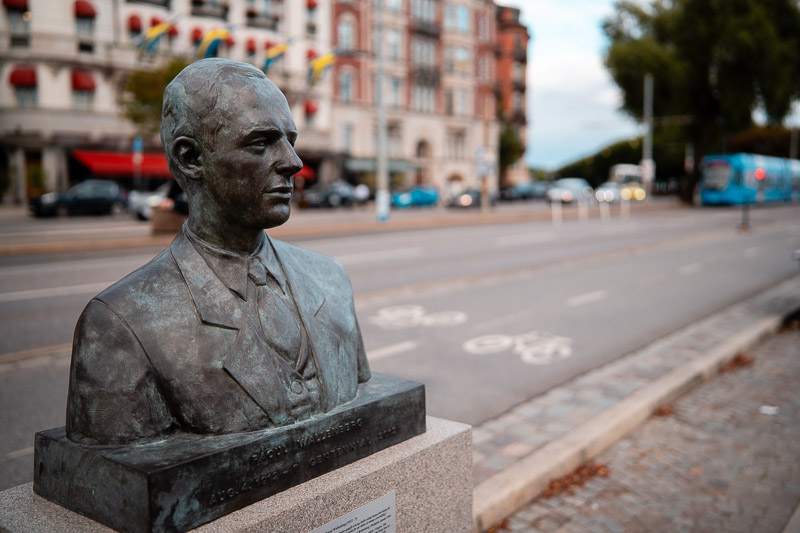



The background blur at medium distances looks fine too, even with challenging, busy city backgrounds.
Long Distance

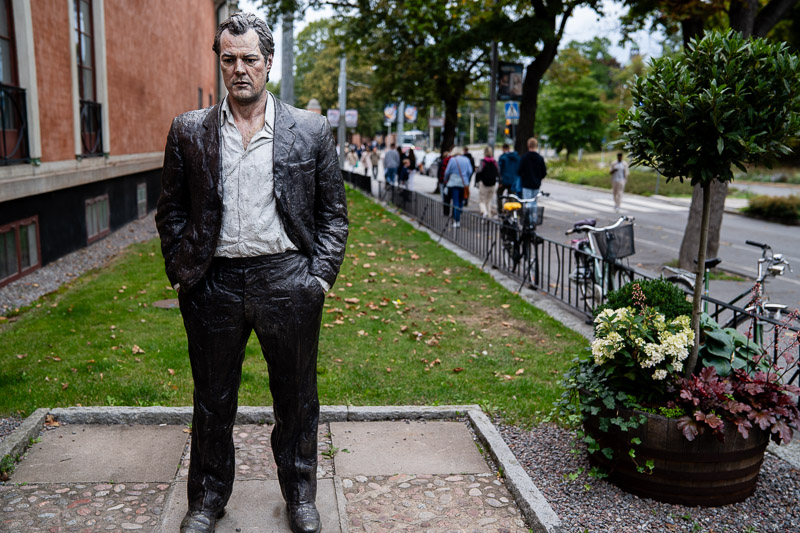
Normally, you cannot get much background blur from a 35mm f/1.4 at longer distances, but the small amount of blur you get with this lens is not distracting at all.
Bokeh is a matter of personal taste, but I think it looks quite nice here—actually, better than that of many competing lenses.
Conclusion
| I LIKE | AVERAGE | I DON’T LIKE |
|
|
|
The Sirui Aurora 35mm f/1.4 does not have any specific optical weakness, and many of its optical characteristics are among the best in its class.
It is not the lens I would choose for sports or scenes with a lot of subject movement, but it is very well suited to environmental portraits thanks to its beautiful bokeh rendering. Sharpness is excellent overall, except in the corners wide open, where it is average rather than outstanding. Contrast, color rendering, coma, chromatic aberration, and sunstars are all well controlled.
The real strength of this lens, though, is its bokeh and background blur. Corner sharpness, as mentioned, is only average, while vignetting, flare resistance, and focus breathing are adequate but not exceptional. Its main weakness is the AF speed, which I hope can be improved through future firmware updates.
Considering its specifications and overall optical quality, I think the price is quite reasonable for what the lens offers.
Writing articles like this one is both time-consuming and costs us a lot of money. If you found this article helpful and decided to buy one of these lenses, please consider using one of the affiliate links.
If you found this article useful, interesting, or it saved you money, consider supporting our work. You can make a donation or buy us a coffee —every contribution is greatly appreciated.
| Where to Buy
New: Sirui Store, Amazon (anywhere), B&H for $466 (Affiliate links) |
Alternatives
See the “Further Reading” section further down.
More Sample Images
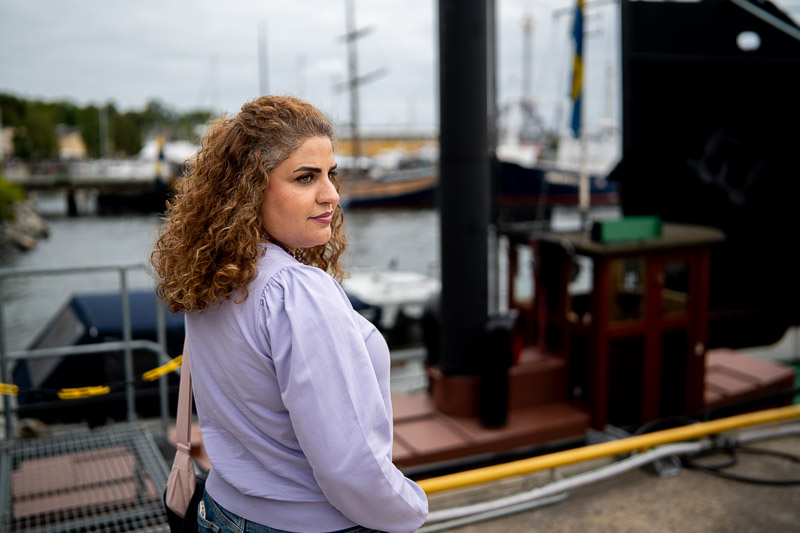

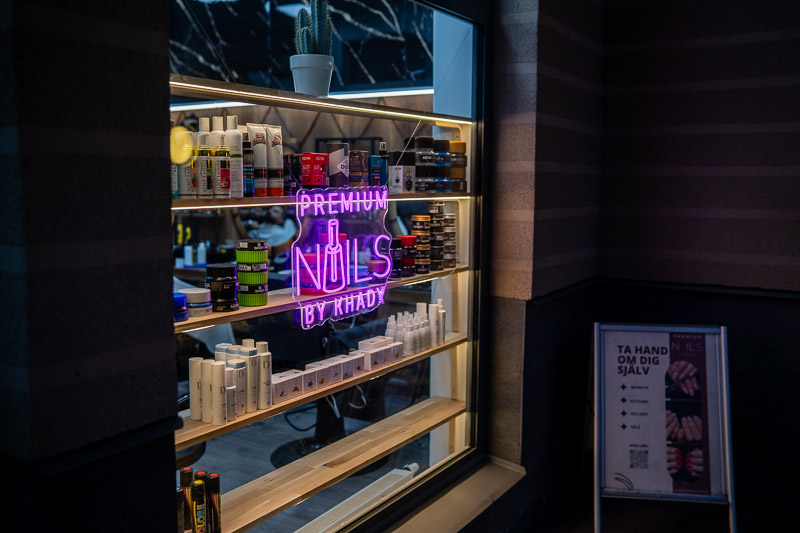


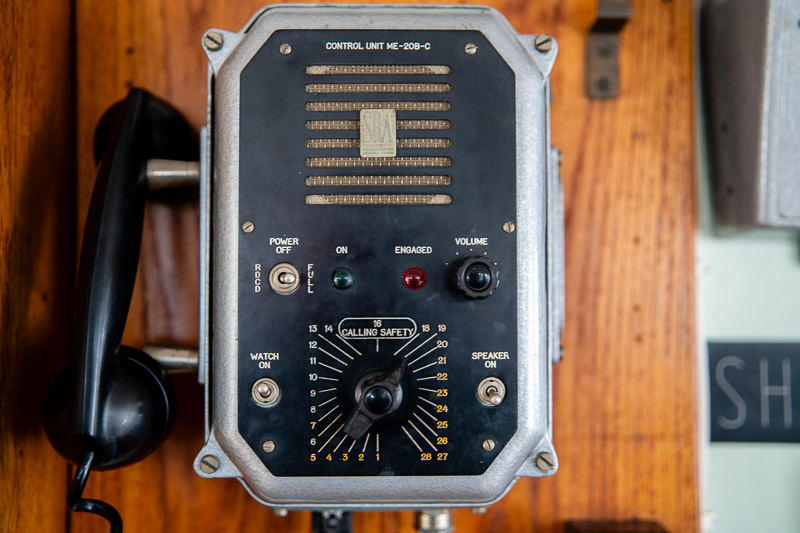

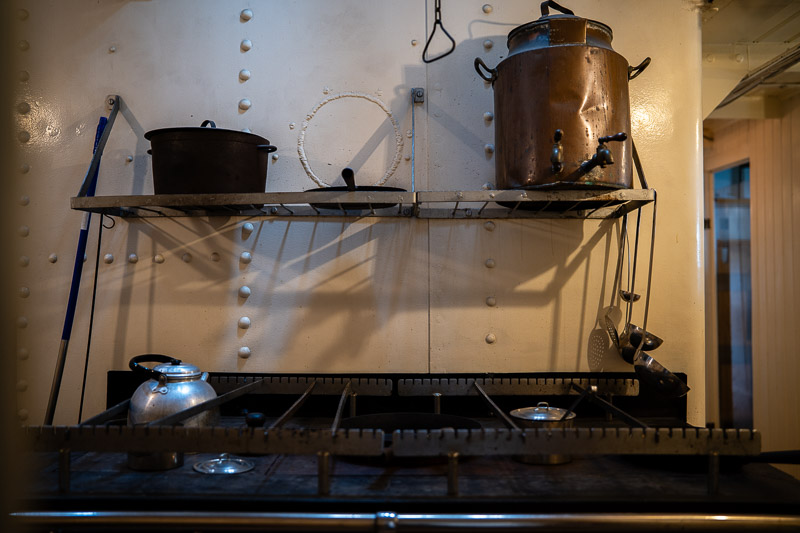



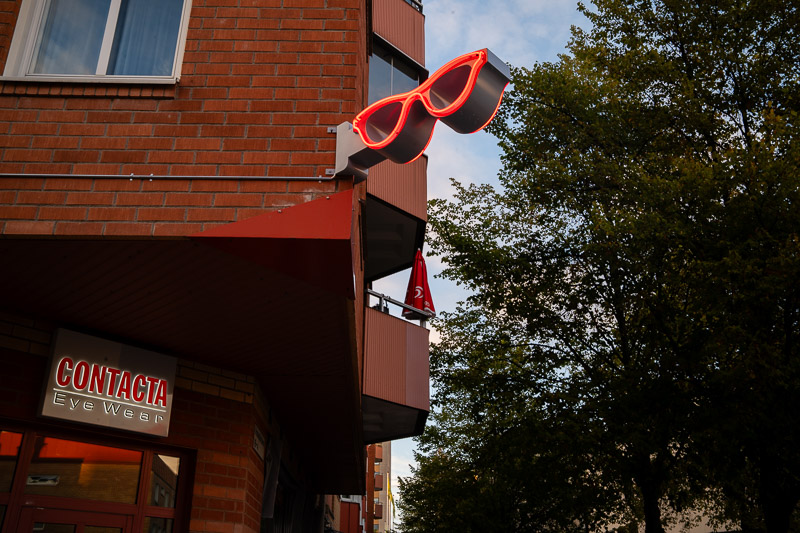

Most of the sample images in this review and many more can be found in higher resolution here.
Further Reading
- What camera gear and accessories do I use most frequently?
- Review/Comparison: Nikon NIKKOR Z 35mm f/1.4 (vs. 35/1.8 S)
- REVIEW/Comparison: Thypoch Simera 35mm f/1.4 ASPH. (Z) vs Leica Summilux 35/1.4 FLE II
- Review: Nikon AF-S 35mm 1.4G
- Review: Leica 35mm 1.4 Summilux-M Asph FLE MK II
- Review: Sony FE 35mm 1.4 GM – The perfect 35mm lens?
- Review: Pergear 35mm 1.4 – The cheapest 35mm fullframe lens
- Review: Zeiss ZM 35mm 1.4 T* Distagon
- Review: Light Lens Lab 35mm 1.4 Aspherical “11873”
- Review: Artizlab 35mm 1.4 Classic
- Review: Sony FE 35mm 1.4 ZA
Support Us
Did you learn something new, find this article useful, or simply enjoy reading it? We’ve put a lot of time and resources into creating it, and your support helps us keep going. If you’d like to show your appreciation, please consider clicking the Donate button!



(Donations via Paypal or bank card)
Or alternatively support us via this link.
What’s in my camera bag? MY 2026 KIT!!
- Main camera : https://amzn.to/3TsGtKg
- Camera grip : https://amzn.to/4e0G3CR
- Memory Card 1: https://amzn.to/47pA20i
- Memory Card 2 : https://amzn.to/3XHYxlZ
- Camera 2 : https://amzn.to/3Xifou8
- Camera grip: https://amzn.to/4dYYpV9
- Memory card 1: https://amzn.to/4e5h2H0
- Memory card 2: https://amzn.to/3zu7W7n
- Main tripod: Leofoto LS-324CPRO
- Small travel tripod: https://amzn.to/4goIX68
- Mini tripod: https://amzn.to/4e09XXX
- Small shoulder bag: https://amzn.to/47tPMiY
- Medium shoulder bag: https://amzn.to/4ej4bjY
- APS-C camera 1: https://link.amazon/B0iKSCc8a
- APS-C camera 2: https://link.amazon/B0duP43QI
This site contains affiliate links, for which I may receive a small commission if you purchase via the links at no additional cost to you. This helps support the creation of future content.


Martin
Latest posts by Martin (see all)
- REVIEW: SIRUI AURORA 35mm F1.4 - October 14, 2026
- REVIEW: Zhiyun FIVERAY M60 Ultra & Molus X100 RGB - October 11, 2026
- Analogue Photography: Part 7 — Gran Canaria with Kodak Portra 400 - September 30, 2026