Introduction
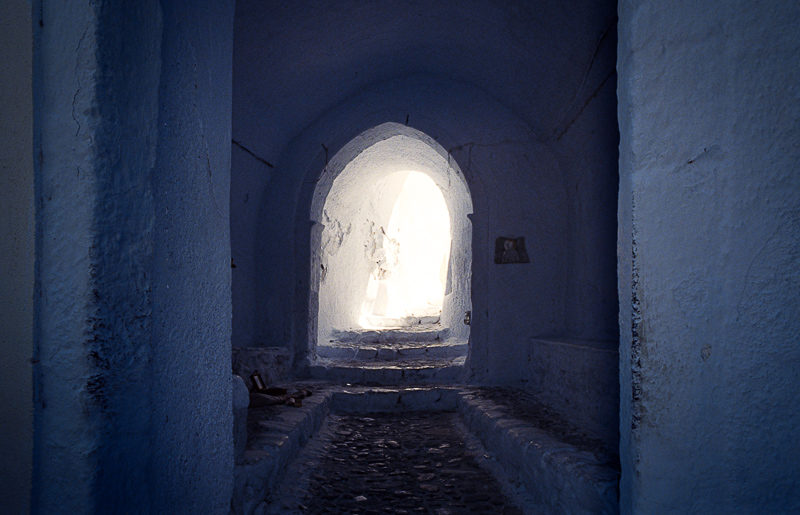
In late 2021 I decided to buy an analogue camera and shoot some film, an experiment whose results I constantly shared with you. In the meantime I exposed around 60 films, which I all had developed and scanned and many of these pictures we also discussed afterwards. This is is already the 50th part of this series, so I thought it might be time for an interim conclusion.
Keep in mind I am only talking about 35mm film here.
1. Digital gives better results with less effort
Let’s first talk about the elephant in the room: image quality. This could not be simpler actually: you will get much better image quality shooting digital and also get there with less effort.
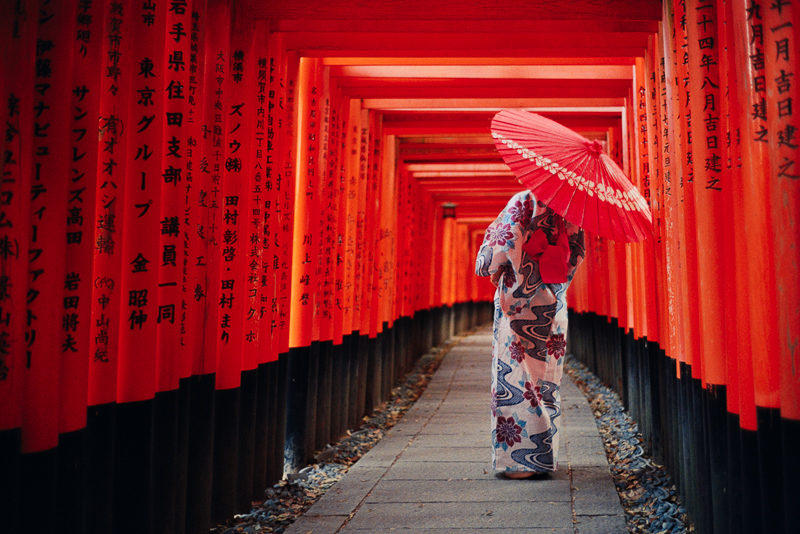
During day time and under flat light this will not be that obvious, but in high contrast scenes, during the blue hour or indoors, the differences can be huge – and this is without even taking things like HDR editing into account.

What is more, thanks to their “what you see is what you get” liveview and electronic viewfinders, it is also much easier to get the results you are looking for with a digital camera.
2. Dynamic range is limited
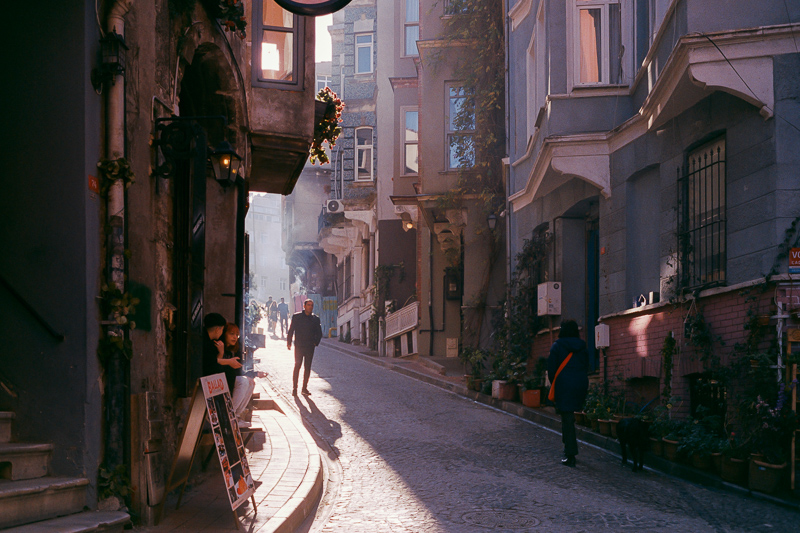
Color negative film actually captures more details in the highlights than the shadows, so you are less likely to blow out the highlights there, which can actually lead to a more appealing look in some high contrast scenes.
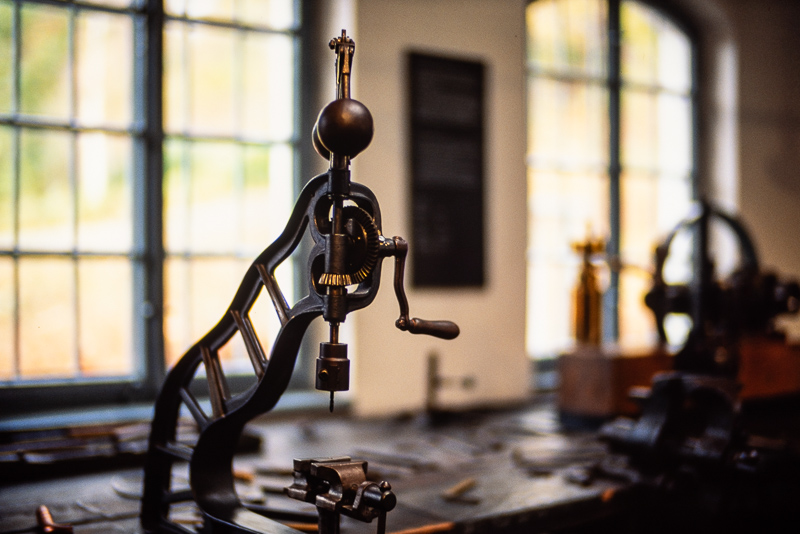
Slide film behaves more like digital here and I generally found those to be a bit lacking when it comes to their dynamic range. The exception is Fujichrome Velvia 50, which I found to have a surprisingly wide dynamic range. Not as good as recent digital cameras of course, but better than most other films.
3. Film is expensive
Compared to two to three decades ago not a lof of different films are available these days and when you start to look at expired films that were popular, prices can get crazy fast. I would love to shoot a roll of original Kodak Aerochrome, but am I willing to pay over 100 bucks for a roll of 36 exposures? Not really.
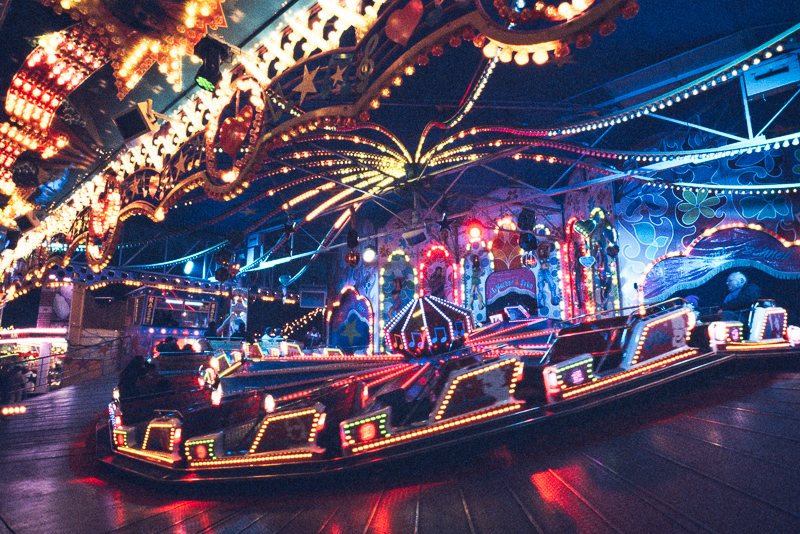
Film and high quality scanning has generally become expensive, so you are easily looking at 50 cents to 1 € per picture. With home development and scanning you can save some money, depending on how much time you want to invest.
Let’s say each roll cost me 25 € for the film and development (and often it was more than that) that would be 1.500 € for those 60 films. You can buy a nice digital fullframe camera for that.
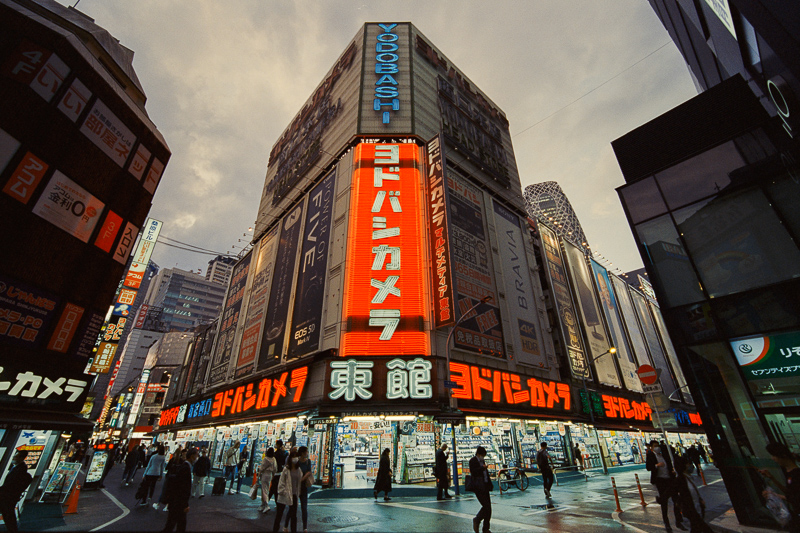
Now for me there is the additional benefit of creating content for this blog, which is always a good excuse to buy another roll.
4. Know your favorite focal lengths
Before deciding what analogue camera to buy you should know which focal lengths you want to use the most.
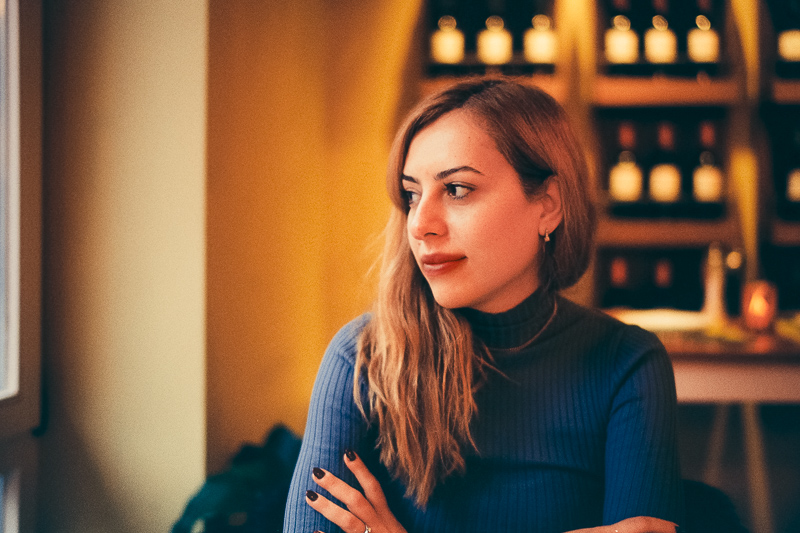
The M-mount rangefinder cameras work best with lenses from 28 to 75mm. Above that focusing and framing starts to get difficult, below that an external finder will often be needed. A big benefit of the M-mount is that plenty of manufacturers still release new high performance lenses for it.

SLRs also work well with longer focal lengths and you can frame properly with ultra wide angle lenses. Focusing with ultra wide lenses or fast wide angle lenses can be more difficult compared to the rangefinder camreas though. In most cases you are also stuck with older lenses, so before committing to a Canon FD or Minolta SR camera be sure the lenses you want to use are actually available (and affordable) for these camera systems.
5. Film is magic
Having read the previous four points, you might not be stoked to give film a(nother) chance, but these things are not enough to paint the complete picture.
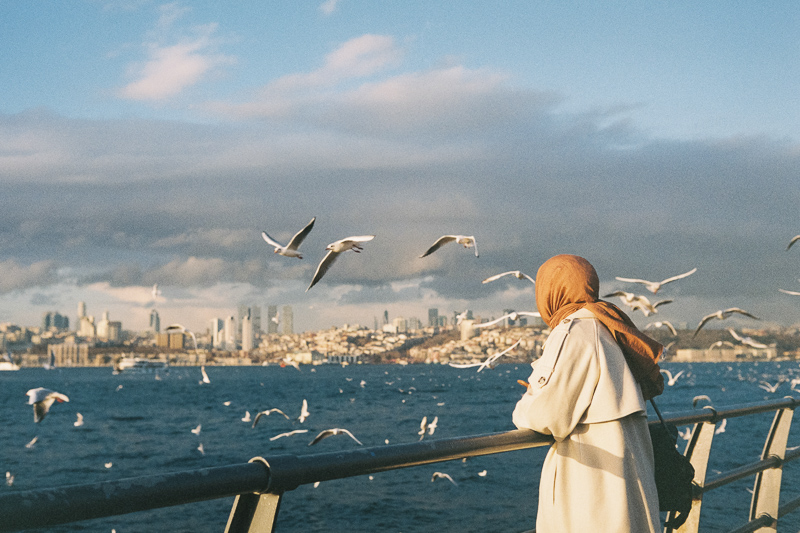
In times of ubiquitous digital photography and Ai enhanced processing the raw experience of analogue film can be a refreshing change: the colors come out likable without a lot of effort in post (if you picked the right film) and you will probably put more thought into the capturing process of every single picture. There is also something wildly satisfying to having taken a shot with a shutter speed you know is too slow and then seeing two weeks later it actually came out perfect.
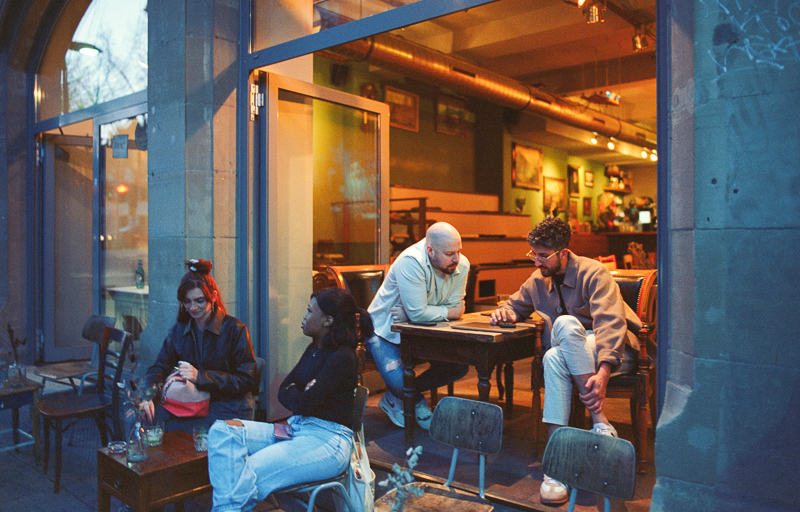
I also know for a fact this series inspired many of you (including my colleague Martin) to try out analogue photography (again), which is probably the highest praise imaginable it could possibly receive.
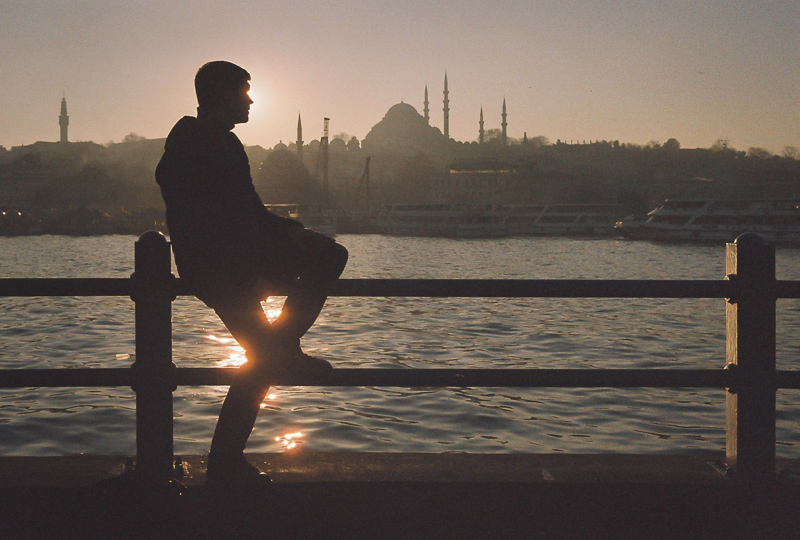
The Analogue Adventures will continue.
Further reading
- Analogue Adventures Landing Page
- Review: Nikon AF-S 28mm 1.4E
- Review: MS-Optics 35mm 1.4 Apoqualia
- Review: SLRmagic 50mm 0.95 Hyperprime
- Review: Sigma 105mm 1.4 Art
Support Us
Did you find this article useful or just liked reading it? Treat us to a coffee or a roll of film!

 via Paypal


Latest posts by BastianK (see all)
- Analogue Adventures – Part 51: Kodak Pro Image 100 ECN-2 - April 15, 2026
- Review: Sony FE 50mm 1.4 GM - April 11, 2026
- Review: Samyang 35mm 1.2 XP - April 1, 2026
Very nice observations and summary!
I could not believe it has come to 50th part of the series. Time flies like crazy!
Do you feel any temptation to try medium (or even large) format?
Hasselblad 500C or Xpan I would be interested in, but don’t have the money to explore those options.
Neither do I. 🙂 There are less costly cameras (or systems) which can yield indistingusihable results. I understand your choices however.
Mamiya rb67 is pretty affordable and some crazy good lenses available.
RB67 has been on my “vanity list” for long time. Bokeh at 6×7 shots look calm somehow. Yet, Mamiya got no 105/2.4 as Pentax does.
You’ve certainly inspired me to get into it and it truly has been magical
I agree with the article – I have been back shooting film (I’m now over 50, shot film when a teenager!) for 3 years or so. It’s not just film itself that’s expensive, I have a terrible habit of buying old cameras!
For me, the end result is not so much the point – it’s the process. Slowing down and thinking a bit more. And the cameras and lenses often feel a lot nicer than new digital stuff, which can all be a bit “samey”.
long time ago I had a Kiev 88 (6×6) in which did load positiv films and also Agfa Scala (BW). This loaded In a Rollei P11 > abosolut crazy
This is the only thing where I miss film.
Do you ever print from your film? I so what software do you use to clean up while keeping grin etc?
I don’t print from film and the lab is doing the scanning for me, so I don’t have to deal with any cleaning up.
Other than nostalgia, I am not sure film photography still makes sense.
One could shoot RAW and then apply tone curves that match film’s characteristic curves in digital including individual tone curves for each primary colors.
This would achieve the same result as negative film except the grain.
Well there are other aspects. If you are not limited or oriented just to the result. As Bastian pointed out in the article, there are inherrent features given to film which can be taken as a flaw or advantage.
To me this extends to the very work with physical medium od film. You can(you have to) touch it with your hands. When you print in the darkroom goes even further. One would say that is the point where the real fun begins.
And even when you search for distinct results, there are still film formats unsurpassed by digital. It has come close but not there yet.
I am both worlds user. You can guess which one gives me more pleasure. And sometimes frustration. 🙂
.
To summarize my experience. For context – I have a good camera and a bunch of great primes. Been shooting as a hobby for 20+ years. Started with Photoshop ever earlier than that. Got plugins, styles, and what not.
I sometimes bring a film camera (or a few) to a portrait photoshoot. I like the result better. People like the results better. No Post whatsoever.
The bad parts: finding a working lab can be a challenge. The price of film is hard to swallow these days. I also find scanning or developing my own film a tedious task. Yet, I still keep 20+ rolls in my fridge.
I’ve really enjoyed following along on these analog adventures. Thanks for continuing the series for so long. Sure, digital can produce perfectly clean images, but for me there’s something far more rewarding about nailing a shot on film. The sense of achievement feels much greater. Film photography really feels like its own hobby altogether, separate from digital workflows.
I agree with Jan S. The real fun begins in the darkroom. While working with a digital camera out in the field doesn’t have to be all that different from working with an analog camera, there are worlds, if not galaxies, between image editing on a PC and developing baryta prints on an enlarger.
The shot of the woman watching the seagulls over the railing under #5 is gorgeous!
From the first 4 points I was thinking “oh no, he hated it” lol. To that end, I’ve mostly relegated my digital shooting to my phone camera since it _is_ that much more easy. And if I want it easy, why not something I likely already have in my hand, won’t need to mess with for more than a second to share anywhere, has almost every focal length I’d want, etc.
Yet I love film photography. It feels like I’m cooking when I put the thought into what to shoot for my limited number, to emphasize the film’s strengths, when I develop it myself, then scan and grade it. I agree with that “magical” feeling, I’ve similarly been shocked like “holy sh*t that worked?” Though I’m not doing things super foolhardy, I am at least metering.
But more than anything, I just find old cameras incredibly cool. Many suck, I certainly feel it when I have to wind a camera with a wind knob rather than advance lever. I got an automatic exposure half-frame camera from the 60s and it’s so cute and fun and great that I’ve used it more than my Leica that I was so happy to finally get. Had to practice zone focusing, yet I went through that effort because of it. Similarly, I got a Minox, which everyone around you immediately loves. Can really only shoot it outside, the images are rather small, scale focus is a bit annoying, but damn if advancing it and using it isn’t super fun.
One last thing, negative film seems rather bland to me so I haven’t shot much of it. The colors are subjective to how you grade it. On the other hand, I love getting slides back so much and looking at them. Still, what I see of people doing darkroom color printing looks phenomenal!! Maybe that’s the real way to wow yourself from color negative film idk
I’ve really enjoyed your blog posts and look forward to any analogue adventures in the future!
Hi Bastian,
I really admire the beautiful pictures you achieved analogue, very, very nice. Despite these and having shot on film in the 80s and 90s myself, including developing b/w in my bathroom at night, nostalgia was never strong enough to convince me to try again. However, adapting lenses of the past to digital is at least a small step in the same direction, since the process of shooting needs to be more aware, careful and slowed down. I shoot about 90% of my images on Altglas (alt glass).
In the first 4 of your bullet points, you are missing one aspect: In my opinion, the quality of a photographer’ work is in large part due to shooting a lot of frames (I don’t use burst mode, but still) and then selecting the best ones. At least for me that’s true. There certainly are photographers that plan a shot extensively, but they also will not rely on a single frame. This is one of the best reasons to shoot digitally, where it doesn’t matter wether you shoot 5 or a 100 frames. It’s not affordable for the amateur photographer using film to produce the quality that comes with selection.
The only thing that makes me think about going analogue are medium and large format options that can produce devine results that even a GFX can’t. I still shy away from all the cost that is to be expected. Maybe later, when I’m retired :-).
Regards, Rolf