Introduction
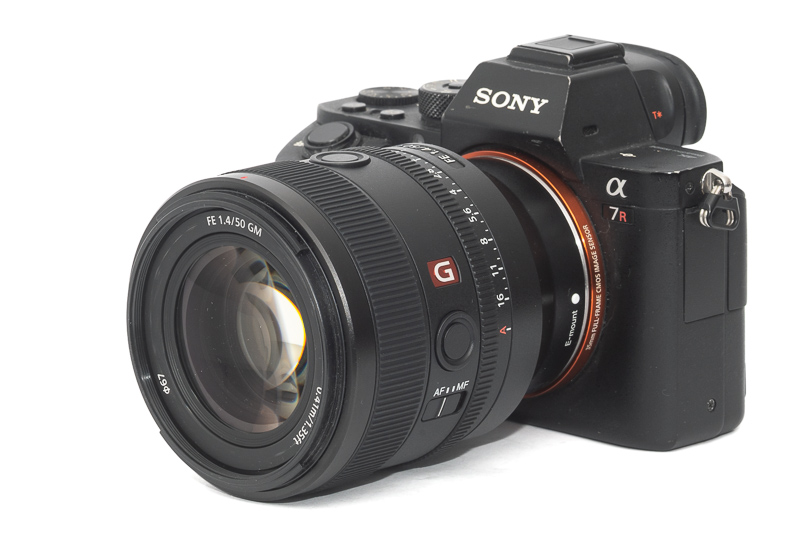
The Sony FE 50mm 1.4 GM is a lens I surely hadn’t expected when it was released – especially only two years after the Sony FE 50mm 1.2 GM hit the market. Some people say this one is better than the half-a-stop faster f/1.2 lens, but is that really the case? Let’s find out in this review!
Sample Images


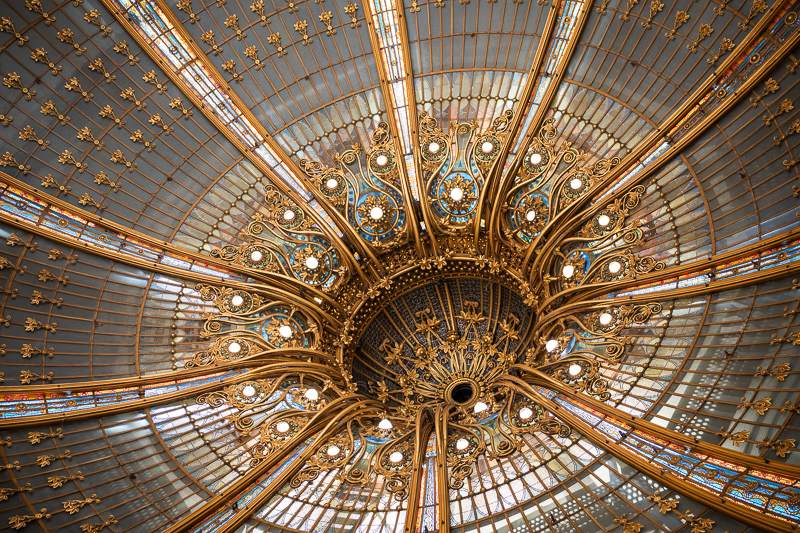

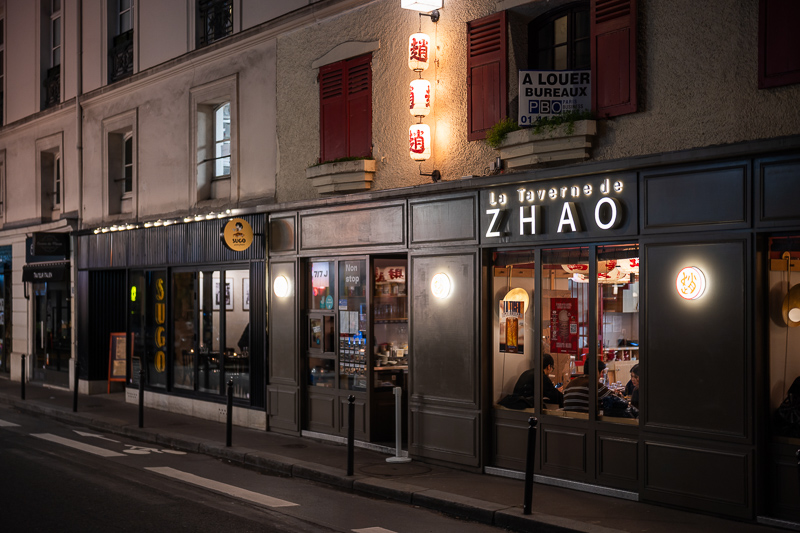


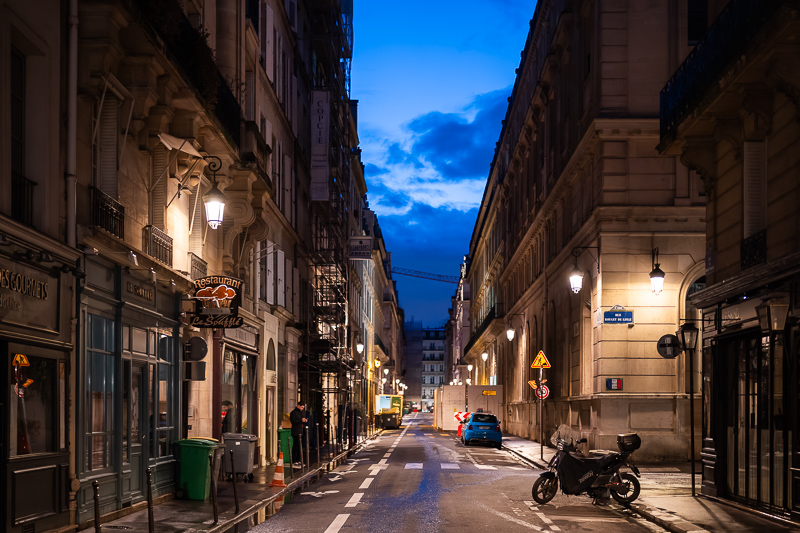
Most of the sample images in this review can be found in full resolution here.
Specifications
The Sony FE 50mm 1.4 GM has the following specifications:
- Diameter: 81 mm
- Length: 96 mm
- Weight: 514g (without hood[52g], without caps)
- Field of view: 47° (diagonally)
- Filter Diameter: 67 mm
- Number of Aperture Blades: 11 (rounded)
- Elements/Groups: 14/11
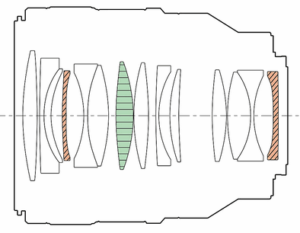
- Close Focusing Distance: 0.38 m
- Maximum Magnification: 1:5.5 (measured)
- Mount: Sony E
buy from amazon.com | amazon.de | ebay.com | ebay.de | B&H (advertisement/affiliate links) for $1448
Disclosure
This Sony FE 50mm 1.4 GM was kindly provided by our reader Lutz for review purposes. Thanks a lot!
Handling/Build quality
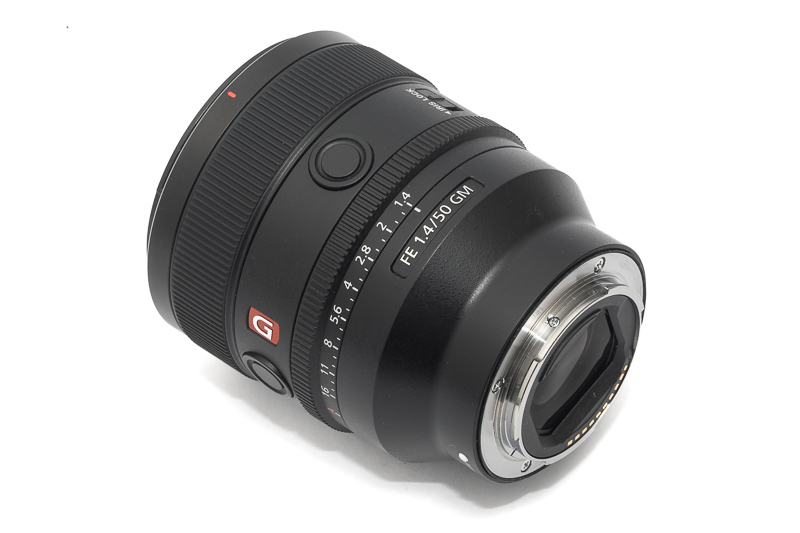
If you have handled any of the other GM primes you will feel right at home here. The rubberized focus ring has decent damping and as is typical for recent Sony lenses the coupling is linear, so it doesn’t matter how fast you turn the focus ring, it always takes 180° from the minimum focus distance of 0.38 m to infinity.
When you turn your camera off the lens will remember the last focus position and will still be there when you turn the camera on again.
The aperture ring has 1/3 of a stop click stops (which you can declick by using a lever on the lens).
You can also set the ring to “A”(utomatic) and let the camera choose the aperture value or use the camera dial to change the aperture value when it is set to “A”.
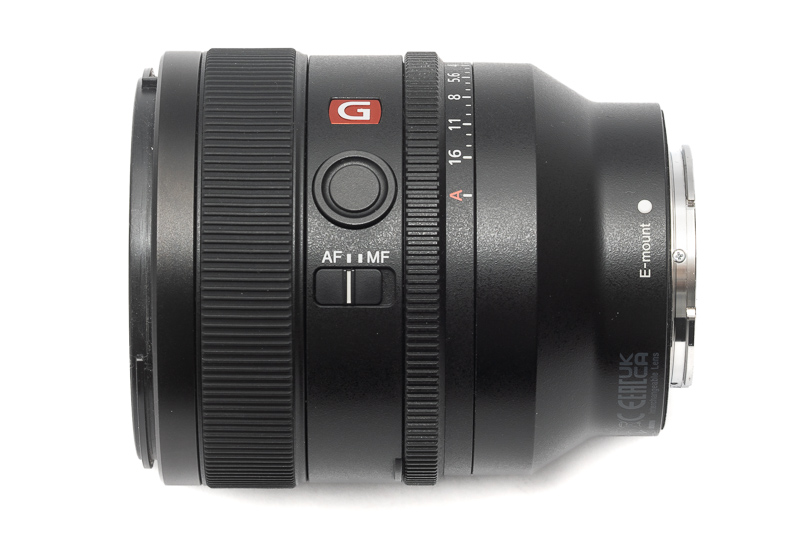
On the left side of the lens there is a programmable button and an AF-MF switch.
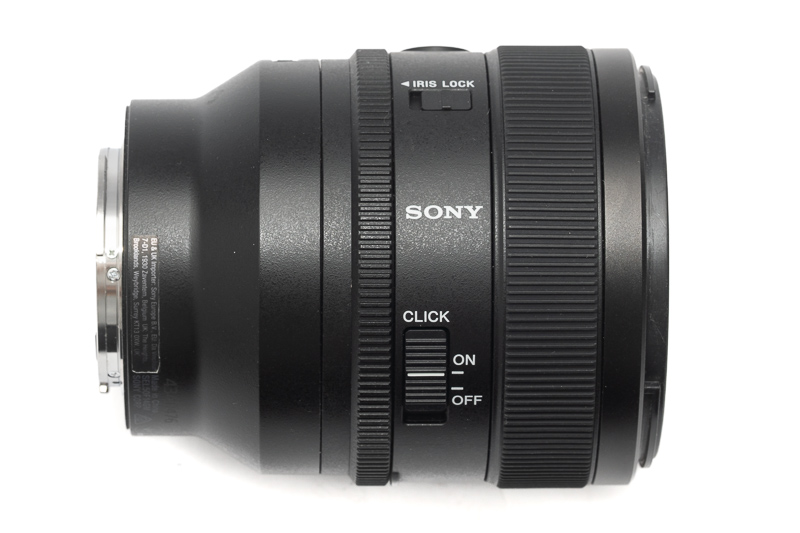
On the right side there is the “iris lock” switch which can be used to lock the aperture ring and the de-click switch for the aperture ring.
The outer casing seems to be made from a high quality polycarbonate and all markings are engraved and filled with paint.
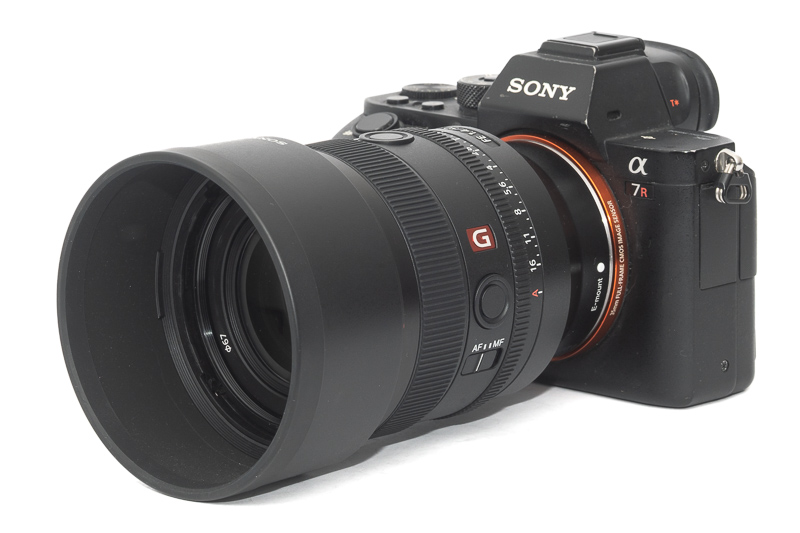
The hood has a rubberized front bumper and is matte on the inside to counteract stray light (previous GM lenses made use of felt, this one features a different material). Furthermore there is also a button which you have to press to remove the hood.
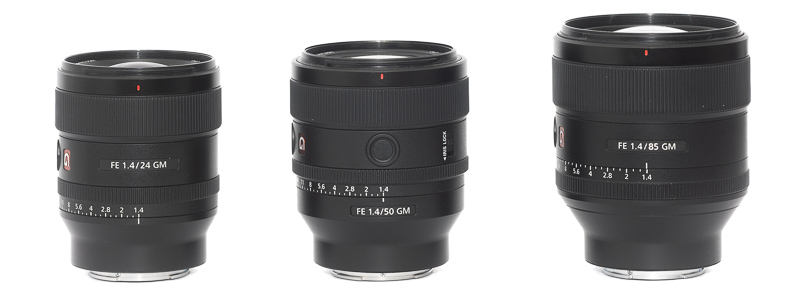
This Sony FE 50mm 1.4 GM is similar in size and weight to the Sony FE 24mm 1.4 GM and Sony FE 35mm 1.4 GM and also shares their 67mm filter thread. The Sony FE 50mm 1.2 GM is about 250g heavier and a bit bigger in every dimension.
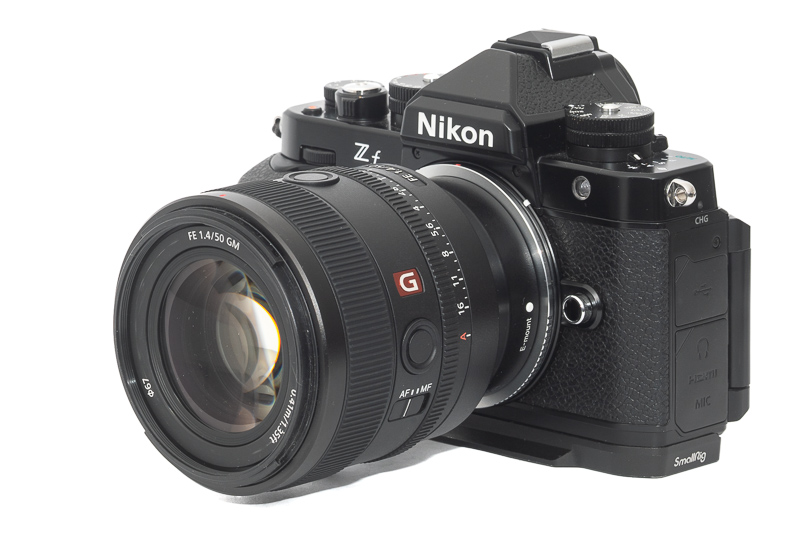
This lens also works surprisingly well adapted to Nikon Z cameras via the Megadap ETZ21pro+ adapter as shown above.
AF performance
I am not shooting sports or fast moving animals/humans so if you want to know if the lens is fast enough for this, or how it compares to other lenses in this segment, you may have to look for a different review with a more detailed assessment of this aspect.
Similar to the Sony FE 85mm 1.4 GM II or the Sony FE 135mm 1.8 GM also this Sony FE 50mm 1.4 GM hardly leaves anything to be desired in this category.
Vignetting
Light falloff
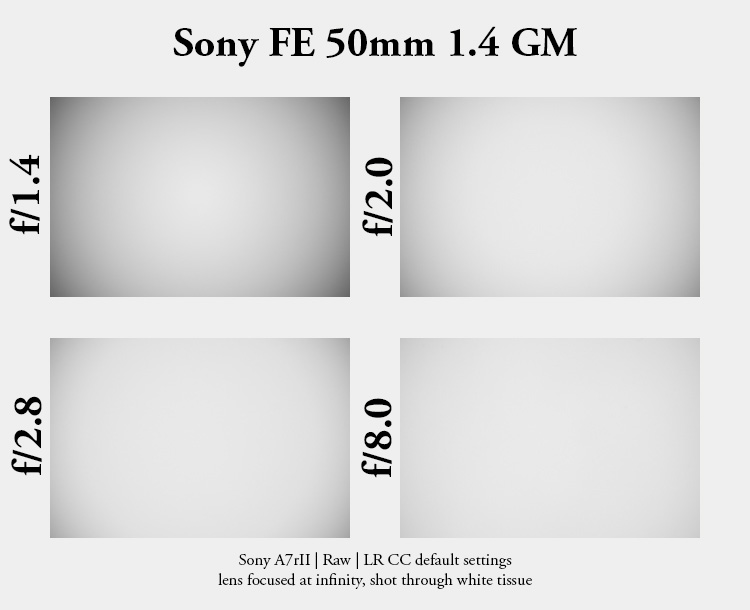
| f/1.4 | 2.6 EV |
| f/2.0 | 2.0 EV |
| f/2.8 | 1.7 EV |
| f/4.0 | 1.4 EV |
| f/5.6 | 1.1 EV |
| f/8.0 - f/16 | 0.9 EV |
Generally the Sony FE 50mm 1.4 GM shows very typical vignetting figures similar to the Samyang AF 50mm 1.4 FE II and the Viltrox AF 50mm 1.4 Pro FE. The Sony FE 50mm 1.2 GM has an advantage of about 0.3 EV between f/1.4 and f/2.8, but stopped down further this Sony FE 50mm 1.4 GM actually shows lower vignetting figures.
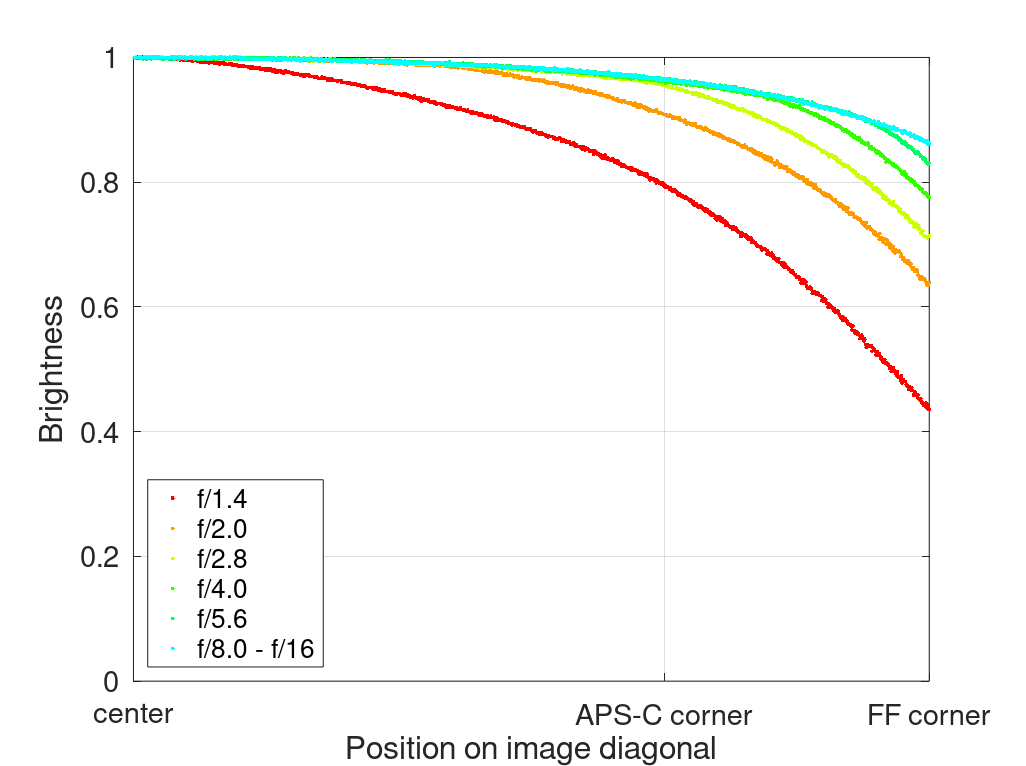
It is recommended to have a look at this article first to get an idea how this brightness graph works.
Optical vignetting
Fast lenses usually show a noticeable amount of optical vignetting, especially so the compact ones. Without going too much into technical details optical vignetting leads to the truncation of light circles towards the borders of the frame.
In the center of the frame almost every lens will render a perfect circle, but only lenses with very low optical vignetting will keep this shape in the corners.
So in the following comparison we move from the center (left) to the extreme corner (right) and see how the shape of the light circle changes.
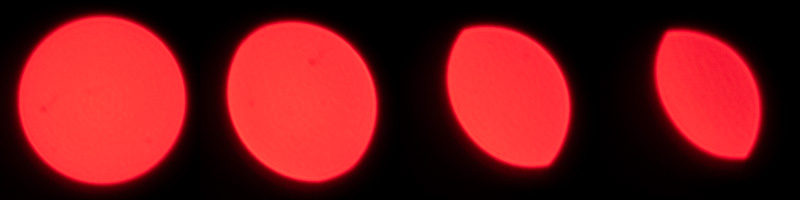
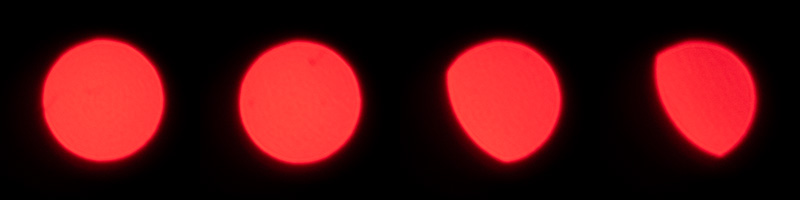
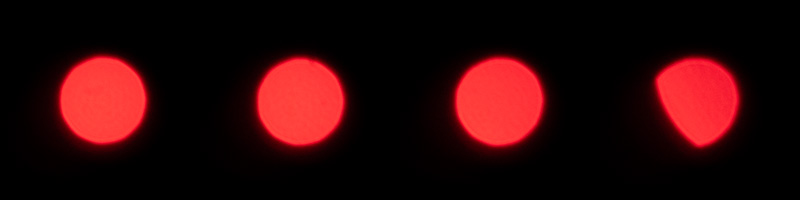

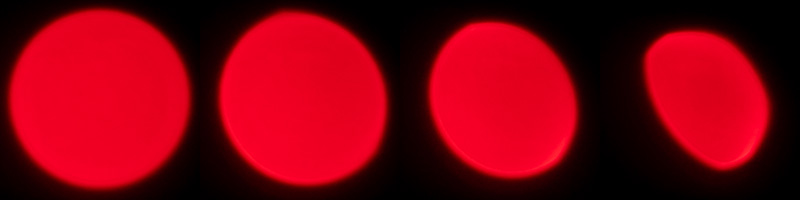
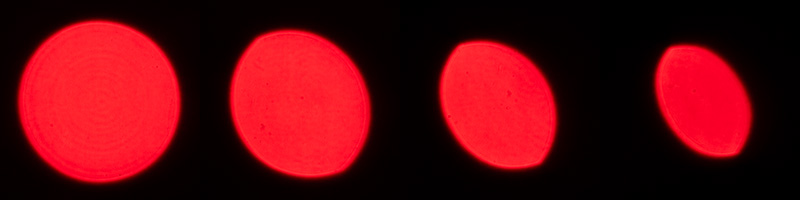
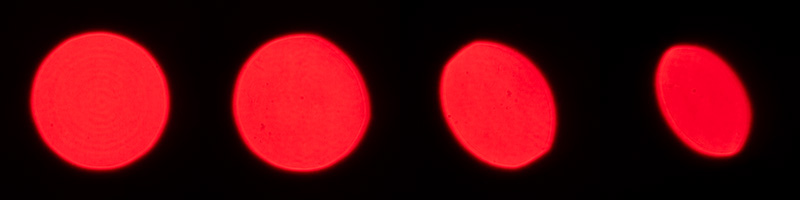
I did not shoot these lenses side-by-side, so the size of the circles is not directly comparable.
Also here there are actually not a lof of surprises. The Viltrox AF 50mm 1.4 Pro FE shows pretty much exactly the same amount of optical vignetting. Interestingly the Samyang AF 50mm 1.4 FE II looks the best among the 50mm 1.4 E-mount lenses I have reviewed so far.
I was also interested how the Sony FE 50mm 1.2 GM stopped down to f/1.4 compares, as sometimes faster lenses have an advantage here when stopped down, but despite being stopped down by half-a-stop it doesn’t look to me like it shows less optical vignetting.
As is typical for Sony’s recent lenses the aspherical elements are of high quality though as onion ring structures are hardly visible.
Sharpness
MTF-Graphs
One of the reasons I was surprised by the release of the Sony FE 50mm 1.4 GM is the existence of the Sony FE 50mm 1.4 ZA. It was the last lens of the “ZA” lineup and arguably one of the best ones that wasn’t really in need of a replacement (unlike the Sony FE 35mm 1.4 ZA).
When comparing the MTF graphs, the newer Sony FE 50mm 1.4 GM still looks a bit better with less astigmatism off center, but already the Sony FE 50mm 1.4 ZA was a very good lens that hardly left something to be desired.
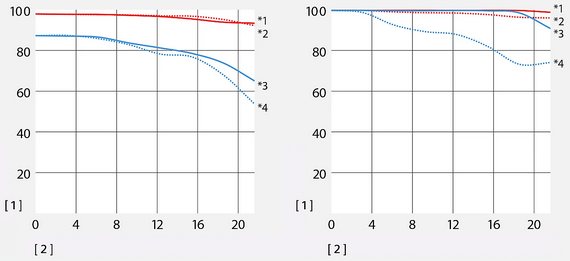
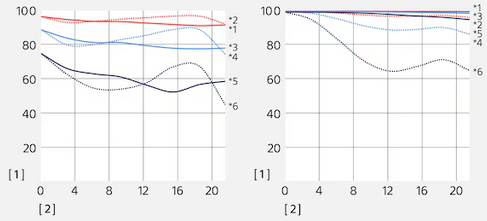
These MTF graphs were measured for infinity, so in the field and shooting at different distances a noticeable variation may be visible.
Focus shift


Because this is an AF lens and at wider apertures the modern Sony bodies focus at working aperture anyway it would hardly matter if there was any focus shift, but I still checked and I am happy to report I didn’t find any.
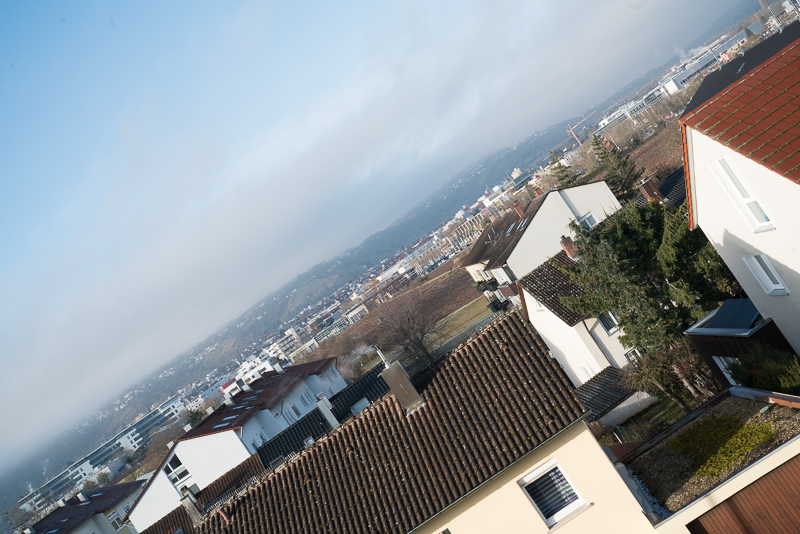
infinity (42mp Sony A7rII)
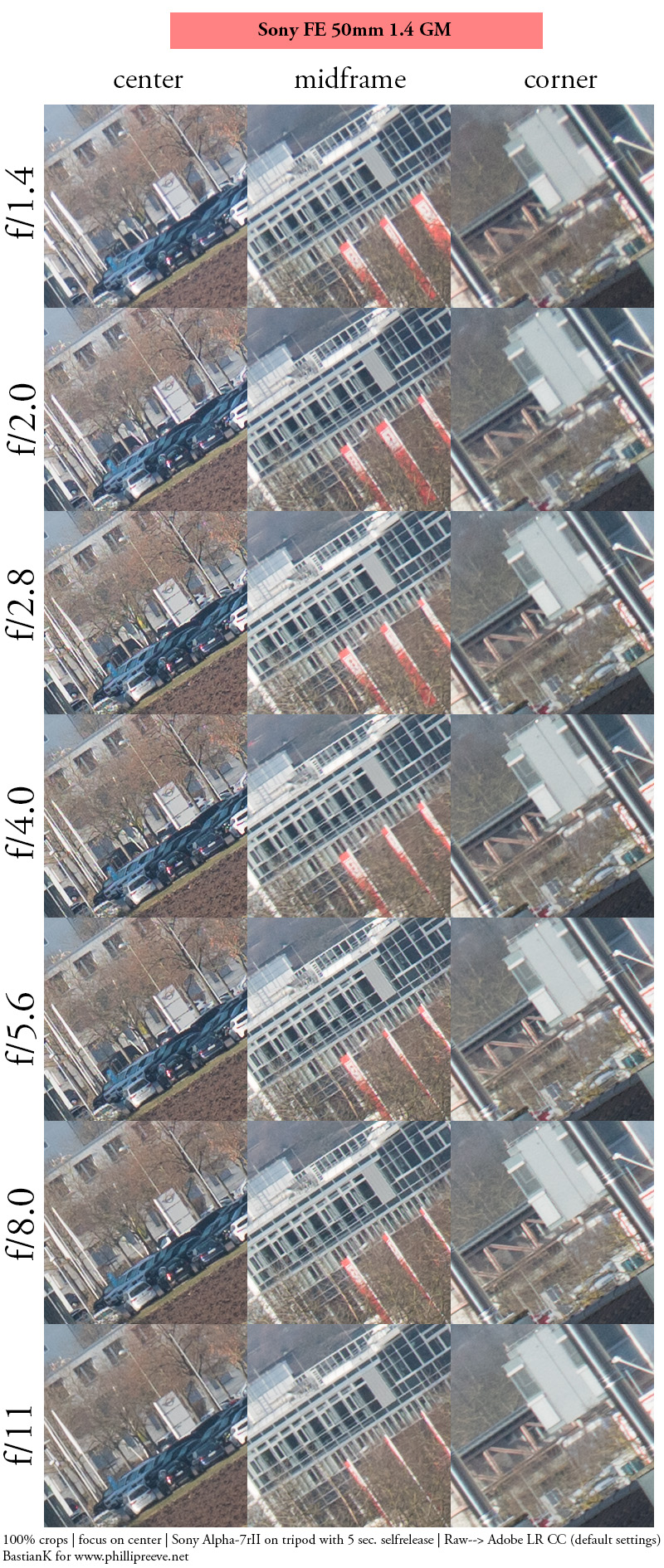
The performance at f/1.4 is impressive: we neither see any issues with purple fringing nor midzone dip nor subpar performance in the corners. Stopping down mainly increases the depth of field and I wouldn’t mind using this lens for any kind of application at f/1.4 if needed.
I already said the same about the Viltrox AF 50mm 1.4 FE Pro and under anything but lab conditions these two perform the same here. The Sony FE 50mm 1.2 GM looked a little worse in the corners at wider apertures.
portrait 1.5 m (42mp Sony A7rII)
I guess many people will want to use this lens for portraits, so let’s see what the performance is like at a typical portrait distance for a 50mm lens of ~1.5 m.
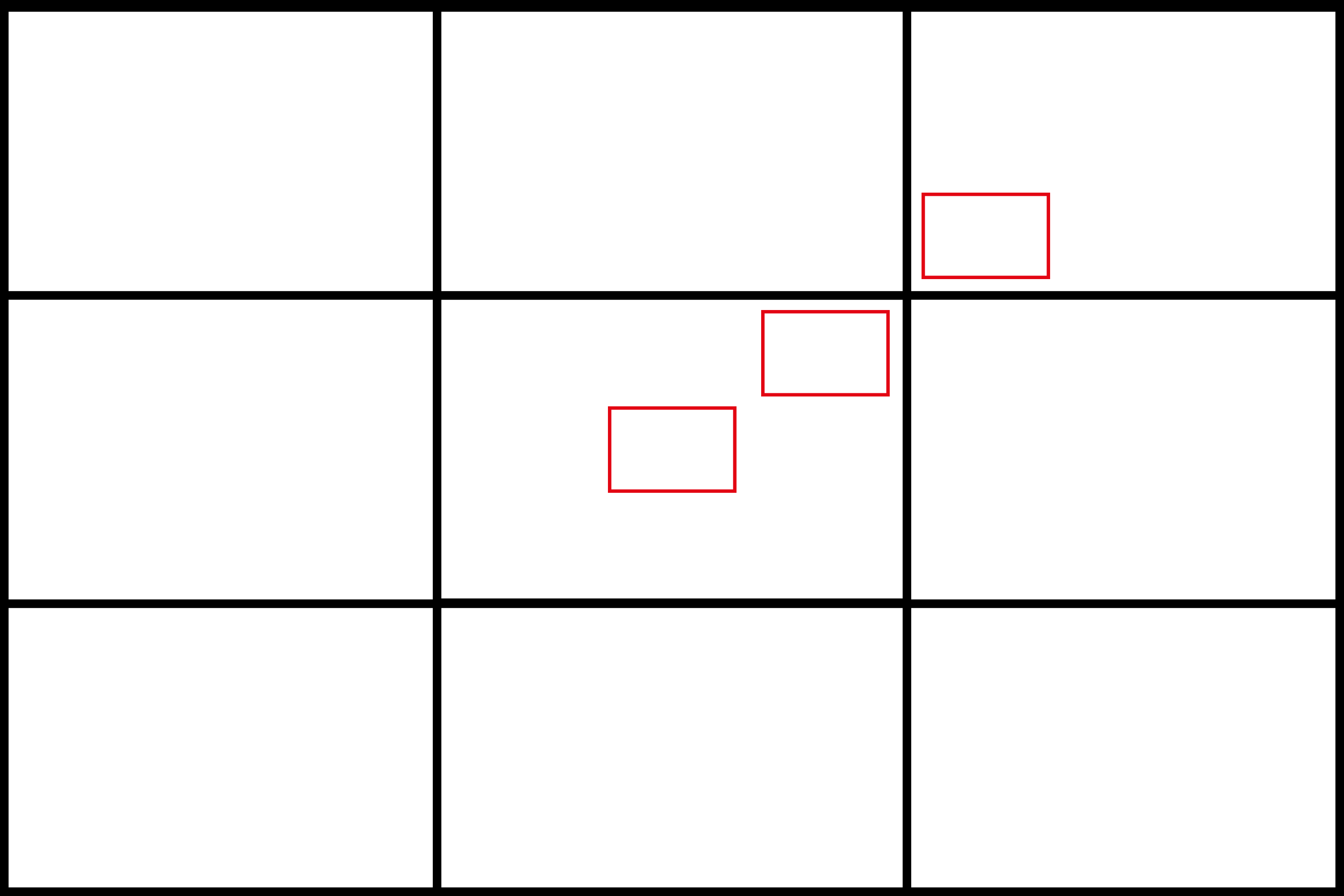
f/1.4 <—> f/2.0
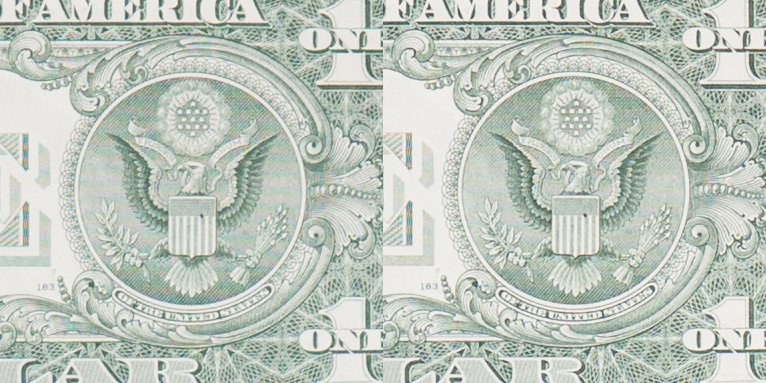

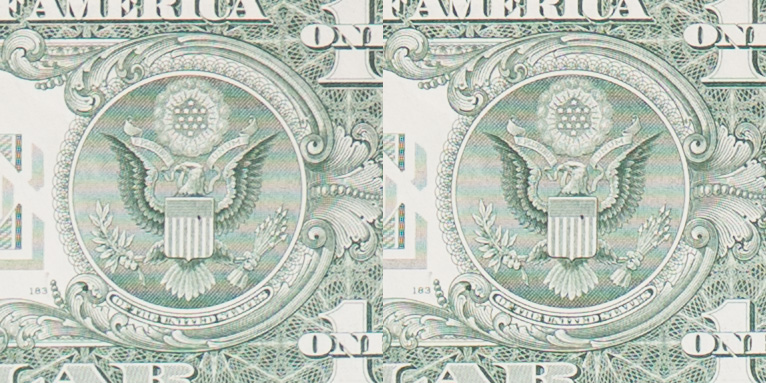
Also at the important portrait distance we can see a very good performance with Moiré at f/1.4 pretty much everywhere in the frame.
This Sony FE 50mm 1.4 GM, the Sony FE 50mm 1.2 GM and the Viltrox AF 50mm 1.4 FE Pro all look so similar and good here, none of them leaves anything to be desired and I have severe doubts there are actually field relevant differences between them.
Close 0.38 m, 1:5.5 (42mp Sony A7rII)




With a minimum focus distance of 0.38 m and a maximum magnification of 1:5.6 this Sony FE 50mm 1.4 GM is one of the closest focusing fast 50mm lenses – just like the Sony FE 50mm 1.2 GM.
Interestingly I found the Sony FE 50mm 1.2 GM to perform better here at f/1.2 than this lens at f/1.4, which is not something I expected. The f/1.2 lens looks almost as good at f/1.2 as stopped down, whereas here f/1.4 is noticeably softer than f/2.0.
The Viltrox AF 50mm 1.4 FE Pro showed one of its few slip-ups in this category: it doesn’t focus as close yet it is the softest of all these lenses at its maximum aperture at close distances.
Flare resistance
As always evaluating flare is a complex matter since you can get any lens to look bad if you push it hard enough and a slight change of scenario can affect results a lot.
Generally speaking, many of Sony’s more recent lenses have been very good performers in this category, yet this is pretty much the only category where the Sony FE 50mm 1.2 GM showed a minor slip up, so how does this Sony FE 50mm 1.4 GM compare?
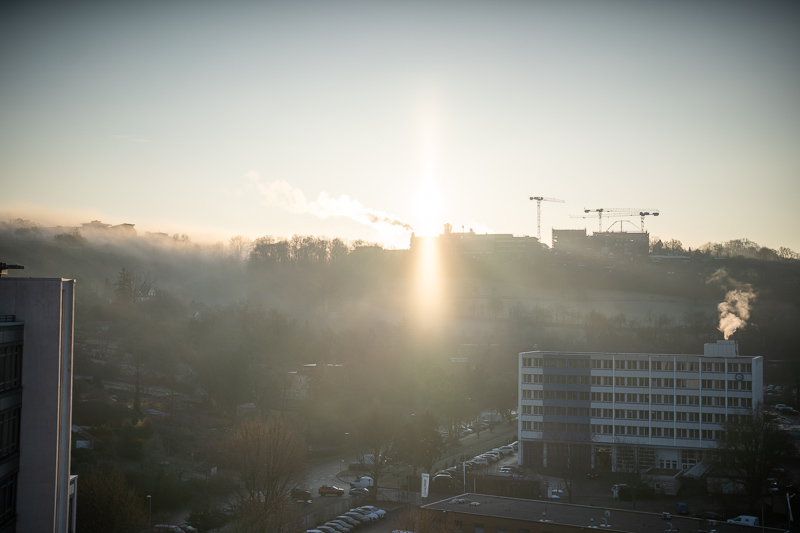
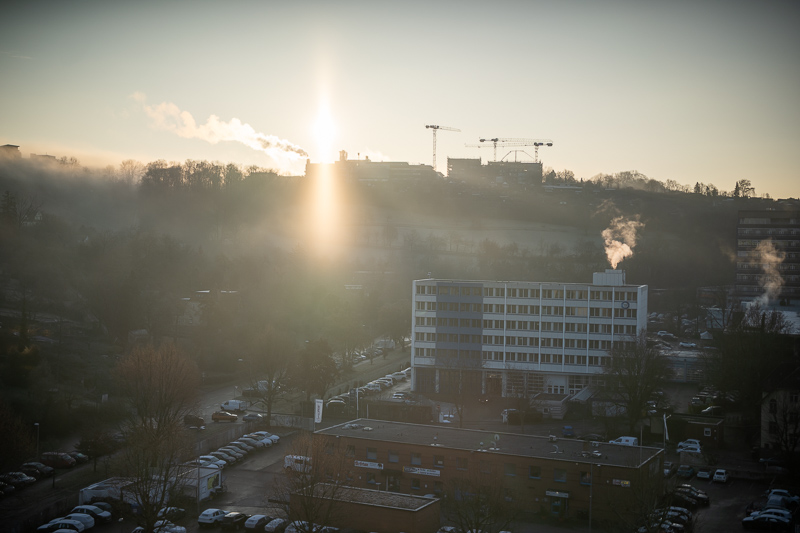

At the maximum aperture I hardly managed to create any unwanted artefacts.

It took for the scene above to finally encounter some more distracting artefacts.
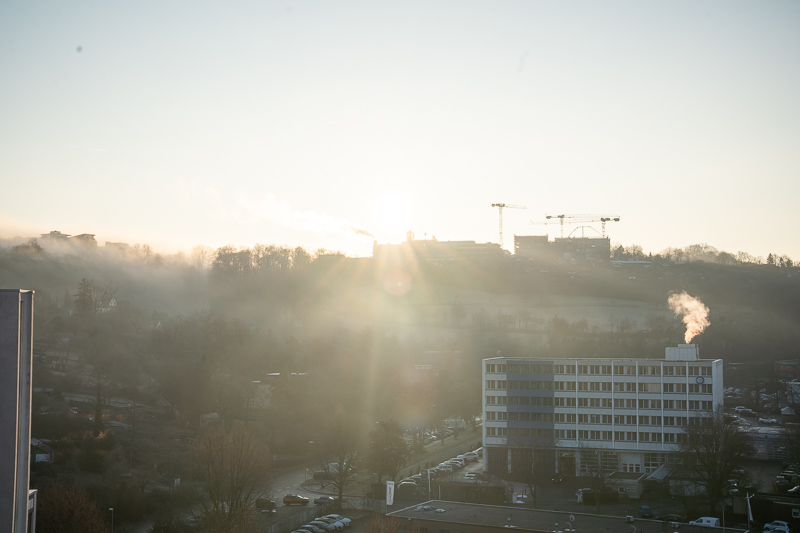
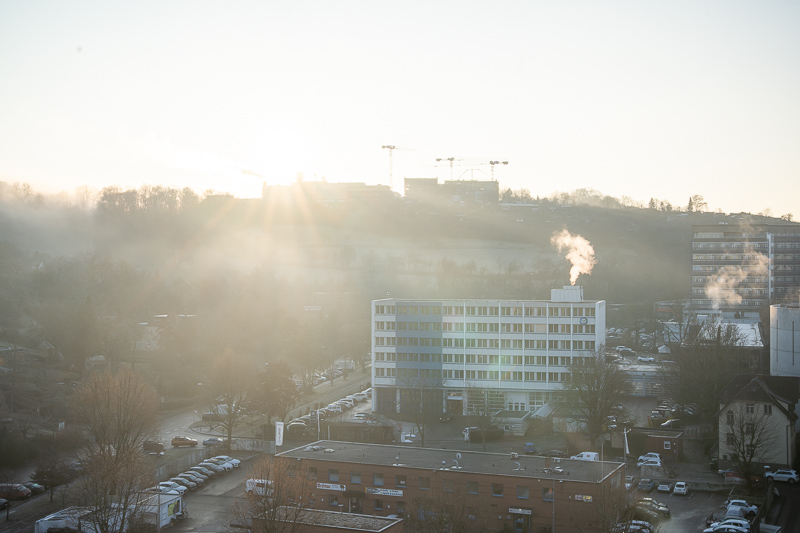
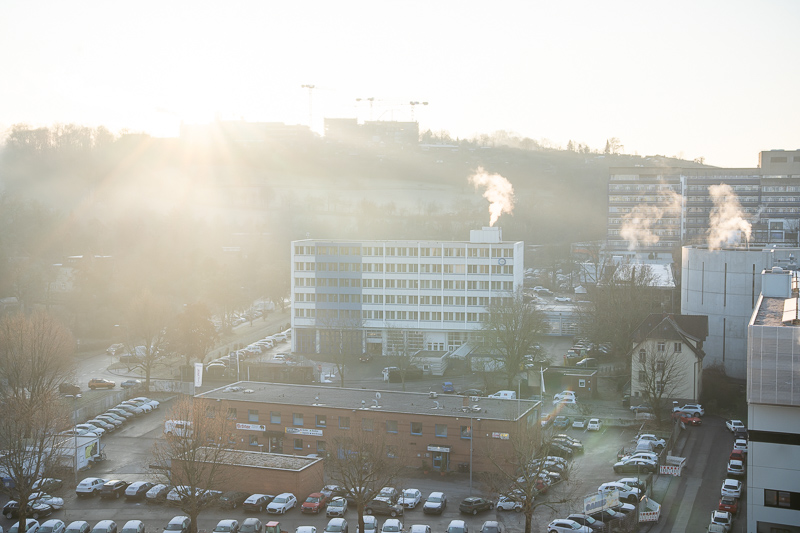

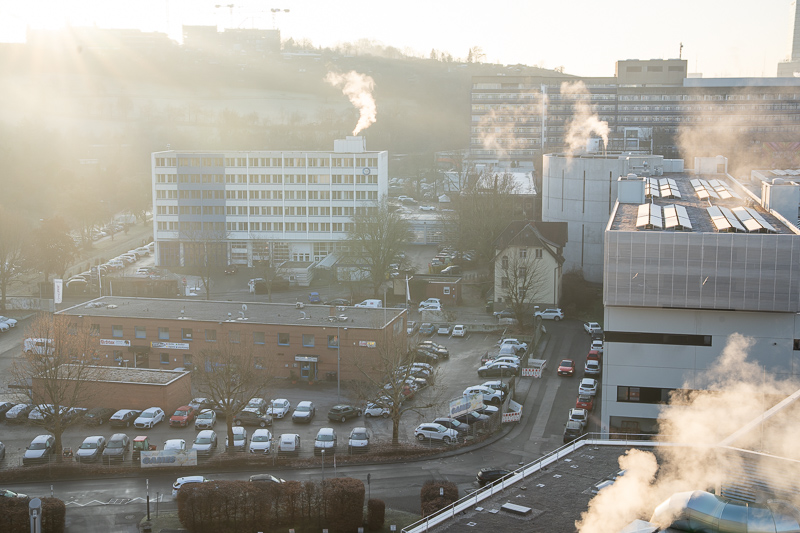
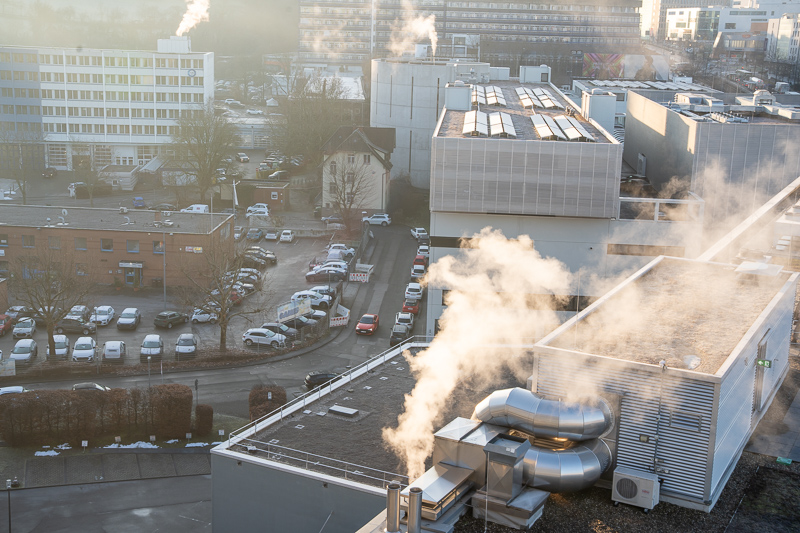
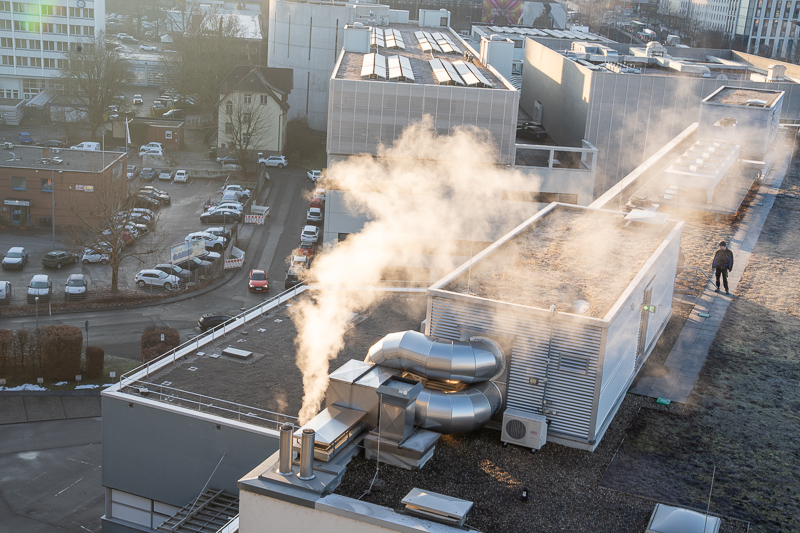
Also stopped down barely any unwanted artefacts show up.
A very good performance here, better than the Viltrox AF 50mm 1.4 FE Pro and also the Sony FE 50mm 1.2 GM.
Coma
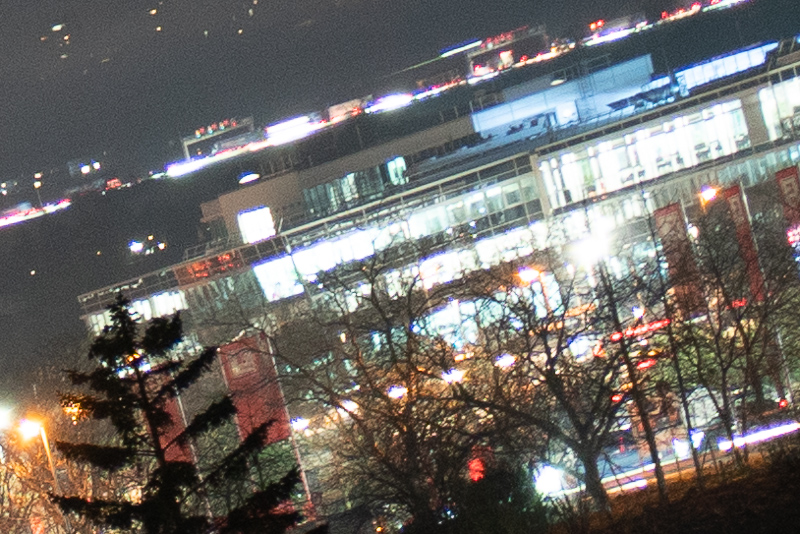
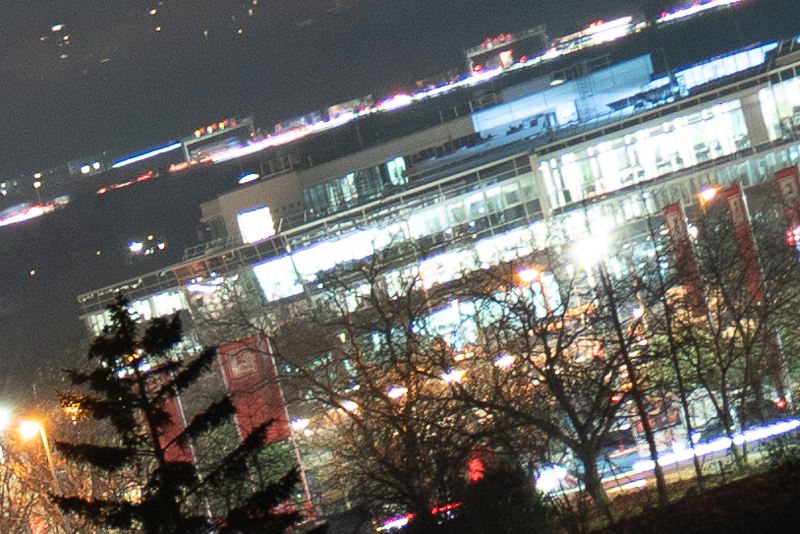
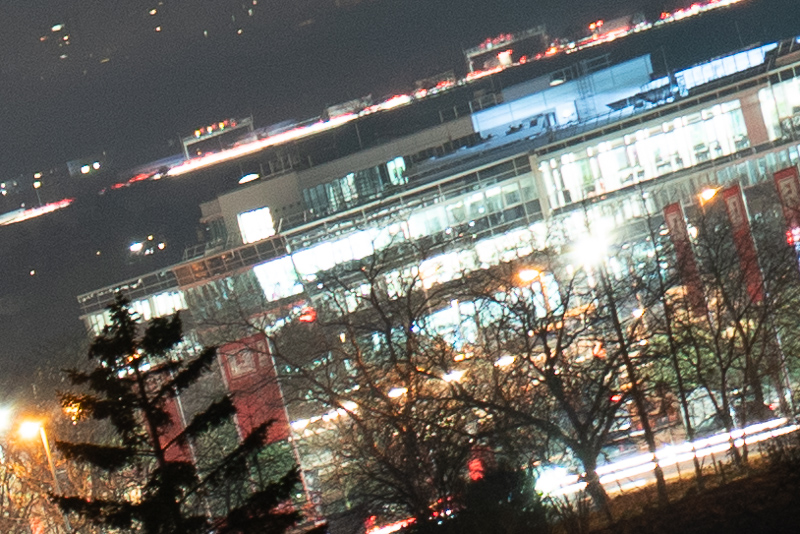
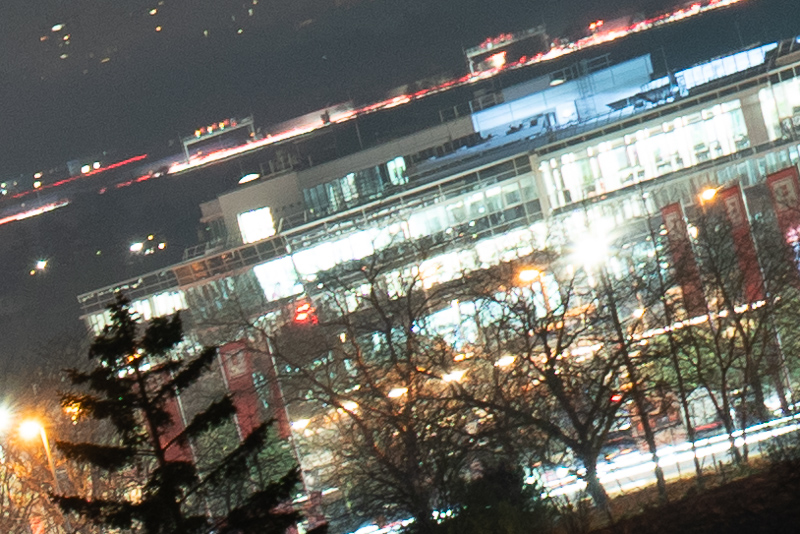
This Sony FE 50mm 1.4 GM shows an exemplary performance in this category and is actually the best performing 50mm 1.4 lens I came across so far. It not only surpasses the (already very good) Viltrox 50mm 1.4 FE Pro and the Samyang AF 50mm 1.4 FE II, but also the Sony FE 50mm 1.2 GM – even when stopped down to f/1.4.
Distortion
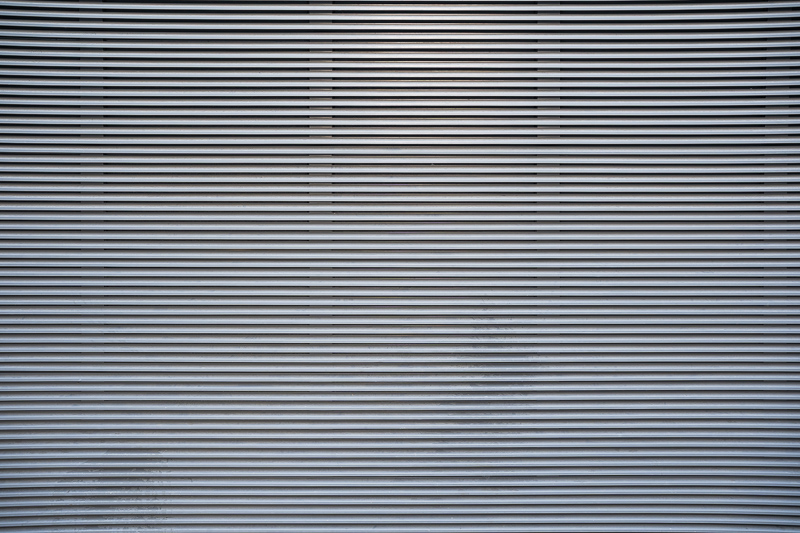
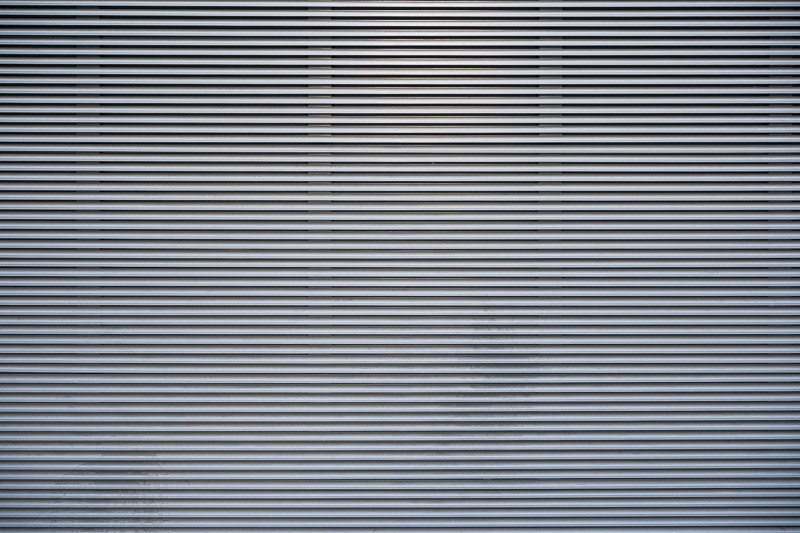
Similar to the Sony FE 50mm 1.2 GM, also this Sony FE 50mm 1.4 GM shows noticeable pincushion distortion. A profile is included in-lens for correcting Jpegs, Lightroom also features a profile for correcting Raw files that works very well, as can be seen from this comparison.
Bokeh

When it comes to 50mm 1.4 lenses there is not only a lot of competition, we can choose from various types of bokeh rendering ranging from vintage lenses with very nervous bokeh to modern lenses that create very smooth and undistracting backgrounds. From a modern Sony lens I would expect the latter, so let’s see if I am right about that.
Close distance




Smooth bokeh, average amount of optical vignetting as well as high contrast and resolution from f/1.4. This is exactly the performance I would have expected from this lens. If the amount of optical vignetting (cat’s eye shape of highlights towards the borders) bothers you, maybe have a look at the Samyang AF 50mm 1.4 FE II, which – despite being even smaller and lighter – shows less optical vignetting.
Mid distance




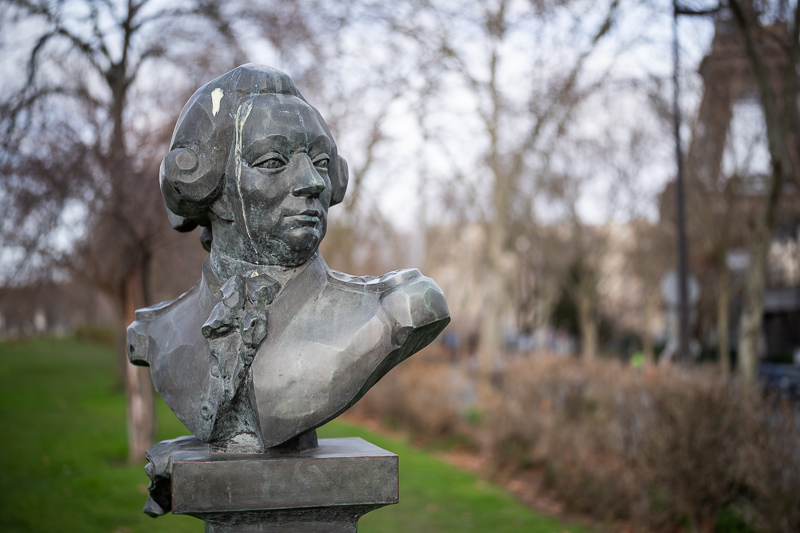
The scenes you see here are where I would use a lens like this the most so this is also where I would care about the bokeh rendering the most. There are no surprises here, this Sony FE 50mm 1.4 GM renders a – at least to my eyes – very appealing and unobtrusive bokeh and also a well defined focal plane. With longer focus distance the cat’s eye shapes are more obvious though, this was already the case for the Viltrox AF 50mm 1.4 FE Pro.
Long distance



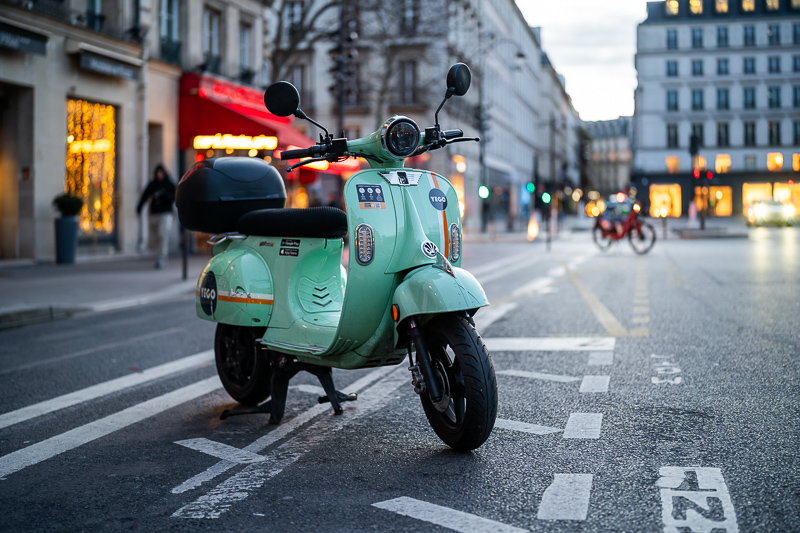
At longer focus distances some of the lenses struggle with creating a nice bokeh, but that is not the case here: the background is rendered in an undistracting way – even in complex scenes with a lot of details in the background.
If you already own the Sony FE 35mm 1.4 GM, the Sony FE 85mm 1.4 GM II or the Sony FE 135mm 1.8 GM you will feel right at home here – all these lenses create very similar bokeh to my eyes. Also the more affordable (but also bigger and heavier) Viltrox AF 50mm 1.4 FE Pro creates very similar bokeh.
The Sony FE 50mm 1.2 GM on the other hand creates a more structured, less smooth bokeh. It depends on your personal taste here, which of the two 50mm GM lenses you will be happier with.
Sunstars
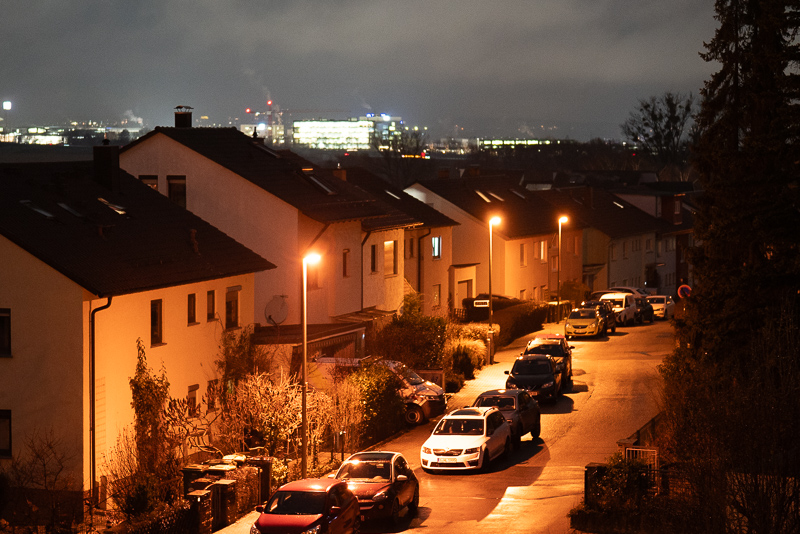
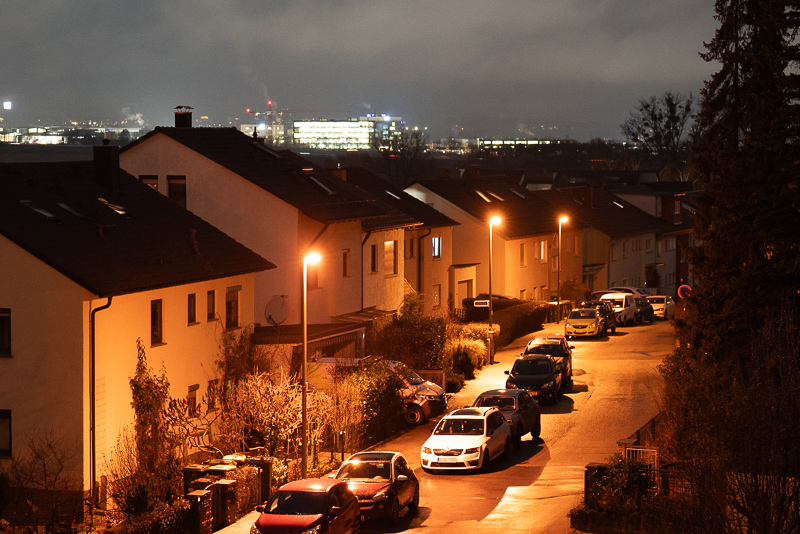
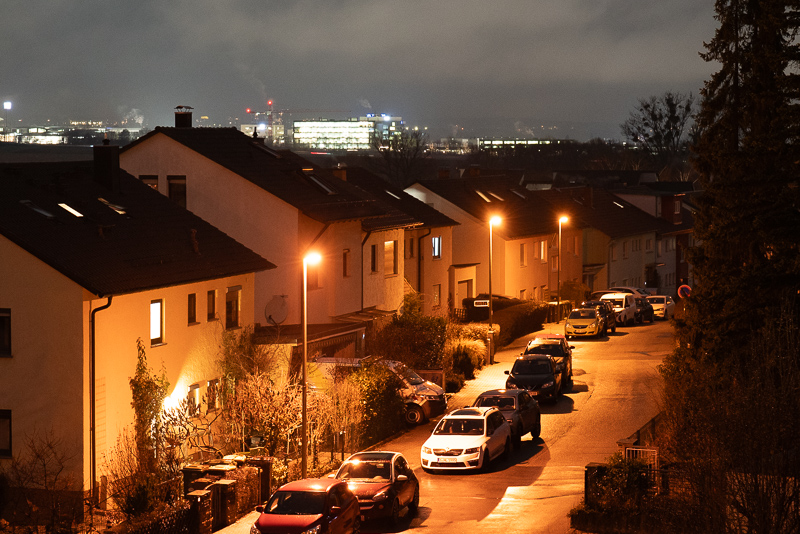
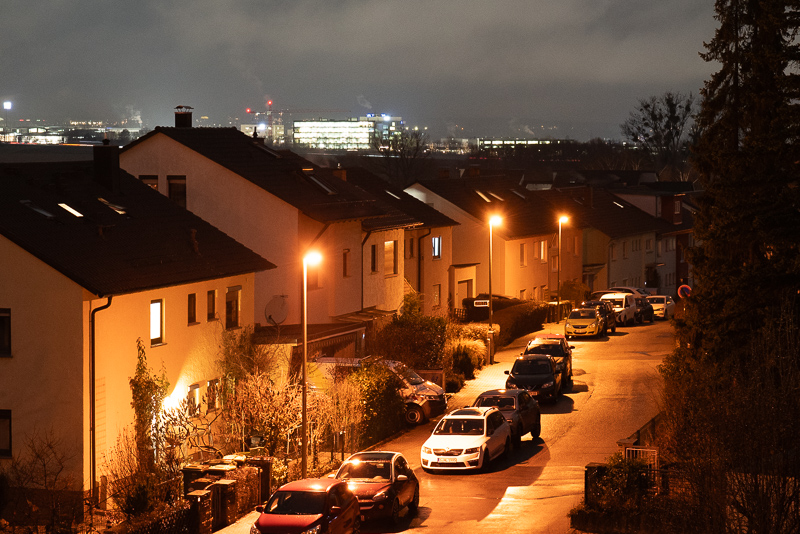
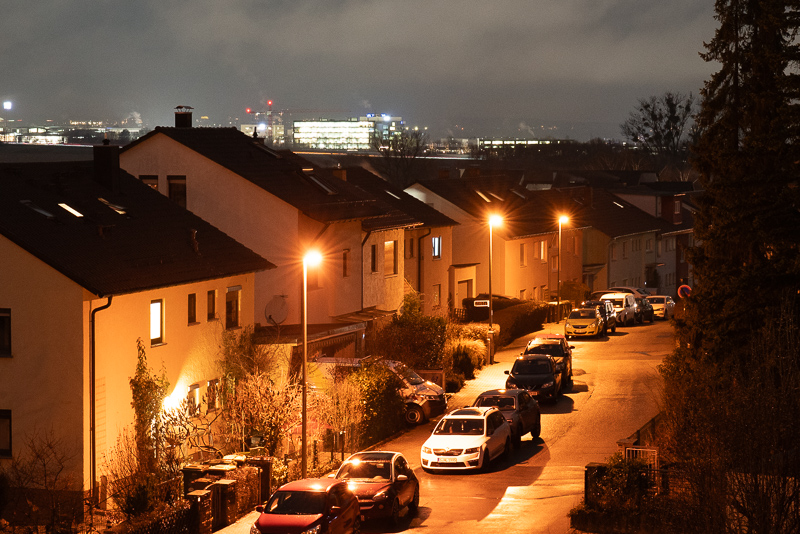
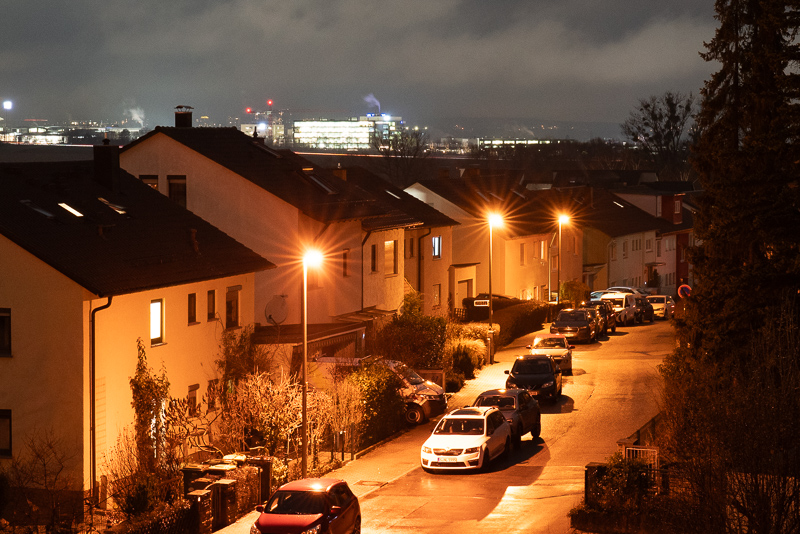
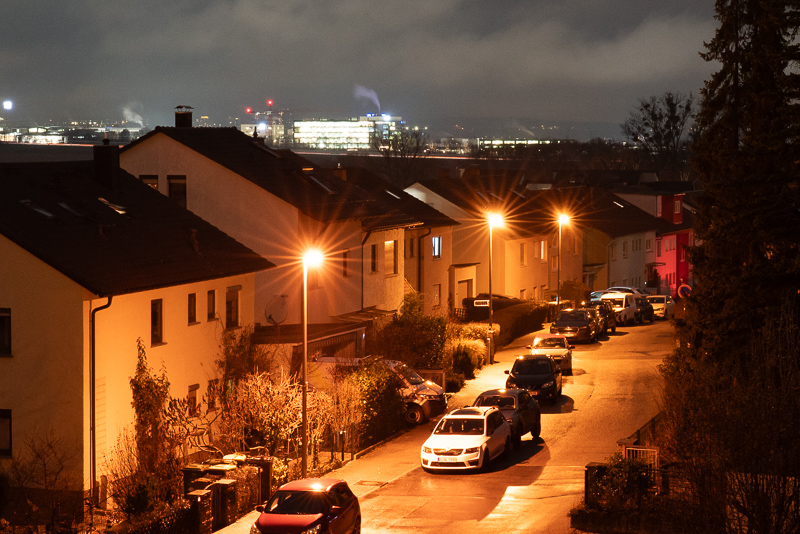
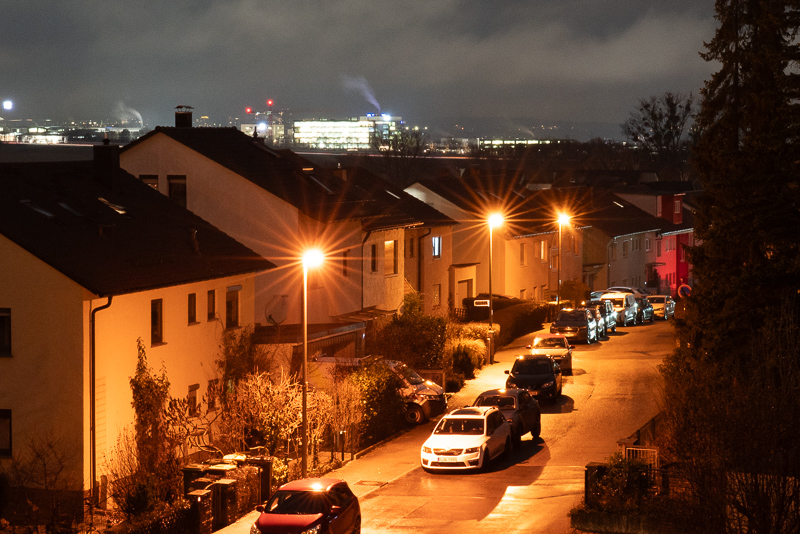
Like most of the other GM primes (including the Sony FE 50mm 1.2 GM) also this Sony FE 50mm 1.4 GM makes use of a diaphragm with 11 aperture blades. The alignment of the blades is pretty good, so we see nice sunstars from f/5.6 to f/16.
If you want to know more about sunstars have a look at this article.
Chromatic aberration
lateral
The Sony FE 50mm 1.4 GM features a built-in lens correction profile for lateral CA that will also be recognized in most raw converters, so in the end: you won’t see any.
longitudinal



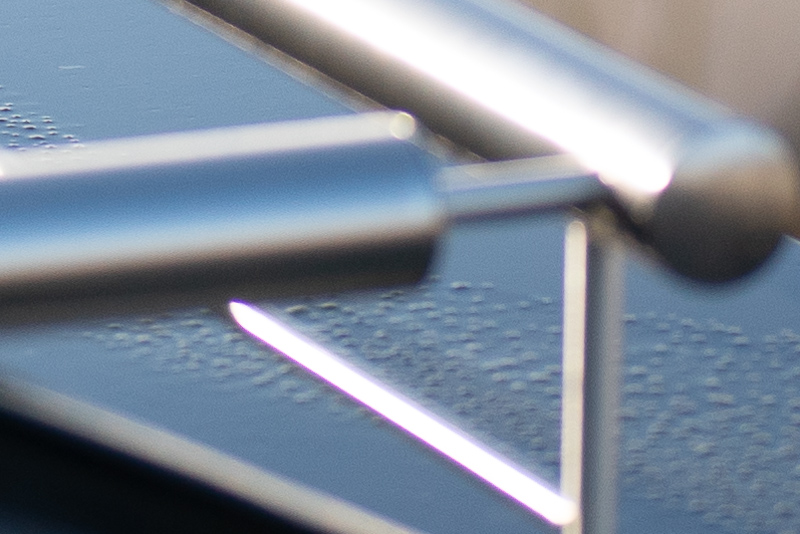
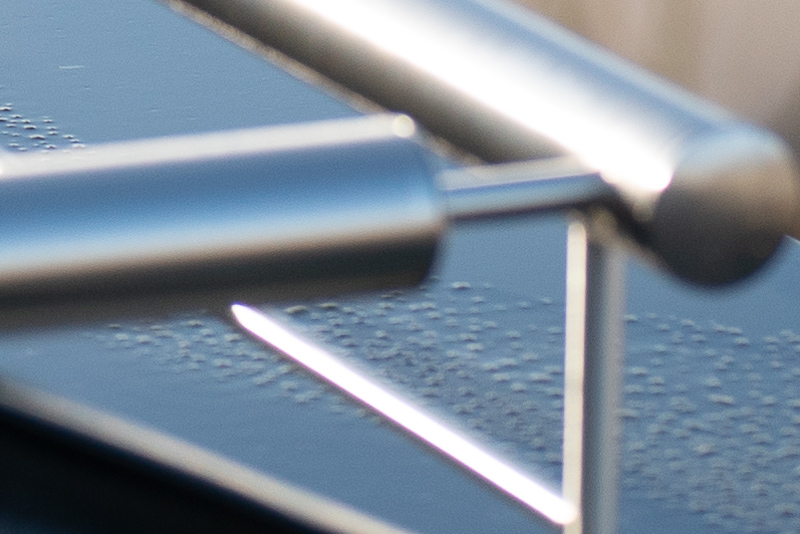
Bokeh fringing is on a low level, very similar to the Sony FE 50mm 1.2 GM and the Viltrox AF 50mm 1.4 FE Pro. One of the categories where the Samyang AF 50mm 1.4 FE II performs noticeably worse.

Purple fringing is on a low level but I do think here the Sony FE 50mm 1.2 GM and the Viltrox AF 50mm 1.4 FE Pro performed a little bit better. This time the test target has also been extra demanding though.
Conclusion
good
|
average
|
not good
|
Just like the other recent GM lenses also this Sony FE 50mm 1.4 GM is (obviously) a very good lens. If you are already a fan of the Sony FE 35mm 1.4 GM, Sony FE 85mm 1.4 GM II or the Sony FE 135mm 1.8 GM and you are now looking for a 50mm lens with the same qualities, this is clearly it and you will surely be happy with it.
There is a bit of an elephant in the room here though and that is the steep price. If you are not that size and weight conscious, the Viltrox AF 50mm 1.4 FE Pro offers very similar performance in almost every category for a third of the price. And if you are looking for the smallest and lightest 50mm 1.4 lens with AF, the Samyang AF 50mm 1.4 FE II is also a very solid performer while being just as affordable as the Viltrox lens.
And then obviously many of you will also wonder how this f/1.4 lens compares to the Sony FE 50mm 1.2 GM. In terms of bokeh rendering this will be a subjective decision. I was surprised by the fact that the f/1.2 lens actually performs better in close focus scenarios though, which is due to it having an optical design with two moving focus groups. Omitting this feature in one of the most expensive 50mm 1.4 AF lenses feels a bit like a questionable cost down measure.
But this review should surely end on a positive note. Since the release of the Sony FE 24mm 1.4 GM, every new GM prime proved to be an outstanding lens with reasonable dimensions and one of the most consistent lineup of lenses across all systems. I hope we will see some more focal lengths being added in the future.
buy from amazon.com | amazon.de | ebay.com | ebay.de | B&H (advertisement/affiliate links) for $1448
Alternatives
Viltrox AF 50mm 1.4 FE Pro:
The optical performance of the Viltrox lens is very similar: contrast, resolution, flare resistance and even bokeh rendering are almost indistinguishable. The Viltrox lens is about 300g heavier but if that doesn’t bother you, you can save a lot of money here.
buy from manufacturer’s shop | amazon.com | amazon.de | B&H | ebay.com | ebay.de (advertisement/affiliate links) for $549
Samyang AF 50mm 1.4 FE II:
Once more Samyang offers the lightest and smallest lens in class. It neither offers as high resolution and contrast nor as fast AF as this Sony lens or the aforementioned Viltrox lens, but it does create very nice bokeh with the lowest amount of optical vignetting among these.
buy from amazon.com | amazon.de | B&H | ebay.com (advertisement/affiliate links) for $549
Sony FE 50mm 1.2 GM:
While this Sony FE 50mm 1.4 GM is already priced like a flagship lens, the Sony FE 50mm 1.2 GM is Sony’s actual 50mm flagship lens. While this f/1.4 lens creates very smooth and unobtrusive bokeh, the f/1.2 lens creates more structured bokeh at times. The f/1.2 lens has even higher contrast and resolution though and especially so at closer distances because it features a design with two independently moving focus groups. Weight difference is about 250g and this f/1.4 lens does a bit better with veiling flare. Not an easy decisions between these, personally I am leaning a bit towards the f/1.2 lens.
buy from Amazon.com | B&H | ebay.com (advertisement/affiliate links) for $2298
I haven’t personally tried the Sigma 50mm 1.4 DG DN Art, Sigma 50mm 1.2 DG DN Art or the older Sony FE 50mm 1.4 ZA. You can still find these and many further alternatives being discussed in our Guide to the best 50mm fullframe E-mount lenses though.
Sample Images

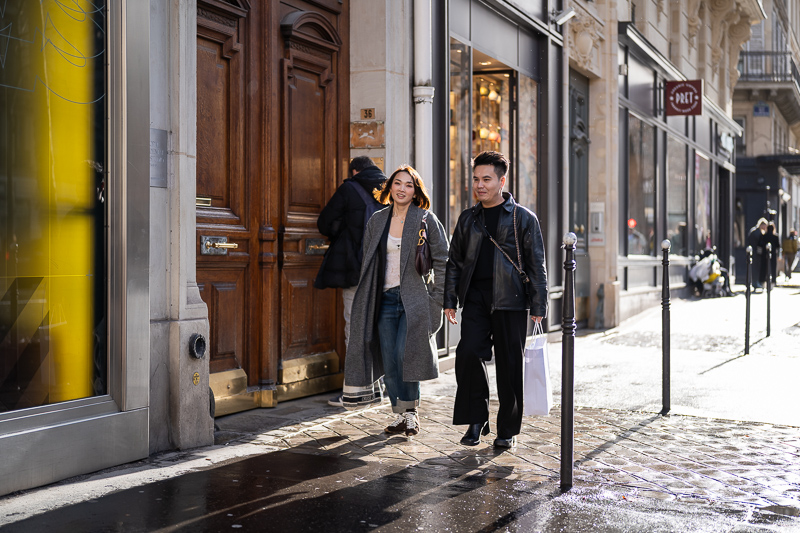

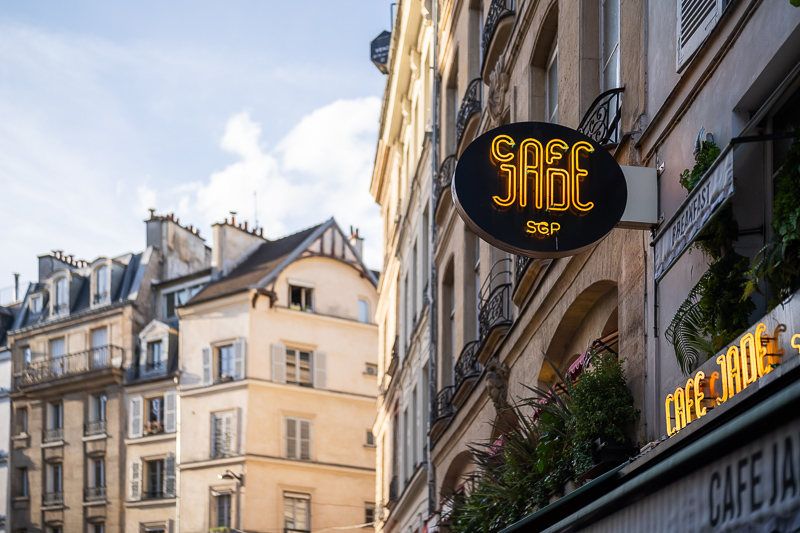

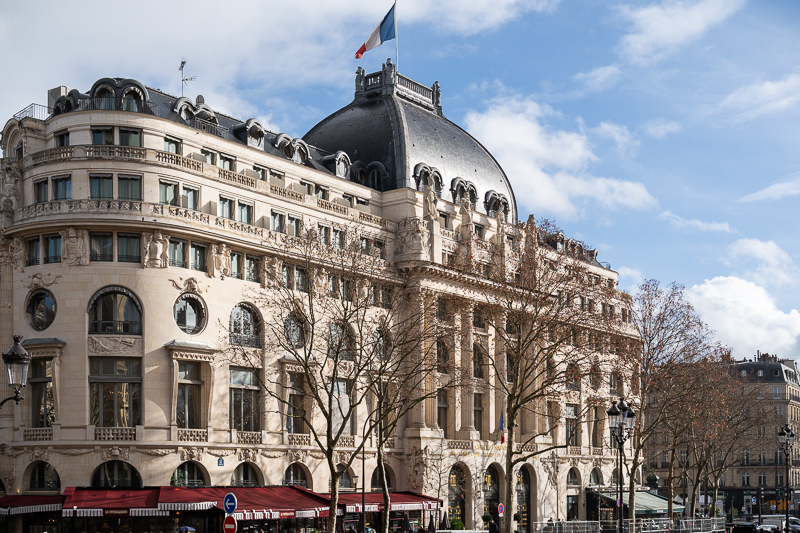
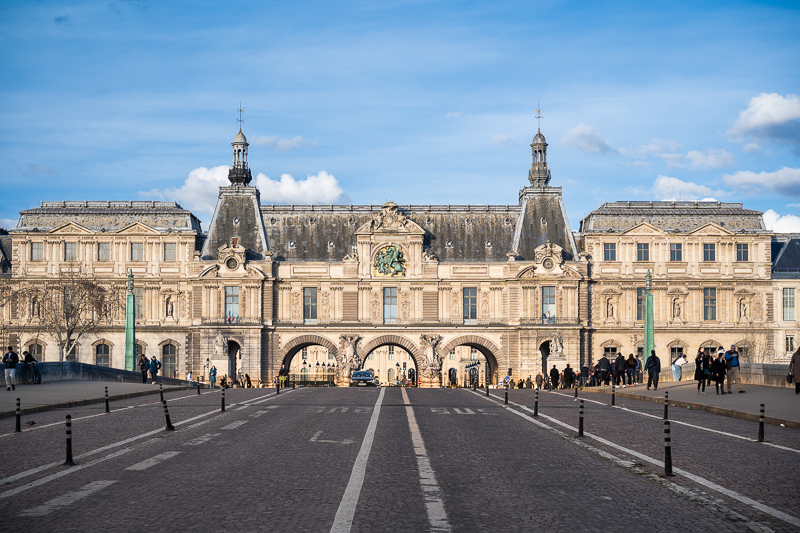


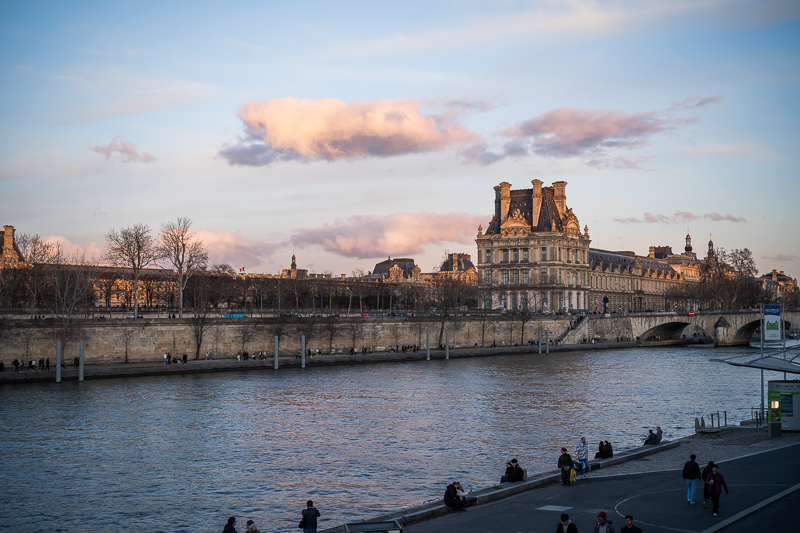
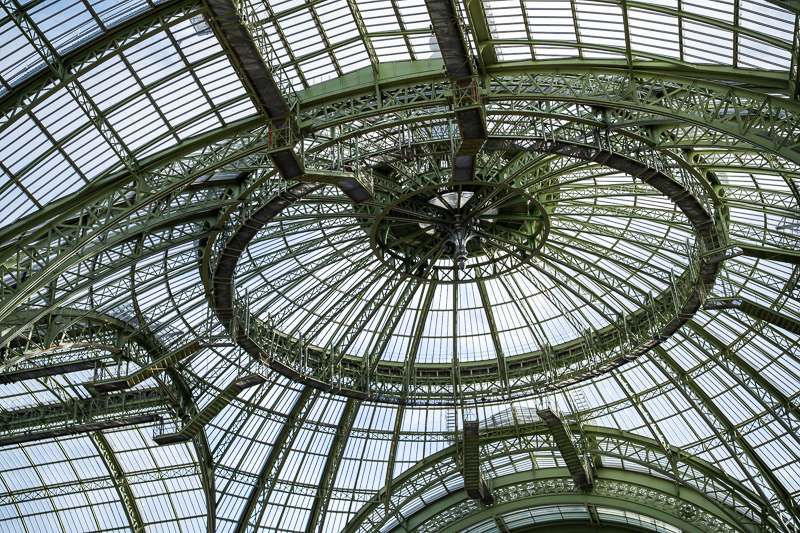






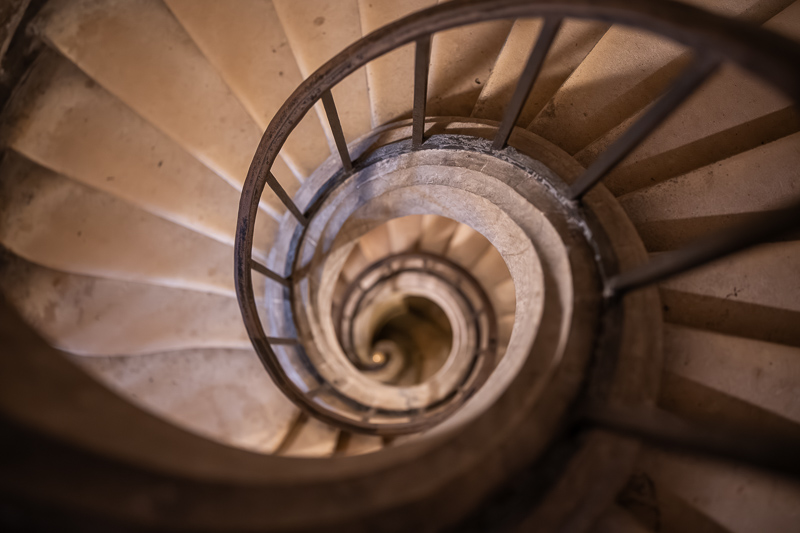



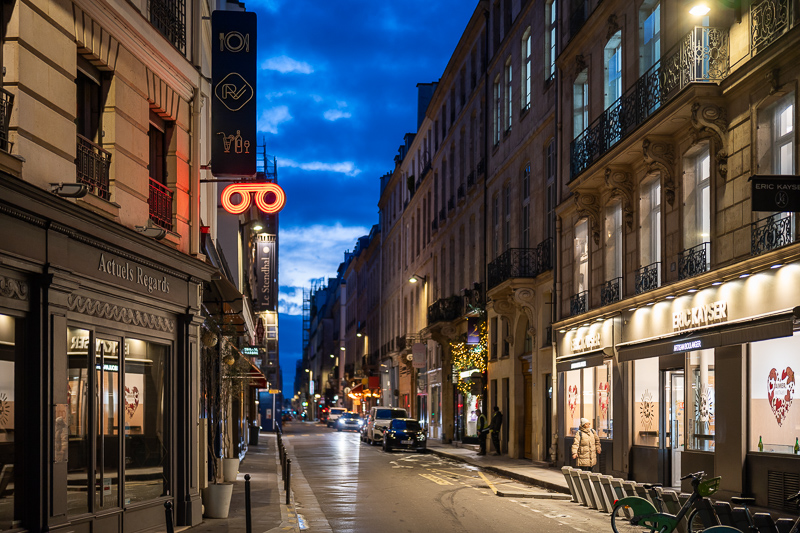
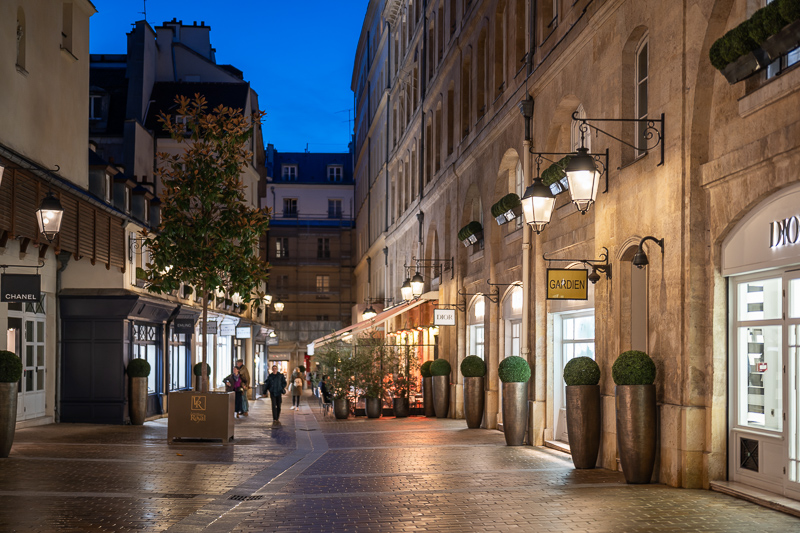
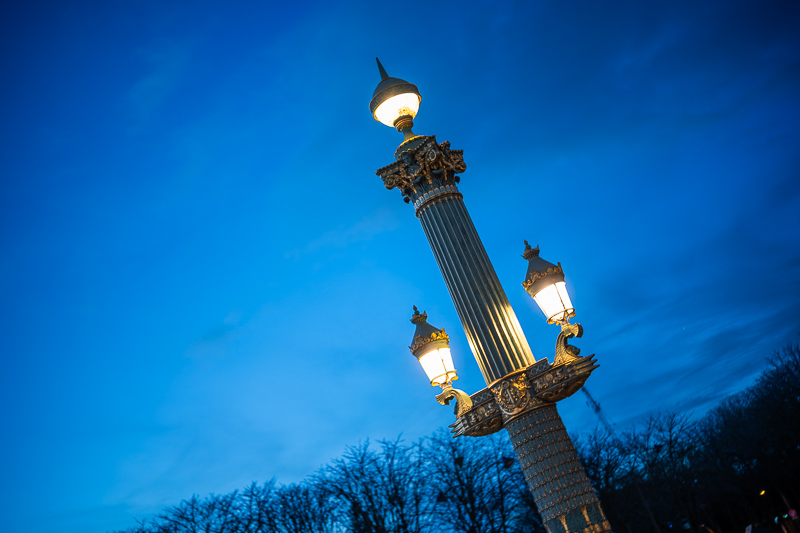



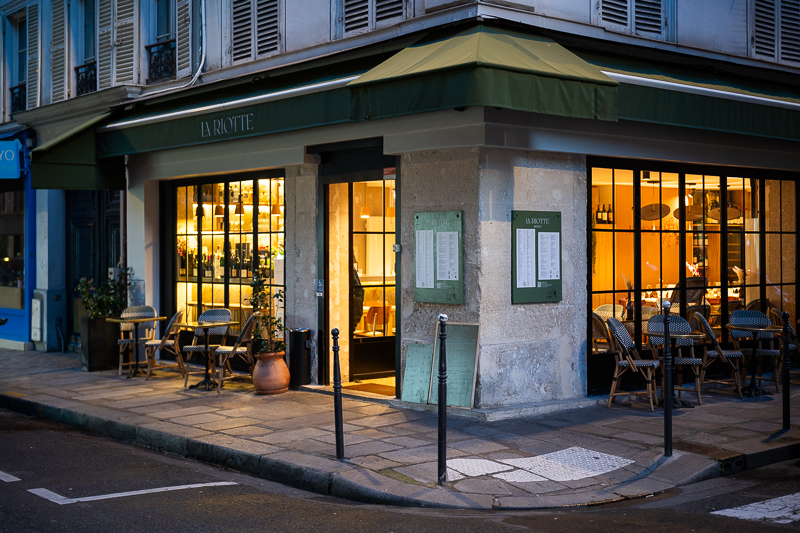
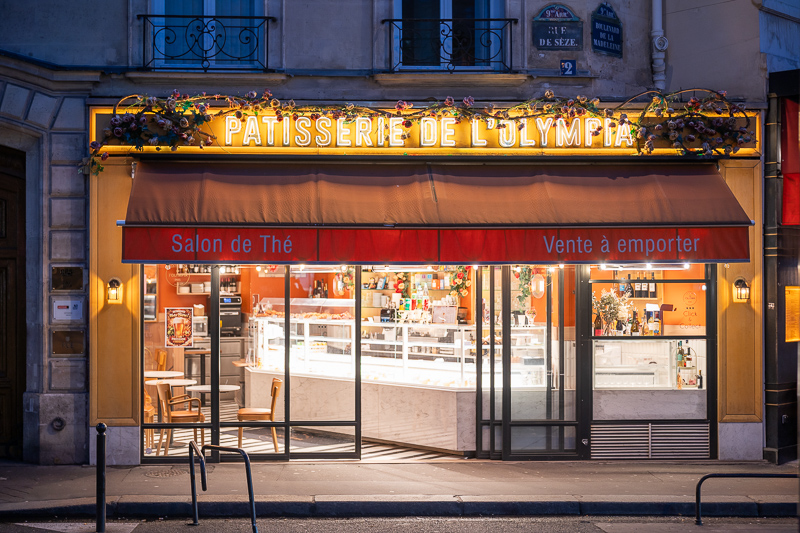

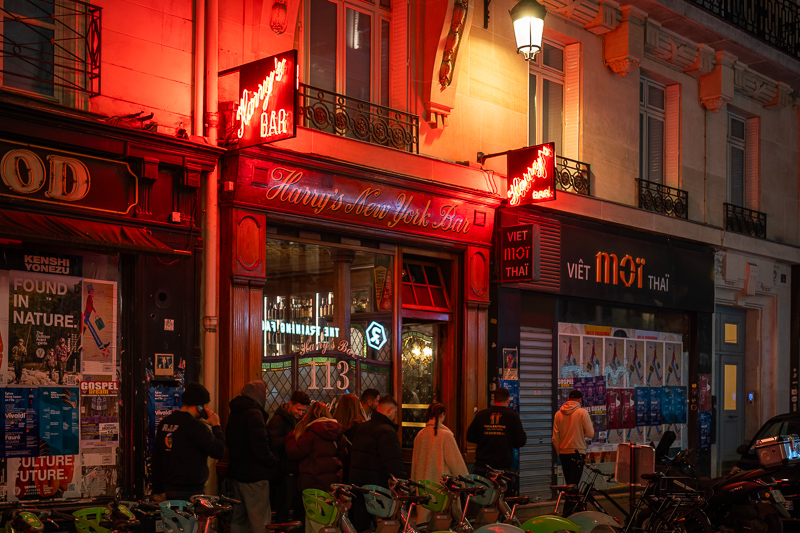



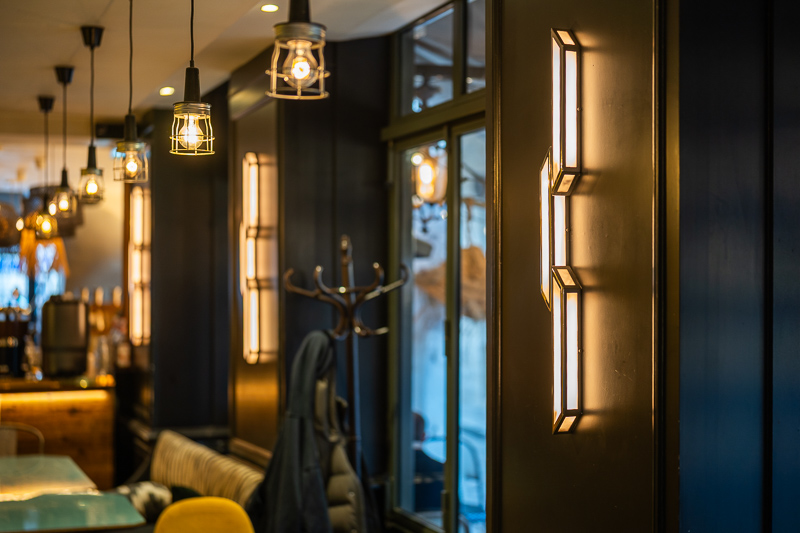
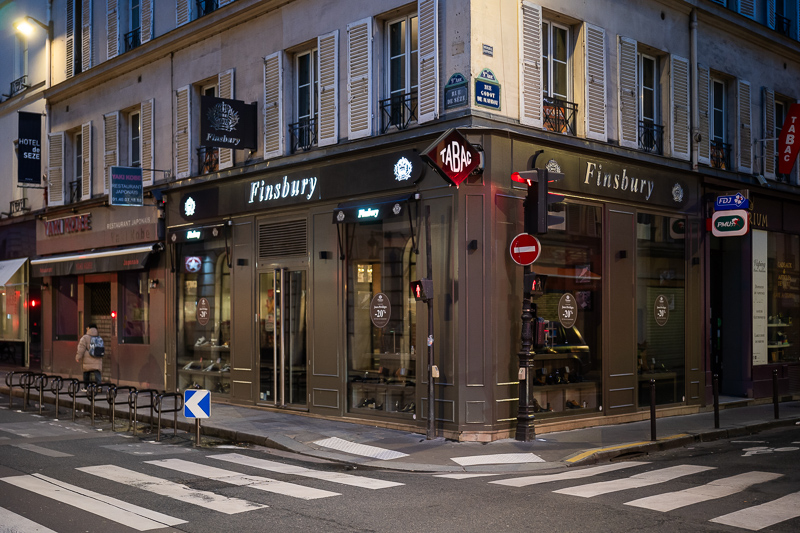
Most of the sample images in this review can be found in full resolution here.
Further Reading
- All E-mount lens reviews
- Review: Viltrox AF 14mm 4.0 Air
- Review: Viltrox AF 85mm 1.4 Pro
- Review: Sigma 135mm 1.4 DG Art
- Become a part of our Discord community
Support Us
Did you find this article useful or just liked reading it? Treat us to a coffee!

 via Paypal
This site contains advertisement/affiliate links. If you make a purchase using any of the links marked as advertisement/affiliate links, I may receive a small commission at no additional cost to you. This helps support the creation of future content.


Latest posts by BastianK (see all)
- Analogue Adventures – Part 58: Adox Color Mission 200 C-41 - October 21, 2026
- Review: Nikon Z 35mm 1.2 S Nikkor - October 17, 2026
- Prime Day Photoshop+Lightroom offer for Amazon Prime Members (EU/UK) | Update: also at B&H - October 7, 2026
Seems like a solid lens, but there are just too many alternatives to make this anything like a compelling option. Especially considering the price
I find 50/1.4 GM to be a great sweet spot between optical quality and size/weight. The Samyang is lighter but comes with a few compromises in optical quality. Other lenses with similar optical quality are all larger and heavier. Though I have to agree the MSRP is pretty steep.
Indeed, Viltrox would seem like a more logical choice, except if this kind of money is a completely irrelevant factor to someone.
Personally, I think I slightly favour the F1.2’s rendering to this one, though these are not “character” lenses and there’s not much to consider between the two in that department.
The Viltrox is significantly bigger and 55% heavier. For some, this alone is worth the premium.
In addition, the GM still performs better up close and has better magnification. It also has support for 15+ FPS and focus breathing correction, as well as all the other first-party advantages.
I think that a maximum aperture of f/1.8 to f/2 is much more practical than f/1.2 to f/1.4 for the broad range of primes from wide-angle through 85mm — smaller, lighter, cheaper, and easier for lens makers to correct aberrations.
I hope you will test the upcoming Viltrox 55mm f/1.8 EVO. Interesting because it is claiming “APO” correction, at a price about a third of this Sony, and also because it is a not-often-seen nowadays (nominal) 55mm rather than 50mm. (55mm is within a half-mm of being the geometric mean of 35 and 85mm, so actually makes a lot of sense when most people shooting primes will have a 35 as their longest wide angle rather than a 28, which is rare nowadays as a focal length, and then will have an 85 as their “portrait” prime).
I think the better setup is
24mm, 45mm, 85mm
The Batis line is pretty close to this. Also 45mm is basically the true natural 43mm. Sadly they seem to skip exactly 45mm
That sequence can also make sense. It all depends on subject matter , I think, as well as how much one is willing to crop in post, carry in weight, and switch lenses.
Personally, to cover the range from 24 to 85, I’d prefer a 24-35-55-85mm sequence. Not only is the maximum crop (if needed to achieve any specific focal length) less, I also think that a 35mm is preferable to either a 24 or an 45 for environmental shots of people; for such use, I think that the 35mm focal length is often very good directly, without needing any crop at all.
Another sequence that looks appealing to me is a 24-40-65-105mm. Back in SLR days, I got a lot of shots that I liked with a 105. Unfortunately, nowadays, there are relatively few modern AF lenses of 100 or 105mm, and with the exception of a Sony 100 “apodized” lens that produces unusual bokeh, all are optimized for macro, and because of that, relatively large and heavy, except for a Panasonic 100mm (still macro, but nicely small). And the only AF 65 is a Sigma 65 f/2 in its “i” series; supposedly excellent optically, but only available for Sony and “L” mount, and significantly more expensive than the Viltrox EVO line lenses.
The Sigma 65mm is easily the best lens in the I-series. I absolutely love it! It just doesn’t pair well with anything longer than 40mm.
Samyang has a compact and lightweight 100 mm T2.3 V-AF lens. This is often overlooked because it is technically part of their cinema series. However, for most of the V-AF series, the stills and the video variant are exactly the same. The video variant is just slightly better built. However, as they switched to the P-series for stills, the last two lenses (100 mm and 20 mm) are only available in the cine version.
The lens is therefore equivalent to an AF 100mm F2.2 FE that was never released.
I’d love to see a serious review of that V-AF 100mm T2.3…
Coming.
As much as I hate the size and weight of the 1.2 GM, I gladly accept the extra 250g compared to the 1.4 GM for that certain something in rendering. That’s why I chose the 1.2 back then and would do it again today.
Yeah, I always thought the same way … always “needed” that 50 1.2 lens … and then, it nearly never left home, or only for some shootings. Still a great lens with top rendering, but I needed something to take with me. Since I have the Samyang V-AF 45 T1.9, I have it really often with me. And I bought the Samyang 100 T2.3, because those lenses were sold for ~200€ back in November (black deals) and I thought, those were great prices. Thise V-AF lenses are mostly overlooked. But the built quality is really damn good and they look much better than their photo counterparts.
I almost exclusively take photos on the go, yet I still take the 1.2 GM with me about 95% of the time, even though I have the Sony 1.8/50FE, Viltrox Air 2.0/50, and CV Nokton 1.2/50SE as alternatives. Incidentally, I never thought “I absolutely have to have this lens.” Quite the opposite. I actually love the Nokton and simply wanted to try out an autofocus alternative. And then I found the GM as a complete package so good that I have to force myself to use the other lenses from time to time as well. That’s how different the usage scenarios are. And actually, my comment only referred to the choice between the 1.4GM and the 1.2GM.
Perhaps I should add that I almost always travel with only one lens and shoot wide open as often as possible.
1600,- € for a 50mm/1.4 lens ?
That must be a joke…
It’s all relative. A Summilux costs three times as much. 😉
This is basically the norm for Bastian, but I still marveled at some of the awesome sample shots, thanks for the review as always!
1. Thank you, Bastian! Great review – as always.
2. There’s a typo under the illustration of optical vignetting. It says “Viltrox AF 50mm 1.4 Pro FE”
3. Photoshop allows to count selected pixels. Window “Histogram”, then “Expanded view”. And the area of light circles (light lemons?) could be recalculated to F-stops.
Here they are:
== Sony 50/1.4 GM ==
– Wide open:
F/1,40 – F/1,51 – F/1,78 – F/2,04
– Stop closed:
F/2,00 – F/2,00 – F/2,10 – F/2,31
– Two stops closed:
F/2,80 – F/2,78 – F/2,76 – F/2,95
== Sony 50/1.2 GM ==
– Wide open:
F/1,20 – F/1,34 – F/1,60 – F/1,90
– Half stop closed:
F/1,40 – F/1,41 – F/1,61 – F/1,91
== Viltrox 50/1.4 Pro ==
– Wide open:
F/1,40 – F/1,50 – F/1,73 – F/2,04
== Samyang 50/1,4 II ==
– Wide open:
F/1,40 – F/1,48 – F/1,65 – F/1,97
To convert an area to F‑stops, you can use this formula:
F-stop in corner = F-stop_in_center × sqrt(area_in_center/area_in_corner).
Alternatively, you can simply ask an AI chatbot to perform these calculations.
This relies on the assumption that the f-stop in the centre is correct. But this is not the case.
As you can see in optical ray tracing tools such as Photons to Photos, most lenses have a slightly slower aperture than claimed, and only have that aperture at infinity, ‘stopping down’ when focusing close.
For example, the 50 mm F1.2 Moonlit is F1.25 at infinity according to the patent, F1.36 at 1:13 and F1.44 at 1:8.
This also highlights another problem: ‘cat’s eye’ or optical vignetting is usually caused near the entrance and exit of a lens, and depends on focus distance. The front element cuts out the ‘inner part of the bokeh’ and the rear element cuts out the outer part.
We also cannot use the vignetting number as an approximation, as vignetting due to the sensor’s acceptance angle would also be counted towards the bokeh.
Currently, only real side-by-side images can definitively show the differences in bokeh.
And there is also perspective distortion of the light circles that further needs to be taken into account 🙂
Actually I am not sure about that. If you mean a “flat plane of light points” being defocussed with a lens with no field curvature, then the bokeh balls should stay the same size in an ideal lens, between center and edge.
If however you have just one light in your test setup and you tilt the camera to “move it to the light to the corner/edge” then indeed you are introducing additional perpsective distortion as you are shortening the path to the corner
No they don’t when dealing with rectilinear lenses, you hace to take into account perspective distortion for off center light points.
You’re right, it does rely on that. But for most modern lenses, this assumption works very well. I mean, if one lens is branded “F/1.4”, it blurs the background (in the center) like another “F/1.4” one. I mean, I’ve seen a lot of comparisons, and when the strength of the blur differs, it’s usually due to different PSFs or FOVs.
The exceptions I know are:
– PERGEAR 35mm F/1.2 DH.MC (actual performance close to ~ F/1.4)
– PERGEAR 35mm F/1.6 HD.MC (~ F/2.2)
– Brightin Star 1:0.95 F=35mm MC (~ F/1.2)
– 7Artisans 35mm F/0.95 (~ F/1.1 .. 1.25)
– 7Artisans 50mm F/1.05 APO (~ F/1.25)
– 7artisans 75mm F/1.4 (~ F/1.66)
After all, these are the cheapest lenses in the fourth echelon.
As for the Moonlit – just check the patents of other F/1.2 lenses, and I bet you’ll find a lot of interesting things.
I’m not sure if I’ve ever seen such a perfect coma correction in any f/1.4 lens.
Only here to say that these photos of Paris are nice!
Thank you!