Introduction
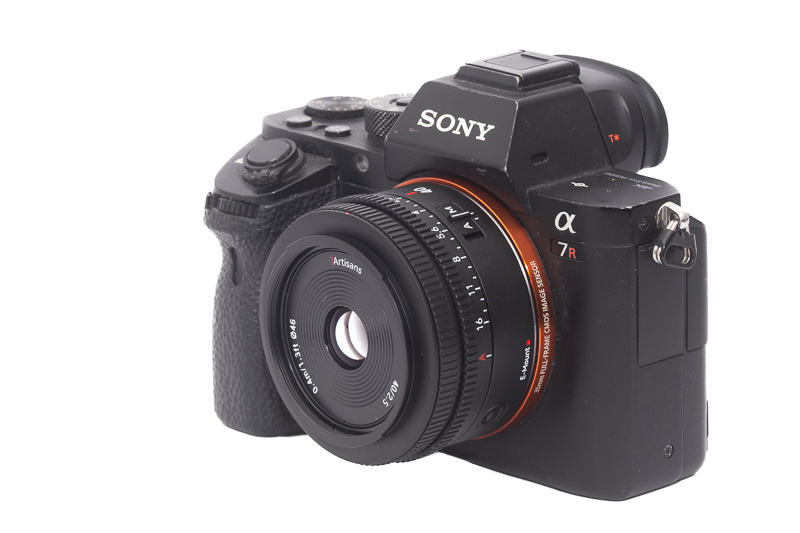
After the Sony FE 40mm 2.5 G and the TTArtisan 40mm 2.0 AF we now have a third compact 40mm lens with AF: the 7Artisans 40mm 2.5 AF. Let’s find out in this review how it compares to its competitors.
Sample Images


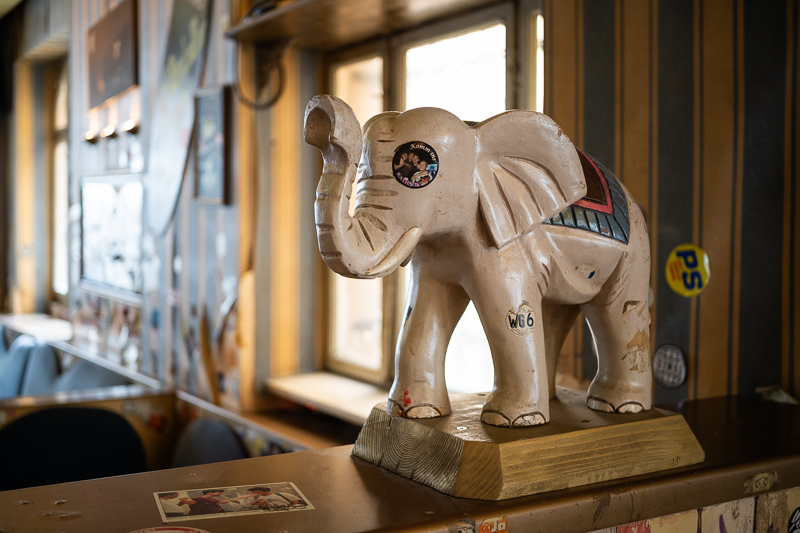
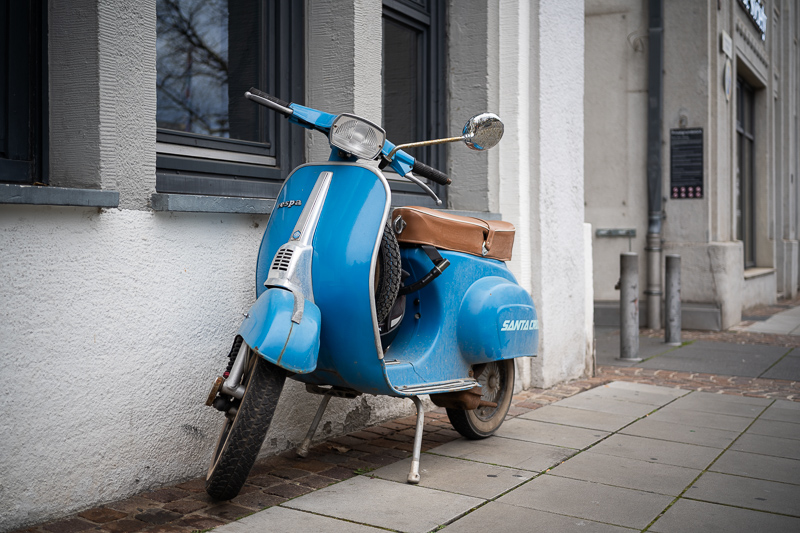
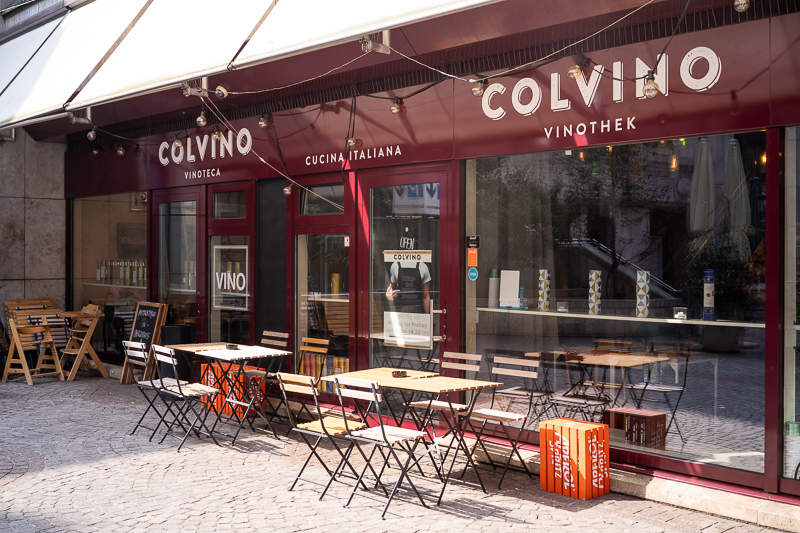
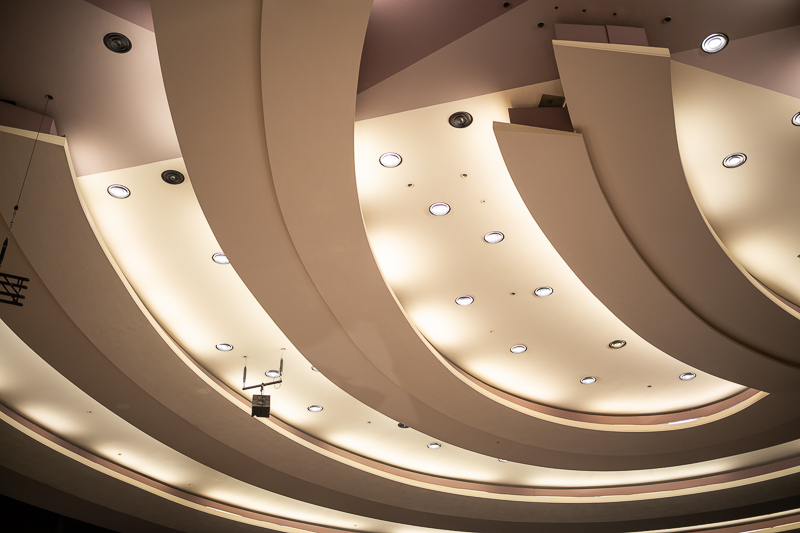
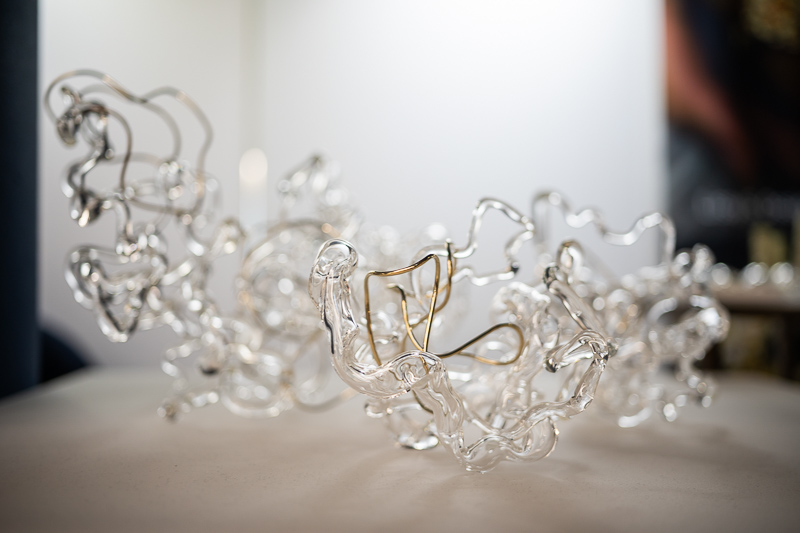
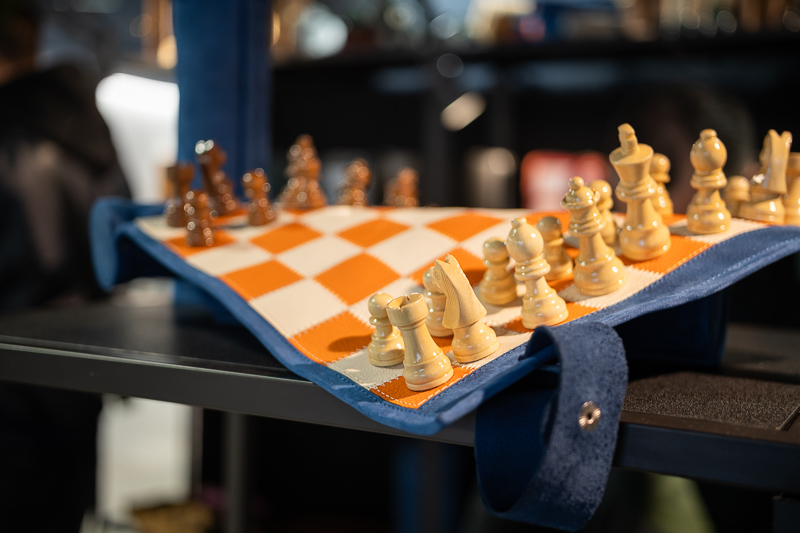
Most of the sample images in this review can be found in full resolution here.
Specifications
The 7Artisans 40mm 2.5 AF has the following specifications:
- Diameter: 63 mm
- Length: 37 mm
- Weight: 88g (without hood[8g], without caps)
- Field of view: 56.1° (diagonally)
- Filter Diameter: 46 mm
- Number of Aperture Blades: 9 (rounded)
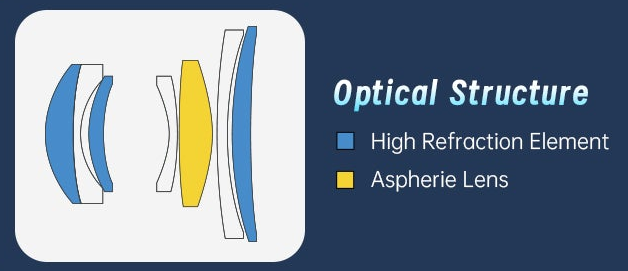
- Elements/Groups: 7/6
- Close Focusing Distance: 0.4 m
- Maximum Magnification: 1:7.8 (measured)
- Mount: Sony E, Nikon Z, L-mount
buy from 7Artisans Shop | Pergear | Amazon.com | Amazon.de | ebay.com | ebay.de | B&H (advertisement/affiliate links) for $159
Disclosure
Pergear sent me a sample of this lens for reviewing purposes. Thanks a lot!
Handling / Build Quality
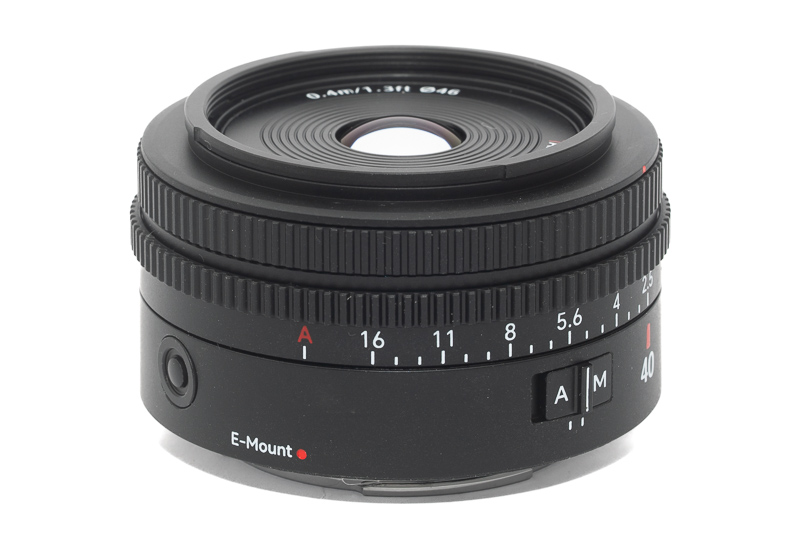
Despite its low price this 7Artisans 40mm 2.5 AF comes with the full set of controls: AF/MF switch, aperture ring and lens button. Apparently there was no space for something structured close to the bayonet for easy mounting and unmounting the lens though.
The outer casing seems be made mostly from polycarbonate, the bayonet part is made from metal.
The focus ring actually has a very nice and even resistance and it alsways takes 180° from the minimum focus distance of 0.40 m to infinity. The manual focus experience surely leaves something to be desired though: the focus motor has noticeable steps and for setting exact focus some more (and smaller) steps would have been appreciated.
The aperture ring has a third-of-a-stop click-stops and cannot be declicked.
The AF/MF switch is also a bit of an oddity: on all other lenses I have used so far that have a vertically oriented AF/MF switch, the top setting is “AF” and the lower setting is “MF”. Here it is the other way round.
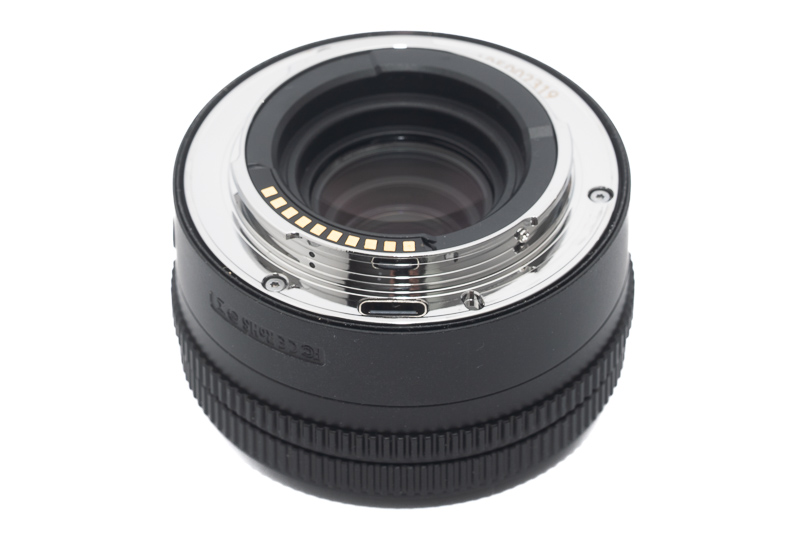
At the bottom you can find a USB-C socket for potential firmware updates.
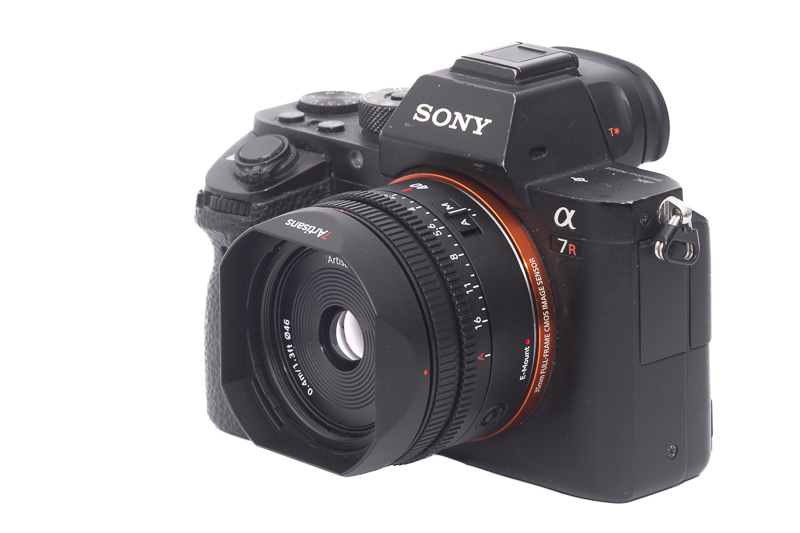
The 7Artisans 40mm 2.5 AF ships with a square hood and here square literally means square, not rectangular.

This 7Artisans 40mm 2.5 AF is a very small lens and one of the smallest AF lenses for the E-mount systen. It is noticeably smaller and lighter than the Sony FE 40mm 2.5 G and only have the weight of the TTArtisan 40mm 2.0 AF.
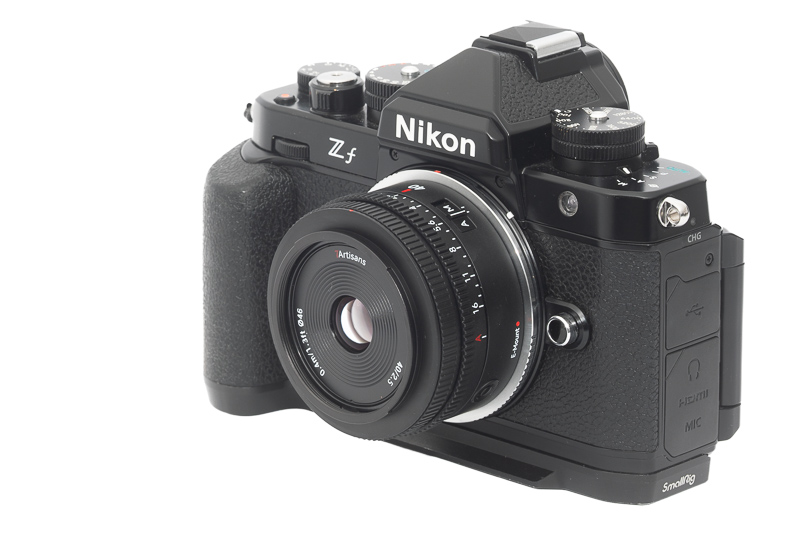
On my Nikon Zf the lens worked very well with the megadap ETZ21pro+ adapter and with slightly slower autofocus also via the Viltrox E-Z adapter. In both cases the lens is being recognized as 40mm f/2.7 though. On the Neewer ETZ adapter it neither focused nor was it possible to change the aperture.
Autofocus
I am not shooting sports or fast moving animals/humans so if you want to know if the lens is fast enough for this, or how it compares to other lenses in this segment, you may have to look for a different review with a more detailed assessment of this aspect.
The AF is not super fast and a little bit noisy. For not very demanding applications it worked perfectly fine though.
Vignetting
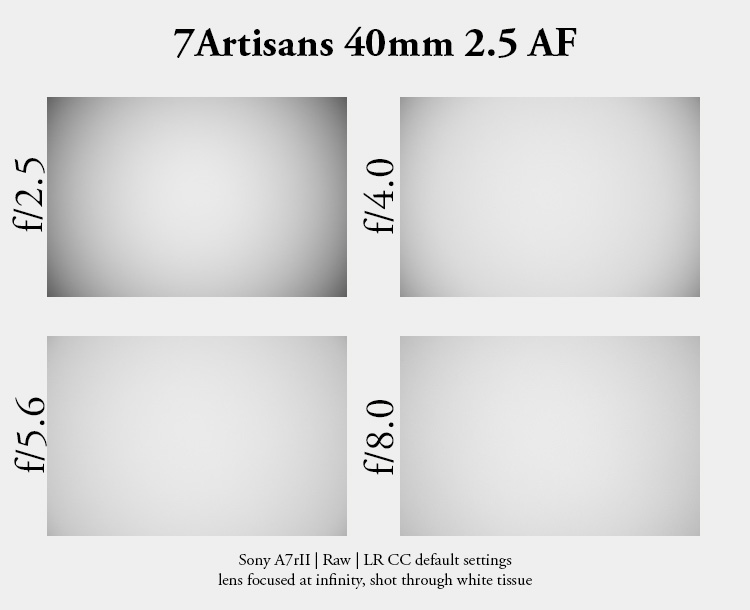
| f/2.5 | 2.8 EV |
|---|---|
| f/4.0 | 2.0 EV |
| f/5.6 | 1.5 EV |
| f/8.0 - f/16 | 1.3 EV |
After seeing the tiny front element you might already be afraid where this is going, but the vignetting figures are not overly high compared to similar lenses. The Sony FE 40mm 2.5 G shows 0.3 to 0.5 EV less vignetting at shared stops, the TTArtisan 40mm 2.0 AF shows similar vignetting values in the f/2.8 to f/4.0 range, but more when stopped down further.
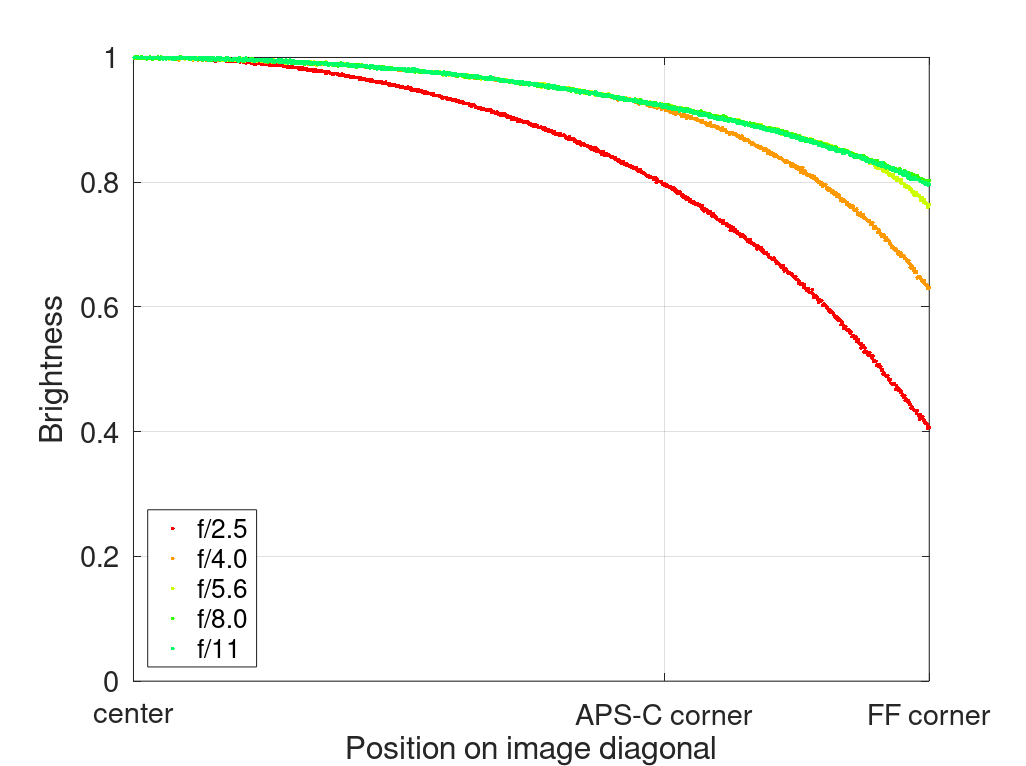
It is recommended to have a look at this article first to get an idea how this brightness graph works.
Sharpness
Infinity (42mp Sony A7rII)
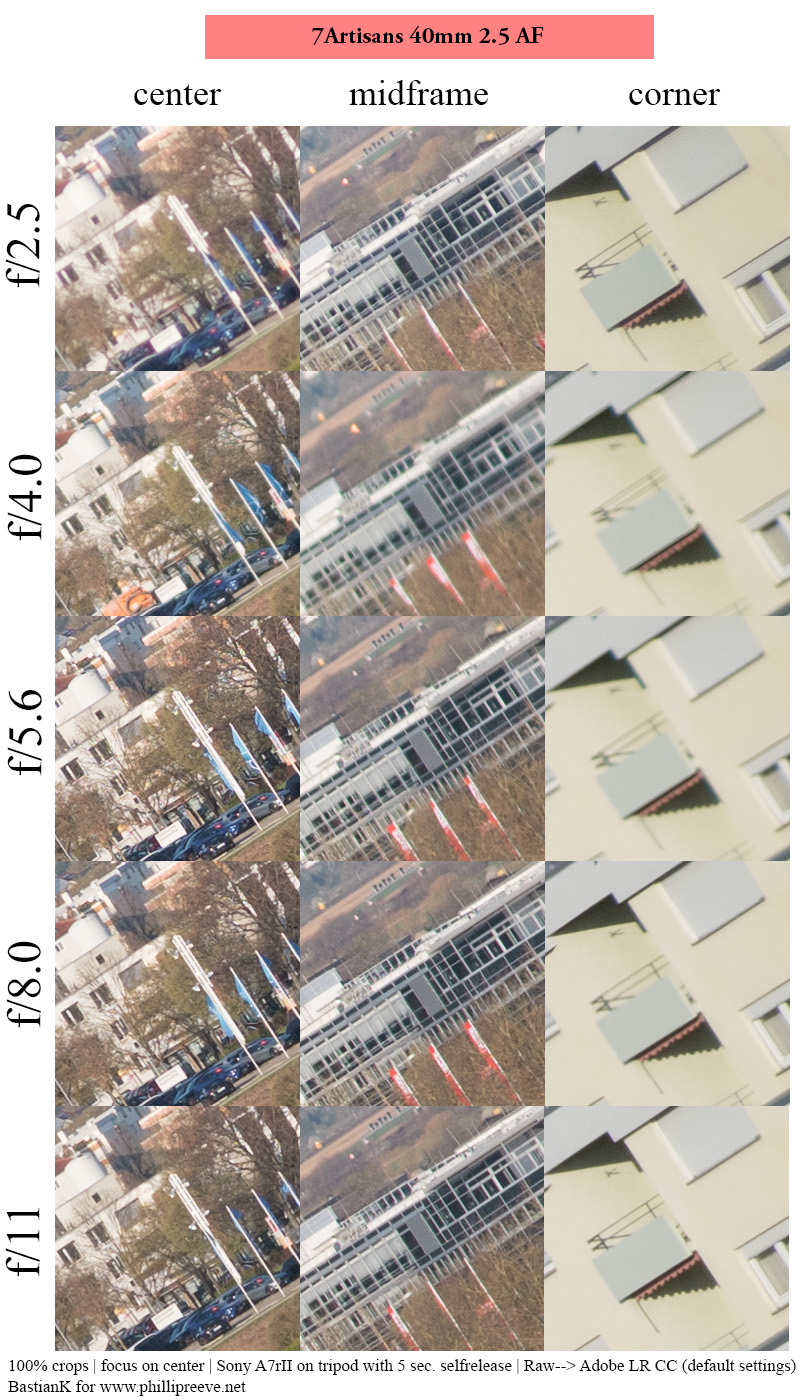
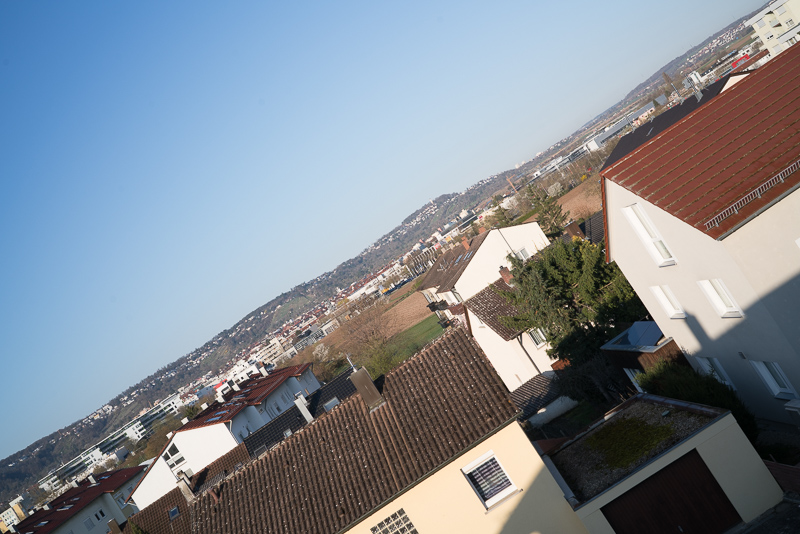
At f/2.5 we see a solid across frame performance, but the image is a bit softer due to spherical aberration.
On stopping down to f/4.0 we see something odd here. This lens – similar to some other compact lenses like the Artizlab 35mm 1.4 Classic or the Light Lens Lab 35mm 2.0 8e – shows an interesting combination of focus shift and field curvature. When taking a first series without adjusting the focus, I noticed there is hardly an improvement in the center of the frame visible (common for lenses with focus shift). When adjusting the focus for optimal performance in the center at working aperture at f/4.0, you can increase the center performance noticeably (as can be seen in the graph above), but at the cost of the performance in the midframe and corner regions (field curvature).
By cleverly adjusting the focus setting you can already get very good across frame performance at f/5.6. If the light levels allow stopping down to f/8.0 or better f/11 you can also do that and not worry about any of this.
The Sony FE 40mm 2.5 G shows an impeccable performance from f/2.5 across the whole frame. The TTArtisan 40mm 2.0 AF does need stopping down to f/11 for the corners to actually look good.
Portrait 1.2 m (42mp Sony A7rII)
For portraiture it isn’t so important how flat the field is, it is more interesting to see what the sharpness is like when focused at different parts of the frame to take field curvature out of the equation.
We will be looking at 100% crops from the 42mp Sony A7rII.
f/2.5 <—> f/4.0
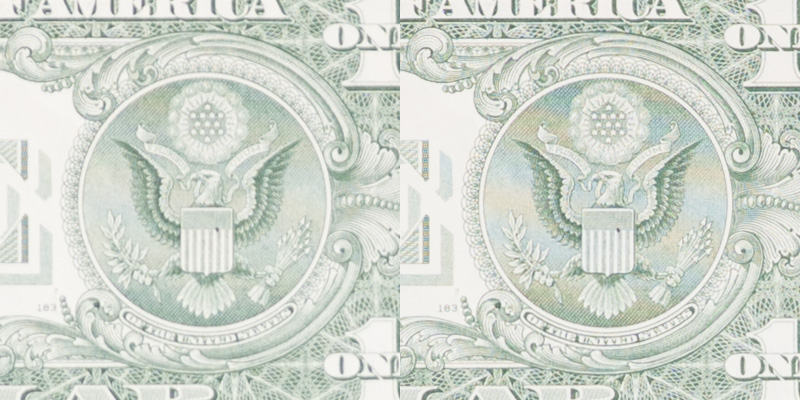
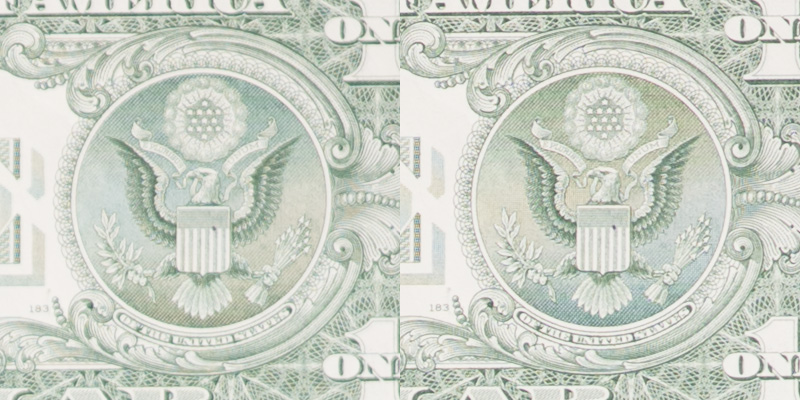

At portrait distances we see a good performance at f/2.5 and a very good performance from f/4.0.
The TTArtisan 40mm 2.0 AF performs similar in the center and inner midframe but looks worse in the outer midframe area. Again the Sony FE 40mm 2.5 G shows higher contrast and resolution at f/2.5, more than this 7Artisans lens stopped down.
Close 0.4 m, 1:7.8 (42mp Sony A7rII)



This 7Artisans 40mm 2.5 AF shows a good performance at close distances from f/2.5 – much better than the TTArtisan 40mm 2.0 AF which comes with the same minimum focus distances.
The Sony FE 40mm 2.5 G focuses noticeably closer (offering a maximum magnification twice as high) and despite that looks least as good at shared apertures.
Flare resistance
Sadly, this is the section where we most often encounter problems with the affordable lenses from China – with some of Viltrox’ lenses like the Viltrox AF 14mm 4.0 FE being a rare exception.
Will this 7Artisans lens with its small front element also be a positive surprise?
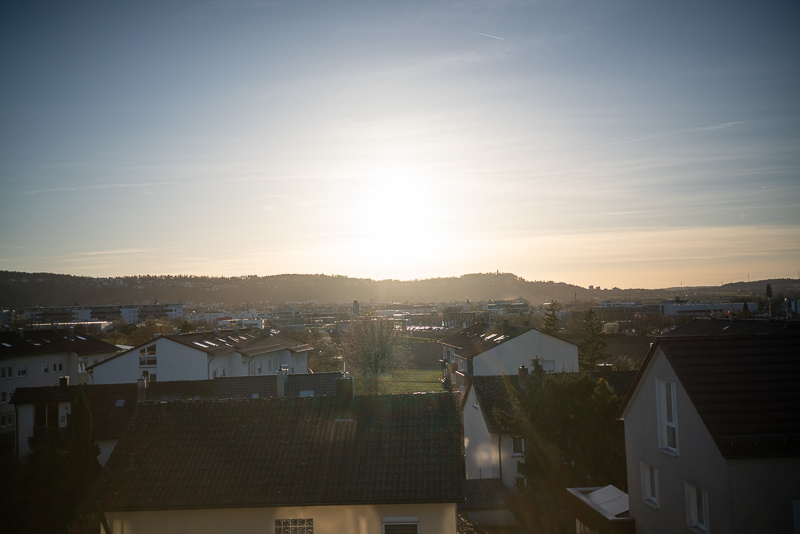
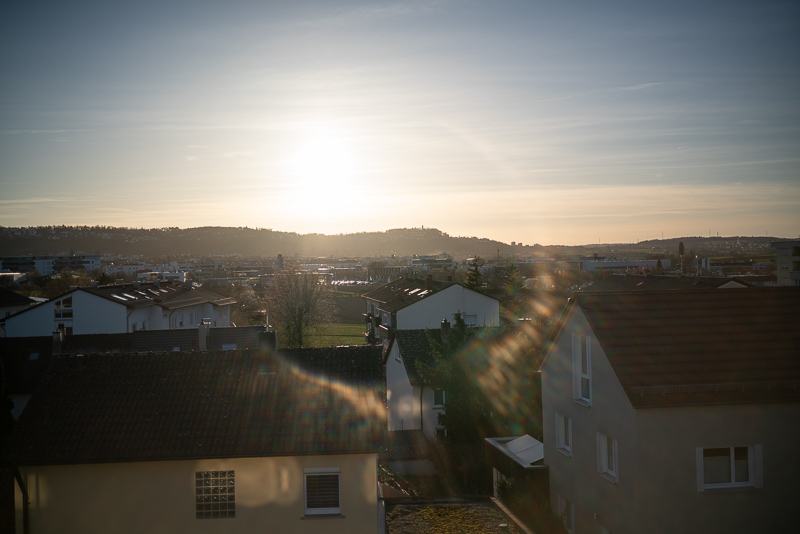
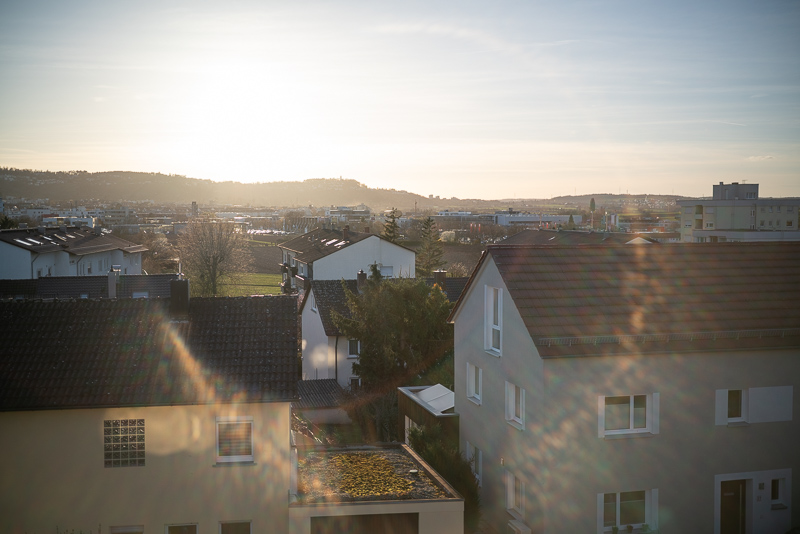
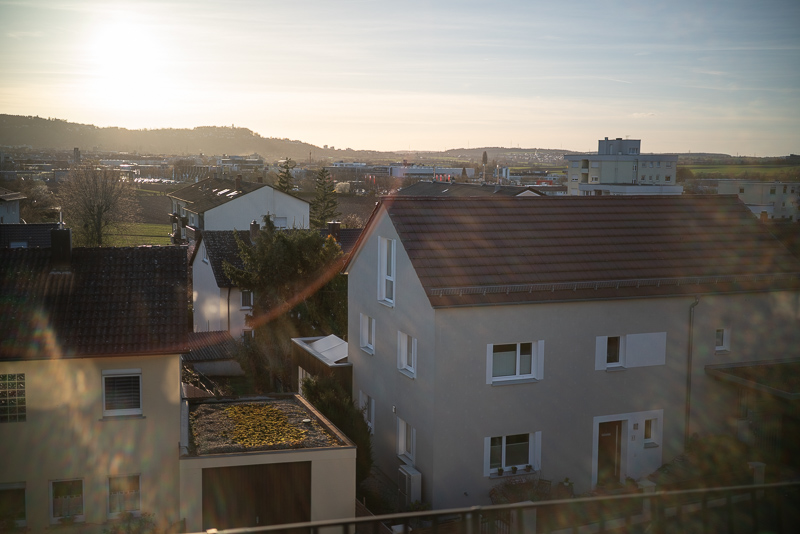
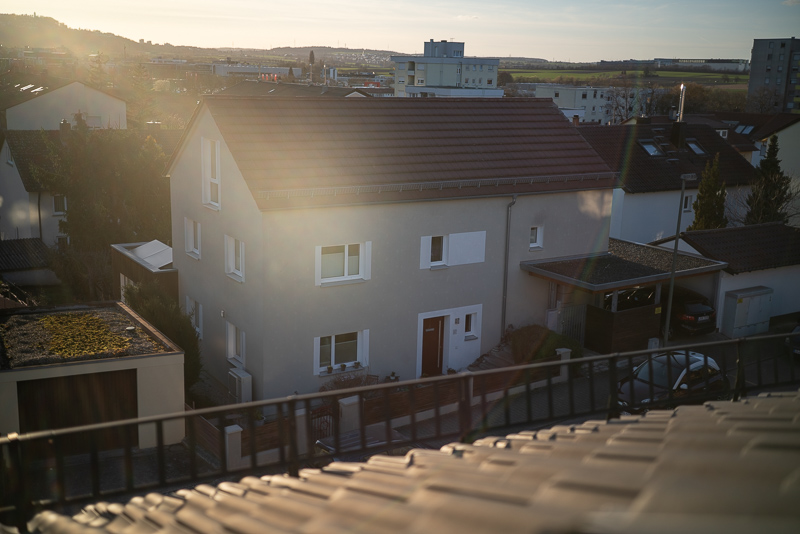
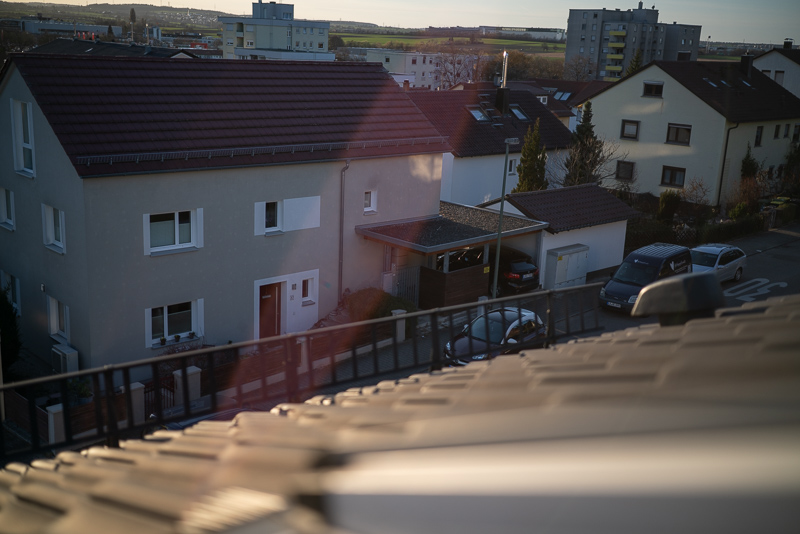
At the maximum aperture we see all kind of artefacts: internal reflections, ring flares and huge ghosts. Also a strong light source outside the frame can lead to severe artefacts – despite using the hood.
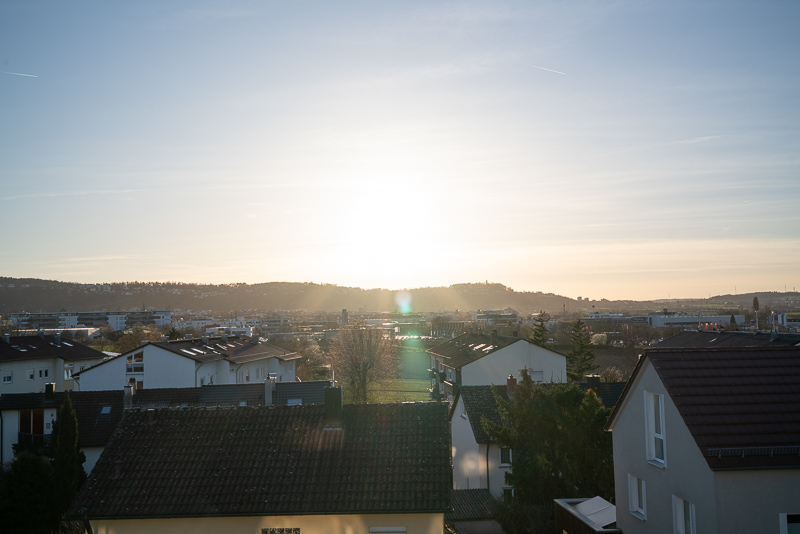
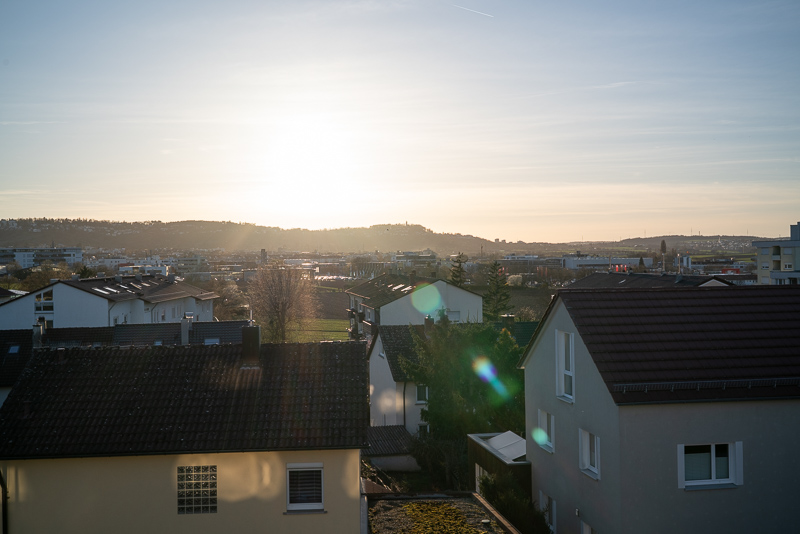
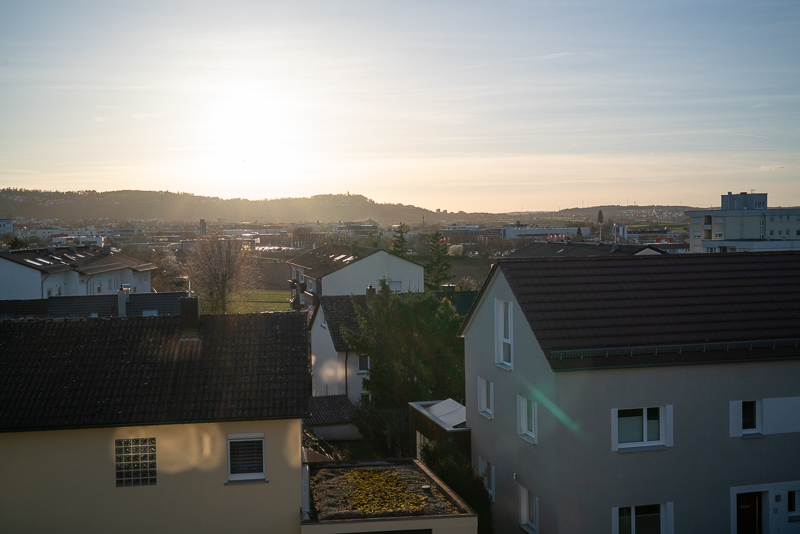
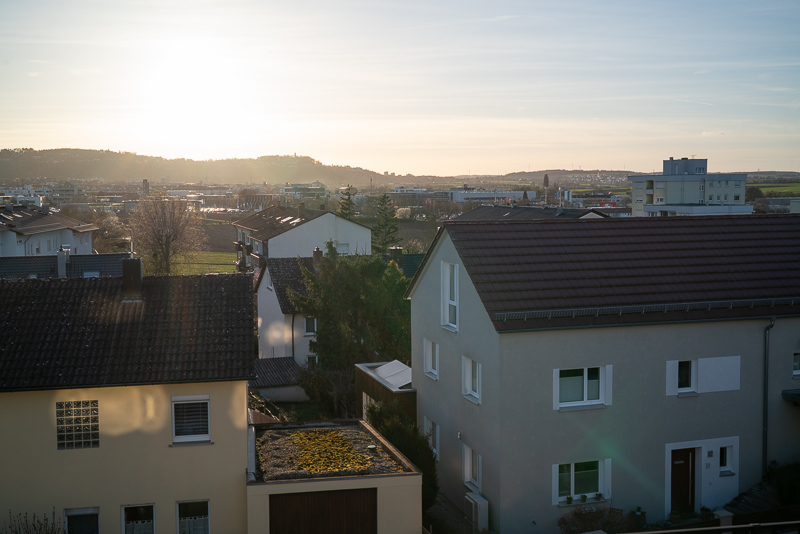
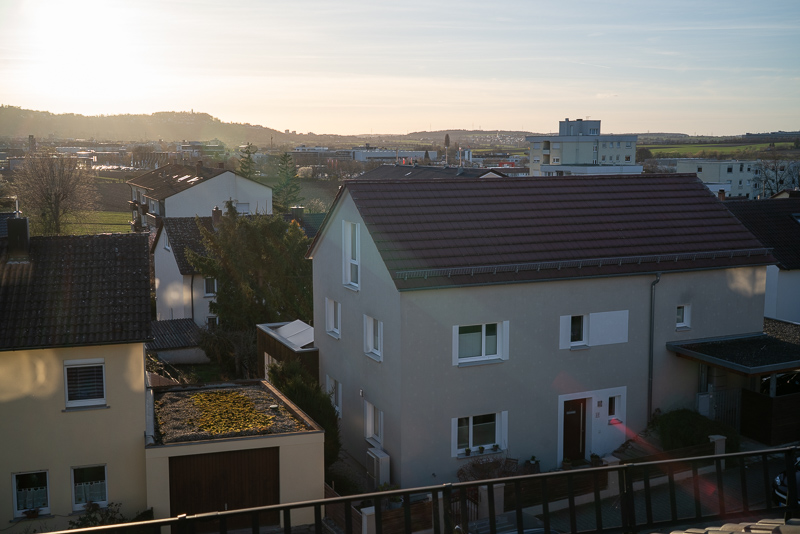
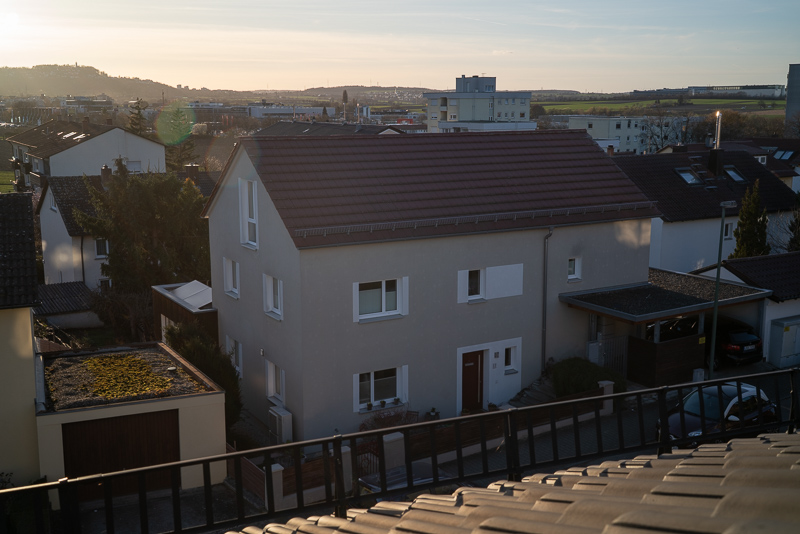
Stopped down the situation is better, as internal reflections are not really a problem anymore. The same cannot be said about all of those ghosts though.
Here actually the TTArtisan 40mm 2.0 AF showed a solid performance in our tests and also the Sony FE 40mm 2.5 G – while not being one of Sony’s best lenses in this category – had way less issues.
Coma
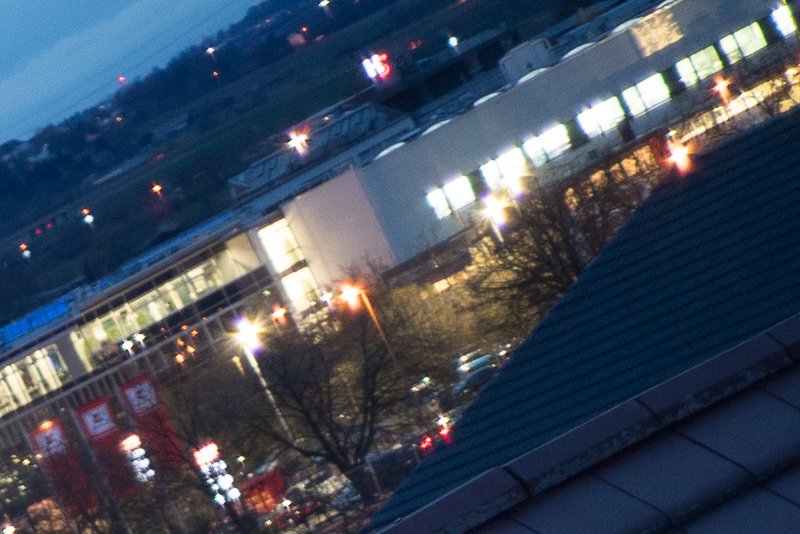
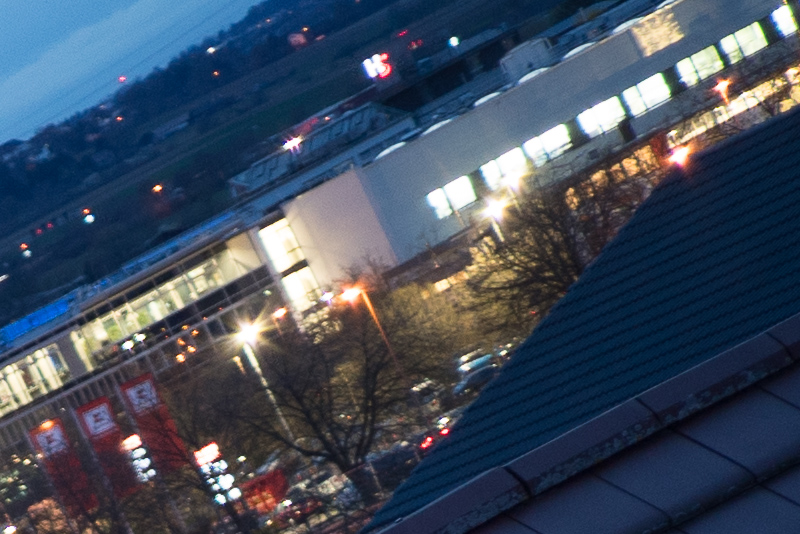
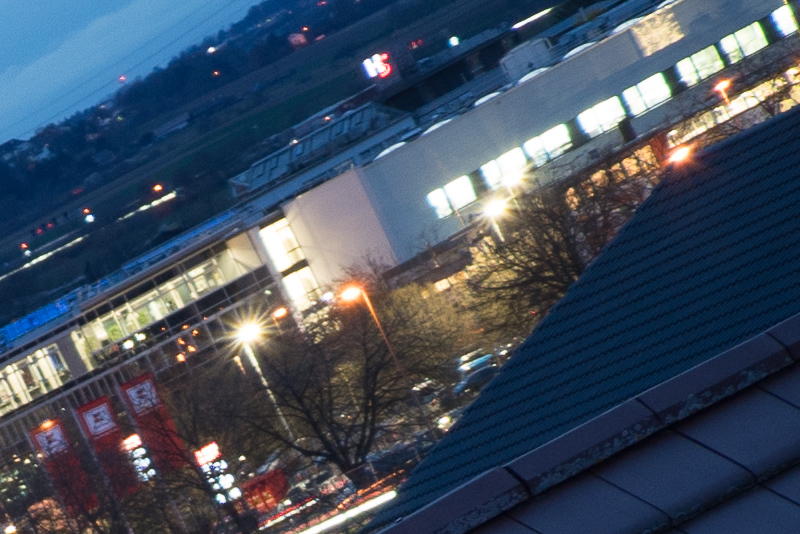
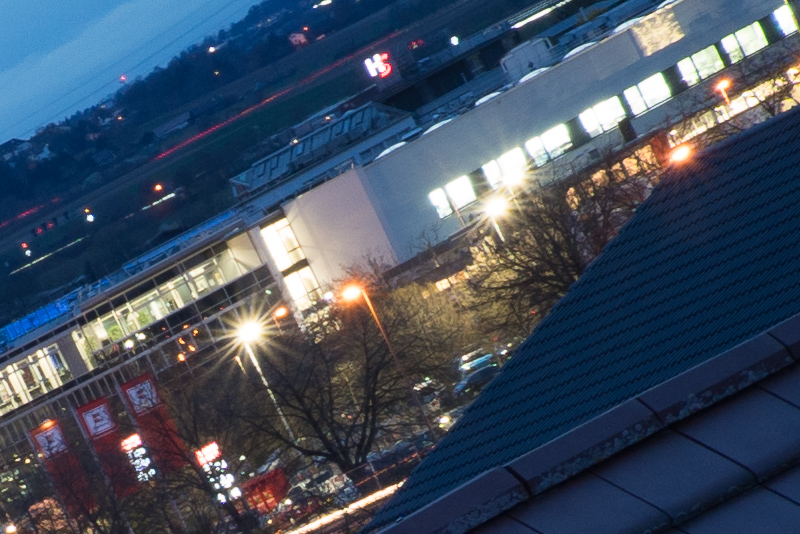
100% crops from extreme corner, focused on center, Sony A7rII
We see some Coma at f/2.5, but already stopped down to f/4.0 it is mostly gone. The TTArtisan 40mm 2.0 AF showed bigger artefacts at f/2.5, the Sony FE 40mm 2.5 G actually showed a similar performance with only minor artefacts (and less soft corners).
Distortion
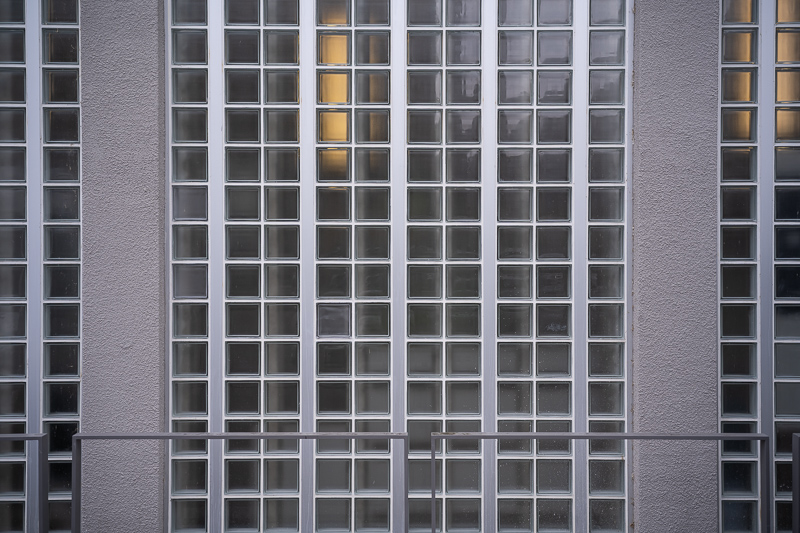
The 7Artisans 40mm 2.5 AF shows a low amount of pincushion distortion. You can dial in -4 in CameraRaw to correct this.
Bokeh
In terms of shallow depth of field a 40mm 2.5 lens will not break any records here, but let’s still have a look at the quality of the bokeh, especially as the Sony FE 40mm 2.5 G was a bit on the harsh side.
Close Distance



For close up photography the maximum magnification of 1:7.8 can be a bit limiting (especially compared to the much closer focusing Sony FE 40mm 2.5 G). The bokeh does look pretty nice at these distances though.
Mid Distance


Also at mid distances the bokeh looks unobtrusive and smoother than what I have seen from the Sony FE 40mm 2.5 G. The TTArtisan 40mm 2.0 AF seems to sit inbetween: not as harsh as the Sony, not as smooth as this 7Artisans. The TTArtisan does have the advantage of being slightly faster though.
Long Distance

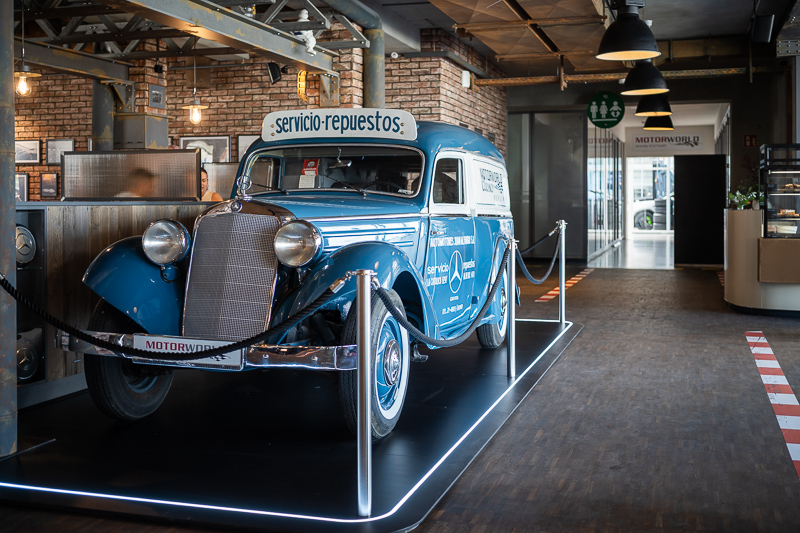

At longer focus distances – thanks to the moderate specifications – there will only be a limited amount of background blur. I also didn’t encounter any issues caused by field curvature here, which we have seen from many other compact lenses.

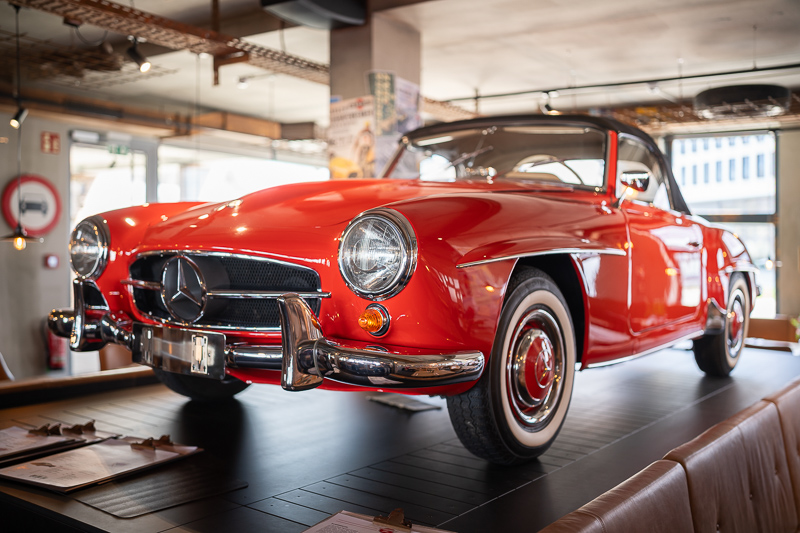
Above you can see a comparison to a much faster lens, the Viltrox AF 35mm 1.2 FE LAB. This obviously isn’t a fair comparison, considering the Viltrox lens is significantly bigger and more expensive.
Sunstars
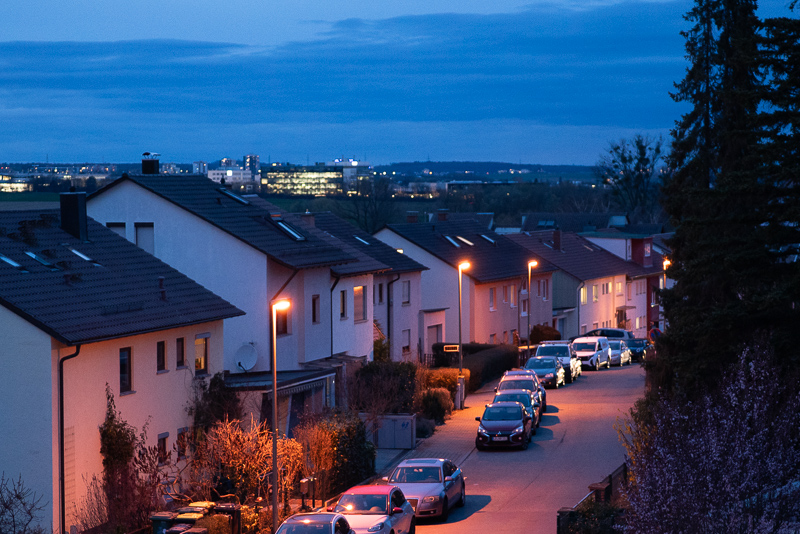
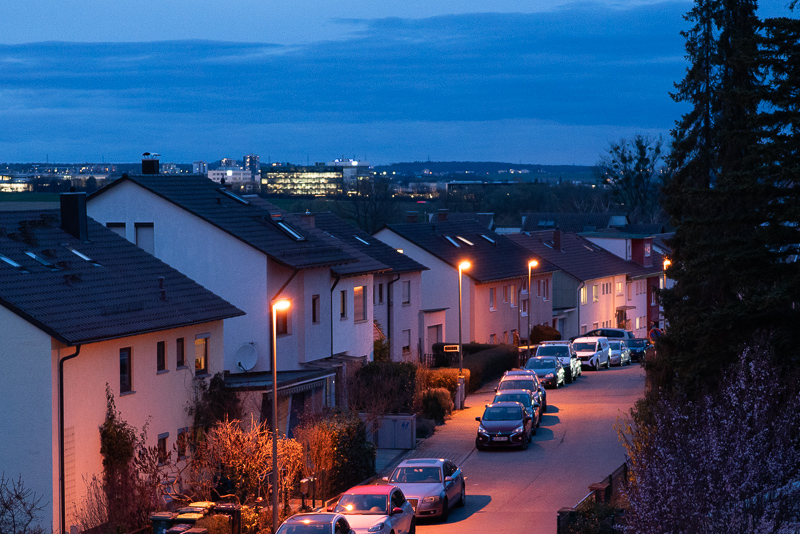


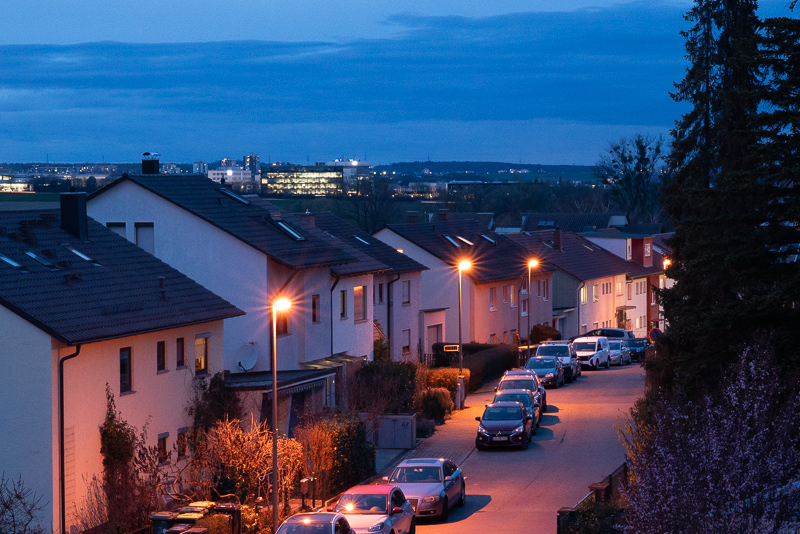
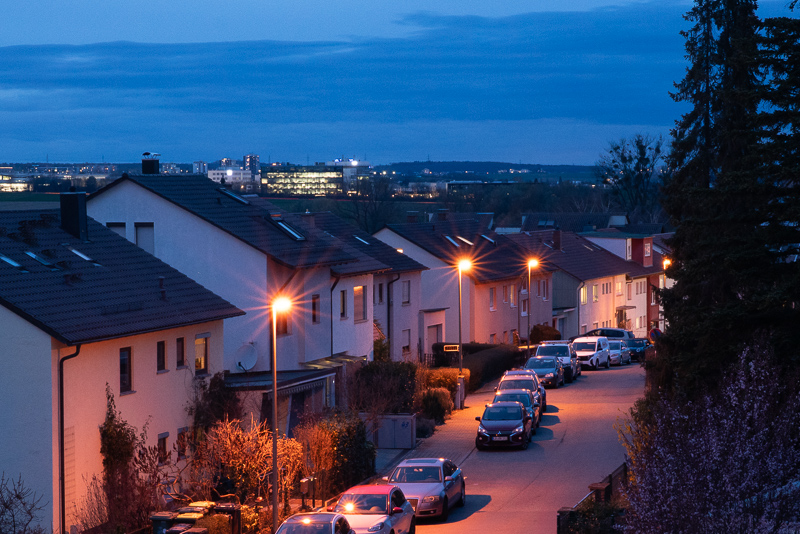
As is often the case with lenses featuring 9 aperture blades, the sunstars are not very well defined. For blue hour scenes they do look ok though and are almost symmetrical from f/11 to f/16.
If you want to know more about sunstar rendering of different lenses have a look at this article.
Chromatic aberration
Lateral
Similar to many other recent E-mount lenses also this 7Artisans 40mm 2.5 AF features a built-in lens correction profile for lateral CA that will be recognized in most raw converters, so you won’t be seeing any in your pictures.
Longitudinal
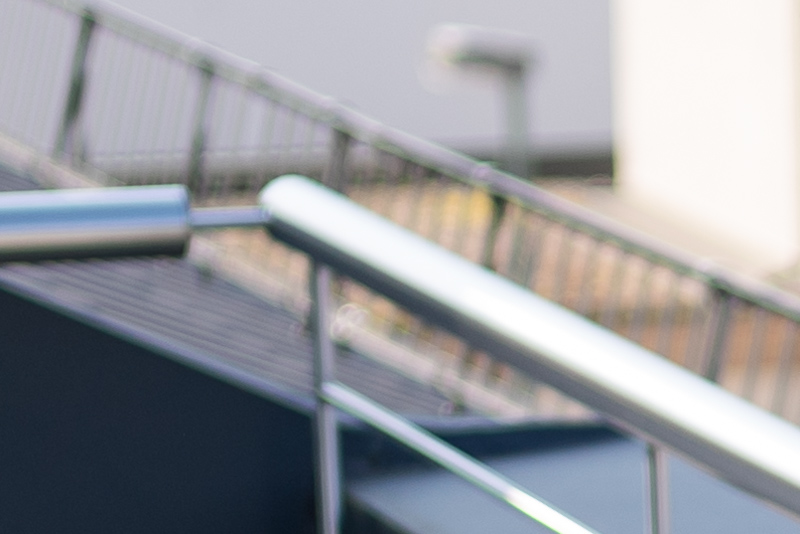
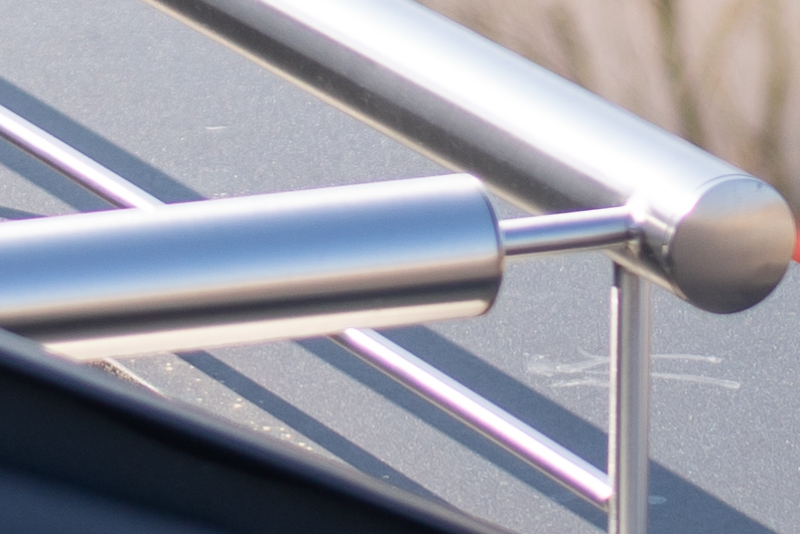
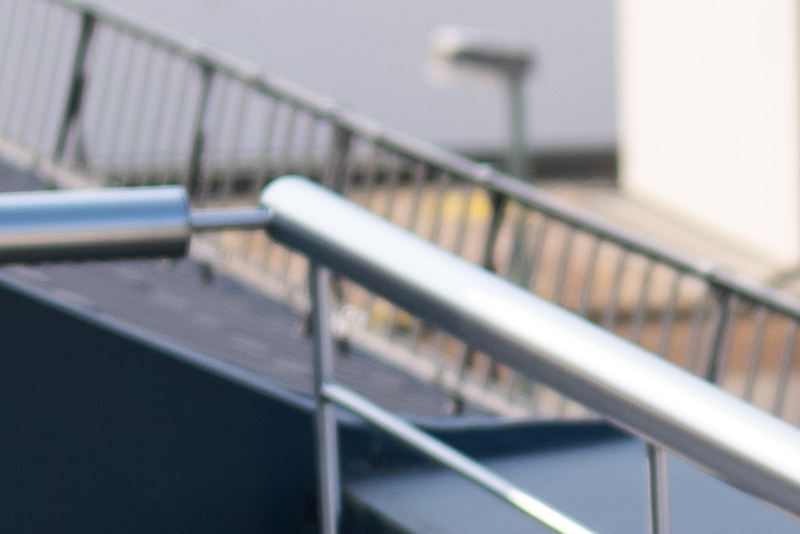
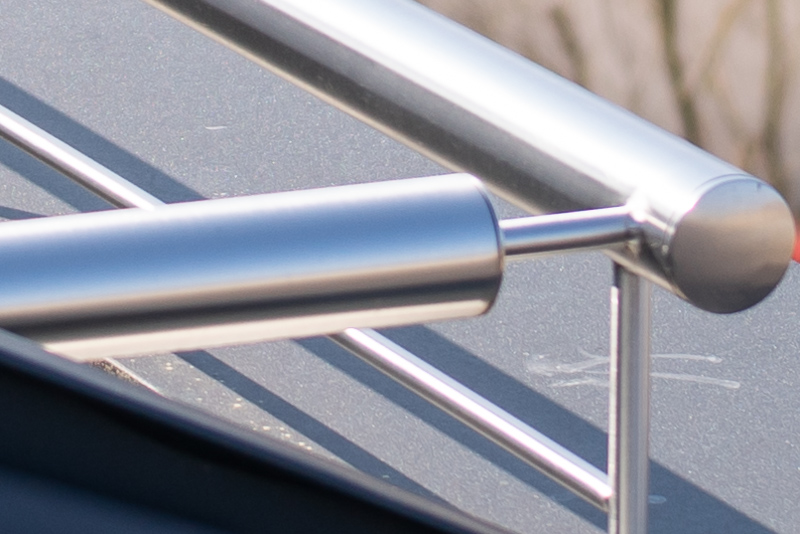
We can see some minor bokeh fringing, similar to the TTArtisan 40mm 2.0 AF. The interesting thing here is, that the Sony FE 40mm 2.5 G actually performed noticeably worse than its cheaper competitors.
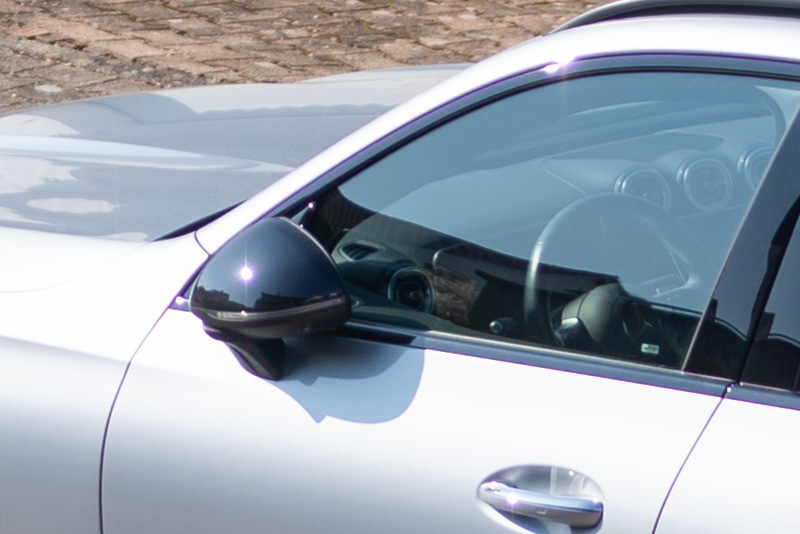
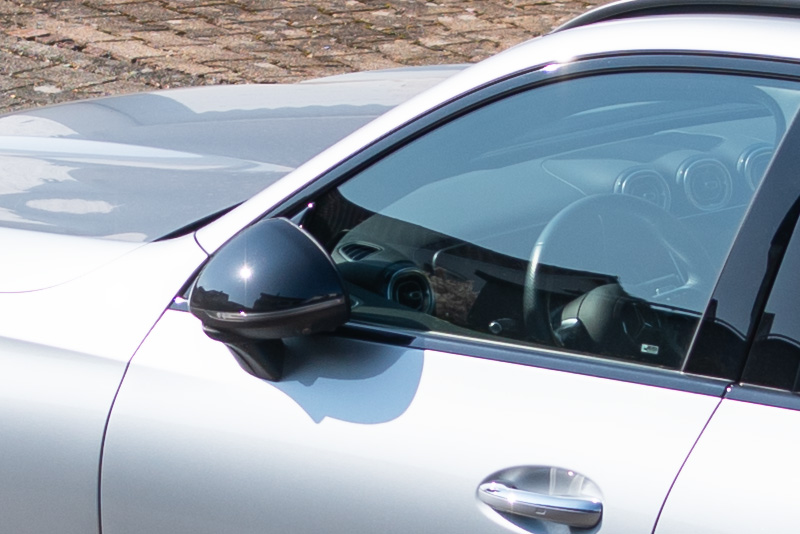
Purple fringing is surely noticeable at f/2.5, stopped down to f/4.0 most of it is gone already. The TTArtisan 40mm 2.0 AF and the Sony FE 40mm 2.5 G showed a similar performance.
Conclusion
good
|
average
|
not good
|
It seems that now all the Chinese manufacturers offering affordable AF lenses have a 40mm f/2.0 or f/2.5 lens in their portfolio, giving us a lot of choice, so who is this 7Artisans lens for?
I always considered Sony’s FE 40mm 2.5 G to be a bit on the expensive side for what it is. Compared to Sony’s own cheaper lenses, the additional controls were a good sales argument, but the Chinese manufacturers now match those at significantly lower price points.
This 7Artisans 40mm 2.5 AF is a solid, compact and affordable prime lens. As is often the case for these lenses, flare resistance can be a problem. There is a bit of field curvature, but stopped down to f/8.0 or f/11 it also works very well for demanding landscape or architecture subjects.
If you are looking for a small and affordable 40mm prime – maybe to complement your slow super zoom – this lens might be what you are looking for, but also have look at the alternatives below to find out which of these (sometimes very similar) lenses could work best for you.
buy from 7Artisans Shop | Pergear | Amazon.com | Amazon.de | ebay.com | ebay.de | B&H (advertisement/affiliate links) for $159
Alternatives
E-mount
Sony FE 40mm 2.5 G:
Compared to all the alternatives listed here the Sony lens is very expensive. It has the highest contrast and resolution of all these lenses but also creates harsher bokeh and shows stronger bokeh fringing. If your biggest concerns are resolution and contrast and not so much bokeh and price this might be your lens.
buy from Amazon.com | Amazon.de | ebay.com | ebay.de | B&H (advertisement/affiliate links) for $548
Viltrox AF 40mm 2.5:
The Viltrox 40mm 2.5 seems to be the optically worst among these compact 40mm AF lenses and also comes without any controls. I would rather be getting one of the alternatives.
buy from Viltrox Shop | Amazon.com | Amazon.de | ebay.com | ebay.de | B&H (advertisement/affiliate links) for $158
TTArtisan 40mm 2.0 AF:
While still a small lens, the TTArtisan is noticeably bigger but also a little bit faster. In many of the categories these lenses perform similar, the main difference I see is this 7Artisans’ slightly nicer bokeh.
buy from TTArtisan Shop | Amazon.com | Amazon.de | ebay.com | ebay.de | B&H (advertisement/affiliate links) for $168
You can find many more alternatives in our Sony FE Guide.
Z-mount
Nikon Z 40mm 2.0:
The Nikon lens is almost the same size as the aforementioned TTArtisan and therefore bigger than the lens being reviewed here. The Nikon’s optical performance is similar, it does not come with any controls and for cost cutting measures doesn’t even have a metal mount. The Nikon Z 40mm 2.0 is only a little more expensive than the Chinese offerings, so I am not sure how appealing those are to Nikon users.
buy from Amazon.com | Amazon.de | ebay.com | ebay.de | B&H (advertisement/affiliate links) for $197
Sample Images







Most of the sample images in this review can be found in full resolution here.
Further Reading
- All Lens Reviews
- Lens Aberrations explained
- Review: Viltrox AF 14mm 4.0 FE Air
- Review: Sigma 40mm 1.4 Art
- Review: Voigtländer VM 40mm 1.4 Nokton MC
- Review: Viltrox AF 85mm 2.0 FE EVO
Support Us
Did you find this article useful or just liked reading it? Treat us to a coffee!

 via Paypal
This site contains advertisement/affiliate links. If you make a purchase using any of the links marked as advertisement/affiliate links, I may receive a small commission at no additional cost to you. This helps support the creation of future content.


Latest posts by BastianK (see all)
- Analogue Adventures – Part 58: Adox Color Mission 200 C-41 - October 21, 2026
- Review: Nikon Z 35mm 1.2 S Nikkor - October 17, 2026
- Prime Day Photoshop+Lightroom offer for Amazon Prime Members (EU/UK) | Update: also at B&H - October 7, 2026
Long-time lurker, :wave: , E-mount aside I gotta say that the immediate point of comparison would be with the Canon EF 40/2.8 which that front end looks very like and whose flare resistance is also very questionable.
Thanks for the review, between the rendering and the even smaller size I would’ve been pretty interested in this one, but the flare handling kills it for me… I went from the Samyang 45/1.8 to the TTA 40/2 and I’m sticking with the latter… As a small/in-between option to my 35GM & TTA 50/1.4. Btw it have any kinda cap for the square hood?
Thanks for this review.
I had the Samyang 45 1.8, thought the rendering ugly, got the Viltrox 40 2.5 and am delighted with it: not so sharp, perhaps, but smoother rendering works for portraits. sharp enough for big landscapes when stopped down. Looking forward to the Viltrox 55 1.8, which I hope you might test…
Thanks for your impressions. I’ll probably buy it. At 90g, it’s so light that I can easily take it with me just in case when I’m hiking with the 1.2GM beast.
Thanks for the review. It’s great to see the HUGE difference in perspective between 35mm and 40mm: for those who say “it’s only 5mm,” the 35mm is a wide-angle lens, the 40mm is much closer to the perspective of human vision.
Yeah, the “only 5mm” could apply to 85-90mm lenses and longer, not with wide lenses; definitely not with UWA where it makes absolutely huge differences. Many people are not aware of this, and I usually point them to some of Bastian’s reviews that contain handy comparisons (e.g. between 9 and 11mm, which doesn’t sound like much).
To me 40mm often feels neither here nor there, and it definitely can’t replace 35mm for me. I see it more like a 50mm alternative, especially in urban environments with limited working space.
I am with you on this one
I agree, the question of millimeters vs. FOV is simple for anyone who knows even a little geometry. What I meant is that the 40mm is much closer to what is commonly called “normal,” while the 35mm enters the wide-angle range; it’s like a threshold. Among other things, it enters the “smartphoner” range in terms of FOV, which in my opinion makes the 28-35mm less interesting.
The 7Artisan has a more finished feel with the smooth contour hood attached, and the brand logo can go on the bottom. Hard to beat 90+ grams except for the flaring, which is disqualifying for sunsets and definitely worse than the Canon 40. As a lens cap, way more useful than the Viltrox 28 f4.5 and forget everything else. On an a7riii, I don’t see how the Sony could be as much fun to bring along. When every 5mm of focal length makes a difference, including resolution at distance, it is easy to add this little one to a better 35 or 45.
Hello Bastian,
thanks for another great review.
I’m very curious about two new 35mm that came out recently (or are about to come out):
Samyang AF 35mm F1.8 P FE and
Viltrox AF 35mm F1.8 Sony FE EVO.
I’m hoping one of them finally shows significant improvements over the Sony FE 35mm 1.8 and Sigma 35mm F2 DG DN.
Any chance you might be able to get your hands on one or both of them soon?
I should be getting a review sample of the Viltrox 35mm 1.8 soon, which I am very much looking forward to.
I bought the Sony 40mm f2.5 before the cheaper alternatives came out but I recently bought the TTA 40mm f2 for its wider aperture but it went straight back as it kept calling up the magnified view when my hand was nowhere near the focus ring and it also kept bricking the camera.
I’ve ran into issues with cheaper new marque MF lenses too and this last AF TTA 40mm f2 has I think convinced me that going with these cheaper new brands often leads to issues which aren’t necessarily highlighted in reviews, the Artralab 35mm f1.4 and its fantasy apertures being an example.
I hope this 7A 40mm is issue free but for now I think I’ve decided to steer clear or the new cheaper brands.
Don’t be too discouraged over Chinese lenses. I’ve bought or borrowed a few, and I didn’t run into any major issues (other than some focusing rings being a bit stiffer than I’d prefer on TT lenses, but they got better with prolonged use).
There are things they can (and no doubt will) perfect still, but the build quality is often better than what you can with first party manufacturers, or at least on par.
As long as you can return them, they are worth the risk when you consider what you can get for the money… Besides, I had to send back Sony and Zeiss lenses in the past; that happens with most if not all brands. They can be faulty too, from decentering to AF or OIS failure etc.
It’s useful that you shared your experience though. That’s why I prefer to buy these lenses from EU, even if it means used copies; I don’t have to worry about returns.
Communication with China can be a real experience sometimes, with many sellers. 🙂
The things that have pushed me over the edge are the inaccurate aperture settings (wildly so in the case of the Artralab, less so in others such as the Pergear 35mm f1.4) and that iffy AF 40mm f2. The flare issue seems to be a big thing too and in some cases performance seems to be far behind mass market film era lenses I have.
These days I like kit to just work and get out of the way. I don’t want to fight kit.
All those things really vary from one lens to the next, I wouldn’t say all Chinese lenses suffer equally from most, hence this list:
https://phillipreeve.net/blog/the-best-fullframe-lenses-from-china/
As for the 40/2, have you tried updating the firmware? There was a lot of talk about the different versions on Fred Miranda and I never even used mine before updating it, haven’t had AF issues on my A7R IV. What film era lens that small do you like better? Just curious!
Yeah buying two of the cheapest, lowest end lenses and then complaining about all lenses from that country doesn’t make a lot of sense.
Nice review as usual, Bastian. At least on Z-mount, I think the Viltrox is about on the same level as the Nikkor 40… Viltrox is slower and has worse flare resistance; the Nikon is less sharp and more CAs. Not sure it matters much since better options seem to have arisen.
Here are my observations:
1. AF on the A7 mark I is precise and about as fast as Sony 28/2. However, when you refocus even if you don’t change the subject and distance it starts focusing anew, as of it wasn’t already close to the point.
2. The aperture ring on the lens suggests that there should be 1/3 stops, but used on my A7 there is actually only one aperture setting between the full stops (e.g f6.7 between f5.6 and f8).
3. I took pictures of an evenly lit surface with this lense and Sony 28/2 at the same ISO setting. Here are the results:
1/45 f2.4 (Sony) – 1/30 f2.5 (7artisans).
If Sony is really a f2 lens then 7artisans is probably f2.8 or f3.2.
Despite of this, I’ll keep the lens. I like it very much. It’s small, light, sharp and fast enough for me. It’s like Panasonic 20/1.7 (m43) which is a great lens.
Correction: I repeated the “test” I described above (under 3) with a spot-center metering instead of the multi metering. This resulted in the same shutter speed at f2.4 (Sony) and f2.5 (7artisans). The deviation which occurred earlier using the multi metering mide is probably caused by the much stronger vignetting of the 7artisans lens. The camera “perceives” what it meters being much darker because of the vignetting.
So I take my assumption regarding the actually maximum aperture back. No complaints in this respect.
One update to the point 2:
As I said, the camera shows only one aperture setting between the full stops. But when you look into the lens and move the aperture ring you can see that there are actually two steps between the full stops. Maybe this has to do something with the firmware or with the age of my camera. Anyway, we are not shooting color positive film with this lens, so 1/3 stops don’t matter.
I have an a7s (original) on the website it is mentioned that this camera is partially compatible. Have you tested the lens on this camera (or the a7 or a7r original)? I am interested to know how the af performance (s-af) in photo is. If it is acceptable then i would be interest so i can make a very small setup with my a7s, thx