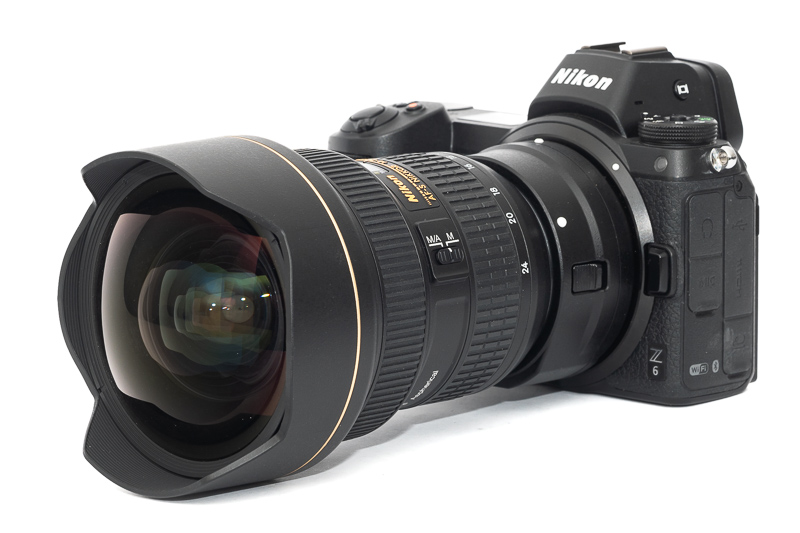
In 1979 Nikon released a lineup of cheaper manual focus lenses called “Series E” instead of “Nikkor”. Today we will have a closer look at the Nikon 50mm 1.8 Series E, probably the most popular lens of that series and definitely the smallest.
Sample Images
Nikon D800 | Nikon 50mm 1.8 Series E | f/4.0Nikon D800 | Nikon 50mm 1.8 Series E | f/8.0Nikon D800 | Nikon 50mm 1.8 Series E | f/4.0Nikon Zf | Nikon 50mm 1.8 Series E | f/1.8Nikon FM2n | Nikon 50mm 1.8 Series E | f/1.8 | Elite Chrome 200 | E-6
Interestingly out of the big camera manufacturers of the (D)SLR era only Nikon ever produced a 28mm 1.4 fullframe lens. They started in 1993 with the world’s first lens with these specifications, the Nikon AF 28mm 1.4D, and then released an updated version in 2017, this Nikon AF-S 28mm 1.4E. It was one of their last f/1.4 primes still designed for DSLRs, so let us find out what it is capable of in this review.
Martin recently reviewed Lomo’s replica of a Petzval lens. I commented, perhaps slightly snidely, that vintage Petzval lenses are still around, often for less money, and often with better centre sharpness – and certainly with a vast choice of models and thus rendition nuances.
Martin suggested I share my knowledge in an article. And like an inverse Spice Girl, one became two. This one seeks to introduce you to the weird magic of Petzval lenses and their widespread availability from old cinema film projectors. The next will look at adapting them, and indeed any old projection lens, to a modern-day camera.
So here we go, I guess.
All pictures were taken on full-frame evils: a Sony a7r2 and an a7cr. Some were cropped; all were adjusted for proper blacks and whites according to ancient darkroom principles. None had additional sharpening or aberration correction applied.
Sample Images
Meyer Görlitz Kinon Superior 50/2.2.Meopta Meostigmat 50/1.3, 617-inspired 1:3 crop out of 3:2 full frame image.Meyer Görlitz Kinon Superior 50/1.6 – A characteristic of Petzval lenses is the swirly bokeh, which also results in lentilesque distortion of highlights (some call it cat’s eyes; you’d need a pretty deformed cat to see that analogy).Meopta 50/1.3The Meyers date from the 1930s! This 50/1.6 cost someone 6 pound sterling in 1938, according to an old advert.
The Sigma 105mm 1.4 DG HSM Art was one of Sigma’s last flagship lenses designed for DSLRs and one of the few that hasn’t seen a successor designed for mirrorless cameras yet. If you read my review, you know it is an impressive lens, but I still had some reservations calling it the “Bokeh Master”. Now I get the feeling someone at Sigma read my comment and decided to take it as a challenge by designing this Sigma 135mm 1.4 DG Art – the actual “Bokeh Master”. To me, this is one of Sigma’s masterpieces, so let’s have a closer look!
In 2025 no one makes slide film faster than ISO100 anymore, but that wasn’t always the case. Back in the day there were several different higher ISO options available and Fujichrome Provia 400x seems to have been one of the more popular ones. As it went out of production a long time ago, today people pay up to 40 bucks for a single roll, so let’s see what it is all about. Processing (E-6) was done at ProLab in Stuttgart, scanning was done by one of our readers via a DSLR. The pictures you see in this article are from one roll.
Sony α | Leica M | Nikon F/Z New article every week
This website uses cookies to improve your experience. We'll assume you're ok with this, but you can opt-out if you wish.AcceptRead More
Privacy & Cookies Policy
Privacy Overview
This website uses cookies to improve your experience while you navigate through the website. Out of these, the cookies that are categorized as necessary are stored on your browser as they are essential for the working of basic functionalities of the website. We also use third-party cookies that help us analyze and understand how you use this website. These cookies will be stored in your browser only with your consent. You also have the option to opt-out of these cookies. But opting out of some of these cookies may affect your browsing experience.
Necessary cookies are absolutely essential for the website to function properly. This category only includes cookies that ensures basic functionalities and security features of the website. These cookies do not store any personal information.
Any cookies that may not be particularly necessary for the website to function and is used specifically to collect user personal data via analytics, ads, other embedded contents are termed as non-necessary cookies. It is mandatory to procure user consent prior to running these cookies on your website.