Introduction
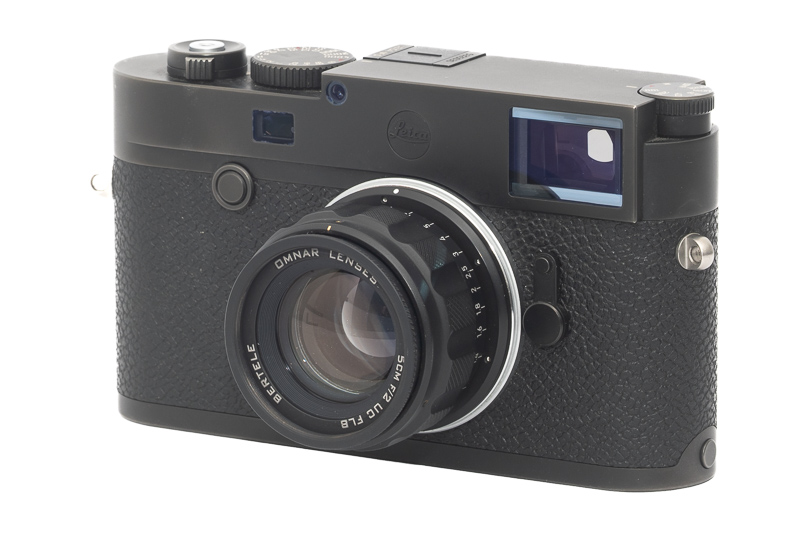
I think I have always been at the forefront to introduce (new) niché lens manufacturers to you guys. Omnar lenses definitely is one of those: a boutique lens manufacturer based in the UK, producing low quantities of unique lenses and also offering lens conversions with a huge attention to detail and quality. The Omnar 50mm 2.0 Bertele FLB is a Sonnar design true to the original formula from 1934, but aims to correct the dreaded focus shift to make it a more enjoyable lens to use on rangefinder cameras. Let’s have a closer look!
This lens will be reviewed on the 24mp Leica M10 as well as the 42mp Sony A7rII and you can find sample pictures taken on the Leica M6, Leica M10 and Nikon Zf.
Sample Images








Most of the sample images in this review can be found in full resolution here.
Contents
Specifications
This Omnar 50mm 2.0 Bertele FLB has the following specifications:
-
- Diameter: 52 mm
- Length: 36 mm
- Weight: 253g (no hood, no caps)
- Filter Diameter: E39
- Number of Aperture Blades: 9 (rounded)
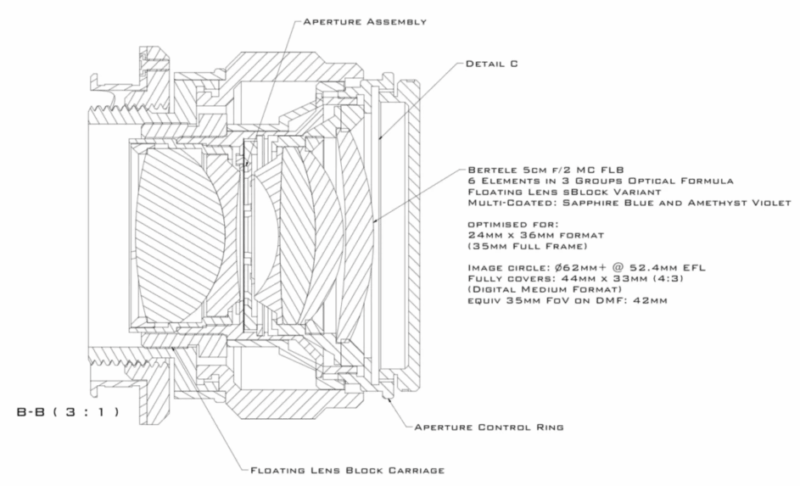
- Elements/Groups: 6/3
- Close Focusing Distance: 0.7 m
- Maximum Magnification: 1:11.3 (measured)
- Mount: Leica-M
Get one of these lenses from the official homepage for £2750
Disclosure
I received two variants of this lens for reviewing purpose for a duration of 8 weeks.
About Omnar Lenses
Omnar Lenses is a small company founded by Hamish Gill (who runs 35mmc.com) and Chris Andreyo (who runs Skyllaney Optomechanics). Both people who I have known for a long time now. Chris was also heavily involved in figuring out which front filters to use to improve the performance of rangefinder lenses when used on Sony A7 series cameras back in the day.
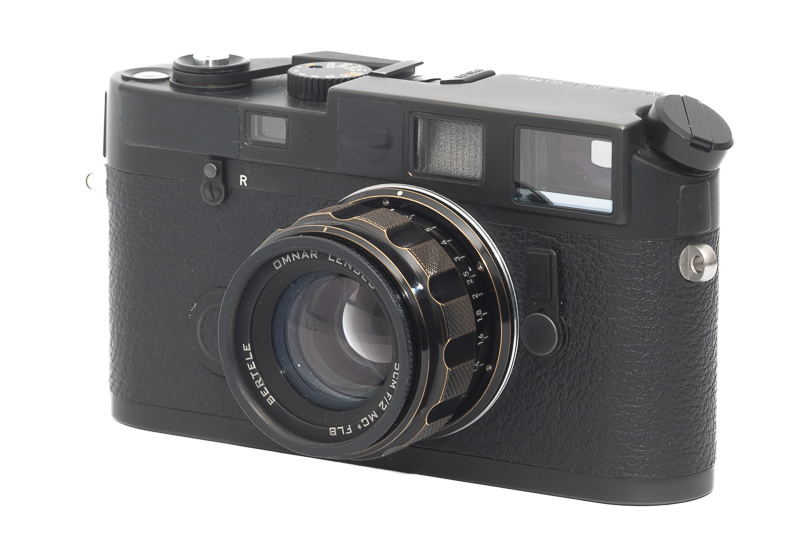
Under the Omnar brand they have offered rehoused lenses from compact cameras in the past, but this 50mm 2.0 Bertele FLB is a novelty, as it is their first lens with newly sourced glass elements. The optical formula is that of the original Sonnar from 1934 though.
All the Omnar lenses are hand assembled in the UK and often come with customization options. This coupled with the low production count leads to these being very expensive lenses aimed at enthusiasts with particular needs and not exactly something that will appeal to – or be affordable for – a broader audience.
In a way their concept reminds me of what MS-Optics is doing, but with a more solid and durable mechanical design – and also much higher price tags.
Handling / Build Quality

The mechanical design of this lens is surely unique, so there is a lot to talk about here.
I don’t want to go too much into detail here what focus shift is and why Sonnar designs are plagued by that, but what you should know is, that when stopping down the plane of optical focus shifts, meaning when you use this lens on a rangefinder camera and it is calibrated for f/2.0, your subject will be slightly out of focus when stopped down to e.g. f/4.0.
This Omnar 50mm 2.0 Bertele FLB (Floating Lens Block) aims to fix this inherent design flaw by – very slightly – moving the optical block when changing the aperture value. You can read more about this here.
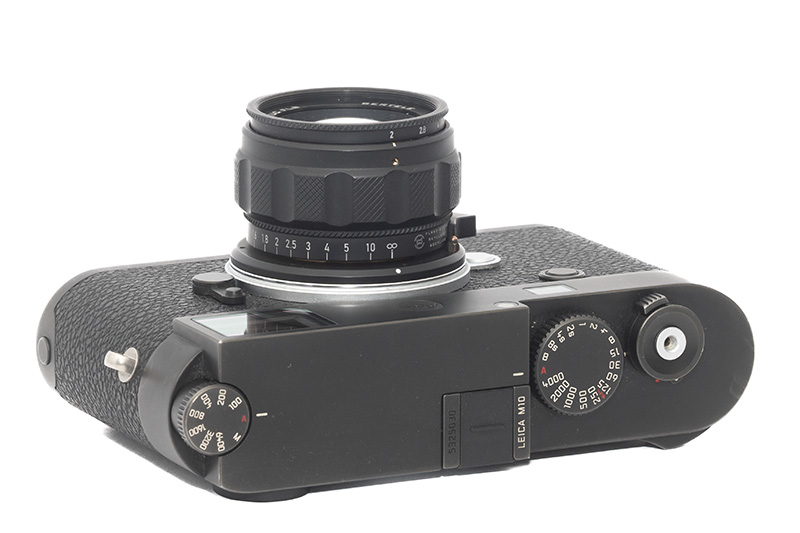
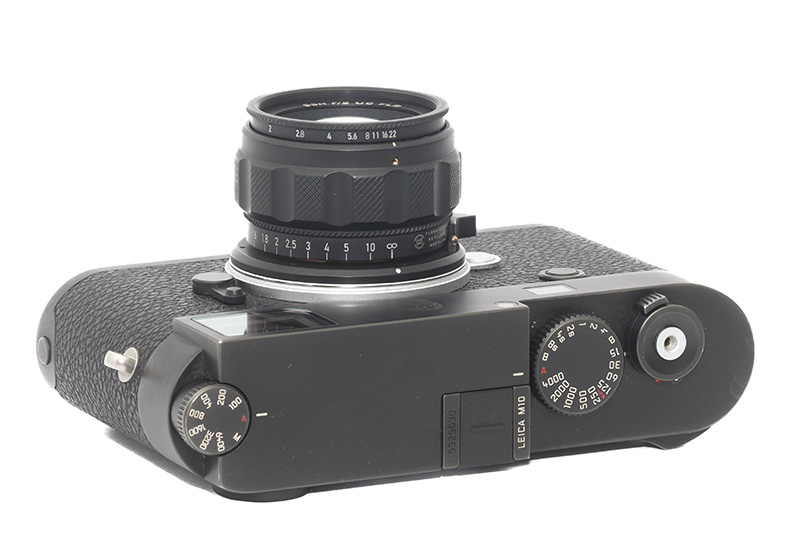

This sounds like a great idea, but there are some mechanical implications we should also be aware of. The aperture does not feature click stops and the coupling is linear, so the aperture stops are not equidistantly spaced. The aperture ring also has a higher resistance than the focus ring, so you will also always change your focus setting when adjusting your aperture value. The filter thread also rotates, but from what I have seen so far, polarizers are not that common among the rangefinder users anyway.
As you can see from the picture series above the whole lens rotates when adjusting focus, so your aperture markings end up on the bottom of the lens at closer distances. The helicoid is also open, so I am not sure it is a great idea to use this lens in dusty or sandy environment. I also found this lens somewhat hard to mount and unmount, as everything rotates except for that flat ring at the bayonet.
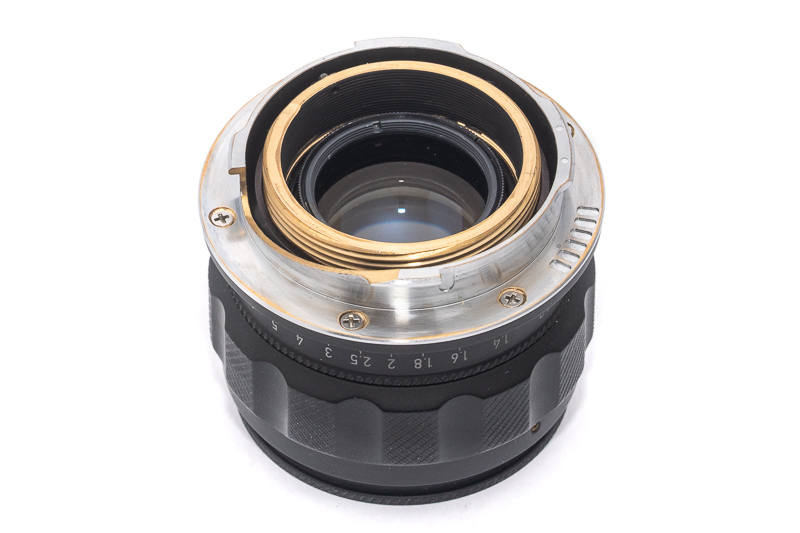
The lens came with a properly calibrated hard infinity stop and also at closer distances it was well calibrated. However, the cam is very slightly sloped, which may lead to small inaccuracies across various M-mount cameras.
The lens brings up the correct 50/75mm frameline set. This is a small 50mm lens, so there is hardly any rangefinder blockage.
These review samples did not come with a lens hood and I am not aware of a dedicated hood being available.
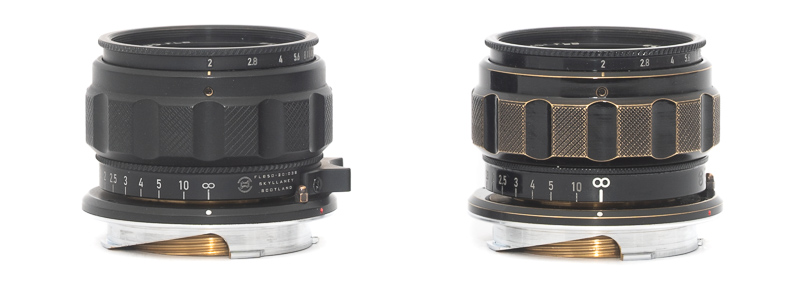
There are different casing designs to choose from. The lenses I received feature the “matte black” and the “gloss black with brassing” finishes, “matte silver” and “satin black” are additional options.
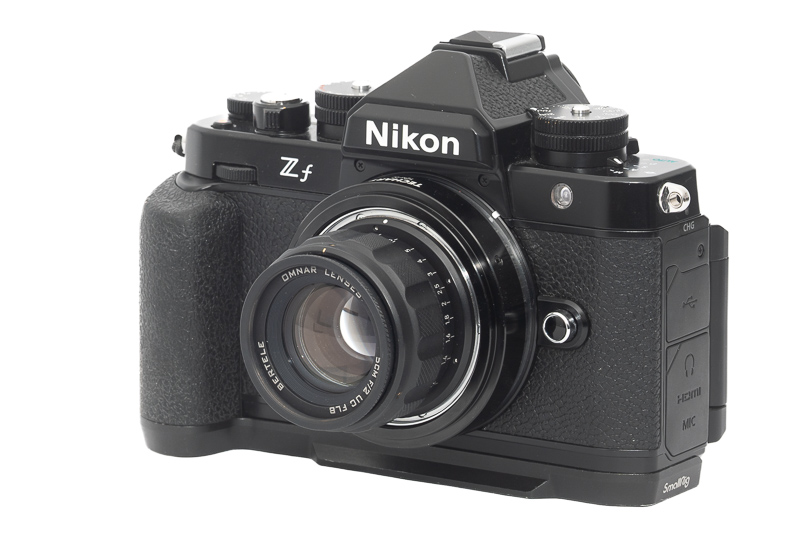
When using Sony E or Nikon Z mount cameras you can e.g. pair this lens with the TTArtisan 6-bit adapter to get EXIF data or with the Techart LM-EA9/TZM 02 adapters to even get autofocus.
Vignetting
light falloff
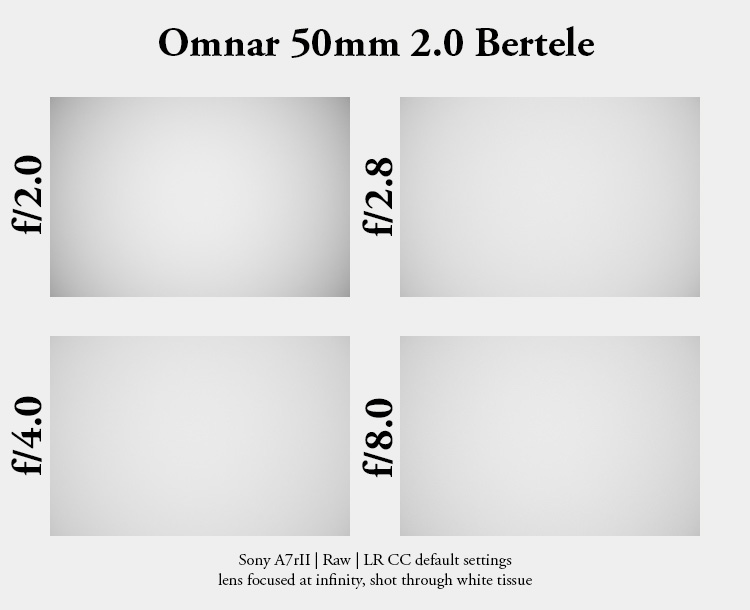
| f/2.0 | 2.0 EV |
| f/2.8 | 1.2 EV |
| f/4.0 - f/22 | 1.0 EV |
The Sonnar lenses I reviewed often showed comparably low vignetting figures and that is also the case here, as at f/2.0 it vignettes about 0.5 EV less than most of the 50mm 2.0 M-mount lenses I reviewed. Stopped down the situation is different, as many lenses were in the 0.5 EV range instead of the 1.0 EV we see here.
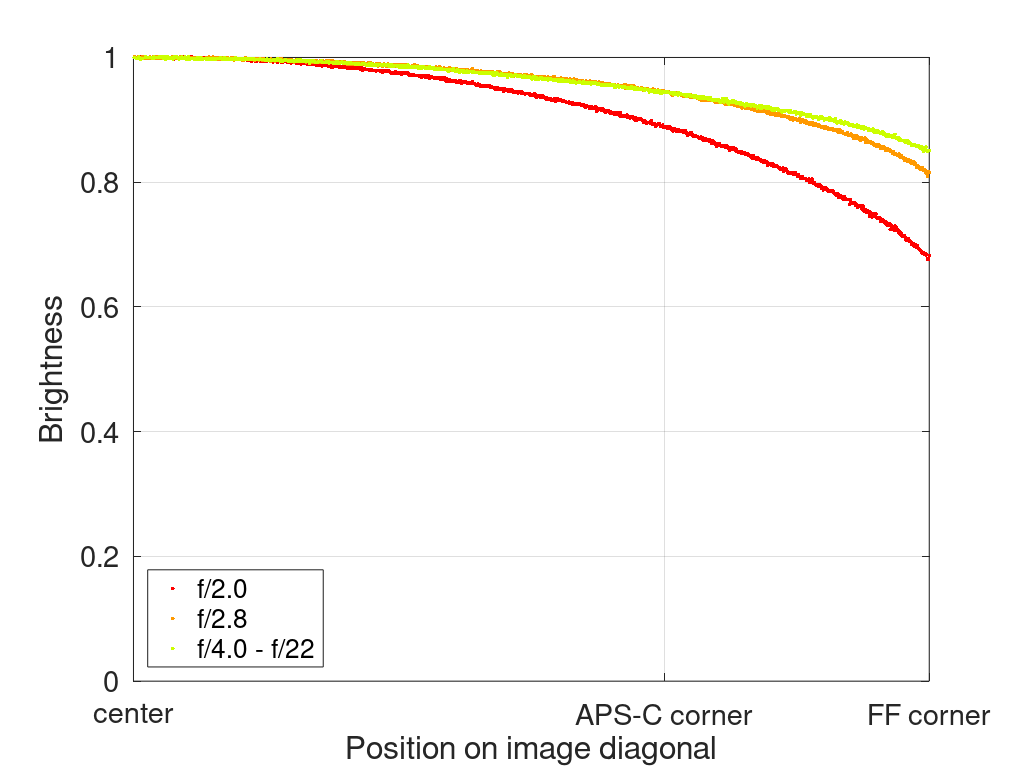
It is recommended to have a look at this article first to get an idea how this brightness graph works.
optical vignetting
In the following comparison we move from the center (left) to the extreme corner (right) and see how the shape of the light circle changes.
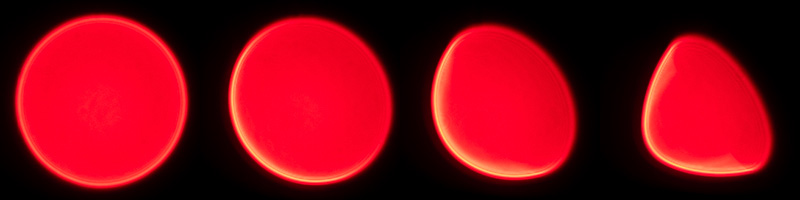
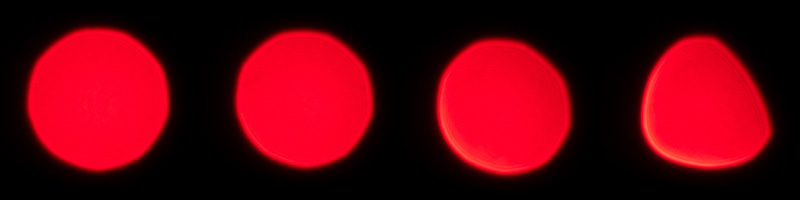
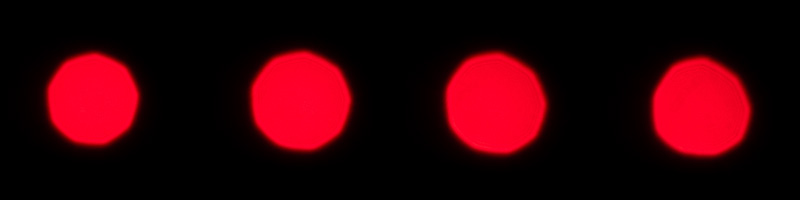
The amount of optical vignetting can be described as moderate. For example, the Light Lens Lab 50mm 2.0 SP II and the Thypoch 50mm 2.0 Eureka showed way higher optical vignetting.
At f/2.0 we can see outlining already in the midframe and triangular shapes towards the corners. The outlining is mostly gone when stopped down to f/2.8, we will see in the bokeh section what that means for the bokeh rendering at f/2.0 compared to stopped down a bit.
Sharpness
Focus shift
One of the main selling points of this lens is that due to its floating lens block it got rid of the focus shift. Sadly I cannot employ my usual method of checking the amount of focus shift as due to this lens’ mechanical design, when changing the aperture value, you will automatically change the focus setting as well.
From my tests I can indeed conclude that the focus shift has been successfully mitigated by this new design though.
infinity (24mp Leica M10, 42mp Sony A7rII)
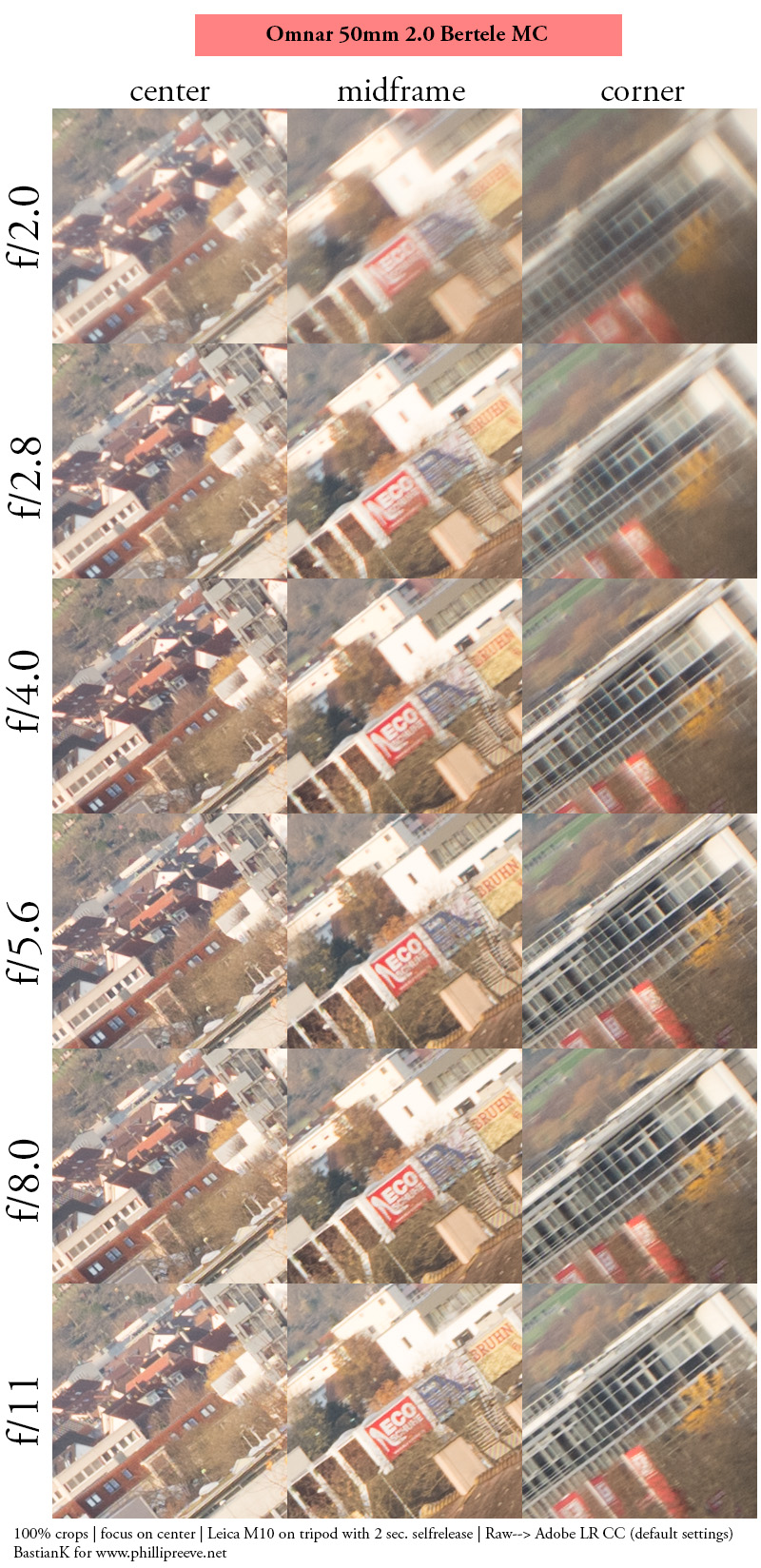

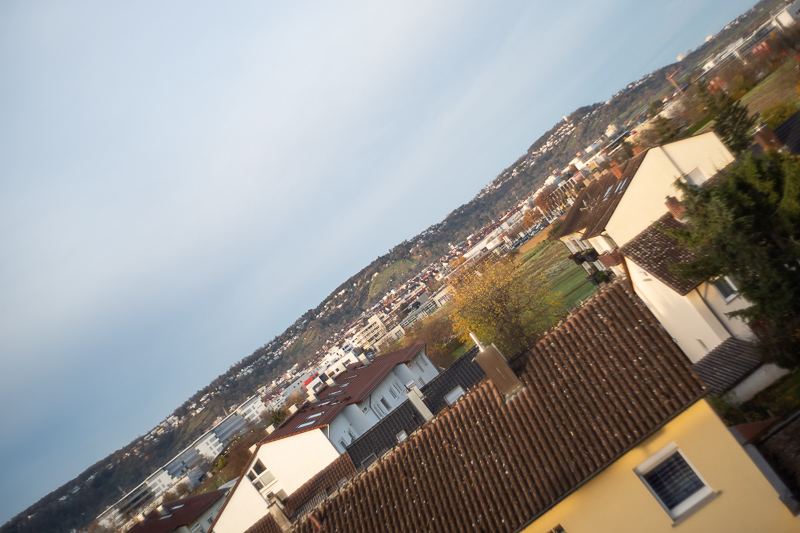

At its maximum aperture this lens is generally a bit softer across the whole frame (similar to the Light Lens Lab 50mm 2.0 SP II).
It takes stopping down to f/5.6 for the midframe area to look good and the corners never look amazing, so this isn’t a lens I would recommend for stopped down landscape shooting.
On the Sony A7rII it performs a bit worse compared to using it on the Leica M10 – as was to be expected due to the different filter stack thickness of these cameras.
I included a comparison between f/2.0 and f/11 – of the scenery as a whole – as well. You can see how everything but the center is really soft at the maximum aperture. Not something I would personally like for landscape/architecture pictures, yet something people might be interested in for portraiture or to generally give their pictures a bit of a vintage touch.
portrait distance 1.4 m (24mp Sony A7III and Leica M10)
For portraiture it isn’t so important how flat the field is, it is more interesting to see what the sharpness is like when focused at different parts of the frame to take field curvature out of the equation.
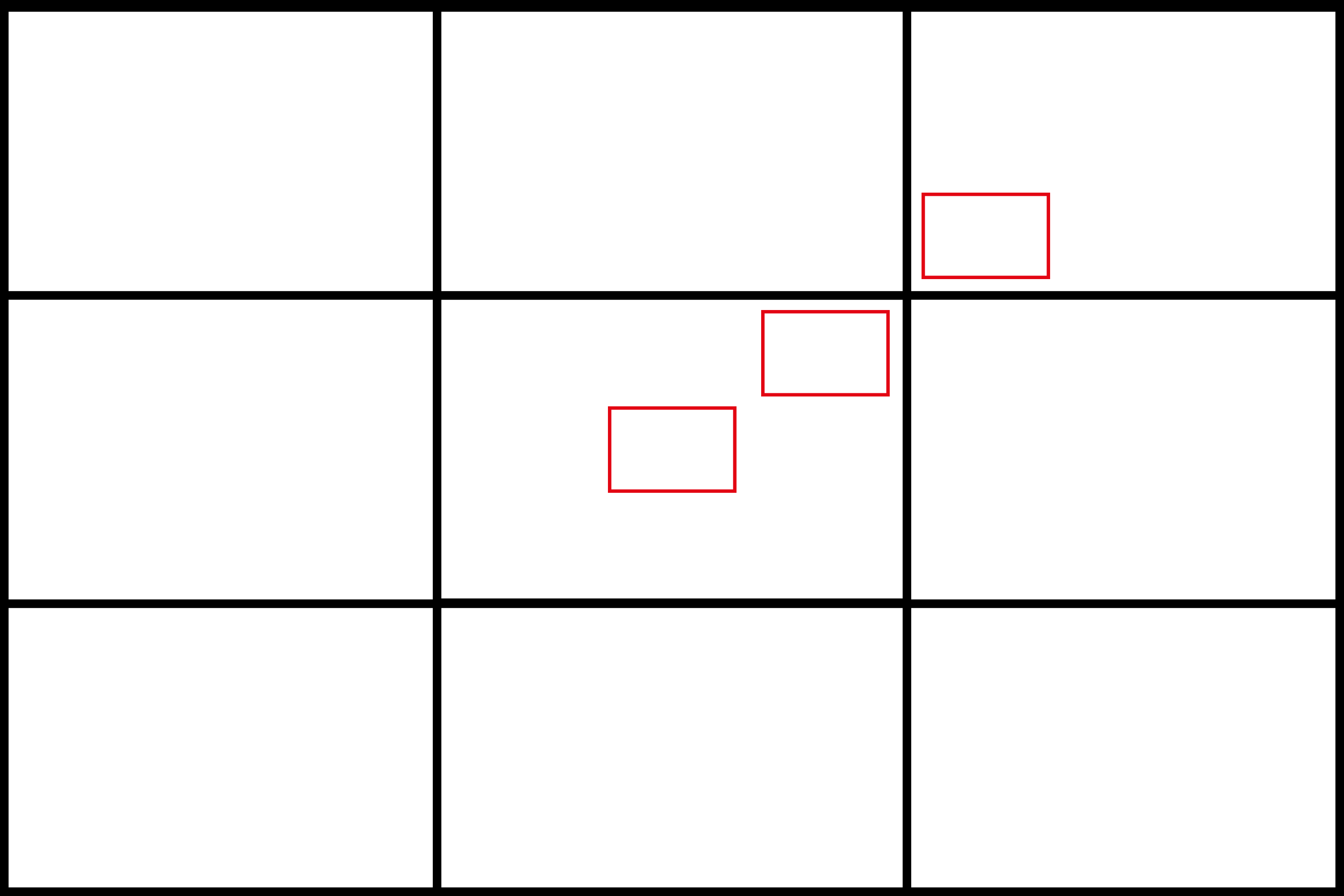
We will be looking at 100% crops from the 24mp Sony A7III and the Leica M10. Both cameras do not have an anti aliasing filter in front of the sensor.
Leica M10 <—> Sony A7III
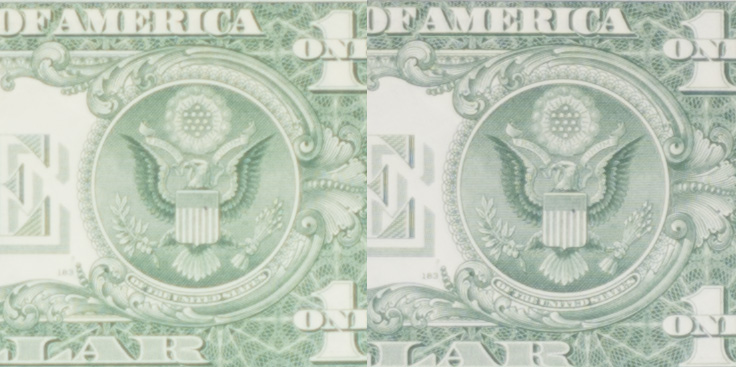
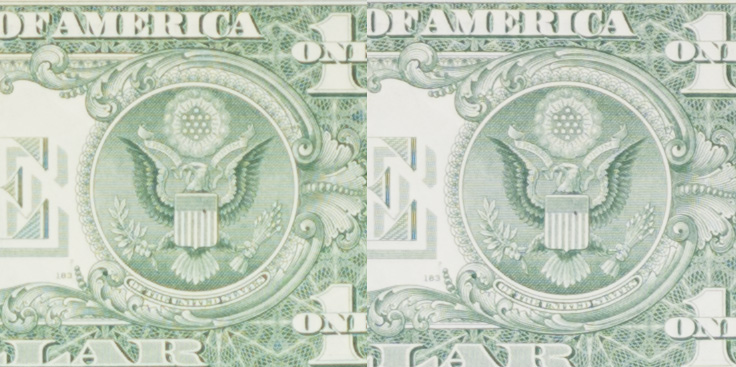




This lens won’t be breaking any resolution records here either, but it shows a solid performance with generally well corrected Astigmatism. Only the outer midframe leaves a bit to be desired at f/2.0.
Off center this lens also seems to work better on the Leica camera with its thinner sensor stack, as was to be expected.
close 0.70 m, 1:11.3 (42mp A7rII)




The original Sonnar lenses only offer a minimum focus distance of 1.0 m, so I am happy to report this version offers 0.7 m.
The performance is typical for a design like this: a bit soft at f/2.0, less soft at f/2.8, really good from f/4.0.
Flare resistance
Evaluating flare is a complex matter since you can get any lens to look bad if you push it hard enough and a slight change of scenario can affect results a lot.
Back in the day – before multicoated lens elements became the norm – an advantage of Sonnar lenses was their higher contrast (better flare resistance) at wider apertures, due to their low number of air to glass surfaces.

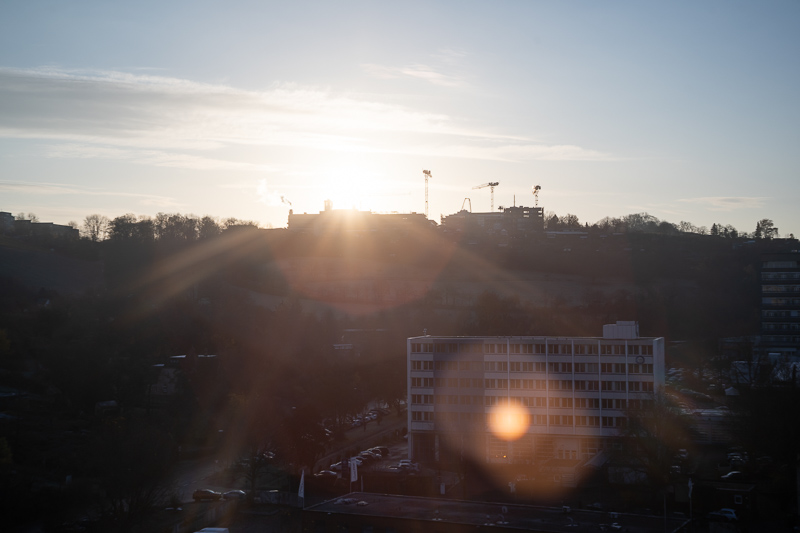
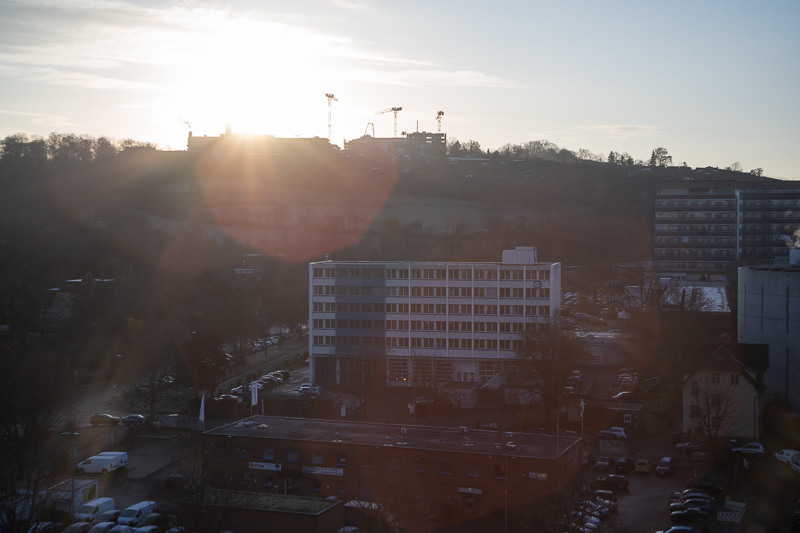
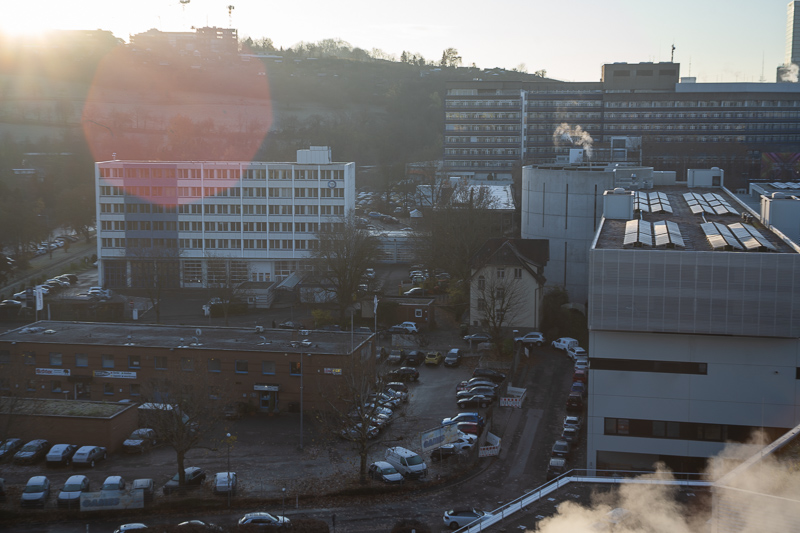
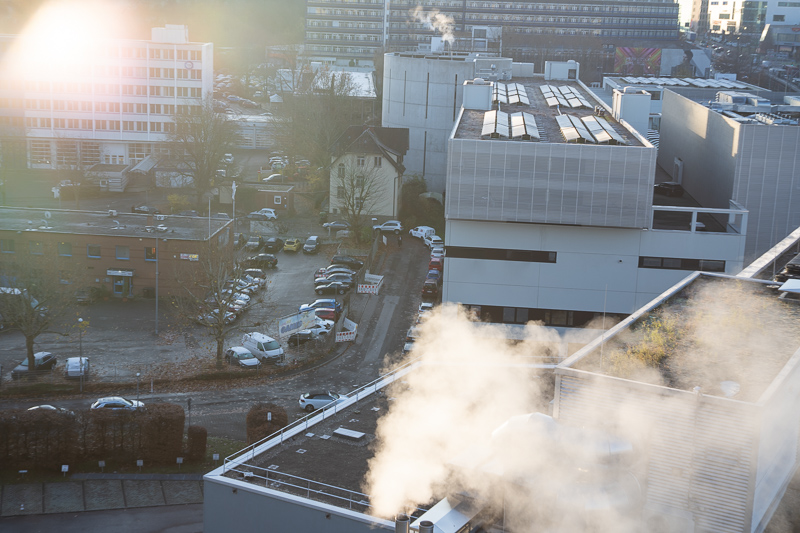
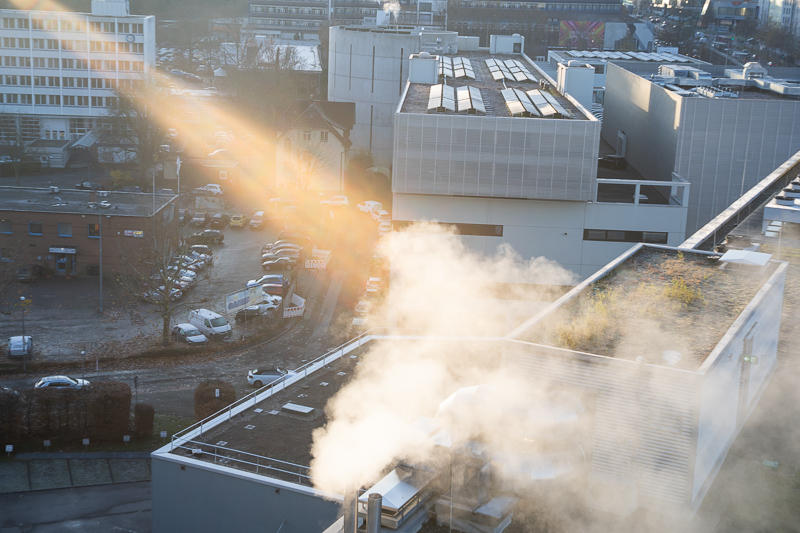
At the maximum aperture we can see some veiling flare and also some huge ghosts.
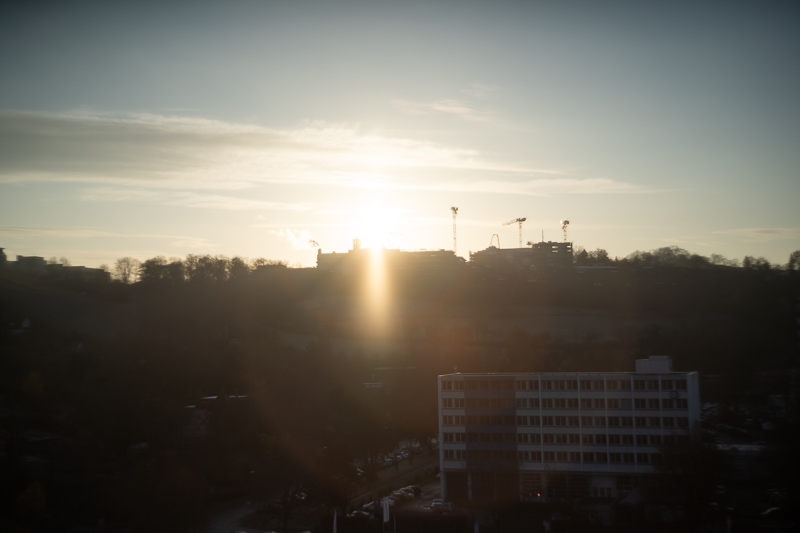
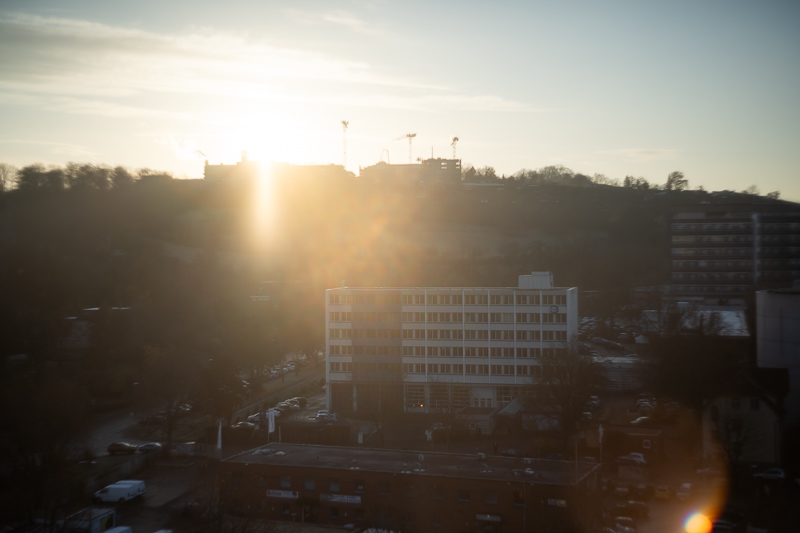
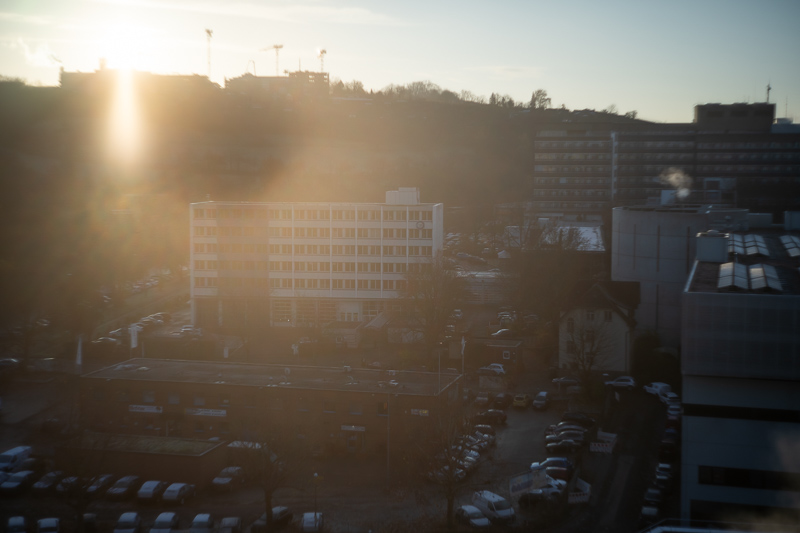
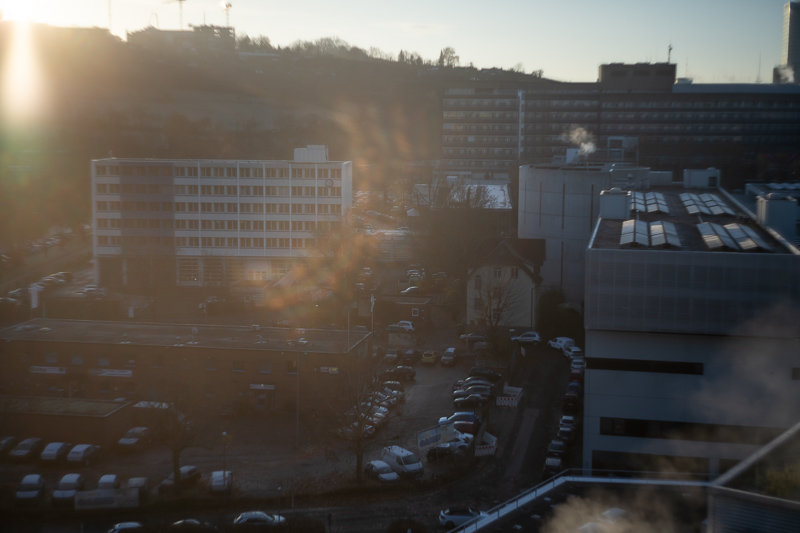

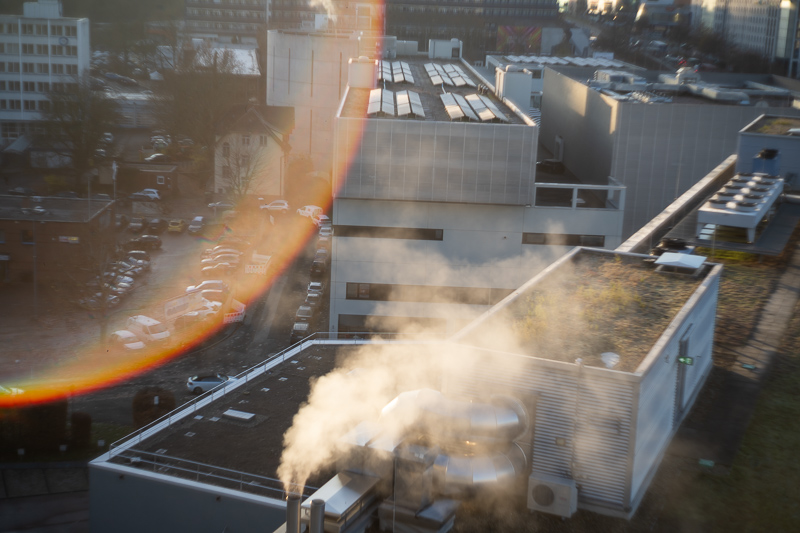
Stopped down the situation is similar and with the sun outside the frame you may even catch huge artefacts.
At the end of the day, better than uncoated actual vintage lenses, but unsurprisingly also no match to the latest modern designs. Compared to the other 50mm 2.0 M-mount lenses I reviewed: better than the Light Lens Lab 50mm 2.0 SP II, worse than the Thypoch Eureka 50mm 2.0.
Coma
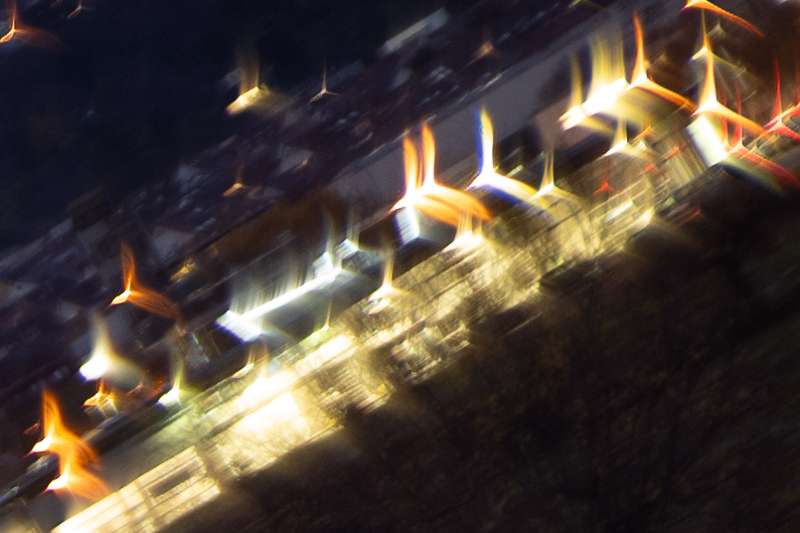
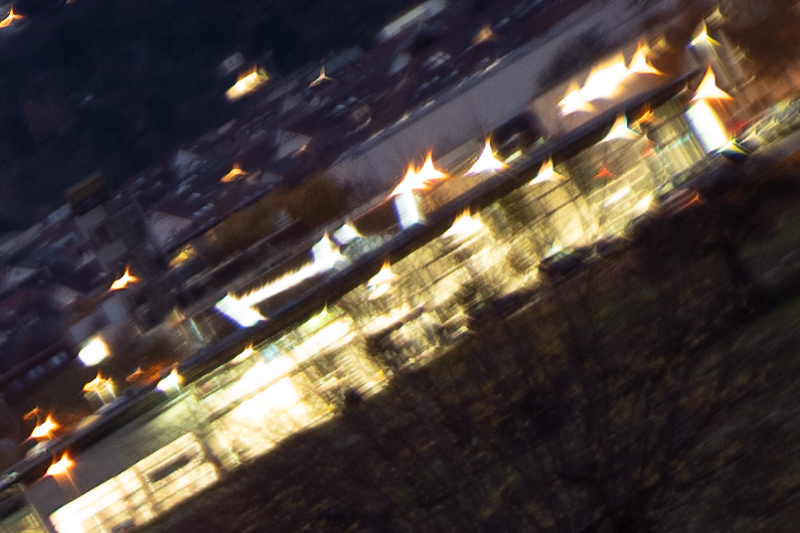
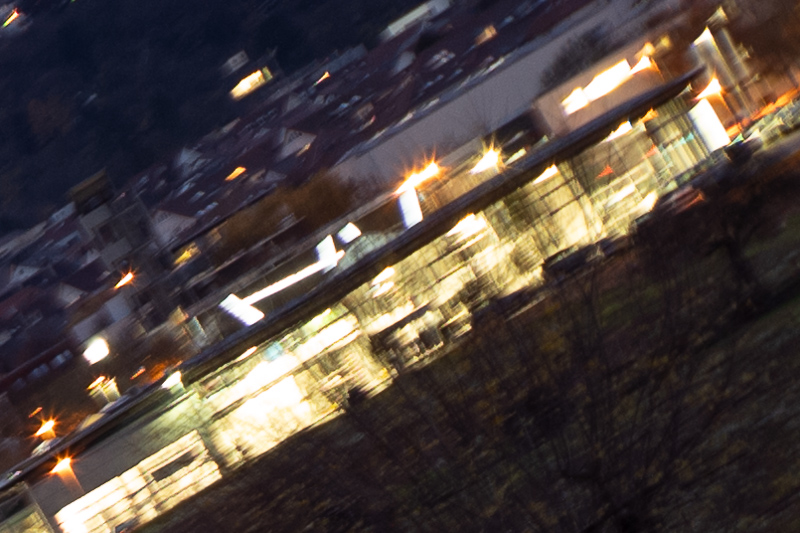


In 1934 it was obviously not possible to design a 50mm 2.0 lens from only six elements that corrects Coma perfectly and the artefacts in the corners are hard to overlook at f/2.0.
Stopping down helps and Coma is mostly gone by f/4.0, but as we already saw before the corners never look amazing.
Distortion


The Omnar 50mm 2.0 Bertele shows a low amount of pincushion distortion. It is uniform and can be easily corrected by dialing in -3 in Photoshop/Lightroom. I corrected many of the pictures taken on digital cameras you can find in this review but I did not bother correcting any of the analogue ones.
Bokeh

If you know a thing or two about Sonnar lenses, you are probably aware that their bokeh rendering differs significantly between their maximum aperture and stopped down by at least one stop. This is of course also the case here, as can be seen from the following side-by-side comparisons.




At f/2.0 I would describe this lens’ bokeh as nervous and often distracting, whereas at f/2.8 it is much calmer, similar to a modern lens.


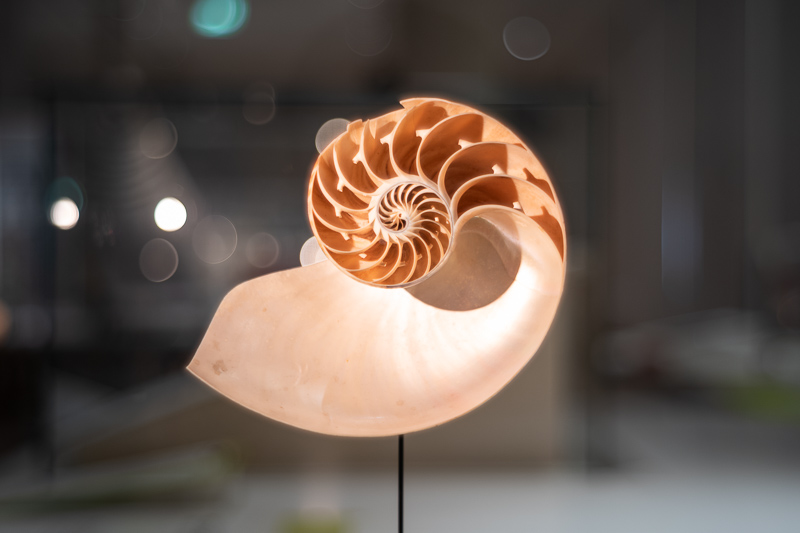

As you will see in this section, depending on the background it can make a huge difference whether you are using this lens at f/2.0 or at f/2.8.



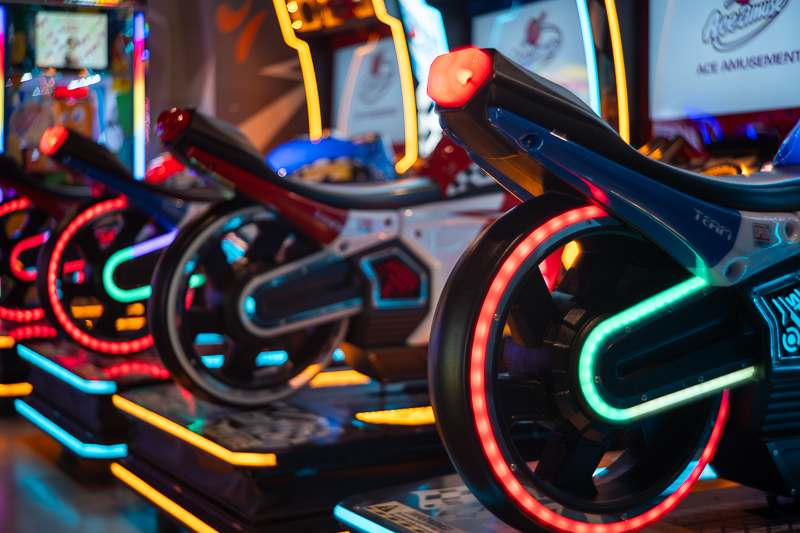
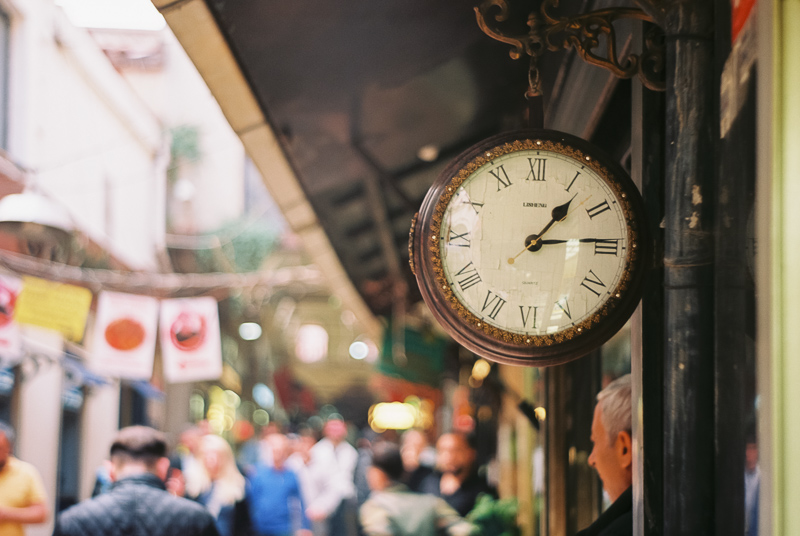
At f/2.0 this 50mm 2.0 creates that very distinct Sonnar look at close to mid distances.


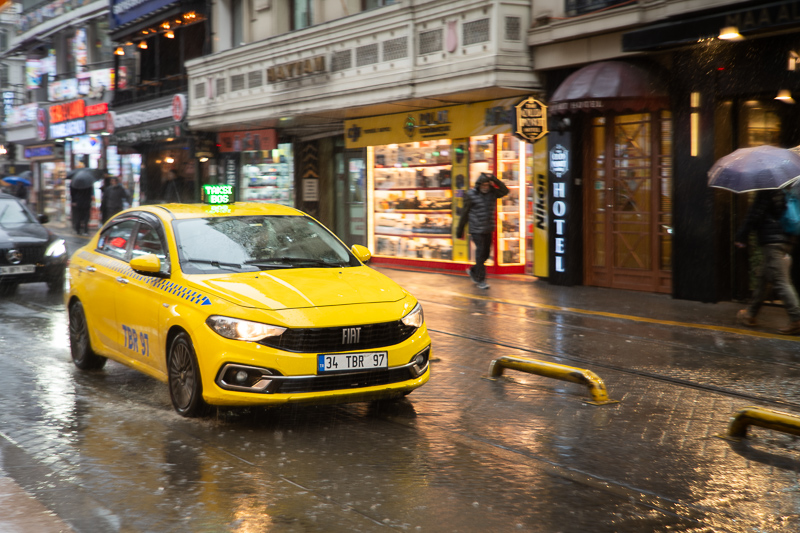
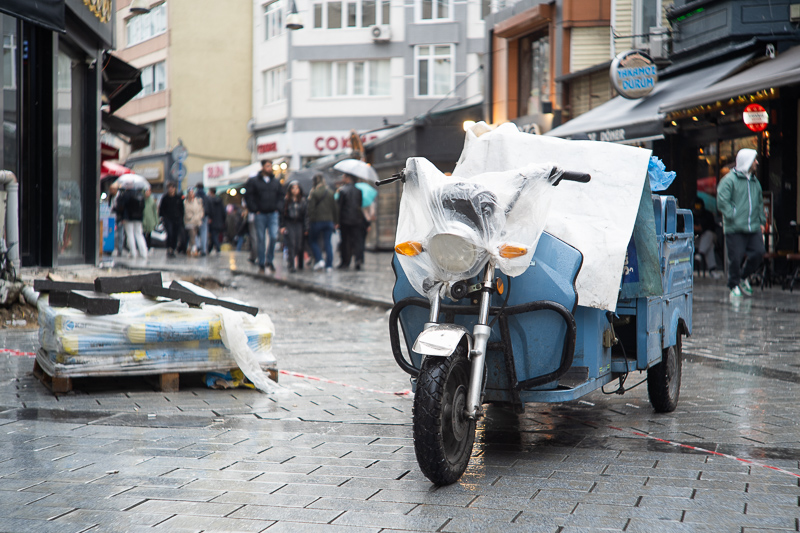
At longer focus distances the amount of blur is obviously a bit limited.
Contrary to many modern lenses – and similar to many of the MS-Optics lenses – the bokeh rendering looks very different wide open and at f/2.8. For some people this is the actual charme of these Sonnar lenses. Personally I preferred using it at f/2.8 for its more predictable behaviour.
Sunstars
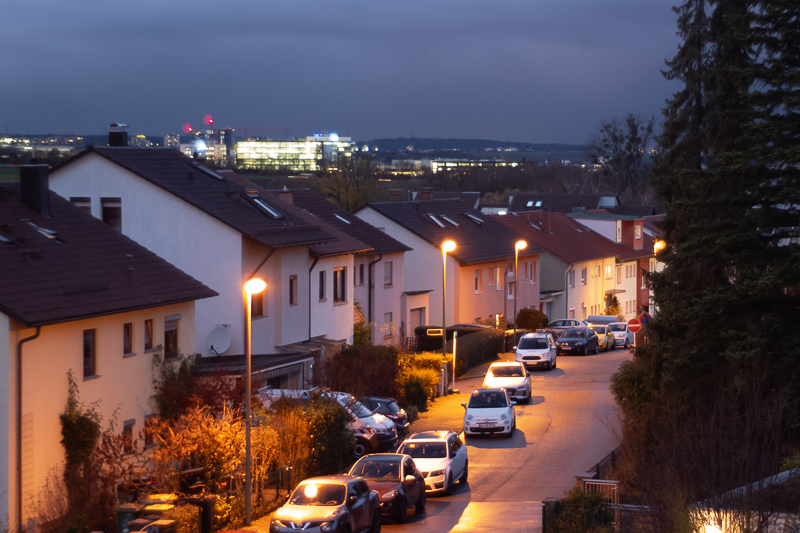
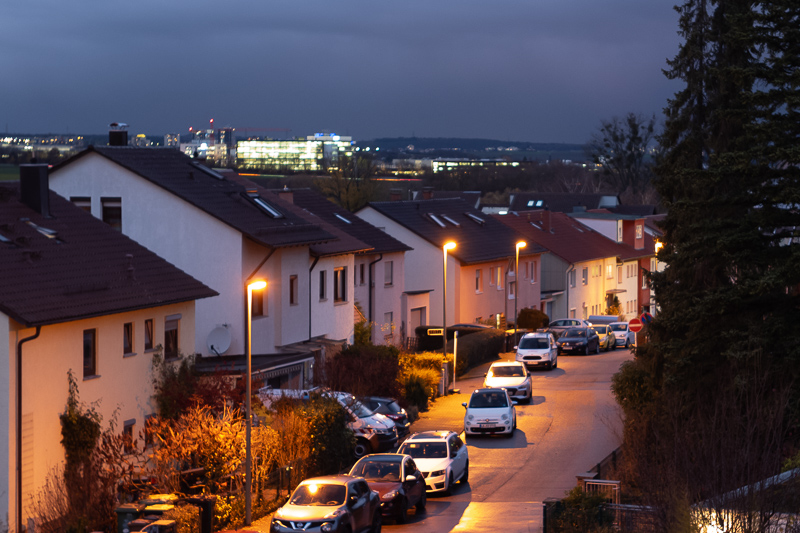
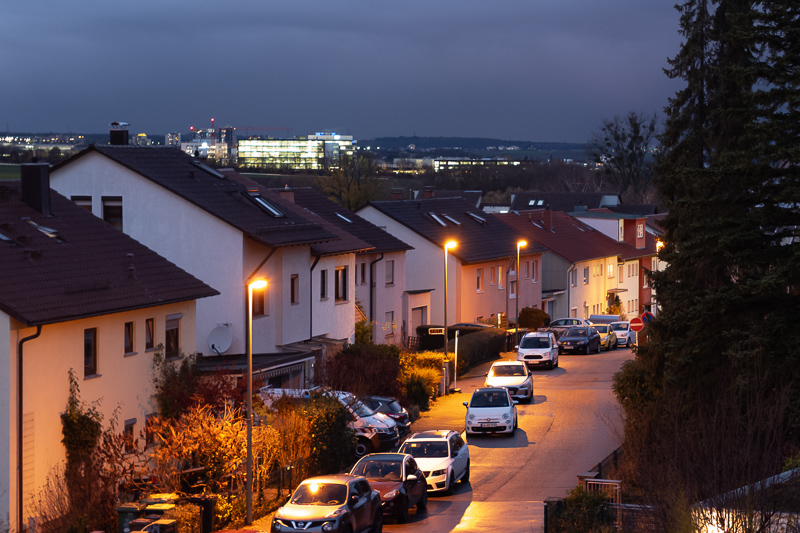
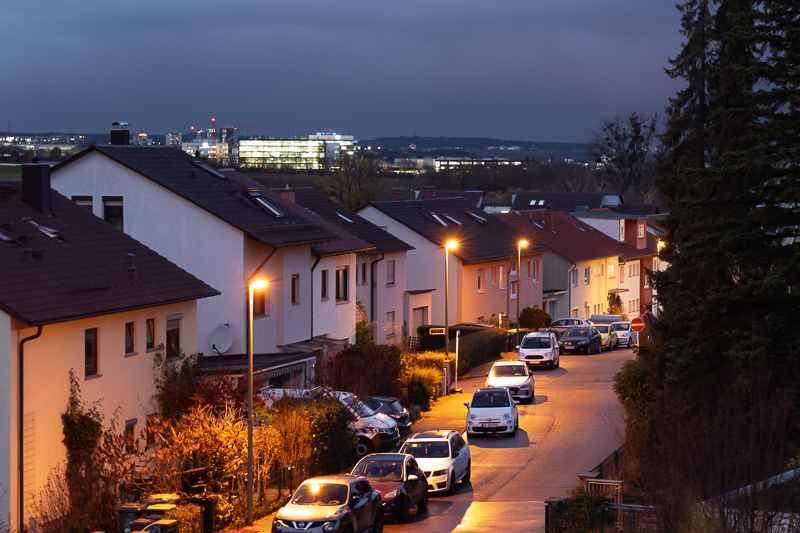
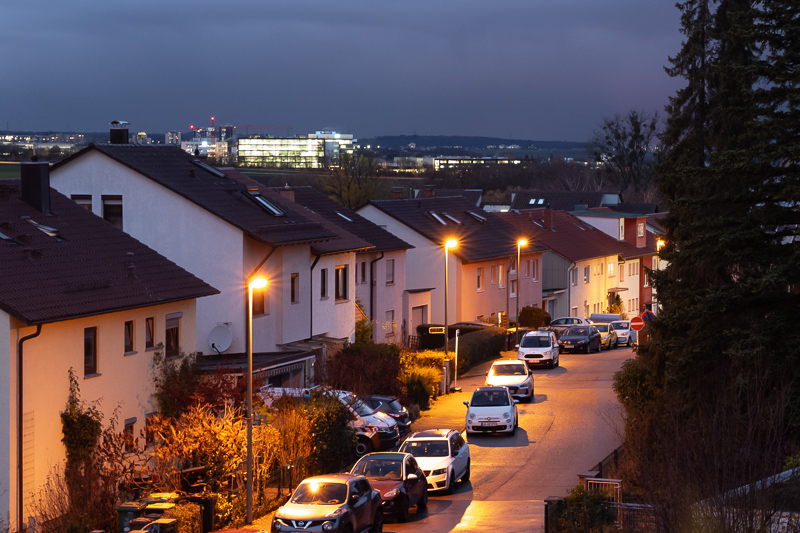
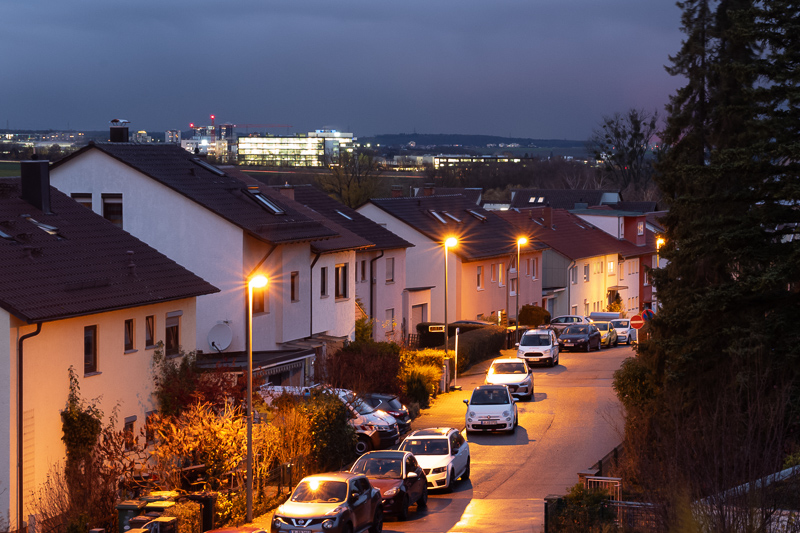
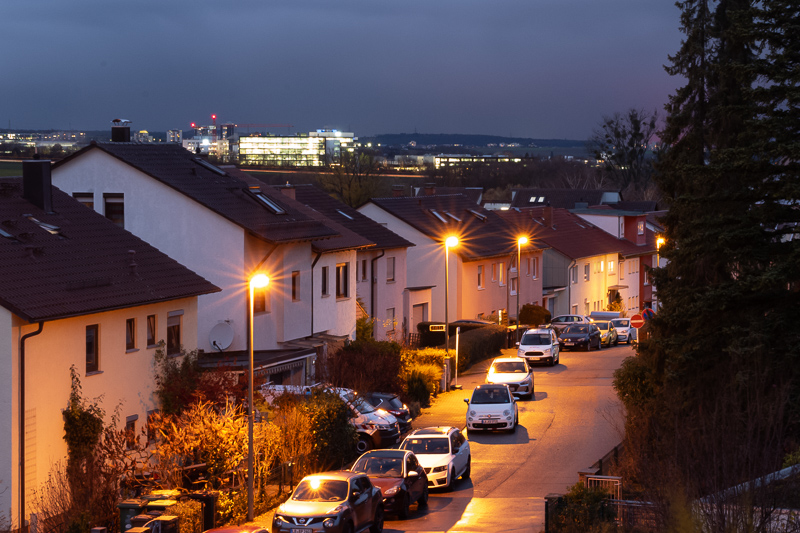
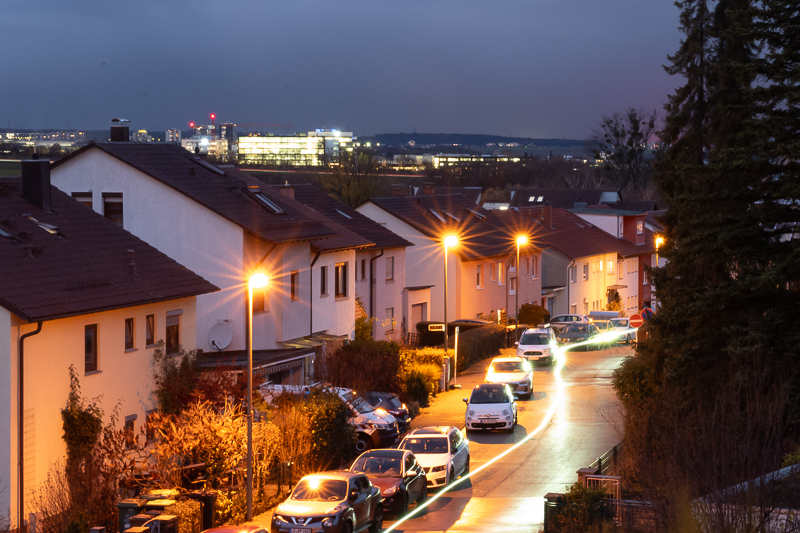
With its 9 rounded aperture blades this lens does not create distinct sunstars. It takes stopping down to f/16 to f/22 for them to be noticeable, but even then they are not very well defined.
If you want to know more about sunstar rendering of different lenses have a look at this article.
Chromatic aberration
lateral
Lateral CA are on a minimal level and nothing to worry about.
longitudinal
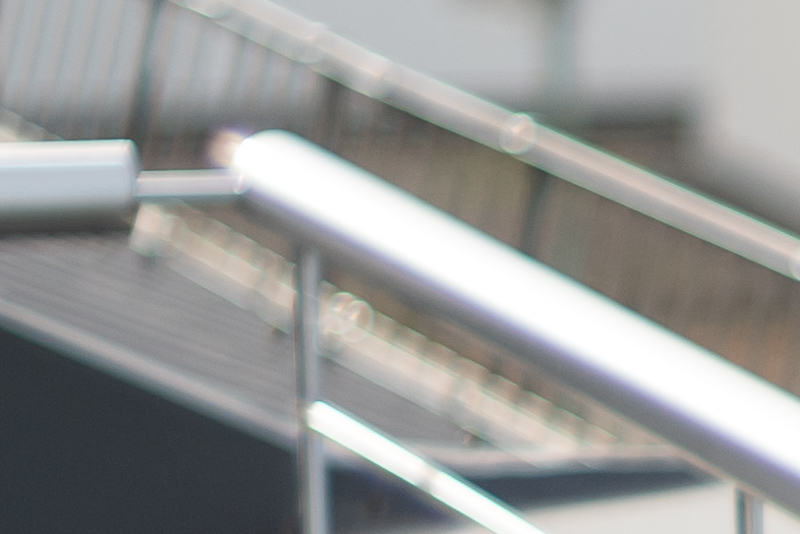
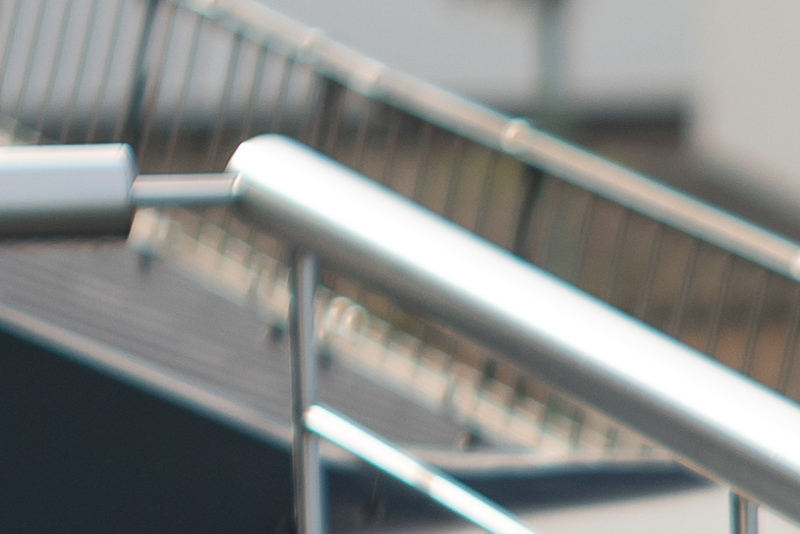

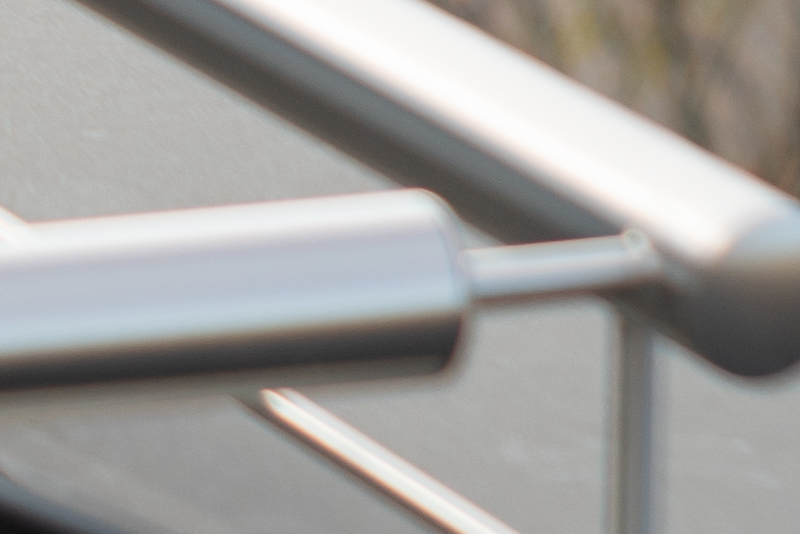
Sony A7rII | Omnar 50mm 2.0 Bertele | 50% crops
Longitudinal CA are not very pronounced. This is one of those lenses where spherical aberration masks this aberration a bit at f/2.0 though. Stopped down to f/2.8 the outlining can actually be more visible due to less spherical aberration.
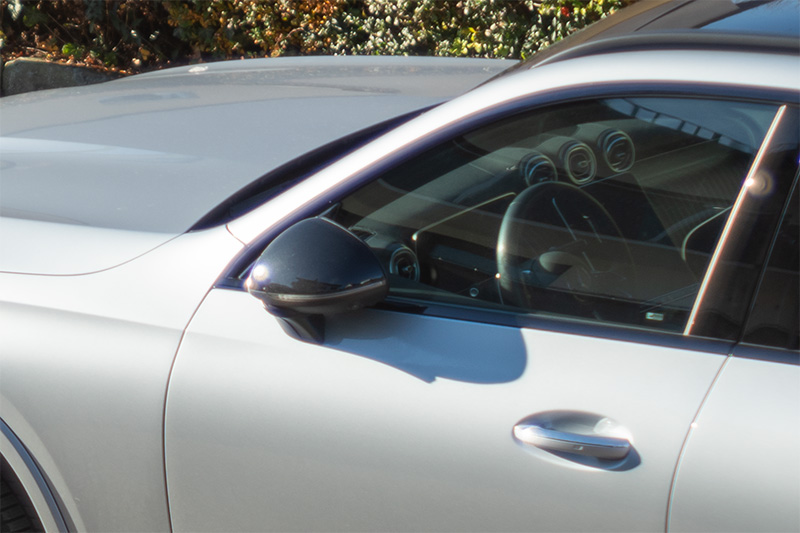
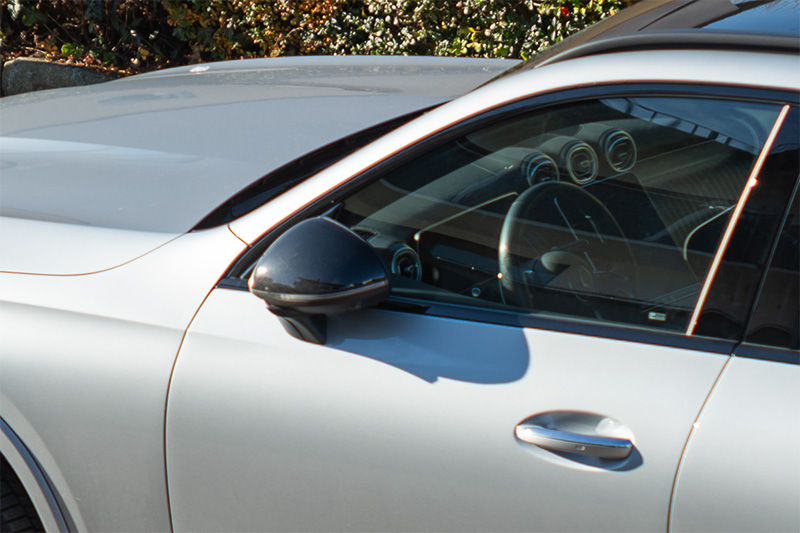
Sony A7rII | Omnar 50mm 2.0 Bertele | 100% crops
When it comes to purple fringing the situation is pretty much the same.
In the pictures I took with it there weren’t any where the longitudinal could be considered an actual issue.
Conclusion
I said it at the beginning already: this is not exactly a lens for the price conscious buyer.
I’d say you must be a huge fan of the Sonnar rendering and solely rely on the rangefinder mechanism to focus – maybe because you only shoot film – to really appreciate the unique “floating lens block” design of this Omnar 50mm 2.0 Bertele and the lack of focus shift that comes with it. As the first batch of these sold out quickly, there certainly seems to be a market for such lenses and if you read this far this might exactly be what you have been looking for.
If you are simply a huge fan of the Sonnar rendering but you are using a digital camera with liveview capabilities, I would definitely recommend to also have a very close look at the Zeiss ZM 50mm 1.5 C-Sonnar. It offers similar rendering while being faster, easier to handle and only costing a fraction.
Get one of these lenses from the official homepage for £2750
Alternatives
As I have said at the beginning, these Sonnar lenses are around for more than 90 years. None of the alternatives I will mention here feature the “FLB” design to mitigate the focus shift though.
Zeiss ZM 50mm 1.5 C-Sonnar:
The Zeiss ZM 50mm 1.5 C-Sonnar is another (faster) modern interpretation of the Sonnar formula. It is easier available (and much cheaper), I prefer its mechanical design and it also seems to be a bit more resistant to flare. It does feature a worse minimum focus distance of 0.9 m though.
buy from ebay.com | ebay.de
(advertisement/affiliate links) starting around $600
Jupiter-3 50mm 1.5:
The Jupiter-3 50mm 1.5 is the Soviet copy of the original Zeiss 50mm 1.5. It can be rather difficult to find one in good condition, those will cost around 300 to 500 bucks.
buy from ebay.com | ebay.de
(advertisement/affiliate links) starting around $200
Jupiter-8 50mm 2.0:
If you are not sure yet whether you actually like Sonnar lenses, it might be a good idea to give the Jupiter-8 50mm 2.0 a try first, as you can find that lens for little money in good condition.
buy from ebay.com | ebay.de
(advertisement/affiliate links) starting around $100
You can also find reviews of many more 50mm M-mount lenses here.
Sample Images
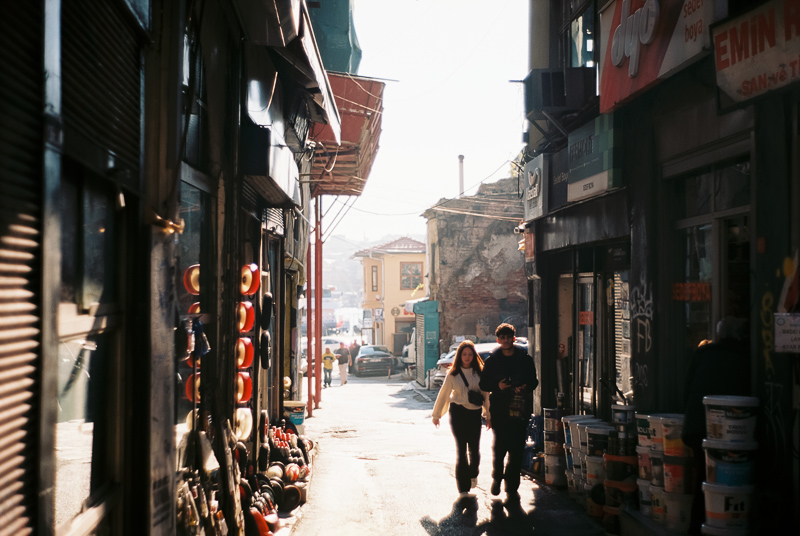






















Most of the sample images in this review can be found in full resolution here.
Further Reading
- M-mount lens reviews
- Analogue Adventures
- Review: Contax-G 16mm 8.0 Hologon
- Review: MS-Optics 50mm 1.3 Sonnetar Slim
- Comparison: Super Fast 50mm M-mount lenses
Support Us
Did you find this article useful or just liked reading it? Treat us to a coffee!

 via Paypal
This site contains advertisement/affiliate links. If you make a purchase using any of the links marked as advertisement/affiliate links, I may receive a small commission at no additional cost to you. This helps support the creation of future content.


Latest posts by BastianK (see all)
- Review: Samyang 35mm 1.2 XP - April 1, 2026
- Review: 7Artisans 40mm 2.5 AF - March 28, 2026
- Analogue Adventures – Part 50: What I learned from Shooting Film (so far) - March 18, 2026
I’d say it performs similar (and a bit worse at infinity, on Sony) to my copy of the Jupiter 8. It doesn’t solve my main gripe about the J8, its clickless aperture that often gives me trouble. I can buy J8 for anything between 10 to 30 eur, so there’s that. It’s funny to think about practicalities in this context, like a person considering new custom made vintage car’s trunk size, and whether it could replace his Ford pickup for regular grocery store runs.
As a non-Leica shooter, I’m happy to conclude that I won’t be yearning after this lens. But like with the previous review, I had fun reading about your experience.
I like their creative approach to solving optical issues (as imperfect as the solution is), and focus on build quality.
But I do hope that they will try to bring their prices down for future products, if they manage (and want to) increase their production numbers. Actually, when I think about it, they are dealing with the Leica market. This is kinda cheap. Again, it’s all about the context… And I already know one owner of this lens, so they do exist. And he’s super-happy with his purchase too.
Dear Bastian, I’m deeply impressed. You got a grip on a lens I’ve never ever heard about although I don’t belong to your youngest fans. I know it is not easy to justify such reviews to most of your readers and it doesn’t bring you any financial fortune. But I love to read exactly this kind of exotic topics. And it is not just a niche you are filling with high quality content. It is also the DNA of Phillip Reeve. Thanks a lot.
Dan, I am always delighted to review something that meets your taste 🙂
Bastian, thanks for reviewing this lens as it is one I was very curious about but for which the price point was a barrier. This truly is a lens narrowly addressed to rangefinder users who are Sonnar aficionados, which I am. But it really seems to benefit film shooters where otherwise it might take a fair amount of trial and error to otherwise compensate for focus shift. Having read Skyllaney’s very informative FLB article, can appreciate why it costs what it does.
That said, I will continue to work with my Sonnar lenses by adapting to focus shift on the fly. Like you, my preferred working aperture with Sonnar lenses is usually one stop down from wide open. My workaround for focus shift on a rangefinder camera has been to utilize live view to determine correct focus for a given stopped down aperture value and to mentally note the corresponding amount of rangefinder focusing patch misalignment. In the field, I then apply this amount of patch misalignment on the fly to generally ballpark good enough focus at that aperture setting. This is also my stop-gap solution to times when the camera’s RF patch drifts out of calibration, or if specific lenses are RF mis-calibrated to my camera. Obviously it’s not ideal and it is always preferred to achieve correct RF focus with proper RF patch alignment, but given the nature of the Leica M’s focusing system, my experience has been that it’s rare for it to perform optimally across all of my lenses. It’s one of those ‘quirks’ of the M system. Given the long Leica service times and corresponding loss of use of the camera, I’ve come to accept this as a bearable workaround when necessary.
I do like that many of the Chinese M-mount lenses can be user calibrated, I wish the same was true for all M-mount lenses.
If this were a car, then a Morgan Plus 8.
An old design with modern technology inside, built for a small group of real fans…
Very fitting comparison.
As a person who´s interested in lens character/ Sonnars my hats of to Omnar for this creation. I will probably never own one myself (it´s way out of reach price wise and there´s just to many other lenses in that price range that I would buy before this one) but I like to see what other people can create with this lens based of what you also pointed out; Rf users who shoots on film.
My main concern is regarding the lens design with the exposed helicoid when close focusing. Wonder how fast dirt and moister will be a problem using it as a daily/not limiting the use.
Let me fill in some details. The name of the lens should have been Sonnar but they went with Bertele since it is a homage to the inventor of the Sonnar lens Ludwig J. Bertele. He is equally important as a lens designer as other great designers like Willi Merté or Harry Zöllner for Zeiss.
Though this article and Omnar states that it is based on the original formula from 1934 it does not mean that it is based on the very first optical Sonnar formula of the Sonnar 5cm f/2. The very first Sonnar 5cm f/2 used an optical formula from 1932 and Bertele did a lot of prototype formulas even way earlier. The Omnar lens uses the (original) 3rd optical formula that went into production (calculated by Bertele). This optical formula was so good that it was in production for the next decades. The Jupiter-8 copied this formula. Bertele replaced it with the 4th optical formula in 1950 with new available glass but Carl Zeiss Jena in East Germany stuck to the 3rd formula until the end of the 50ies.
If someone is interested in the Zeiss Sonnar 50ies you can find a detailed desription here: https://vividlyfading.blogspot.com/2024/07/zeiss-sonnar-50mm-f2-regular-versions.html
Other mentionable alternatives (@Bastian please add)
Carl Zeiss Jena Sonnar 5cm f/2 for Contax
The original Sonnar build before, during and after WWII in Jena. This might be a little bit of a rollet gamble depending on condition. The collapsible chrome variation is available in high numbers, cheap, build with German quality and uses the same formula. No click stops and no anti reflection coating are some drawbacks. Another drawback is that you need a Contax RF -> LTM adapter that is pretty expensive. There are even some with Leica thread mount made shortly after WWII but they are pretty rare and some of them have seen rough use.
Zeiss-Opton / Carl Zeiss Sonnar 50mm f/2 for Contax
Made post-war in West Germany this uses the 4th optical formula and single coating it offers very good build quality and maybe the second best image quality to the Omnar lens. Prices are cheap, you get 2 aperture scales on the lens (that help seeing your aperture settings after focusing) and 11 aperture blades. It is still missing aperture clicks but the scale is not linear anymore. But you still need an expensive Contax RF -> LTM / LM adapter.
Nikon Nikkor-S.C 5cm f1,4 for Nikon S or LTM
Nikons Sonnar made from 1951 to 1962. Build quality is typical Japanese very good and it offers click stops, single coating, faster speed and finally black color. There are 2 versions. One for Nikon S (Contax mount copy) and one M39 mount copy.
Canon Lens 50mm f/1,5 for LTM
Canons Sonnar made from 1952 to 1956. Similar weight and size as the Omnar lens but 1 stop faster and way cheaper. Easy to adapt through LTM mount. With click stops and single coating but only available in chrome.
A third party lens without resale value at the price of a top mint Summicron. No thanks.