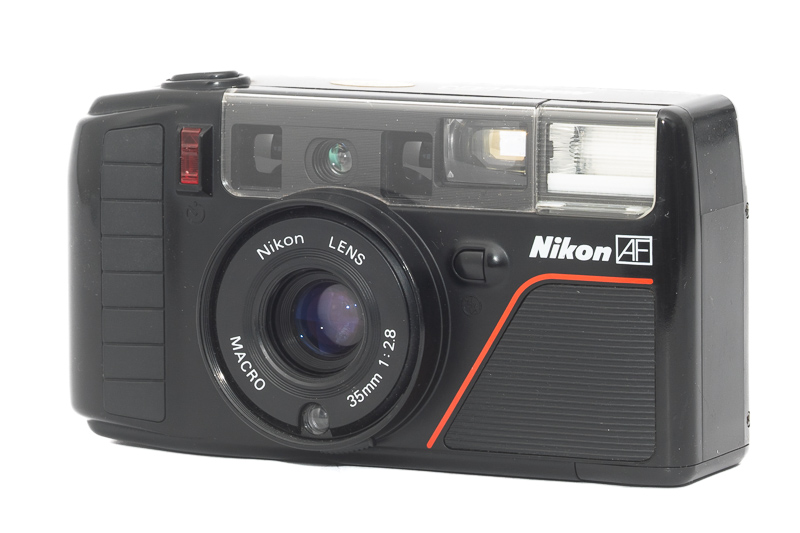
Among all the Revueflex and Porst junk cameras I usually see on the local flea markets, I discovered the familiar “Nikon” logo on a compact analogue camera. The cameras was very dirty, there was no way of knowing if it actually works, but for 25 bucks I decided to take the gamble.




This camera makes use of a rather obscure 6V CR-2P battery, so I had to order one of those first. I spent the waiting time cleaning this camera which was badly needed. Luckily the glass looks clean without any apparent haze or fungus issues – neither would have been a surprise taking into account the initial moldy smell of this device.
Handling
Released in 1987 this Nikon AF3 is one of the simplest cameras I have ever used: shutter button, self timer and a no-flash-button are the only controls you can find here.
The camera reads DX codes and if you load a film without one it will be treated as an ISO 100 film.
You cannot pick the aperture and there is no exposure compensation either.
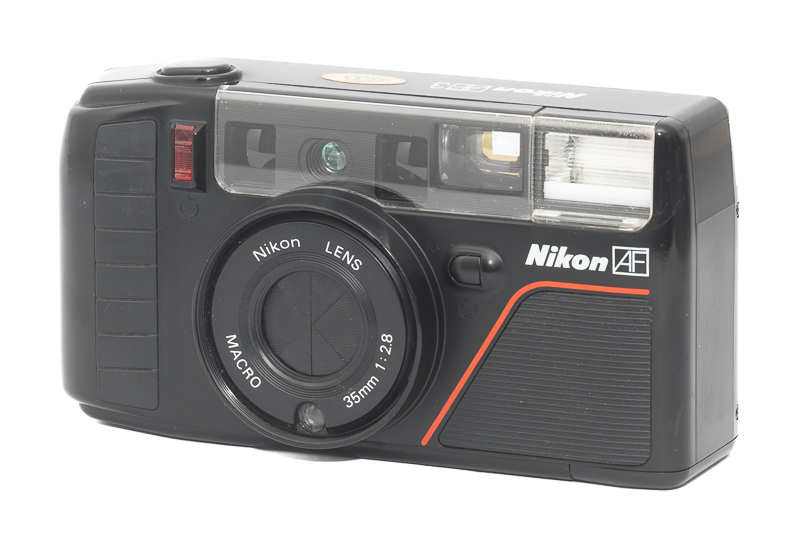
At the front you can see the red self timer lever and the no-flash-button. The on/off switch is at the bottom of the lens and doubles as opening lever for the lens cover.
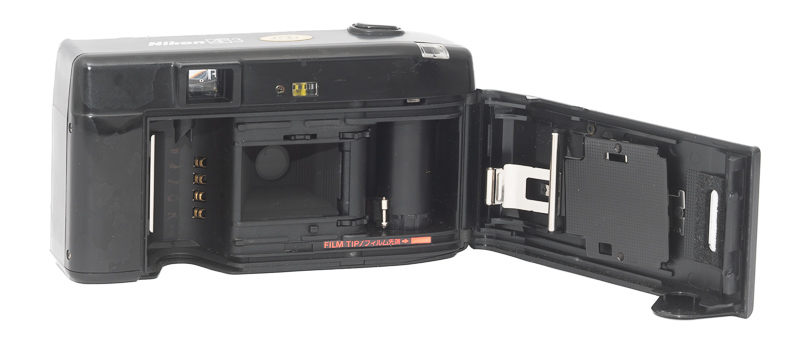
Film transport and rewind are both automatic.
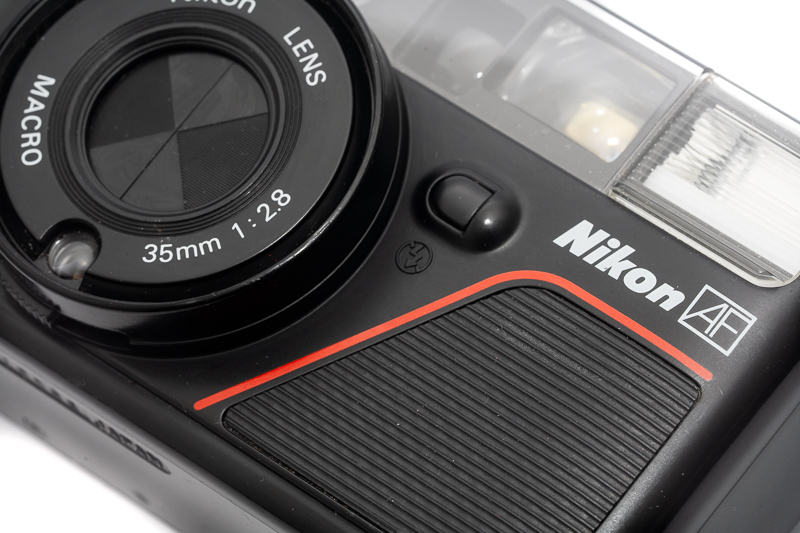
The lens is a unit-focusing 35mm f/2.8 4/3 design that focuses relatively close (0.45 m), hence the “Macro” writing on the front.
Impressions

You cannot control the aperture setting and on that one roll of film I actually only took one picture with a significant amount of bokeh. As you can easily see from that picture above, bokeh is super weird. This is due to the electronic leaf shutter doubling as aperture diaphragm.

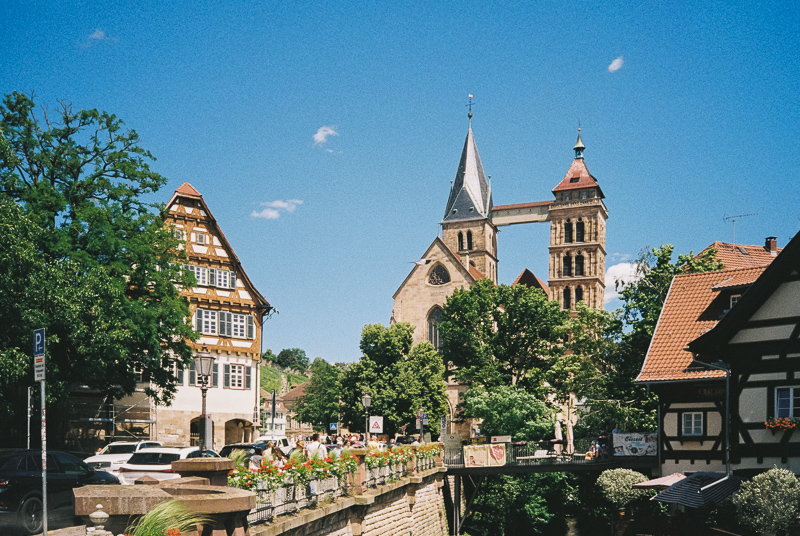
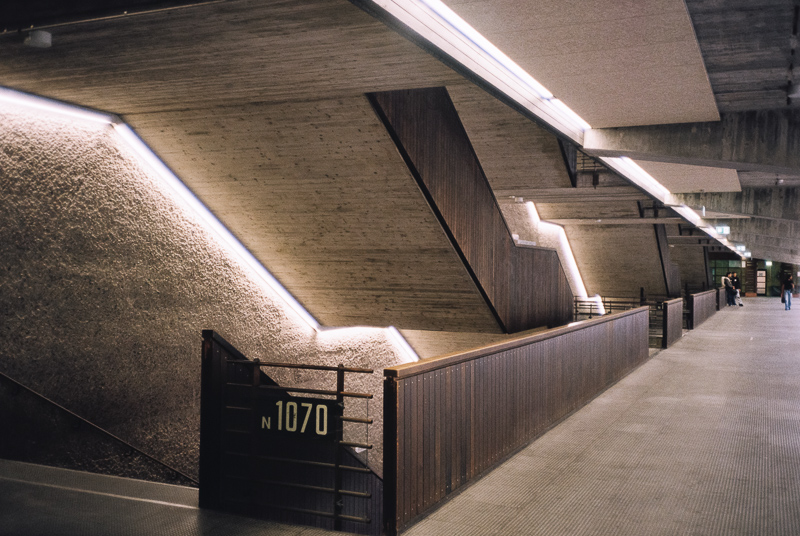
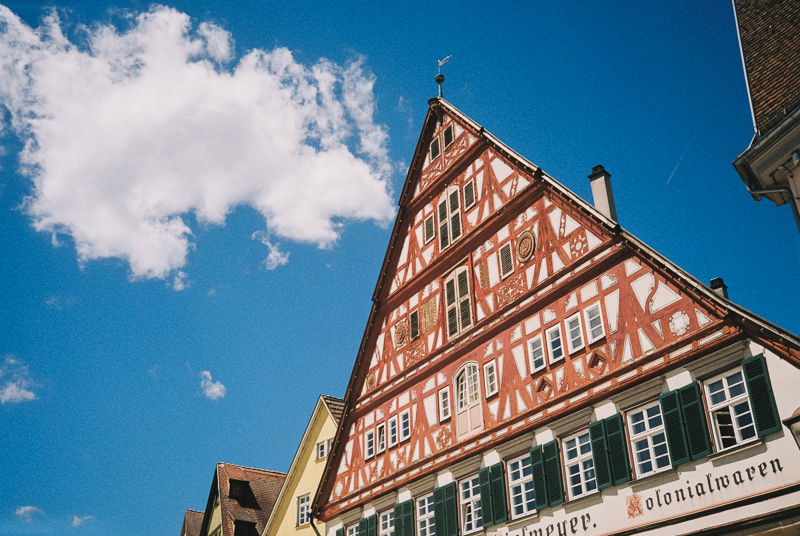
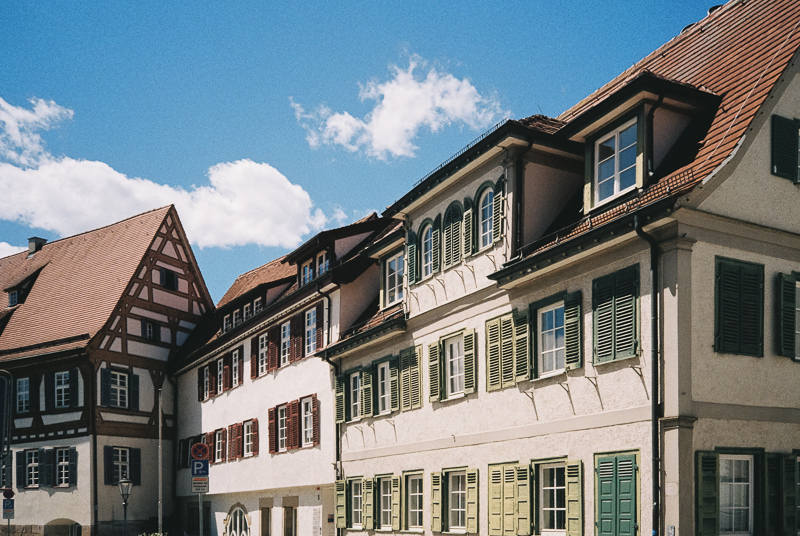
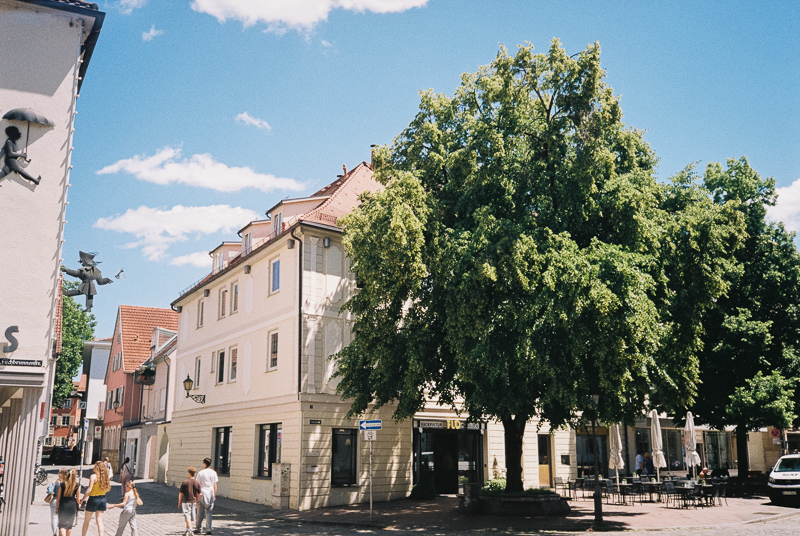
Apart from that the image quality is actually surprisingly good considering, age, price and initial condition of this camera. Colors come out neutral, contrast is good, performance is good even in the corners and there were only minor issues in backlit scenarios.
As I have told you above already, you can only use this camera in what would be called “program mode” or simply “P” on other cameras and you can not make any adjustments.
I already had a look at the Nikon 35Ti which also features a 35mm 2.8 lens and is not only significantly more popular, but does actually allow to change aperture value and exposure compensation. Personally I didn’t enjoy the handling of that camera overly much, so I ended up using it in “P” mode all the time – just like this Nikon AF3. In terms of lens performance these cameras are very similar except for one important detail: the 35Ti features an actual aperture diaphragm creating significantly nicer bokeh.
While the Nikon 35Ti commands around $900 on the used market, you can find this Nikon AF3 for roughly $130. Considering the pictures from these two cameras look indistiguishable in most of the cases (everything not including a significant amount of bokeh), this often overlooked AF3 might actually be worth a closer look as a compact, lightweight (280g), carry everywhere film camera.
buy a Nikon AF3 from ebay.com | ebay.de (advertisement/affiliate links) starting at $130
Sample pictures








Further Reading
Support Us
Did you find this article useful or just liked reading it? Treat us to a coffee or a roll of film!

 via Paypal
This site contains advertisement/affiliate links. If you make a purchase using any of the links marked as advertisement/affiliate links, I may receive a small commission at no additional cost to you. This helps support the creation of future content.


Latest posts by BastianK (see all)
- Prime Day Photoshop+Lightroom offer for Amazon Prime Members (EU/UK) | Update: also at B&H - October 7, 2026
- Review: Nikon AF-S 18-35mm 3.5-4.5G - October 7, 2026
- Review: Sigma 14mm 1.4 DG Art – World’s widest f/1.4 lens - September 26, 2026
Hard to believe we’re being treated to episode 55 of this adventure. My favorite blog series.
It is 56 even, I overlooked that there already was a 55, sorry!
Nothing wrong with any of these photographs, specially with experience hands behind it. Good little camera.