Sigma 20-200mm 3.5-6.3 DG Contemporary on Sony A7rII
You haven’t seen (m)any reviews of superzoom lenses on this blog so far, because traditionally many of those ~10x zoom lenses were either lacking in terms of optical performance (e.g. Sony FE 24-240mm 3.5-5.6 OSS) and/or I personally didn’t find the focal length range particularly useful, often starting at 28mm (e.g. Tamron 28-200mm 2.8-5.6 Di III RXD). Furthermore, if you want to review such lenses properly, it takes a lot of time and effort, equal to reviewing several prime lenses.
With its unique focal length range this Sigma 20-200mm 3.5-6.3 DG Contemporary intrigued me though, but can the performance of such a bold design be any good? I ultimately decided to buy one and see for myself how it performs, so here we are.
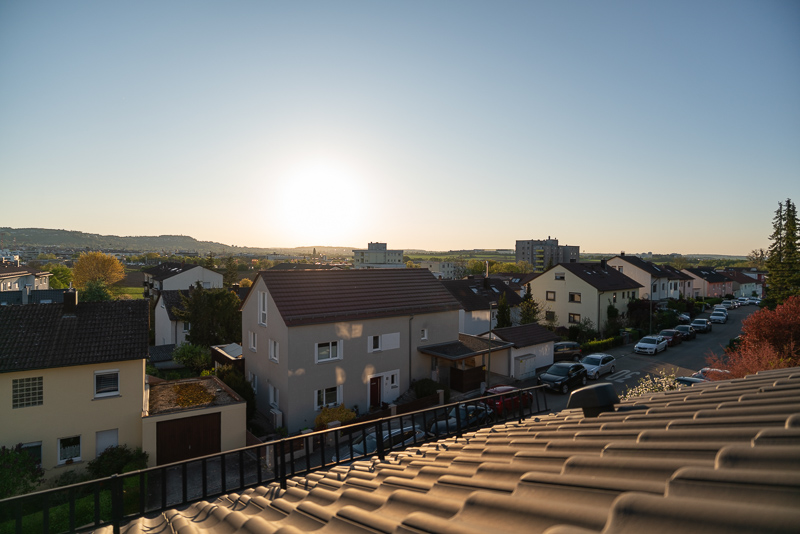
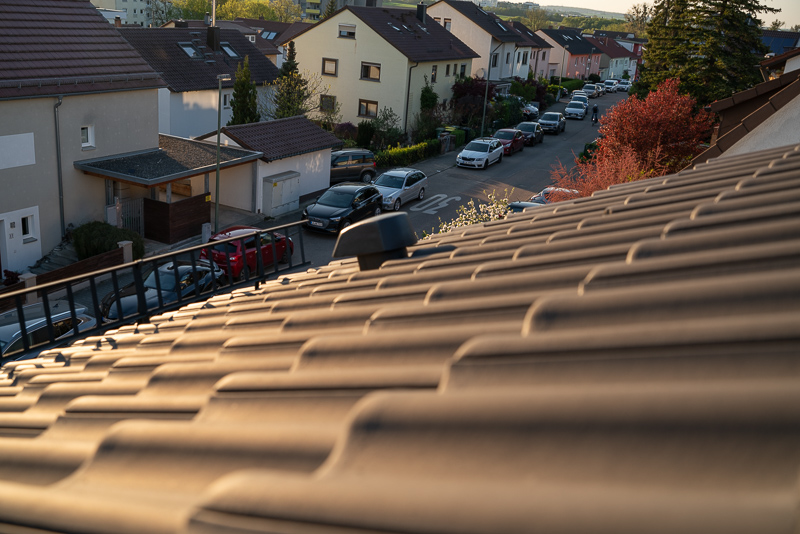
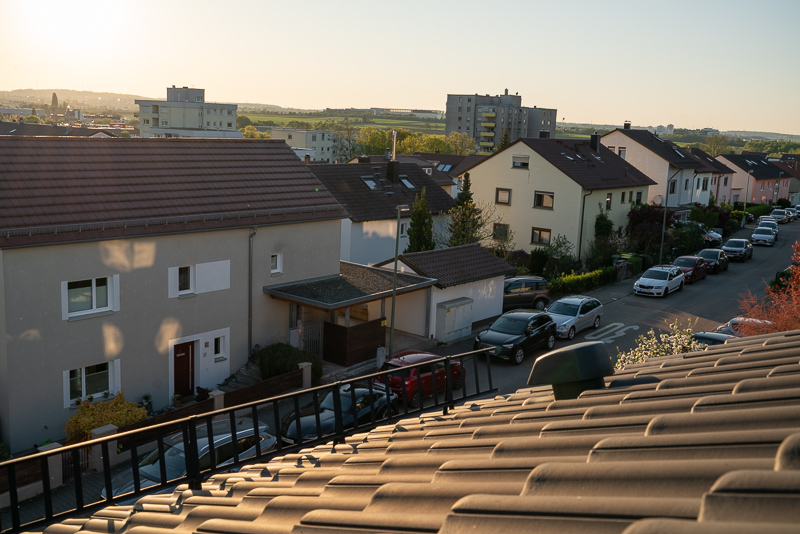
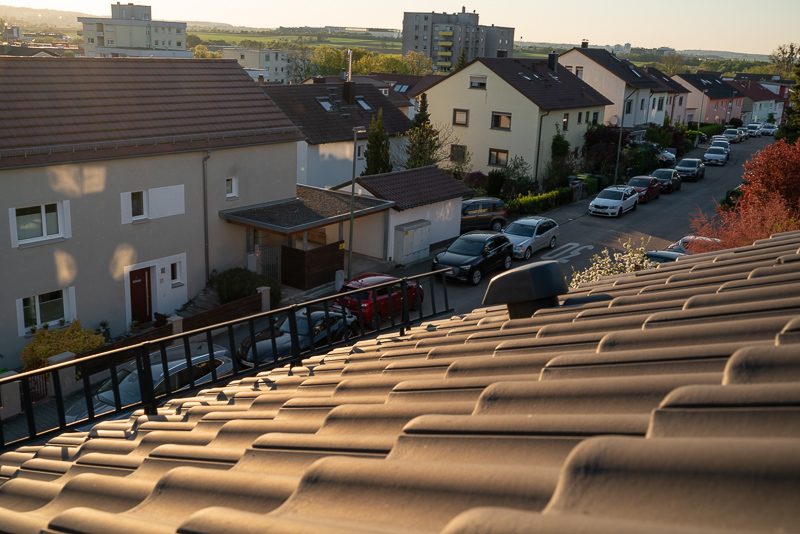
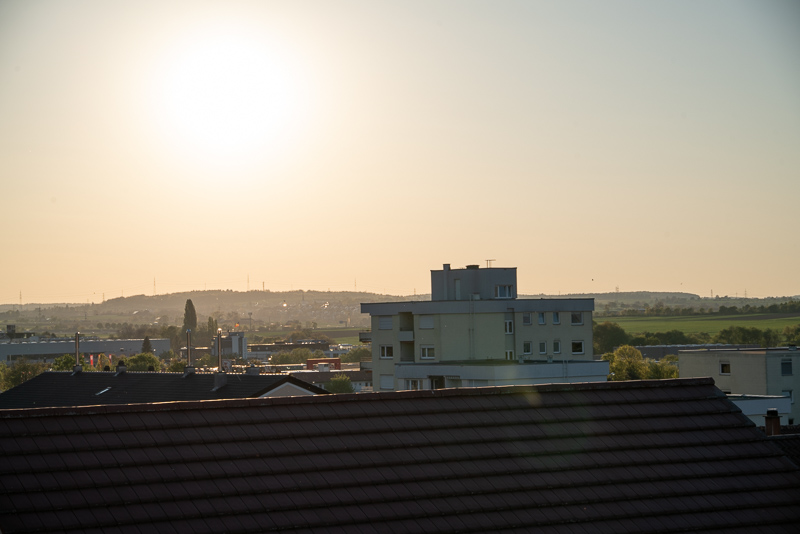
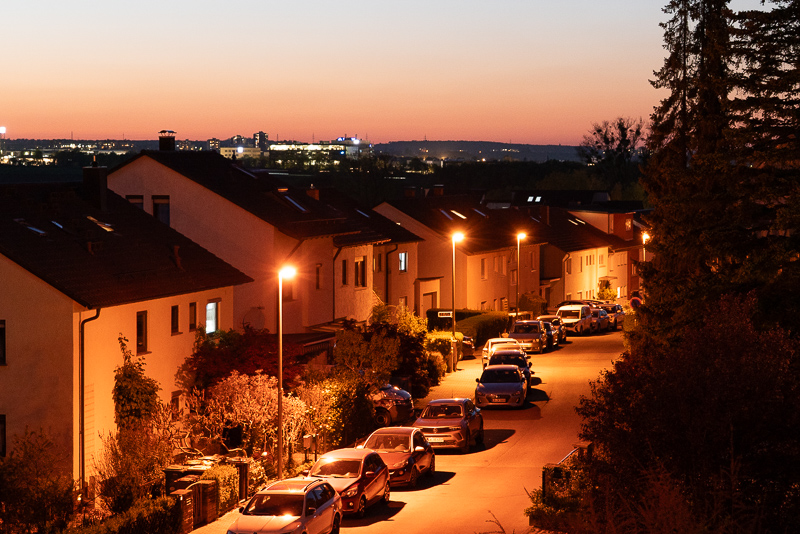
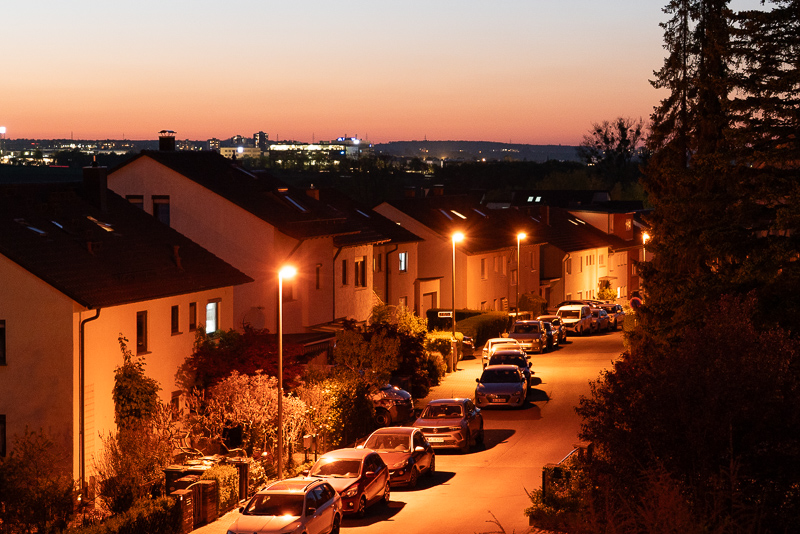
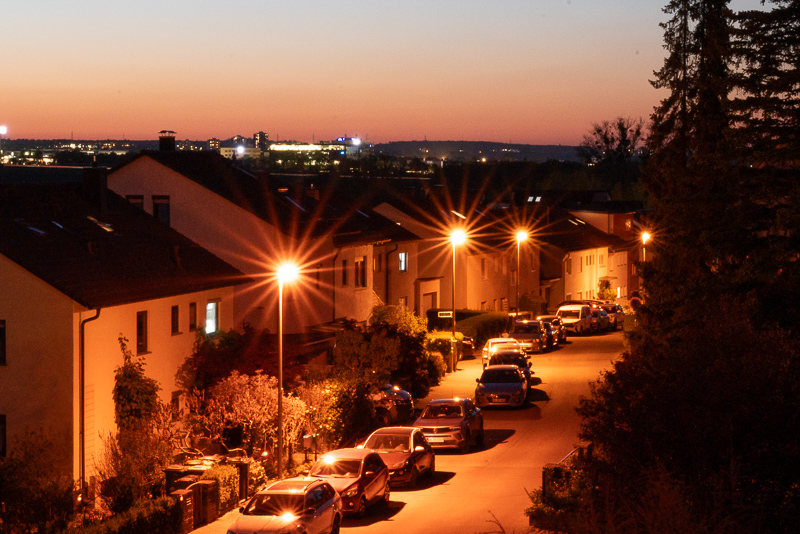
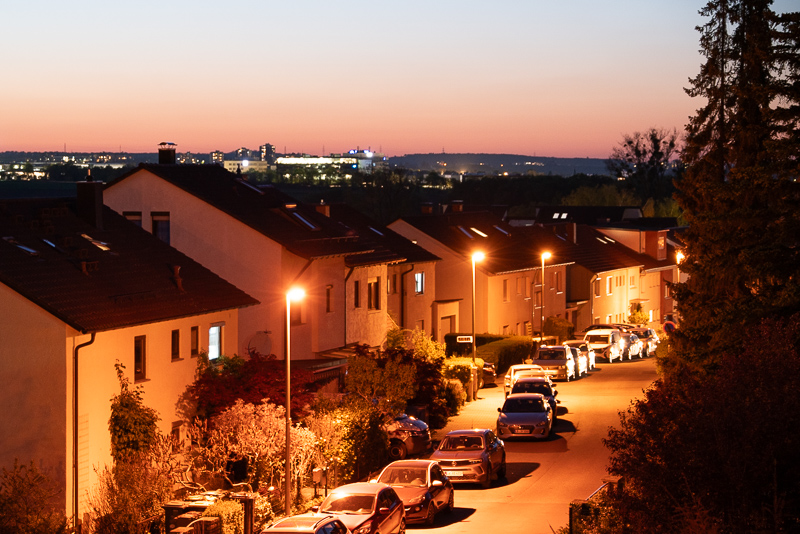
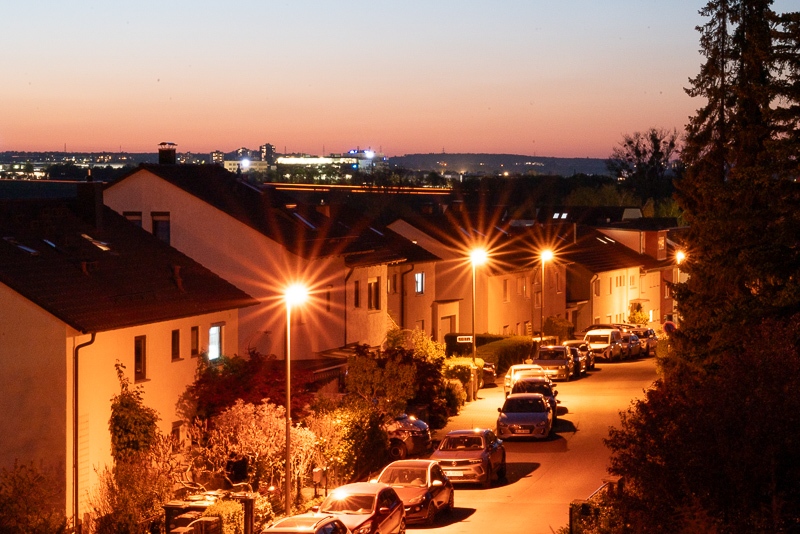
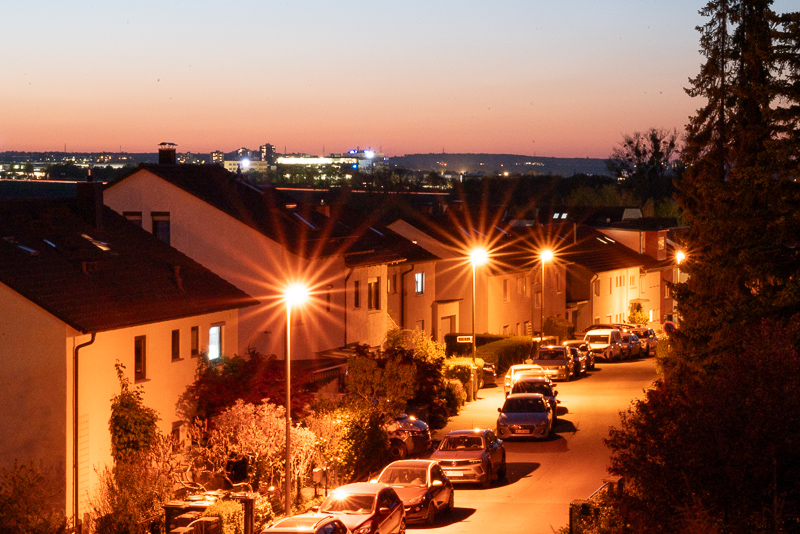
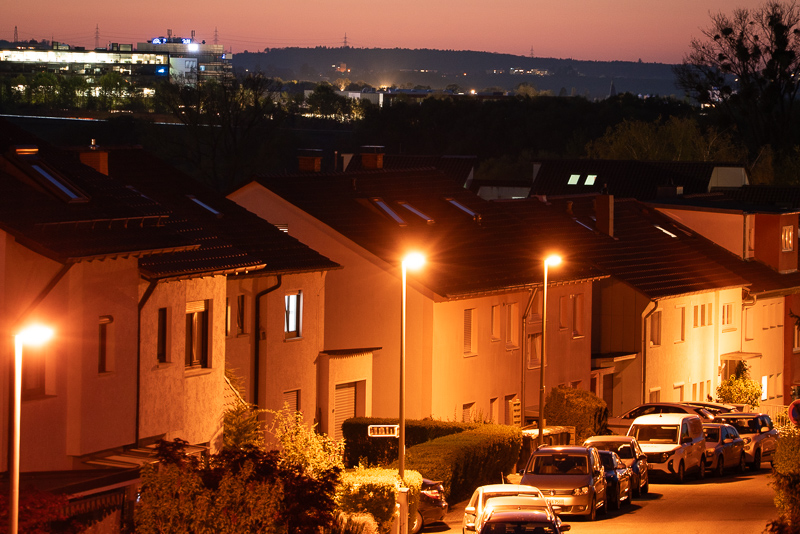
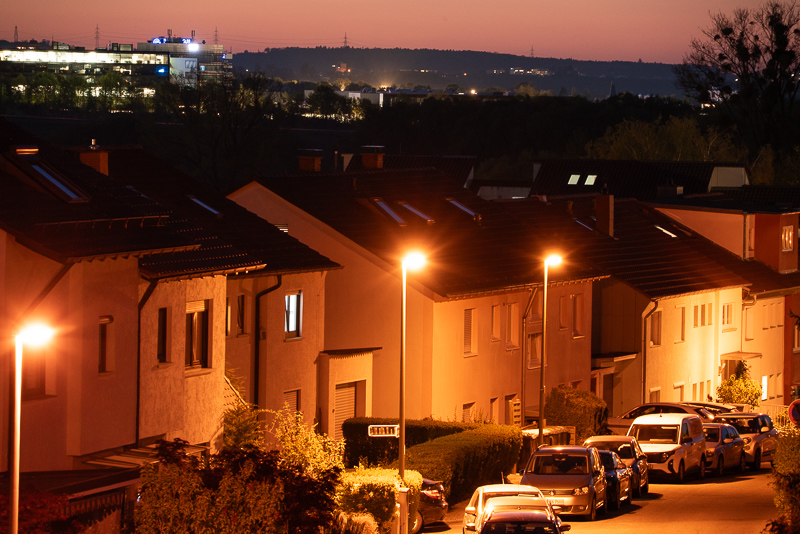
This scenery highlights quite well the jump from 20mm (on the edge of ultra) wide angle to 200mm tele.
This is a variable aperture zoom lens, in the following table you can see the maximum aperture values according to camera when set to 1/3 EV steps. If you set your camera to 1/2 EV steps this changes slightly.
Focal Length
Max. Aperture
20-21mm
f/3.5
22-28mm
f/4.0
29-36mm
f/4.5
37-49mm
f/5.0
50-84mm
f/5.6
85-200mm
f/6.3
Handling / Build Quality
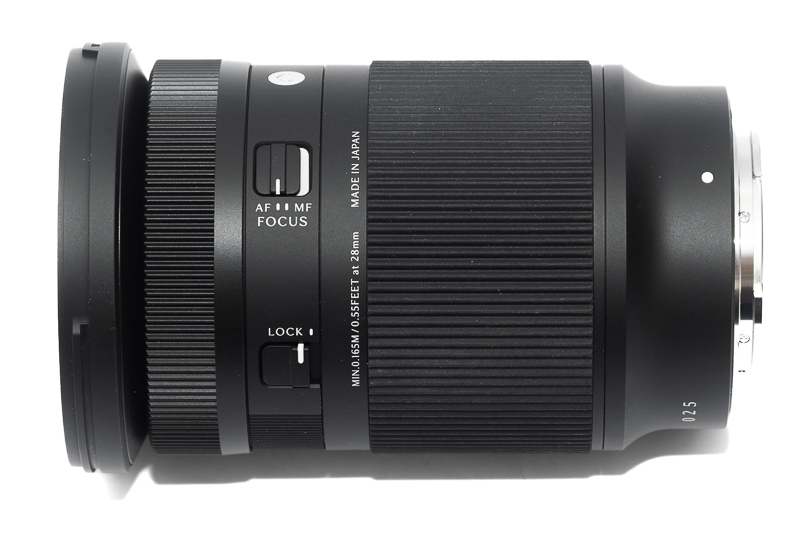
Sigma 20-200mm 3.5-6.3 DG Contemporary
Unlike Sigma’s Contemporary i-Series prime lenses (e.g. the Sigma 17mm 4.0 DG DN Contemporary), this 20-200mm zoom lens does not feature that all metal casing and seems to be made mostly from Sigma’s high quality polycarbonate.
The rubberized focus ring has decent damping and it takes about 180° from the minimum focus distance to infinity. As is luckily the case for most lenses these days, the coupling is linear, so it doesn’t matter how fast you turn the focus ring.
When you turn your camera off, the lens will remember the last focus position and will still be there when you turn the camera on again.
The focus group also moves around freely when the lens is powered off. This is normal, don’t annoy your dealer with useless returns and exchange requests because of that.
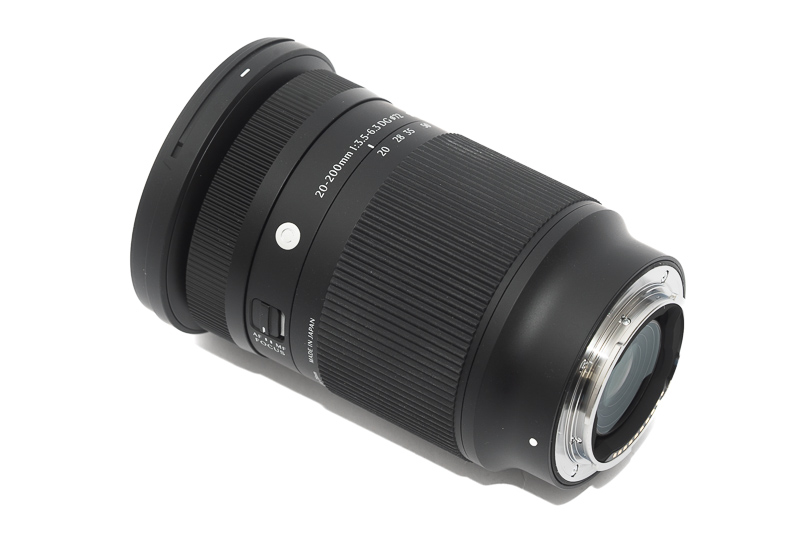
The zoom is mechanically coupled and there was no zoom creep. This is something that may still develop over time though and for that case Sigma already included a lock switch for the shortest 20mm setting.
AF/MF switch and zoom lock button
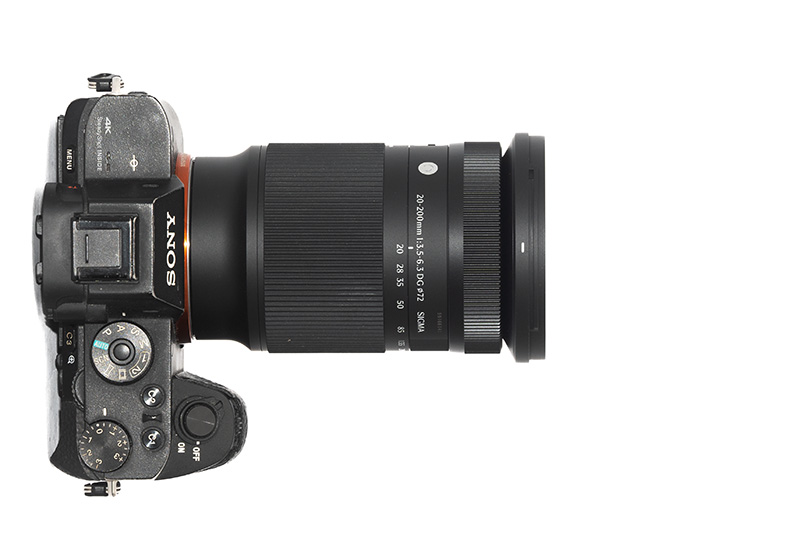
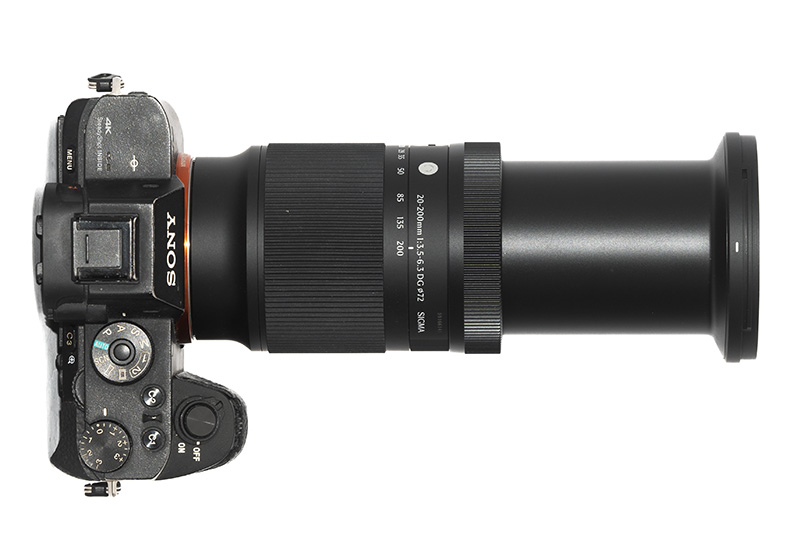
The zoom ring is situated closer to the camera and has markings for 20, 28, 35, 50, 85, 135 and 200 mm. This is not a parfocal zoom, if you change the focal length, focus needs to be adjusted. Compared to Sony, Nikon and Tamron lenses, the zoom ring rotates in the opposite direction (same as Canon’s lenses), so if you are using zooms from different manufacturers, that has the potential to be bothersome in the field.
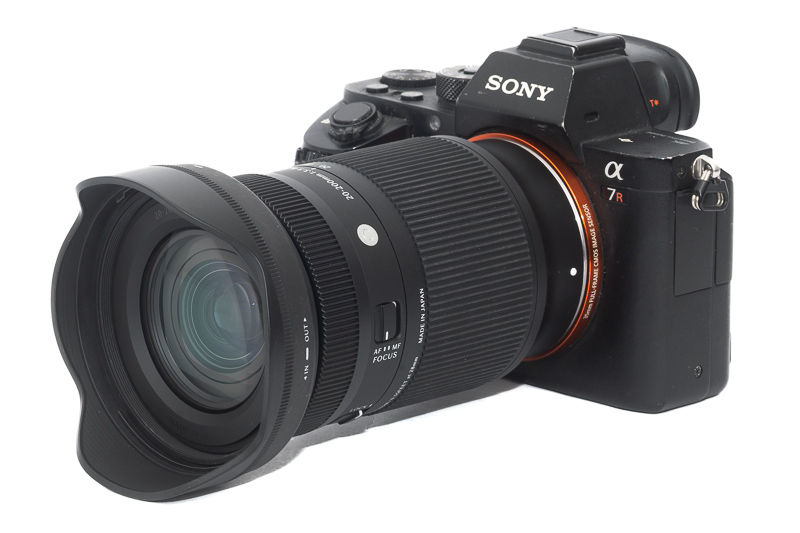
Sigma 20-200mm 3.5-6.3 DG Contemporary with hood attached
The lens comes with a plastic bayonet-style tulip-shaped lens hood that can also be attached reversed.
The zoom design is typical: shortest at the 20mm end, longest at the 200mm end. It is nice to see that Sigma managed to incorporate this zoom range with a single extending tube.
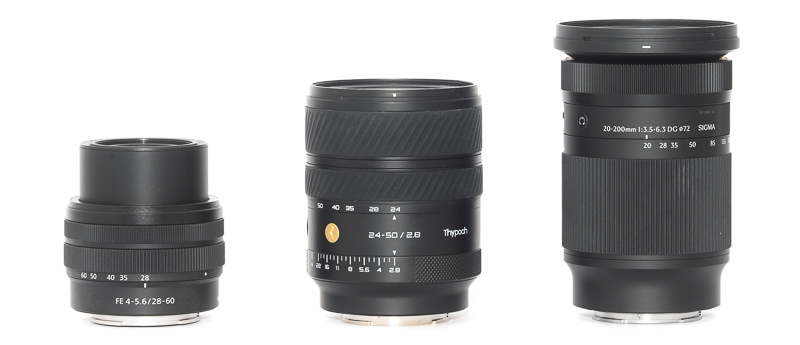
Sony FE 28-60mm 4.0-5.6 | Thypoch 24-50mm 2.8 Voyager | Sigma 20-200mm 3.5-6.3 DG Contemporary
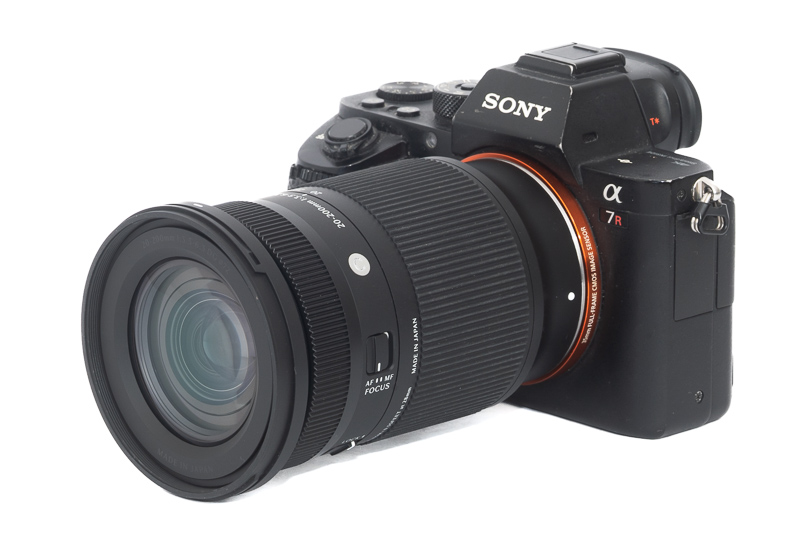
This lens is also surprisingly small considering its massive zoom range. It is only slightly longer and actually thinner than the Sony FE 20-70mm 4.0 G and about the same size as the Tamron 28-200mm 2.8-5.6 Di III RXD.
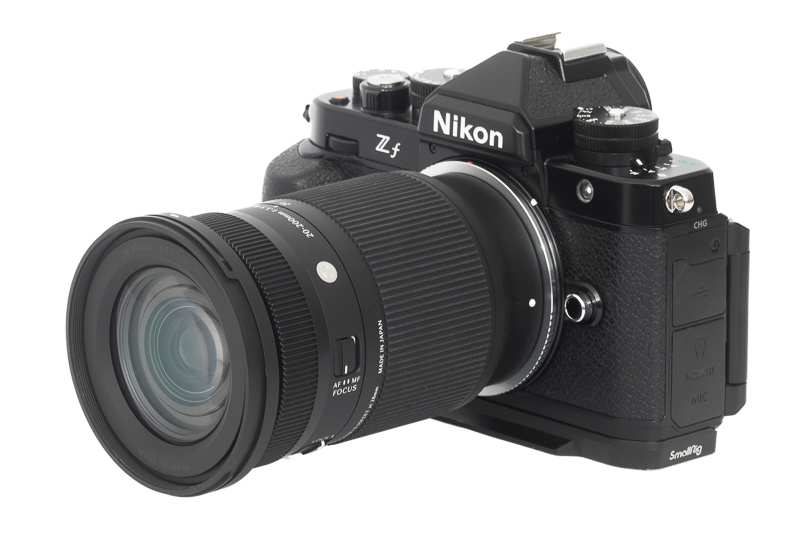
Sigma 20-200mm 3.5-6.3 DG Contemporary via megadap ETZ21pro+ on Nikon Zf
Generally this lens works fine on Z-mount cameras via the megadap ETZ21pro+ adapter, but the built-in distortion correction profiles will obviously not work, so this is not a combination I would recommend, as the strong distortion (especially at the wide end) makes properly framing a tedious task.
Autofocus
I am not shooting sports or fast moving animals/humans so if you want to know if the lens is fast enough for this, or how it compares to other lenses in this segment, you may have to look for a different review with a more detailed assessment of this aspect.
For all the applications I used it for, the AF was always fast and accurate and it is also completely silent.
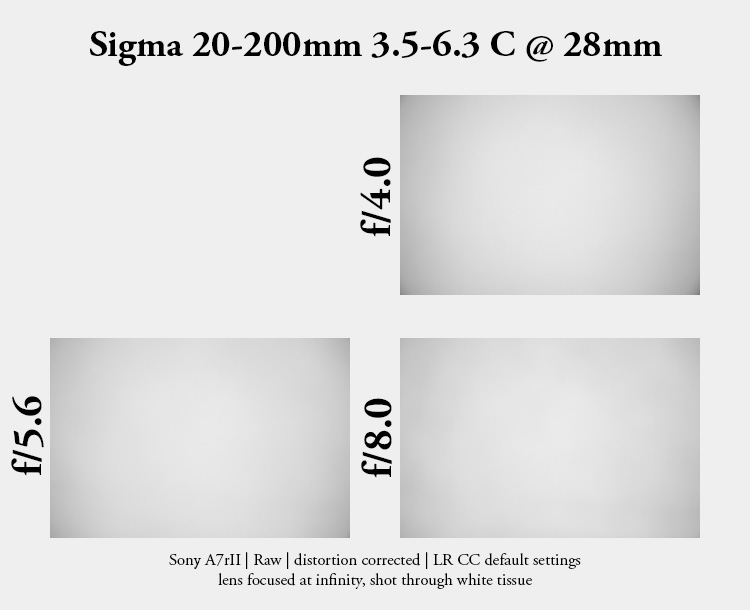
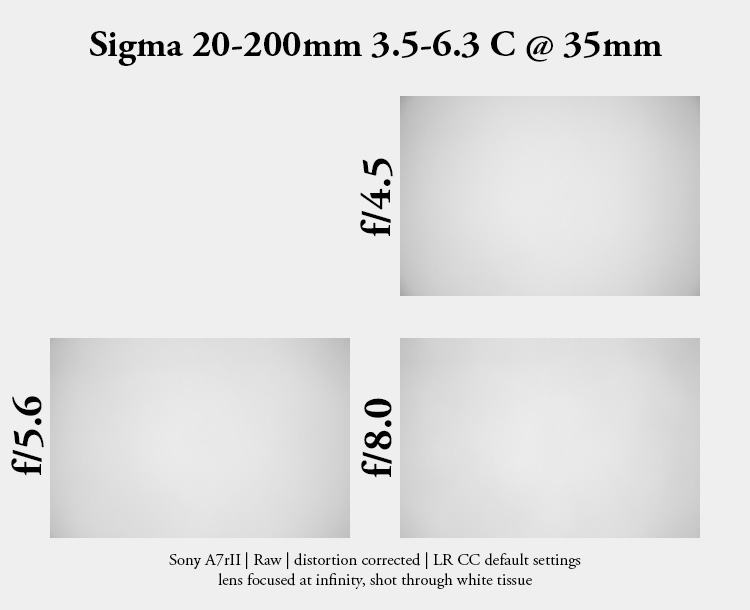
Sony A7rII | Sigma 20-200mm 3.5-6.3 DG C | Distortion corrected
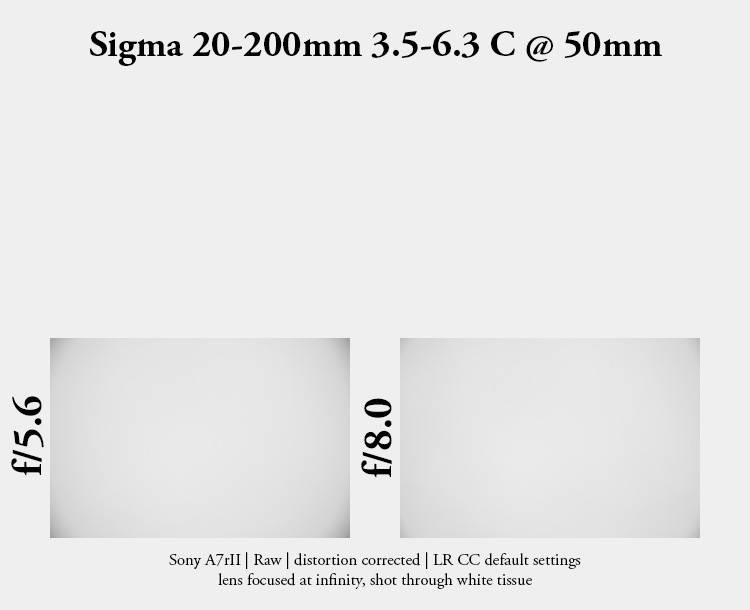
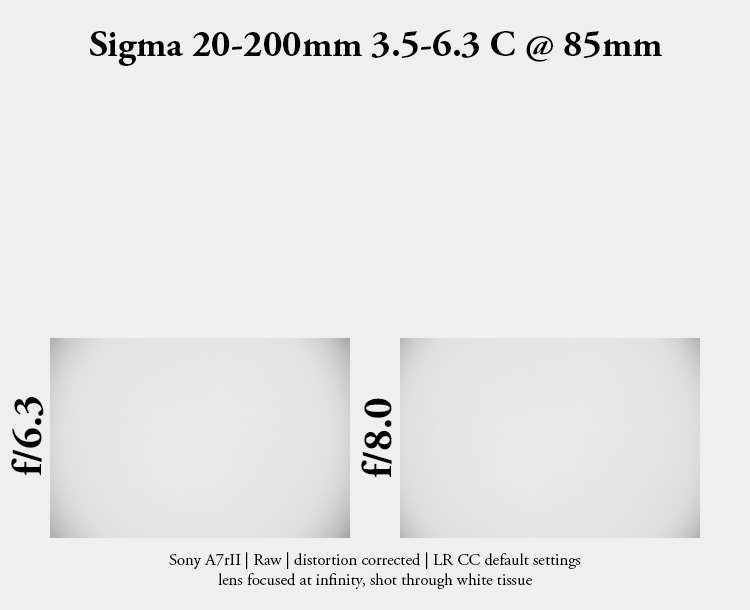
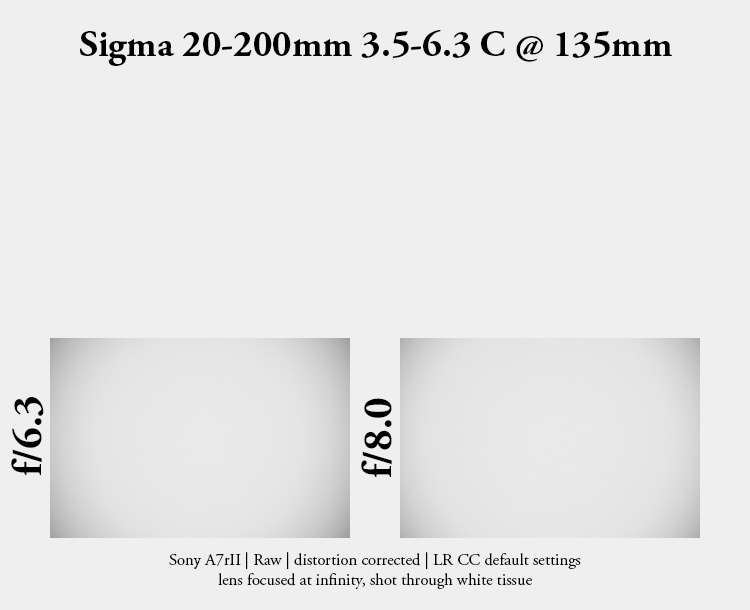
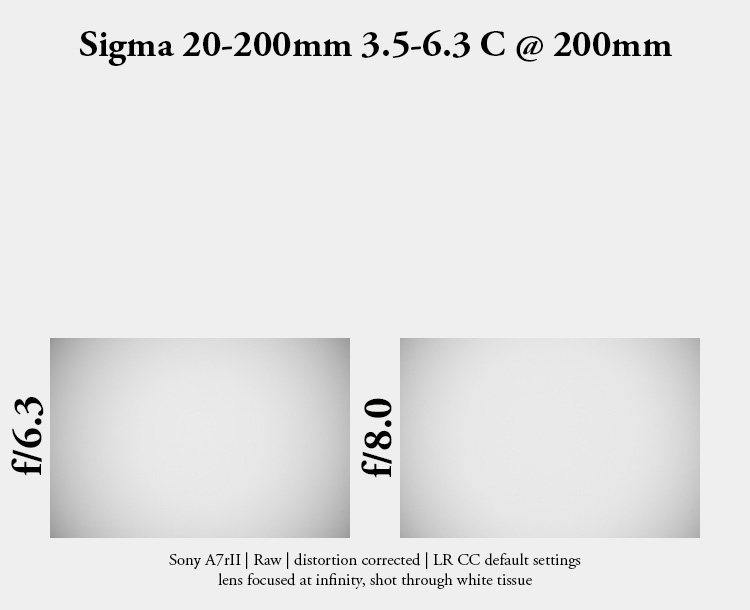
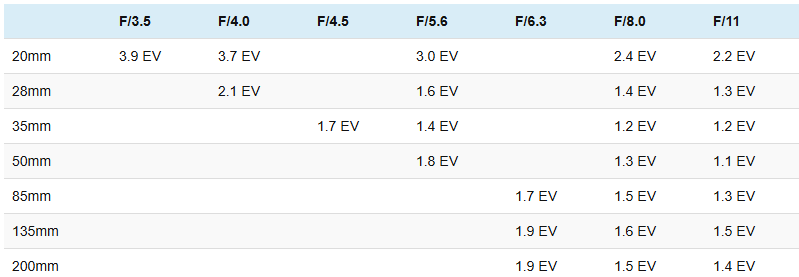
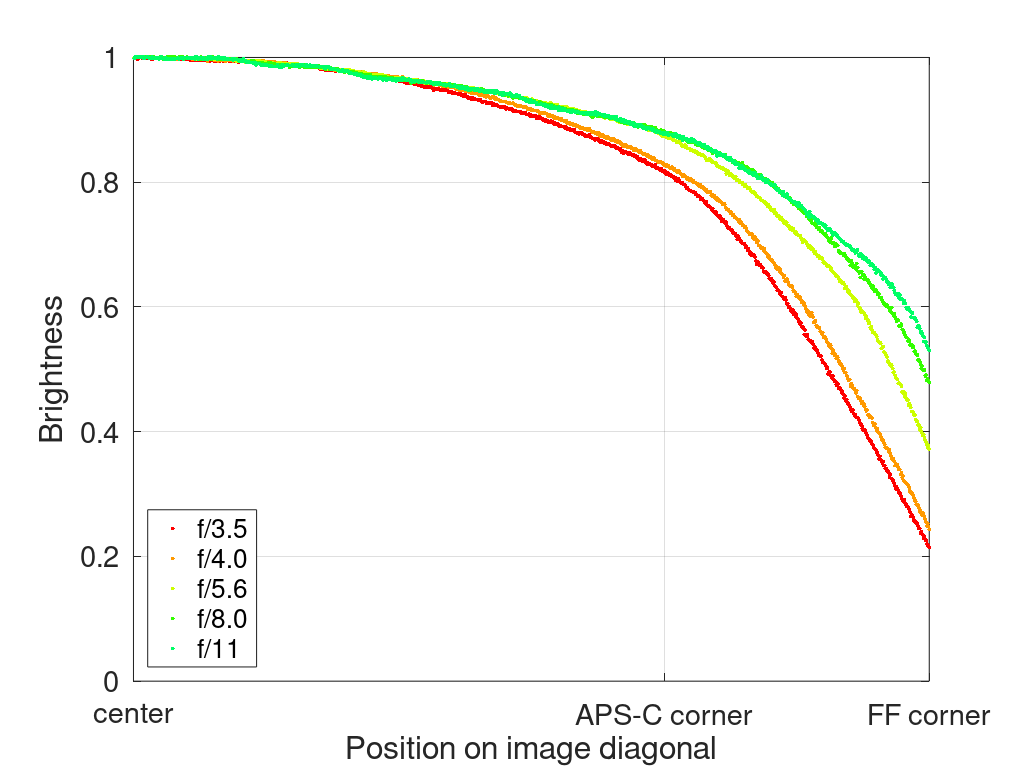
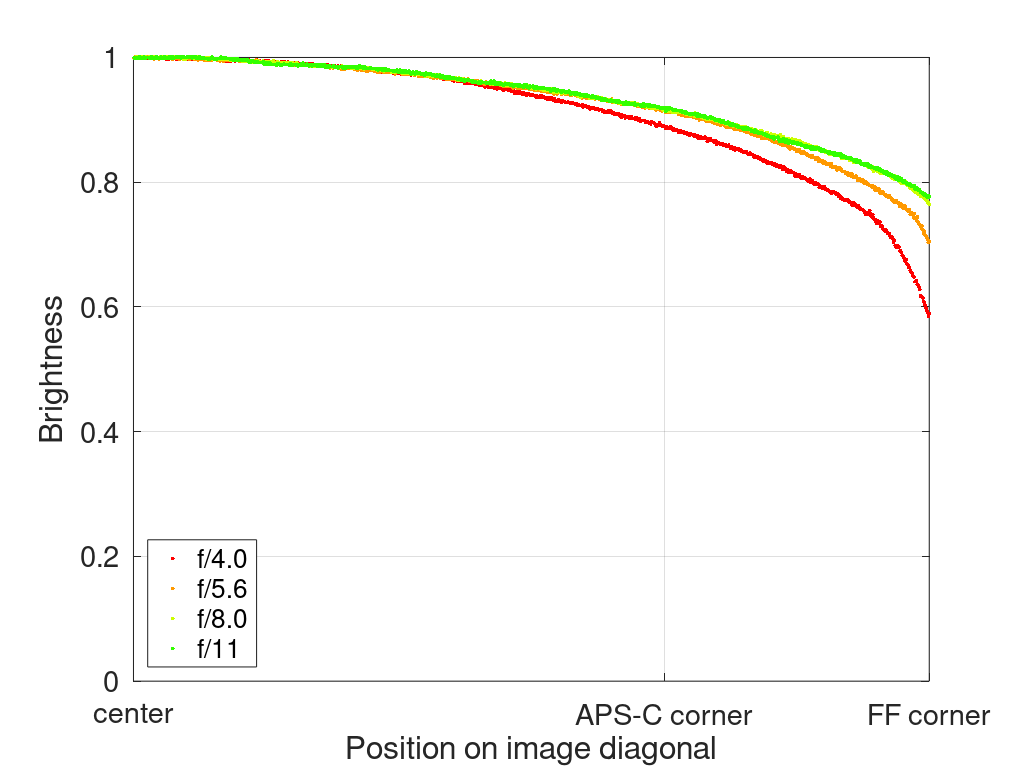
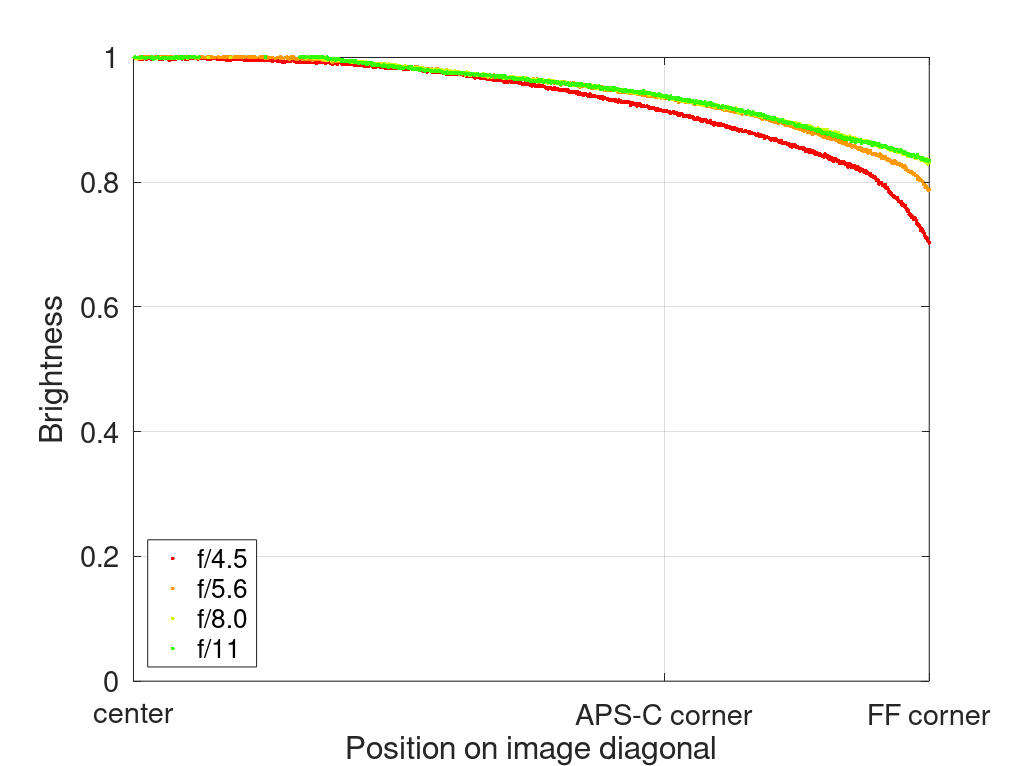
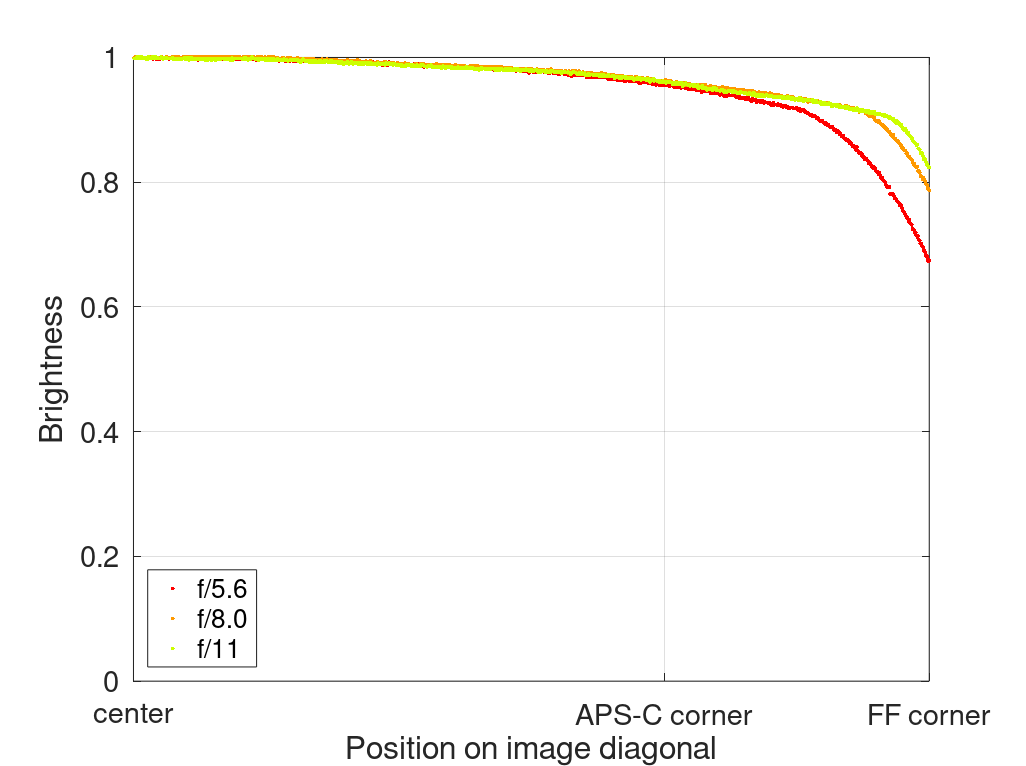
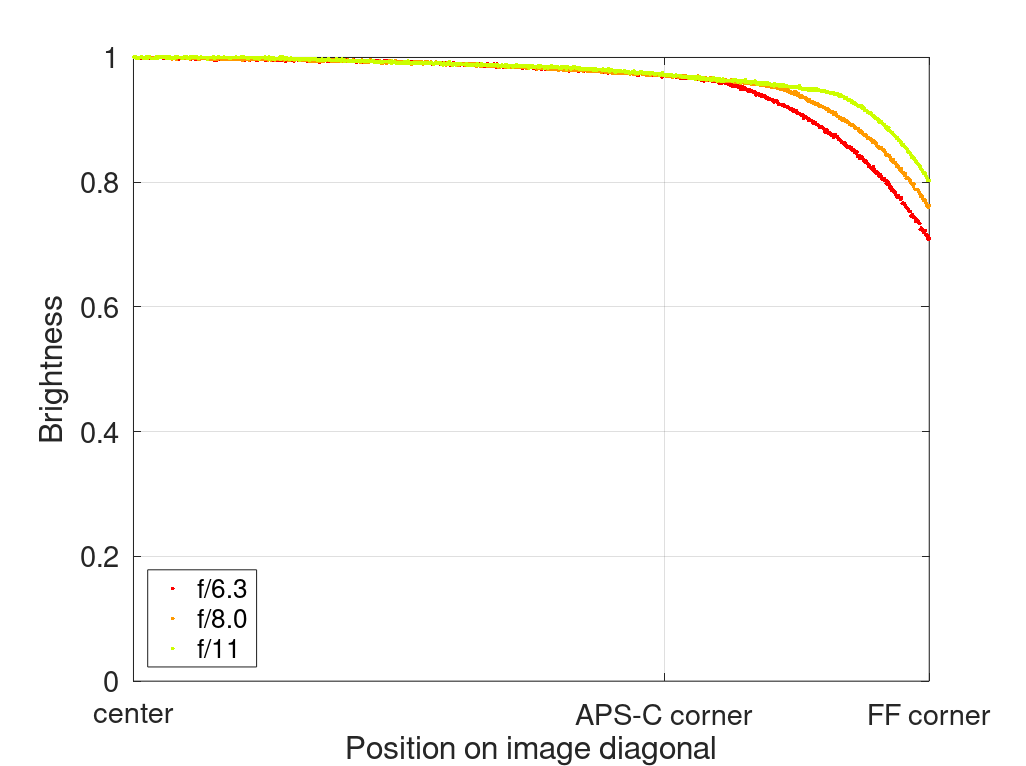
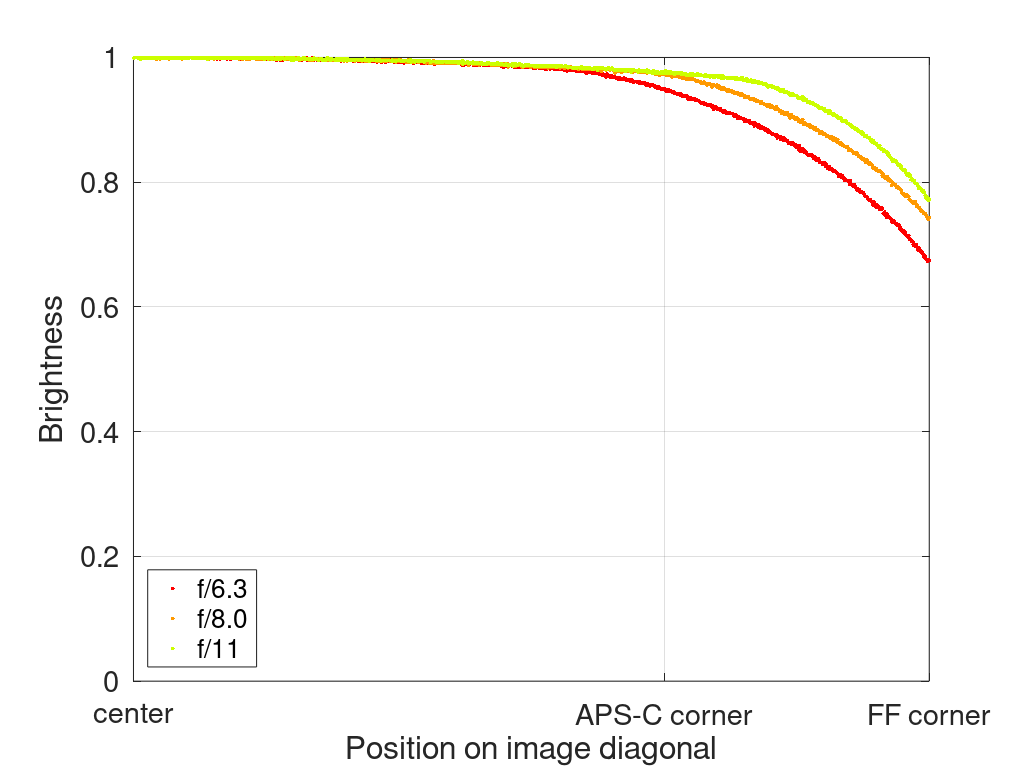
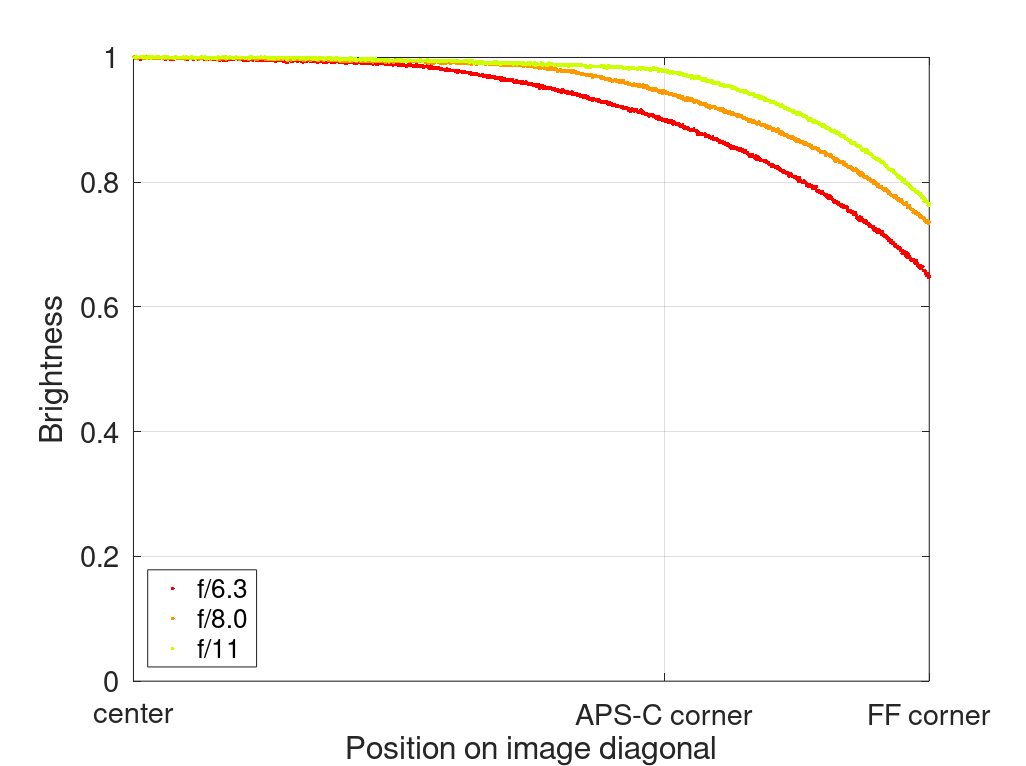
What would I expect from a lens with these specifications? Definitely strong vignetting at the wide 20mm end and as we can see from the table above that is indeed the case here. Almost 4 EV is definitely a lot, but good news here are, it actually improves on stopping down. From 28mm onwards the vignetting is rather tame, rarely exceeding 2 EV and around 1 EV stopped down. Very similar to other midrange zooms.
The Sony FE 20-70mm 4.0 G was a bit better at the wide end showing “only” 3 EV vignetting at f/4.0, but stopped down and at other focal lengths it doesn’t really manage to pull farther ahead.
Sony A7rII | Sigma 20-200mm 3.5-6.3 DG C | Distortion corrected
Because the lens is obviously supposed to be used with distortion correction we will again be looking at files where the distortion correction has already been applied.
What I was most interested here was, how this Sigma lens compares to the Sony FE 20-70mm 4.0 G, as these are the two standard zooms offering a 20mm setting. Considering this Sigma lens has a much wider zoom range we should also expect the Sony lens to perform better.
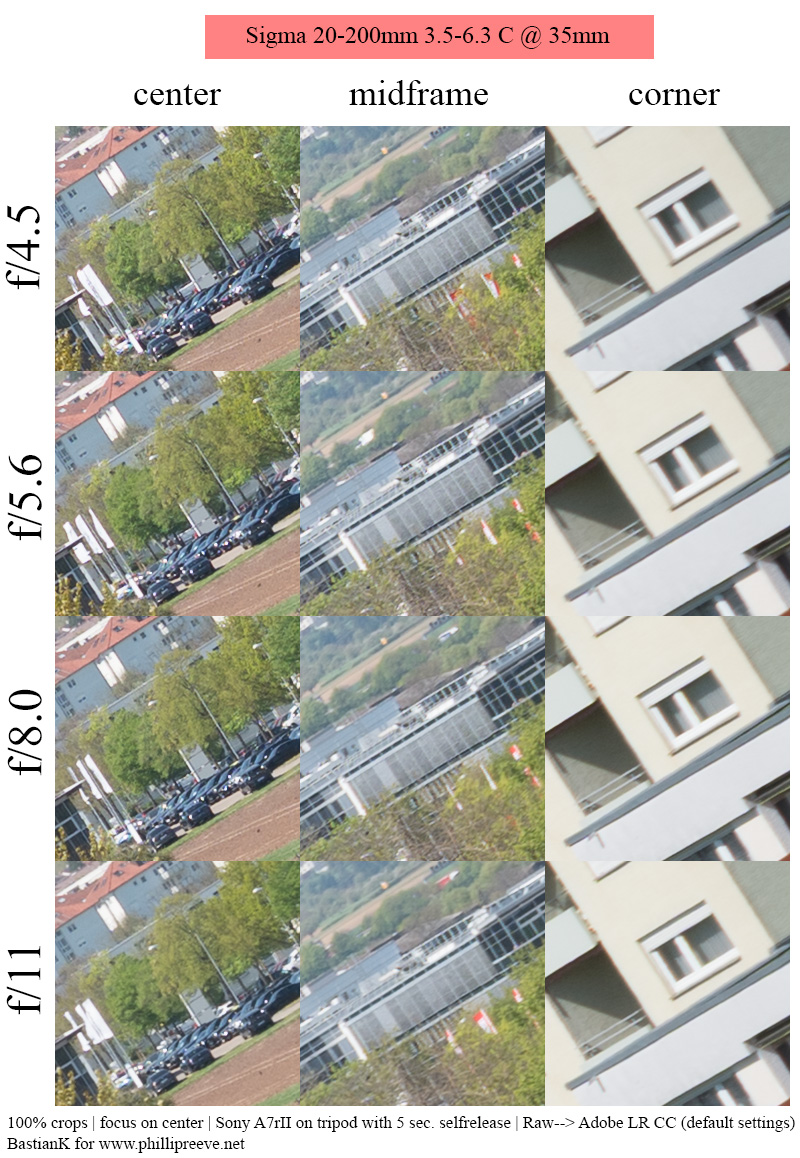
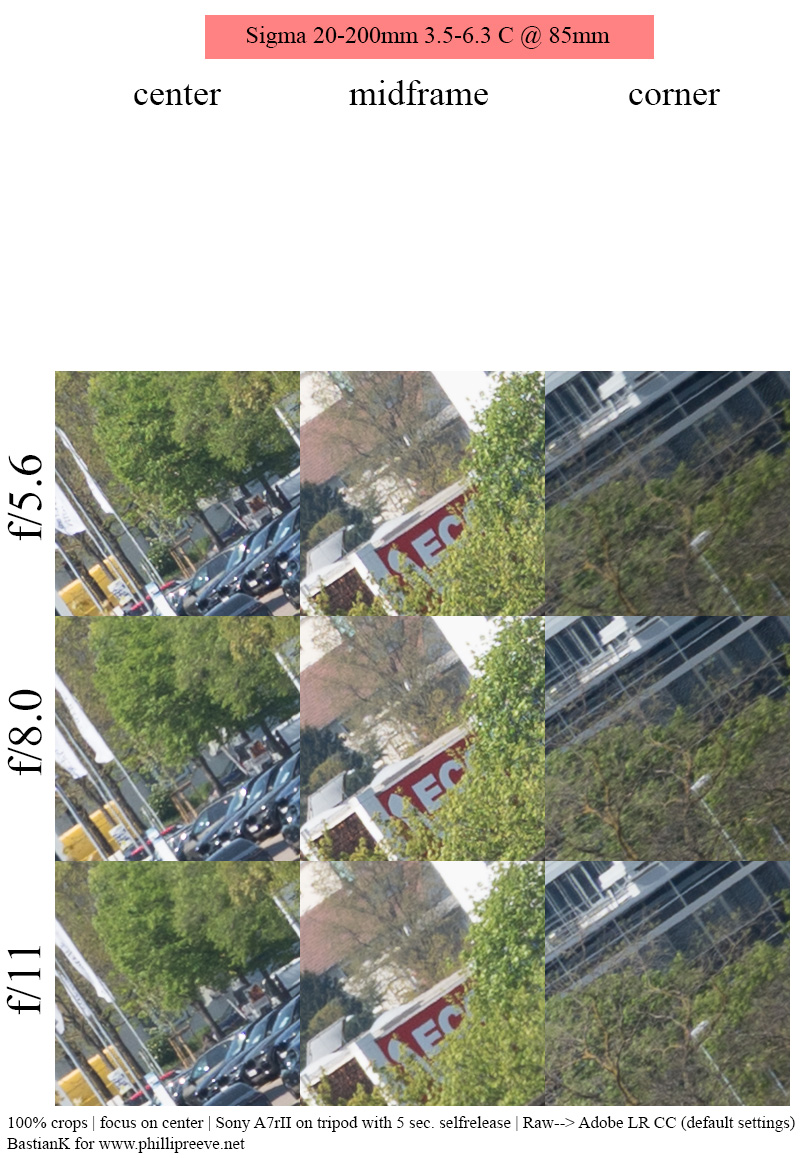
Looking at 20mm, this Sigma lens performs similar in the center and midframe, but actually better in the corners. Not something I expected. Comparing them at 35mm, the Sony lens does look a bit better in the corners now. The 85mm setting of this Sigma lens looks no worse than the 70mm setting of the Sony lens. That is an impressive result for this Sigma lens.
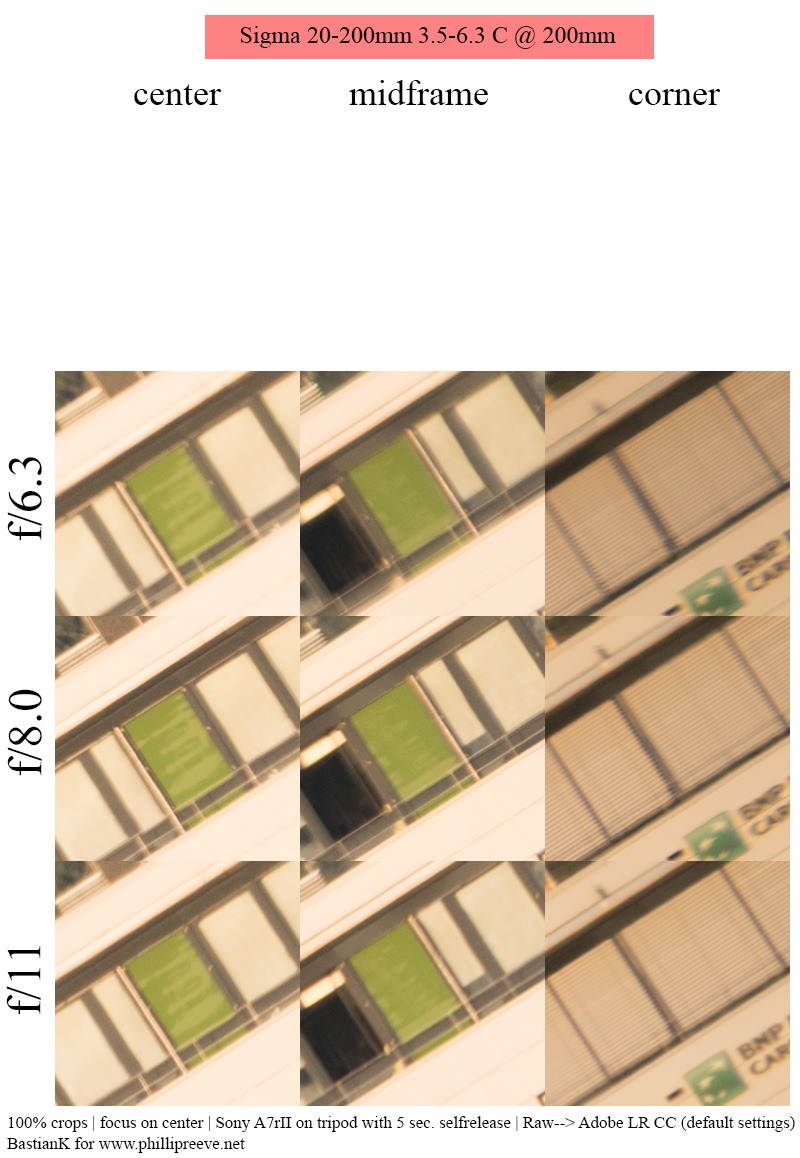
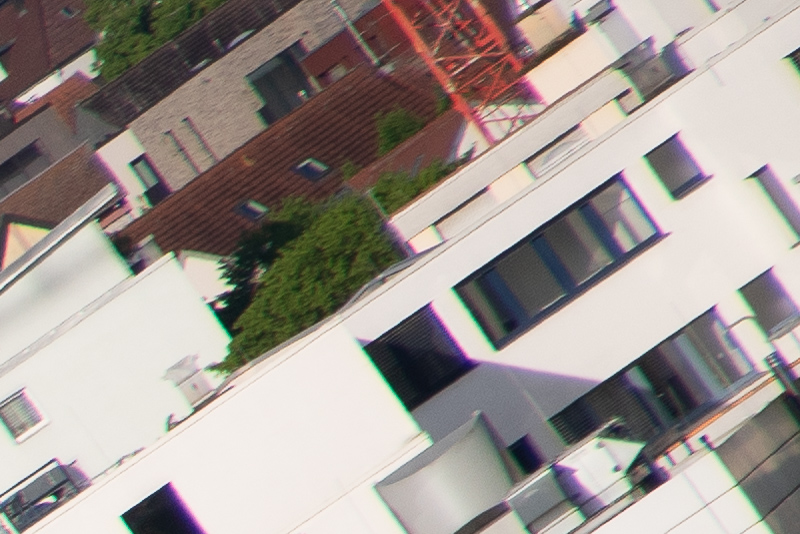
When looking at the 200mm setting (where we also clearly see the influence of heat haze) stopping down to f/8.0 can actually be advisable, as it is a bit soft at f/6.3.
I found this lens to be very competent in the 20 to 135mm range from its maximum aperture, only at the 200mm setting I always tried to use f/8.0 instead.
At the end of the day the performance of this 10x Sigma zoom is very much comparable to the 3.5x Sony FE 20-70mm 4.0 G zoom in the overlapping range, which is an outcome far exceeding my expectations.
Sony A7rII | Sigma 20-200mm 3.5-6.3 DG C | 200mm | 100% crops from center
Observations
In the center of the frame the performance is very good at all focal lengths at close distances – again except for the 200mm setting, where stopping down to f/8.0 makes a notable difference.
Now in the 28-85mm range the maximum magnification is most impressive, even exceeding 1:2. However, as often is the case for zooms that focus very close (e.g. the Sony FE 20-70mm 4.0 G or Tamron 70-180mm 2.8 Di III MKI/II), there is very strong field curvature here as can be seen from the overviews I included.
With this Sigma 20-200mm 3.5-6.3 DG C there is a solution to this though: just use the 200mm setting. Here the maximum magnification of 1:2.9 may be slightly less impressive, but there is hardly any field curvature left at this setting.
This zoom lens does not offer the same performance (or maximum aperture) as a dedicated macro lens, but for many close focus applications I found it to work surprisingly well.
Flare resistance
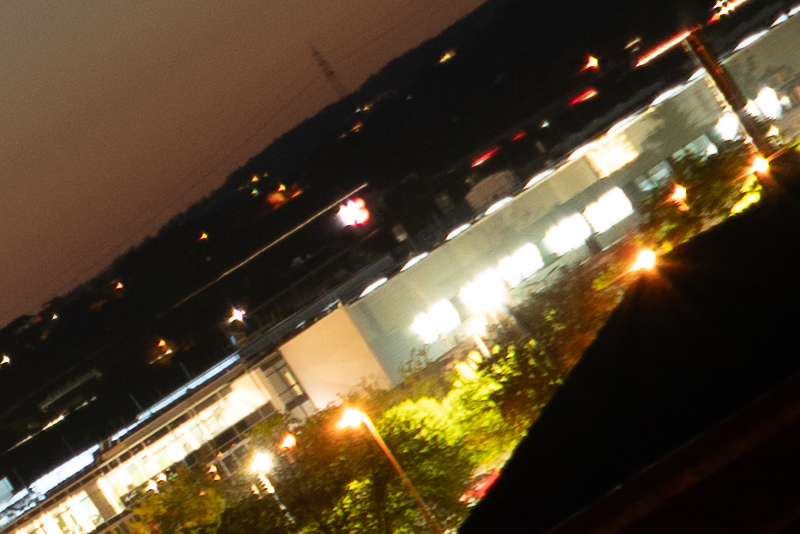
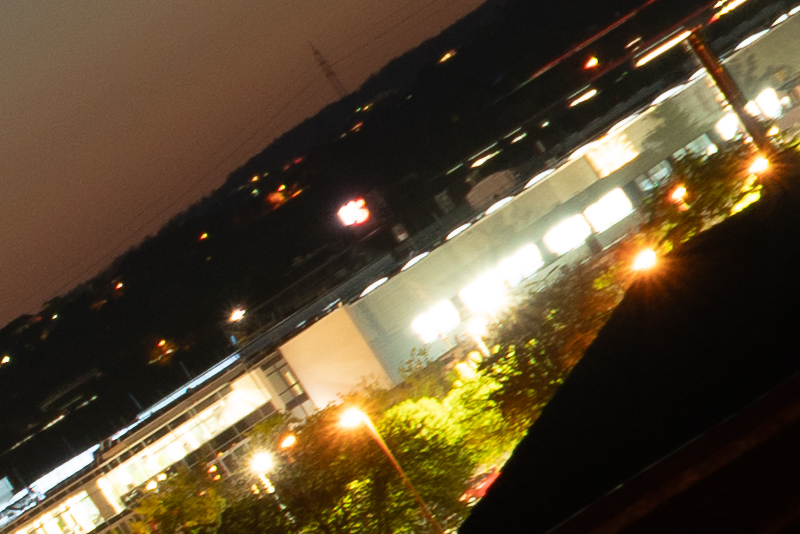
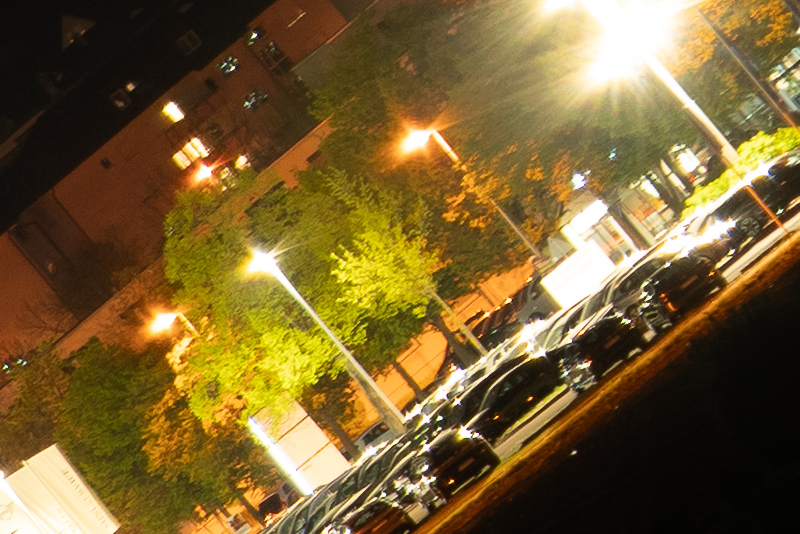
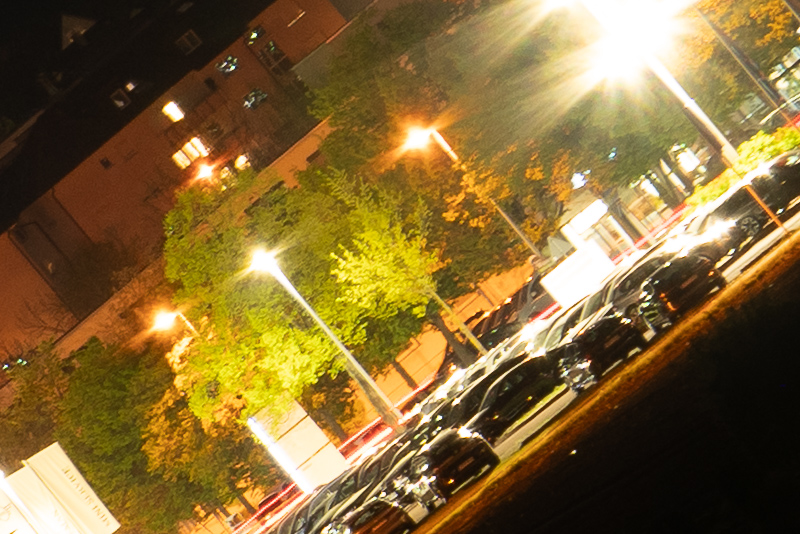
Generally, if you try hard and long enough, you can make almost any lens look bad in this category. Zoom lenses are often more prone to issues here, due to many air-glass surfaces and plenty of moving parts inside.
The performance here is significantly better than I expected. We can see minor ghosts in a few situations, but not only are these very rare, they can often also be avoided by slight reframing.
Also at longer focal lengths veiling flare is surprisingly not an issue. I didn’t use the hood for any of the pictures in this section. As it has to be very short because of the 20mm setting, it cannot make much of a difference anyway.
Again this Sigma’s performance here looks better to me than the Sony FE 20-70mm 4.0 G‘s, which was once more unexpected.
Sony A7rII | Sigma 20-200mm 3.5-6.3 DG C | 200mm | 100% crops from corner | distortion corrected
Observations
Considering its wide focal length range, Coma is corrected surprisingly well. At the wide end not only better than the Sony FE 20-70mm 4.0 G, but also better than many of the compact prime lenses like the Viltrox AF 20mm 2.8.
At 200mm stopping down by about one stop again improves the performance, but this still looks better than many primes from just a few years ago.
Sony A7III | Sigma 20-200mm 3.5-6.3 DG C | 20mm | f/3.5
We see strong and wavy barrel distortion at the 20mm end, almost no distortion around 35mm and strong pincushion distortion from 85 to 200mm. This is actually a very typical behaviour for a zoom lens.
There is something worth pointing out here though: the Sony FE 20-70mm 4.0 G – despite featuring a significantly narrower zoom range – actually shows worse distortion at the 20mm end which also doesn’t correct as well with the supplied profiles.
I expected this Sigma lens to perform noticeably worse here than the Sony FE 20-70mm 4.0 G, but that is not the case at all.
Sony A7rII | Sigma 20-200mm 3.5-6.3 DG C | 200mm | full pictures
Observations
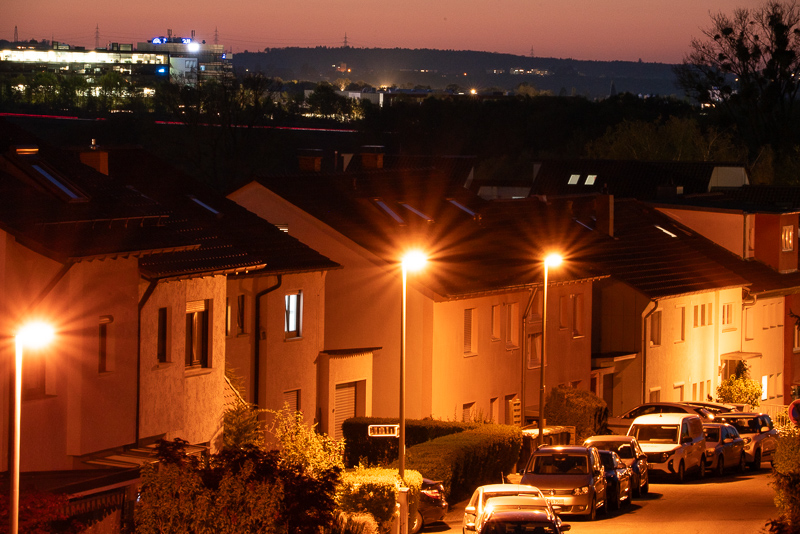
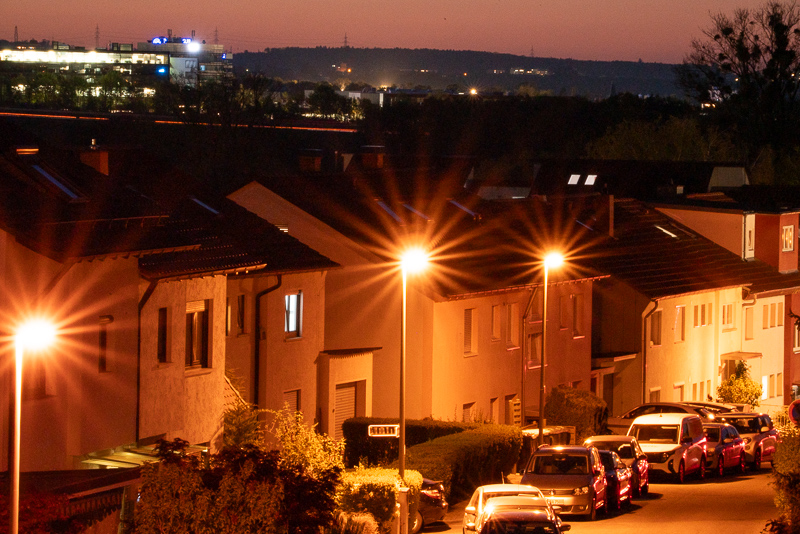
Using 9 rounded aperture blades is not the optimal configuration for creating distinct sunstars, but the good news is that Sigma improved a lot in this category lately and their modern lenses feature diaphragms with tight tolerances for creating symmetrical sunstars at least when stopped down a lot, whereas their older lenses often produced rather whacky and unsightly ones at any aperture setting.
As this is a highly subjective topic may have a look at this article to see which kind of sunstars you prefer.
Bokeh
Sony A7III | Sigma 20-200mm 3.5-6.3 DG C | 200mm | f/6.3
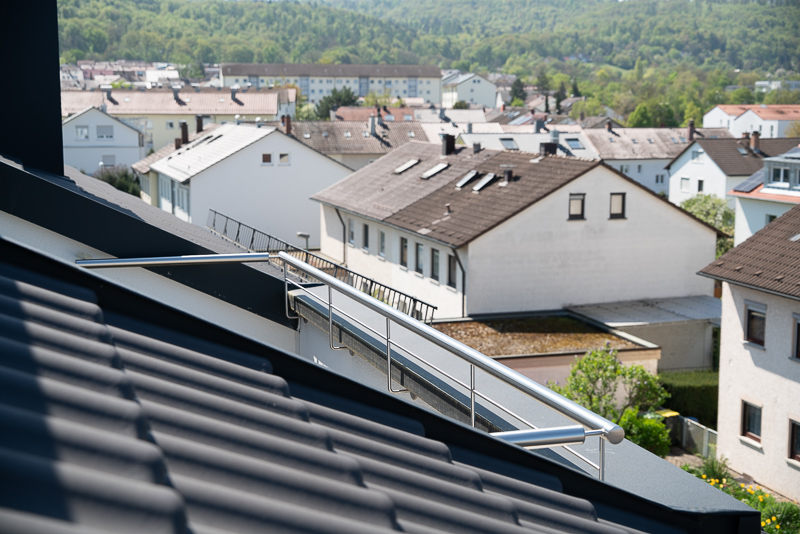
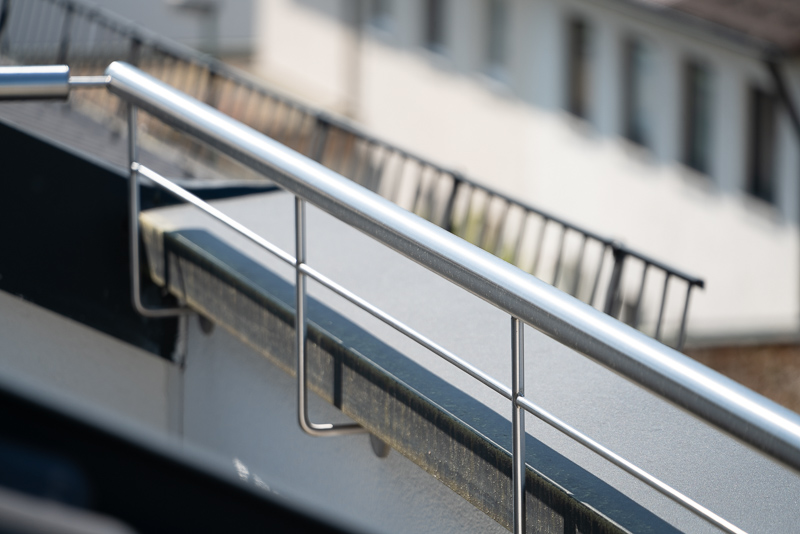
Going by its specifications this is obviously not a lens I would recommend if you are into shallow depth of field photography. However, in close focus scenarios you can create a lot of bokeh and when using longer focal lengths and making sure the background is far behind your subject you can still get a fair amount of subject separation from this lens at medium distances.
Sony A7III | Sigma 20-200mm 3.5-6.3 DG C | 200mm | f/6.3Sony A7III | Sigma 20-200mm 3.5-6.3 DG C | 85mm | f/5.6Sony A7III | Sigma 20-200mm 3.5-6.3 DG C | 100mm | f/6.3
In close focus scenarios the bokeh is actually surprisingly nice. Towards the corners we do see a bit of cat’s eye bokeh, but nothing overly distracting.
Sony A7III | Sigma 20-200mm 3.5-6.3 DG C | 85mm | f/5.6Sony A7III | Sigma 20-200mm 3.5-6.3 DG C | 70mm | f/5.6Sony A7III | Sigma 20-200mm 3.5-6.3 DG C | 90mm | f/5.6
At mid distances you need the longer focal lengths to create some bokeh. In this section we clearly see that the in-focus subjects are well defined at all distances, adding to the subject separation.
Sony A7III | Sigma 20-200mm 3.5-6.3 DG C | 120mm | f/6.3Sony A7III | Sigma 20-200mm 3.5-6.3 DG C | 160mm | f/6.3Sony A7III | Sigma 20-200mm 3.5-6.3 DG C | 35mm | f/4.5
With bigger objects – especially when using shorter focal lengths – there is not that much subject separation anymore. A cheap 50mm 1.8 or 85mm 1.8 lens will create more impressive results here if you are looking to create a shallow depth of field.
Nevertheless, especially in close focus scenarios this Sigma 20-200mm zoom creates a decent bokeh which I never found to distract from the main subject – not something I could say about e.g. the first generation Tamron 28-75mm 2.8 Di III RXD.
Sony A7rII | Sigma 20-200mm 3.5-6.3 DG C | 200mm | f/8.0 | 100% crops from border
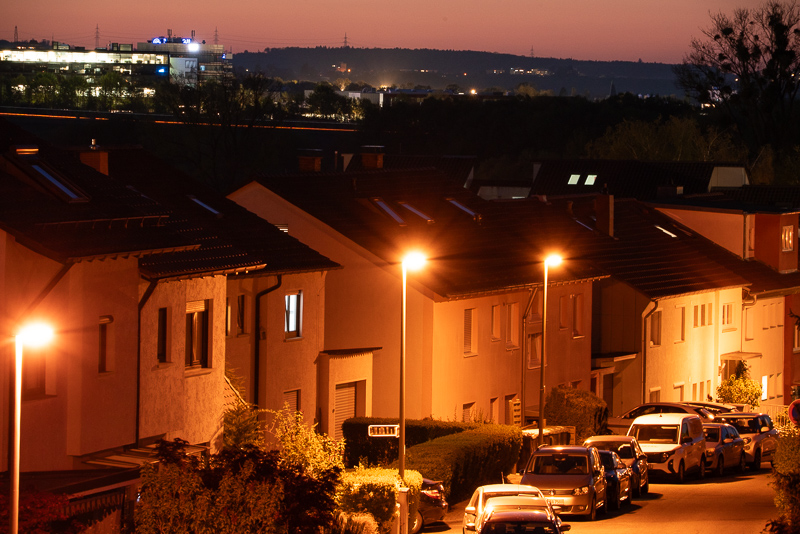
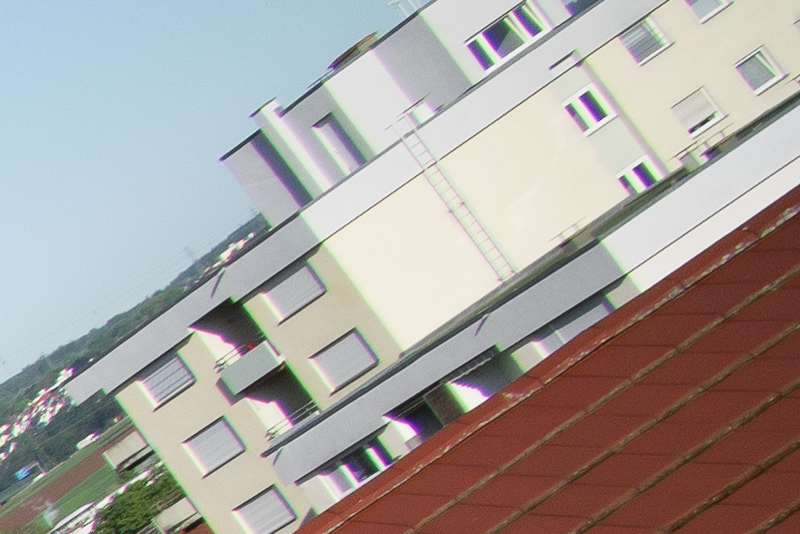
Traditionally superzoom lenses were plagued by strong lateral CA. These days lateral CA are automatically corrected for Jpegs already in camera and also the popular raw convertes correct them directly on import.
I still decided to check what the actual performance without electronic corrections is like and then we start to see a medium amount of lateral CA. As the digital corrections work very well this is not something to worry about and if you are a normal user you won’t be seeing any lateral CA anyway.
Sony A7rII | Sigma 20-200mm 3.5-6.3 DG Contemporary
Bokeh fringing hardly exists which might not be too surprising considering this lens’ specifications, but it is still nice for macro applications with a shallower depth of field.
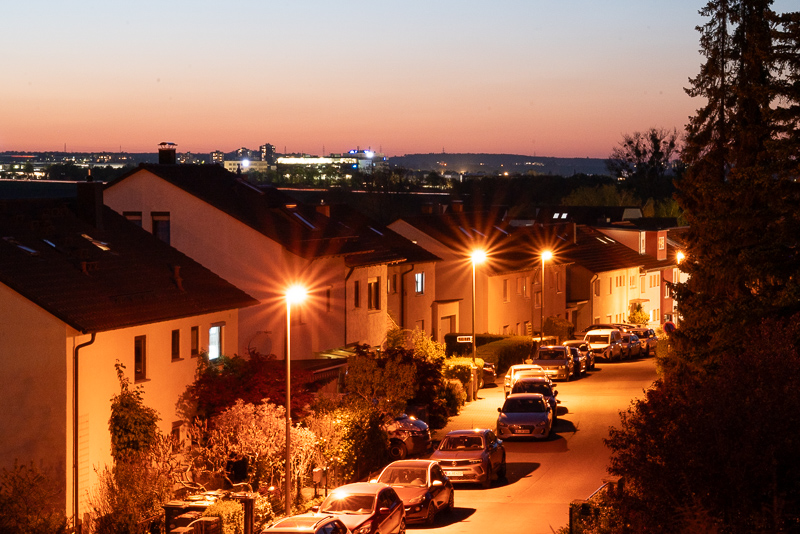
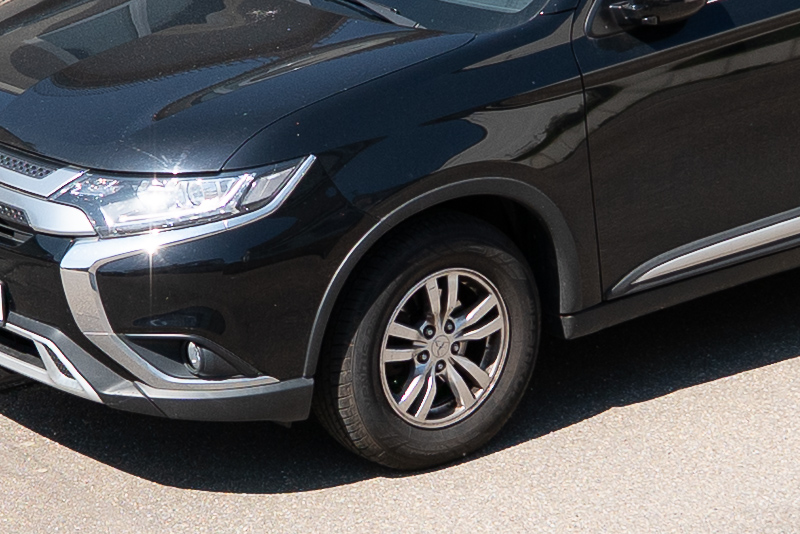
What is more surprising, purple fringing simply does not exist. Even in scenes with extreme contrast like the one below I couldn’t find any discoloring. Impressive and more worthy of an “Apo” tag than many lenses that actually do carry one.
Sony A7III | Sigma 20-200mm 3.5-6.3 DG C | 100mm | f/6.3
Conclusion
good
unique, very versatile focal length range
sharpness (except for 200mm at f/6.3)
impeccable correction of longitudinal CA
coma correction
flare resistance
nice bokeh
maximum magnification 1:2 in the 28-85mm range, 1:3 at 200mm
fast AF
build quality/handling
size/weight
average
lateral CA
vignetting (28-200mm range)
not good
high vignetting at 20mm
very high uncorrected distortion (profiles available)
direction of rotation of zoom ring
That 20-200mm range sounds great on paper, but what about the actual image quality you can achieve with this lens? In two words: surprisingly good. I am almost tempted to say extraordinarily good – it surely far exceeded my expectations.
Looking at the performance at infinity, field curvature is minimal and at all focal lengths you can expect sufficient corner to corner sharpness. What is more impressive, this is already the case from the maximum aperture, except for the 200mm end, where stopping down to f/8.0 is a good idea. At the 20mm end this Sigma zoom actually outperforms modern (affordable) prime lenses like the Viltrox AF 20mm 2.8, showing better corner resolution and less Coma.
Talking about optical aberrations, hard-to-correct longitudinal CA are non existent. To put things into perspective, this Sigma 10x zoom lens corrects this aberration better than the highly regarded Voigtländer 35mm 2.0 Apo-Lanthar. Coma is low throughout the whole zoom range, flare resistance is better than that of many (also recent) prime lenses we have reviewed here.
If there was something to nitpick about, I could mention the strong field curvature in the 1:2 macro range between 28-85mm. But not only is this the case for most standard zoom lenses focusing similarly close, here you still have an impressive 1:3 magnification at the 200mm end with very little field curvature and better working distance. Some people may also find the direction of the rotation of the zoom ring annoying, as it is the opposite of Sony, Nikon and Tamron lenses and matches that of Canon lenses.
Unsurprisingly the uncorrected distortion is high, especially at the 20mm end. But it is actually less than what I saw from the Sony FE 20-70mm 4.0 G and the profiles do a better job at correcting it, giving you almost perfectly straight lines after correction. Also the vignetting figures at 20mm are high, this is one of the few areas where I found the Sony FE 20-70mm 4.0 G to perform better – which is actually high praise for the lens being reviewed here, considering the Sony is only a 3.5x zoom versus the 10x range of this Sigma lens.
This is the first zoom lens that offers a similarly versatile range of focal lengths – from ultra wide angle to tele – as the recent high end smartphones (e.g. the Vivo X200 Ultra) without having to change lenses. You can seamlessly go from taking pictures of tight interior spaces at 20mm over vast landscapes to detail tele-shots at 200mm and even take 1:2 macro pictures with it. Going by all this, it is easily the most versatile zoom lens I have ever used and which money can buy today.
On my last trip I combined it with the Laowa 9mm 5.6 and the Viltrox AF 35mm 1.8 Evo and with that portable three lens setup I could take all the pictures I possibly wanted to take.
If there is just one (zoom) lens you want to buy and use, make it this one.
In my opinion there is no real competitor to this Sigma 20-200mm 3.5-6.3 DG Contemporary. Among the standard zooms that start at 20mm (or wider) we have the Sony FE 20-70mm 4.0 G, the Tamron 20-40mm 2.8 Di III VXD, and the Tamron 17-50mm 4.0 Di III VXD. Their zoom ranges (2.0x to 3.5x) are obviously not really comparable to this Sigma 20-200mm 3.5-6.3 (10x).
Some people may also see the Tamron 28-200mm 2.8-5.6 Di III RXD or the newer Tamron 25-200mm 2.8-5.6 Di III VXD G2 as alternatives. After having used this Sigma 20-200mm 3.5-6.3 DG C – and previously the Sony FE 20-70mm 4.0 G – I certainly don’t. Having a standard zoom starting at 20mm is such a game changer in my opinion, it easily outweighs a lens being 2/3rds of a stop faster but only starting at 24, 25 or even 28mm.
You can find many more E-mount standard zoom lenses with different focal length ranges discussed in our Sony FE Guide.
Did you find this article useful or just liked reading it? Treat us to a coffee! via Paypal
This site contains advertisement/affiliate links. If you make a purchase using any of the links marked as advertisement/affiliate links, I may receive a small commission at no additional cost to you. This helps support the creation of future content.
My name is Bastian and I am your expert here when it comes to ultra wide angle lenses, super fast portrait lenses (ranging from a 50mm f/0.95 to a 200mm f/1.8) and I also have reviewed way too many 35mm lenses.
Don't ask me anything about macro or wildlife shooting though.
58 thoughts on “Review: Sigma 20-200mm 3.5-6.3 DG Contemporary – Better than you think”
I use Tamron 28-200 and Sony 12-24/F4 G as my travel combo.I never thought about upgrading it to the new 25-200 G2, the difference is minimal. I am surprised how well the lens performs, especially compared to the terrible Sony 24-240.
My only issue with Sigma zoom lenses is they use reverse zoom direction compared to the other brands.
Just wow! Ideal travel companion? Pair it with some small nifty fifty (or 35) and you have everything you need.
Your choice of composition/light put the lens into even better perspective though, I suppose. As with all lenses reviewed here. 🙂
Nice shots, as usual 🙂
I came from 28mm at the wide end and wanted something a bit longer than 70mm though not alot heavier. I found the Tamron 25-200 perfect. It has a rather nice feeling zoom action.
I too am pleasantly surprised by its performance, and agree with a previous commenter that your photography does flatter it.
Given that it focuses relatively close over its entire zoom range (albeit with the considerable field curvature that you mentioned), I wonder how it would perform optically with an added supplementary diopter, either a two-element achromat or even a basic single-element one? Power-wise, any diopter of reasonable size and strength wouldn’t change maximum magnification much at the lens’ short end (because a 20mm lens is itself 50 diopters), but towards the long end would have a greater proportional effect (a 200mm lens itself being a much weaker 5 diopters). Am also wondering, short or long end, whether use of a supplementary diopter would make the inherent field curvature worse, or might it to some extent counteract it?
Anyway, the lens looks worth considering. I still though wish that Sony would either redesign its 24-105 f/4, now nearly nine years old, or better yet, redesign it and extend the long end a bit, say to match the generally well-regarded Nikkor Z 24-120 f/4.
Many thanks for the review, I was a little surprised that you decided on such a zoom lens, since you are a long-time supporter of fixed lenses. Therefore, the given review is all the more valuable from you.
this is one of the exceptionally rare variable aperture zooms that’s genuinely exciting to me; i’d pick one up in an instant if i weren’t comitted to Z mount. A truly wide 20mm starting point and real close focus capability at a multiplicity of focal lengths would make this an addictive lens to use, i imagine. Great review and sample images, as always!
As a kind of side note, it’s disappointing how close focus capability is often relegated to specialist lenses, when a ‘half’ macro (or even a little less) adds such enormous versatility to a lens. I understand that all glass comes with compromises, but i do yearn for more lenses like canon’s modern 85mm f2 or voigtlander’s 65mm f2 that have such well rounded skillsets.
Great to see this reviewed here. I, like you, would typically not be interested in a superzoom because of the many compromises required, but this is a surprising and exceptional result. Very tempting as a travel lens!
I have only one problem with this lens – you NEED the new software to correct distortion with these 8-4% correction, so more expenses here. The tamron 28-200 had about 1-2% on the ends so it is hardly visible in normal shooting.
If you care so little about Raw editing that you don’t have current software you can just shoot Jpeg where the distortion will automatically be corrected.
Older raw editors are also sufficient to correct photos. I’m sure that the new software is better but not everyone has new lenses (and some of the new ones also don’t need the profiles) to correct and force the subscription or pay for the new version.
I use only raws (as I don’t like the a7iii profiles and jpgs) but I take only a few thousands of photos a year and correct them few times a year. I’m only a hobbist who likes to change the photos but I take too little photos to justify the additional cost of the software when I can buy more lenses:) And there are probably more people like this, so I tink that it’s important to point out this disadvantage of the lens.
Yeah, and DxO is the cheapest of those 3 anyway so an upgraded license every few years isn’t very onerous. When complaints like these come up I usually wonder what they’re using to develop RAWs as well… AFAIK any other program outside those 3 will be using the open source Lensfun correction database, so you don’t need to update either.
Are people still using LR5 or 6 or whatever the last standalone license was? I did for a while when they went sub-based, but it’s time to let that go. I’ve bounced between C1 & DxO ever since cause I like how they handle corrections but I might give LR a shot again sometime, for the sync functionality more than anything. I dunno why they tie profile updates to full program updates tho, that seems annoying when new lenses go months without support.
I can see some leftover distortion at 20mm after correction.. Am I correct?
I cannot do the distortion test shots for infinity and at closer distances the profiles often do not work 100% accurate out of the box, which is what you see here.
In none of the actual pictures taken at longer distances I see any distortion at 20mm, after correction it is as good as it gets and a lot better than the Sony FE 20-70mm 4.0 G at 20mm.
Lightroom, I think the in camera profiles actually work better at varying distances, but this is not something I have (or will) invesitage(d) in great detail.
I understand that you cannot or will not investigate it. Probably too niche of a topic.
Just if you have still the RAW we could drop it in C1 or darktable and see for ourself.
Since both the adobe and the internal lens profile seem to come from Sigma directly and both in theory have the capability for different profiles at different distances it would be weird if they didn’t match.
@phanter I thought for E mount Adobe always took the profile’s built-in CA/vignetting corrections and mixed it with their own geometric corrections (for whatever reason)… But maybe that varies by lens brand?
Would be interesting to see how well DXO profiles work for this lens, as DXO makes a big point about their profiles supposedly being so detailed/good. Don’t know whether they have issued anything for this lens yet, and if not, how long before they will; they usually seem to run considerably behind Adobe timewise, and for some less-popular third-party lenses, they might never appear. I hope they realize that this lens is unique and very useful for a particular niche, and deserves a detailed, good profile.
You really don’t need to wonder, you can just check, they’ve been doing much better than in the past… When I first checked some 5 years ago there were a few 3rd party lenses/brands of mine not supported, now the only ones that aren’t are lenses that really don’t need it.
You’re right, DXO does seem to have reduced their lag time, a profile for this lens is available. My expectation of amount of lag time was based on how they were a few years ago. Looks like they’ve improved.
Hello Bastian,
Wonderful review as always! Seems like a tempting lens, but there are reviews mentioning that on the telephoto end, if you pull the clarity in post, a big white circle is visible and therefore ruin the image, do you notice this problem? Many thanks.
Thanks for the review! Appreciate the hard work put into testing such a high zoom ratio lens. I am also lured to replace my 20-70mm F4 by a lot of possitive comments. Still I have some doubt of sample variations and there are some complaints of image quality drop when the lens is used at higher altitudes.
Absolute insane lens. How do they do it? I bought the tamron 28-200 for travel etc and I leave for a 6 week trip in a month from now. I feel like I have to get it and sell my tamron 😂 was also thinking of pairing my tamron with the Samyang AF 21mm interchangeable pancake lens. IDK. I feel like sooner or later I will need this lens lol. It even has goodish contrast and colors
Much thanks for your review! I just used your ebay link and bought one open box for $840 before taxes. Hopefully that gets you a coffee or something! Gonna sell a few lenses to compensate 😆
It’s just too useful for traveling to turn down. As someone who loves 20mm and am traveling for 6 weeks to like 7 different countries, which I won’t be able to do for a very long time, i cannot justify NOT getting it. I would miss out on too many photo ops. The best pictures are the ones you can actually capture. And nothing is more flexible than this lens
Very true, greatly appreciated!
Got back from 6 weeks in eastern europe and south caucasus with this lens 😍 truly amazing to have a lens this flexible. I was able to do some of the best wildlife photography I have ever been able to do while also being able to capture the interiors of small ancient churches all on one lens. I will edit them all and put them on flickr in a few weeks and I will share them. I really tested the limits of this lens to the extreme and was very satisfied.
Please share here!
First things first: You have a distinctive and excellent style, not only in your photos but also in your reviews.
I really appreciate your reviews and am grateful for all the work you put into them.
I think it’s remarkable what Sigma has delivered here.
As a longtime Sony user who switched to Nikon, I still like to check out the E-mount lineup every now and then to see what’s available.
I’m happy with my Z-mount lenses.
But sometimes, when I see certain E-mount lenses, I wish they were also available for the Z-mount.
I know there’s the Viltrox adapter, which is also very slim. But I’m just not the type of person who really likes using adapters.
Great review (and very nice pictures) as always! Thank you very much!
Regarding the problem with the distortion on a Nikon Z camera with the Megadap Adapter:
I think I could live with not having the distortion correction when looking through the view finder. However, I would really need a proper correction profile in post.
Do you or does anyone else here in the comment section know if the Megadap adapter correctly writes the lens internal (manufacturer) correction profile (that comes with the lens) into the exif-data so that my raw converter can use it? I know, if I used Lightroom I could probably easily use the profile from Adobe but because I use Capture One (they don’t have and propably won’t ever have a correction profile for that lens) I would be depending on a functioning manufacturer profile.
More expensive ones will do better with reflections, but then, when shooting directly into the sun, a polarizer has zero effect to begin with, so if you are on a tight budget, a cheaper one will do just fine.
ďakujem ešte za skorú odpoveď. Ešte ma zaujíma, vybrali ste si ako píšete túto Sigmu 20-200, nerozmýšľali ste aj nad tým Thypoch Voyager 24-50. Má síce menší rozsah, ale zase má iné špecifiká, ktoré sa dajú oceniť. Rozmýšľam akurát, že jeden z nich a neviem sa rozhodnúť, tento kvôli tomu rozsahu a ako píšete, že má aj celkom dobré vlastnosti. Thypoch kvôli 10 lamelovej clone hlavne, váhe, ale už by som musel nosiť viac objektívov zase. Tak ťažké rozhodnutie 😊
Thank you as always for the detailed review! I went out and did some light comparisons at different focal lengths between this lens and the Sony 20-70mm.
My results differed in 2 areas: sharpness and handling.
It terms of sharpness, the Sony was the clear winner edge to edge, beginning from the midframe, starting from 20mm through maybe 50mm. The centers were indistinguishable.
As for handling, the Sigma was vastly worse. The Sony is very consistent in terms of zoom ring resistance, while the Sigma has inconsistent resistance and the zoom creeps and slides out starting from around 70 or 80mm. It will happen almost instantly if the camera is pointed down if around 115mm and up. This is almost a dealbreaker for me, unexpectedly.
Mine does not do this, and I haven’t seen anyone online report a similar issue with zoom creep. Return or exchange if you still can, sounds like a bad copy. The zoom smoothness is indeed pretty awful though and the reversed direction is driving me crazy. Tamron lenses annoy me too with them swapping the zoom and manual focus ring location, but at least it turns in the correct direction.
I also did the same comparison with my Sony 20-70, and the Sigma is indeed a bit worse in the corners and just a smidge worse in the mid-frame. But also want to mention some other downsides: the autofocus is definitely a step or two worse (on fast moving little ones) and so is the video stabilization. The third party lens penalty is pretty bad for my use case, I kind of forgot about it. I was set on selling my 20-70, but now I’m reconsidering.
Not trying to say the Sigma is bad by any means, gaining the 70-200mm range is pretty amazing. Just had more quirks with it than I was expecting.
The comments are full of praise – and rightly so – and the photos are marvellous, showing places in Italy that are (unfortunately) not named in the captions. Given the quality of the photos, it makes you want to buy that zoom lens and go there to do the same. Well done on this enormous and magnificent piece of work – especially as it was probably done whilst the author was on holiday.
I traded my Tamron 28-200 for the Sigma 20-200 prior to a trip to trek the Cordillera Huayhuash in Peru last June. It is relatively light and easy to carry and delivered some stunning photographs. My fellow trekkers were mainly using their high end phones but they commented that the Sigma photos from the Sony A7Cii were considerably better. Esp after the RAW shots had been edited. In reality, the lens never left my camera during the whole trek which was good in the windy/dusty terrain of the high Andes. BTW, I used a Hikeman waterproof case attached to the front straps of my backpack and secured with the waist belt – inexspensive and secure and did not impede trekking up relatively steep terrain. Thanks for the review – I was considering the Sony 20-70 as a smaller around town option but now will just take a small light prime along with the Sigma for any low light work.
I wonder if you have a bad copy of the 20-70 of a very good copy of the Sigma. When I compare the sharpness at 20mm F4 the Sony has much better corner sharpness. Center sharpness is somewhat close. At F11 the Sony is still better, but not by much. But in your review you say the Sigma outperforms the Sony in the corners, definitely not in my comparison.
I made a photo of a brick wall from about 1,5-2 meter distance. IBIS was turned on. I used a tripod and focussed manually. Made multiple shots at the same apperture and refocused for each shot, findings were consistent.
By the way thanks for the great review. Appreciate all the work.
Ok would you mind to explain why there can be big difference? I don’t have as much technical knowledge as you have or experience with these sort of technical tests.
All the lenses show an – often vastly – different performance at different distances.
This is the only reason we often test lenses at 3 different distances.
You can find many tests of ultra wide angle lenses elsewhere based on test charts.
Often ultra wide angle lenses do very bad in those tests because they are optimized for shooting at infinity, not at “1.0 m because my test chart is not big enough for a longer distance”.
Those results are practically irrelevant.
If you look at tests of lenses or if you want to test yours yourself, always do for the distance you actually want to use them at.
And turn of IBIS, below 28mm it does more harm than good (in your case the camera should have noticed it is on a tripod though).
I’ve tested it in the field with real landscapes as I would photograph normally and focused at infinity. And I was surprised, because now my results are the same as yours. Really impressed by this lens. It will replace my 20-70. Thanks for helping me out!
You are welcome!
Ah ok, I wasn’t aware of this. Thanks for the explanation! Will give it another shot.
Sony α | Leica M | Nikon Z/F New articles every week
This website uses cookies to improve your experience. We'll assume you're ok with this, but you can opt-out if you wish.AcceptRead More
Privacy & Cookies Policy
Privacy Overview
This website uses cookies to improve your experience while you navigate through the website. Out of these, the cookies that are categorized as necessary are stored on your browser as they are essential for the working of basic functionalities of the website. We also use third-party cookies that help us analyze and understand how you use this website. These cookies will be stored in your browser only with your consent. You also have the option to opt-out of these cookies. But opting out of some of these cookies may affect your browsing experience.
Necessary cookies are absolutely essential for the website to function properly. This category only includes cookies that ensures basic functionalities and security features of the website. These cookies do not store any personal information.
Any cookies that may not be particularly necessary for the website to function and is used specifically to collect user personal data via analytics, ads, other embedded contents are termed as non-necessary cookies. It is mandatory to procure user consent prior to running these cookies on your website.





































































































I use Tamron 28-200 and Sony 12-24/F4 G as my travel combo.I never thought about upgrading it to the new 25-200 G2, the difference is minimal. I am surprised how well the lens performs, especially compared to the terrible Sony 24-240.
My only issue with Sigma zoom lenses is they use reverse zoom direction compared to the other brands.
Just wow! Ideal travel companion? Pair it with some small nifty fifty (or 35) and you have everything you need.
Your choice of composition/light put the lens into even better perspective though, I suppose. As with all lenses reviewed here. 🙂
Nice shots, as usual 🙂
I came from 28mm at the wide end and wanted something a bit longer than 70mm though not alot heavier. I found the Tamron 25-200 perfect. It has a rather nice feeling zoom action.
I too am pleasantly surprised by its performance, and agree with a previous commenter that your photography does flatter it.
Given that it focuses relatively close over its entire zoom range (albeit with the considerable field curvature that you mentioned), I wonder how it would perform optically with an added supplementary diopter, either a two-element achromat or even a basic single-element one? Power-wise, any diopter of reasonable size and strength wouldn’t change maximum magnification much at the lens’ short end (because a 20mm lens is itself 50 diopters), but towards the long end would have a greater proportional effect (a 200mm lens itself being a much weaker 5 diopters). Am also wondering, short or long end, whether use of a supplementary diopter would make the inherent field curvature worse, or might it to some extent counteract it?
Anyway, the lens looks worth considering. I still though wish that Sony would either redesign its 24-105 f/4, now nearly nine years old, or better yet, redesign it and extend the long end a bit, say to match the generally well-regarded Nikkor Z 24-120 f/4.
Many thanks for the review, I was a little surprised that you decided on such a zoom lens, since you are a long-time supporter of fixed lenses. Therefore, the given review is all the more valuable from you.
this is one of the exceptionally rare variable aperture zooms that’s genuinely exciting to me; i’d pick one up in an instant if i weren’t comitted to Z mount. A truly wide 20mm starting point and real close focus capability at a multiplicity of focal lengths would make this an addictive lens to use, i imagine. Great review and sample images, as always!
As a kind of side note, it’s disappointing how close focus capability is often relegated to specialist lenses, when a ‘half’ macro (or even a little less) adds such enormous versatility to a lens. I understand that all glass comes with compromises, but i do yearn for more lenses like canon’s modern 85mm f2 or voigtlander’s 65mm f2 that have such well rounded skillsets.
Great Review !!
Great to see this reviewed here. I, like you, would typically not be interested in a superzoom because of the many compromises required, but this is a surprising and exceptional result. Very tempting as a travel lens!
And great photos as always, Bastian!
I have only one problem with this lens – you NEED the new software to correct distortion with these 8-4% correction, so more expenses here. The tamron 28-200 had about 1-2% on the ends so it is hardly visible in normal shooting.
If you care so little about Raw editing that you don’t have current software you can just shoot Jpeg where the distortion will automatically be corrected.
Older raw editors are also sufficient to correct photos. I’m sure that the new software is better but not everyone has new lenses (and some of the new ones also don’t need the profiles) to correct and force the subscription or pay for the new version.
I use only raws (as I don’t like the a7iii profiles and jpgs) but I take only a few thousands of photos a year and correct them few times a year. I’m only a hobbist who likes to change the photos but I take too little photos to justify the additional cost of the software when I can buy more lenses:) And there are probably more people like this, so I tink that it’s important to point out this disadvantage of the lens.
Which is probably the reason for it being mentioned in the “not good” column.
Depends a lot on which RAW converter you are using, since Sony does store the distortion correction metadata in the RAW files themselves.
So if you use for example software like capture one no update is needed.
And Lightroom isn’t available as a standalone anyway.
So it is only really DXO that forces you to upgrade.
Yeah, and DxO is the cheapest of those 3 anyway so an upgraded license every few years isn’t very onerous. When complaints like these come up I usually wonder what they’re using to develop RAWs as well… AFAIK any other program outside those 3 will be using the open source Lensfun correction database, so you don’t need to update either.
Are people still using LR5 or 6 or whatever the last standalone license was? I did for a while when they went sub-based, but it’s time to let that go. I’ve bounced between C1 & DxO ever since cause I like how they handle corrections but I might give LR a shot again sometime, for the sync functionality more than anything. I dunno why they tie profile updates to full program updates tho, that seems annoying when new lenses go months without support.
I can see some leftover distortion at 20mm after correction.. Am I correct?
I cannot do the distortion test shots for infinity and at closer distances the profiles often do not work 100% accurate out of the box, which is what you see here.
In none of the actual pictures taken at longer distances I see any distortion at 20mm, after correction it is as good as it gets and a lot better than the Sony FE 20-70mm 4.0 G at 20mm.
Are those the in camera profiles or the lightroom profiles?
Lightroom, I think the in camera profiles actually work better at varying distances, but this is not something I have (or will) invesitage(d) in great detail.
I understand that you cannot or will not investigate it. Probably too niche of a topic.
Just if you have still the RAW we could drop it in C1 or darktable and see for ourself.
Since both the adobe and the internal lens profile seem to come from Sigma directly and both in theory have the capability for different profiles at different distances it would be weird if they didn’t match.
@phanter I thought for E mount Adobe always took the profile’s built-in CA/vignetting corrections and mixed it with their own geometric corrections (for whatever reason)… But maybe that varies by lens brand?
Would be interesting to see how well DXO profiles work for this lens, as DXO makes a big point about their profiles supposedly being so detailed/good. Don’t know whether they have issued anything for this lens yet, and if not, how long before they will; they usually seem to run considerably behind Adobe timewise, and for some less-popular third-party lenses, they might never appear. I hope they realize that this lens is unique and very useful for a particular niche, and deserves a detailed, good profile.
You really don’t need to wonder, you can just check, they’ve been doing much better than in the past… When I first checked some 5 years ago there were a few 3rd party lenses/brands of mine not supported, now the only ones that aren’t are lenses that really don’t need it.
TL;DR: It’s already supported, as of PL 7.0.
https://www.dxo.com/supported-cameras/
@Frank Vigil
You’re right, DXO does seem to have reduced their lag time, a profile for this lens is available. My expectation of amount of lag time was based on how they were a few years ago. Looks like they’ve improved.
Hello Bastian,
Wonderful review as always! Seems like a tempting lens, but there are reviews mentioning that on the telephoto end, if you pull the clarity in post, a big white circle is visible and therefore ruin the image, do you notice this problem? Many thanks.
If your image looks bad after pulling a slider too much that is obviously user error and not the lens’ fault.
Thanks for the review! Appreciate the hard work put into testing such a high zoom ratio lens. I am also lured to replace my 20-70mm F4 by a lot of possitive comments. Still I have some doubt of sample variations and there are some complaints of image quality drop when the lens is used at higher altitudes.
At higher altitudes? Interesting.
Absolute insane lens. How do they do it? I bought the tamron 28-200 for travel etc and I leave for a 6 week trip in a month from now. I feel like I have to get it and sell my tamron 😂 was also thinking of pairing my tamron with the Samyang AF 21mm interchangeable pancake lens. IDK. I feel like sooner or later I will need this lens lol. It even has goodish contrast and colors
This Sigma performs way better at 20mm than the Samyang 21mm 3.5…
Yeah i need it 😆 im gonna have to sell my tamron and get it. It would pair well with maybe my voigtlander 40/1.2 se
Very useful two lens setup!
Much thanks for your review! I just used your ebay link and bought one open box for $840 before taxes. Hopefully that gets you a coffee or something! Gonna sell a few lenses to compensate 😆
It’s just too useful for traveling to turn down. As someone who loves 20mm and am traveling for 6 weeks to like 7 different countries, which I won’t be able to do for a very long time, i cannot justify NOT getting it. I would miss out on too many photo ops. The best pictures are the ones you can actually capture. And nothing is more flexible than this lens
Very true, greatly appreciated!
Got back from 6 weeks in eastern europe and south caucasus with this lens 😍 truly amazing to have a lens this flexible. I was able to do some of the best wildlife photography I have ever been able to do while also being able to capture the interiors of small ancient churches all on one lens. I will edit them all and put them on flickr in a few weeks and I will share them. I really tested the limits of this lens to the extreme and was very satisfied.
Please share here!
First things first: You have a distinctive and excellent style, not only in your photos but also in your reviews.
I really appreciate your reviews and am grateful for all the work you put into them.
I think it’s remarkable what Sigma has delivered here.
As a longtime Sony user who switched to Nikon, I still like to check out the E-mount lineup every now and then to see what’s available.
I’m happy with my Z-mount lenses.
But sometimes, when I see certain E-mount lenses, I wish they were also available for the Z-mount.
I know there’s the Viltrox adapter, which is also very slim. But I’m just not the type of person who really likes using adapters.
Anyway, thanks for the great review.
Thank you very much!
For many lenses I also wish there were native Z-mount lenses…
Great review (and very nice pictures) as always! Thank you very much!
Regarding the problem with the distortion on a Nikon Z camera with the Megadap Adapter:
I think I could live with not having the distortion correction when looking through the view finder. However, I would really need a proper correction profile in post.
Do you or does anyone else here in the comment section know if the Megadap adapter correctly writes the lens internal (manufacturer) correction profile (that comes with the lens) into the exif-data so that my raw converter can use it? I know, if I used Lightroom I could probably easily use the profile from Adobe but because I use Capture One (they don’t have and propably won’t ever have a correction profile for that lens) I would be depending on a functioning manufacturer profile.
Ak by ste mohli prezradiť, aký typ polarizačného CPL filtra na ňom používate? Ďakujem
I am using this one (affiliate link), but a cheaper one will have the same effect.
ďakujem za odpoveď, nie je potrebné podľa Vás kupovať nejaké drahé filtre?
More expensive ones will do better with reflections, but then, when shooting directly into the sun, a polarizer has zero effect to begin with, so if you are on a tight budget, a cheaper one will do just fine.
ďakujem ešte za skorú odpoveď. Ešte ma zaujíma, vybrali ste si ako píšete túto Sigmu 20-200, nerozmýšľali ste aj nad tým Thypoch Voyager 24-50. Má síce menší rozsah, ale zase má iné špecifiká, ktoré sa dajú oceniť. Rozmýšľam akurát, že jeden z nich a neviem sa rozhodnúť, tento kvôli tomu rozsahu a ako píšete, že má aj celkom dobré vlastnosti. Thypoch kvôli 10 lamelovej clone hlavne, váhe, ale už by som musel nosiť viac objektívov zase. Tak ťažké rozhodnutie 😊
Thank you as always for the detailed review! I went out and did some light comparisons at different focal lengths between this lens and the Sony 20-70mm.
My results differed in 2 areas: sharpness and handling.
It terms of sharpness, the Sony was the clear winner edge to edge, beginning from the midframe, starting from 20mm through maybe 50mm. The centers were indistinguishable.
As for handling, the Sigma was vastly worse. The Sony is very consistent in terms of zoom ring resistance, while the Sigma has inconsistent resistance and the zoom creeps and slides out starting from around 70 or 80mm. It will happen almost instantly if the camera is pointed down if around 115mm and up. This is almost a dealbreaker for me, unexpectedly.
I hope this helps someone out there!
Mine does not do this, and I haven’t seen anyone online report a similar issue with zoom creep. Return or exchange if you still can, sounds like a bad copy. The zoom smoothness is indeed pretty awful though and the reversed direction is driving me crazy. Tamron lenses annoy me too with them swapping the zoom and manual focus ring location, but at least it turns in the correct direction.
I also did the same comparison with my Sony 20-70, and the Sigma is indeed a bit worse in the corners and just a smidge worse in the mid-frame. But also want to mention some other downsides: the autofocus is definitely a step or two worse (on fast moving little ones) and so is the video stabilization. The third party lens penalty is pretty bad for my use case, I kind of forgot about it. I was set on selling my 20-70, but now I’m reconsidering.
Not trying to say the Sigma is bad by any means, gaining the 70-200mm range is pretty amazing. Just had more quirks with it than I was expecting.
when I click “All Lens Reviews” on your website, this lens is not listed even though this review exists.
The comments are full of praise – and rightly so – and the photos are marvellous, showing places in Italy that are (unfortunately) not named in the captions. Given the quality of the photos, it makes you want to buy that zoom lens and go there to do the same. Well done on this enormous and magnificent piece of work – especially as it was probably done whilst the author was on holiday.
Yes it was 🙂
I traded my Tamron 28-200 for the Sigma 20-200 prior to a trip to trek the Cordillera Huayhuash in Peru last June. It is relatively light and easy to carry and delivered some stunning photographs. My fellow trekkers were mainly using their high end phones but they commented that the Sigma photos from the Sony A7Cii were considerably better. Esp after the RAW shots had been edited. In reality, the lens never left my camera during the whole trek which was good in the windy/dusty terrain of the high Andes. BTW, I used a Hikeman waterproof case attached to the front straps of my backpack and secured with the waist belt – inexspensive and secure and did not impede trekking up relatively steep terrain. Thanks for the review – I was considering the Sony 20-70 as a smaller around town option but now will just take a small light prime along with the Sigma for any low light work.
I wonder if you have a bad copy of the 20-70 of a very good copy of the Sigma. When I compare the sharpness at 20mm F4 the Sony has much better corner sharpness. Center sharpness is somewhat close. At F11 the Sony is still better, but not by much. But in your review you say the Sigma outperforms the Sony in the corners, definitely not in my comparison.
And at what distance did you check?
Was IBIS turned on or off?
Did you use a tripod?
Did you focus manually?
I made a photo of a brick wall from about 1,5-2 meter distance. IBIS was turned on. I used a tripod and focussed manually. Made multiple shots at the same apperture and refocused for each shot, findings were consistent.
By the way thanks for the great review. Appreciate all the work.
My results are for infinity and not 1-2m.
Ok would you mind to explain why there can be big difference? I don’t have as much technical knowledge as you have or experience with these sort of technical tests.
All the lenses show an – often vastly – different performance at different distances.
This is the only reason we often test lenses at 3 different distances.
You can find many tests of ultra wide angle lenses elsewhere based on test charts.
Often ultra wide angle lenses do very bad in those tests because they are optimized for shooting at infinity, not at “1.0 m because my test chart is not big enough for a longer distance”.
Those results are practically irrelevant.
If you look at tests of lenses or if you want to test yours yourself, always do for the distance you actually want to use them at.
And turn of IBIS, below 28mm it does more harm than good (in your case the camera should have noticed it is on a tripod though).
I’ve tested it in the field with real landscapes as I would photograph normally and focused at infinity. And I was surprised, because now my results are the same as yours. Really impressed by this lens. It will replace my 20-70. Thanks for helping me out!
You are welcome!
Ah ok, I wasn’t aware of this. Thanks for the explanation! Will give it another shot.