Category Archives: Vintage

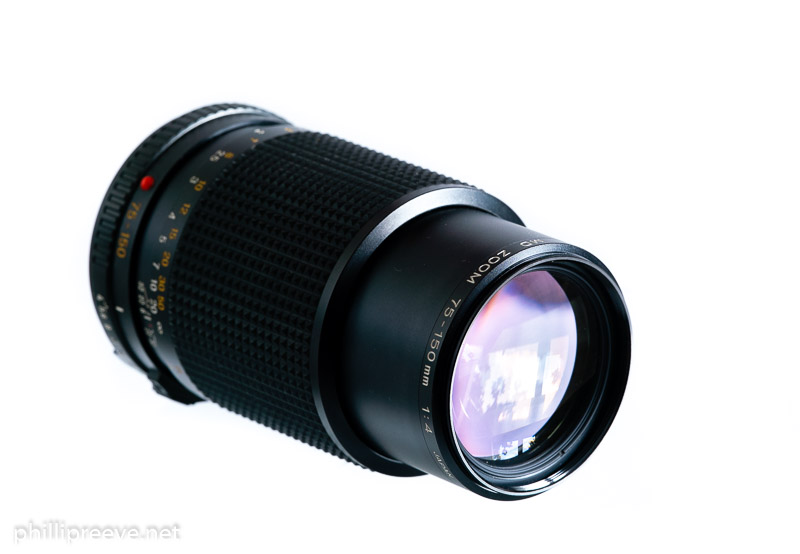
Review: Minolta MD Zoom 75-150mm 1:4

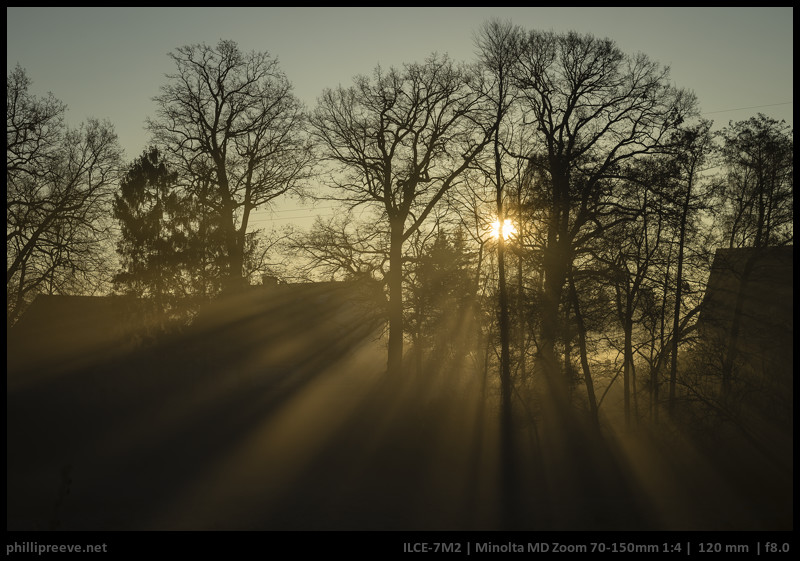
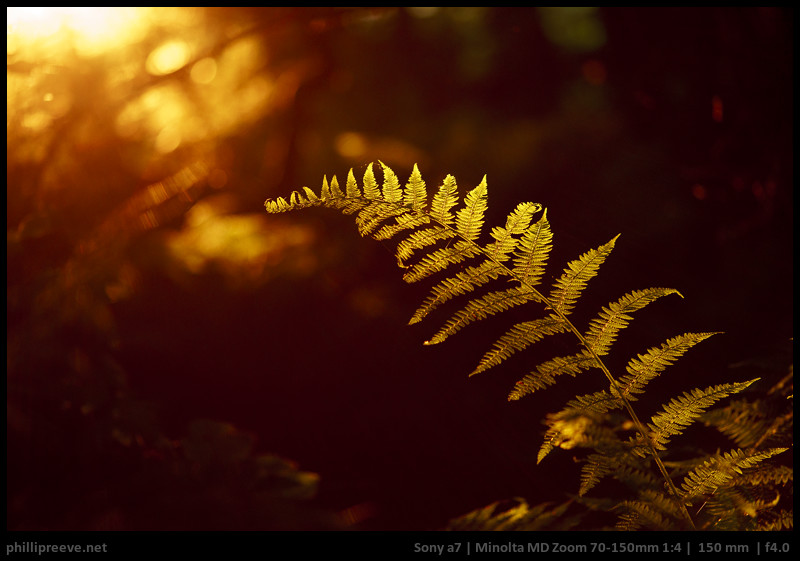
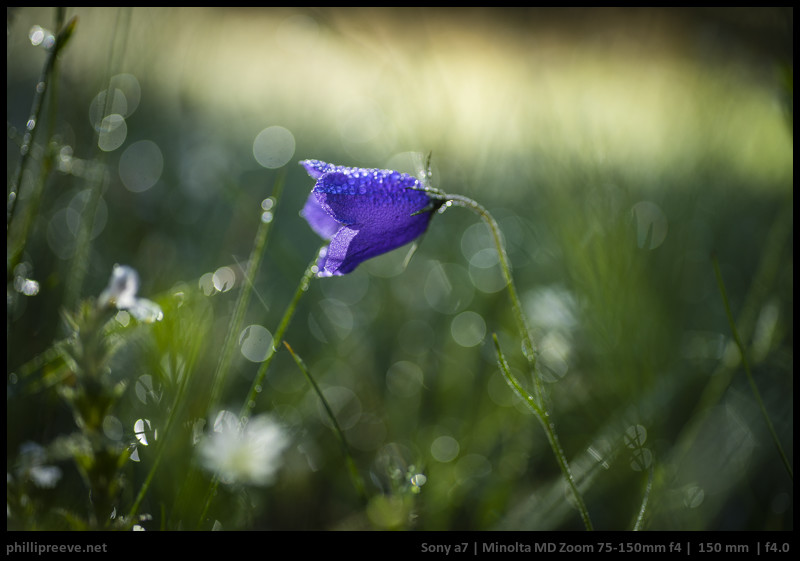
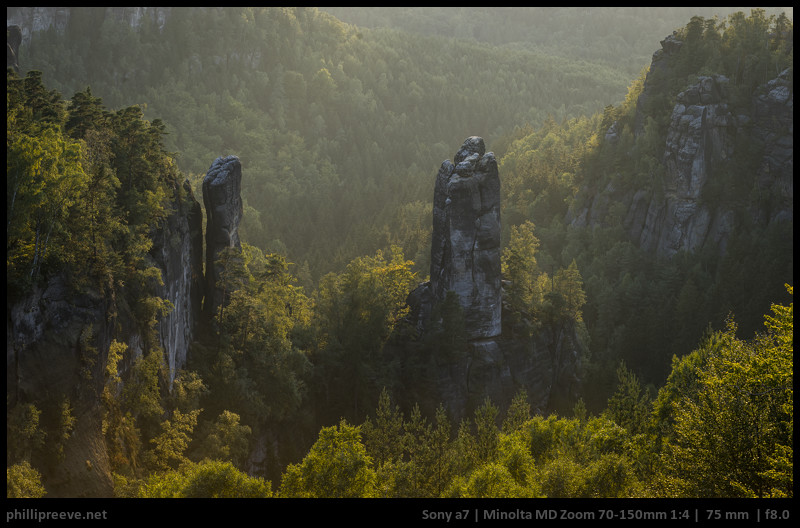
The Minolta MD 75-150mm f4 was released nearly 40 years ago but still it makes a good argument for a category of lenses which has nearly died out: Zooms with a limited range and slower speed.

Image Samples

You can find most images shown in the review in full resolution in this You can find many of the images shown here in full resolution in this flickr set: Minolta MD Zoom 75-150mm 1:4.. 
    

Continue reading Review: Minolta MD Zoom 75-150mm 1:4

Guide to Classic Olympus OM Zuiko lenses on film and Sony Full Frame

Yoshihisa Maitani’s Olympus OM system was a remarkable achievement, with beautifully engineered smaller bodies and exquisite small lenses, often as good or better than larger lenses from the competition. They are all nicely engineered and a joy to use. This makes them very tempting options for someone who wants to explore them on a modern full frame camera, or for someone who wants to experiment with film. I was an OM system user back in the days of film, so you’ll see a few samples from me that are from OM film cameras, as well as digital. In this guide Juriaan, Phillip and I will take you through the lenses with comments about how they perform, and whether they make sense adapted to Sony full frame digital cameras.

Many of the samples are film era images taken from my (David’s) personal archives. We don’t therefore pretend that they illustrate the technical qualities of the lenses, but they do give you an idea of the creative possibilities of them.

Except for a few late era lenses, they won’t resolve quite as well as the best expensive modern lenses, or be as as contrasty as the latest Zeiss or GM glass. But many are close and nonetheless extremely good, and others have a look which we sometimes enjoy as an alternative to the near perfection of some recent glass.

Continue reading Guide to Classic Olympus OM Zuiko lenses on film and Sony Full Frame
Review: Olympus F.Zuiko Auto-S 1.8/50

Introduction

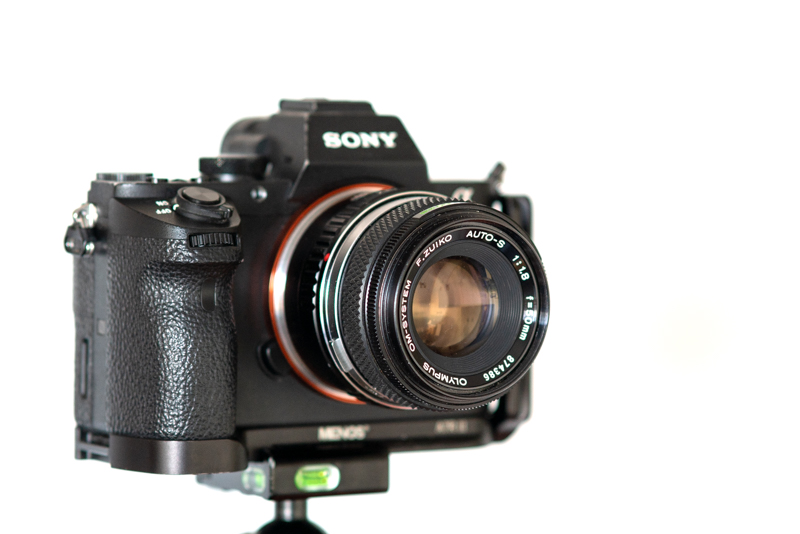
Olympus lenses are known for their good build quality and performance. Does this apply to the the Olympus F.Zuiko Auto-S 1.8/50, one of the lightest Olympus standard lenses too?


Sony a7II | Olympus F.Zuiko 1.8/50 | f/1.8
Sony a7RIII | Olympus F.Zuiko 1.8/50 | f/8

Most images in this review can be found in full resolution on flickr.
Continue reading Review: Olympus F.Zuiko Auto-S 1.8/50

Review: Minolta MC / MD Macro Rokkor 100mm 1:3.5

SpecificationsMC100f3p5Macro-2

Diameter: 75mm
Length: 89mm
Filter Thread: 55mm
Weight: 600g
Max. Magnification :  1:2
Close Focusing Distance (from the sensor/from the front of the lens): 45cm /27cm
Number of aperture blades: 6
Elements/ Groups: 5/4
Price:  (February 2015): 90-150€ in good condition at ebay.de or $110-170 at ebay.com (affiliate links)

Versions

MC100f3p5Macro-3
the lens fully extended

Minolta made three versions of the lens which share the optical design

  1. The Minolta MC MACRO ROKKOR-QE 100mm 1:3.5 was introduced in 1972 and has a metal focusing ring with 550g it is a bit lighter than later versions.
  2. The Minolta MC MACRO ROKKOR (QE) 100mm 1:3.5 was introduced in 1973 and it has a rubberized focusing ring.
  3. The Minolta Minolta MD MACRO ROKKOR 100mm 1:3.5 is the version shown in my pictures.

The differences between the different versions are minor and only cosmetically. Only if you plan to use the lens on a younger Minolta film camera the MD version has  some advantages.

For more technical details visit the Minolta SR lens index.

Build quality and handling

MC100f3p5Macro
with the lens hood

Builts quality is excellent, everything is made from high quality metals and feels very solid.

The focusing ring travels around 220° from 45cm to 1m and a further 60° to infinity. The focusing has just the right amount of resistance and is a joy to use. It is a bit hard to focus the lens at longer distances because the focus throw is quite short at distances above 1.5m.

The aperture ring has full stops from f/5.6 to f/16 and no stop from f/3.5 to f/5.6 and f/16 to f/22.

The lens is quite large for a little camera like the Sony Alpha 7 and I prefer to use a L-bracket with it but it is quite possible to use it without. The weight is centered in the middle of the lens which is good for balance.

The front lens is well protected even without the massive made from metal lens hood but because the lens is very sensitive to flare to lens hood is recommended.

MC100f3p5Macro-4

 Image Samples in low resolution

backlit leave

last light

backlit detail

Untitled

a winter morning
You can find some more samples in this flickr set.

Optical performance

These results are based on the use with a Sony Alpha 7.

Flare Resistance

The lens is very very sensitive to flare and this can be quite limiting at times

Minolta MD Macro Rokkor 100mm 1:3.5

Bokeh

Bokeh is one of the biggest strengths of the lens.

Minolta MD Macro Rokkor 100mm 1:3.5762
f/3.5: very smooth outlines


Minolta MD Macro Rokkor 100mm 1:3.5
f/5.6: still very smooth and the aperture blades are not too visible


Minolta MD Macro Rokkor 100mm 1:3.5
f/8: now the aperture blades are quite visible


Chromatic Aberrations

Lateral chromatic aberrations are almost non existent.

Axial chromatic aberrations (“bokeh fringing”) are about average.

Sharpness

Minolta_MC_100mmf3p5Macro

f/3.5 and f/5.6: Sharp in the center but midframe and corner sharpness isn’t that good.

f/8:Now the image is sharp to very sharp across the frame. A solid but not great performance.

f/11: The corners improve further

Now lets have a look at the closeup performance, I compared it to my Tokina 2.5/90 which is an excellent lens.

First the center with my Nex-5n:cornersharpnessI see an advantage for the Tokina but the difference isn’t huge.

Now I placed the same subject in the corners (back to a7):centermacroouch! I redid the test two times because I assumed that I had make a mistake but with no  better results. Based on the infinity results f/8 would probably give better results for the Minolta but you will notice diffraction.

Conclusion

This is a nice lens, the mechanical quality is great and optically it is a capable lens, the only issues I found is the bad flare resistance and below average corner performance (which isn’t that much of a problem in the field). I enjoyed using it.

What I did not enjoy was carrying it: This is a pretty big and heavy lens and I found myself often wondering  if it was worth to put it in my bag when there are other lenses which do the same or even more while being lighter.

My Tokina 2.5/90 Macro is much a more versatile lens: It is a lot smaller and a little lighter while being faster (important for portraits), not that sensitive to flare, sharper and easier to focus at longer distances.

So if you already own one or can get one cheaply I am pretty positive that you will enjoy it. But don’t spend too much on it.

Here are the ebay links: ebay.de | ebay.com (affiliate links)

Also check out my Minolta SR-mount adapter guide.

Alternatives

  •  Minolta MC  2.5/100: Not a macro lens but a better portrait and landscape lens. For my everyday photography I would prefer it.
  • Tokina 2.5/90 Macro: i think this lens does everything the Minolta does a little better, the only downside is the noticeably higher price
  • Almost any manufacturer had a 4/100 Macro lens and these are usually a lot smaller and lighter than this lens. The Minolta MD 4/100 is a bit sharper but I didn’t like the focusing ring.

Images Samples in full resolution

Minolta MD Macro Rokkor 100mm 1:3.52054
f/3.5 short distance


Minolta MD Macro Rokkor 100mm 1:3.5
f/8 long to medium distance


Minolta MD Macro Rokkor 100mm 1:3.5
f/8 infinity

Further Reading

For more Minolta lenses check out my Minolta list.

To learn about manual lenses in general this beginners guide might be helpful.

This site contains affiliate links. If you make a purchase using any of the links marked as affiliate links, I may receive a small commission at no additional cost to you. This helps support the creation of future content.