Introduction
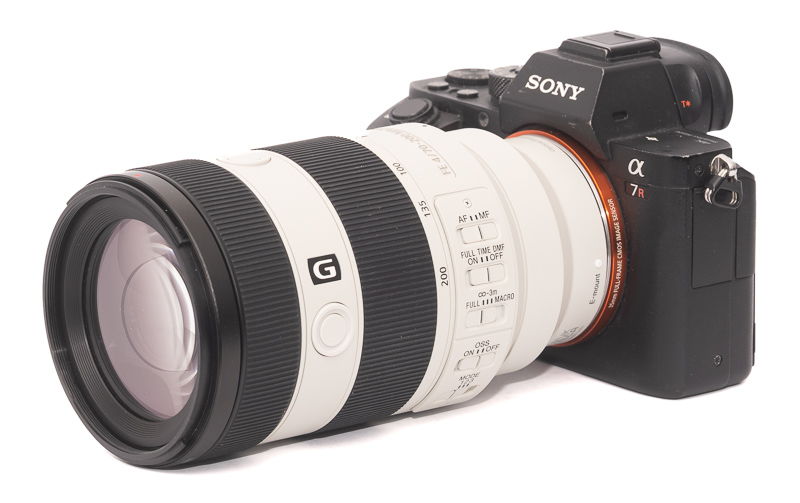
Sony managed to significantly reduce the weight of their 70-200mm 2.8 zoom with its second iteration, leaving less room for an f/4.0 version below that. With the weight difference between the f/2.8 and this f/4.0 lens being a mere 250g, Sony had to find another way to make this Sony FE 70-200mm 4.0 G Macro OSS II more attractive and they tried to do that by adding a 1:2 macro feature. But was that enough? Let’s find out in this review.
Sample Images









You can find most of the sample pictures in full resolution here.
Contents
Specifications / Version History
There have been two different 70-200mm 4.0 Sony lenses for E-mount:
- Sony FE 70-200mm 4.0 G OSS
21/15 design, 1.0 to 1.5 m MFD, 1:7.7 magnification, 840g, internal zoom, 2014-2023 - Sony FE 70-200mm 4.0 G Macro OSS II
19/13 design, 0.4 to 0.82 m MFD, 1:2.0 magnification, 792g, extends towards 200 mm, 2023-
The second generation lens had “macro” added to its name to promote its close focusing abilities. A notable difference not easily visible from the specifications: the first generation featured an internal zoom design (constant length) whereas the new one is shortest when set to 70mm and extends towards 200mm. Unlike the second generation Sony FE 70-200mm 2.8 GM OSS II, this one also did not get an aperture ring.
This is a review of the Sony FE 70-200mm 4.0 G Macro OSS II which has the following specifications:
- Diameter: 81 mm
- Length: 141 mm (lens set to infinity)
- Weight: 792g (without hood [49g], tripod foot [67g] and caps)
- Field of view: 12.3° to 34° (diagonally)
- Filter Diameter: 72 mm
- Number of Aperture Blades: 9 (rounded)
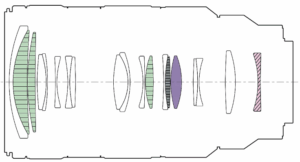
- Elements/Groups: 19/13
- Close Focusing Distance: 0.26 m at 70mm to 0.42 m at 200mm
- Maximum Magnification: 1:2.0 at all focal lengths (measured)
- Mount: Sony E
buy from amazon.com | amazon.de | ebay.com | ebay.de | B&H (affiliate links) for $1998
Disclosure
This Sony FE 70-200mm 4.0 G Macro OSS II was kindly provided free of charge by our reader Florian for review purposes, thanks a lot!
Focal Lengths



Handling / Build Quality
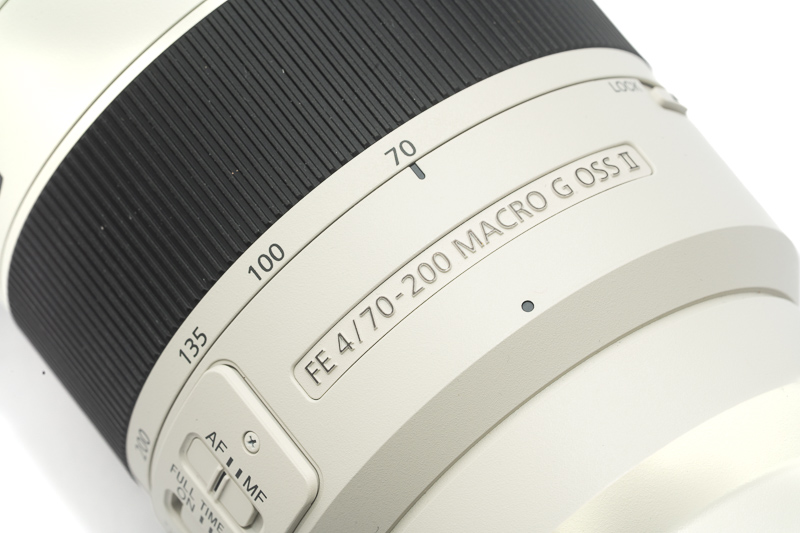
Generally this Sony FE 70-200mm 4.0 G Macro OSS II handles and feels very similar to the other recent G/GM primes and zooms, but interestingly it does not feature an aperture ring, whereas – for example – the Sony FE 70-200mm 2.8 GM OSS II and also the Sony FE 20-70mm 4.0 G both do.
The rubberized focus ring has decent damping and it takes a little around 270° from the minimum focus distance to infinity – no matter how fast you turn it, as the coupling is linear. Most of Sony’s recent lenses feature a focus throw of 180°, I guess because of the macro feature that has been extended here.
When you turn your camera off, the lens will remember the last focus position and will still be there when you turn the camera on again.
The zoom is mechanically coupled and there was no zoom creep. This is something that may still develop over time though and for that case there is also a small lock switch to fix the zoom mechanism at the 70mm setting where this lens is also shortest. Unlike the Sony FE 70-200mm 2.8 GM OSS II this is not an internal zoom lens and extends on zooming in towards 200mm.

On the left side of the lens we have a host of buttons. An AF/MF switch, a focus limiter and the On/Off/Mode buttons for the OSS. We also have lens buttons between zoom and focus ring. On the opposite side you can find the small zoom lock switch.
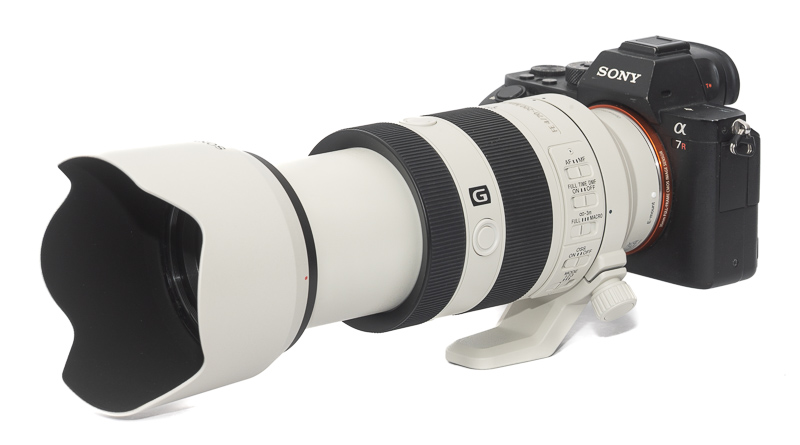
The lens shipped with a bayonet style lens hood. As this is a tele lens I think it is generally a good idea to use it and it is also good protection should you be shooting in the rain. Unlike the hood of the Sony FE 70-200mm 2.8 GM OSS II this one does not feature a small window that can be opened to rotate a polarizer or variable ND filter.
The lens also comes with a removable tripod foot. Sadly it doesn’t feature an Arca Swiss profile, so most people will buy a replacement foot and leave this one in the box. Sigma and Laowa have figured this out by now…
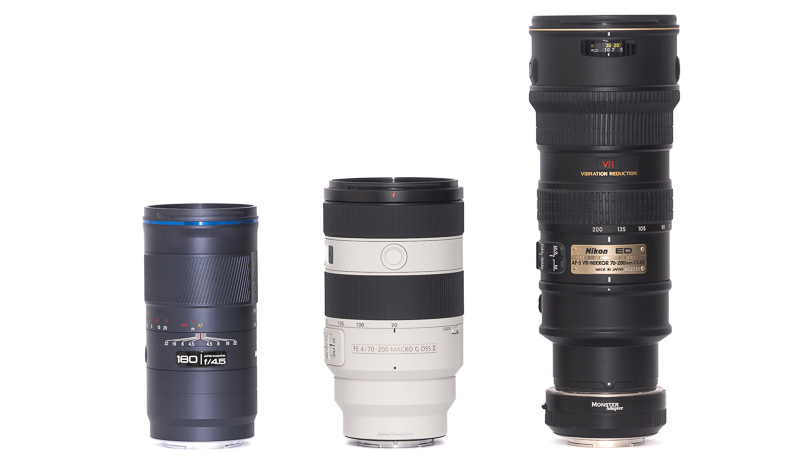
In terms of size this f/4.0 lens is a bit smaller than the Sony FE 70-200mm 2.8 GM OSS II, but this is mainly due to it being an extending external zoom lens. The width is also a bit less, but enough to get excited about? The weight difference is also only 250g – not that much in my opinion.
Autofocus/Stabilizer
I am not shooting sports or fast moving animals/humans so if you want to know if the lens is fast enough for this, or how it compares to other lenses in this segment, you may have to look for a different review with a more detailed assessment of this aspect.

In the field I did not feel this lens being any slower than the Sony FE 70-200mm 2.8 GM OSS II though.
I did not run a huge series to test the efficiency of the stabilizer – as that is extremely little fun to do. The guys at Lenstip did though and came to the conclusion it is equivalent to 4 stops as advertised.
Vignetting
Light Falloff

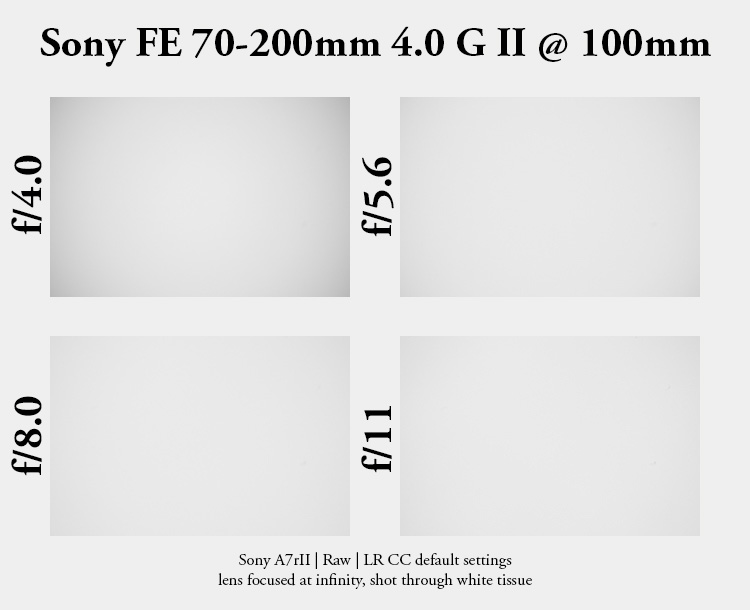
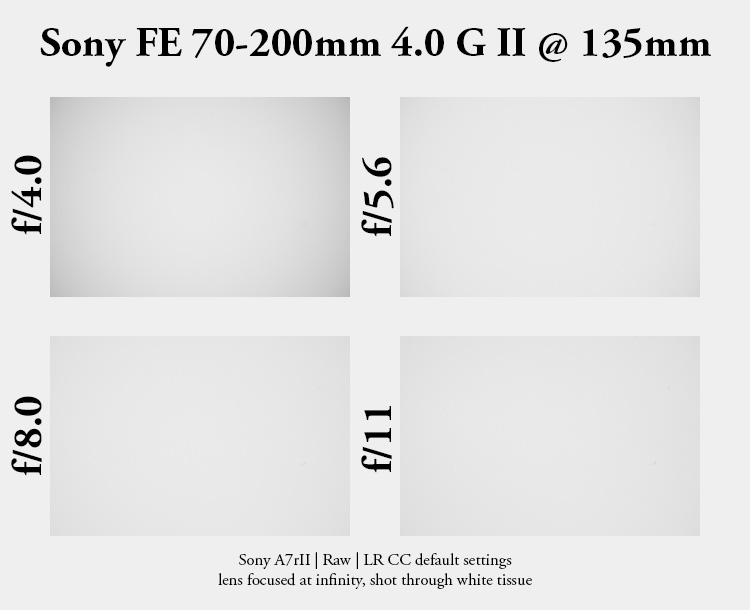

| 70mm | 100mm | 135mm | 200mm | |
|---|---|---|---|---|
| f/4.0 | 2.0 EV | 1.5 EV | 1.4 EV | 2.0 EV |
| f/5.6 | 1.2 EV | 0.8 EV | 0.7 EV | 1.1 EV |
| f/8.0 | 0.6 EV | 0.5 EV | 0.4 EV | 0.6 EV |
| f/11 | 0.5 EV | 0.5 EV | 0.4 EV | 0.4 EV |
We see a very typical behaviour for these 70-200mm lenses here: the vignetting is strongest and the ends of the zoom range and a bit lower at the intermediate focal lengths.
At the maximum aperture these values are similar to those of the Sony FE 70-200mm 2.8 GM OSS II, so when both lenses are set to f/4.0 the f/2.8 lens unsurprisingly is at an advantage, showing up to a 1 EV advantage.
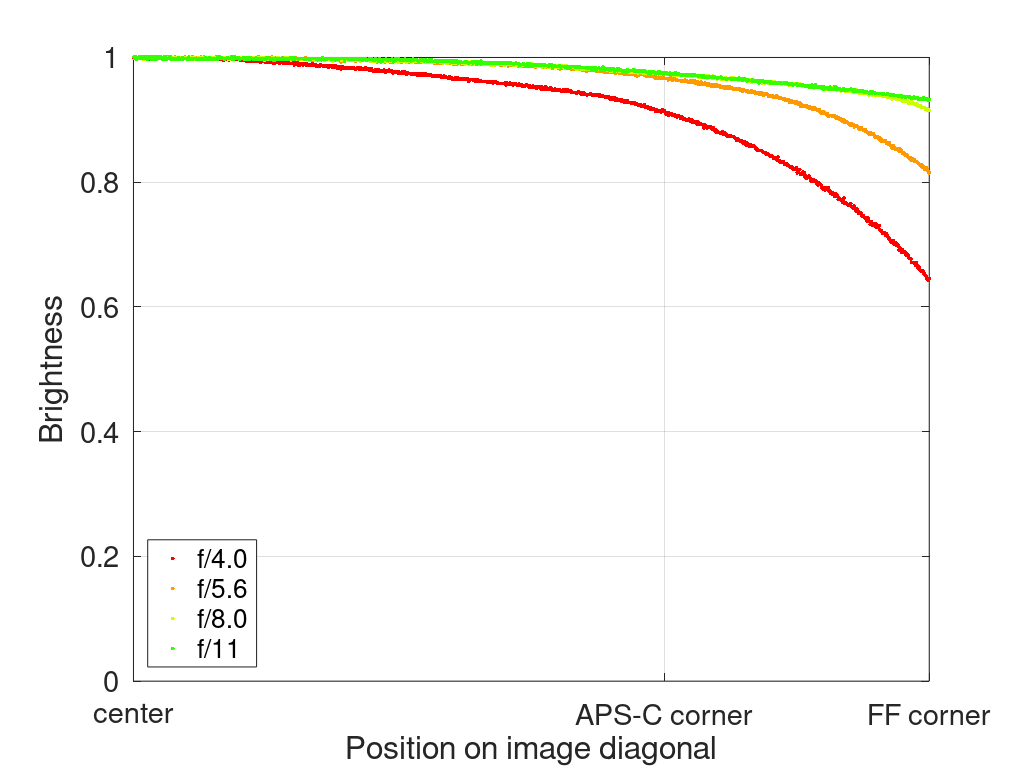


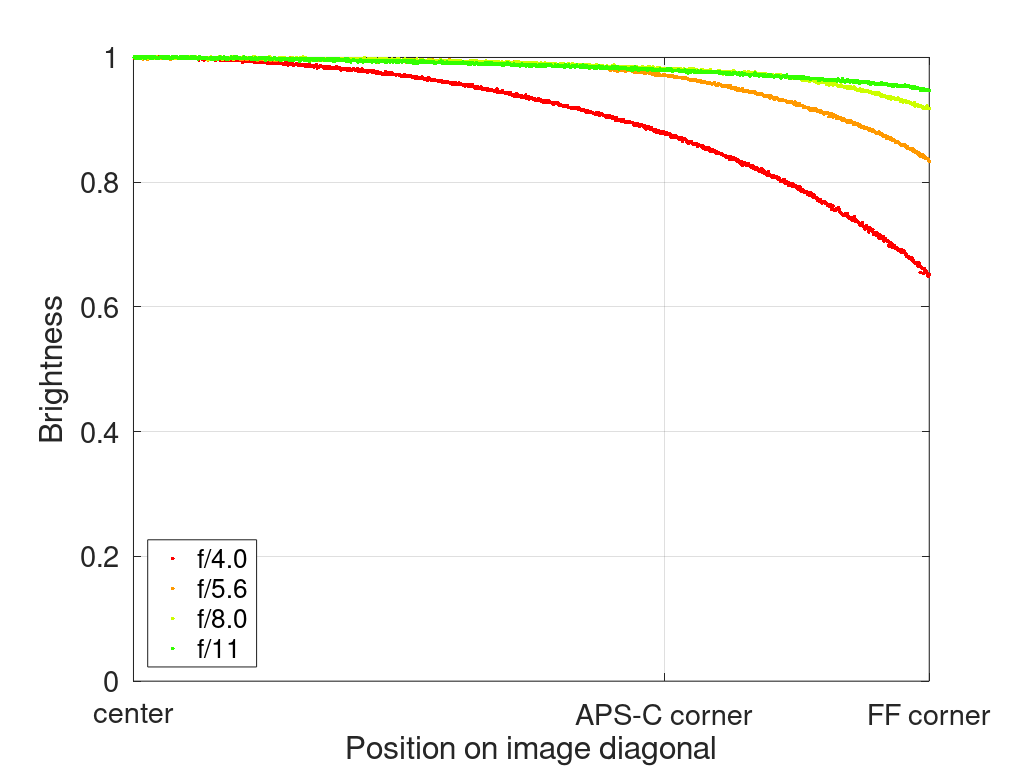
It is recommended to have a look at this article first to get an idea how this brightness graph works.
Optical vignetting
Fast lenses usually show a noticeable amount of optical vignetting. Without going too much into technical details optical vignetting leads to the truncation of light circles towards the borders of the frame.
In the center of the frame almost every lens will render a perfect circle, but only lenses with very low optical vignetting will keep this shape in the corners.
So in the following comparison we move from the center (left) to the extreme corner (right) and see how the shape of the light circle changes.
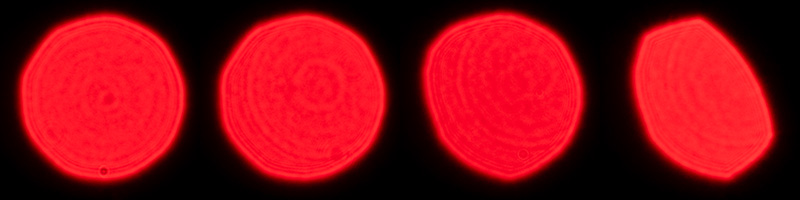
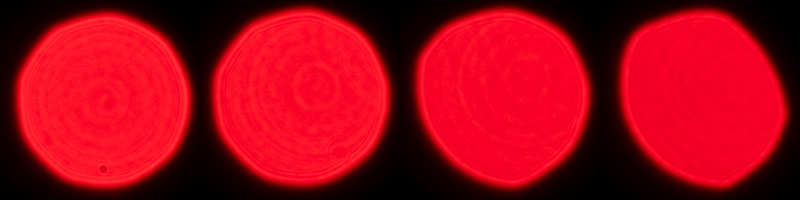


Again a very typical performance for a modern 70-200mm lens with the optical vignetting being highest at the 200mm end.
We see something else interesting here: the circles are not perfectly round at even at the maximum aperture of f/4.0 as the aperture diaphragm seems to be closed a tiny little bit. With many constant aperture zoom lenses this occurs at one end of the zoom range, but here it is true for the whole range.
In the 70-100mm range we can also see some slight onion rings, towards to 200mm they are less noticeable.
Sharpness
Focus Shift
When set to half life size magnification the depth of field is very thin, so I did check for focus shift at 70mm and 200mm and I am happy to report I did not see any.
infinity (42mp Sony A7rII)


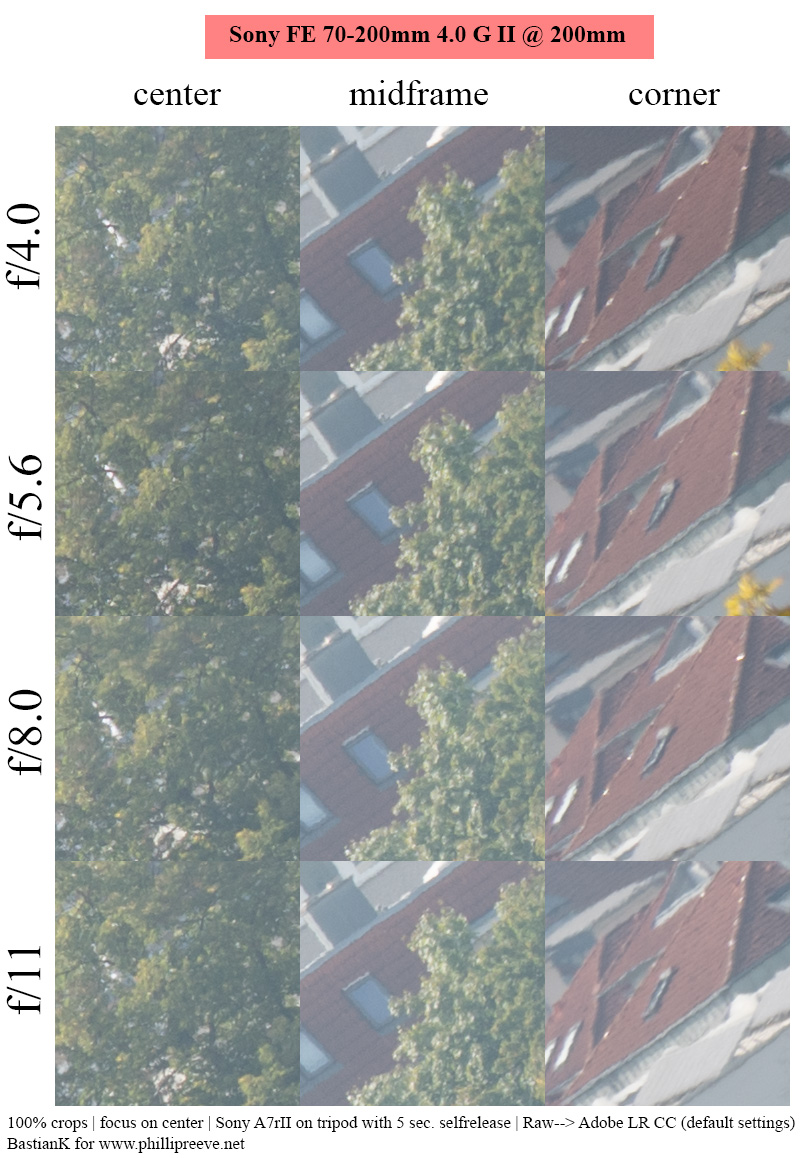
In the center and midframe area this Sony FE 70-200mm 4.0 G Macro OSS II generally shows a great performance from f/4.0 at all focal lengths and also the corners look very good – except for the 70mm end. The corners at 70mm are actually the weak spot of this lens and here stopping to f/8.0 or f/11 is needed for peak performance.
The longer focal lengths are harder to evaluate because of the negative impact of heat haze, but it looks to me that also here this lens performs very well at f/4.0.
Keep in mind: at these distances heat haze and vibrations can have a big influence.
close (1:2.0, 42mp Sony A7rII)
70mm



200mm



I could just tell you that the performance at the minimum focus distance is impeccable from f/4.0 and at 70mm as well as 200mm, but this result is actually more impressive than you might think.
Let’s have a look at the Tamron 70-180mm 2.8 G1 and G2 for a comparison. These lenses offer a comparable maximum magnification of 1:2.0 (G1) to 1:2.6 (G2) at the 70mm end but only 1:4.5 (G1+G2) at the – in my opinion more important – 200mm end. What is more: these Tamron lenses show a ridiculous amount of field curvature as shown in my reviews.
This Sony lens maintains the 1:2 magnification across the whole focal length range and is also corrected for field curvature at close distances, meaning you could even use it for repro work if a half life size magnification is sufficient for you here.
Contrary to some other zoom lenses, here the “Macro” designation in its name is actually fully deserved.
Distortion
infinity


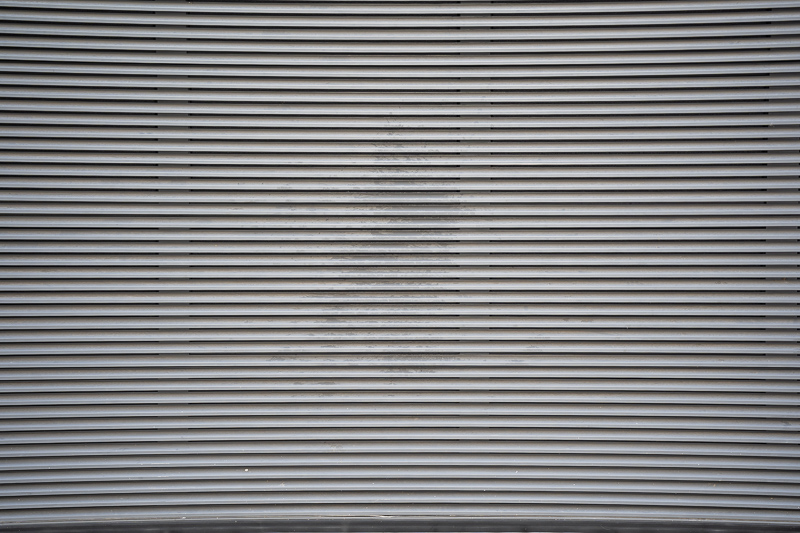



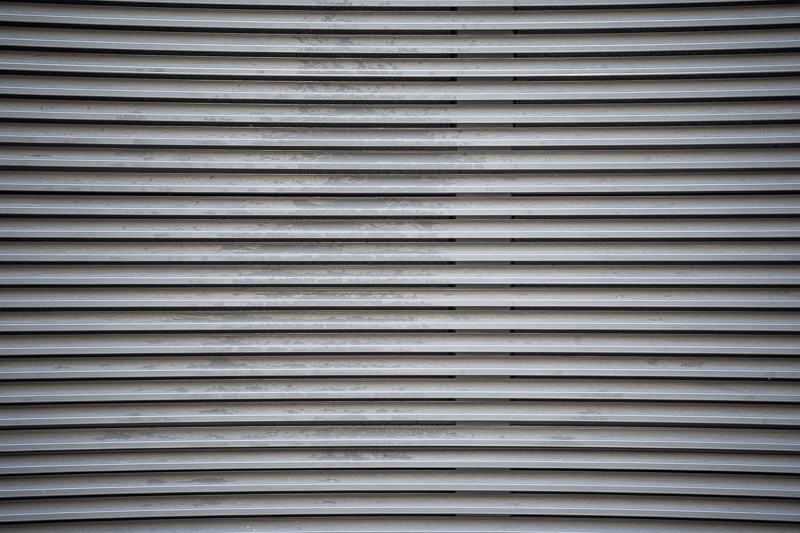

This Sony FE 70-200mm 2.8 G Macro OSS II shows the same distortion pattern as Sony FE 70-200mm 2.8 GM OSS II: almost no distortion at the 70mm end and from there on increasing pincushion distortion that peaks at the 200mm end. As you can see from the comparison above the profiles do a very good job at correcting this.
1:2


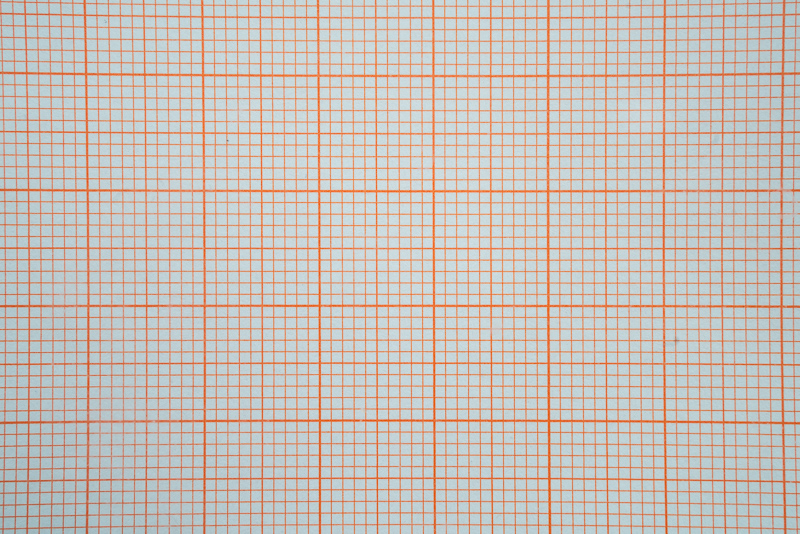

At the minimum focus distance there is interestingly a bit stronger pincushion distortion to be found at the 70mm end, also here the correction profiles do a good job though.
Sunstars
70mm






200mm
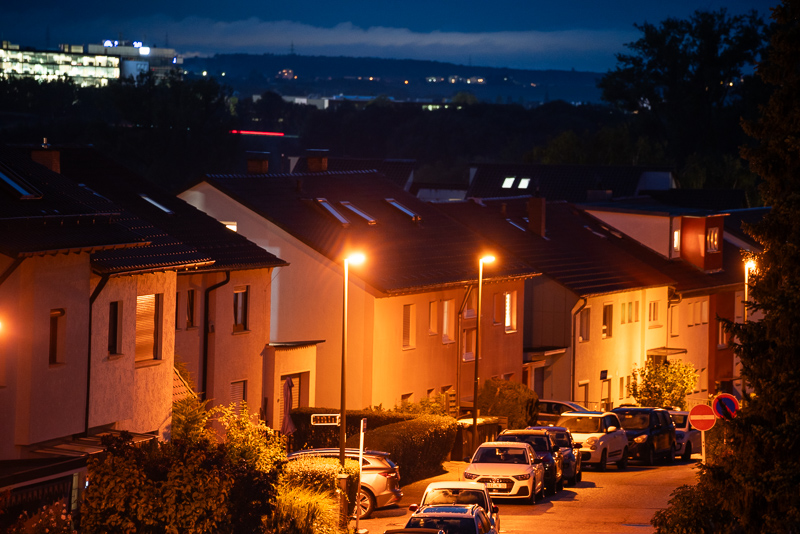

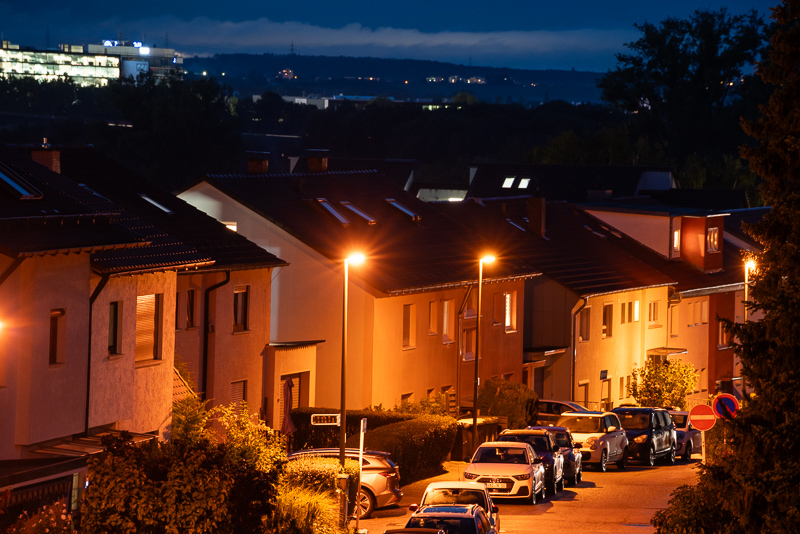

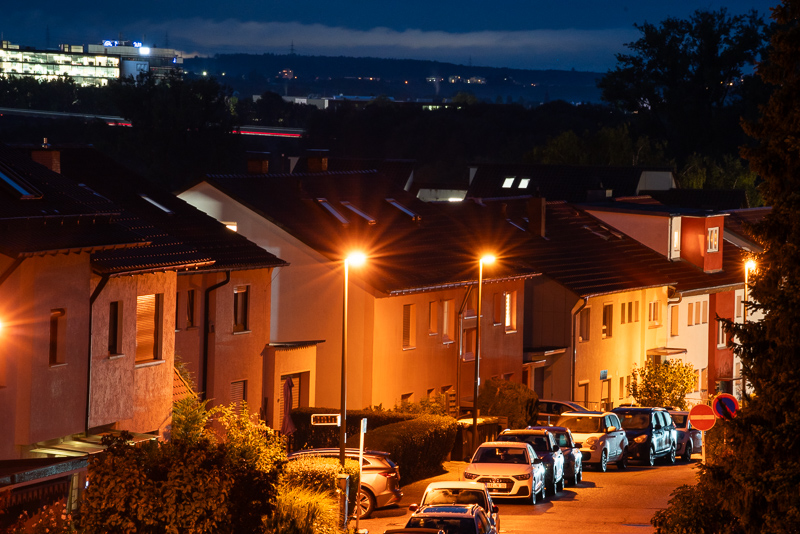
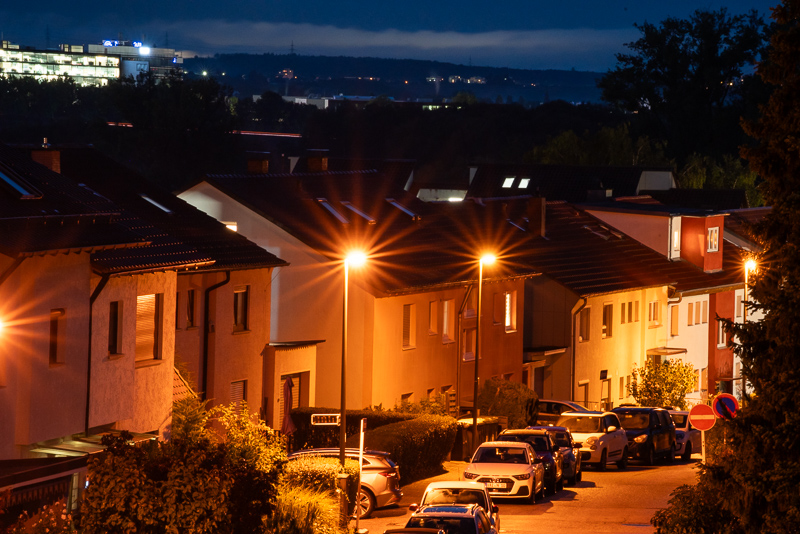
In my experience, the longer the focal length of your lens, the more unlikely you are to encounter sunstars in your pictures. Nevertheless 70mm may still be used for more intimate cityscapes or landscapes with the sun on the edge of a mountain, so we have a closer look here and while I was at it I also added a series taken at 200mm.
Unlike the Sony FE 70-200mm 2.8 GM OSS II this Sony FE 70-200mm 4.0 G Macro OSS II features only 9 rounded aperture blades. Similar to the diaphragm with 11 blades, with thist configuration you will only rarely see distinct sunstars and for them to be visible stopping down to f/16 and f/22 will usually be needed.
As this is a highly subjective topic may have a look at this article to see which kind of sunstars you prefer.
Coma correction



We can see some minor artefacts at f/4.0 but nothing that would ruin your blue hour shots. The Sony FE 70-200mm 2.8 GM OSS II does perform a bit better here despite being a stop faster though.
Bokeh

These zoom lenses are always for those that value flexibility higher than having the lens with the biggest aperture.


Generally we need to separate here between the bokeh at typical portrait distances and macro scenarios. As can be seen from the sample above, a maximum aperture of f/4.0 at 70mm does not exactly yield impressive bokeh at longer focus distances and even at 200mm I wouldn’t call it impressive.




The quality of the bokeh is perfectly fine though: this lens creates an unobtrusive bokeh, as we are used to from most of Sony’s recent lenses.


At macro distances the story is a different one. If you are using this lens near its minimum focus distance you will often want to stop the lens in order to avoid haven a razor thin focal plane. Also here the bokeh looks very nice, but that is true for most macro lenses.
Flare resistance
Tele lenses often have some issues with veiling flare in this category, but then the Sony FE 70-200mm 2.8 GM OSS II showed an above average performance. Will this again be the case here?
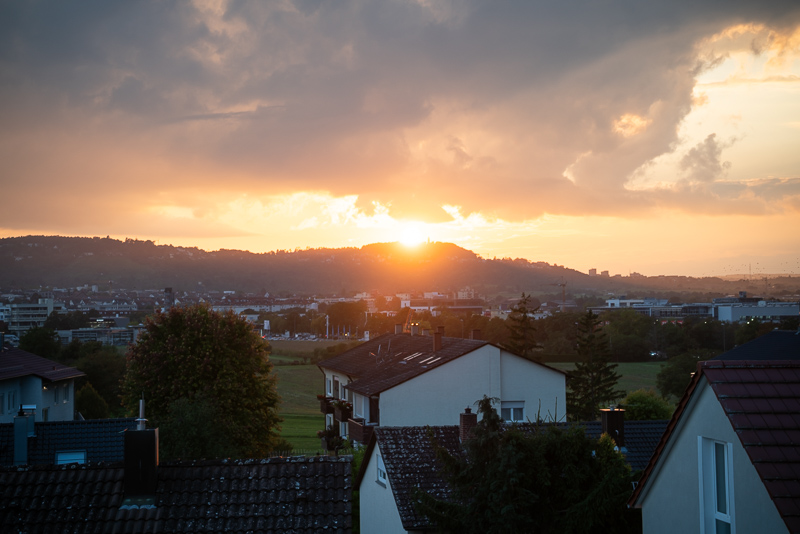
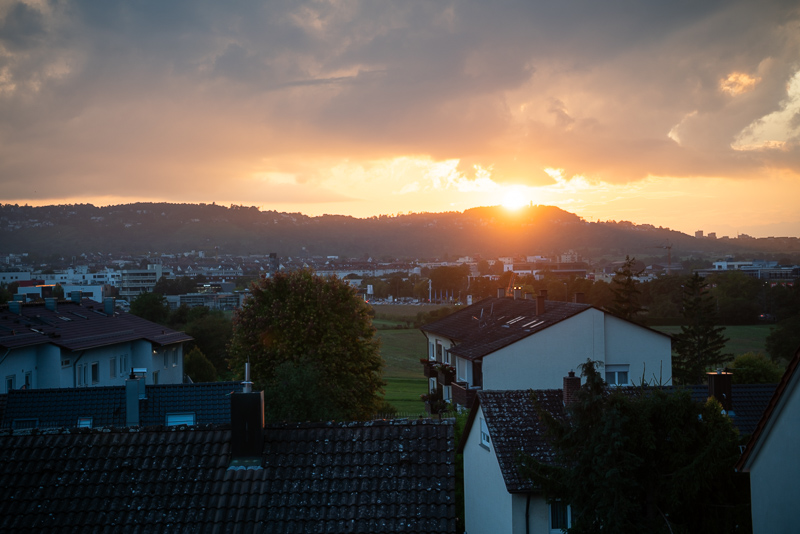
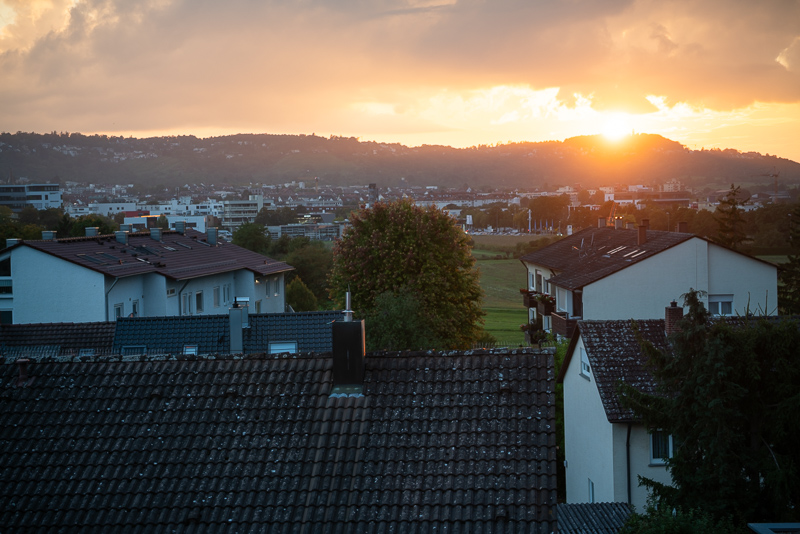
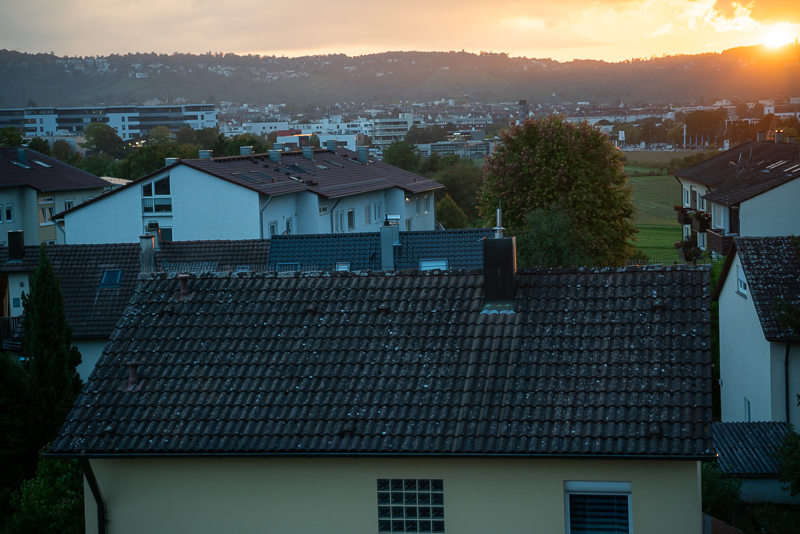

A good performance at 70mm at its maximum aperture: no problems with ghosting, only one specific position with the sun outside the frame leads to some artefacts.
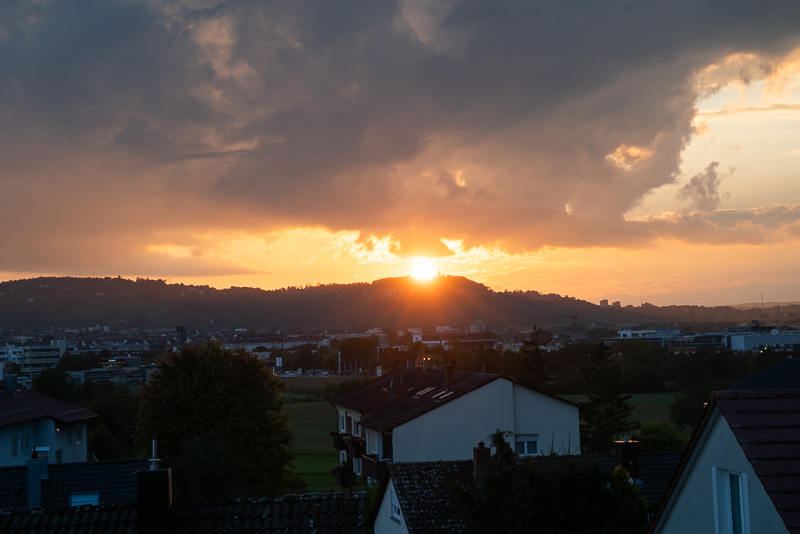


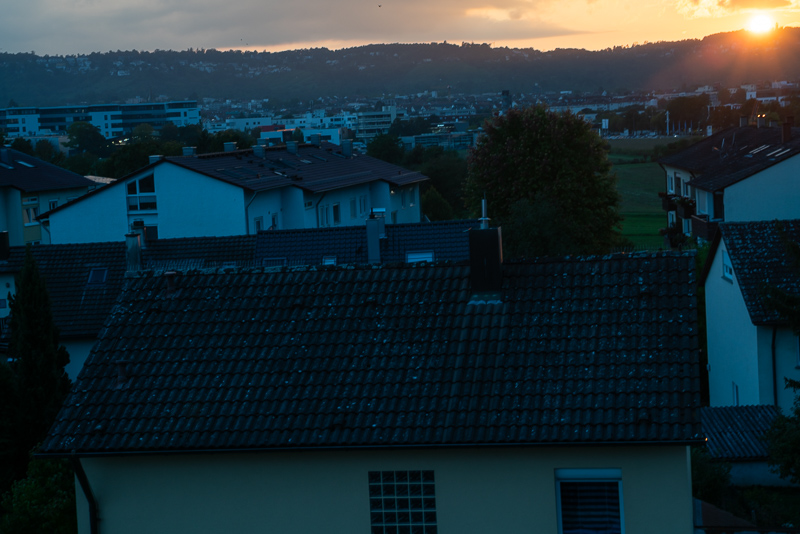
Stopped down to f/11 we see a similar performance.


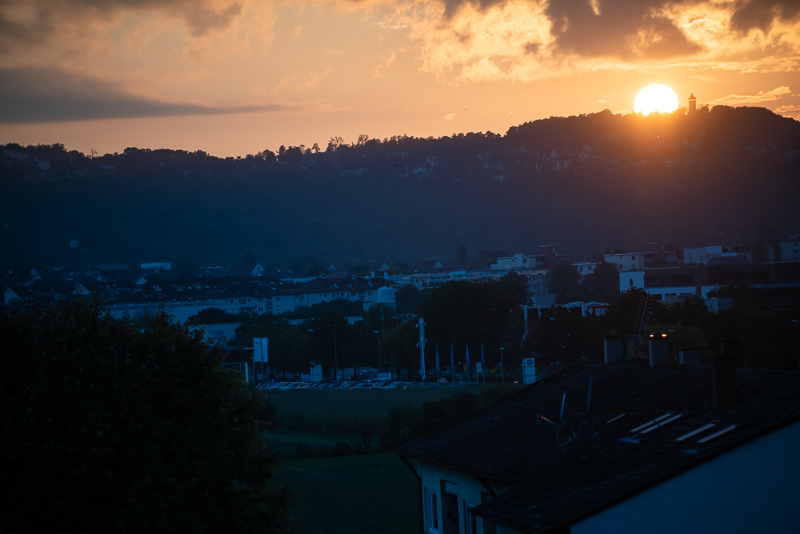
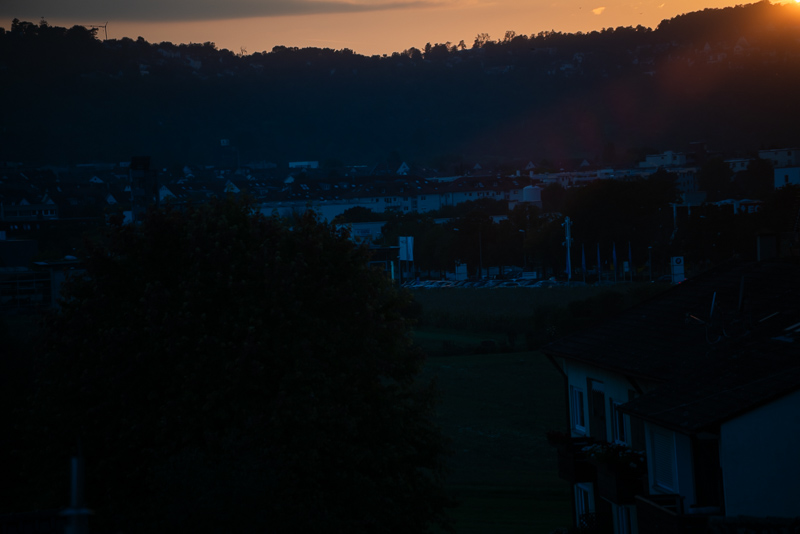
At 200mm it is again only one specific position that can lead to a big artefact.

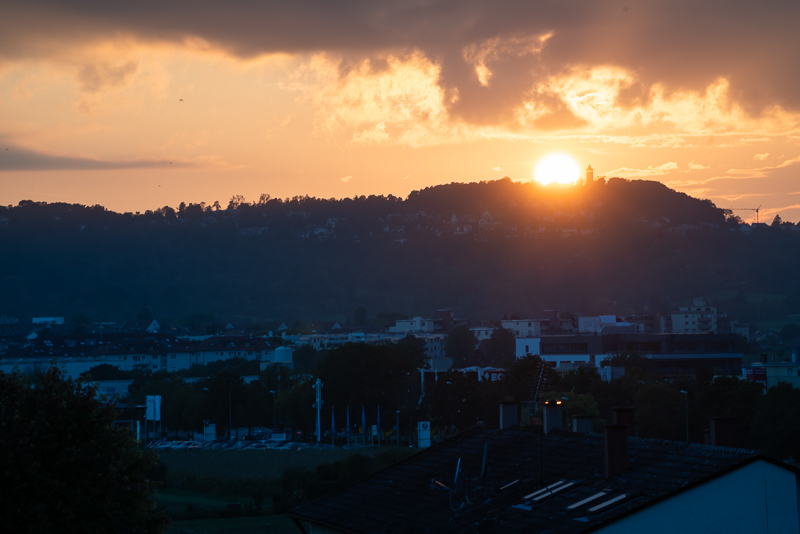

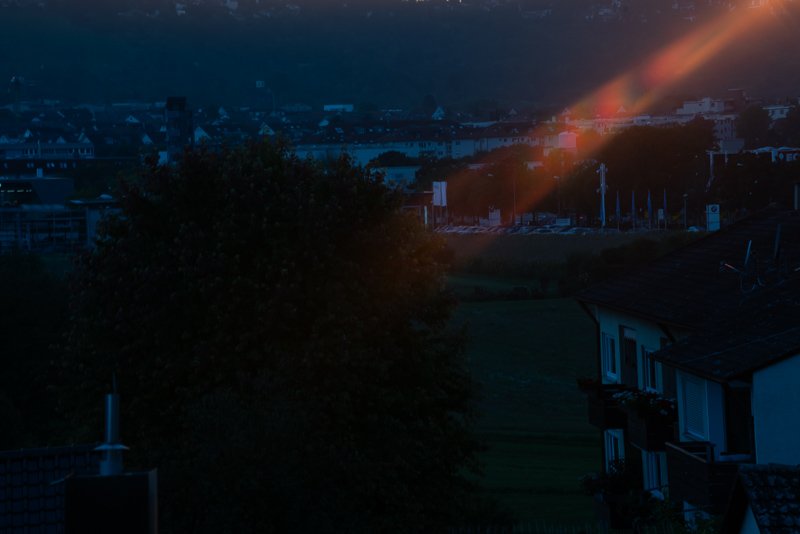
And that artefact is noticeably bigger stopped down.
This is a very good performance and actually better than the latest 70-200mm 2.8 lenses.
Chromatic aberrations
Lateral
Lateral CA are already corrected by the built in lens correction profile in most raw converters, so in the end: you won’t see any.
Longitudinal


Sony A7rII | Sony FE 70-200mm 4.0 G Macro OSS II
Already the Sony FE 70-200mm 2.8 GM OSS II showed a very good performance here and this Sony FE 70-200mm 4.0 G Macro OSS II is no worse. Only at the 70mm end we can see some minor fringing, at the 200mm end there is nothing to be found.


Sony A7rII | Sony FE 70-200mm 4.0 G Macro OSS II | 100% crops
Purple fringing is corrected perfectly at every focal length.
Conclusion
good
|
average
|
not good
|
As can be easily seen from the table above, this Sony FE 70-200mm 4.0 G Macro OSS II is a well corrected lens without any outstanding flaws. Typical for Sony’s MK II lenses it is also clearly a better lens than its predecessor.
During the DSLR era the 70-200mm 4.0 zooms were often significantly cheaper and lighter alternatives to the top of the line 70-200mm 2.8 lenses. In the meantime a whole lot of effort has been put into making the 70-200mm 2.8 lenses lighter, so this lens is only a mere 300g less than the Sony FE 70-200mm 2.8 GM OSS II – not that impressive. And while the more expensive f/2.8 lens is $2798, at $1998 this f/4.0 lens is far from being an affordable option either.
Sony had to come up with some unique aspect for people to actually consider spending a lot of money on this lens and they decided to make it an 1:2 Macro. While these days many zoom lenses offer staggering maximum magnifications on paper, when looking a bit closer you will soon notice they do not even remotely offer the performance at these magnifications we are used to from actual macro prime lenses (just have a look at my reviews of Tamron’s 70-180mm 2.8 lenses) and often they only offer the highest magnification at the less useful wide end.
Here the situation is very different: this Sony FE 70-200mm 4.0 G Macro OSS II reaches the magnification of 1:2 throughout the whole zoom range and it offers a performance at close distances worthy of its “Macro” tag and comparable to macro primes, making it a very versatile telezoom lens.
buy from amazon.com | amazon.de | ebay.com | ebay.de | B&H (affiliate links) for $1998
Alternatives
I will only be talking about the currently most popular alternatives for Sony E-mount users.
Sony FE 70-200mm 4.0 G OSS:
The first iteration is a bit bigger as it is an internal zoom which doesn’t change its length on zooming in. It also doesn’t focus nearly as close and in terms of optical performance it is no match to this second generation lens. It can be found at affordable prices on the used market, but if you are on a budget I would rather recommend to have a closer look at the first generation Tamron 70-180mm 2.8 Di III VXD (see next entry).
buy from ebay.com | ebay.de (affiliate links) starting at $750 (used)
Tamron 70-180mm 2.8 Di III VXD:
Thanks to its successor (next lens on the list) this one got a bit cheaper on the used market. I wasn’t happy with the lack of buttons and its build quality, but if you can overlook these things this is a great affordable fast telezoom with very good image quality. This lens also focuses close, but it doesn’t offer nearly the same performance at close distances as this second generation 70-200mm 4.0 Sony lens.
buy from amazon.com | amazon.de | B&H | ebay.com | ebay.de (affiliate links) for $1099 new or $750 used
Tamron 70-180mm 2.8 Di III VC VXD G2:
For the second generation it looks like Tamron’s engineers had a look at my review of the first one, as they addressed all the things I wasn’t happy about. The price also increased a bit, but if you are looking for a compact, capable fast telezoom it can be very well worth it. In terms of optical performance the Tamron is only slightly worse than the Sony lens being reviewed here – except for the missing 20mm at the long end. Disadvantages are build quality, TC compatibility and AF speed. Also Tamron’s second generation 70-180mm 2.8 doesn’t perform nearly as good at close distances as this Sony lens.
buy from amazon.com | amazon.de | B&H | ebay.com | ebay.de (affiliate links) for $1299
Sony FE 70-200mm 2.8 GM OSS II:
Sony’s one stop faster professional tele zoom. The weight difference is only 300g and the price different 800 bucks. Personally, I would probably go for the 2.8 MK II if deciding between those two lenses. The weight savings are not enough to pick the f/4.0 lens and the f/4.0 lens is simply too expensive to be considered a budget option, especially compared to the aforementioned Tamron lenses.
buy from amazon.com | amazon.de | B&H | ebay.com | ebay.de (affiliate links) for $2798
Sample images







You can find most of the sample pictures in full resolution here.
Further Reading
- Sony Lens Reviews
- Review: Sony FE 12-24mm 2.8 GM
- Review: Sony FE 20-70mm 4.0 G
- Review: Sony FE 35mm 1.4 GM
- Review: Sony FE 50mm 1.2 GM
Support Us
Did you find this article useful or just liked reading it? Treat us to a coffee!

 via Paypal
This site contains affiliate links. If you make a purchase using any of the links marked as affiliate links, I may receive a small commission at no additional cost to you. This helps support the creation of future content.


Latest posts by BastianK (see all)
- Review: Omnar 50mm 2.0 Bertele FLB - January 27, 2026
- Review: DJ-Optical 50mm 1.0 M - January 24, 2026
- Analogue Adventures – Part 48: Hexar RF - January 21, 2026
With the good close-up capability and performance of this lens being (as you noted) a major differentiating factor between this lens and the alternatives, would you (or any site reader) have any idea of how good is the close-up performance of the Sony 70-200mm f/2.8 GM II with the addition of a supplementary close-up diopter, either single-element or the more-complex achromatic type? If good, that would to some extent reduce the major advantage of this Sony f/4 G II.
(Close-up diopters in large sizes can weigh a considerable amount, so I’d be a bit uncomfortable using one on either this f/4 lens or on either of the Tamron 70-180 lenses, all of which extend. But I’d expect it would not be problematic with regard to mechanical stress on the GM II, which, IIRC, is both internal zoom and focus. Also, I don’t really trust extension tubes with most modern lenses, because such lenses not being unit-focusing, extension tubes will interfere with floating-element correction of aberrations, and additionally, there are too many stories of them damaging modern lens and camera contacts).
With diopter and extension tubes you can never get as flat field.
For some uses, that could indeed be an important consideration.
Still, I’d be interested in learning about what kind of close-up results anyone has obtained, if they have ever tried using an accessory diopter on the GM II. That lens still has the advantage of being f/2.8 rather than f/4, and while I wouldn’t use f/2.8 (or even f/4) for macro or quasi-macro uses, these are general-purpose optics, f/2.8 could sometimes be useful, and as you noted, the f/2.8 GM II isn’t that much heavier than the f/4 G II, and the latter isn’t exactly cheap. Also, should a tele-converter ever be used, effective aperture will decrease from the native value, so the brighter f/2.8 GM II becomes even more advantageous.
“Unlike the hood of the Sony FE 70-200mm 2.8 GM OSS II this one does not feature a small window that can be opened to rotate a polarizer or variable ND filter.”
Strange choice of a downgrade (just so differentiate it). Some generic plastic lens hoods from AliExpress, and cost like two or three bucks.
It may be a small detail (though really, really useful), but it’s also a bit petty; especially if we consider what this lens costs (no, I won’t be a boiled frog and suddenly accept that a 2000 eur lens is a budget option). C’est la vie…
But all in all, I’d be really happy with this one as a landscape lens, which is how I use 70-200mm zooms. Extra close-up capability would really come in handy for occasional detail shots. When you shoot landscapes, why not add a nice close up of leaves, flowers, insects, interesting rocks, or whatever…
Low weight matters, even when you save extra 300 grams, so I take that as a significant plus too. For me it can make a difference between having neck and shoulder pains or not, after several hours of carrying the bag.
It’s a shame about the aperture ring. It’s just something you really miss if you were used to having it, but I guess it’s too expensive to implement too (can’t be more expensive than a whole TTArtisan lens that have it, and I’d pay that much extra).
I imagine this lens could also be really interesting option for product photography, especially since it offers 1:2 at any FL.
All in all, my impression is that tiny cons (nitpicking anyway) are worth it. If the price was close to 1600-1800 eur range, it would be even better. But then, for some people this lens won’t even have competitors, for now.
Thanks for another interesting read!
It costs 1522€ in german amazon, with alpha welcome bonus it is 1422€.
Now that sounds much better and quite intriguing, since holidays are coming!
*Strange choice of a downgrade (just to differentiate it). Some generic plastic lens hoods from AliExpress have it, and cost like two or three bucks.
Sorry about my terrible typing in the early morning.
Thank you for the good review and the very nice shots, as always🤩🙌.
This lens replaced my Voigtländer 65 F2 and Zeiss Batis 135 F2.8. It’s tiny for a 70-200, even compared to the GM II, and a dream in terms of handling and versatility (especially if you like close-ups too).
The optical quality is very good, although not quite on par with top-of-the-line primes. What me really impresses is the AF speed at close distance, which is extremely good even with a 1.4x converter.
I can live with the fact that it is not perfect for low/available light (other lenes in my bag for that).
But of course I also understand people, who prefer lens kits including the GM II. There are good arguments for that, as well.
Wishing everyone happy holidays!
I think this Sony 70-200 f/4 G II is a very important, very useful option, certainly made more attractive by its quite-good performance, relatively small size, and quasi-macro capability..
However, I think part of its attraction is simply that alternatives are limited. “The market” has failed to provide — or been prevented from providing by E-mount contractual limitations — certain desirable alternative capabilities. Specifically:
1) as the “traditional” lens makers have tried to out-run the new Chinese competition, they have focused on making large-aperture primes and esoteric zooms — so no availability for AF of the previously-common (and I think extremely useful) relatively small, light, and inexpensive moderate-aperture primes of ~135mm (except perhaps for the high-priced Batis 135, and that doesn’t even meet the size and weight goals all that well).
2) full-functionality burst rate of third-party lenses for Sony tops out at 15 shots/sec.
3) we can’t use teleconverters on third-party zooms for Sony.
All those various things add up, and so this Sony G II zoom probably ends up being the most-desirable (or alternatively, least-objectionable) choice.
I’ll probably eventually buy one myself, for those reasons. But haven’t been in any rush to do so, because some of its features (high burst rate and teleconverter usability) are not currently needed by me. The quasi-macro capability could be very useful, but I’m also considering the Laowa 180 macro prime for that (if I’m willing to forego zooming at close range, haven’t decided).
By the way, even if I buy this lens, I’d still want in my kit a small prime towards the lower end of the focal length range (probably either a Sigma 65mm f/2, Viltrox 85mm f/2 EVO, or Sigma 90mm f/2.8. Even with the relatively small size of the Sony 70-200 f/4 G II, those primes are all much smaller and lighter, and also provide one or two stops of aperture advantage over this zoom.
Any plans on reviewing the Sigma 20-200? 😀
I wouldn’t rule it out 😀
The fact that it has THAT amount of range, is a bit slower but is the same size as the Tamron 28-200, and has great contrast, colors, and good enough sharpness is amazing. I did not imagine that was physically possible
As always, a great review. Thank you very much. The only thing I’m missing among the alternatives to a short telephoto zoom is the Tamron 35-150. For some, this is the main reason why a 70-200 or 70-180 doesn’t make sense. It is still one of the best lenses in the E-mount system. It handles superbly and is uniquely versatile. One of the few lenses where weight isn’t an issue for me.