Introduction

About a year after the release of the Zeiss Otus 28mm 1.4 Distagon – to the surprise of many – Zeiss released this Zeiss Milvus 25mm 1.4 Distagon. Almost as complex optical design, almost as big, almost as heavy, but “only” half the price – making it the most expensive lens of the Milvus lineup. What are you giving up in terms of performance compared to the 28mm Otus? Let’s try to find out in this review.
Sample Images


You can find many of the sample images in full resolution here.
Contents
Specifications
The EF-mount (ZE) version of this Zeiss Milvus 25mm 1.4 Distagon has the following specifications:
-
- Diameter: 96 mm
- Field of view: 81.2° (diagonally)
- Length: 117 mm
- Weight: 1140g (without hood[g], without caps)
- Filter Diameter: 82 mm
- Number of Aperture Blades: 9 (rounded)
- Elements/Groups: 15/13

- Close Focusing Distance: 0.25 m
- Maximum Magnification: 1:4.6 (measured)
- Mount: Nikon F (ZF.2) | Canon EF (ZE)
buy from amazon.com | amazon.de | B&H | ebay.com | ebay.de (advertisement/affiliate links) for $2400 (new) or starting at $1300 (used)
Handling/Build quality

The Milvus lenses feature the same casing design as the higher end Otus lenses (and also the Batis and Touit lenses), but not everyone was happy with the design choices made by Zeiss here, let me tell you why.
The lens features a big rubberized focus ring. It rotates 172° from infinity to the minimum focus distance of 0.25 m. For me the resistance of the focus ring could also be a bit higher, but that is a matter of personal taste to some degree.
I am not a big fan of the rubber used for the focus ring (and aperture ring of the ZF.2 version). It already doesn’t smell particularly nice and I have severe doubts about its longevity. It also attracts all kind of debris.
The casing seems to be made of some kind of metal and is a bit shiny and slippery. All the markings are engraved and filled with paint.
The lens ships with a bayonet type lens hood but I bought a used one that came without it. The lens certainly looks nicer with the hood attached, but it makes the whole package even bulkier and harder to carry around.
The lens also doesn’t feature a tripod foot, considering its weight I would have liked one though.

The 82mm filter thread is surely more manageable than the Zeiss Otus 28mm 1.4‘s 95mm one, but it is still bigger than that of any other 24mm 1.4 lens (Nikon AF-S 24mm 1.4G and Canon EF 24mm 1.4L II USM: 77mm, Sony FE 24mm 1.4 GM: 67mm).

This is a review of the EF version which can easily be adapted to E-mount and Z-mount cameras.
Vignetting
light falloff

| f/1.4 | 3.6 |
| f/2.0 | 2.6 |
| f/2.8 | 1.6 |
| f/4.0 | 0.9 |
| f/5.6 - f/16 | 0.6 |
This is another one of those cases, that clearly shows: a huge lens does not equal low vignetting figures. In fact these are the highest vignetting figures I have seen from a ~24mm 1.4 lens yet. The Nikon AF-S 24mm 1.4G and the Sony FE 24mm 1.4 GM show about 2/3 of a stop less vignetting at the maximum aperture as does the Zeiss 28mm 1.4 Otus. The Canon EF 24mm 1.4L USM II shows similar but still slightly lower vignetting figures.

It is recommended to have a look at this article first to get an idea how this brightness graph works.
optical vignetting
Fast lenses usually show a noticeable amount of optical vignetting. Without going too much into technical details optical vignetting leads to the truncation of light circles towards the borders of the frame.
In the center of the frame almost every lens will render a perfect circle, but only lenses with very low optical vignetting will keep this shape in the corners.
So in the following comparison we move from the center (left) to the extreme corner (right) and see how the shape of the light circle changes.


The fast 24mm 1.4 lenses I reviewed didn’t encounter severe issues in this category and that is again the case here – they all perform similar here.
However, one thing that caught me by surprise are the pronounced onion ring structures. The Nikon AF-S 24mm 1.4G and the Canon EF 24mm 1.4L USM II are hardly better, but the Zeiss 28mm 1.4 Otus featured aspherical elements with way smoother surfaces and I would have expected the same here. Not the case.
Sharpness
MTF-Graphs
The MTF graphs promise an impressive performance at f/1.4 in the center of the frame and the inner midframe, in the outer midframe and the corners we do see a notable amount of astigmatism though. Stopped down to f/4.0 the astigmatism is significantly lowered.
It is interesting to compare these graphs to those for the Zeiss 28mm 1.4 Otus. In the center of the frame this 25mm Milvus actually shows a higher performance at f/1.4, the Otus has a more even and therefore higher performance farther away from the center though. Stopped down to f/4.0 they look similar with the Otus showing a bit higher resolution in the outer midframe and the corners.
Sadly Zeiss does not publish graphs showing the performance at 20 times the focal length for the Milvus lenses, they only do for the Oti.


Most MTF-Graphs show calculated values that do not take into account manufacturing tolerances and sample variation, so the actual performance in the field may vary.
Focus Shift


I don’t see any focus shift here and we can also see that this lens is better corrected for closer distances than the Nikon AF-S 24mm 1.4G and the Canon EF 24mm 1.4L USM II.
infinity (42mp Sony A7rII)


Generally the performs I see here in the field matches what I see in the MTF graphs: the center looks good from f/1.4, but midframe and corners are a bit soft and it takes stopping down to f/5.6 for optimal across frame performance.
The Nikon AF-S 24mm 1.4G looks a bit worse in the corners at wider apertures, but by f/5.6 looks pretty much the same. The Canon EF 24mm 1.4L USM II I tried never looked great in the corners. The Sony FE 24mm 1.4 GM looks pretty great already from f/1.4 though.
As this is lens features a floating elements design the correct flange focal distance is crucial for optimal performance. I tested this lens with a metabones as well as a Sigma MC-11 on the Sony A7rII and both gave the same results. The Sigma MC-11 is generally closer to the correct length than the metabones.
portrait distance 0.9 m (42mp Sony A7rII)
For portraiture it isn’t so important how flat the field is, it is more interesting to see what the sharpness is like when focused at different parts of the frame to take field curvature out of the equation.
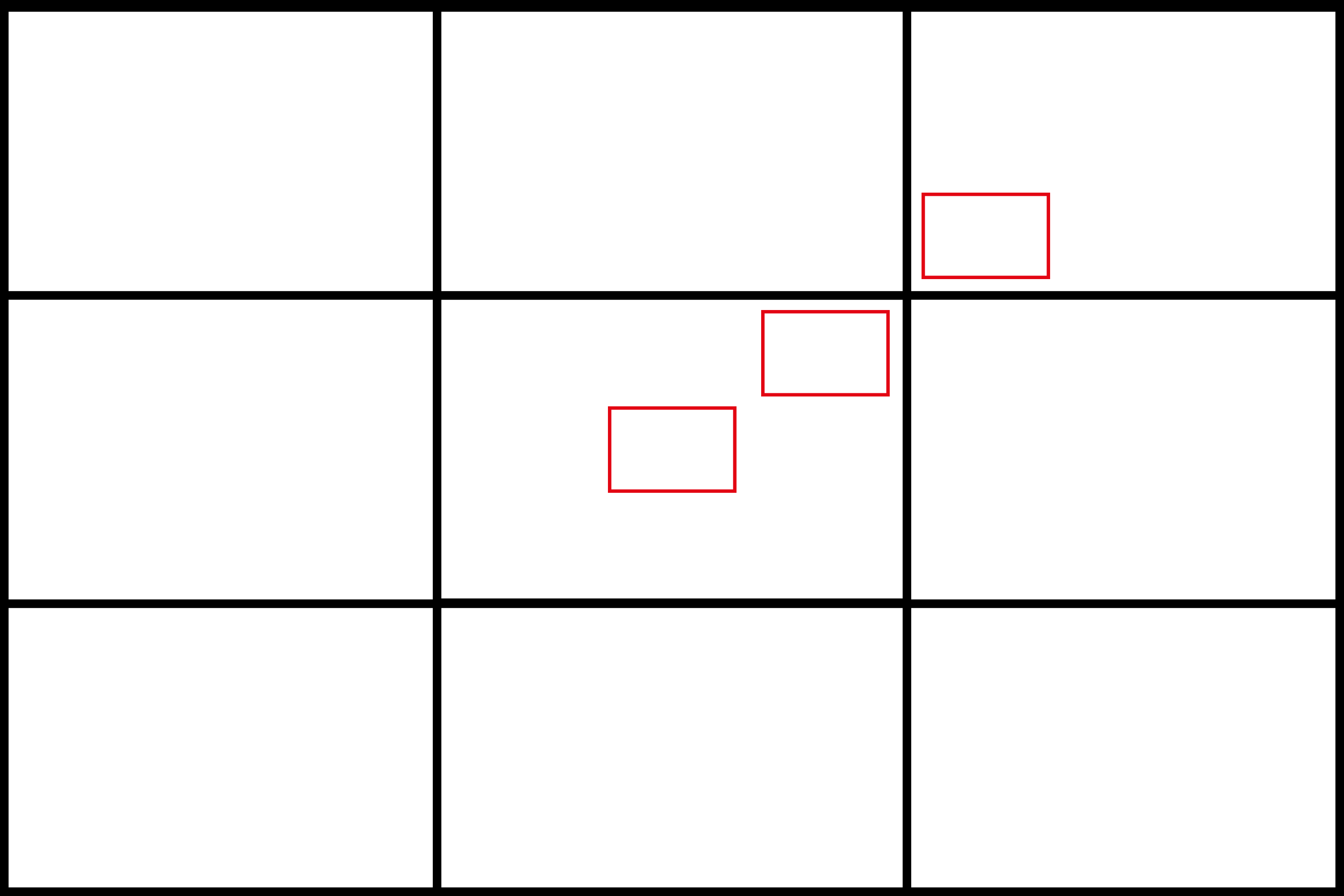
This is what I did here, I refocused for every shot and aperture to get the best possible result at different locations in the frame (center, inner midframe and outer midframe).
Focus distance was roughly 0.9 m and the circle of the dollar bill is more or less the size of a human eye.
f/1.4 <————> f/2.0


In this category I would have hoped for an improvement over the Nikon AF-S 24mm 1.4G and the Canon EF 24mm 1.4L USM II, but this is not really the case.
This Zeiss 25mm 1.4 shows very high contrast and resolution in the center of the frame, but already the inner midframe area and especially the outer midframe area is noticeably softer. Also stopping down to f/2.0 doesn’t really cure this.
Both, the Nikon AF-S 24mm 1.4G and the Canon EF 24mm 1.4L USM II, have slightly lower performance in the center of the frame, but look better in the midframe area which is something I would prefer for my kind of shooting.
close 0.25 m, 1:4.6 (42mp Sony A7rII)


As I already prediced in the Focus Shift section this Zeiss lens does perform very well at closer distances. Here the Nikon AF-S 24mm 1.4G is pretty soft and needs to be stopped down to f/2.8 to match the Zeiss’ performance and also the Canon EF 24mm 1.4L USM II is softer at its maximum aperture.
Flare resistance

As always evaluating flare is a complex matter since you can get any lens to look bad if you push it hard enough and a slight change of scenario can affect results a lot. The late Zeiss lenses I tried have generally been pretty good performers here though – especially the Zeiss 28mm 1.4 Otus.


At f/1.4 we can only see some minor artefacts and shooting directly into the sun also the contrast stays on a high level.


Stopped down some issues arise, as we may encounter rather big artefacts and also veiling flare with a strong point light source close to the corner of the frame can be an issue.
From a modern high performance Zeiss lens I expected a bit better in this category, it is still better than what I have seen from the Nikon AF-S 24mm 1.4G or the Canon EF 24mm 1.4L USM II, but also clearly worse compared to the Sony FE 24mm 1.4 GM and the Zeiss 28mm 1.4 Otus.
Coma


Correcting Coma in a fast wide angle lens like this is a really difficult task. As this Zeiss 25mm 1.4 Milvus features a more complex design than either the Nikon AF-S 24mm 1.4G or the Canon EF 24mm 1.4L USM II, I was hoping it would perform noticeably better in this category. It does in fact perform a bit better, but then not really enough to write home about – especially taking into account this Zeiss lens shows the highest vignetting figures.
If you are looking for a fast ~24mm lens with good Coma correction best have a look at the Sony FE 24mm 1.4 GM, which performs way better than all of these DSLR designs.
Distortion


The Zeiss 25mm 1.4 Milvus only a low to medium amount of barrel distortion. A correction profile in Lightroom is available, but in many cases I found its correction too strong, setting it to 70% worked better for me.
Bokeh

These fast wide angle lenses are a bit tricky to use for shallow depth of field photography, as you need to be close to your subject for that and then you often have to work around their perspective distortion.
Close Distance


In close focus scenarios the bokeh is generally nice, similar to the Nikon AF-S 24mm 1.4G. All lenses in this class also focus similarly close.
Mid Distance


Mid distances are what I like to use lenses like this for the most, because you can show your subject (e.g. a person) but also its slightly out of focus surroundings (see: How to: Create Environmental Portraits). The bokeh looks again similar to the Nikon AF-S 24mm 1.4G and also the Sony FE 24mm 1.4 GM. The Canon EF 24mm 1.4L USM II looked a bit busier in my testing.
Long Distance


At longer focus distances a wide angle lens will simply not yield as much bokeh as a longer lens with the same maximum aperture, meaning it will be difficult to create a shallow depth of field. Here with complex backgrounds the bokeh also doesn’t look that nice anymore.
If you want to use this lens at wider apertures e.g. for shooting interiors without a tripod you also need to be careful making sure that all the things you want to be in focus actually are.
Sunstars


Just like the Zeiss 28mm 1.4 Otus also this Zeiss 25mm 1.4 Milvus features an aperture diaphragm made of 9 rounded aperture blades. The alignment of the blades is pretty good, so we see decent 18-pointed sunstars with rays of even length from f/8.0 to f/16.
If you want to learn more about this topic have a look at this article.
Chromatic aberration
lateral


Similar to the Zeiss 28mm 1.4 Otus also here we see a medium amount of lateral CA here. This is still easily corrected in post by just one click, so nothing to worry about.
longitudinal


While the Zeiss 28mm 1.4 Otus features an “Apo-Distagon” tag, this Zeiss 25mm 1.4 Milvus only received a “Distagon” tag, hinting at a worse performance in this category and indeed the Otus showed an even lower amount of bokeh fringing.


When it comes to purple fringing this Milvus lens is corrected just as well though.
In this category we can see a clear improvement over the Nikon AF-S 24mm 1.4G and the Canon EF 24mm 1.4L USM II.
Conclusion
good
|
average
|
not good
|
Once again we have to talk about expectation managment here.
Going by its optical diagram, size, price and release date, I was hoping this Zeiss 25mm 1.4 Milvus would be close in performance to the Zeiss 28mm 1.4 Otus. Having used both lenses under the same conditions in the same scenarios, I have to say that is not entirely the case.
Despite only featuring one more lens element, the Otus corrects Coma better, has lower vignetting figures, better flare resistance, better sharpness and also creates a nicer bokeh with higher quality aspherical elements. The Otus being even bigger and heavier and – not to mention double the price – that might not be that much of a surprise though, so how does it compare to the now much cheaper DSLR alternatives from Nikon and Canon?
Generally, this Zeiss 25mm 1.4 Milvus performs a bit better in some of the categories, but enough to warrant double the weight and price while not featuring auto focus? I have my doubts about that.
This Zeiss lens also only somewhat makes sense if you need a lens with EF or F-mount. There is a huge advantage to designing lenses like this for mirrorless cameras and this becomes very obvious when looking at the Sony FE 24mm 1.4 GM, which shows a better performance in pretty much every category while being cheaper and less than half the weight and size.
buy from amazon.com | amazon.de | B&H | ebay.com | ebay.de (advertisement/affiliate links) for $2400 (new) or starting at $1300 (used)
Alternatives
Sony FE 24mm 1.4 GM
In 2025 this is still the gold standard when it comes to 24mm 1.4 lenses. Not only is it the smallest lens with these parameters, it is also the best performing in terms of Coma correction and sharpness. It is a true mirrorless design, so the only camera systems you can use it on are Sony E or Nikon Z via adapter.
buy from amazon.com | amazon.de | B&H | ebay.com | ebay.de (advertisement/affiliate links) for $1298
Nikon AF-S 24mm 1.4G
A lens I have been using a lot during the DSLR era. Compared to this Zeiss 25mm 1.4 Milvus it performs worse in some areas (CA correction and flare resistance) but also better in others (less vignetting, much smaller and lighter with AF).
buy from Amazon.com | Amazon.de | B&H | ebay.com | ebay.de (advertisement/affiliate links) for $1.999 (new) or $550+ (used)
Canon EF 24mm 1.4L USM II
Generally I found this Canon lens to perform a bit worse than the aforementioned Nikon, have a look at their reviews for more detailed information.
buy from Amazon.com | Amazon.de | ebay.com | ebay.de | B&H (advertisement/affiliate links) for $1.549 (new) or $500+ (used)
Sigma 24mm 1.4 Art DG HSM
This Sigma has also been designed for DSLRs and comes in F-mount as well, so it is a direct competitor. It came out after the Nikon and according to several tests it performs better with regards to sharpness. It has slower AF and doesn’t do any better when it comes to Coma correction, vignetting and flare resistance though. Sigma and Zeiss had rather similar design criteria at that time, so without having used the Sigma I am not sure how they compare in detail.
buy from Amazon.com | Amazon.de | B&H | ebay.com | ebay.de (advertisement/affiliate links) for $849 (new) or $400 (used)
Sigma 24mm 1.4 Art DG DN
Sigma’s updated mirrorless version of the aforementioned lens. I haven’t used it personally yet, but it seems to be a solid performer. Personally I would rather go for the smaller, lighter and closer focusing Sony FE 24mm 1.4 GM though.
buy from Amazon.com | Amazon.de | B&H | ebay.com | ebay.de (advertisement/affiliate links) for $799
If you also consider a 28mm lens as an alternatives, the Sigma 28mm 1.4 Art, the Nikon AF-S 28mm 1.4E, the Nikon AF-D 28mm 1.4 and the Laowa 28mm 1.2 Argus are all part of my Fast 28mm Comparison, so best have a look there first. I also reviewed the Zeiss Otus 28mm 1.4 Apo Distagon.
Sample Images


You can find many of the sample images in full resolution here.
Further Reading
- All Zeiss Lens Reviews
- Guide to 20-28mm wide angle lenses for Sony FE cameras
- Review: Zeiss 16mm 8.0 Hologon
- Review: Laowa 28mm T1.0 Argus Cine – The World’s fastest 28mm lens
- Technical Knowledge
Support Us
Did you find this article useful or just liked reading it? Treat us to a coffee!

 via Paypal
This site contains advertisement/affiliate links. If you make a purchase using any of the links marked as advertisement/affiliate links, I may receive a small commission at no additional cost to you. This helps support the creation of future content.


Latest posts by BastianK (see all)
- Review: Samyang 35mm 1.2 XP - April 1, 2026
- Review: 7Artisans 40mm 2.5 AF - March 28, 2026
- Analogue Adventures – Part 50: What I learned from Shooting Film (so far) - March 18, 2026
Another fine review, Bastian. I believe that it puts things into perspective really well,
I personally have no use for such a lens, not in 2025, as these kinds of sacrifices are only worth making if there’s significant saving compared to buying a new mirrorless design option. In this case it’s kind of the opposite, so it falls down to subjective tastes and needs (but this is not exactly a character lens, I recon).
But all that rationale aside (most amateurs in the world can only dream about such a lens, after all), that rubber ring gives me shivers. It was present on many devices from the 90’s, 2010’s, and from my experience it always ends in sorrow. Dust, lint, oily traces, the smell happen almost from day one, followed by inevitable stickiness and degradation after a decade or so. Extremely odd choice from Zeiss, especially since almost no one seems to like the thing anyway.
Maybe the thinking was that their flagship optical designs were so good, that they needed to sabotage their own products in terms of longevity. 🙂 With no AF or OIS to fail, which is what i.e. Nikon could depend on, you have to be inventive. Joking aside, I’m glad that almost no one copied this (except Samyang with XP series I guess).
In my view, the Milvus series was a last-ditch attempt to grab some business with old (but proven), repackaged lens designs in the face of the triumph of mirrorless cameras.
Actually not all milvus lenses are reused design. 15, 21, 35(f2), 50(f2),100, 135 are rehoused classic lens. But 18, 25, 35(1.4), 50(1.4), 85 are completely different from classics. Lensrental testing suggest that some of these might share same design with Zeiss supreme primes/cp.3 for cinema though.
Finally some Zeiss. Hopefully, you will be able to try the Milvus Distagon 1.4/35, which is, imho, one of the best in the lineup. I still keep it for these special occasions, because I love how versatile it is. Mind you, I also have the Sigma Art 40/1.4, which is still an astonishing performer. Resolution wise, the Sigma looks great on paper, especially at early apertures, but the Milvus produces very “film-like” / “cinematic” look at earlier apertures, even with modern sensors. The amount of clarity these two lenses deliver are out of this world.
It is crucial to understand that Classic, Milvus, and Otus lines have different philosophies and should be taken for what they are.
The case with 1.4/25 is not as favorable as while it is one of the best DSLR lenses, the mirrorless competition is optically unforgiving, and the former doesn’t seem to be vastly superior in terms of rendering, either.
Finally, I have no idea how you manage to put out so many reviews every week.
Wow never expected to see this lens review.
I too use it on a Sony mirrorless camera. It doesn’t really make sense to adapt this gargantuan thing on a mirrorless camera, but I really like the rendering of this lens so I just can’t get rid of it. Maybe not everyone’s cut of tea due to busy background though.
Now seeing the review I wonder how does Loca/fringing performance compare to Sony Gm 24mm? From what I hear it is the only shortcoming of the Gm?
Thanks for the great review as always.