Introduction

For 36 years this Nikon Nikkor 105mm 1.8 Ai-S has been the fastest 105mm photography lens. Despite its fast maximum aperture it is made of only five elements, can that actually be enough for appealing image quality? Let’s try to find out in this review.
Sample Images

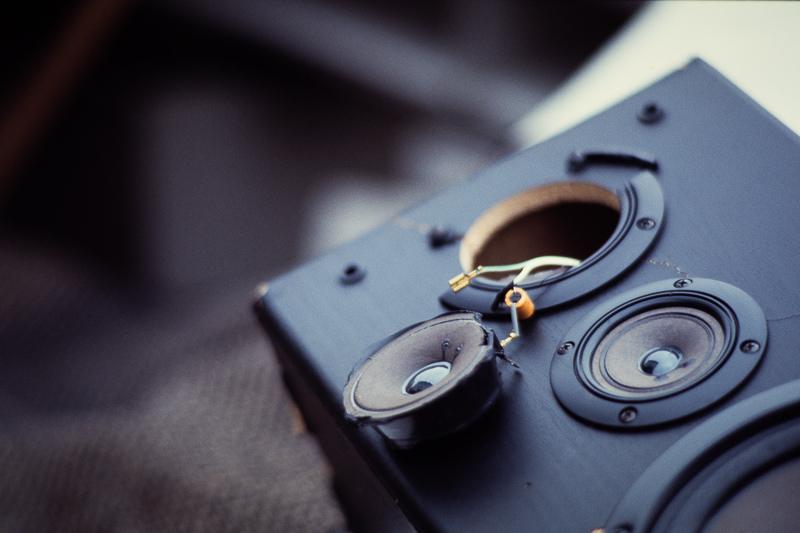





Most of the sample images in this review can be found in full resolution here.
Contents
Specifications / Version History
Nikon only made one 105mm 1.8 lens so far and all of them are of the Ai-S standard, so we don’t have to deal with different versions here. The full specifications of this Nikon Nikkor Ai-S 105mm 1.8 are:
- Diameter: 80 mm
- Length: 93 mm
- Weight: 564g (measured, without caps)
- Field of view: 23.2° (diagonally)
- Filter Diameter: 62 mm
- Number of Aperture Blades: 9 (straight)
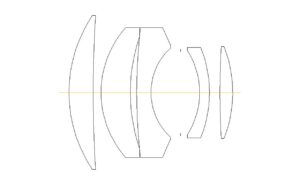
- Elements/Groups: 5/5
- Close Focusing Distance: 1.0 m
- Maximum Magnification: 1:7.4 (measured)
- Mount: Nikon F
buy from ebay.com | ebay.de (advertisement/affiliate links) starting around $400
History
If you want to know more about the development and the history of this lens you should first have a look at Nikkor – The Thousand and One Nights – No. 59: Nikon Ai Nikkor 105mm 1.8S.
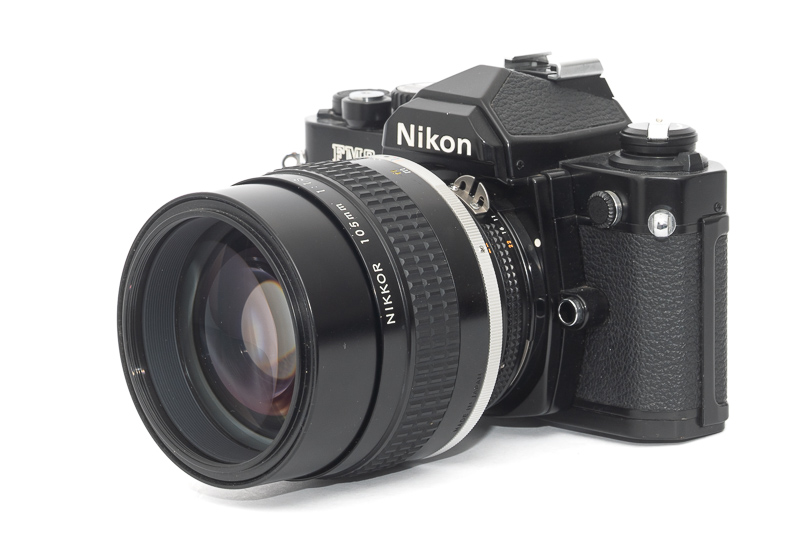
While many manufacturers offered 85mm 1.8, 85mm 1.4 and 135mm 2.0 lenses during the SLR era, fast 105mm lenses were significantly less popular.
When this Nikon Nikkor 105mm 1.8 Ai-s was released in 1981, it was the fastest 105mm lens available. It actually took until 2016 before we saw a faster 105mm lens aimed at photographers and it was again Nikon with the Nikon AF-S 105mm 1.4E.
What is special about this lens is, that it is made of only five elements. If you have a look at Nikon’s history page you will learn, that it was actually the aim to build a lens like this with the lowest element count possible. This is a very different approach compared to most of today’s lenses.
Around 45000 of these have been made from 1981 to 2005, which doesn’t make it a hot seller like the Nikon 105mm 2.5, of which more than 300000 have been made from 1977 to 2005.
Handling / Build Quality
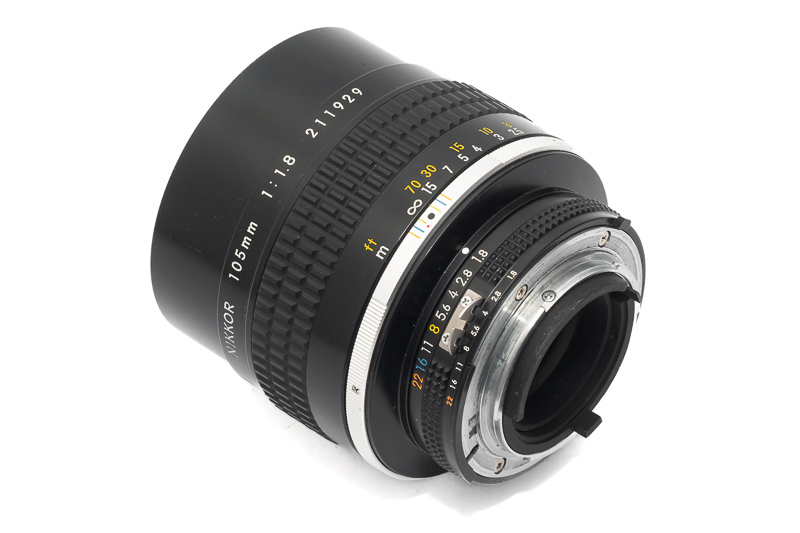
Just like the 105mm 2.5, also this 105mm 1.8 has the typical build quality of Nikon’s Ai(-S) lenses: all metal body with engraved writings, colorful aperture stops and DoF scale.
The focus ring has a very nice and even resistance. It takes around 160° from the minimum focus distance of 1.0 m to infinity.
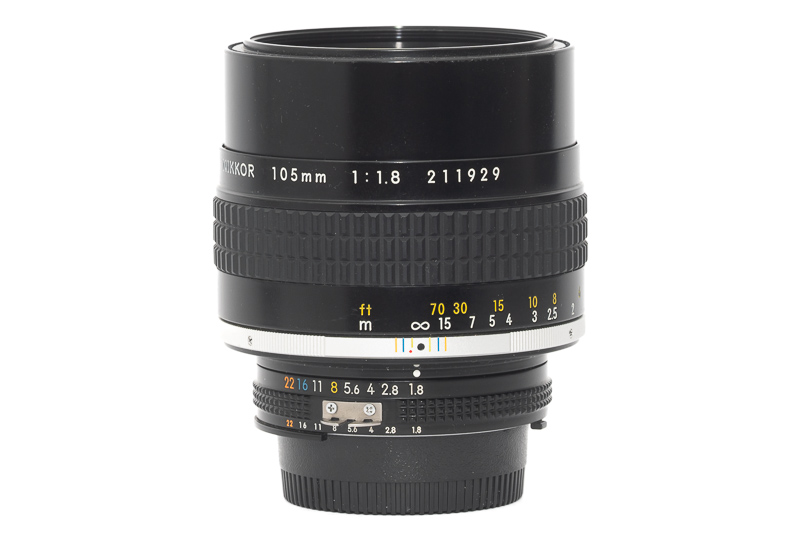
The aperture ring is also typical for Nikon’s lenses: equidistantly spaced full-stop click stops and the aperture ring close to the camera body. The aperture ring can be moved very slightly past the f/1.8 mark, which I am not a huge fan of.
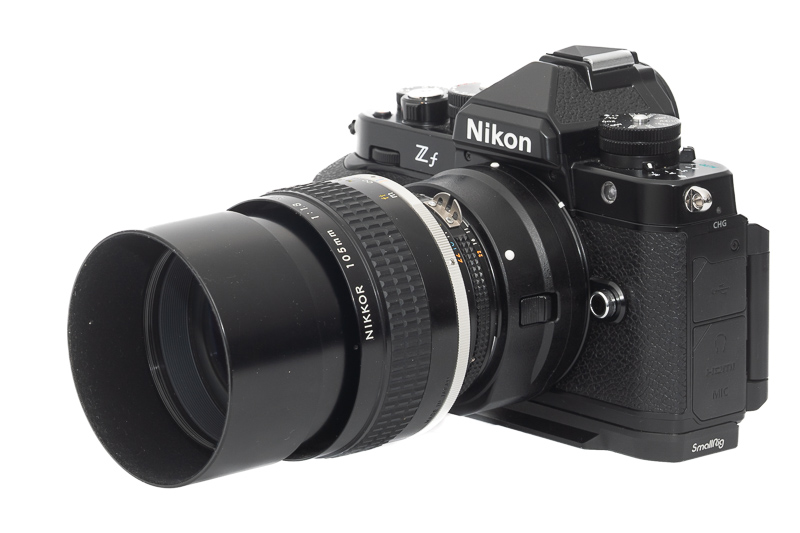
This 105mm 1.8 features a built-in telescopic hood.
Also unlike most of the Nikon lenses from this era, this one doesn’t feature the typical 52 mm filter thread, but a bigger 62 mm filter thread instead.

Vignetting
Light falloff

| f/1.8 | 1.6 EV |
| f/2.8 | 0.5 EV |
| f/4.0 - f/22 | 0.2 EV |
Tele lenses usually don’t have issues with vignetting, but the vignetting figures of this Nikon 105mm 1.8 Ai-s are even a bit lower than I would have expected.
They are slightly lower than those of the Nikon AF-D 105mm 2.0 DC and about the same at shared apertures as those of the Nikon 105mm 2.5 Ai.
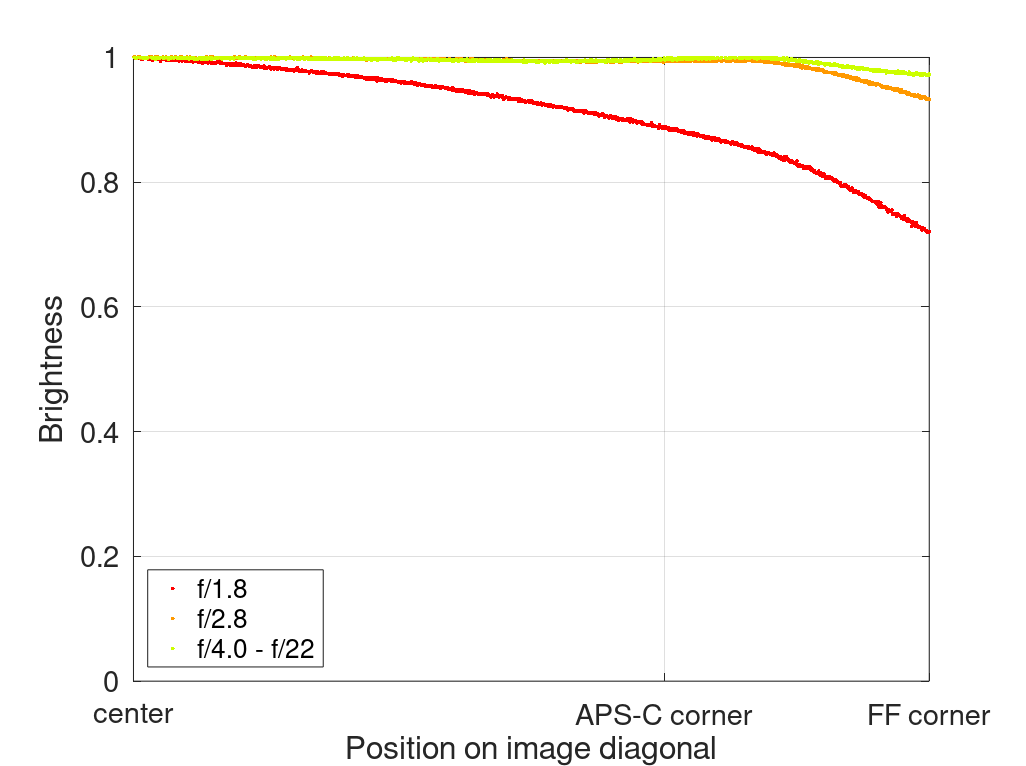
It is recommended to have a look at this article first to get an idea how this brightness graph works.
Optical vignetting
Fast lenses usually show a noticeable amount of optical vignetting, especially so the compact ones. Without going too much into technical details optical vignetting leads to the truncation of light circles towards the borders of the frame.
In the center of the frame almost every lens will render a perfect circle, but only lenses with very low optical vignetting will keep this shape in the corners.
So in the following comparison we move from the center (left) to the extreme corner (right) and see how the shape of the light circle changes.
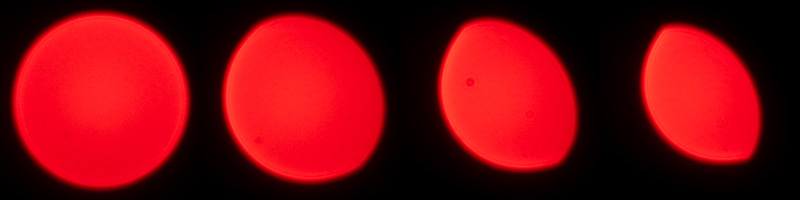

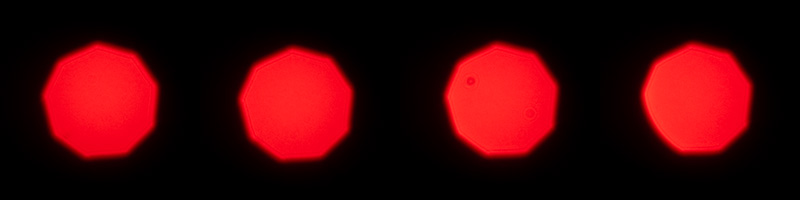

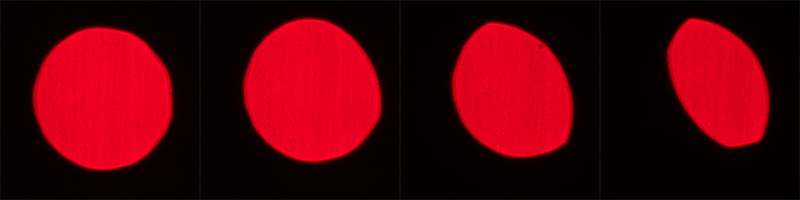
Compared to Nikon’s other 105mm lenses this one shows a very typical performance. At shared apertures the amount of optical vignetting is very similar to the Nikon AF-D 105mm 2.0 DC. The Nikon AF-S 105mm 1.4E still shows a higher amount of optical vignetting at f/2.0, despite already being stopped down by one stop.
Sharpness
Focus shift
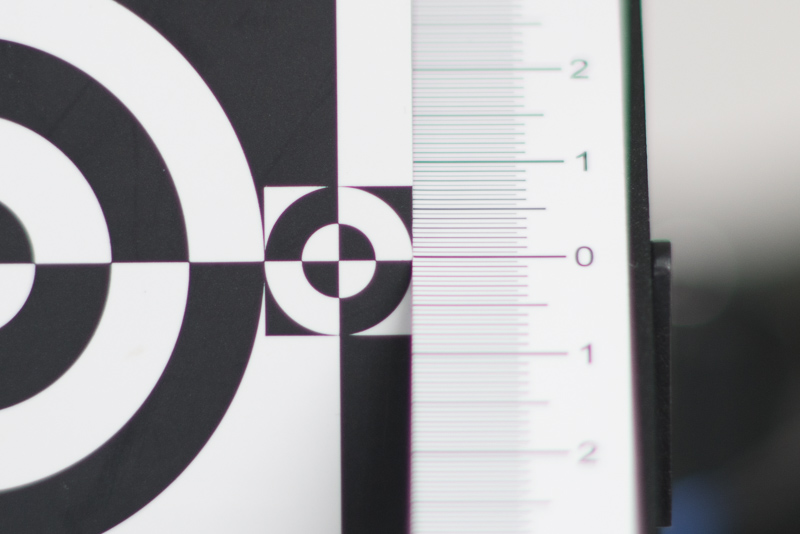
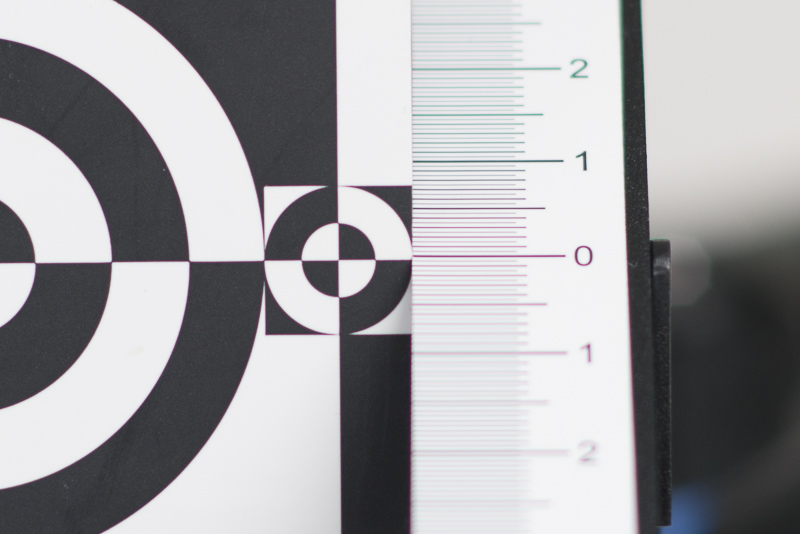

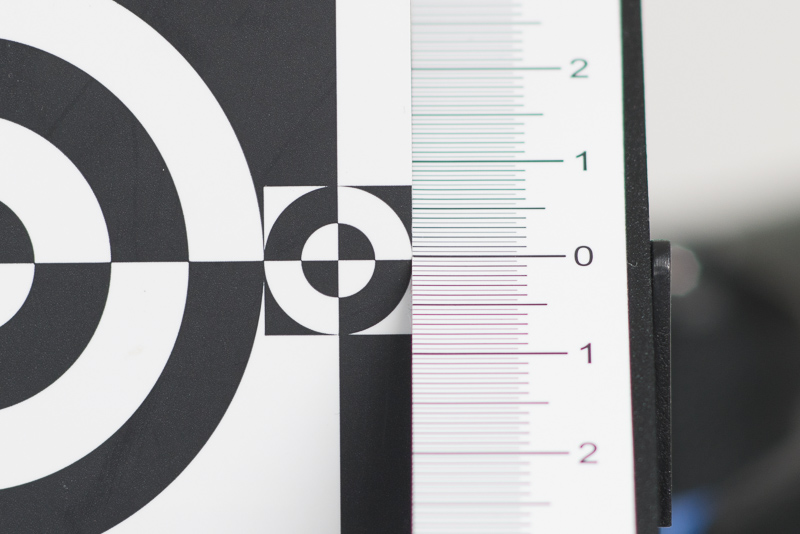
I definitely see more focus shift here than I would like to see from an SLR lens. When you stop down to f/2.8 or f/4.0 your subject may even slightly drop out of the focal plane, at least at closer distances.
We also see a rather high amount of bokeh fringing here, typical for Nikon’s fast lenses of that era.
Infinity (42mp Sony A7rII)
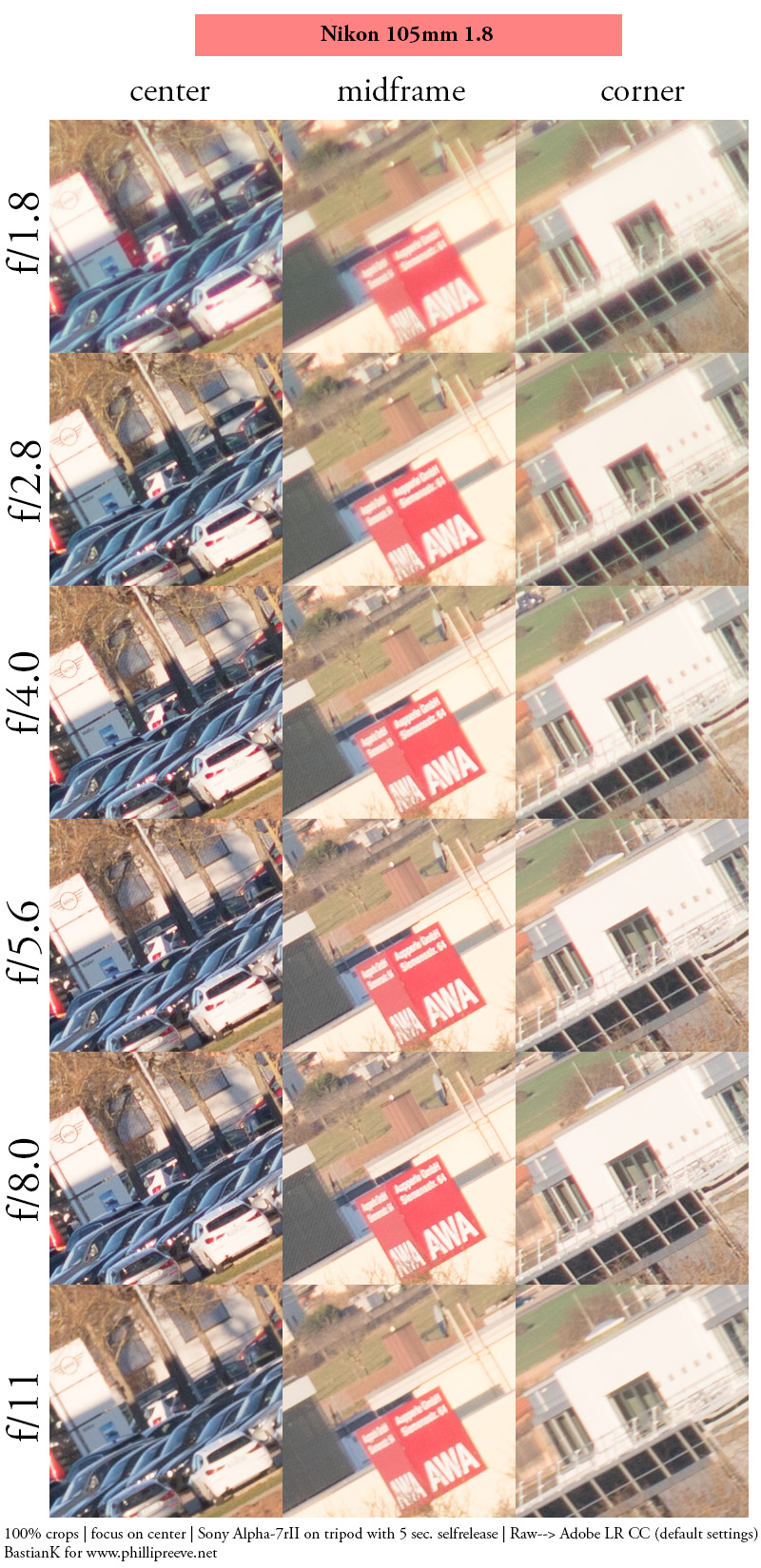

At f/1.8 we see some purple fringing everywhere in the frame and traces of it are still visible at f/2.8. The lens is also rather soft at f/1.8. By f/5.6 the image quality is very good everywhere in the frame and I wouldn’t mind using this lens for demanding applications here, this was already the case for the Nikon AF-D 105mm 2.0 DC-Nikkor – generally these two perform similar at shared apertures. The older Nikon 105mm 2.5 Ai better be stopped down to f/11 for very good across frame performance.
At f/11 this 105mm 1.8 looks noticeably worse here compared to f/8.0, this might be due to diffraction or heat haze or a mix of both.
Portrait 2.6 m (42mp Sony A7rII)
For portraiture it isn’t so important how flat the field is, it is more interesting to see what the sharpness is like when focused at different parts of the frame to take field curvature out of the equation.
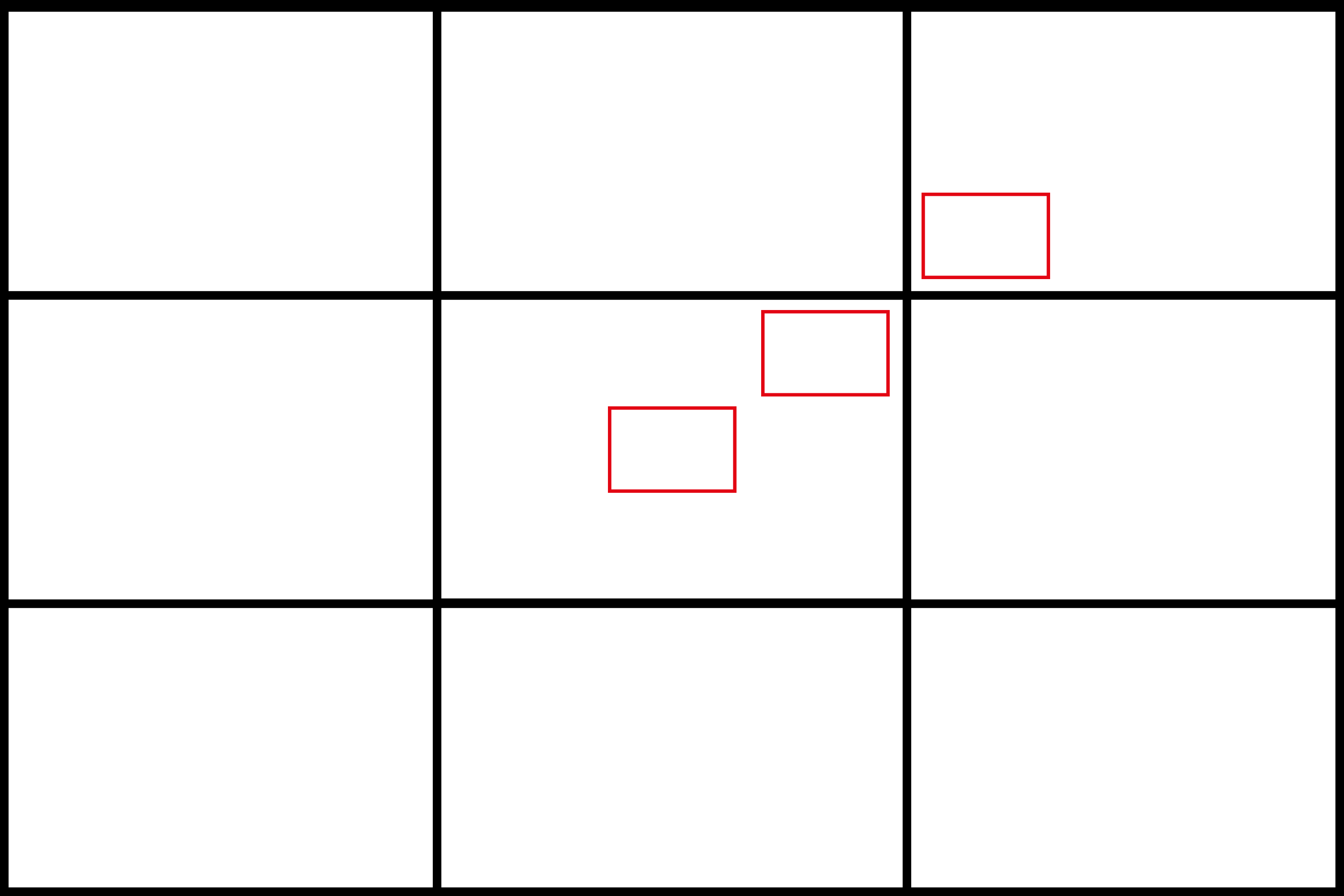
We will be looking at 100% crops from the 42mp Sony A7rII.
f/1.8 <—> f/2.8



At f/1.8 this Nikon 105mm 1.8 is clearly a bit soft, actually similar to the Nikon AF-D 105mm 2.0 DC at f/2.8. Both these lenses look much better when stopped down to f/2.8. The old Nikon 105mm 2.5 Ai looks about as good at f/2.5 as the others do stopped down to f/2.8. The Nikon AF-S 105mm 1.4E – unsurprisingly – looks least as good at f/1.4 as these older lenses do at any aperture setting.
Close 1.0 m, 1:7.4 (42mp Sony A7rII)




The maximum magnification of 1:7.4 is very typical for a short portrait tele and similar to the Nikon AF-S 105mm 1.4E, Nikon AF-D 105mm 2.0 DC and Nikon 105mm 2.5 Ai.
Being a sample unit focus lens, this one performs just as bad as the 105mm 2.5 Ai at closer distances, so stopping down to f/4.0 is needed for really crisp images here.
Flare resistance
Fast short tele lenses rarely do well in this category. The Nikon AF-D 85mm 1.4 for example was pretty bad and the Nikon 105mm 2.5 Ai didn’t do well either, so let’s have a closer look.
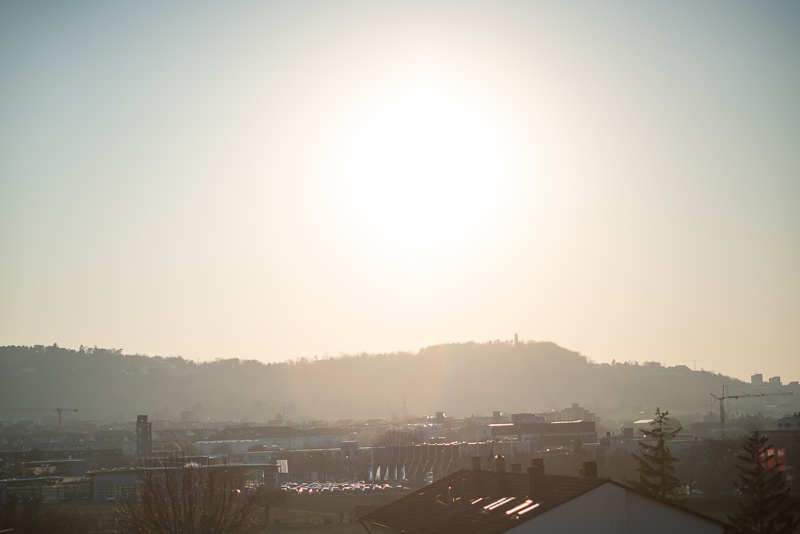
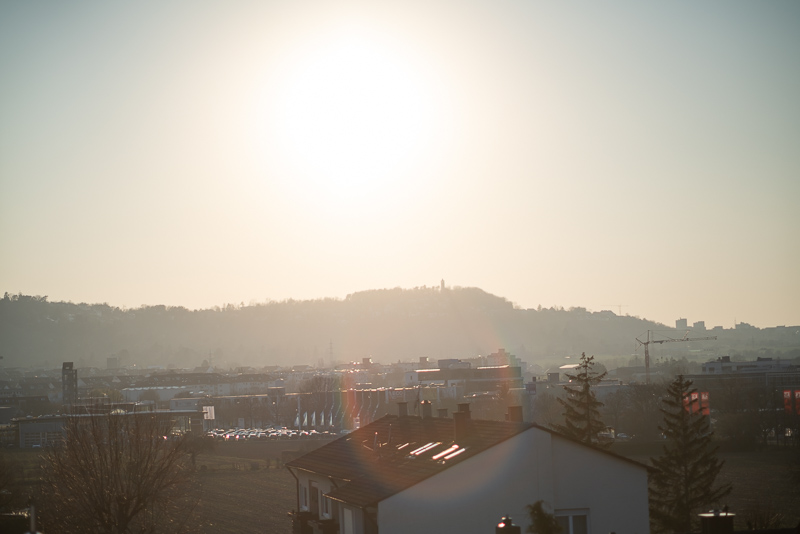
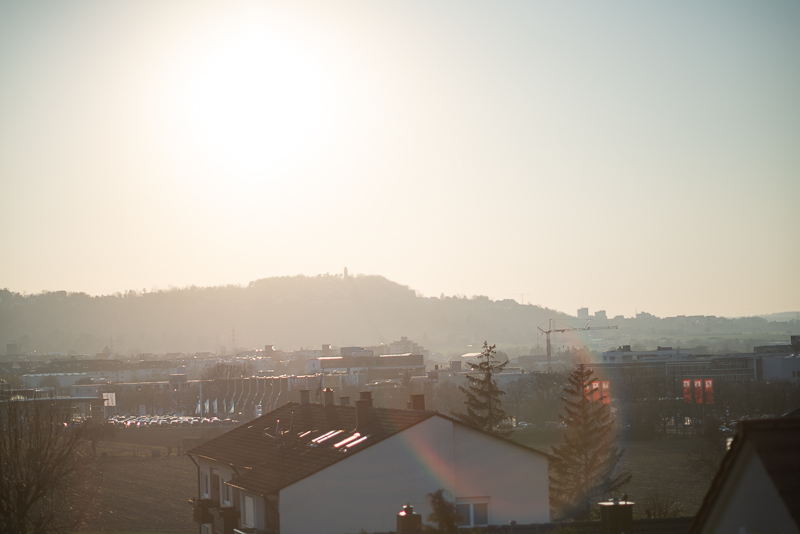
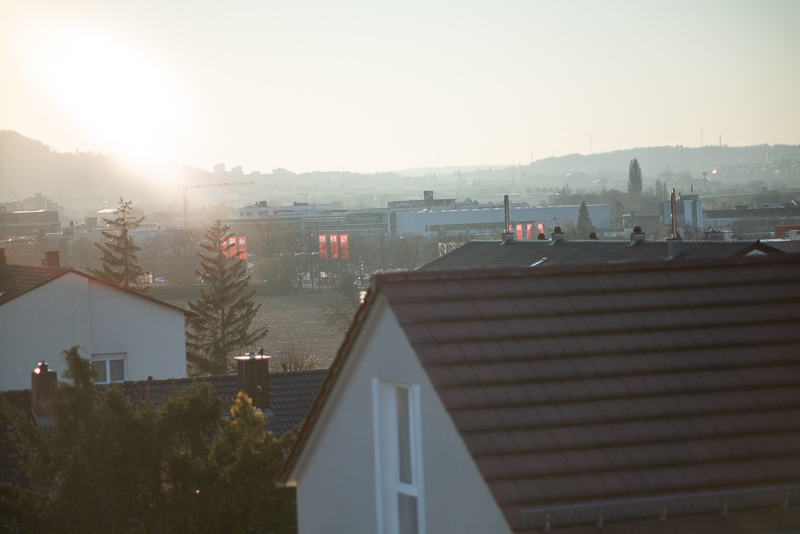
At the maximum aperture with a strong light source in the frame we encounter a strong loss of contrast and also some ring flare artefacts.


The built-in telescopic hood at least somewhat helps with mitigating some of the artefacts.
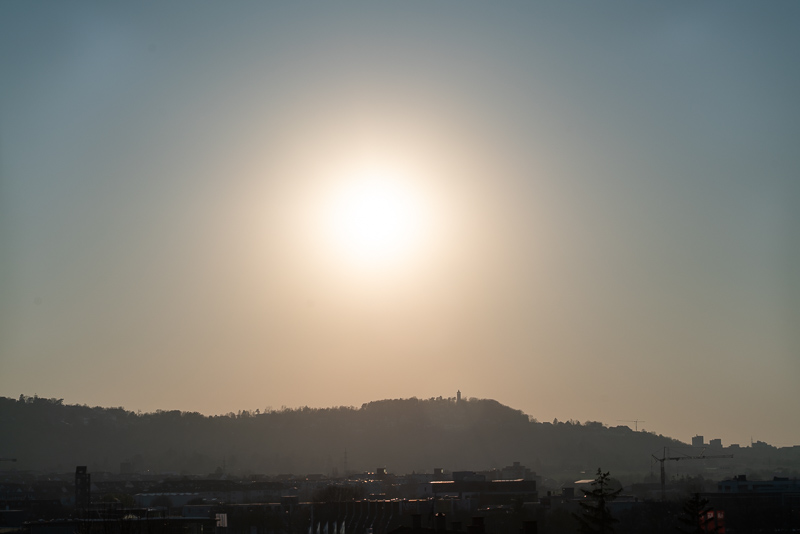
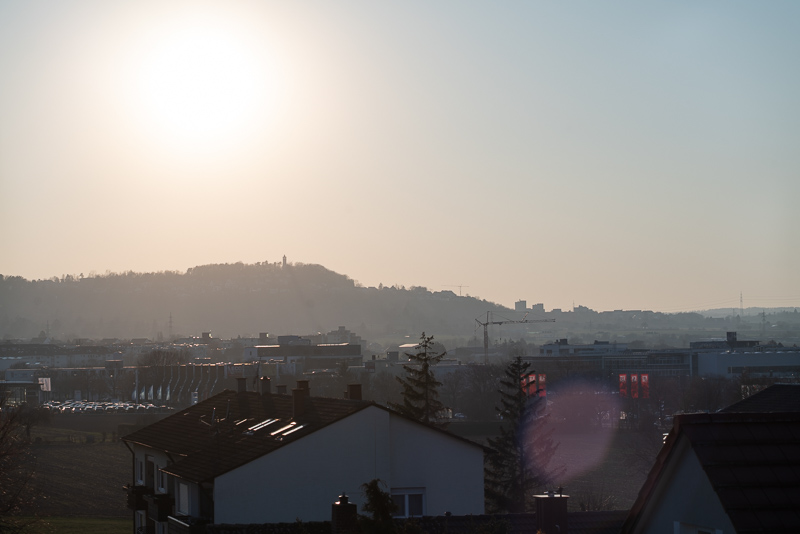
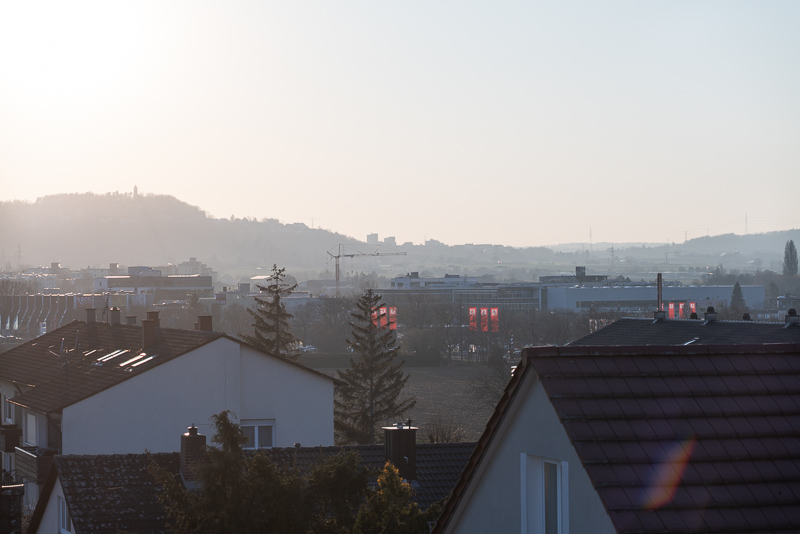
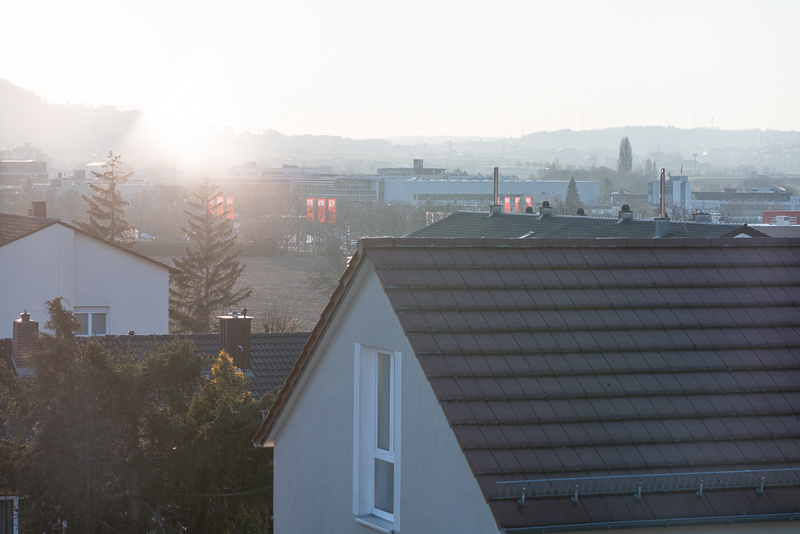
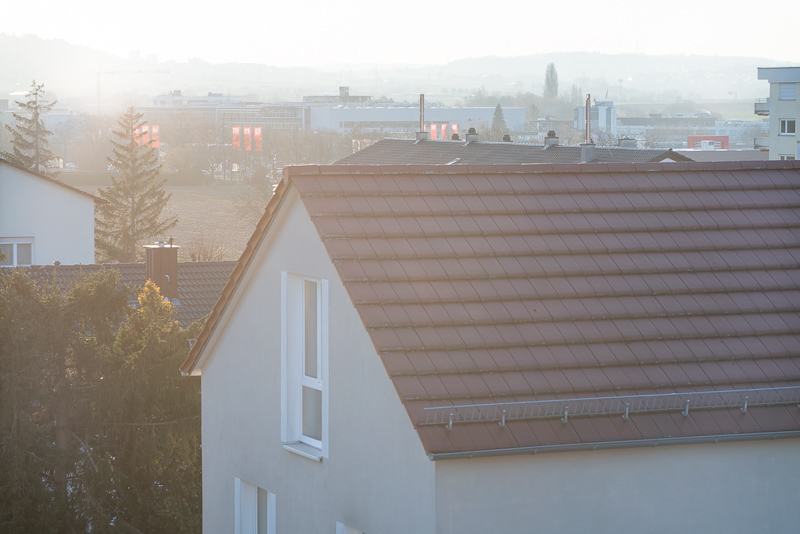

Stopped down there is still a significant loss of contrast due to veiling flare. Some pretty big ghosts can also appear.

A typical performance for a fast tele lens from the early 1980s.
Coma

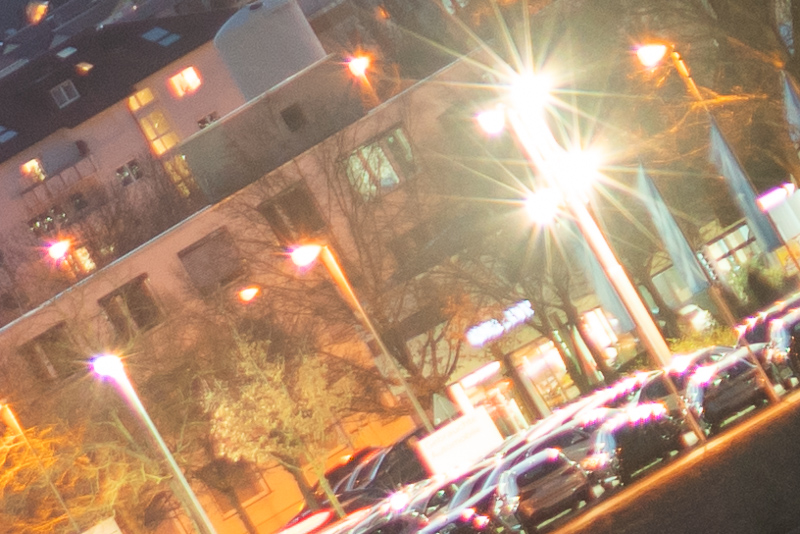
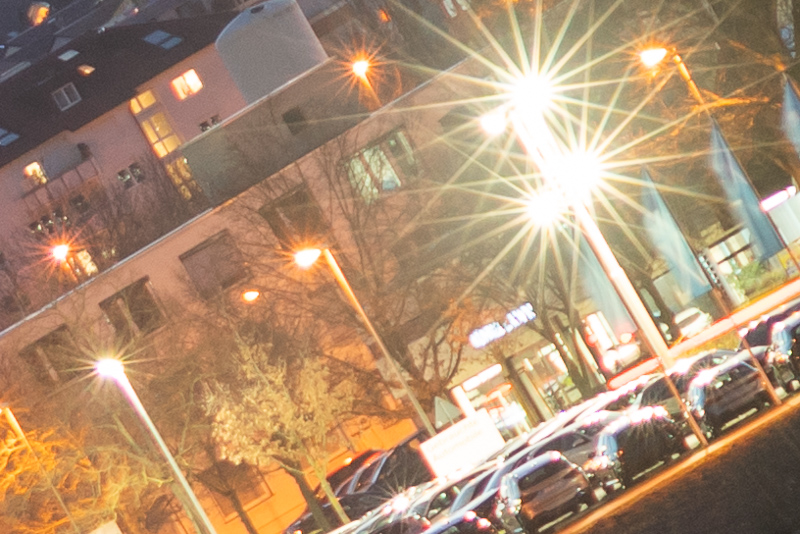

100% crops from extreme corner, focused on center, Sony A7rII
Only five elements are not enough to correct Coma properly in a fast lens like this. Considering this, it doesn’t look all that bad though. At f/1.8 we clearly see some artefacts, stopped down to f/2.8 they are mostly gone.
The Nikon AF-D 105mm 2.0 DC looks a bit better at f/2.0. The Nikon 105mm 2.5 looks similar at f/2.8 and the latest Nikon AF-S 105mm 1.4E looks better at f/1.4 than the others do at their (slower) maximum apertures.
Distortion

The Nikon 105mm 1.8 does not have any field relevant distortion.
Bokeh

I don’t know if Nikon’s engineers put any emphasis on a pleasing bokeh when designing this lens in the late 1970s. Having read its history page, it seems to me other aspects had definitely been considered more important. Either way, let’s have at the bokeh this 105mm 1.8 creates.



At close distances it generally draws a smooth bokeh, but as we have seen in the sharpness close section it leaves some to be desired when it comes to contrast and resolution, so the actual focal plane doesn’t stand out as much as it could given its f/1.8 maxium aperture and 105mm focal length. I also didn’t find focusing particularly easy at closer distances because of that.




At mid distances the image is still a bit soft at f/1.8 – which can be a benefit when taking portraits – but the general bokeh rendering doesn’t knock it ouf of the park for me. It isn’t bad, but also not something special in my opinion.



At longer distances, I think the problems become even more obvious. The bokeh is rather harsh with double edged structures appearing and the high amount of outlining doesn’t help either.
Personally, I find the successor, the Nikon AF 105mm 2.0D DC-Nikkor, rendering a more pleasing bokeh, but the question is of course what you are looking for here and you may come to a different conclusion.
Sunstars
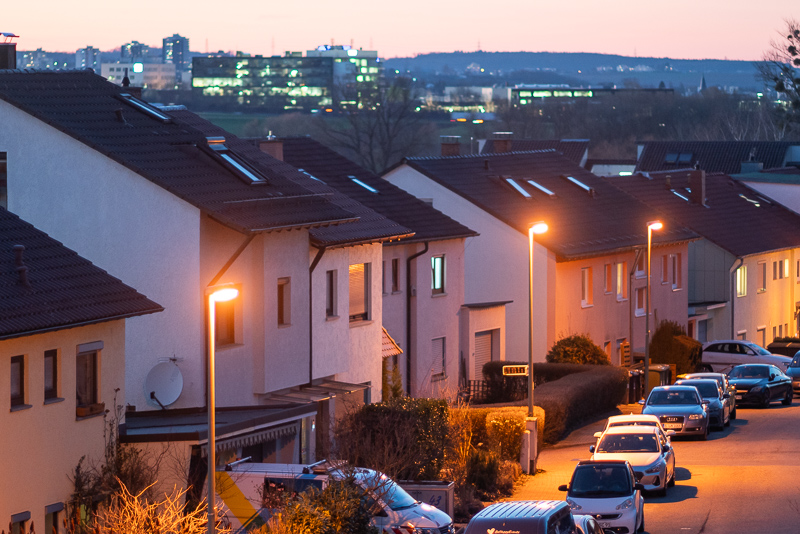

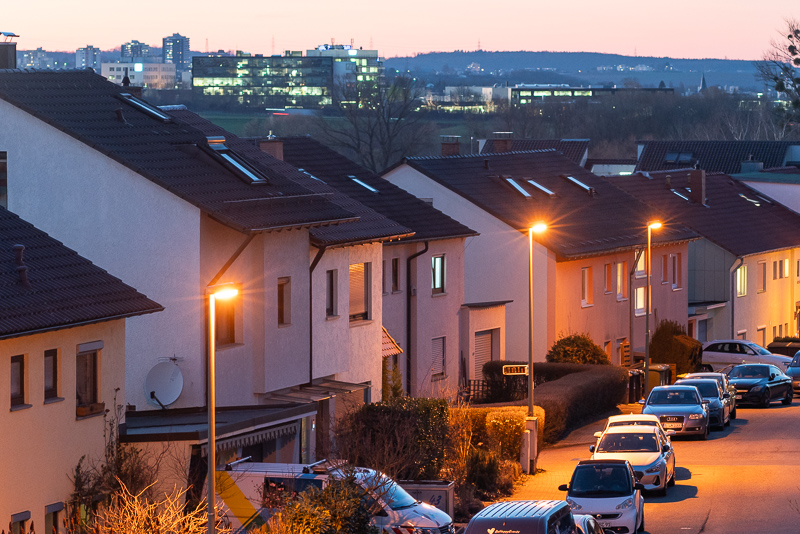
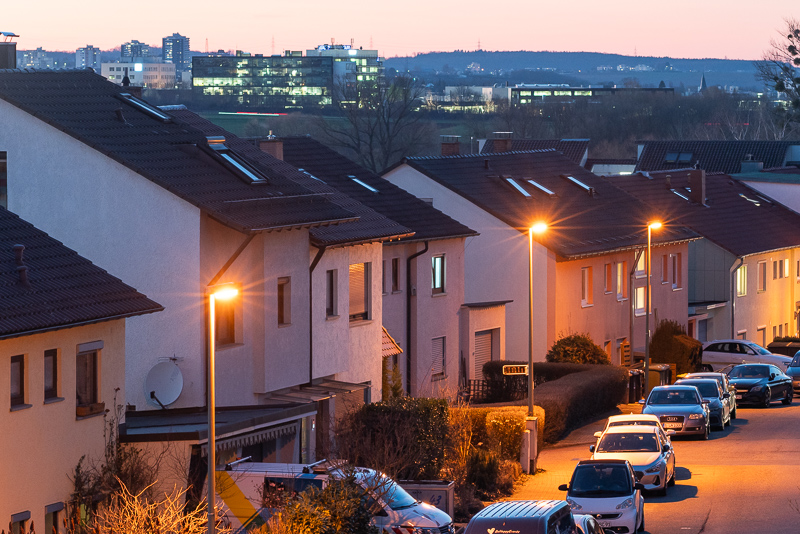
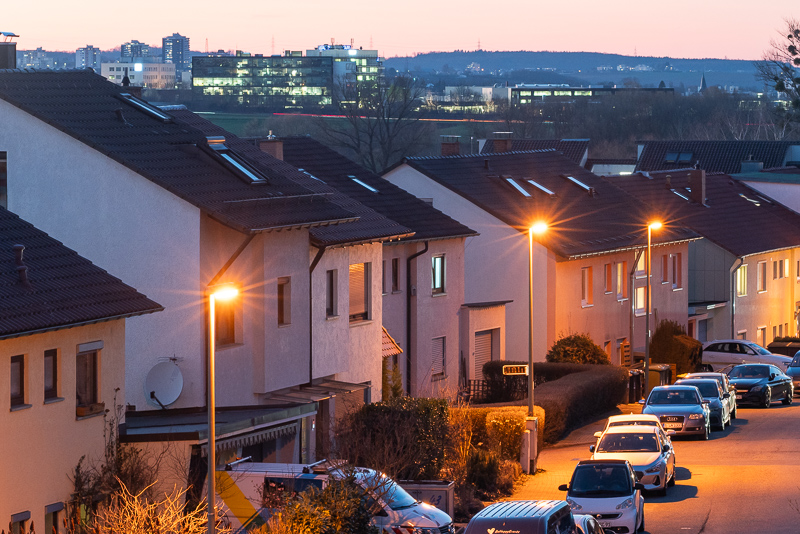

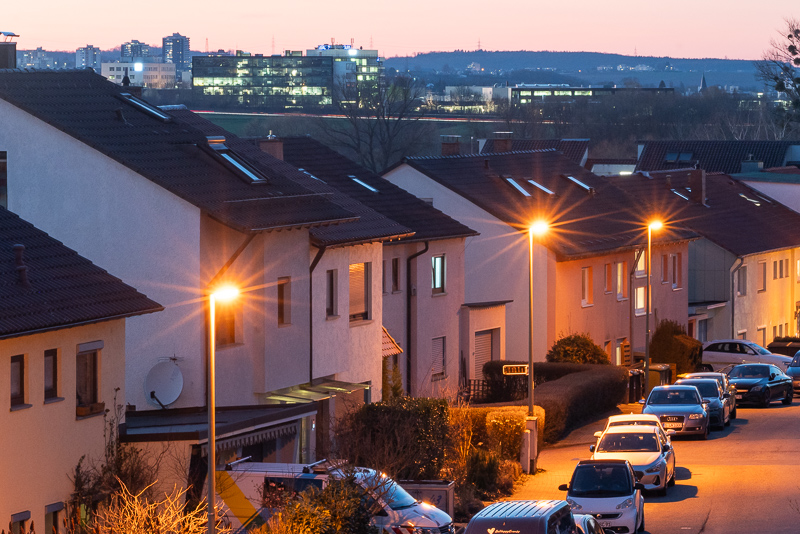
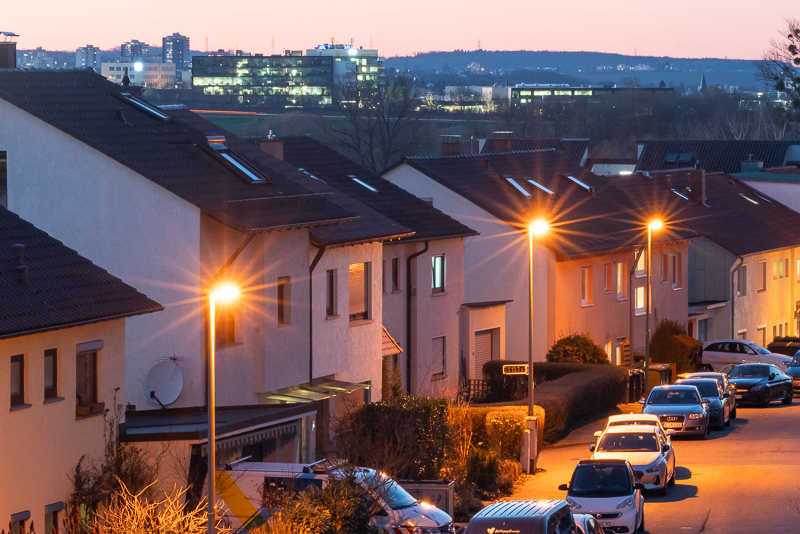
This 105mm 1.8 features an aperture diaphragm made of 9 mostly straight aperture blades that creates distinct sunstars stopped down. I don’t think the alignment of the blades is perfect though, as the rays do not seem to all have the same length and spacing. This is still much better than what I have seen from the Nikon 105mm 2.5 Ai and the Nikon AF-D 105mm 2.0 DC.
If you want to know more about sunstar rendering of different lenses have a look at this article.
Chromatic aberration
Lateral
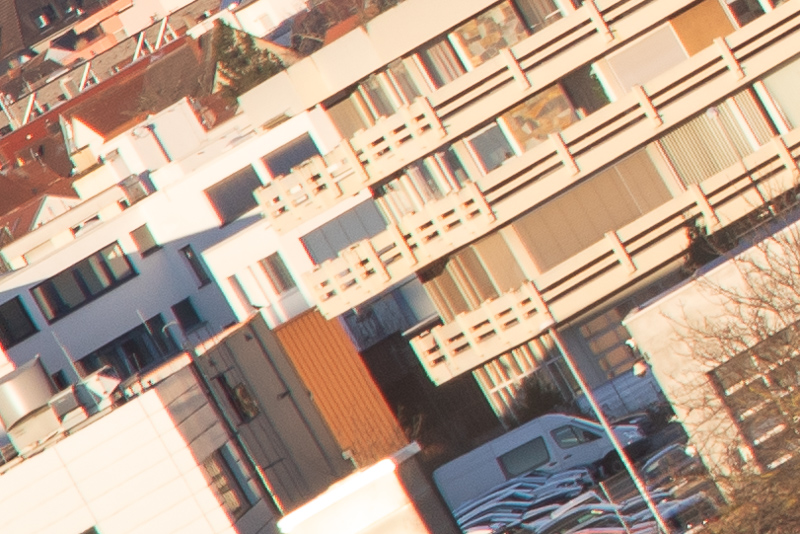
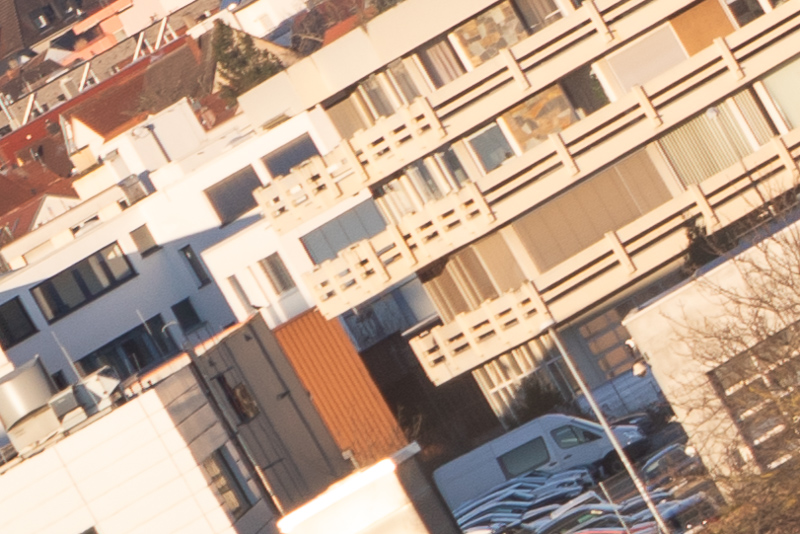
Considering the simple optical design it doesn’t come as a surprise that we can also see a medium amount of lateral CA. The correction in Lightroom is still doing a good job here.
Longitudinal



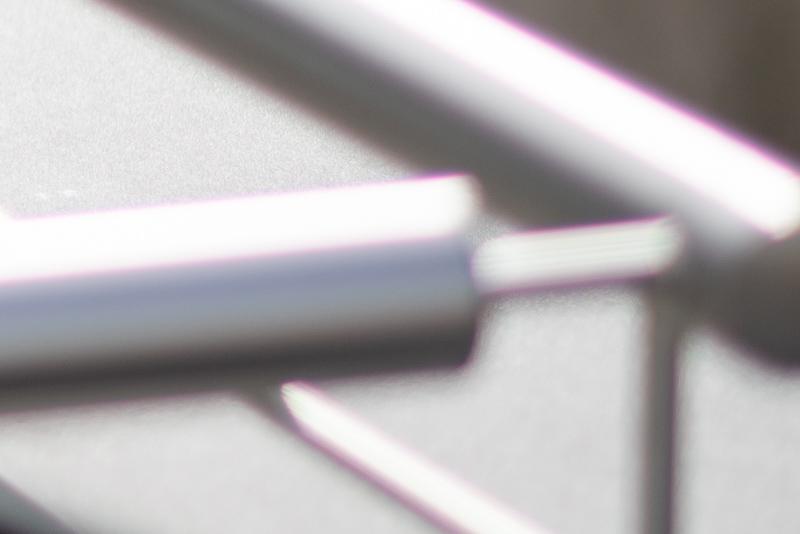
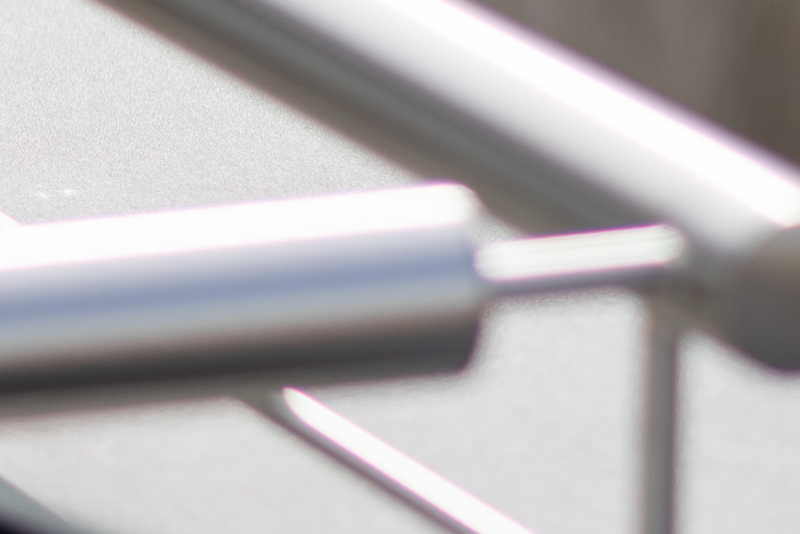
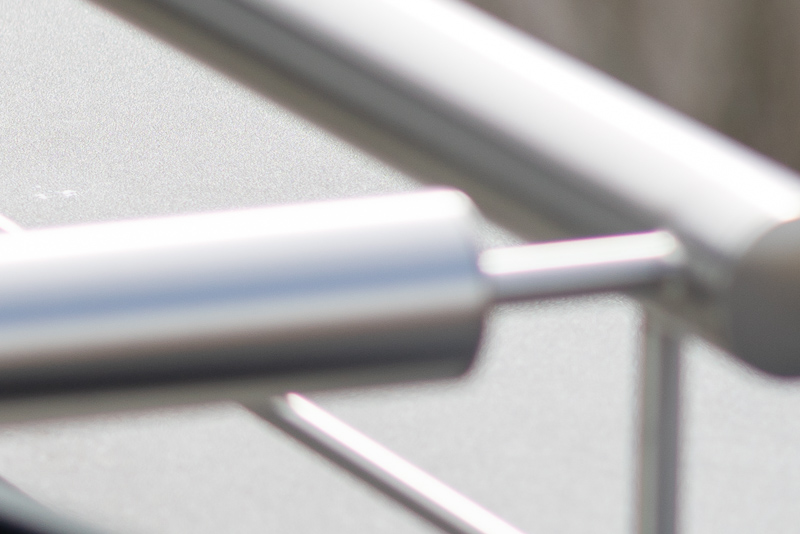
If you already read one of my other reviews of a fast older Nikon lens you probably already know how this will play out: this lens produces strong longitudinal CA at the maximum aperture. Stopping down to f/2.8 is also not enough to get rid of them and even by f/4.0 we still see slight traces of outlining.
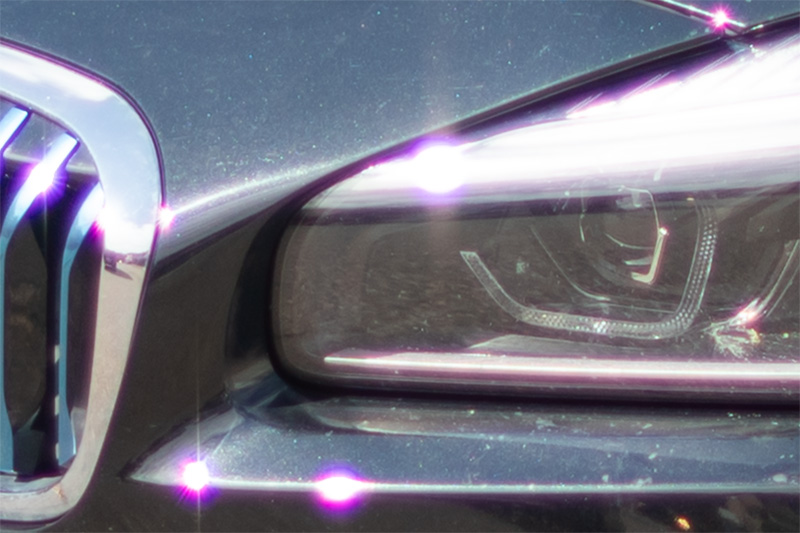
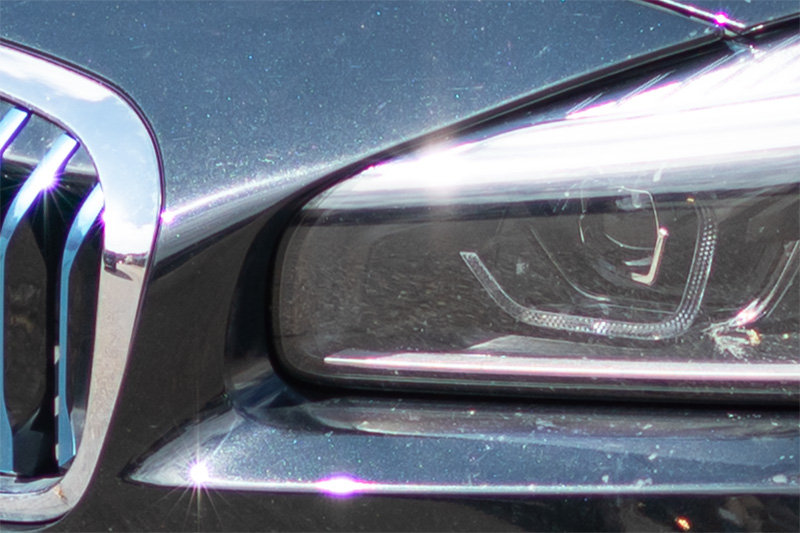

When it comes to purple fringing the situation is the same: rather strong magenta outlining at f/1.8, still some at f/2.8 and mostly (but not completely) gone by f/4.0.
Conclusion
good
|
average
|
not good
|
Among the vintage SLR portrait lenses, this 105mm 1.8 is definitely one of the more exotic options, which is also the reason I was interested in reviewing it. After having done that I have to say, this 105mm 1.8 doesn’t fully convince me.
The first reason for that is the Nikon 105mm 2.5 Ai. At shared apertures they generally perform similar, so it is really the f/1.8 to f/2.5 range that makes the difference. Unfortunately at f/1.8 this 105mm 1.8 doesn’t perform all that great, so quite often I thought it would be better to stop down to f/2.8, for better contrast and resolution, which means I could have used the smaller, lighter and cheaper 105mm 2.5 in the first place.
The second reason is the Nikon AF 105mm 2.0D DC-Nikkor. It can often be found for ~100 bucks more than this 105mm 1.8 and I definitely recommend to invest those 100 bucks. It offers way better image quality at its maximum aperture, nicer bokeh (which even is adjustable thanks to the DC feature) and even offers autofocus on cameras/adapters with a built-in AF motor.
At the end of the day, I don’t think the prices being asked for this 105mm 1.8 are justified by its performance, but rather due to its “unique” parameters.
buy from ebay.com | ebay.de (advertisement/affiliate links) starting around $400
Alternatives
Nikon 105mm 2.5 Ai
Nikon made a lot of these as it was a very popular lens. At shared apertures these two lenses perform very similar, so have a look at this review and see first if you are really happy with the image quality and bokeh of this 105mm 1.8 lens at f/1.8, because if not, the 105mm 2.5 Ai is probably the smarter choice for you.
buy from ebay.com (advertisement/affiliate link) starting at $150
Nikon AF-D 105mm 2.0 DC-Nikkor
Much better image quality at its maximum aperture, interesting “defocus control” feature and autofocus on cameras/adapters with built-in motor. Despite being an AF lens also the MF experience is great. The better alternative to this 105mm 1.8 for a little more money.
buy from ebay.com | ebay.de | B&H (advertisement/affiliate links) starting at $550
There are of course plenty of other portrait lenses in the 85-135mm range available. You can find a few examples of those in our Guide to 85-200mm portrait lenses.
To my knowledge no one else made a 105mm 1.8 lens during the film era. We did review a few slower vintage lenses in the past though, the Minolta MC 100mm 2.5, the Minolta MD 100mm 2.5 and the Olympus OM 100mm 2.0.
Sample Images

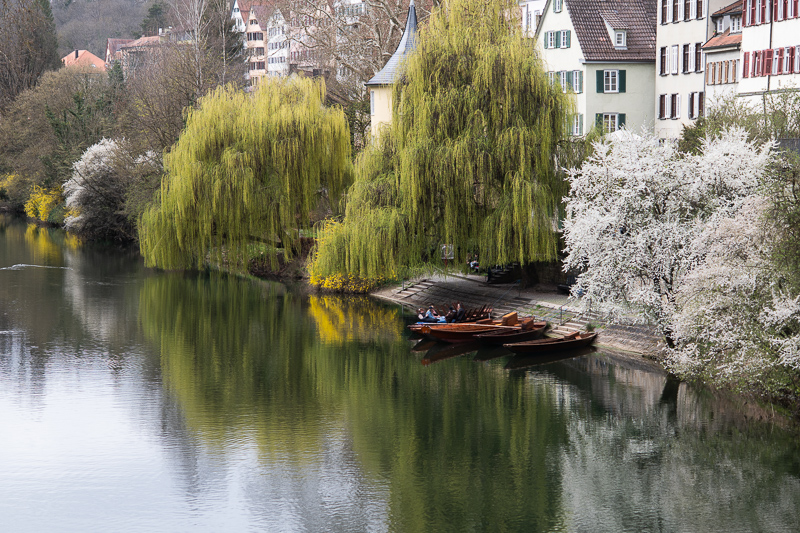
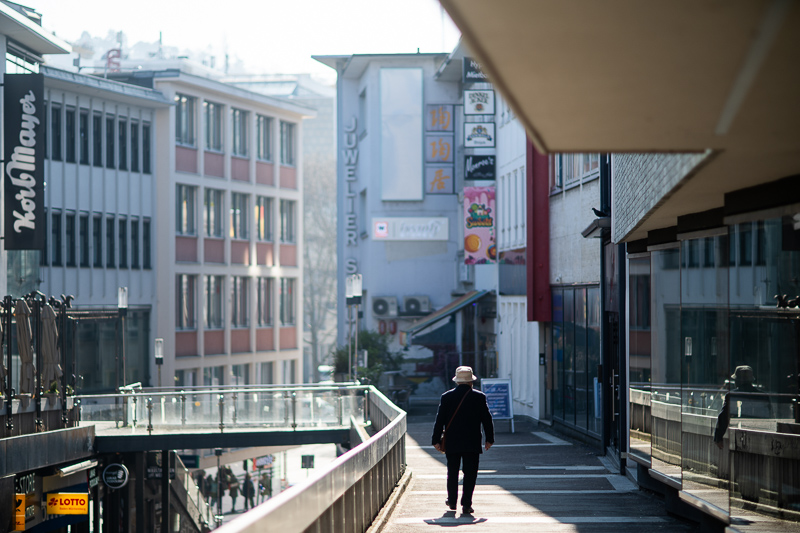
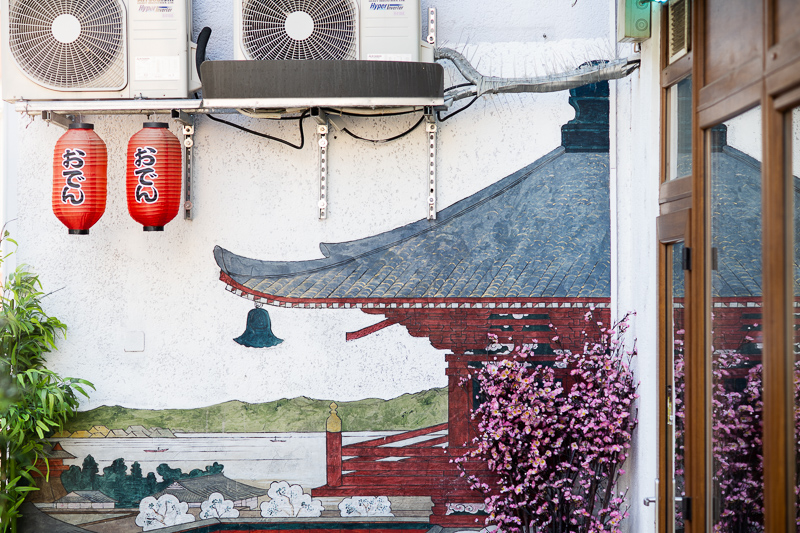



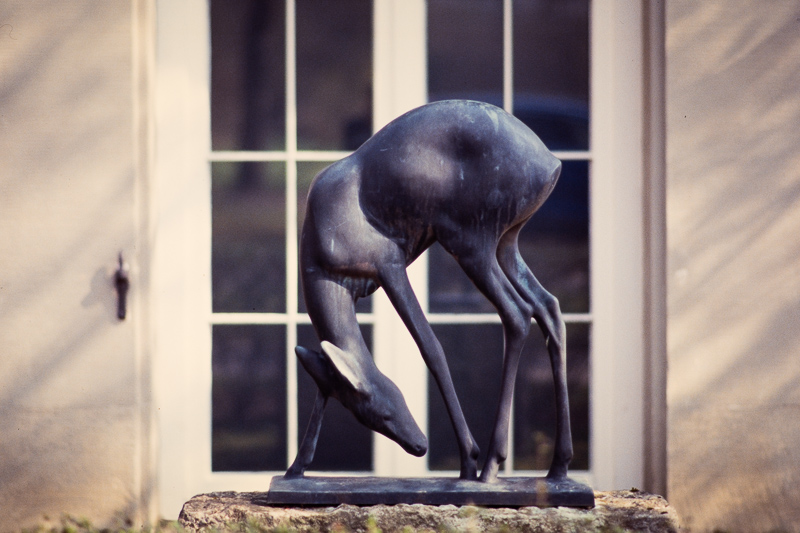
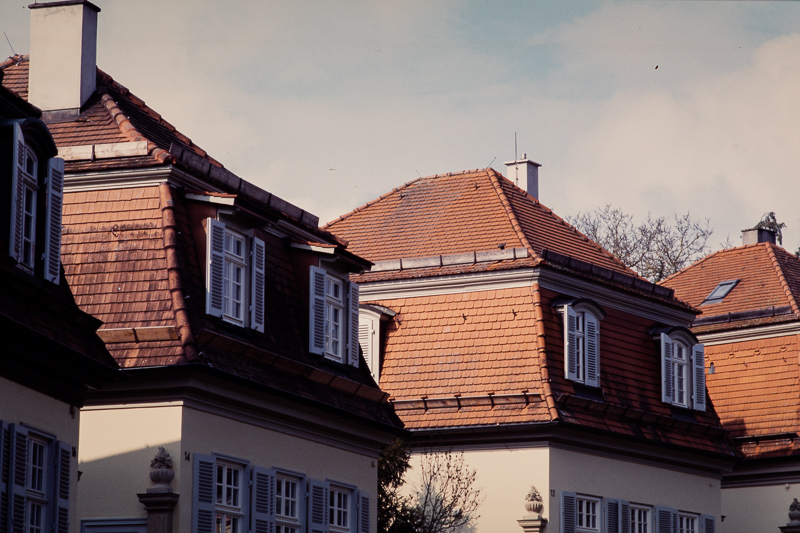


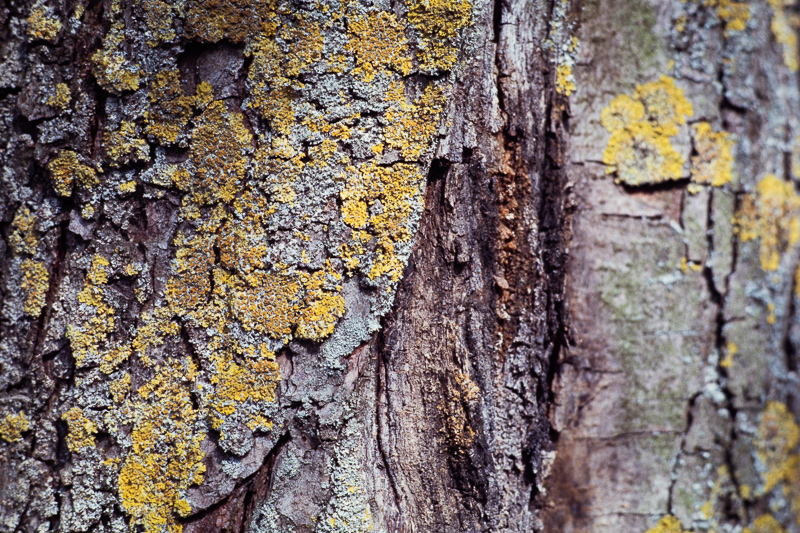
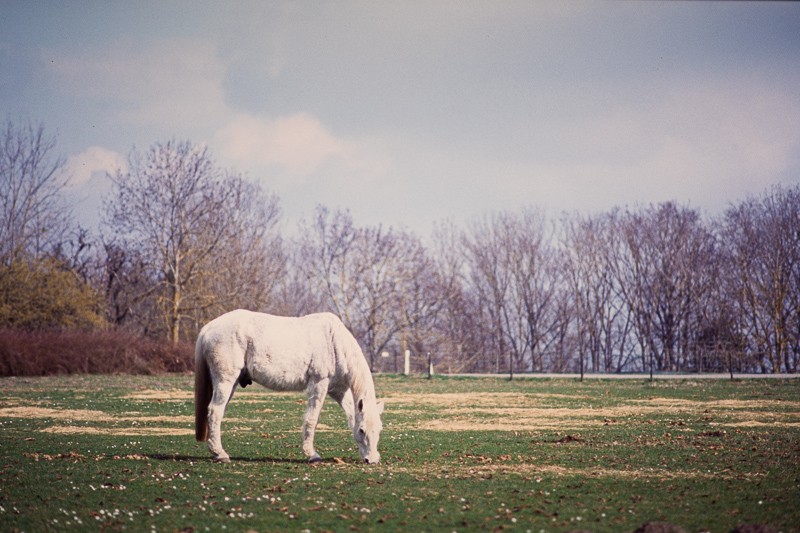
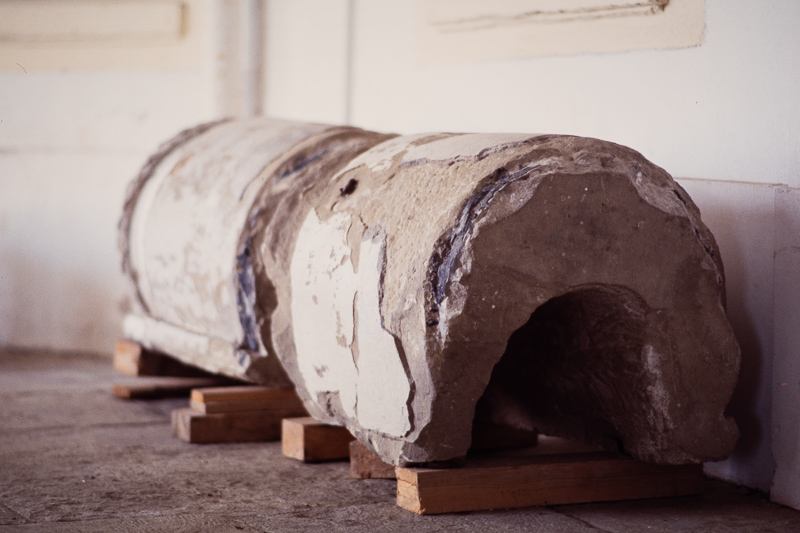
Most of the sample images in this review can be found in full resolution here.
Further Reading
- All Lens Reviews
- Review: Zeiss 28mm 1.4 Otus
- Review: Nikon AF-S 58mm 1.4G
- Review: Nikon AF 85mm 1.4D
- Review: Nikon Ai 200mm 2.0 IF-ED
Support Us
Did you find this article useful or just liked reading it? Treat us to a coffee!

 via Paypal
This site contains advertisement/affiliate links. If you make a purchase using any of the links marked as advertisement/affiliate links, I may receive a small commission at no additional cost to you. This helps support the creation of future content.


Latest posts by BastianK (see all)
- Analogue Adventures – Part 50: What I learned from Shooting Film (so far) - March 18, 2026
- Review: 7Artisans 75mm 1.25 II - March 14, 2026
- Review: Irix 30mm 1.4 Dragonfly - March 7, 2026
You write “ To my knowledge no one else made a 105mm 1.8 lens during the film era”. I think this is only true when you omit the 1983-2005 period (still the film era) from your scope: arrival of AF lead to very interesting lens designs. You mentioned yourself the 105MM 2.0 AF DC, but there was also in 1987 the very good Minolta AF 100 mm f2 (https://www.dyxum.com/lenses/Minolta-AF-100mm-F2_lens73.html). Some of these lenses might still be of some interest today.
You did notice the lenses you mentioned are f/2.0 and not f/1.8, right?
Very nice to see this lens reviewed through your benchmark.
Now I just wait your review of the nFD 100mm f/2.0 😉
Thank you very much for this excellent and very thorough test. I truly enjoyed reading it, and the photographs are outstanding – they show beautifully what this lens is capable of.
What really surprised me is the optical formula behind this Nikon lens. Despite coming from the 1980s, it is clearly rooted in a very classical design approach. Nikon itself describes the lens as a Xenotar-type construction. I initially assumed a relation to the Ernostar family, but the more symmetrical Xenotar lineage fits well here. While Xenotar designs are often associated with cemented groups, this Nikkor achieves its performance with a 5 elements / 5 groups layout.
Seeing such a historically grounded optical concept deliver this level of performance in a Nikon lens of that era is truly fascinating. Thank you again for the test and for sharing these impressive images.
Another impressive performance with a simple 5/5 formula is the famous 180mm f/2.8 ED ais
FujiFilm used the Biometar/Xenotar formula as well for the M42 and X-mount SLR lenses and the early fixed lens rangefinders: Fujica 35 M and ML. The last in the classic 5 element 4 groups design and not faster than 2.8. The X-Fujinon DM EBC 55mm 1.6 reversed Xenotar type 5/5 is also an exception for its speed. The non-EBC before it has the same optical design. The M42 mount one probably as well. The later X-Fujinon 50mm 1.9 has a similar optical design, the 50mm 1.6 is more a Planar type.
Thanks for sharing this! Just a small note regarding the optical construction of the 50mm f/1.9.
According to the JAPB / Fuji lens data, the X-Fujinon 50mm f/1.9 (FM/DM) is listed as having 4 elements in 4 groups, not 5 elements.
You can find this specification here:
👉 https://www.japb.net/fuji/x-fujinon_50mm_f19_fm/
That said, it’s entirely possible that different optical versions of a 50/1.9 existed over time or across mounts/rebrands. There is, for example, a lens cross-section published on Spiral M42 that shows a 5-element design, which could point to a variant or to some mixing of information between versions:
👉 https://spiral-m42.blogspot.com/
So at the moment, the safest conclusion seems to be:
X-Fujinon 50/1.9 (FM/DM): documented as 4 elements / 4 groups
Other variants or predecessors: possibly different optical formulas.
Thanks for sharing this! Just a small note regarding the optical construction of the **50mm f/1.9**.
According to the JAPB / Fuji lens data, the X-Fujinon 50mm f/1.9 (FM/DM) is listed as having 4 elements in 4 groups, not 5 elements. You can find this specification here: https://japb.net/gear/gear-review-index/ds_x-fujinon_50f19/
That said, it’s entirely possible that different optical versions of a 50/1.9 existed over time.
Sorry! Here is the full link: https://spiral-m42.blogspot.com/2015/12/fuji-photo-film-x-fujinon-50mm-f19.html
Which shows the correct lens diagram. Both links you gave are not correct on the X-Yashinon DM EBC 55mm 1.6 though. Here it is not the place to discuss that topic but there is good thread here: https://www.dpreview.com/forums/threads/x-fujinon-55mm-1-6-dm-ebc-optical-diagram-transferred-from-another-thread.4743157/ It would be a good thing for web info if there was less copying of data and a bit more hands on research before publishing anything. BTW, the reason why I like to read the articles here.