Introduction
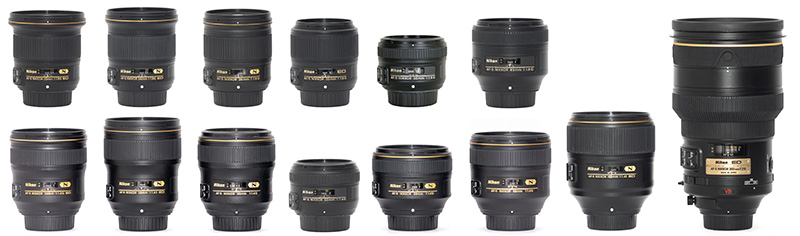
From 2004 to 2018 Nikon produced 14 different AF-S primes from 20 to 200mm for fullframe with maximum apertures ranging from f/1.4 to f/2.0. Among those the “Gold Ring” primes were the highlight of the F-mount lens lineup, mostly aimed at professional photographers, who were not satisfied by the light gathering capabilities of the f/2.8 zooms. The f/1.8 primes on the other hand were aimed at consumers looking for more affordable options. Some of these lenses can be found at very attractive prices on the used market today, so after having used all of them personally, I thought it was time to give you this overview.
History
2007 was a big year for Nikon, as they released the D3 and D700 – their first digital fullframe SLRs. The release of those also meant there was suddenly a higher demand for capable fullframe lenses.
Nikon released their first generation of (not overly reliable) AF-S lenses in 1999. So they had their “f/2.8 Trinity” (at that time the 17-35mm 2.8, 28-70mm 2.8 and 80-200mm 2.8) ready for the release of the D1 (with APS-C sized sensor) in 1999 and by 2007 already the second generation (14-24mm 2.8, 24-70mm 2.8 and 70-200mm 2.8 VR) was available, but things did not look as rosy for prime lenses.
Fact is: by 2007 not a single prime lens shorter than 200mm (and that was the expensive and huge Nikon AF-S 200mm 2.0G VRI) had been updated to the AF-S standard.
In 2008 Nikon released the Nikon AF-S 50mm 1.4G. It is more of a low cost lens and neither features some of the optical treats of these other f/1.4 primes, nor their build quality.
Then in January 2010, things finally took a turn for the better with the release of the Nikon AF-S 24mm 1.4G. Later that same year the Nikon AF-S 35mm 1.4G and the Nikon AF-S 85mm 1.4G followed. 2013 saw the release of the Nikon AF-S 58mm 1.4G and the release of the Nikon AF-S 105mm 1.4E in 2016 and the Nikon AF-S 28mm 1.4E in 2017 marked the completion of the lineup before the first Z-mount cameras hit the market in 2018.
Nikon was well aware that not everyone was able to afford those fancy f/1.4 lenses, so they also created a line up of (usually) more affordable f/1.8 lenses. In most cases these were released after the f/1.4 lenses of the same focal length. The first one was the 50mm 1.8G in 2011, the 28mm 1.8G and 85mm 1.8G followed in 2012, the 20mm 1.8G and 35mm 1.8G in 2014 and the last one to be released was the 24mm 1.8G in 2015.
If you are a Nikon Z-mount user all these lenses work flawlessly with the FTZ adapters. If you are an E-mount user they work with little limitations via the Monster LA-FE1/2 adapters.
Specifications
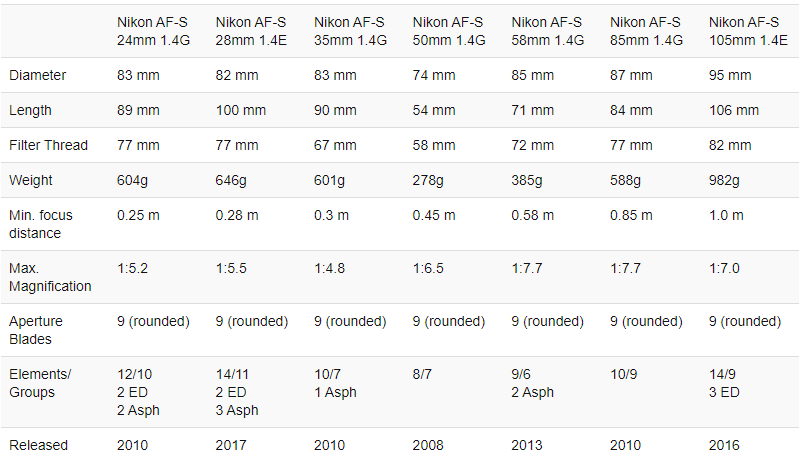


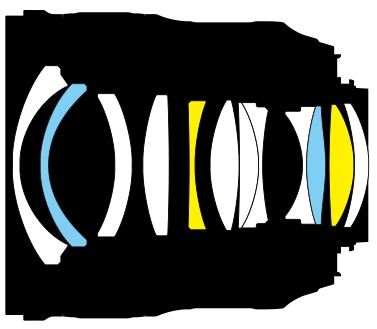

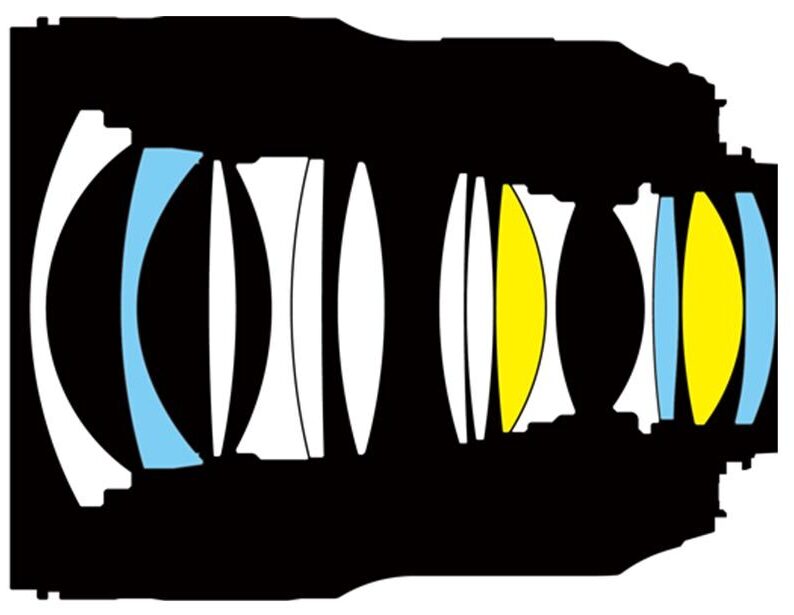
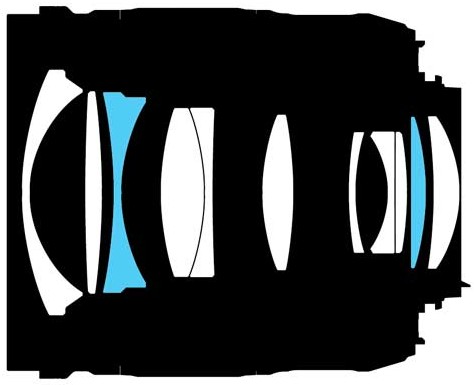

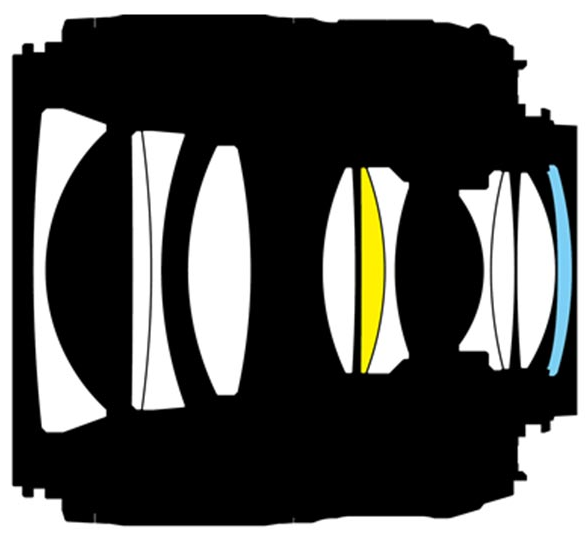


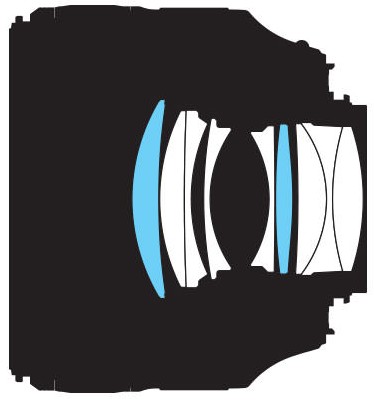
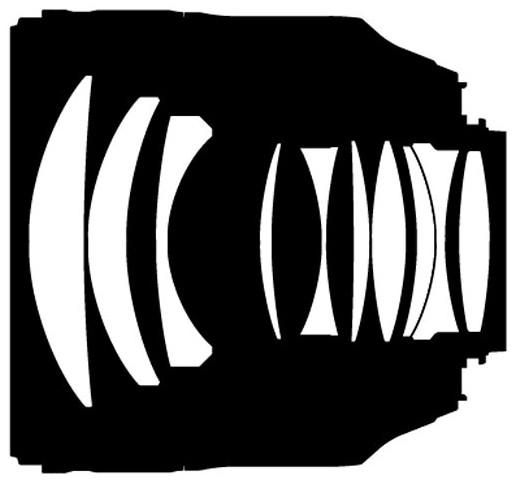

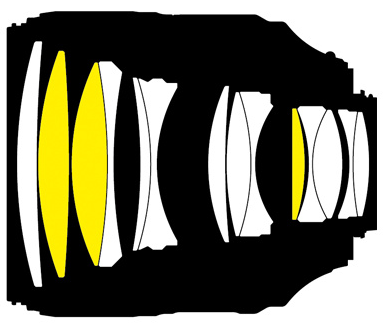
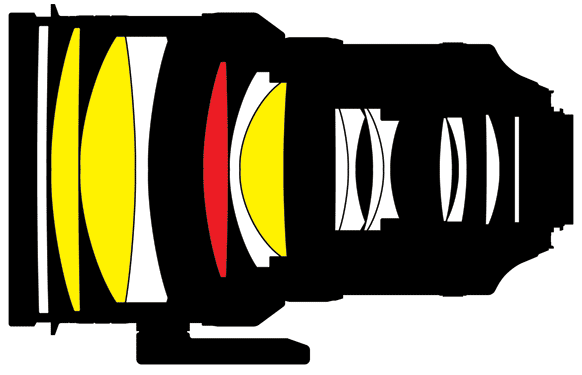
We can see a few interesting things looking at these diagrams. Generally the lenses became more complex over time. Looking at the 50mm and 35mm lenses, the f/1.8 lenses – that have been released later – actually feature more complex designs than their f/1.4 counterparts. And also the 105mm 1.4 (2016) features a way more complex design than the 85mm 1.4 (2010).

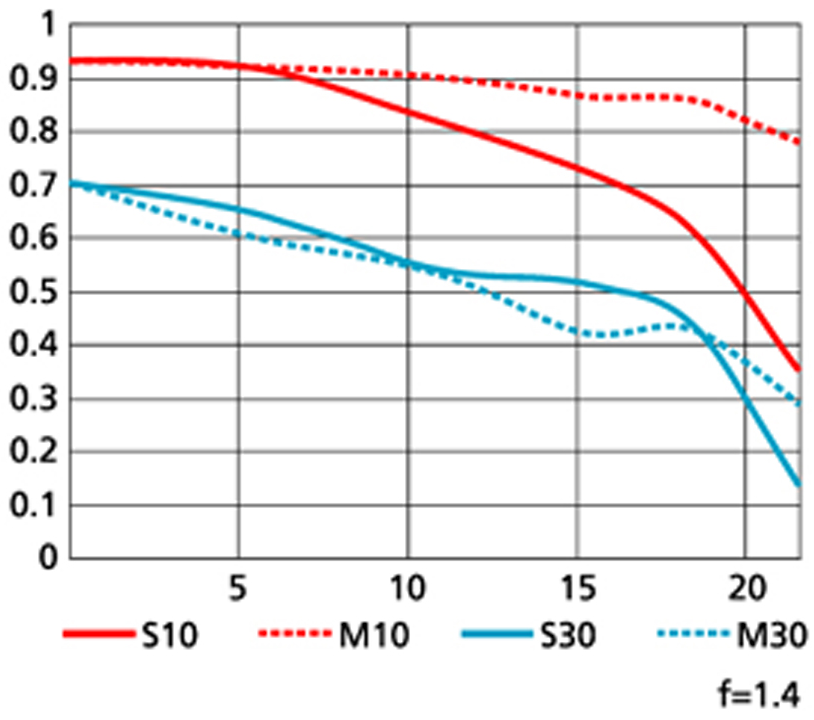

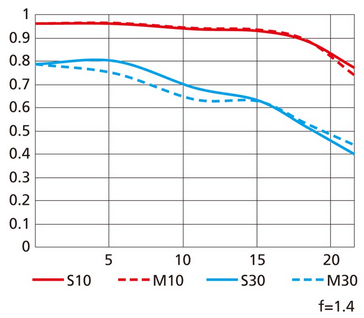
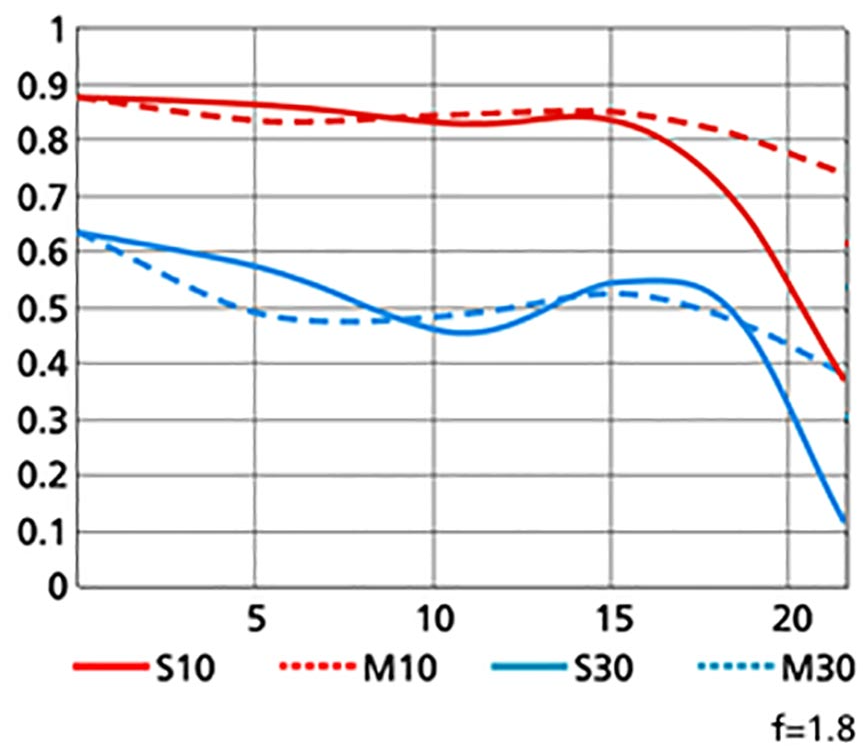

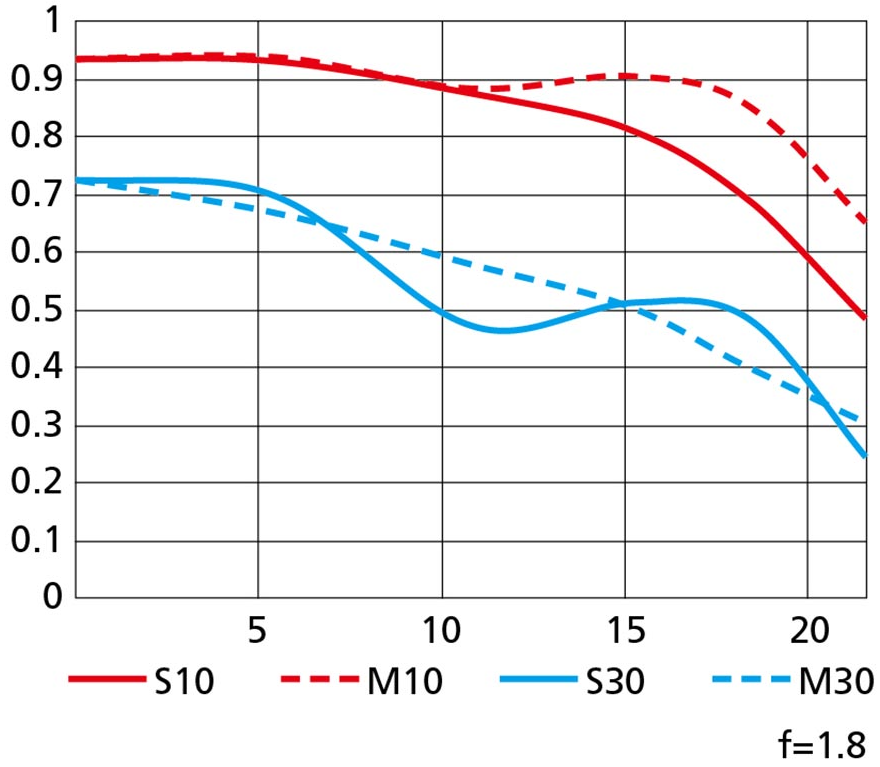

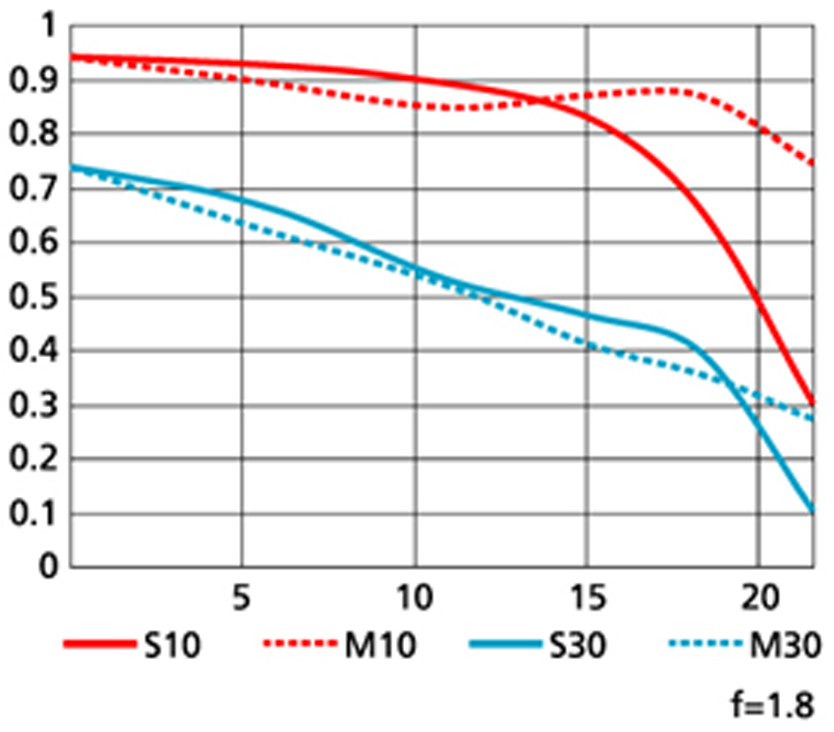
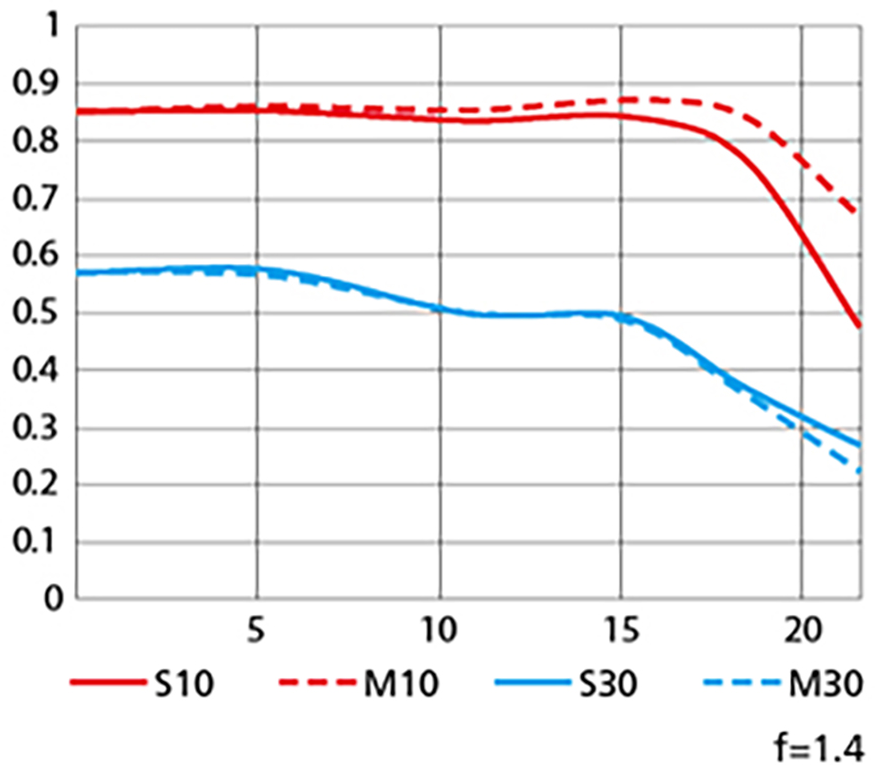

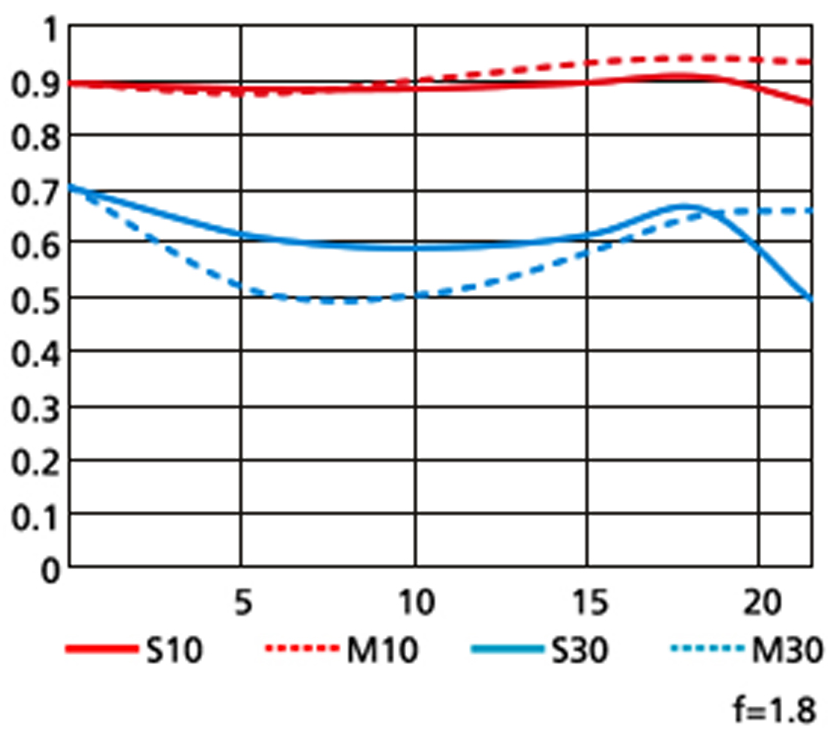
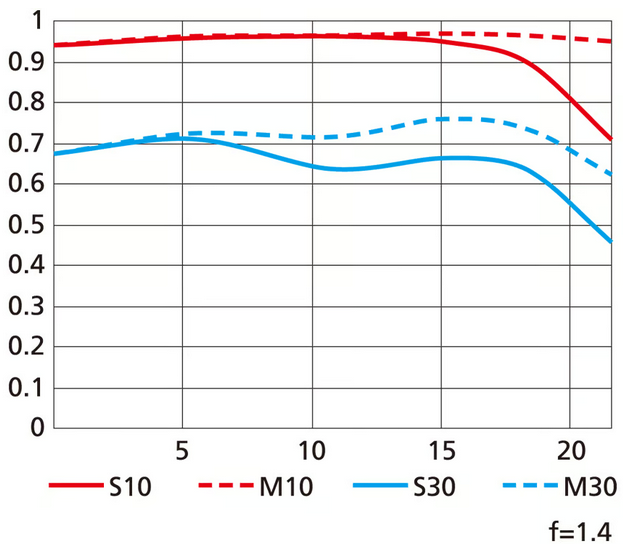
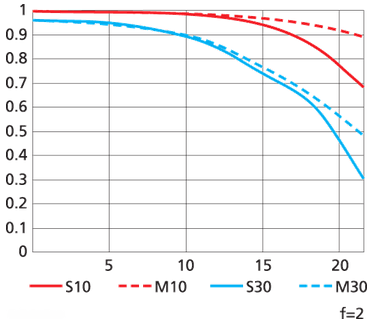
Looking at the MTF graphs we see how the more complex designs also translated into higher performance. Some of the earlier lenses cannot exactly be described as high performance lenses, especially the 50mm 1.4G but also the 35mm 1.4G. In both cases the later released f/1.8 lens shows better performance on paper (and in the field, too). This also holds true for the two 24mm lenses.
In case of the 28mm focal length the f/1.4 lens had been released five years later than the f/1.8 lens though and shows a way better performance.
The 58mm 1.4G might look like a bit of an oddity here, because it was released later than the 50mm 1.8G, yet shows worse resolution figures. This is because it is optimized for appealing out of focus rendering and not for sharpness – more on that later.
The two 85mm lenses have been released within a span of less than two years and according to their MTF graphs they should perform very similar.
The 200mm 2.0 is also a bit of a special case. It has already been released in 2004, but over a big portion of the frame it cannot be touched by any of the other lenses.
Either way, the takeaway message here should be, that not always the more expensive f/1.4 lens is automatically better than the f/1.8 lens. And not always the old lens is automatically worse than the new lens – even though this is actually often the case here.
Similarities and Differences
All these lenses feature some similarities: big rubberized focus ring, AF/MF switch and rubber gasket at the rear. The 28mm 1.4 and the 105mm 1.4 are “E” lenses though and feature a purely electronically controlled aperture diaphragm, therefore they cannot be stopped down on analogue cameras and some older digital APS-C cameras. The 200mm 2.0G also features a VR and many additional controls.
In terms of optical characteristics there are also some differences. The 24mm 1.4, 28mm 1.8, 35mm 1.4, 35mm 1.8, 50mm 1.4, 58mm 1.4, 85mm 1.4 and 85mm 1.8, seem to be based on the same design criteria. They have generally high contrast and resolution at their maximum aperture, but also strong longitudinal CA, leading to noticeable bokeh fringing under high contrast shooting conditions. Some people may see this as a flaw and think Nikon cheaped out on ED elements, but this is actually not entirely true, as some aberrations can also lead to a smoother and more appealing out of focus rendering, as is the case here. At this point it might be worth it to have a look at Nikkor – The Thousand and One Nights – No. 41: Nikon AF-D 85mm 1.4, where it is explained how some of Nikon’s engineers tried to find the right balance of aberrations to create the “ideal rendering” for portraiture. Having used all these lenses myself, I think those mentioned before still offer very similar rendering to the Nikon AF 85mm 1.4D.
The latest lenses, the 105mm 1.4 and 28mm 1.4 and to some degree also the 20mm 1.8, 24mm 1.8 and 50mm 1.8 are a different story. By comparison these lenses have higher MTF (meaning higher resolution and contrast) at their maximum aperture and also correct longitudinal CA and Coma better. I don’t know exactly why Nikon decided to change their design criteria, but it was probably to account for higher sensor resolutions and maybe also to match the resolution and contrast figures of the competitors.
The Nikon AF-S 200mm 2.0G VR is part of Nikon’s Super Tele line up and a different story altogether. It is amazingly sharp at its maximum aperture and corrects almost all optical aberrations perfectly.
Nikon AF-S 20mm 1.8G
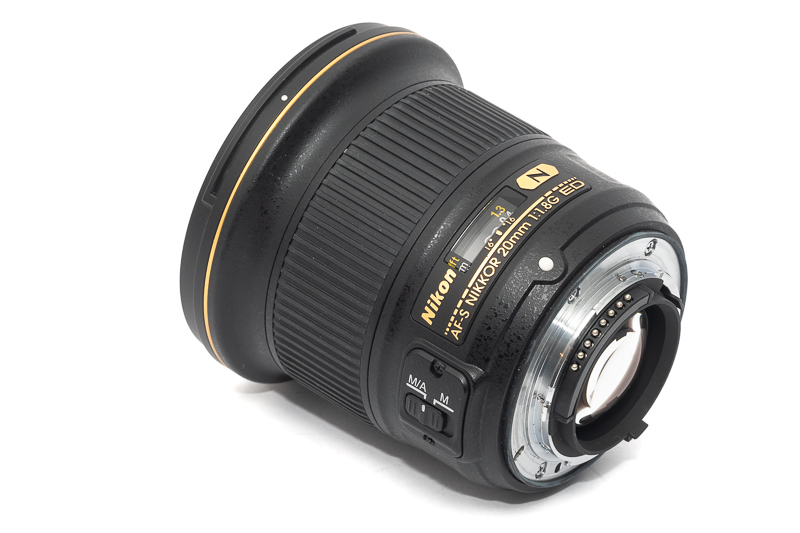
Nikon had a good timing with this lens. When it had been released many people (including me) were very interested in doing landscape astrophotography with our highly sensitive fullframe cameras and together with the Nikon AF-S 14-24mm 2.8G this was the best option for your F-mount camera you could get – yet noticeably cheaper than the 24mm 1.4 (I even sold my 24mm 1.4 after getting this 20mm 1.8). But there was more: this 20mm 1.8 also offered a great minimum focus distance, surprisingly good bokeh and was very competitively priced.
Rating: 4.5/5


Full Review
buy from Amazon.com
Nikon AF-S 24mm 1.4G
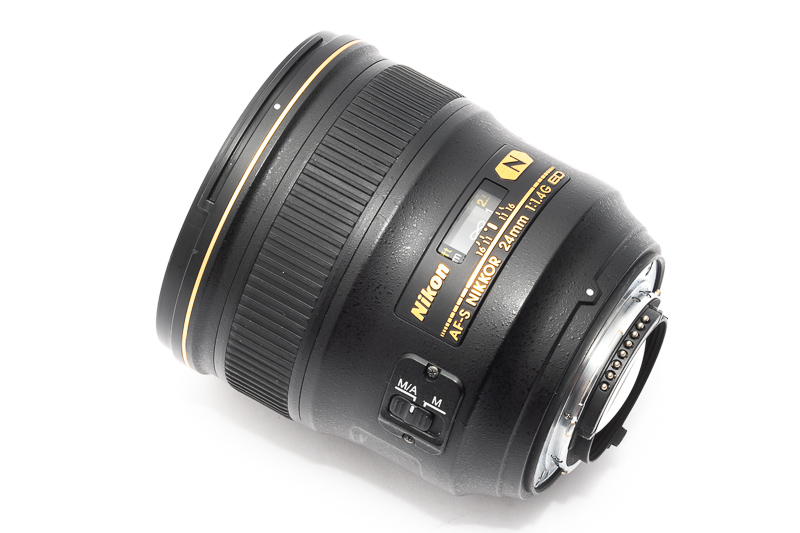
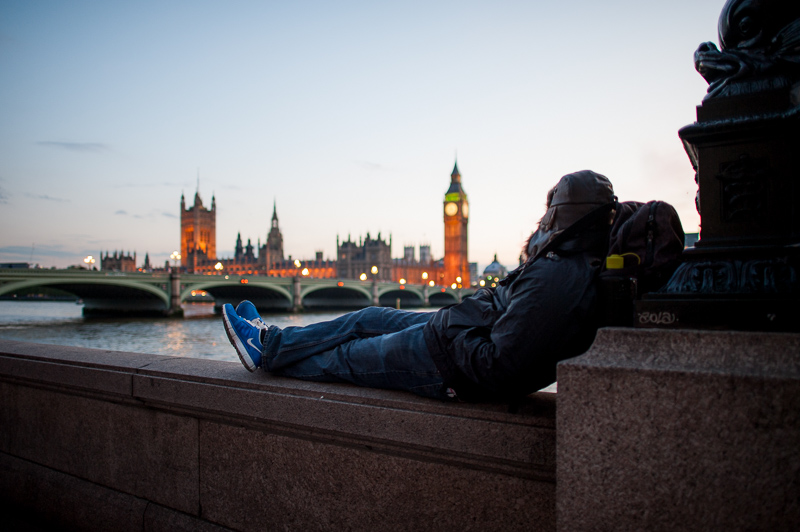
Released in 2010, the Nikon AF-S 24mm 1.4G was the first of the higher end f/1.4 lenses. It is a lens I personally used for many years on Nikon DSLRs. It is not as well corrected as the latest 24mm 1.4 lenses from Sony and Sigma, but it draws a nice bokeh which makes it a good choice for environmental portraits. If you are looking for a fast 24mm lens for astrophotography this is not the ideal choice though, as it needs to be stopped down to f/2.8 to be free from Coma.
Rating: 4/5

Full Review
buy from Amazon.com | Amazon.de | ebay.com | ebay.de | B&H (advertisement/affiliate links) for $1.999 (new) or $550+ (used)
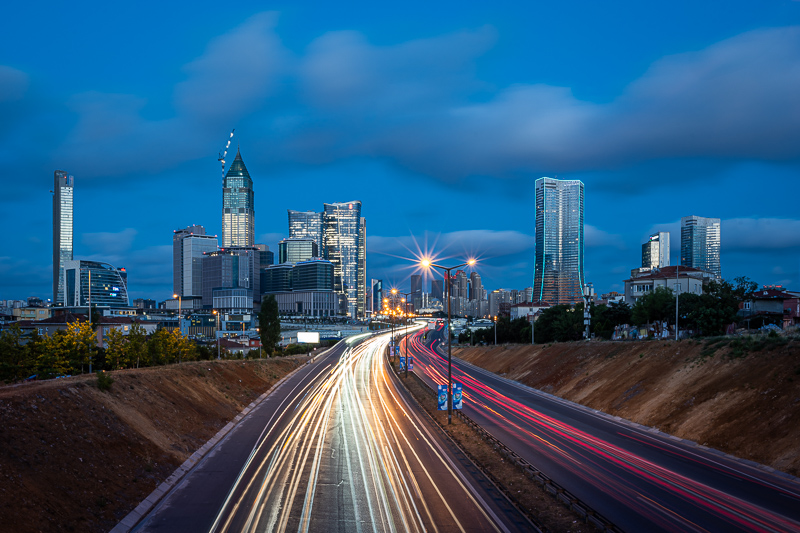
Nikon AF-S 24mm 1.8G
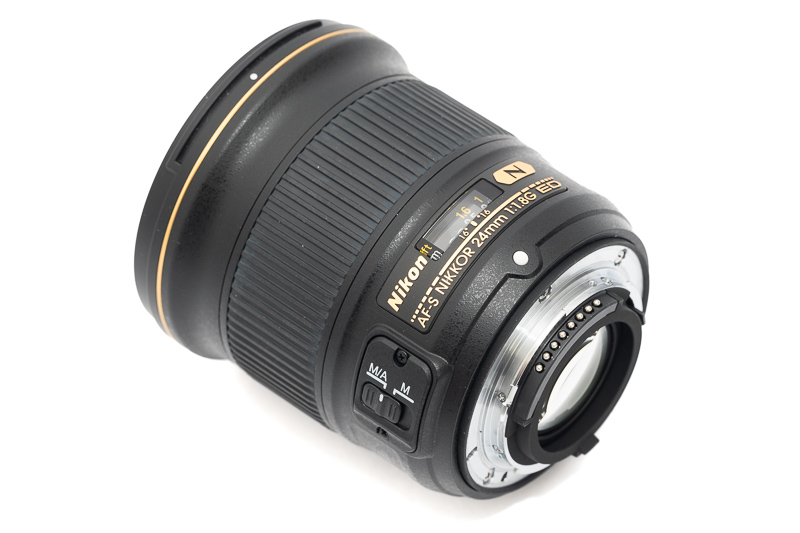
Released shortly after the Nikon AF-S 20mm 1.8G, this 24mm offers a very similar performance across the board. If you are deciding between these two, you can therefore just pick the one whose focal length fits your needs better.
Released five years after the aforementioned Nikon AF-S 24mm 1.4G, this f/1.8 lens actually performs better in some categories than the more expensive lens – especially when it comes to flare resistance – but it also creates nicer sunstars. When it comes to off center sharpness at portrait distances the f/1.4 lens is the better one though. I would pick this f/1.8 lens if the main focus is on landscape/architecture shooting and the f/1.4 if it is on environmental portraits.
Rating: 4.5/5

Full Review
buy from Amazon.com | Amazon.de | ebay.com | ebay.de | B&H (advertisement/affiliate links) for $680 (new) or starting at $400 (used)
Nikon AF-S 28mm 1.4E
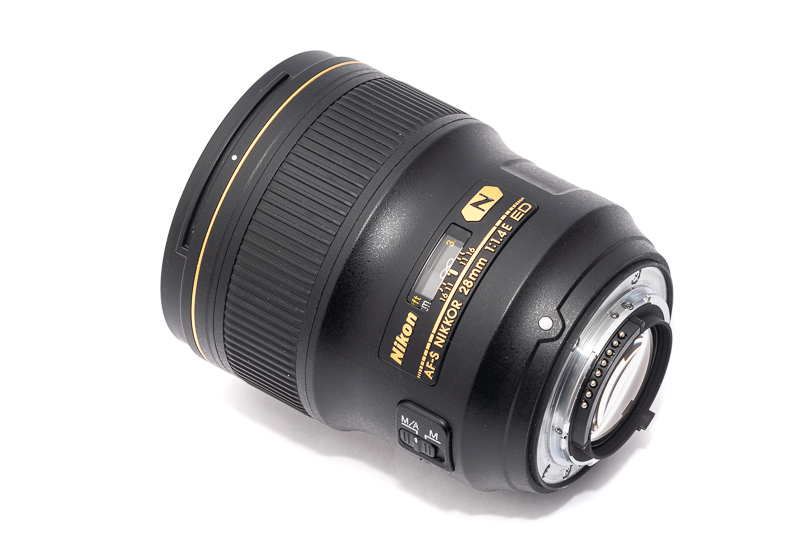
This is the last lens of the f/1.4 series and it has been released in 2017. In terms of optical performance it is easily the best, having higher resolution and contrast as well as being better corrected for CA and Coma than either the AF-S 24mm 1.4G or the 35mm 1.4G. It even surpasses mirrorless designs like the Sony FE 24mm 1.4 GM in that regard. As we have seen in my comparison of fast 28mm fullframe lenses, despite being well corrected, it still draws a very appealing bokeh.
The electronically controlled aperture sadly means you cannot really use this lens on any of the analogue Nikon cameras, as you will not be able to stop the lens down.
Rating: 5/5


Full Review
buy from Amazon.de | B&H | ebay.com | ebay.de (advertisement/affiliate links) for $1.999 (new) or $1.000 (used)
Nikon AF-S 28mm 1.8G
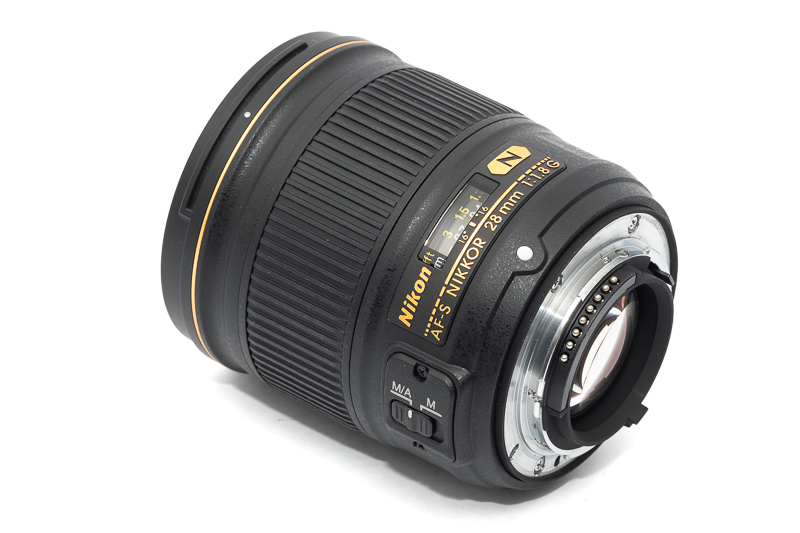
At the time this Nikon AF-S 28mm 1.8G was released, I think not many people were looking for a 28mm f/1.8 lens. Going by today’s used prices, it never really became a fan favorite either, as at the time of writing this, you have to pay about double for the Nikon AF-S 20mm 1.8G or the 24mm 1.8G on the used market.
In terms of performance this is not a bad lens though. The bokeh is nice in most situations, in terms of sharpness it is usable from f/1.8 and looks very good stopped down. Due to the lack of competition when it comes to compact fast 28mm lenses this can still be an interesting option today.
Rating: 4/5


Full Review
buy from Amazon.com | Amazon.de | ebay.com | ebay.de | B&H (advertisement/affiliate links) for $700 (new) or $300 (used)
Nikon AF-S 35mm 1.4G
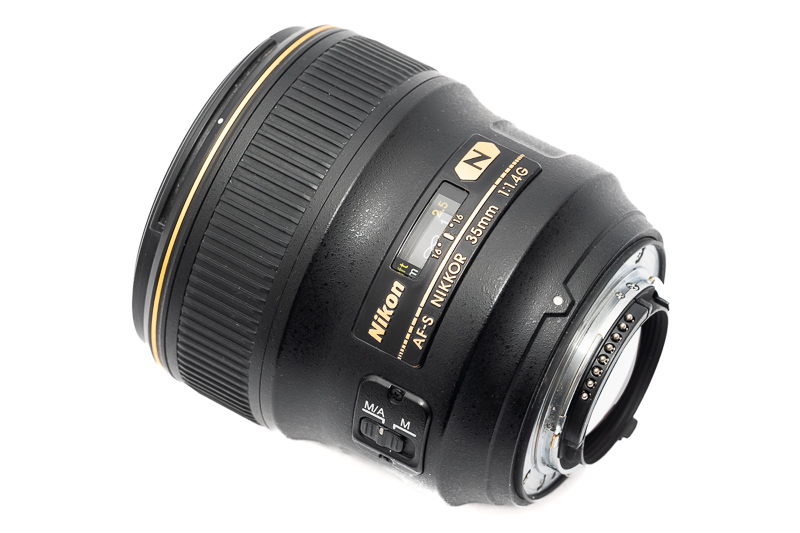
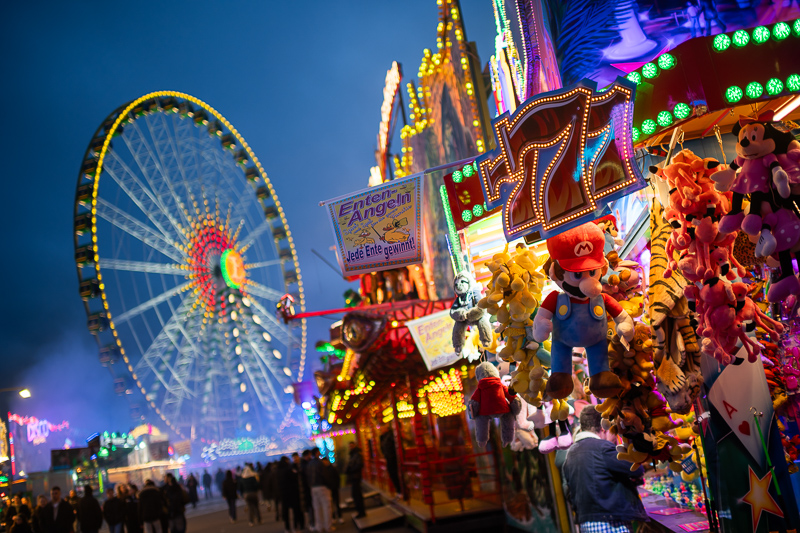
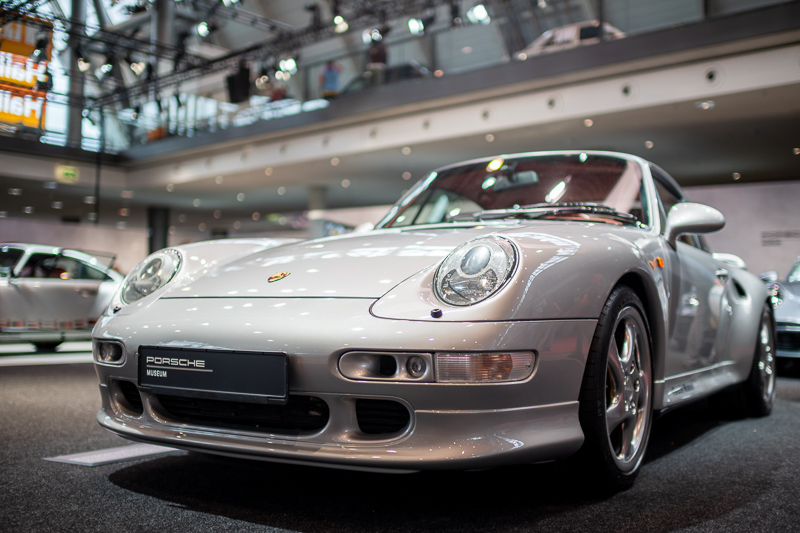
When it comes to 35mm 1.4 lenses I think we have seen the biggest leap in image quality since the release of this AF-S 35mm 1.4G in late 2010. Compared to the latest mirrorless offerings (e.g. Sony FE 35mm 1.4 GM, Viltrox 35mm 1.2 LAB, Sigma 35mm 1.2 Art, Laowa 35mm 0.95 Argus) this Nikon lens makes use of a rather simple optical design.
This lens has always been a favorite among the portrait/wedding photographers using Nikon cameras and it does draw a nice bokeh indeed, but that is also true for some of the modern and at the same time better corrected and way sharper 35mm lenses. Also because there is such strong competition when it comes to 35mm 1.4 lenses, this one did not age as well as some of the others.
Rating: 2.5/5
Full Review
buy from Amazon.com | Amazon.de | B&H | ebay.com | ebay.de (advertisement/affiliate links) for $1.699 (new) or $550+ (used)
Nikon AF-S 35mm 1.8G
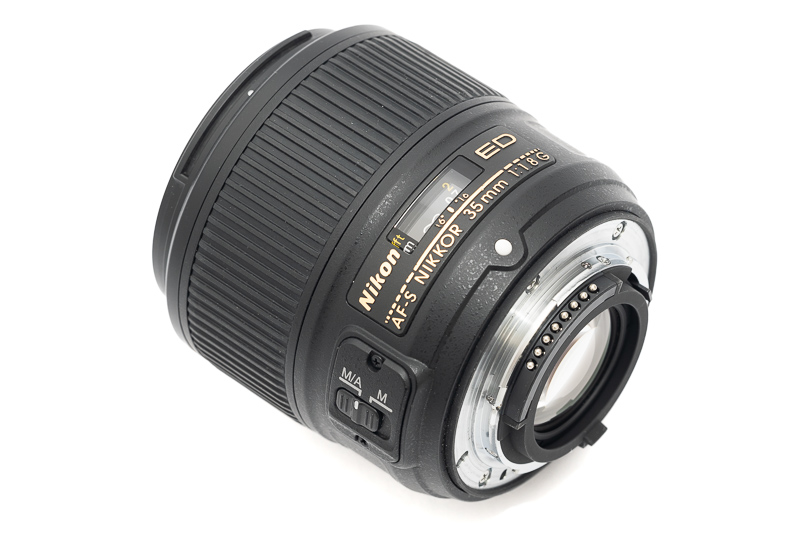
When this lens hit the market in 2014 the reactions where somewhere between “finally” and “too little, too late”. On the one hand there was finally a modern, affordable 35mm 1.8 fullframe lens, replacing the outdated AF 35mm 2.0D, but on the other hand it didn’t meet everyone’s expectations. The main issue weren’t the missing nano coating or the lack of the fancy gold ring, but the nervous bokeh at medium to longer focus distances. Overall, I still think this is a slightly better lens than the more expensive Nikon AF-S 35mm 1.4G, but I definitely see why many people decided to go with the Sigma 35mm 1.4 Art instead.
Rating: 3.5/5


Full Review
buy from Amazon.com | Amazon.de | ebay.com | ebay.de | B&H (advertisement/affiliate links) for $477 (new) or starting at $300 (used)
Nikon AF-S 50mm 1.4G
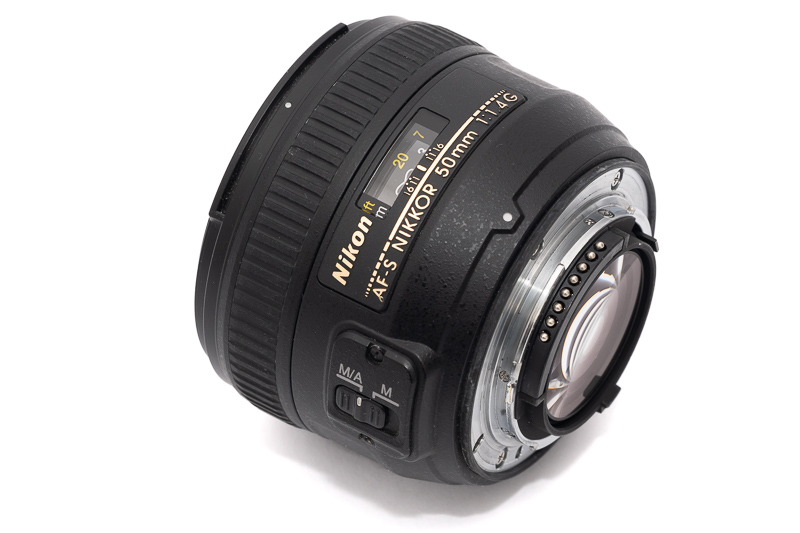
Despite featuring a maximum aperture of f/1.4, this lens differs from the other f/1.4 lenses mentioned here. The build quality is closer to the cheaper f/1.8 lenses and also the optical design can best be described as simple.
This is a classic/vintage 50mm 1.4 lens in the casing of a modern AF lens. If you are looking for a bit of a vintage look with nervous bokeh and strong lens flares this might be exactly the lens you are looking for. But if you are looking for an allround 50mm lens that gets the job done without getting in the way, you might want to look elsewhere, maybe at the f/1.8 version coming next.
Rating: 2.5/5 (general photography) to 4/5 (vintage lovers)


Full Review
buy from Amazon.com | Amazon.de | ebay.com | ebay.de | B&H (advertisement/affiliate links) for $407 (new) or starting at $200 (used)
Nikon AF-S 50mm 1.8G
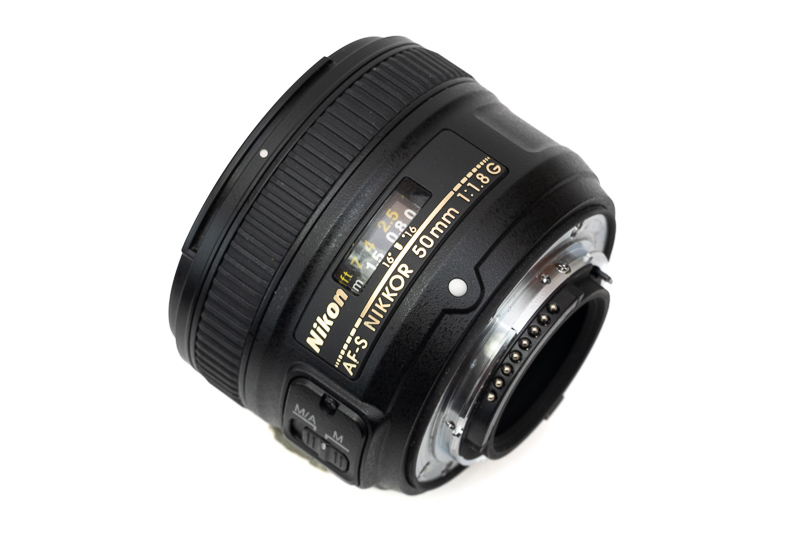
This is the cheapest lens on this list, but it is actually much better than its price suggests. Many people preferred it to both, the 50mm 1.4G and the way more expensive 58mm 1.4G, for actually being the sharpest of the three at maximum aperture. Not only that: out of those it is also the one best corrected for longitudinal CA and it features a more appealing bokeh rendering than the 50mm 1.4G. Not bad for a lens that can often be found for 100 bucks.
Rating: 4/5 (performance) to 5/5 (value for money)

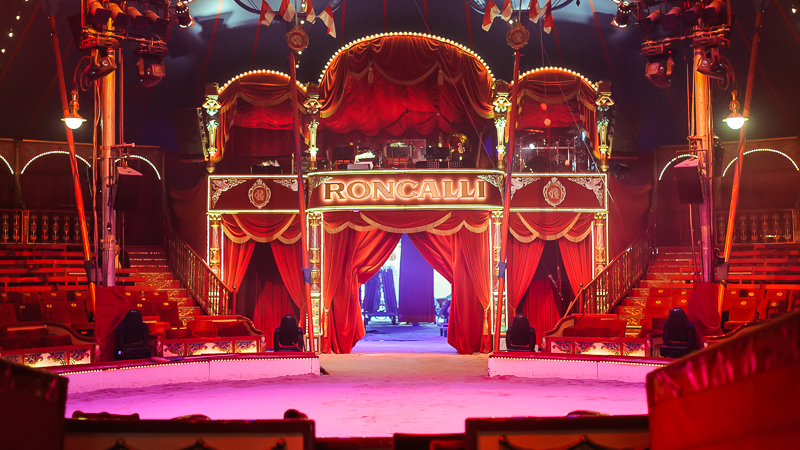
Full Review
buy from Amazon.com | Amazon.de | ebay.com | ebay.de | B&H (advertisement/affiliate links) for $197 (new) or starting at $100 (used)
Nikon AF-S 58mm 1.4G

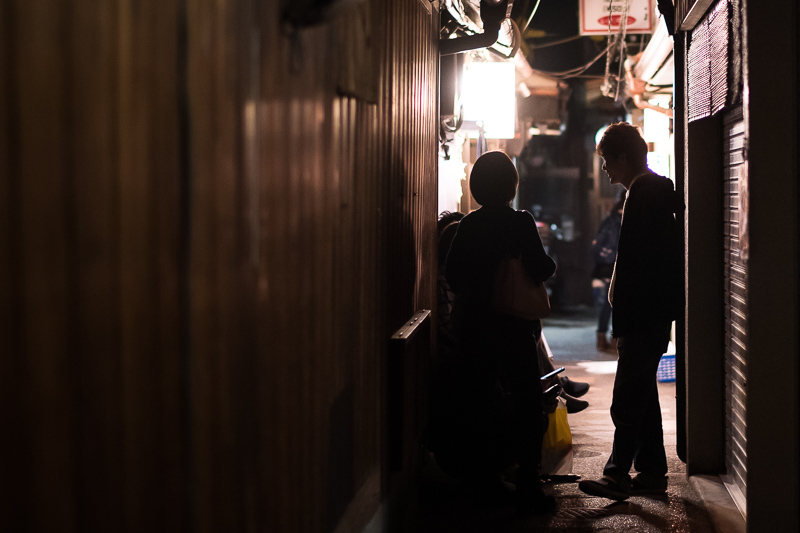
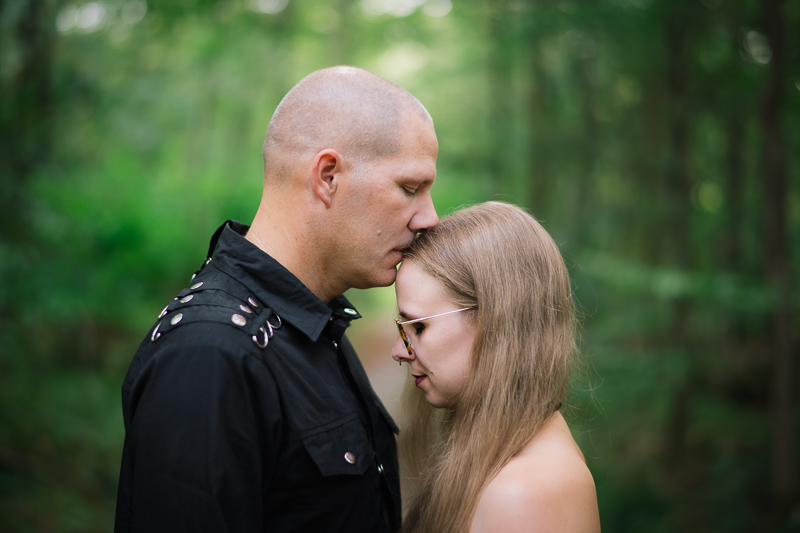
This lens had been advertised as successor to the 58mm 1.2 Noct Nikkor, but Nikon did not exactly do it a favour by doing that. This Nikon AF-S 58mm 1.4G is a portrait lens that draws a very smooth bokeh, but it is not the sharpest lens, has strong longitudinal CA and – unlike the original Noct Nikkor – pretty strong Coma at wider apertures.
A specialized portrait lens with great bokeh rendering that rightfully has its fans, but one that never managed to actually appeal to a broader audience – also thanks to being way too expensive for its general performance.
Rating: 3/5 (general photography) to 4.5/5 (portraiture)
Full Review
buy from Amazon.com | Amazon.de | B&H | ebay.com | ebay.de (advertisement/affiliate links) for $1.599 (new) or $900 (used)
Nikon AF-S 85mm 1.4G
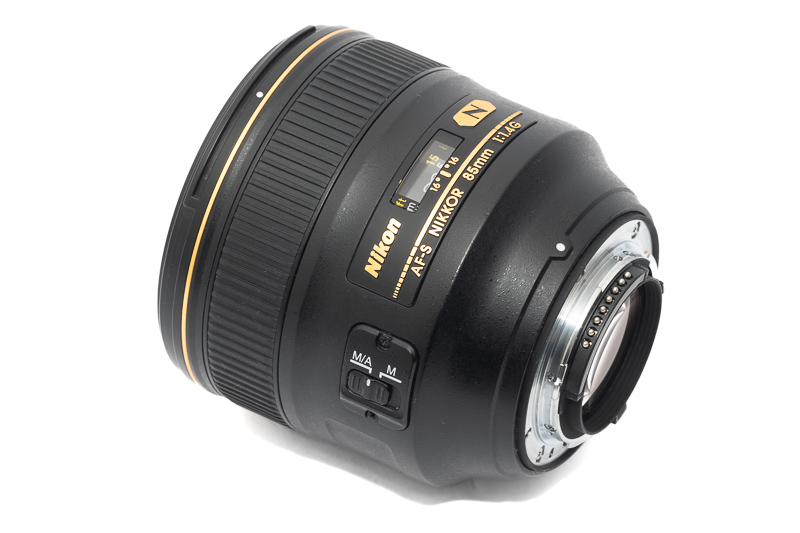
Its predecessor, the Nikon AF 85mm 1.4D, was already a famous and highly regarded portrait lens. This AF-S 85mm 1.4G kept its smooth signature rendering while significantly improving sharpness and contrast (especially off center). Some people were put off by its rather slow autofocus compared to the AF-D lens though.
This was one of the last flagship 85mm 1.4 lenses without any aspherical or fluorite elements which is why it cannot keep up in all categories with the latest designs (e.g. the Sony FE 85mm 1.4 GM II, Sony FE 85mm 1.4 GM or the Sigma 85mm 1.4 Art DG DN). If you can live with the rather high longitudinal CA this is still a great portrait lens with beautiful background bokeh though.
Rating: 4/5


Full Review
buy from Amazon.com | Amazon.de | B&H | ebay.com | ebay.de (advertisement/affiliate links) for $1.599 (new) or $750 (used)
Nikon AF-S 85mm 1.8G
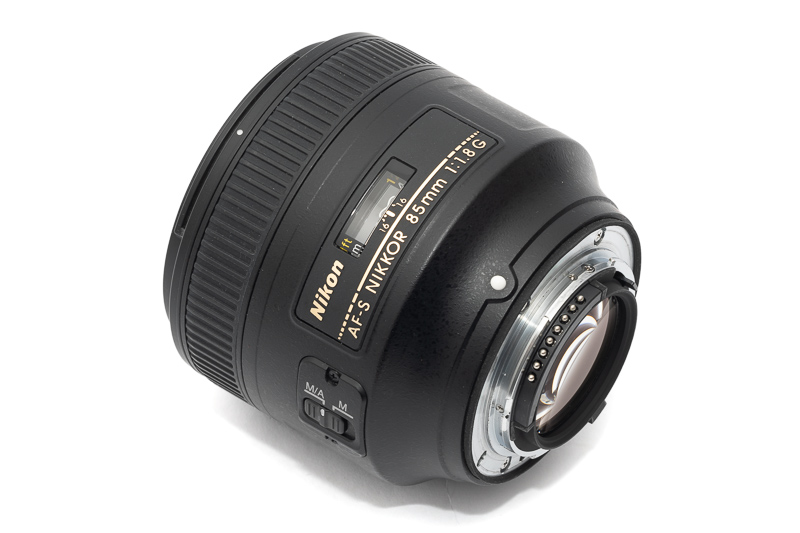
Long story short: at least 90% of the performance of the aforementioned 85mm 1.4 lens for only about 30% of its price. A really well balanced portrait lens without any outstanding flaws. If you are a Z-mount user and have an FTZ adapter anyway, this is a very sensible alternative to the way more expensive Nikon Z 85mm 1.8 S.
Rating: 4/5


Full Review
buy from amazon.com | amazon.de | ebay.com | ebay.de | B&H (advertisement/affiliate links) for $426 (new) or $280 (used)
Nikon AF-S 105mm 1.4E
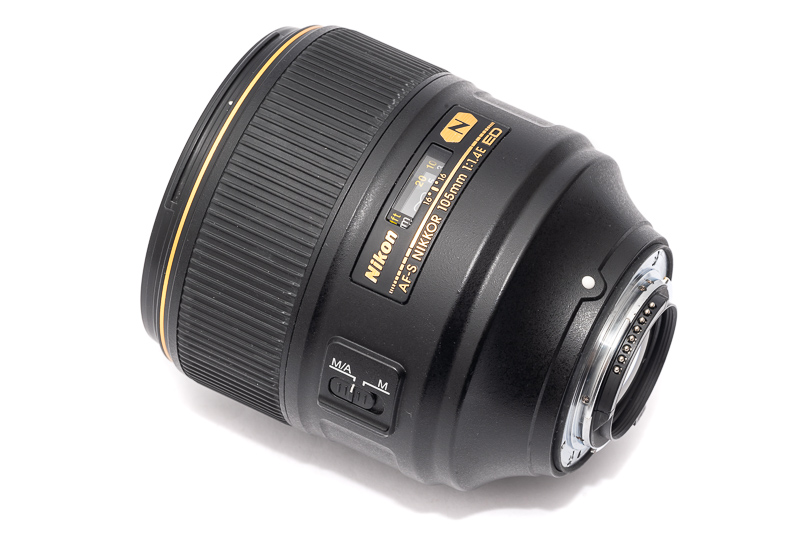
The Nikon AF-S 105mm 1.4E is the second last lens released in the f/1.4 series and like the AF-S 28mm 1.4E also features the electronic aperture diaphragm.
In many ways this is an improved version of the AF-S 85mm 1.4G: it has higher resolution and contrast, less CA, a faster AF and a bigger entrance pupil leading to even more background blur. The problem is: it has way too high optical vignetting, leading to some of the strongest cat’s eyes I have ever seen, which spoils the otherwise very nice picture for me a bit.
Rating: 4.5/5


Full Review
buy from Amazon.com | Amazon.de | B&H | ebay.com | ebay.de (advertisement/affiliate links) for $2.099 (new) or $1.200 (used)
Nikon AF-S 200mm 2.0G VR
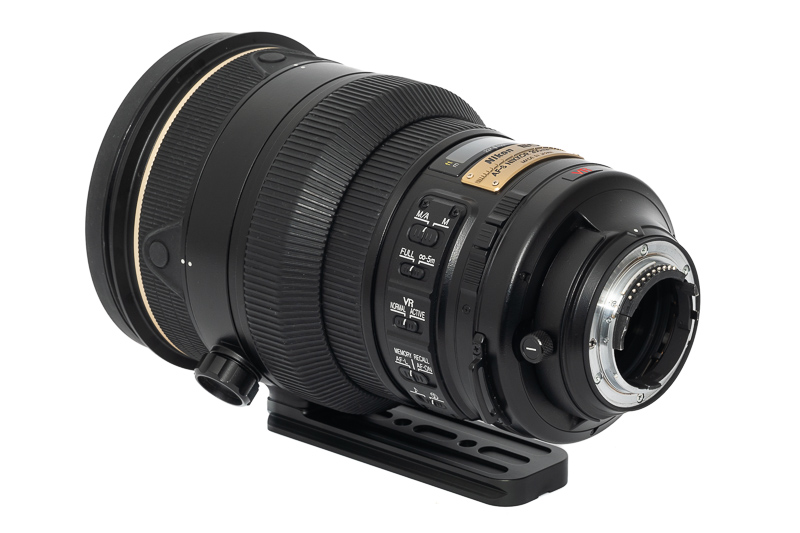
One of the absolute highlights of the entire F-mount line up. I tried most of the 200mm 2.0 lenses by now and this remains my favorite. Super high contrast and resolution, blazingly fast AF, amazingly smooth bokeh rendering. This is a huge and unflexible lens, but it is hard to believe you can get it under $2000 these days.
Rating: 5/5


Full Review
buy from ebay.com | ebay.de | B&H (advertisement/affiliate links) starting at ~$2.000 (used)
Conclusion
Let’s talk about the elephant in the room: does it still make sense to consider getting some of these lenses in 2025 and counting?
For me the answer to that question is a definitive yes, but let’s discuss what you are giving up compared to some of the latest lenses – and what you may gain – first.
I generally like to put it like this: Nikon’s (and also Canon’s) lenses from the late DSLR era are great at what they have been designed for, whereas the latest (mirrorless) designs are simply great at everything.
Let’s have a look at the Nikon AF-S 85mm 1.8G for example. Bokeh is very nice. Sharpness at portrait distances is very good. Coma, vignetting and distortion are low. Stopped down it is plenty of sharp at infinity, too. What would the latest Nikon Z 85mm 1.8 S be better at? Better across frame sharpness at infinity at wider apertures, less loCA and faster AF. For typical portrait applications, do these really make a difference? I don’t think so.
Except for the two “E” lenses, everything on these lenses can also still be controlled manually, so even if the electronics die on you one day, you will still be able to use them as manual focus lenses. The same cannot be said about the newer focus-by-wire lenses and lenses with purely electronically controlled aperture diaphragm.
Long story short: Z-mount users can save a lot of money with some of these AF-S lenses compared to the latest Z lenses and thanks to the Monster LA-FE1/2 adapters even E-mount users can enjoy these lenses with little drawbacks.
Further Reading
- Reviews of Nikon Lenses
- Review: Laowa 10mm 2.8 AF
- Review: Zeiss 16mm 8.0 Hologon
- Review: Tamron 70-180mm 2.8 G2
- Technical Knowledge
Support Us
Did you find this article useful or just liked reading it? Treat us to a coffee!

 via Paypal
This site contains advertisement/affiliate links. If you make a purchase using any of the links marked as advertisement/affiliate links, I may receive a small commission at no additional cost to you. This helps support the creation of future content.


Latest posts by BastianK (see all)
- Analogue Adventures – Part 58: Adox Color Mission 200 C-41 - October 21, 2026
- Review: Nikon Z 35mm 1.2 S Nikkor - October 17, 2026
- Prime Day Photoshop+Lightroom offer for Amazon Prime Members (EU/UK) | Update: also at B&H - October 7, 2026
Crazy that you went through testing all 14 of them. This is an amazing resource to have – thanks a lot!
Thanks!
Thanks for this compilation.
However, while the ability to continue to use manual focus on these lenses (except for the E-suffix ones) that you noted, even if the electronics die, is certainly an advantage, I think that in practice it would be far less useful than implied, because of the “slop” (hysteresis-type imprecision) of the manual focus ring that has been reported (i.e. at Optical Limits) for many of these lenses. That hysteresis would make the traditional technique for precise manual focus (doing back-and-forth decreasing arcs on the focus ring) truly maddening.
Which leads me to ask, have you noted and do you remember whether any of these non-E-suffix lenses are particularly good or bad with regard to amount of hysteresis in manual focus? And do the two E-suffix lenses exhibit less MF hysteresis? Thanks in advance.
You need to check my individual reviews, this is mentioned in the handling section of each of them.
Bastian. Thanks for the review.
But I will express my position.
I personally had them, I did not get to the tests, namely, I owned them for a year, (in parentheses on which cameras were used) these lenses:
85 f/1.8D (D300 and D800), 85 f/1.8G (D800 and Z5), Z 85 f/1.8S (Z5 and Z7).
Although I have already sold all these lenses. I disagree with the opinion that having 85 f/1.8G makes no sense to buy Z 85 f/1.8S. The advantage of the Z 85 f/1.8S was visible even on the Z5. And although the Z 85 f/1.8S is not as sharp as the Z 50 f/1.8S, it is one of the sharpest lenses I have ever had and the best bokeh. I was doing a blind test. People who are far from knowing the defects of lenses have seen the difference in the open. For understanding. What comes out on an open Z 85 f/1.8S using 85 f/1.8G needs to be closed to f/4 (in the center, f/3.2 is enough).
At the same time, the Z 85 f/1.8S has a better side. And at the same time there is much less spherochromatism, which I don’t like.
I repeat. Although I eventually sold the Z 85 f/1.8S due to the discontinuation of 85mm autofocus lenses, I don’t regret buying it.
But I repeat. That’s my opinion.
I second this opinion. The 85mm f/1.8G really isn’t the sharpest when it comes to 85mm lens. Nevertheless, I still use it as a swirly bokeh lens.
i am all in with discreet praise for the list’s bargain, the 50mm 1.8. (i got mine on sale from nikon for <$200.) i have always digged carrying this lens on a d7200, where it acts like a compact 75mm. the image of the black kitten on the discord channel –early november– was taken with that setup.
Great article, thanks.
It is very convenient to see structured material. Added it to my bookmarks. On my own, when I returned to film (the main f90x), I bought the d780 after the z7ii, for the convenience of using the same lenses on film cameras and dslr-s, without having problems with front and back focus on dslr-s. However, I only have one full-frame af-s fix, the 50mm f/1.8g (and the Tamron 35 mf/1.4, although it can’t shoot on my film cameras). I mainly use af(d) 85mm f/1.4d, 105 f/2 dc and zooms 24-85mm f/2.8-4d, f/80-200 2.8 mkii, and wide angle af-s 18-35mm f/3.5-4.5.
After the article, I wanted to buy something else, although I don’t need it ))
It’ll be fantastic to read the same article about af(d) lenses…)
Just a reminder that the F90x doesn’t support VR. You may want to check out the F80 or F100 should you get a Nikon lens with VR.
I know, i have f75 if I’ll need VR. But i don’t have any af-s lens with VR, so for me limitation of f90x of not supporting VR is not a problem at all. In 2025 f100/f5/f6 overpriced on second market as for me.
I prefer the 50 and 35 (1.8/2.0) D lenses to their G equivalents. They don’t autofocus on Z cameras which is one reason you can get them so cheap. The 50 was always cheap with very little distortion. The 35 at 2.8 is nearly indistinguishable from more expensive lenses and I contend that it isn’t nearly as bad at 2.0 as everyone says it is.
I think the issue is that there is no objective test for ‘overall render quality.’ For a lot of us, it is that over any one test that we need to consider. The 85 1.4, a lens I own, is pretty bad when you test it and I would never recommend it for general photography. In its element, you won’t get better colors, even from the Z lenses. The 50 1.8D doesn’t resolve very well, but it has barely any distortion and keeps the classic vintage rendering people tend to love. I have printed portraits that I sold for money using the D850 + 50 1.8D.
I tend to add this disclaimer at the end; almost any functional lens sold since 1980 will be plenty sharp if you have your lighting game sewn up. We don’t talk about it enough, you want sharp images, look at your lighting. Lighting, lighting, lighting, lighting, lighting. Bad lighting, even the best lenses will look like muddy crap.
Very informative, even though I disagree with some of your conclusions.