Introduction

In 2001 – with digital photography slowly taking off – Nikon not only released their beautiful FM3a analogue camera, but also a tiny pancake lens to go with it: the Nikon 45mm 2.8 Ai-P Nikkor. This is actually Nikon’s smallest F-mount lens, which is probably one of the main reasons it is still rather expensive on the used market. Thanks to a reader I get the chance to check it out in detail, so let’s have a closer look!
Sample Images



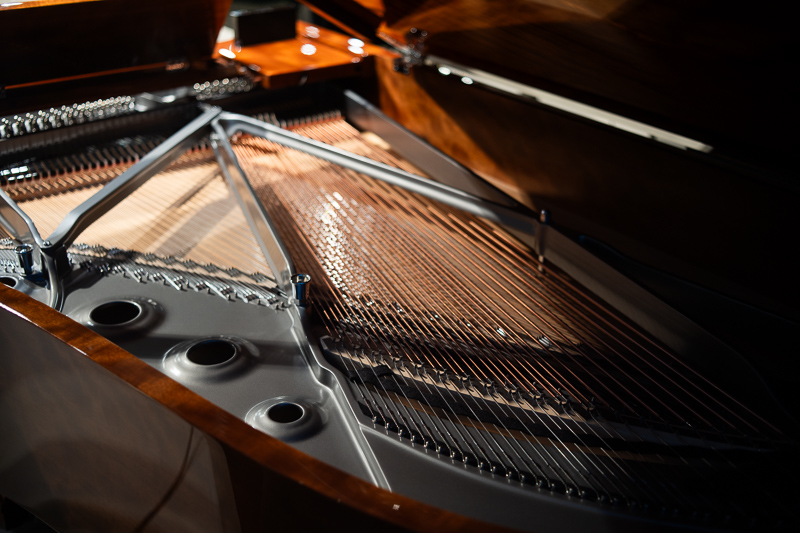

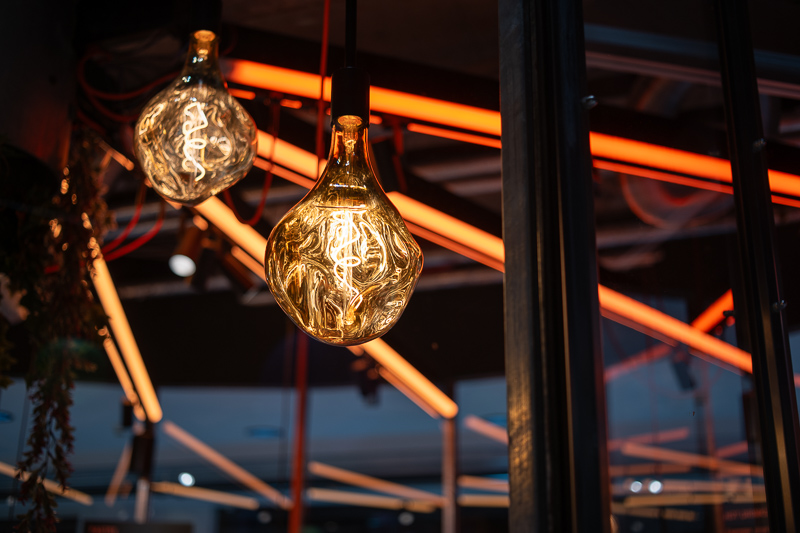

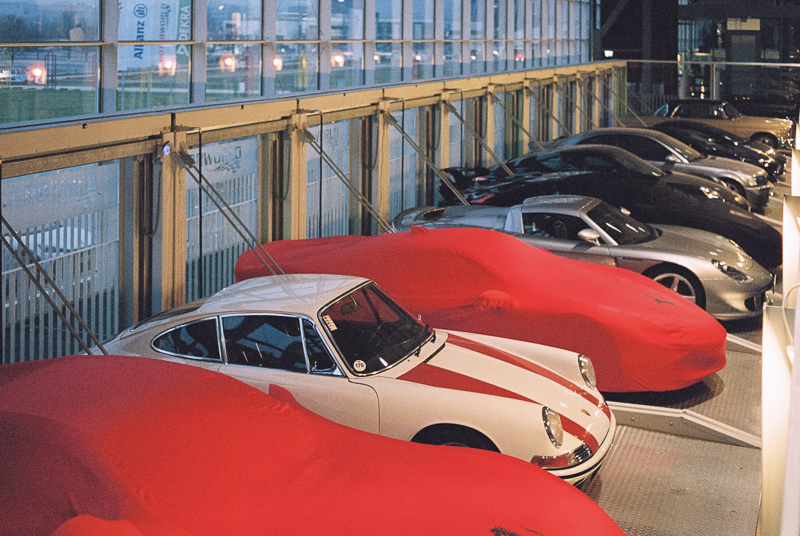

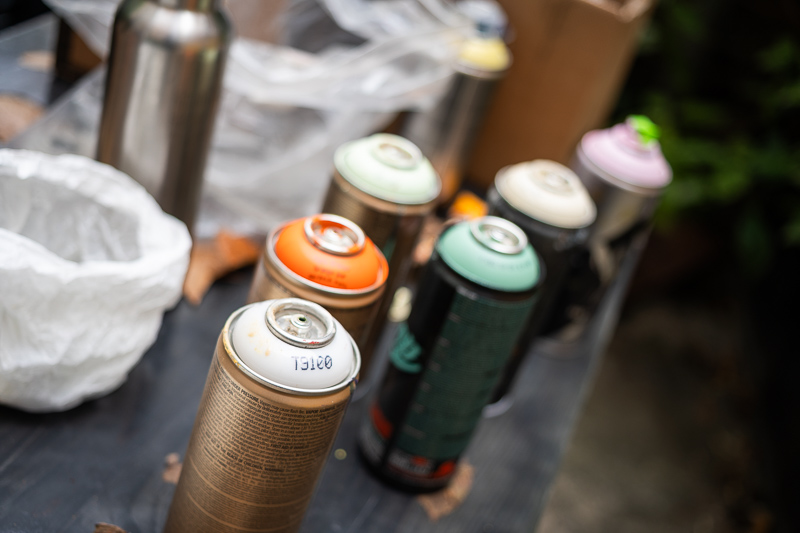

Most of the sample images in this review can be found in full resolution here.
Specifications / Version History
Nikon made two different 45mm 2.8 pancake lenses for F-mount:
- Nikon 45mm 2.8 GN Auto ~44000 pcs
150g, 4/3 design, MFD: 0.8 m, no electronic contacts, 1968-1977 - Nikon 45mm 2.8 Ai-P ~35000 pcs
118g, new 4/3 design, MFD: 0.45 m, electronic contacts, 2001-2006
This is a review of the later Nikon 45mm 2.8 Ai-P which has the following specifications:
- Diameter: 62 mm
- Length: 17 mm
- Weight: 118g (without hood[6g], without caps)
- Field of view: 50.4° (diagonally)
- Filter Diameter: 52 mm
- Number of Aperture Blades: 7 (slightly rounded)
- Elements/Groups: 4/3
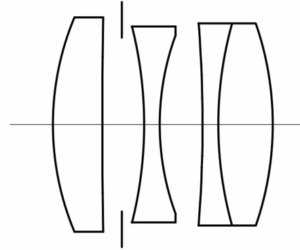
- Close Focusing Distance: 0.45 m
- Maximum Magnification: 1:7.5 (measured)
- Mount: Nikon F
buy from ebay.com | ebay.de (advertisement/affiliate links) starting at $400
Disclosure
The Nikon 45mm 2.8 Ai-P Nikkor was kindly provided free of charge by our reader Hoss Green for review purposes. You can have a look at his work on his homepage or over at Instagram. Thanks a lot!
History
If you want to know more about the development and the history of this lens you should have a look at Nikkor – The Thousand and One Nights – No. 78: A Standard Pancake Lens for the Nikon FM3A – Ai Nikkor 45mm f/2.8P.
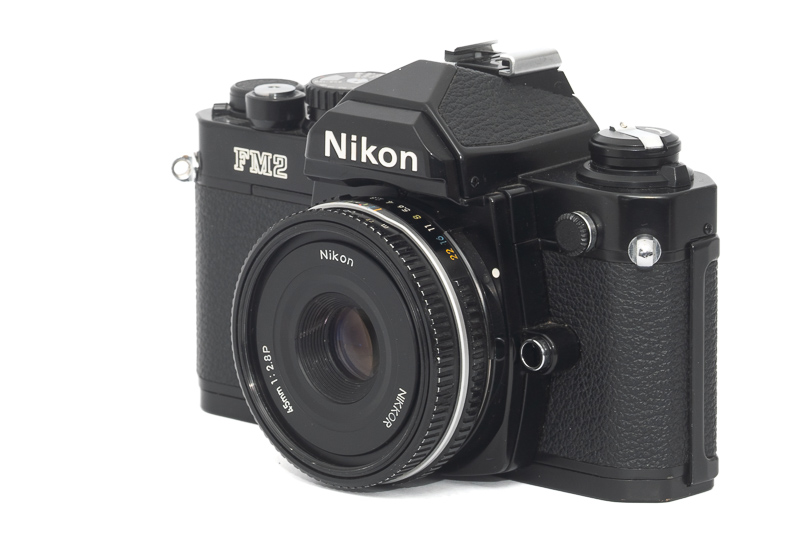
Handling / Build Quality
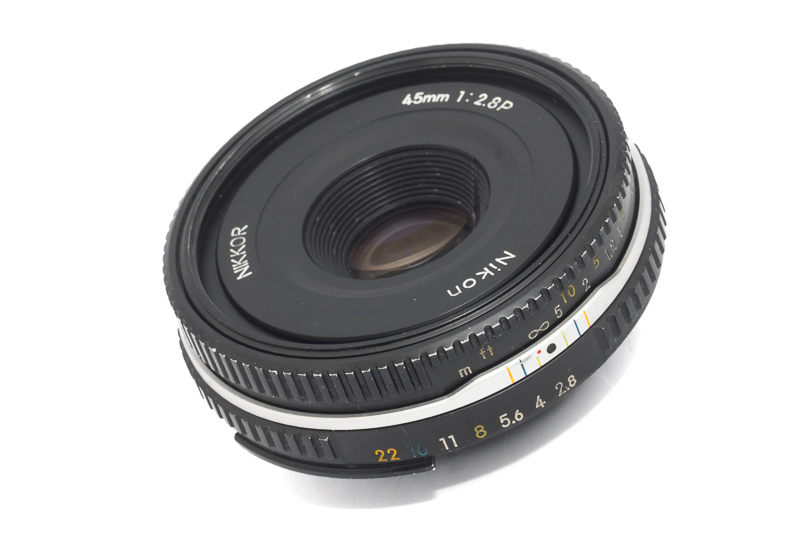
Generally this lens looks and feels similar to Nikon’s other late manual focus F-mount lenses. This sample has seen a lot of use though and focus ring as well as aperture ring do not feel as smooth anymore as I am used to from other Nikon lenses.
The focus ring has a very nice and even resistance. It takes exactly 90° from the minimum focus distance of 0.45 m to infinity.
The aperture ring is also typical for Nikon’s lenses: equidistantly spaced full-stop click stops and the aperture ring close to the camera body.
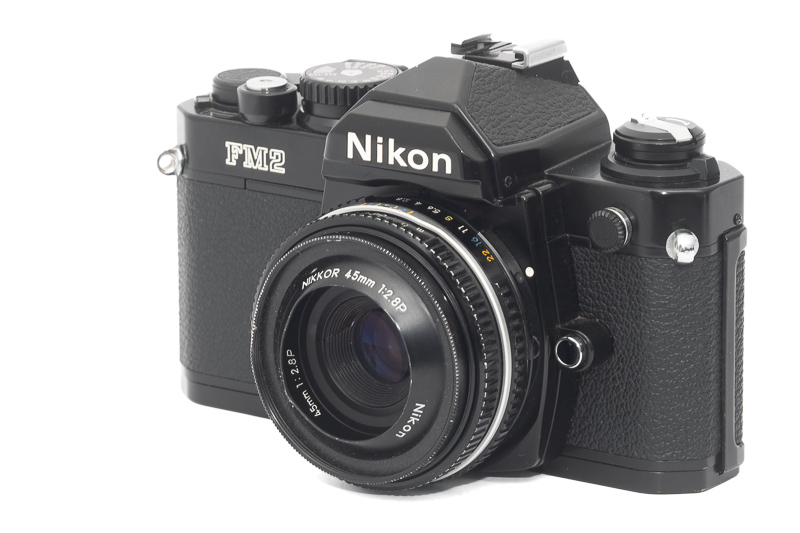
The owner also sent me the official HN-35 hood. I don’t find it particularly beautfiul, but an additional 52mm protection filter can be mounted inbetween front element and lens hood without risking additional vignetting, so that is an added bonus if you like to use protection filters.
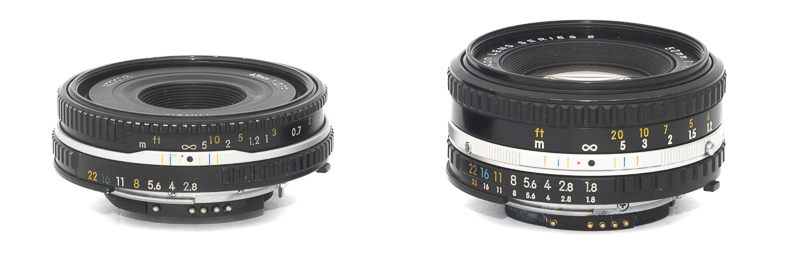
While this is Nikon’s smallest F-mount lens, the 50mm 1.8 Series-E is not a lot bigger while at the same time being more than a stop faster and significantly cheaper. That Series-E lens does not normally come with electronic contacts though: the sample you see in the picture above has been retrofitted with a Dandelion chip.
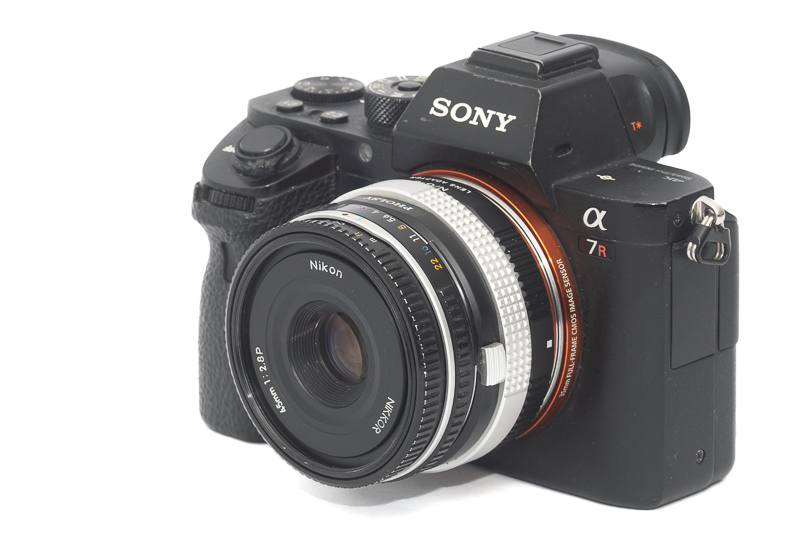
This lens can be adapted to all kinds of modern mirrorless cameras, due to the adapter involved it will loose its main selling point though: its tiny size.
Vignetting
Light falloff
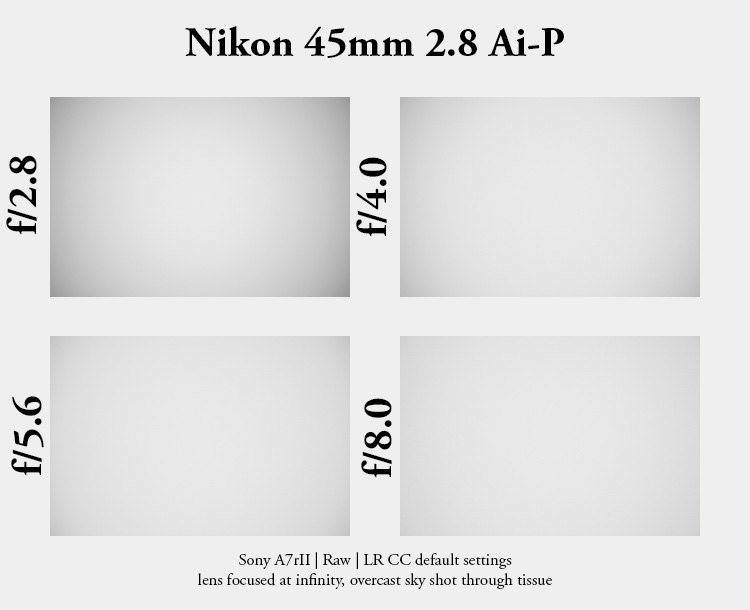
| f/2.8 | 2.0 EV |
| f/4.0 | 1.5 EV |
| f/5.6 | 1.2 EV |
| f/8.0 | 0.9 EV |
| f/11 | 0.8 EV |
Considering its small size these vignetting figures are actually moderate. However, faster 50mm when stopped down to f/2.8 show less vignetting, the Nikon 50mm 1.8 Series-E for example only 1.2 EV falloff at f/2.8.

It is recommended to have a look at this article first to get an idea how this brightness graph works.
Optical vignetting
Fast or very small lenses usually show a noticeable amount of optical vignetting. Without going too much into technical details optical vignetting leads to the truncation of light circles towards the borders of the frame.
In the center of the frame almost every lens will render a perfect circle, but only lenses with very low optical vignetting will keep this shape in the corners.
So in the following comparison we move from the center (left) to the extreme corner (right) and see how the shape of the light circle changes.
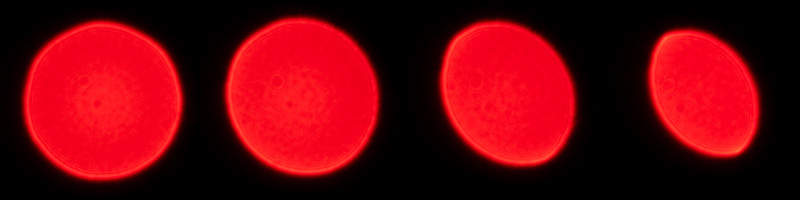
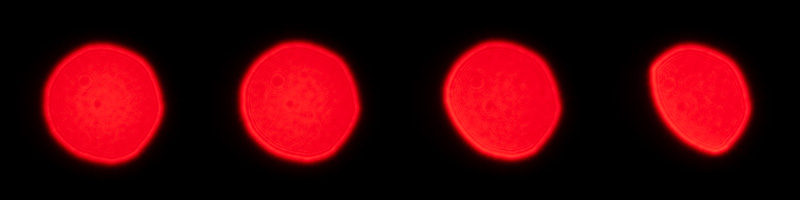
The amount of optical vignetting doesn’t look particularly strong, but also here: if you buy any cheap 50mm 1.8 lens and stop it down to f/2.8 it will hardly look worse.
Sharpness
Focus shift
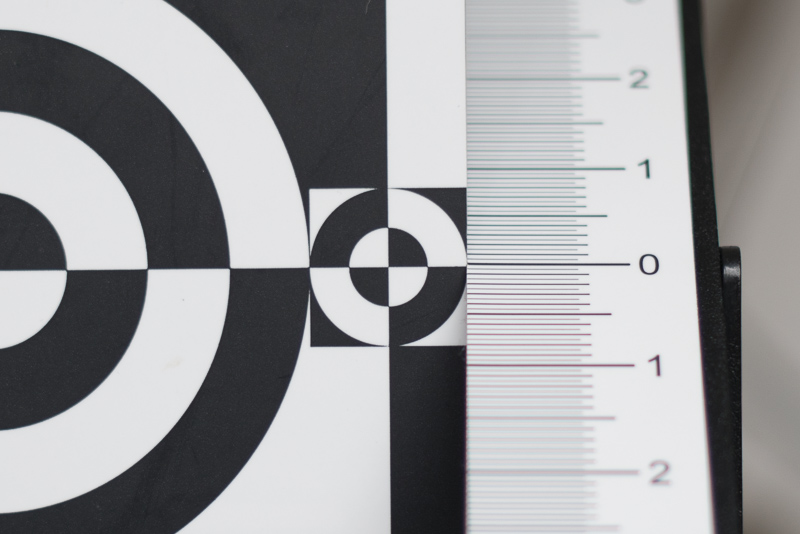
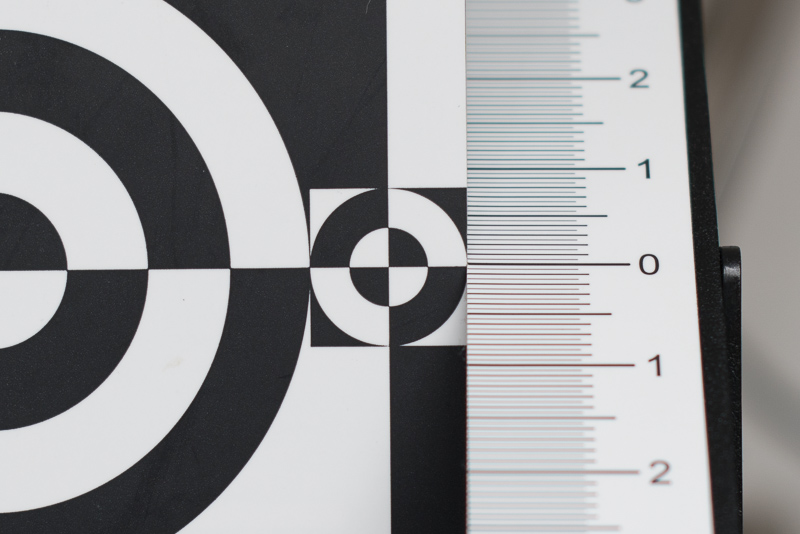
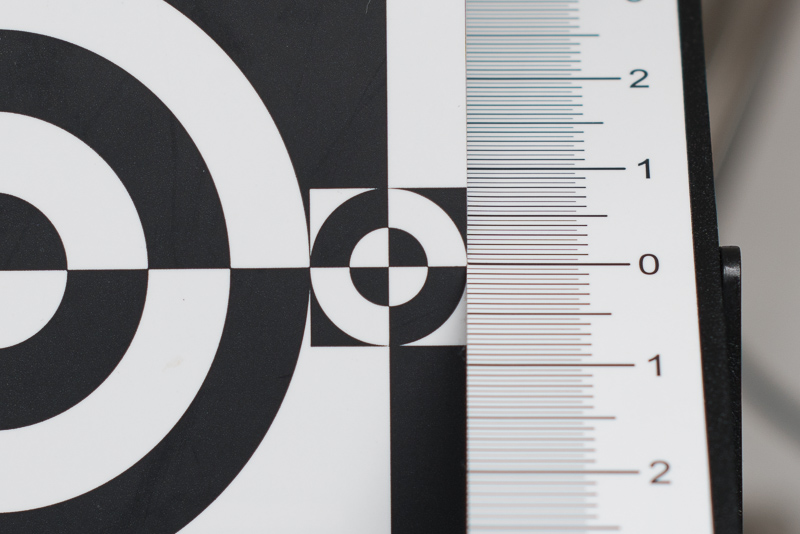
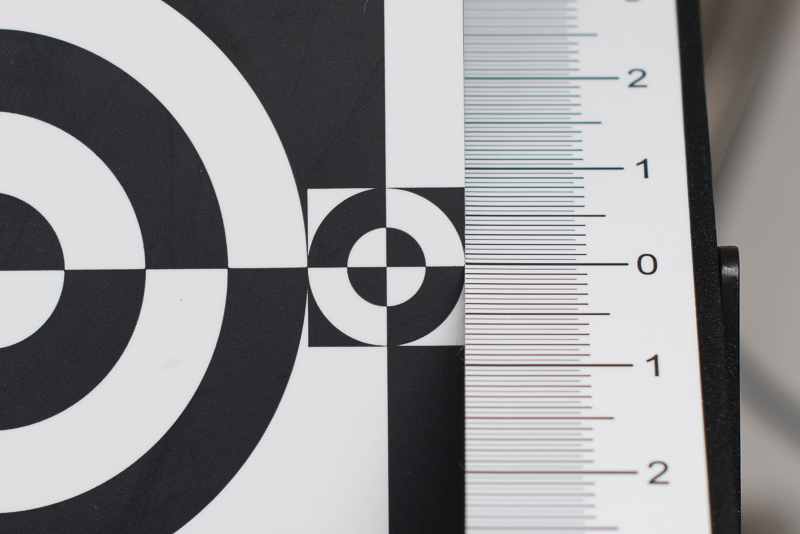
33% crops, Sony A7rII
There is a little bit of focus shift with this lens, but probably not enough to worry about when using a lower resolution camera or even film.
If you are using a higher resolution camera it might be a good idea to double check focus at working aperture in the f/4.0 to f/5.6 range with liveview though – if possible.
Infinity (42mp Sony A7rII)
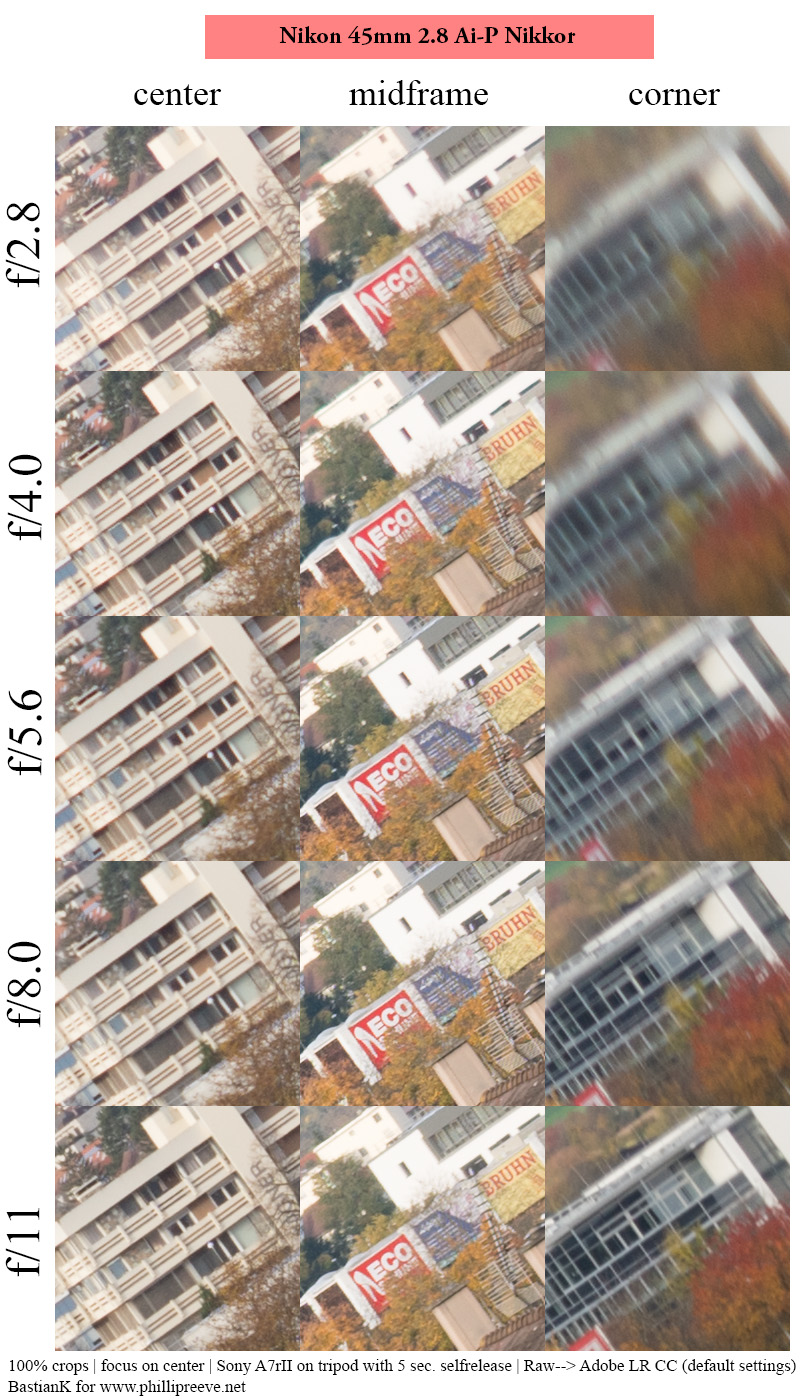

From a lens with such a simple optical design we cannot expect high resolution and contrast across from already at its maximum aperture.
In the center we can see good contrast from f/2.8 whereas the midzone dip looks a little worse and the corners significantly so. For the midframe to look good stopping down to f/8.0 is needed, the extreme corners still don’t look amazing at f/11.
I did not adjust the stopped down pictures for focus shift here and it seems the central performance at f/5.6 and f/8.0 is negatively affected by that.
This 45mm 2.8 lens should still yield satisfactory results for stopped down landscape and architecture shooting, but at the same time I have to mention the Nikon 50mm 1.8 Series-E as well as the TTArtisan 50mm 2.0 actually performed better here while being noticeably cheaper and also very compact.
Portrait 1.3 m (42mp Sony A7rII)
For portraiture it isn’t so important how flat the field is, it is more interesting to see what the sharpness is like when focused at different parts of the frame to take field curvature out of the equation.
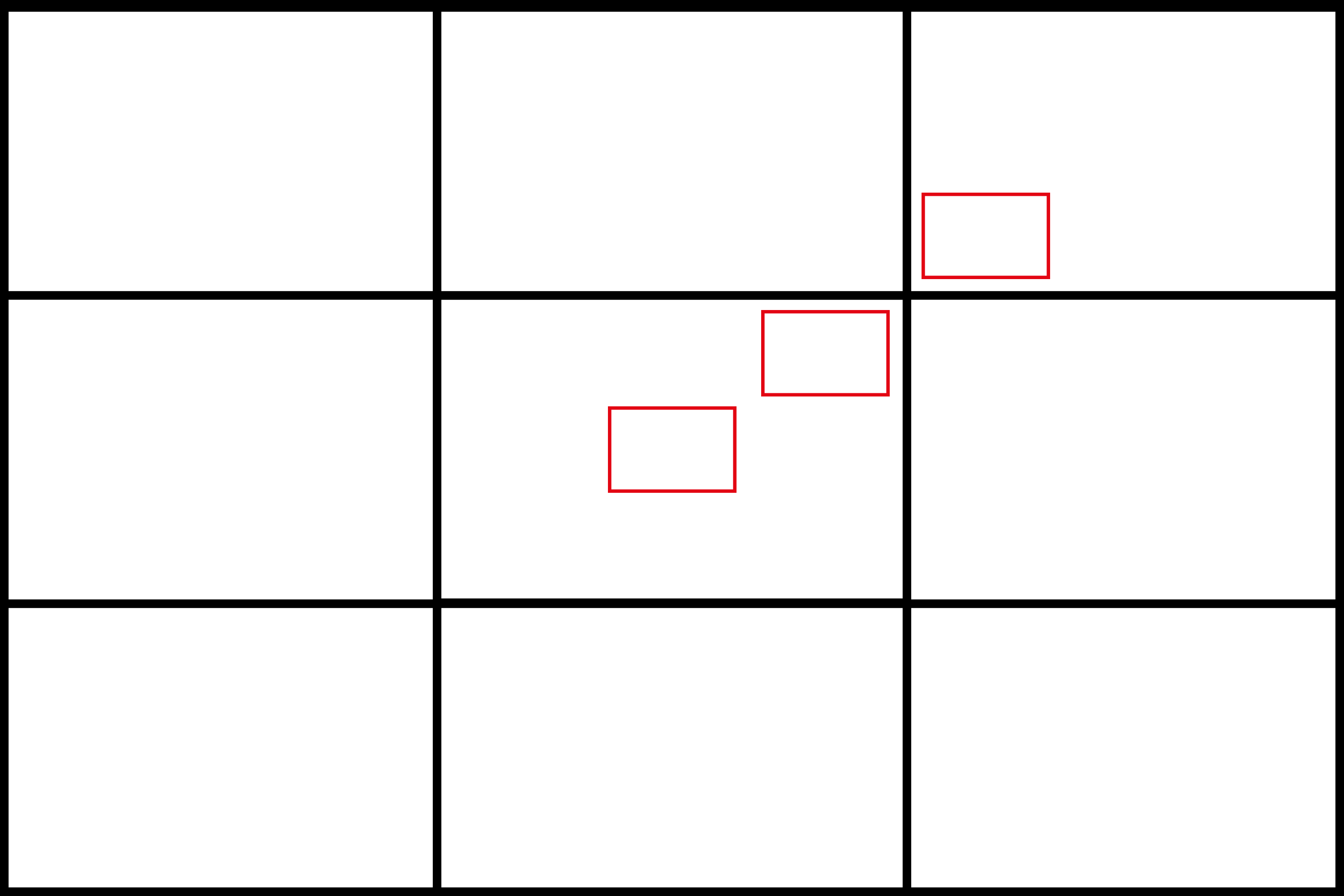
We will be looking at 100% crops from the 42mp Sony A7rII.
f/2.8 <—> f/4.0



Also at portrait distances this 45mm lens is a bit softer at f/2.8 compared to stopped down a bit, but Astigmatism is well corrected which also makes it comparably easy to focus.
Close 0.45 m, 1:7.5 (42mp Sony A7rII)



A compact unit focus lens like this cannot be optimized for different distances and the maximum magnification of 1:7.5 can be considered moderate.
Using a high resolution digital camera you can certainly see some softness at f/2.8 and still some at f/4.0. So if you are looking for very crisp results it is a good idea to stop down to f/5.6 near the minimum focus distance.
Flare resistance
While the design of most of Nikon’s manual Ai lenses dates back to the 70s, this 45mm 2.8 Ai-P had been released much later, in 2001. Could this translate to better flare resistance?


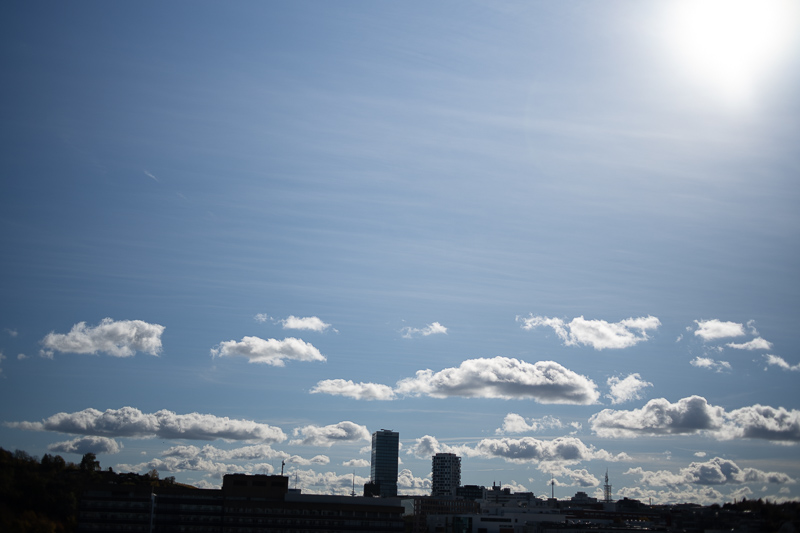
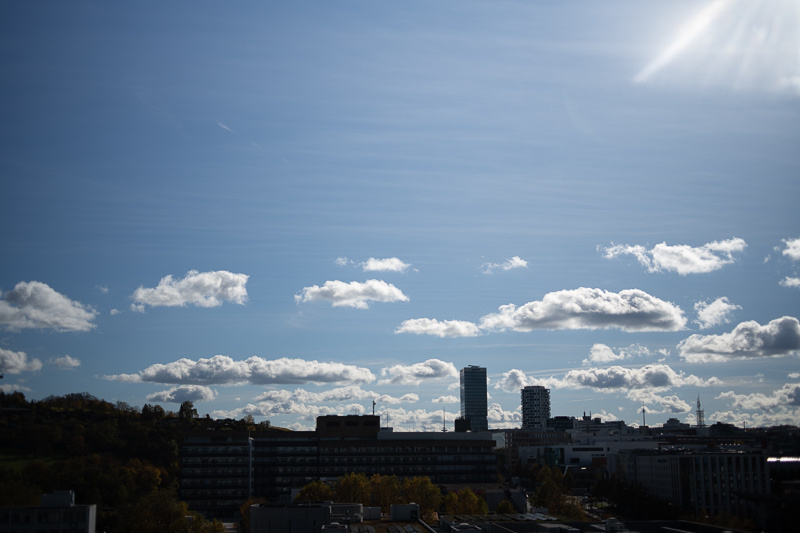
At the maximum aperture it is quite difficult to catch disturbing artefacts – a huge difference compared to the Nikon 50mm 1.8 Series-E.
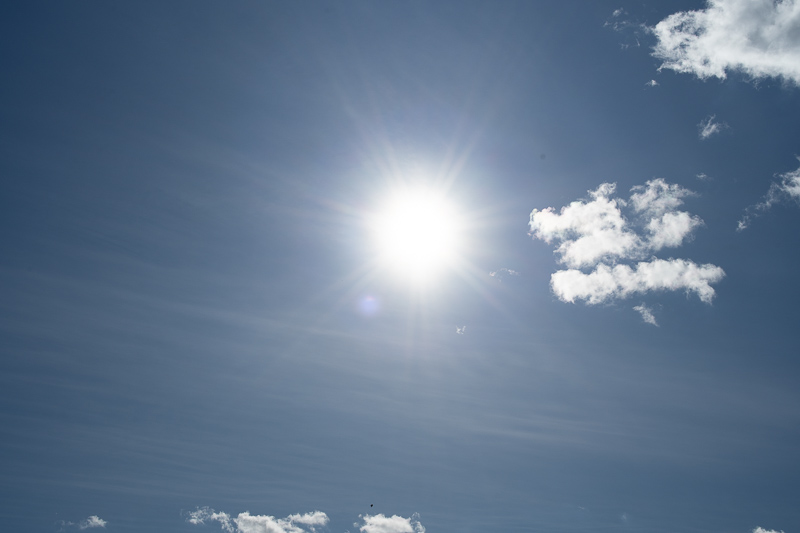
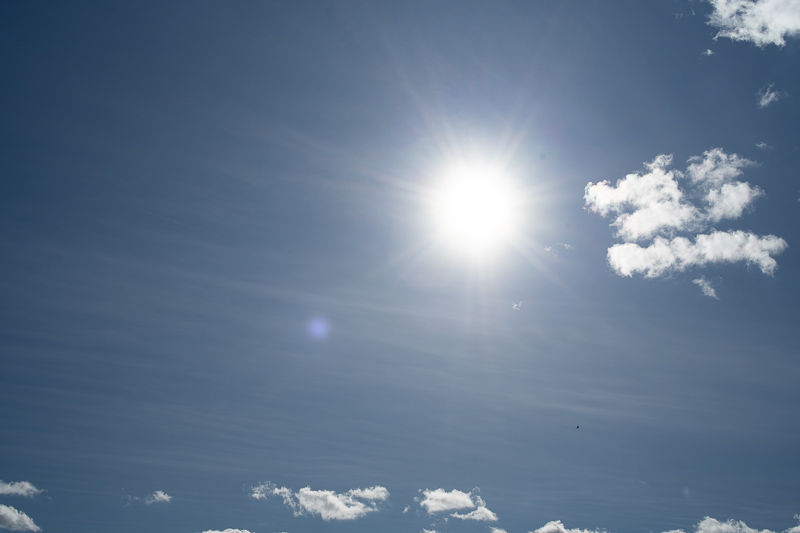
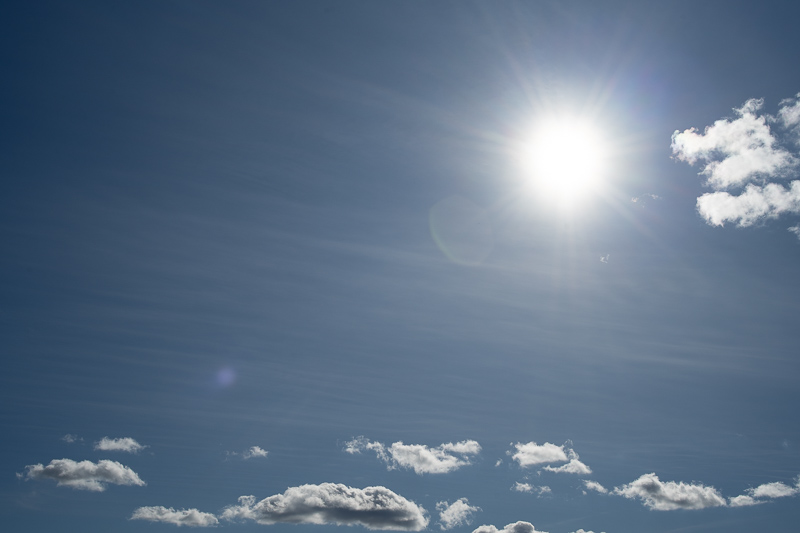
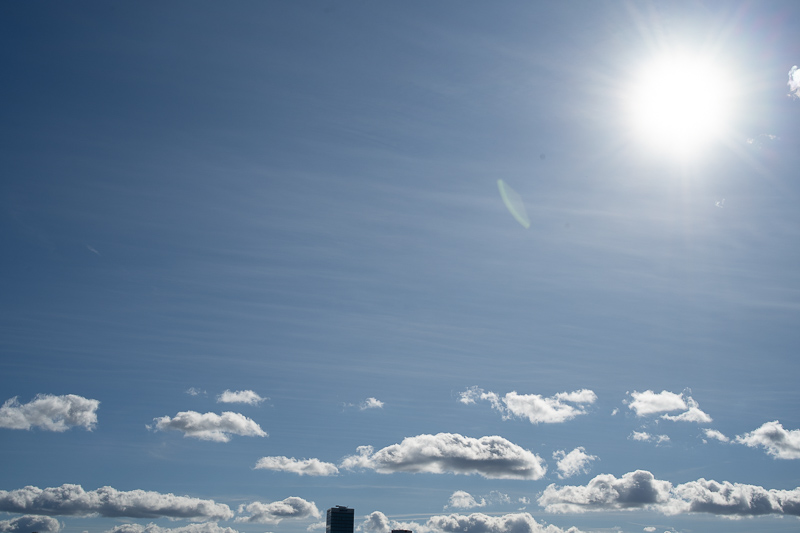
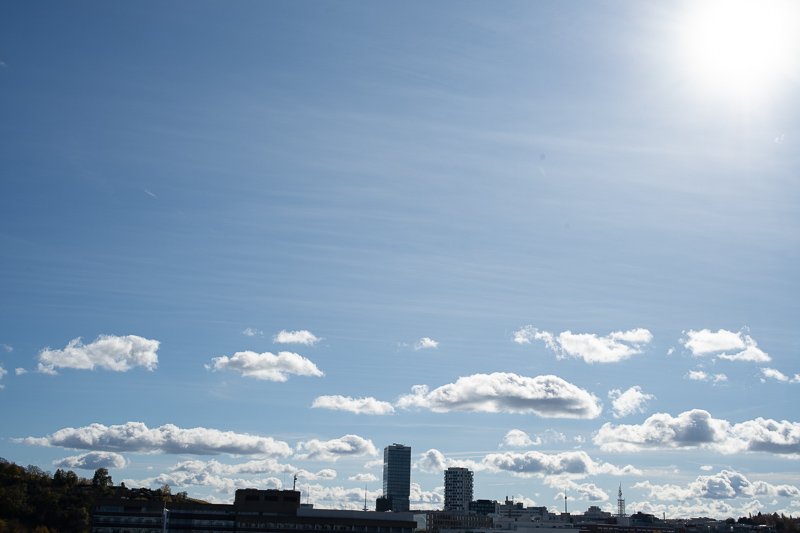
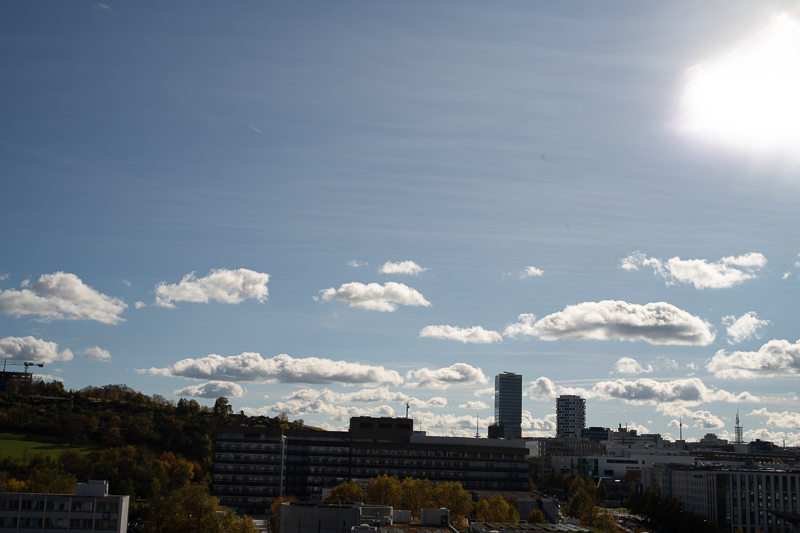
Stopped down I managed to create a few small ghosts in these staged scenarios and also some flare with the sun in a very specific position just outside the frame.
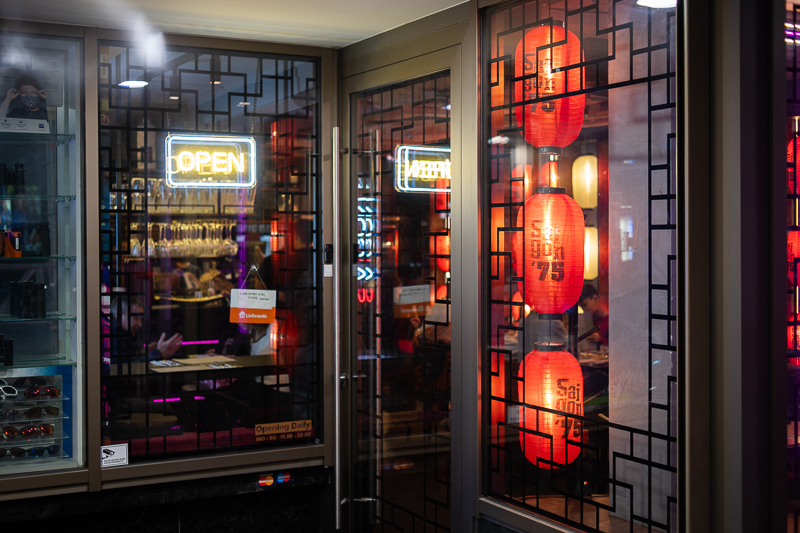
The latter also was a problem at night: here street lamps located outside the frame often lead to artefacts close to the edges or corners.
This is still a much better performance than that of most of Nikon’s older manual focus Ai lenses.
Coma
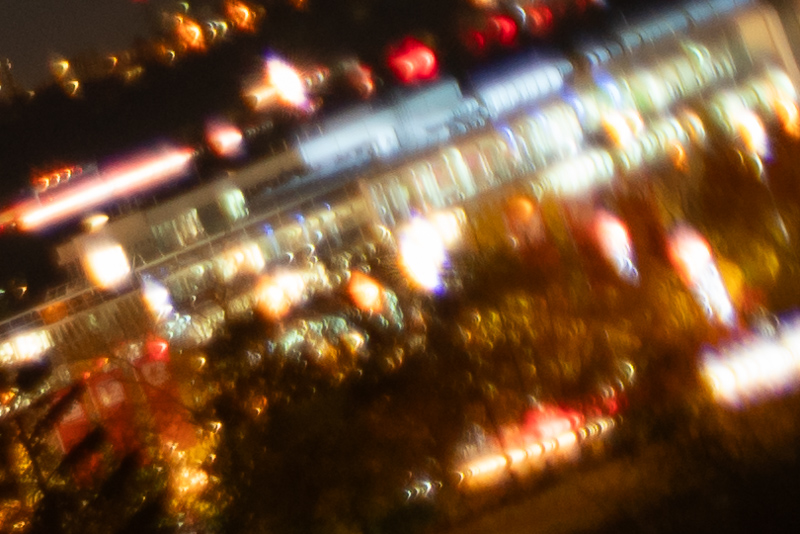
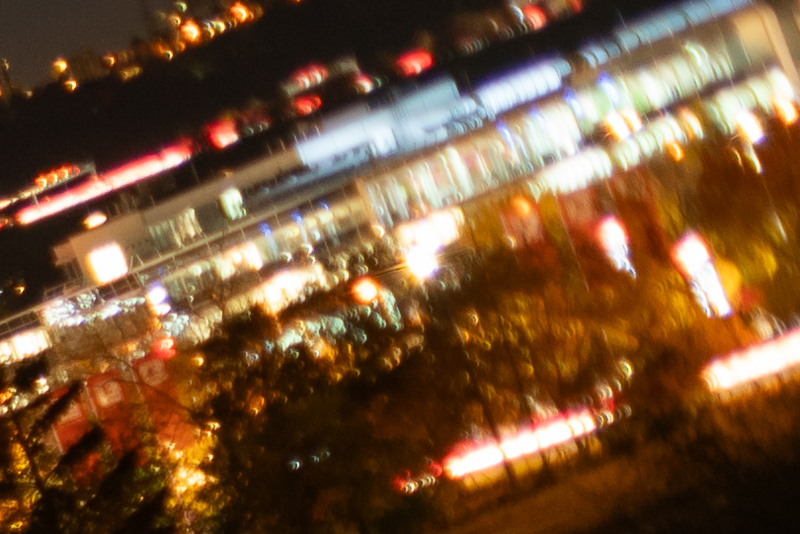
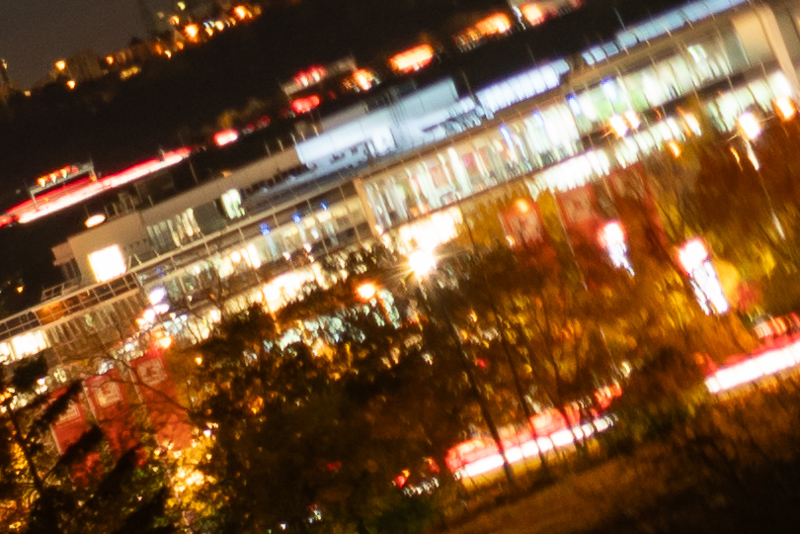
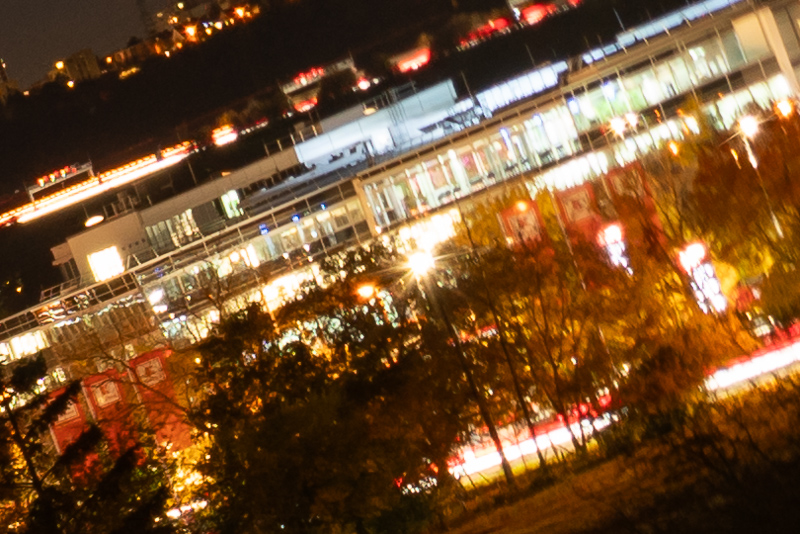

100% crops from extreme corner, focused on center, Sony A7rII
I don’t think astrophotography is a typical application for this lens, but a very high amount of coma can still easily ruin blue hour or nightly cityscapes.
These patterns look rather interesting: while the artefacts around point light sources are not as big as those of faster double gauss 50mm 1.8 lenses, there is still a lot of glow around highlights in the corners. As we have already seen in the sharpness section the extreme corners never look great – probably a compromise to keep the size of this lens down
Distortion
This lens does not show any field relevant distortion.
Bokeh

A maximum aperture of f/2.8 is not something to get excited about in a 45mm lens. There are a lot of zoom lenses that offer this combination after tall. That being said, many of pancake lenses I reviewed also had some issues with the bokeh quality. Can this Nikon lens improve on those?



This 45mm lens focuses reasonably close and the bokeh quality is also perfectly fine here.

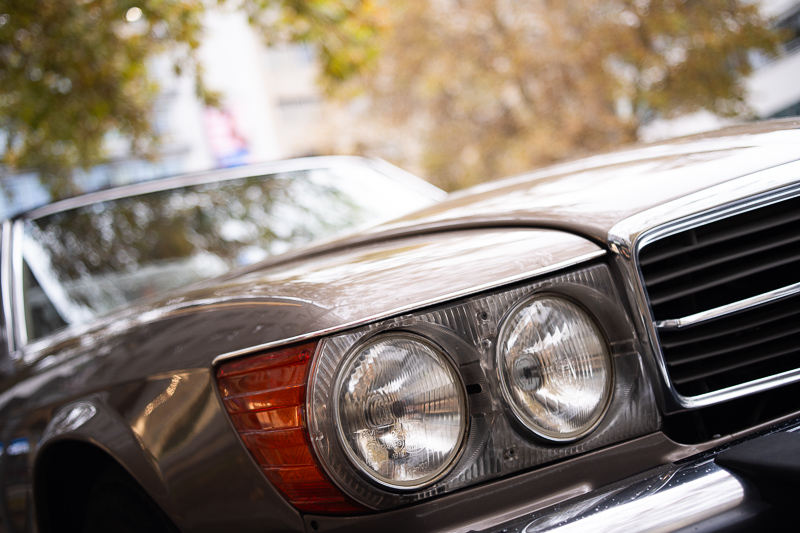
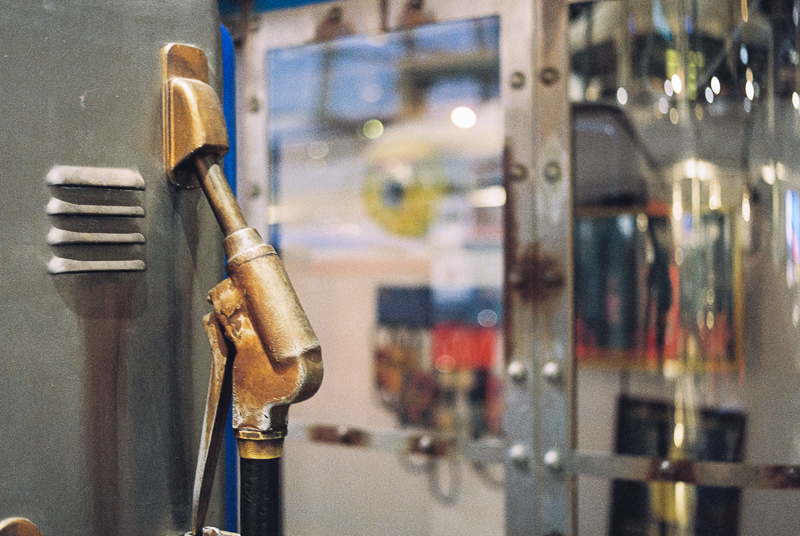

At mid distances I found the bokeh to be more pleasing than I would have expected, as outlining or deformation of the out of focus highlights are not really an issue.


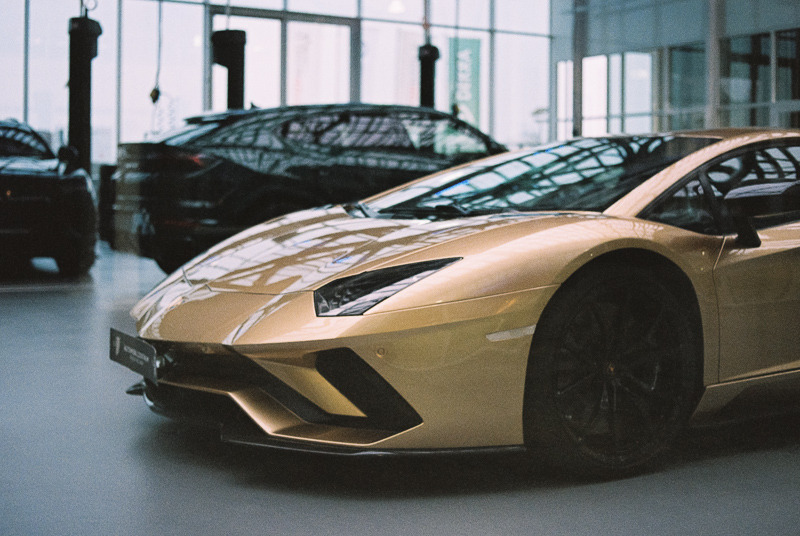
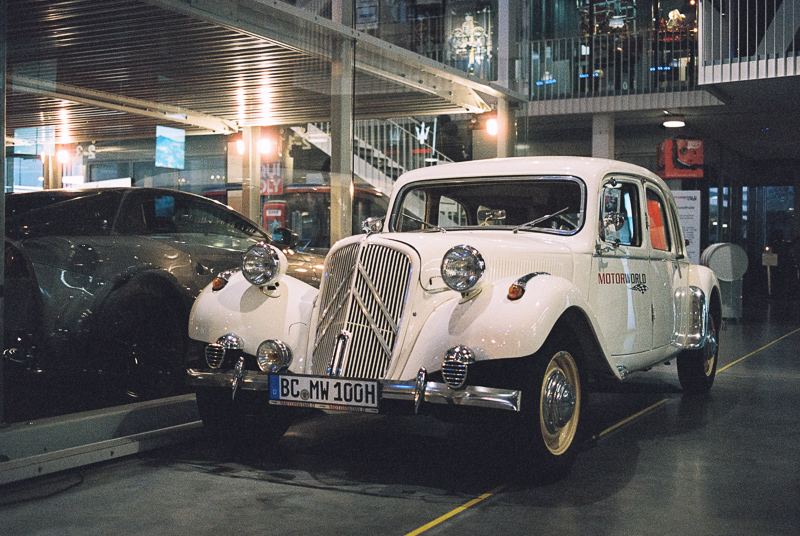


At longer focus distances it obviously gets more difficult to create a shallow depth of field. Obviously this lens is not for those that are looking for the shallowest depth of field, but it still shows a solid performance in this category – better than many other pancake lenses.
Sunstars
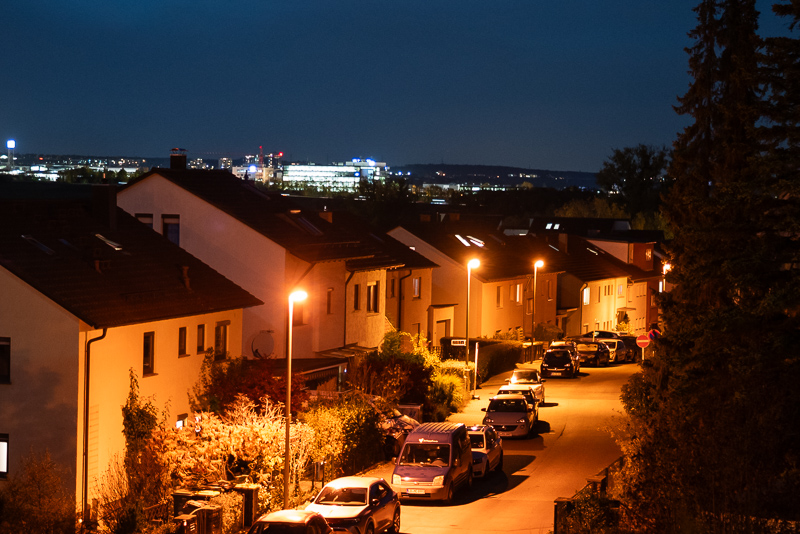
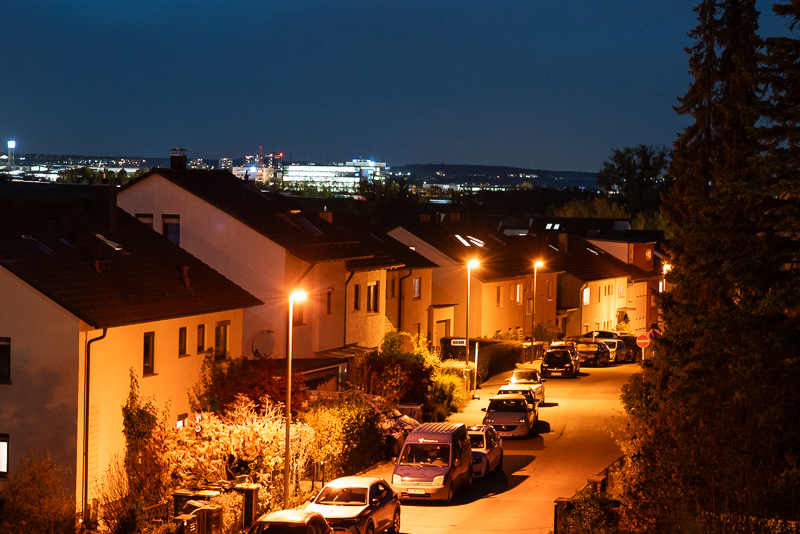
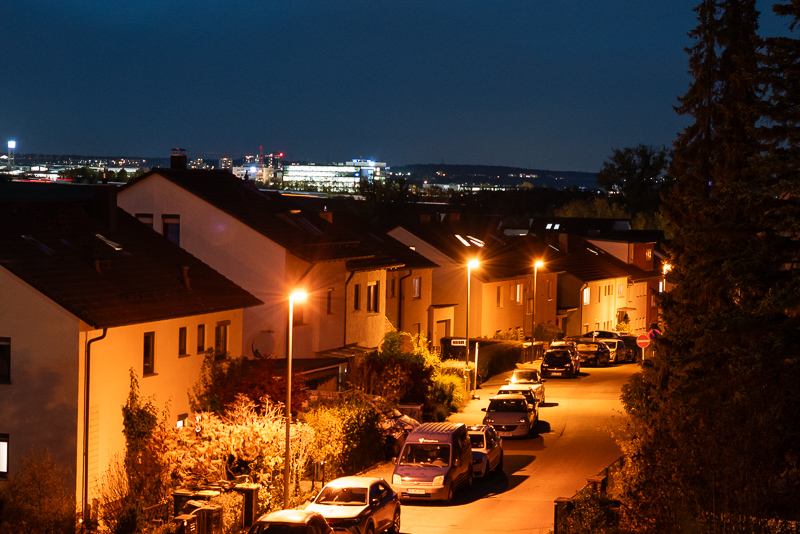
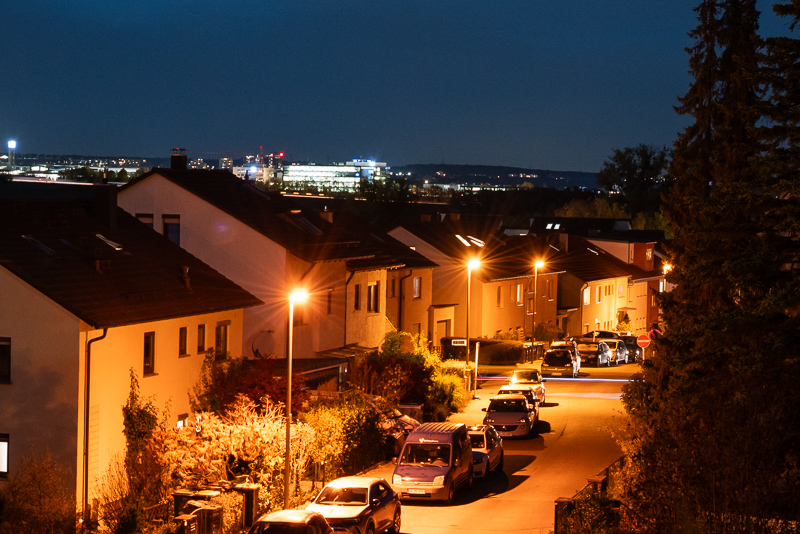
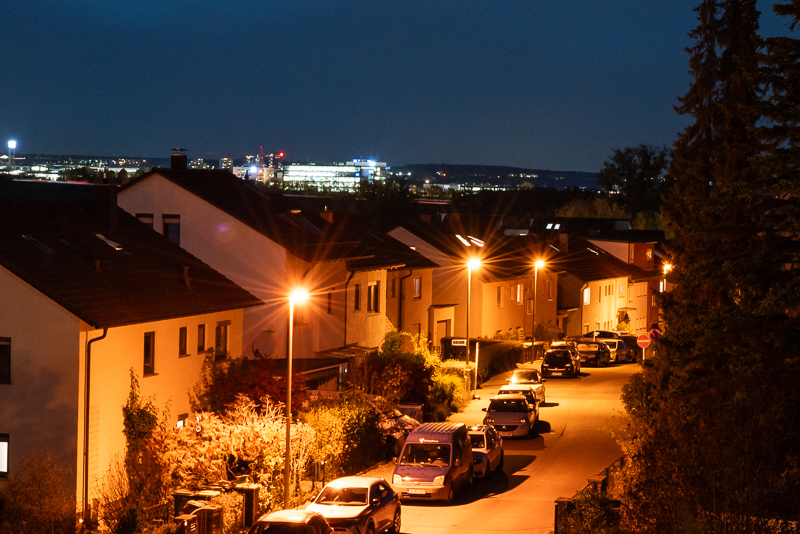
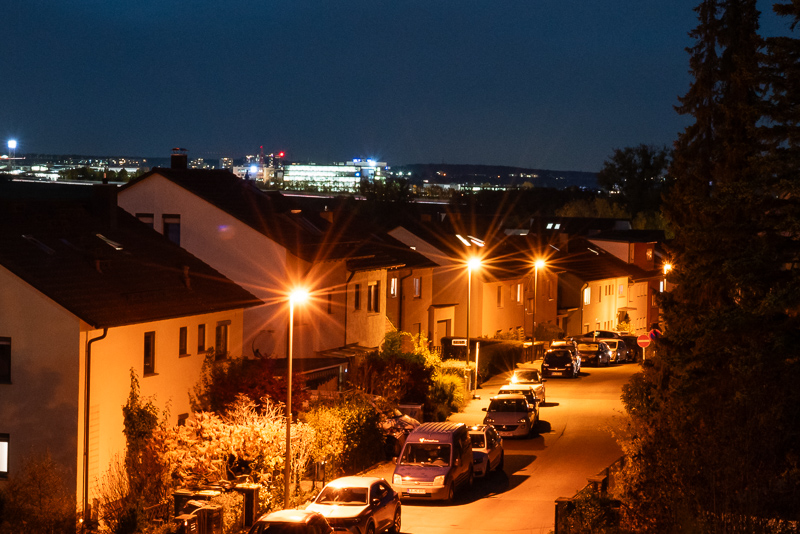
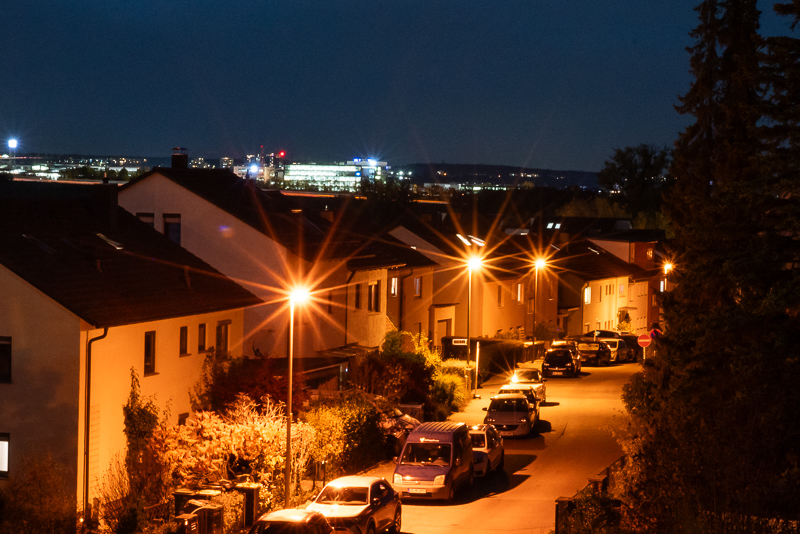
Nikon’s 7 aperture blade diaphragms are a bit hit and miss in this category. Here The alignment of the blades is once more not really great, which leads to rays of uneven length. Only stopped down to f/22 this lens actually produced nice sunstars, but here diffraction will already severly hurt the overall quality of your pictures so that is a setting I normally avoid.
If you want to know more about sunstar rendering of different lenses have a look at this article.
Chromatic aberration
Lateral
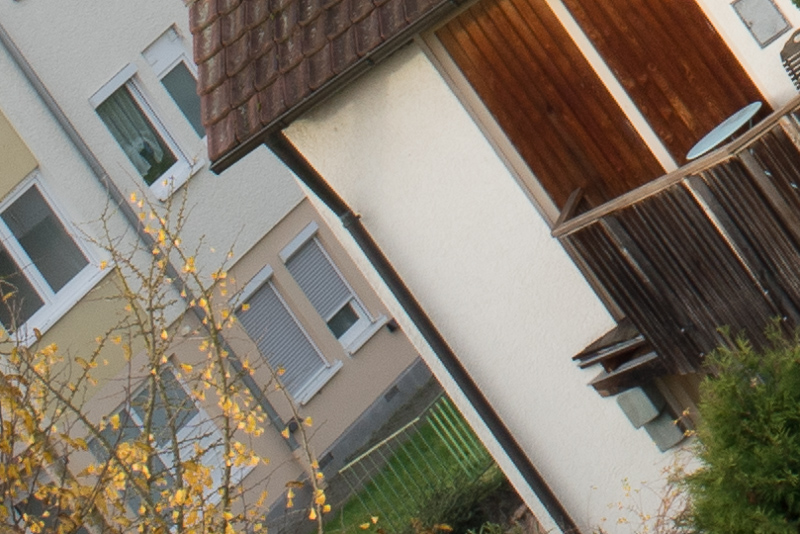
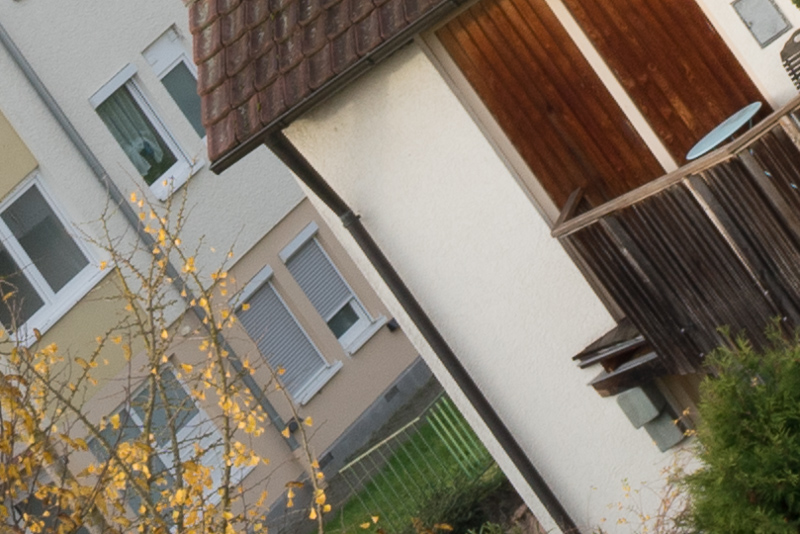
100% crops from corner, Sony A7rII
Despite its rather simple 4 element design, lateral CA are not really an issue. What is still there is easy to correct in post with just one click, e.g. in Lightroom.
Longitudinal
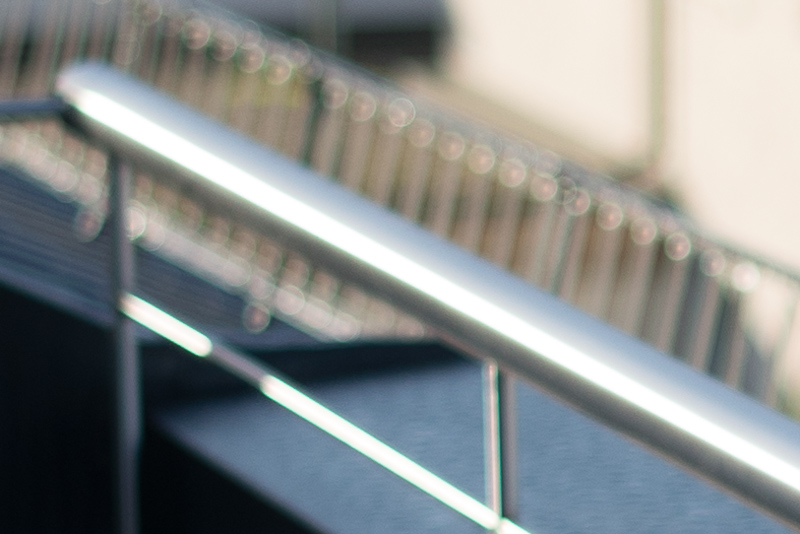
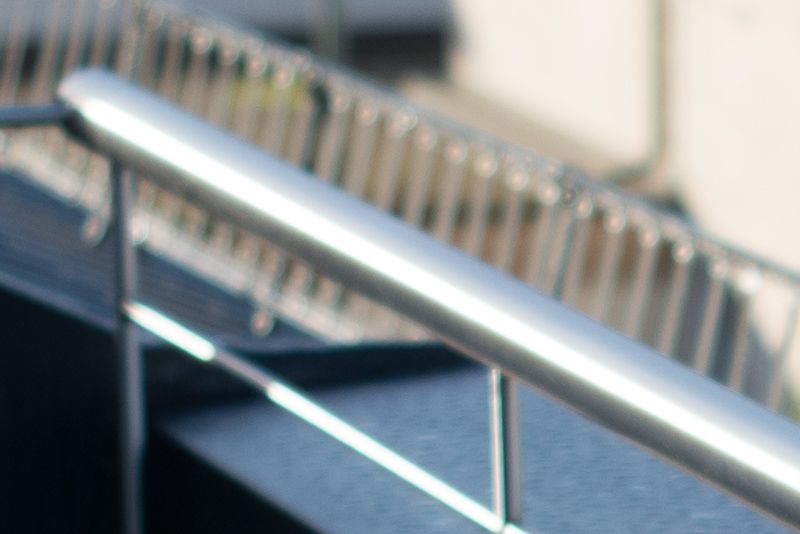
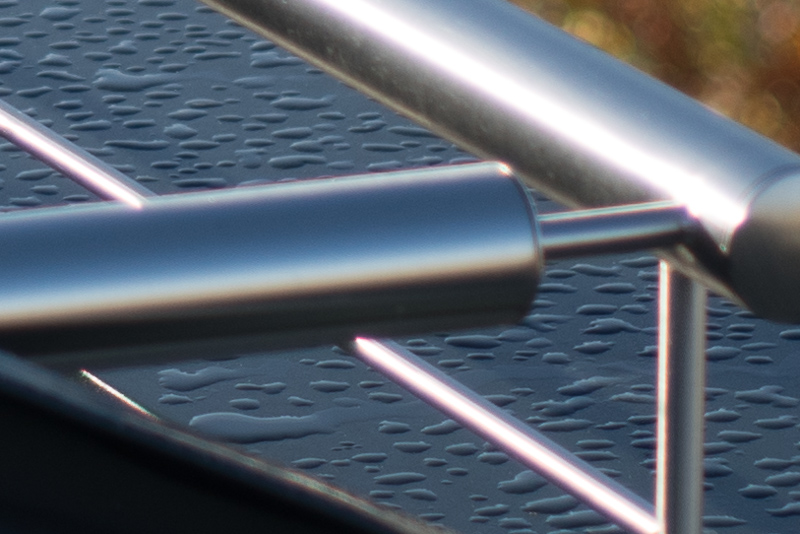
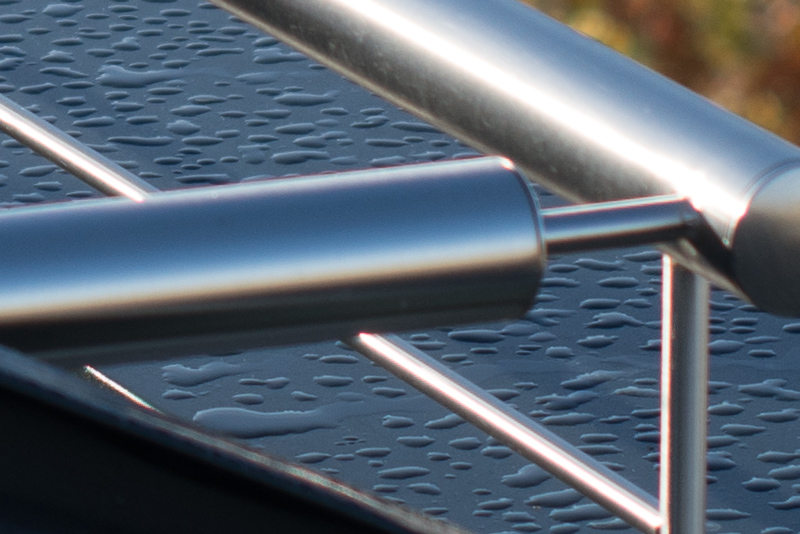
Considering the moderate maximum aperture of f/2.8, longitudinal CA are a bit on the high side. Here the modern also very compact yet very affordable TTArtisan 50mm 2.0 actually performs better – despite being one stop faster.
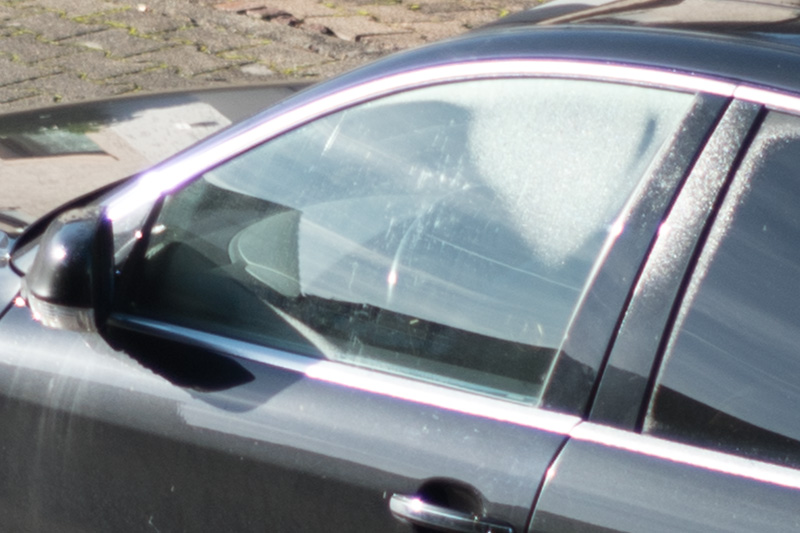
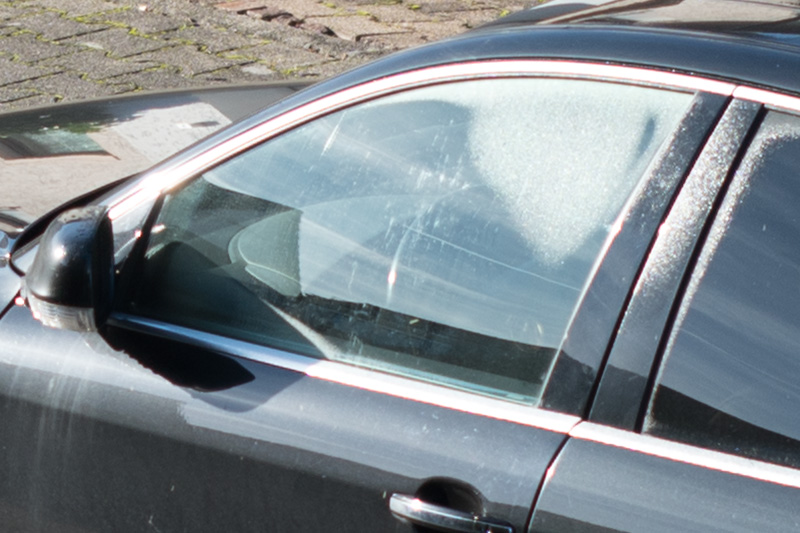
Also purple fringing is strong at f/2.8 and the discoloring still isn’t completely gone when stopped down to f/5.6.
Conclusion
good
|
average
|
not good
|
When dealing with pancake lenses there are always optical compromises involved. Even if you got rid of all cost restraints, the number of lens elements would still be severly limited by the physical dimensions. Complex mechanical structures like a floating elements design usually also cannot be incorporated.
Keeping all this in mind, the general performance of this 45mm 2.8 is quite alright actually. There are some flaws – but not outstanding or unexpected ones – and it still holds the title for being Nikon’s smallest F-mount lens after all.
That being said, this isn’t really a lens I would to put on a modern mirrorless camera. As soon as you add the necessary adapter to the equation, the pancake size is gone and there are smarter options available – e.g. the TTArtisan 50mm 2.0.
So at the end of the day, I think this lens is best used on an FM/FE series analogue camera, where it looks simply beautiful.
buy from ebay.com | ebay.de (advertisement/affiliate links) starting at $400
Alternatives
(D)SLR lenses
Nikon 45mm 2.8 GN Auto-Nikkor:
The predecessor. Also features a (different) 4/3 design and a fancy short lived GN ring for easier use of flash. I haven’t used this lens personally yet, from everything I have seen it performs worse and doesn’t feature electronic contacts but it is also cheaper.
buy from ebay.com | ebay.de (advertisement/affiliate links) starting at $200
Voigtländer 40mm 2.0 Ultron SL:
The latest SL IIs version – despite the same optical formula – is much bigger than the older SL version. The SL version is still not as short as this Nikon 45mm 2.8, but a very small lens nevertheless and it also comes with electronic contacts. Sadly it is one of the few lenses from Voigtländer’s SL lineup I did not get the chance to review yet. From everything I have seen it shows a better performance while even being a stop faster. Considering it can usually be found new for less money than this 45mm 2.8 Ai-P, I would give it a strong consideration.
buy from ebay.com | ebay.de (advertisement/affiliate links) starting at $300
buy the latest (bigger) version new from B&H (advertisement/affiliate links) for $489
Nikon 50mm 1.8 Series-E:
The Nikon 50mm 1.8 Series-E is one of Nikon’s cheapest lenses and can easily be found used for ~$60. It is only slightly bigger but 4/3rds of a stop faster. Sadly its flare resistance is not very good and it also lacks electronic contacts. If these two things are not that important to you, I would definitely recommend to have a look at the 50mm Series-E first.
buy from ebay.com | ebay.de (advertisement/affiliate links) starting at $60
Mirrorless lenses
TTArtisan 50mm 2.0
The TTArtisan 50mm 2.0 is to me the nifty-fifty of the mirrorless era. Its flare resistance is a bit worse than this 45mm 2.8, but keeping in mind you don’t need an adapter it is much smaller when used on a mirrorless camera and it can be bought for just $69 new.
buy from TTArtisan | Amazon | ebay.com | B&H for $69 (advertisement/affiliate links)
Sample Images






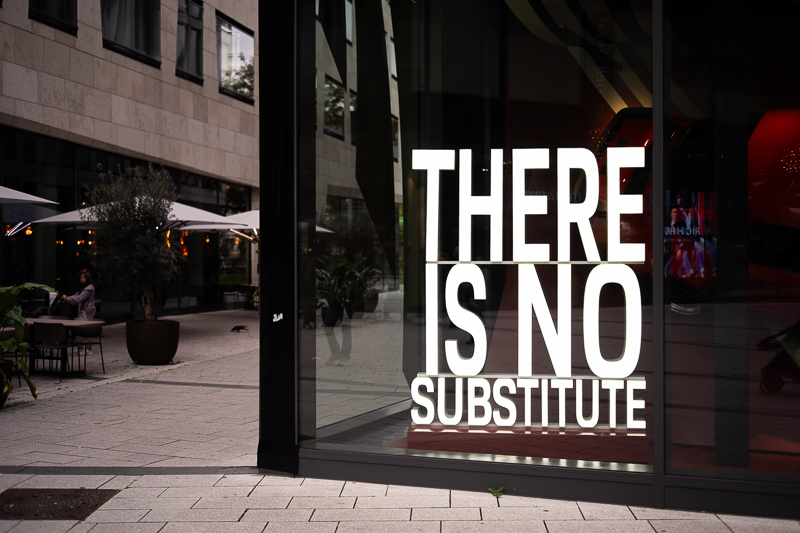

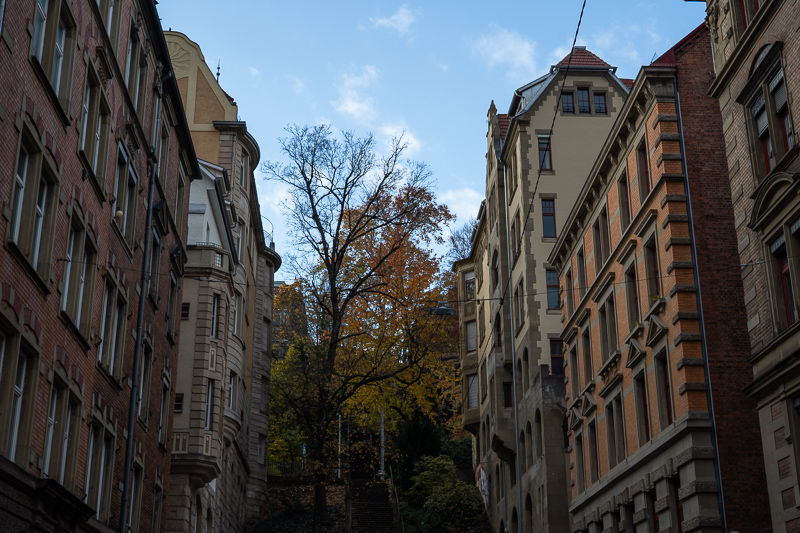
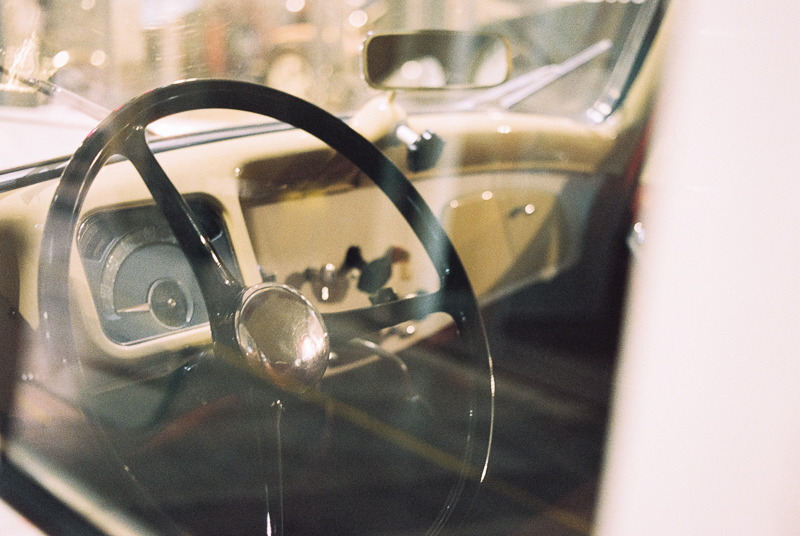



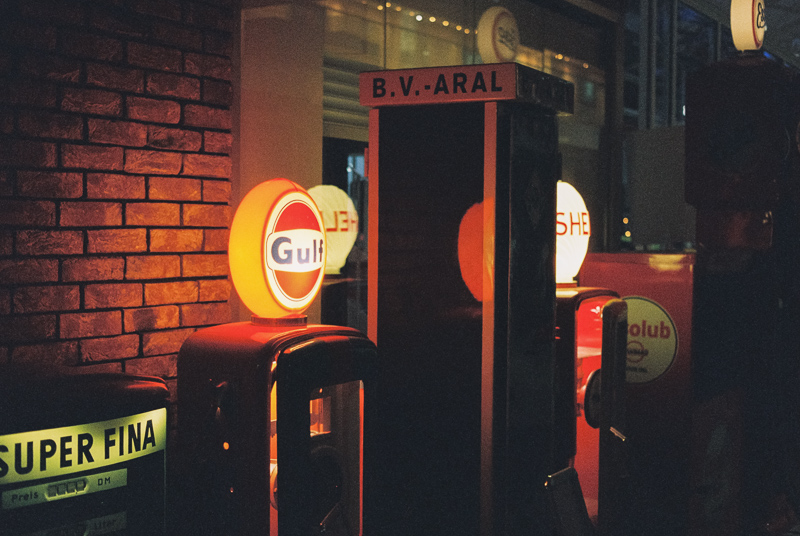
Most of the sample images in this review can be found in full resolution here.
Further Reading
- All Lens Reviews
- Analogue Adventures Landing Page
- Review: Nikon AF-S 58mm 1.4G
- Review: Nikon 105mm 2.5 Ai
- Review: Nikon 200mm 2.0 IF-ED Ai
Support Us
Did you find this article useful or just liked reading it? Treat us to a coffee!

 via Paypal
This site contains advertisement/affiliate links. If you make a purchase using any of the links marked as advertisement/affiliate links, I may receive a small commission at no additional cost to you. This helps support the creation of future content.


Latest posts by BastianK (see all)
- Review: Nikon 45mm 2.8 Ai-P Nikkor – Nikon’s smallest F-mount lens - November 25, 2026
- Review: Laowa 35mm 2.8 Apo Macro Acris 1.0X - November 21, 2026
- Analogue Adventures – Part 59: Lucky 200 C-41 - November 18, 2026
Interesting and quite uncommon lens! I am glad to see such review here, even if it turns out it does not make much sense to use it on mirrorless cameras.
From time to time I put an effort to overview offers for similar(the same formula in fact) lens for Contax/Yashica mount, the Carl Zeiss Tessar 45/2.8. But I do not bother to proceed to purchase for the same reasons that the review suggested.
Thanks for the review! My impression from the sample I owned was that I got much better results at infinity – mine was fine to the edges at f/5.6. But I’d have to dig out the raws to be sure.
Theoretically, neither the Sony’s thicker sensor stack nor the adapter length should affect this lens much, but I still wonder whether infinity performance would have been better on a Nikon Z camera.