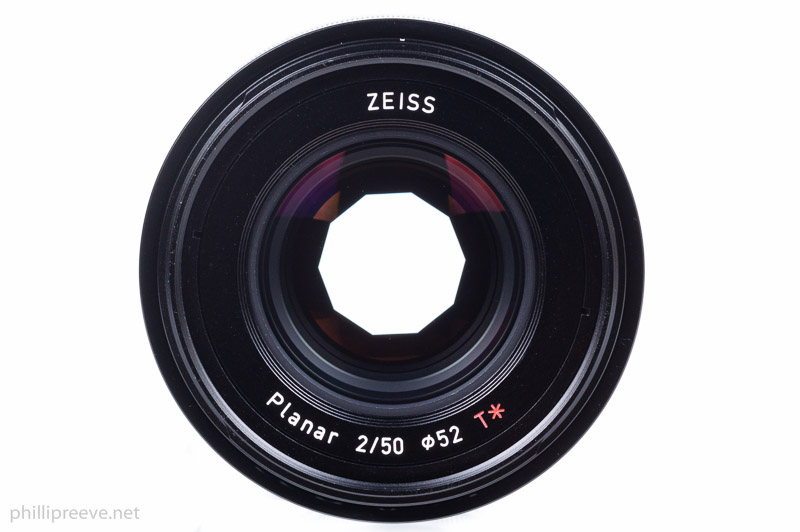
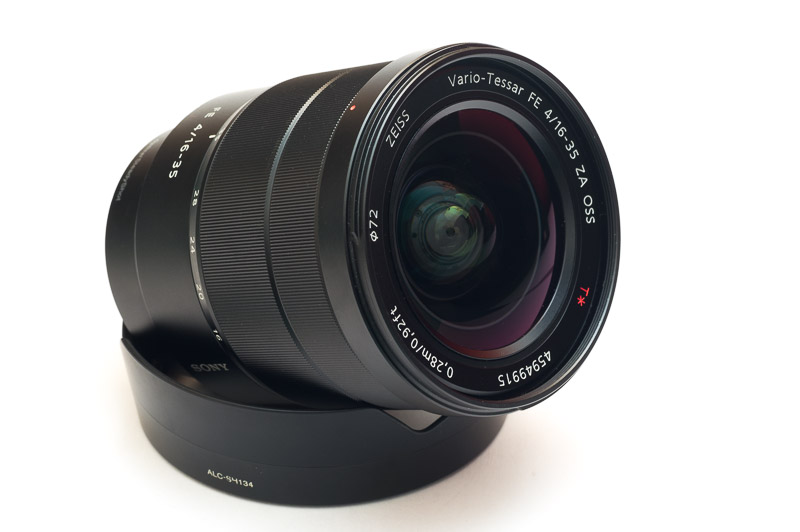
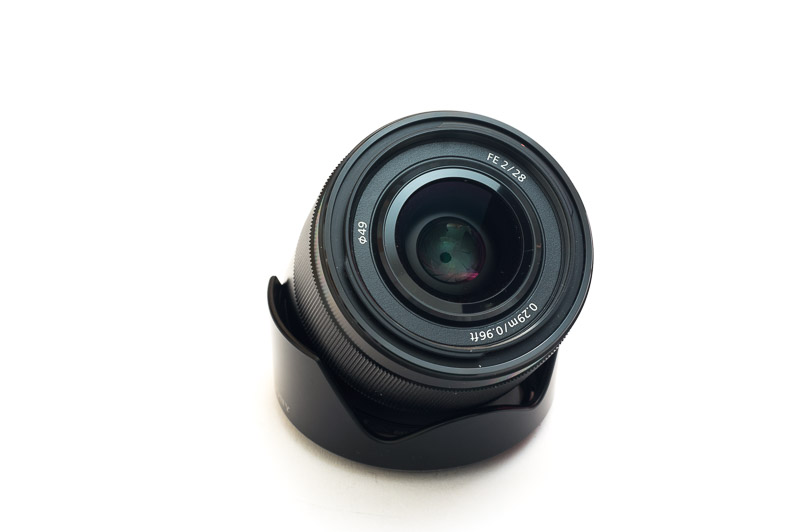
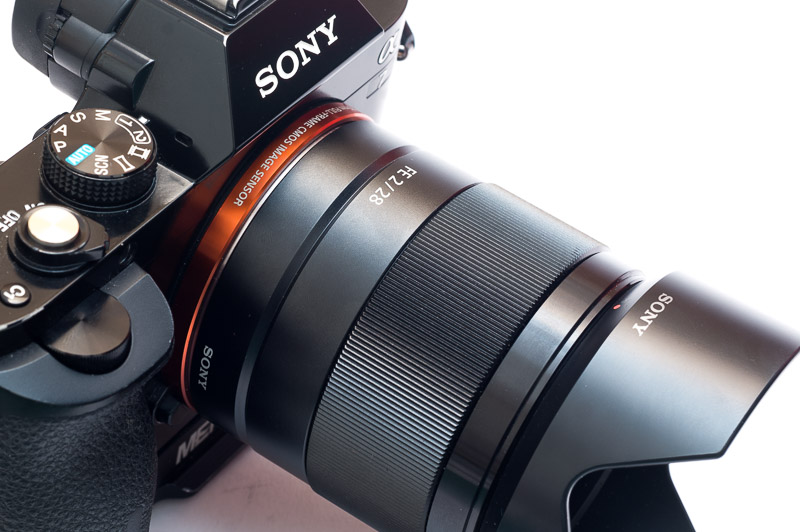
The Zeiss Loxia Planar 2/50 offers all the benefits of manual lens: a great focusing ring, very solid build quality and a small size but it gets rid of most disadvantages like outdated coatings, adapters and you get full exif info. 09/07/17 Update by Bastian: I have just recently been looking for a fast standard lens to use for Milkyway stitching (see this article) and compared this lens and the Sony FE 55mm 1.8 side by side. Therefore I added a few bits from these comparisons.
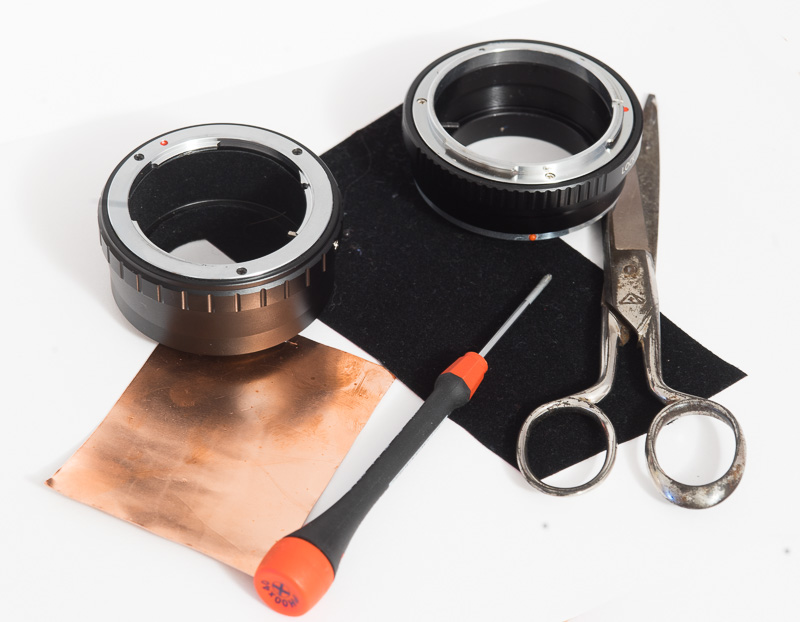
Since a few people asked this is a short how-to on how I tune my adapters. As you will notice I am far from a perfectionist but so far my method has worked well for me and I think it could solve issues for some of you as well.
Correcting Infinity Focus
The Issue
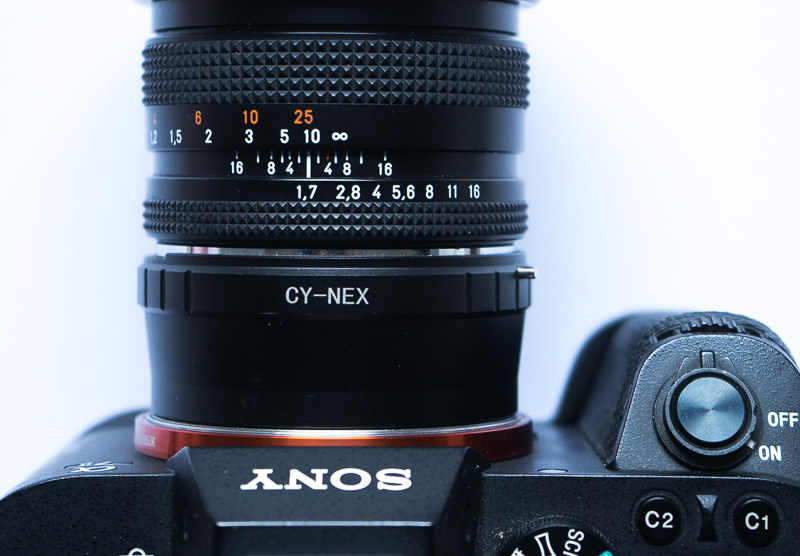
Most adapters, not only the cheap ones, are a bit too short. This means that the markings on your lens are off and you can focus your lens behind infinity so the infinity hard stop of your lens won’t work. It makes sense for adapter manufacturers to make their adapters a bit too short because your Sony’s flange focal distance varies a bit and so does lens calibration. If their adapters were exactly as thick as specified there would be quite a few cases were people couldn’t focus at infinity which is way more annoying than a focus scale which is a little off.
But a too short adapter can also have negative impact on the image quality if you use a lens with floating elements. Especially with fast wide angle lenses you can get serious field curvature issues as many users of the Metabones Canon EF adapters have found out.
Important notice: This fix only works if you can focus at infinity and beyond! If you can’t reach infinity the fix will only make matters worse.
The lens is focused as infinity but the focus scale is way off because the adapter is too short
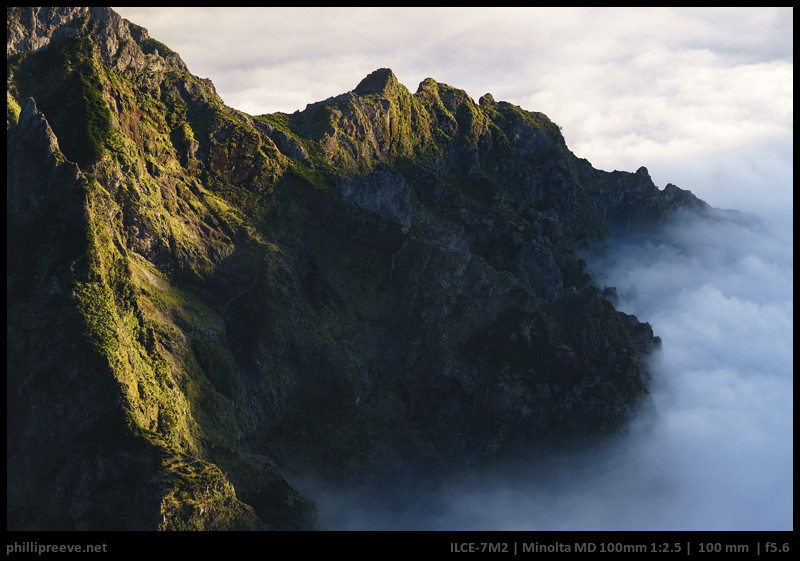
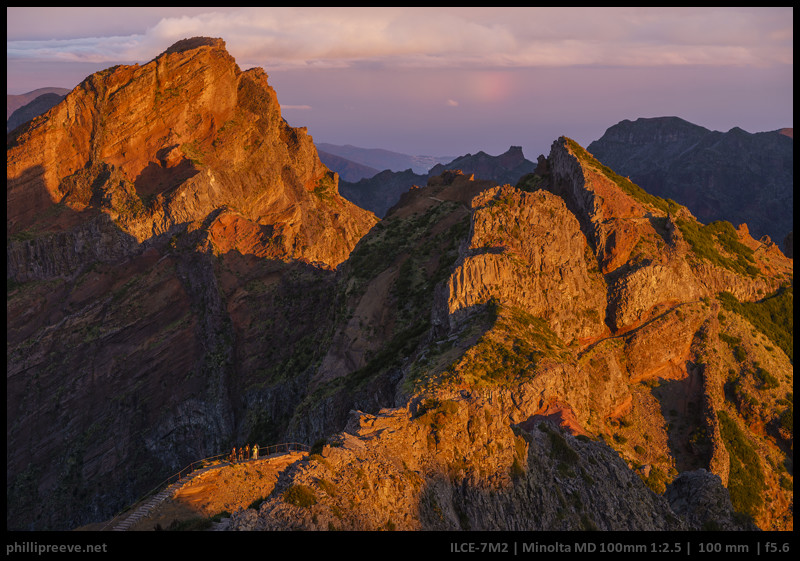
The Minolta MD 100mm 1:2.5 is a small and affordable lens which delivers a surprisingly good performance on the Sony a7 series. Read my in-depth review to decide if it could be a good addition to your camera bag.
Specifications
Diameter
64 mm
Length
65.5 mm
Filter Thread
49 mm
Weight
310 g
Max. Magnification
0.12
Close Focusing Distance from the sensor
1 m
Number of aperture blades
6
Elements/ Groups
5/5
The Minolta MD 2.5/100 usually sells for around $150 used at ebay.com (advertisement, affiliate link). In Germany you can buy it used for around 140€at ebay.de (advertisement, affiliate link).
Image Samples
You can find all images shown in this image in full resolution in this album.
Close Focusing Distance from the front of the lens
36
Number of aperture blades
6
Elements/ Groups
7
Price: (July 2016): about 50€ in good condition at ebay.de or $ at ebay.com (affiliate links).
Versions
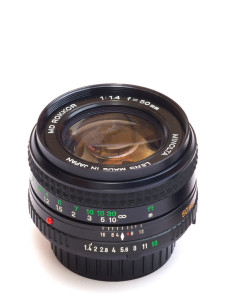
Minolta made three optically different 1.4/50 lenses.
The MC Rokkor 50mm 1:1.4 PG is the oldest one with the nicest built quality and very good image quality
The MD Rokkor 50mm 1:1.4 with 55mm filter thread. It is 60gramms lighter than the MC and the close focusing distance decreased from 50cm to 45cm. This page is about this lens.
The MD (Rokkor) 50mm 1:1.4 with 49mm filter thread.
Builts quality is very good, only the name plate and aperture ring are made from plastic, the rest is made from metal.
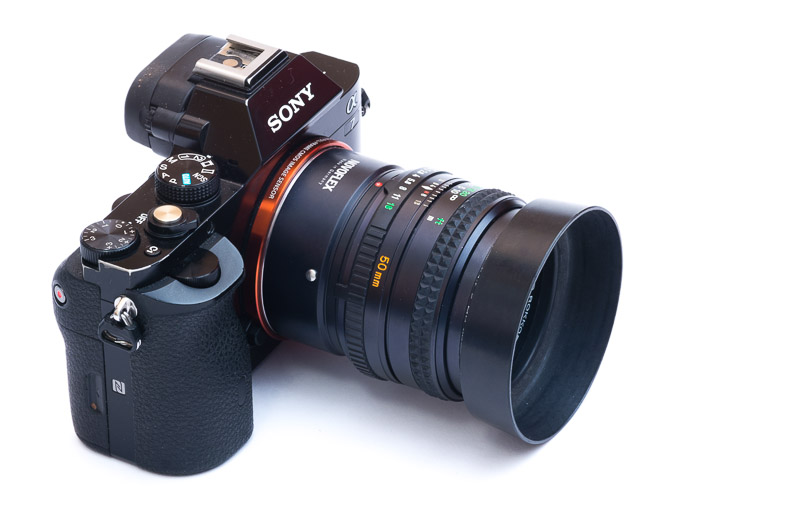
All in all it is a rather small lens and it balances very well on the Sony a7. The original lens shade is made from plastics, has a decent size and isn’t too bulky. Because the front element is rather exposed I would recommend using it.
The focusing ring travels around 100° from 45cm to 1m and a further 60° to infinity. The focusing has just the right amount of resistance but it is a bit small (8mm) for my taste.
The aperture ring has half stops from f/2.0 to f/16 and no stop between f/1.4 and f/2.0.
These results are based on the use with a Sony Alpha 7.
Bokeh
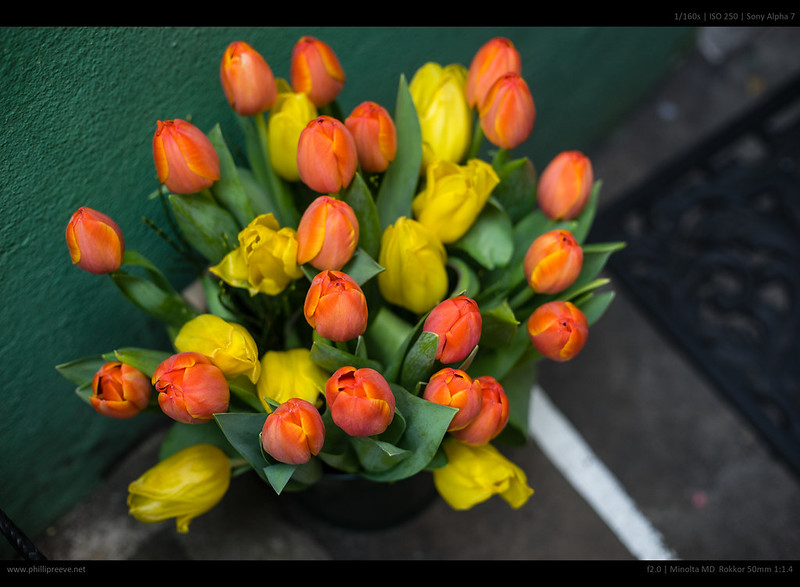
f/1.4: rather defined outlinesf/2: still defined outline but noticeably lessf/2.8: much less defined outlines but visible hexagons
Chromatic Aberrations
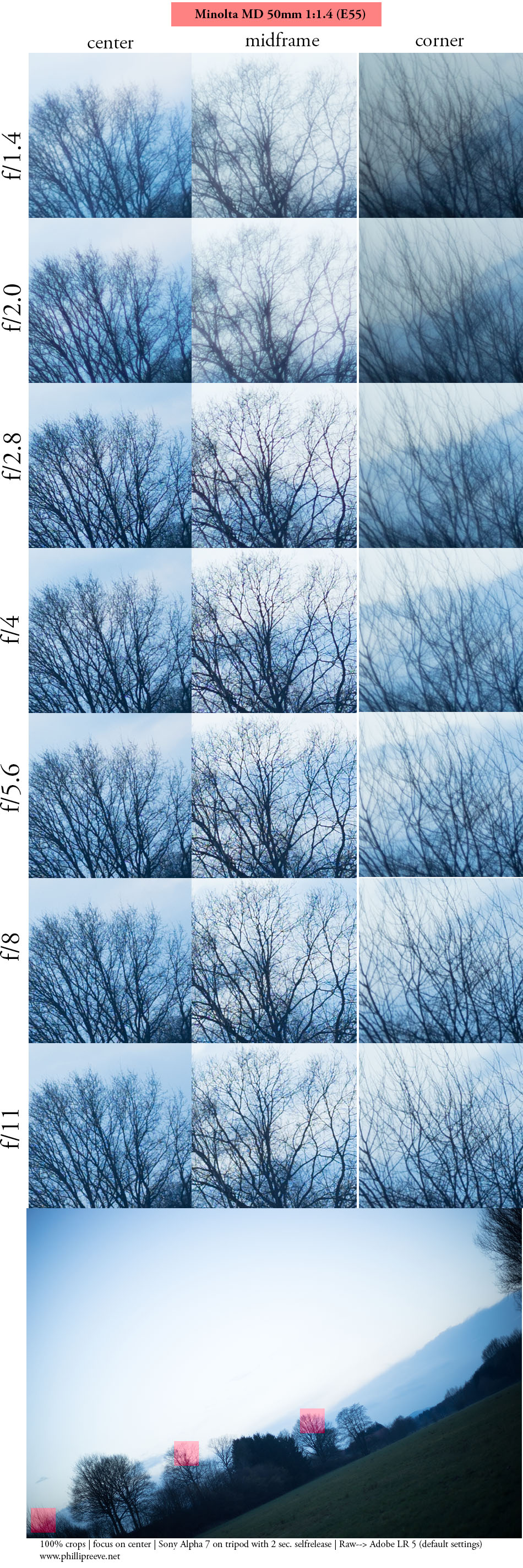
Sharpness
Alternatives
Minolta MC 1.2/58: Quite a bit smoother bokeh and 8, not just 6 aperture blades make it a superior lens when bokeh is important. Sharpness is similar, the 1.4/50 might be a tad better. It also costs about 6 times as much and is nearly 150g heavier.
Minolta MC 1.7/55: Not as sharp at wider apertures but it has nicer bokeh and is a bit smaller.
Minolta MD 2/50: Worse bokeh but it is sharp across most of the frame from f/2, very small and only weights half of the MC 1.4/50. This is reflected in the build quality though. It is also free of lateral CA and distortion which the 1.4/50 is not.
Zeiss C/Y Planar 1.4/50: The Planar has more effective coatings which results in a much better flare resistance and higher contrast at wider apertures. The Minolta is a lot cheaper though.
Canon nFD 1.4/50:The Canon is quite a bit sharper at f/1.4 and f/2 but and it doesn’t feel nearly as solid. Price is similar.
Zeiss Loxia 2/50: A modern lens which is sharp across the frame from f/2 with high contrast and exif transmission. Bokeh is the only real weakness I found. Oh an the price of course.
Sony FE 1.8/55 ZA: The Sony is super sharp from f/1.8 and it has much smoother bokeh. Manual focus is a pain in the a** though and it is expensive.
Conclusion
A typical 1.4/50 lens: Rather soft wide open, good for portraits by f/2, excellent by f/2.8 but it needs to be stopped down to f/8 for landscapes.
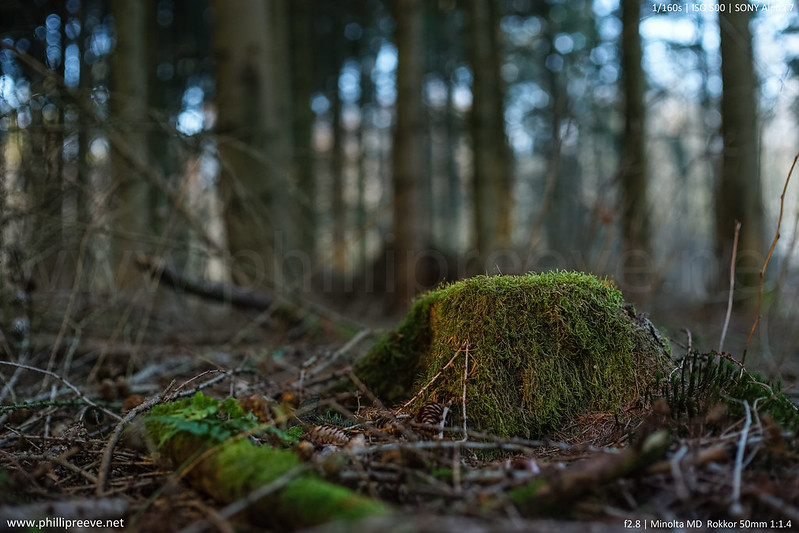
Images Samples in high resolution
f/2
f/2.8 or maybe f/2.4
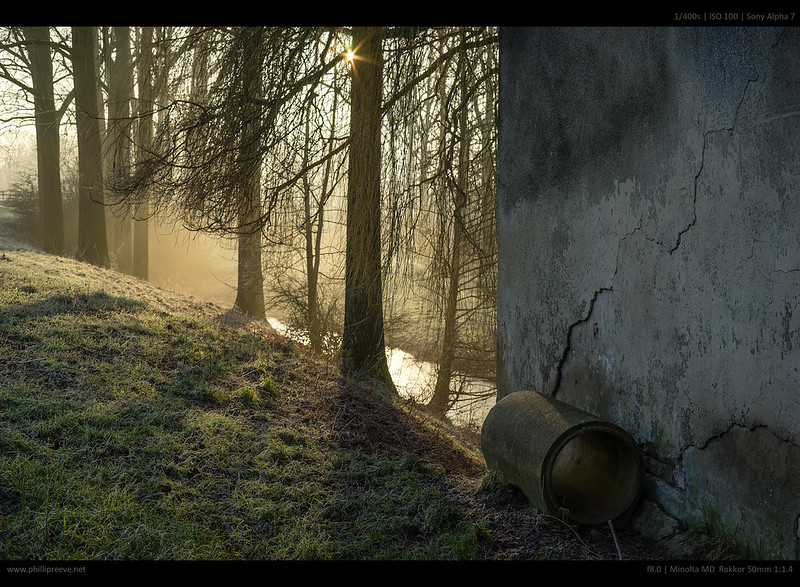
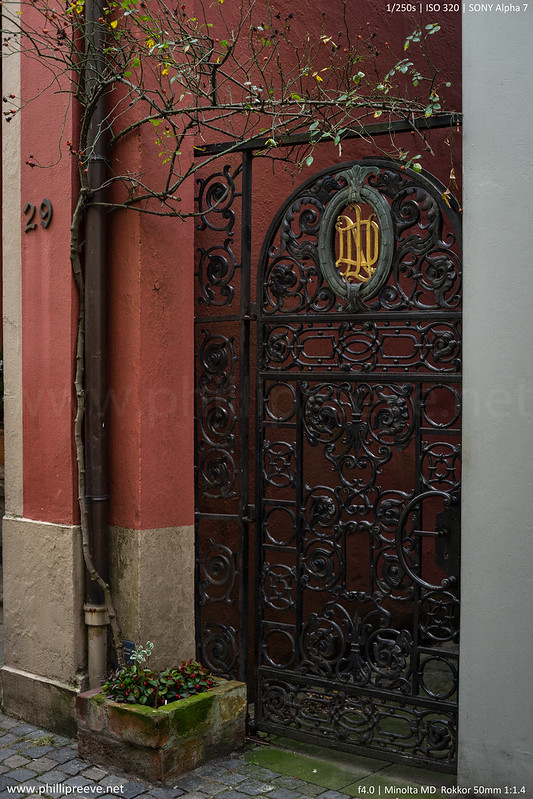
f/4 – very good sharpness with a notable drop in the far corners
f/5.6
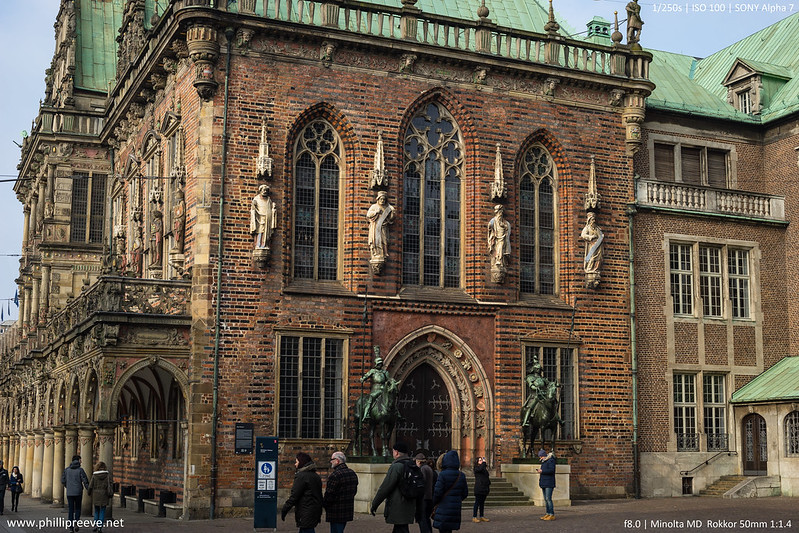
f/8
Further Reading
For more Minolta lenses check out my Minolta list.
This site contains affiliate links. If you make a purchase using any of the links marked as affiliate links, I may receive a small commission at no additional cost to you. This helps support the creation of future content.
Sony α | Leica M | Nikon Z/F New articles every week
This website uses cookies to improve your experience. We'll assume you're ok with this, but you can opt-out if you wish.AcceptRead More
Privacy & Cookies Policy
Privacy Overview
This website uses cookies to improve your experience while you navigate through the website. Out of these, the cookies that are categorized as necessary are stored on your browser as they are essential for the working of basic functionalities of the website. We also use third-party cookies that help us analyze and understand how you use this website. These cookies will be stored in your browser only with your consent. You also have the option to opt-out of these cookies. But opting out of some of these cookies may affect your browsing experience.
Necessary cookies are absolutely essential for the website to function properly. This category only includes cookies that ensures basic functionalities and security features of the website. These cookies do not store any personal information.
Any cookies that may not be particularly necessary for the website to function and is used specifically to collect user personal data via analytics, ads, other embedded contents are termed as non-necessary cookies. It is mandatory to procure user consent prior to running these cookies on your website.