Introduction

Pancake lenses are something I am always interested in, but so far none of the E-mount ones was really convincing. The best one until now was probably the Viltrox AF 28mm 4.5 Chip, but that lens came with one compromise too many: fixed aperture, no focus ring, no filter thread, janky sunstars. Now Viltrox is at it with a different formula: this Viltrox AF 26mm 2.8 Evo – which is in many ways inspired by Nikon’s Z 26mm 2.8 – looks like a fully fledged lens. Is this the pancake lens that Sony users have been waiting for? Let’s find out in this review!
Sample Images






Most of the sample images in this review can be found in full resolution here.
Specifications
The E-mount version of the Viltrox AF 26mm 2.8 Evo has the following specifications:
- Diameter: 66 mm
- Length: 24 mm
- Weight: 128g (without hood[11g], without caps)
- Field of view: 81.2° (diagonally)
- Filter Diameter: 43 mm (in lens hood)
- Number of Aperture Blades: 7 (slightly rounded)
- Elements/Groups: 8/6
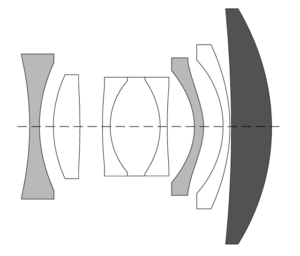
- Close Focusing Distance: 0.2 m
- Maximum Magnification: 1:4.5 (measured)
- Mount: Sony E, Nikon Z
buy from manufacturer’s shop (use the code “PRNet” for 5% discount) | amazon.com | amazon.de | B&H | ebay.com | ebay.de (advertisement/affiliate links) for $299
Disclosure
This Viltrox AF 26mm 2.8 Evo was kindly provided free of charge by Viltrox for reviewing purpose prior to release.
Handling / Build Quality
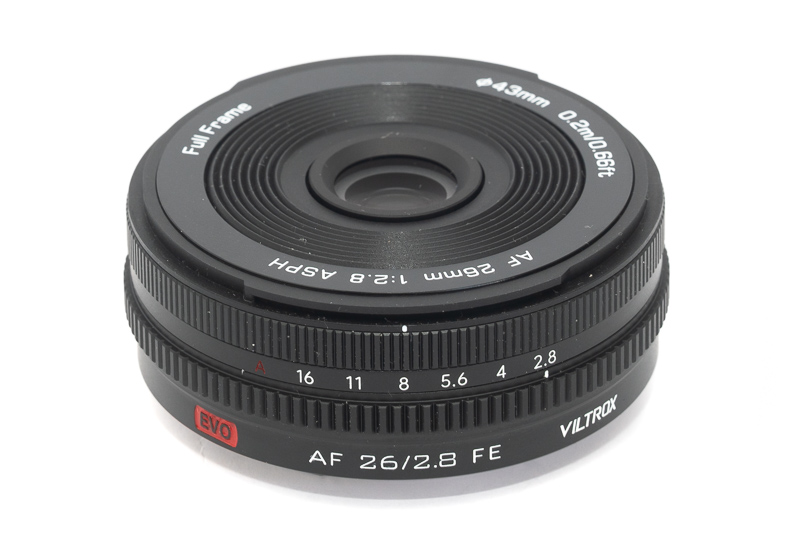
Many pancake lenses come with severe compromises in terms of handling, but Viltrox tried to give us a fully fledged lens here.
The focus ring has a comparably high resistance and it takes almost 360° from the minimum focus distance of 0.2 m to infinity. Personally I would have preferred a shorter travel path.
The aperture ring has 1/3rd-of-a-stop click-stops similar to other Viltrox lenses. Here it cannot be declicked though.
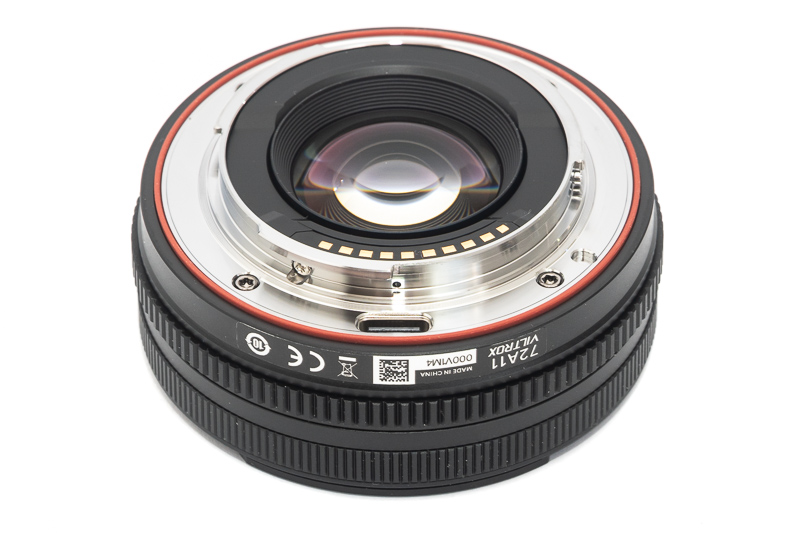
There is no AF/MF switch – I also don’t know where there was space for it – but we have the USB-C socket for potential firmware updates and also a rubber gasket.
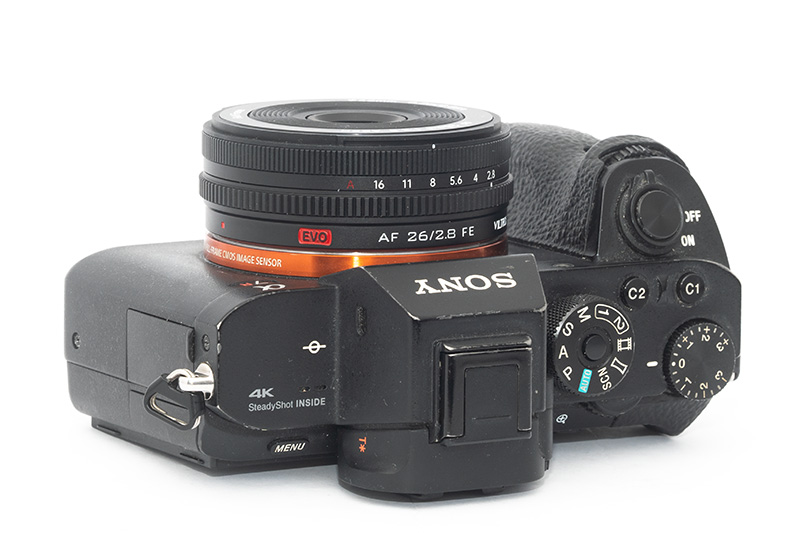
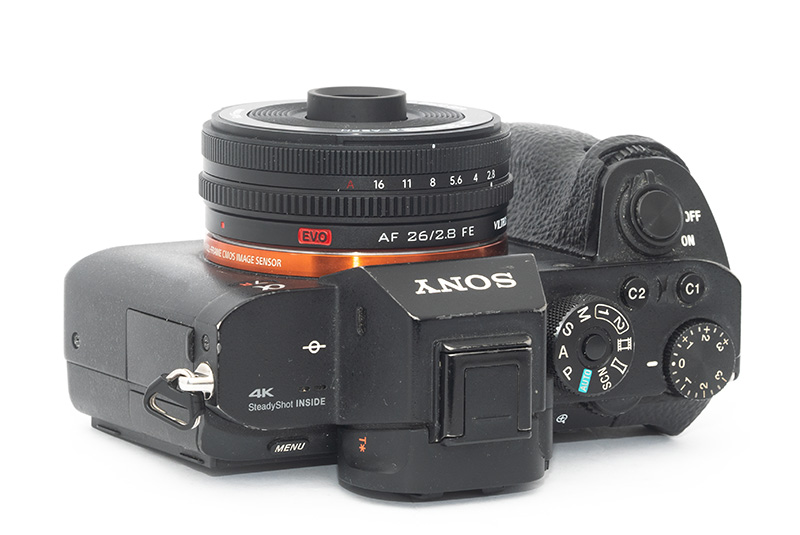
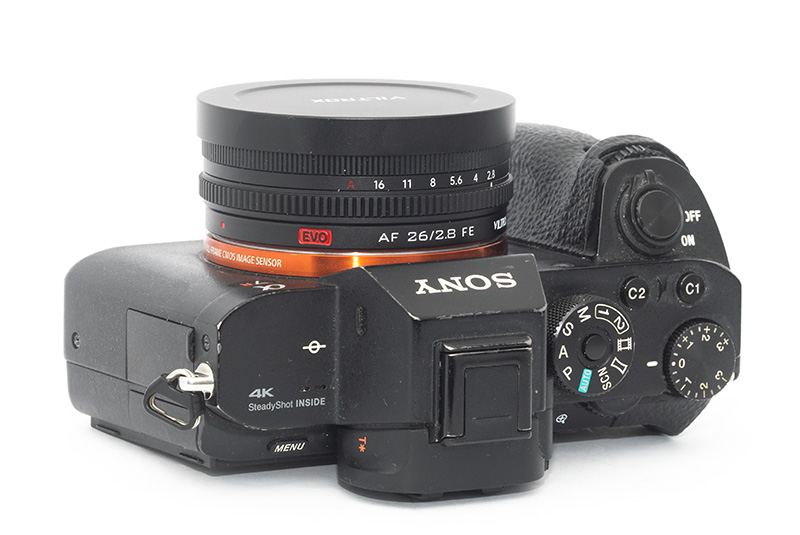
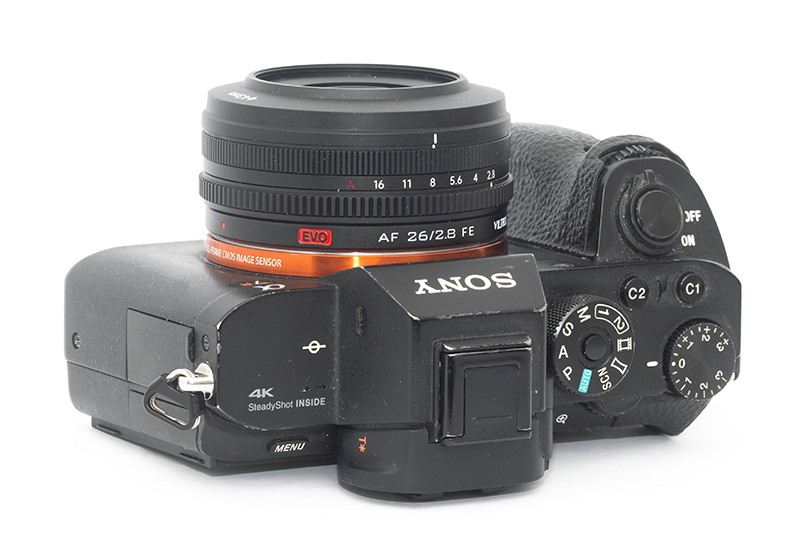
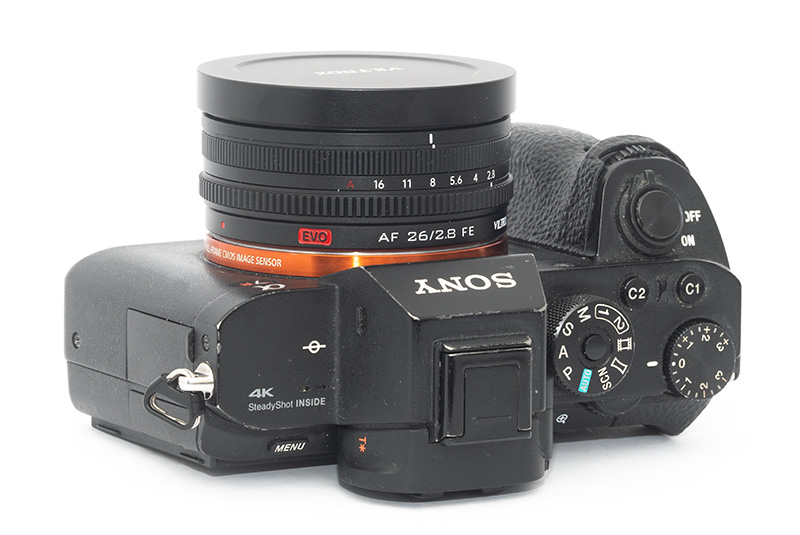
The mechanical design is extremely similar to the Nikon Z 26mm 2.8: the optical block extends on focusing closer and you need the lens hood to attach filters. This lens ships with a magnetic lens cap that can either be attached with or without the hood in between.
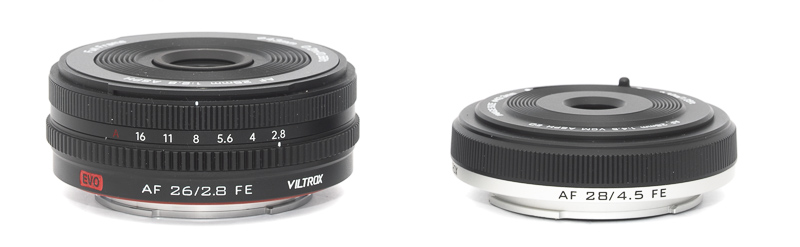
While this Viltrox AF 26mm 2.8 Evo is a small lens, the Viltrox AF 28mm 4.5 Chip is even smaller. This 26mm lens also offers many benefits though: a focus ring, and aperture ring and a bayonet for the lens hood.
AF Performance
The AF performance was generally alright, but this lens won’t be challenging your latest GM primes and zooms in terms of speed.
With its specifications it is also not overly demanding, so for everyday use I found its performance to be totally sufficient.
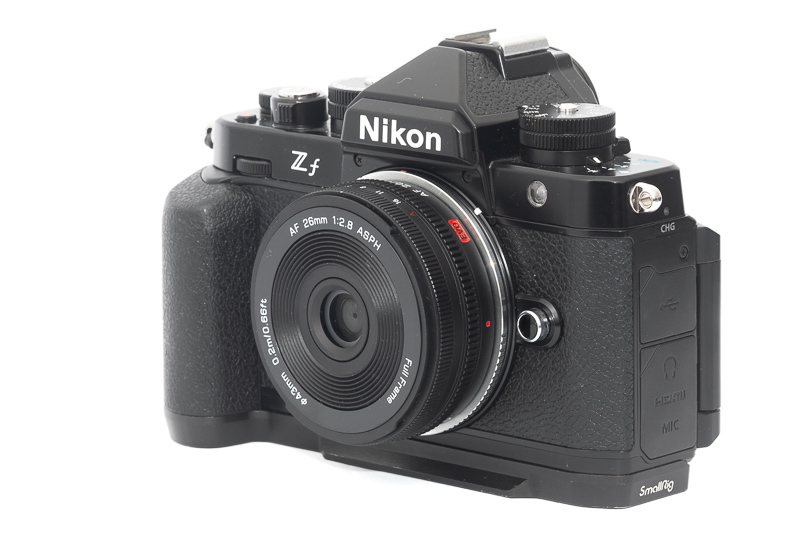
For logistics reasons I used this lens a lot on my Nikon Zf with the help of the megadap ETZ21pro+ adapter and that also worked very well.
Vignetting
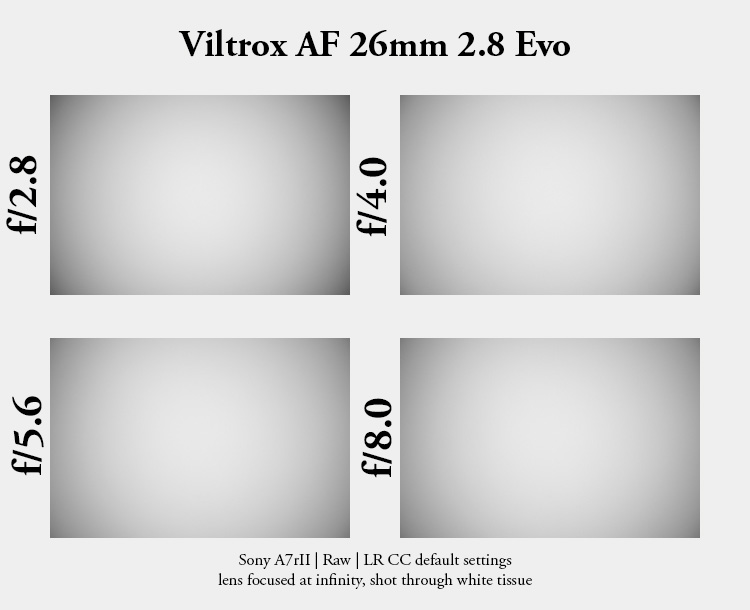
| f/2.8 | 2.9 EV |
| f/4.0 | 2.4 EV |
| f/5.6 - f/16 | 2.3 EV |
The vignetting figures are very typical for a pancake lens. I measure almost 3 EV at f/2.8 and a bit more than 2 EV stopped down. The Viltrox AF 28mm 4.5 Chip showed 2.9 EV, the Nikon Z 26mm 2.8 performs similar at wider apertures but improves more on stopping down.
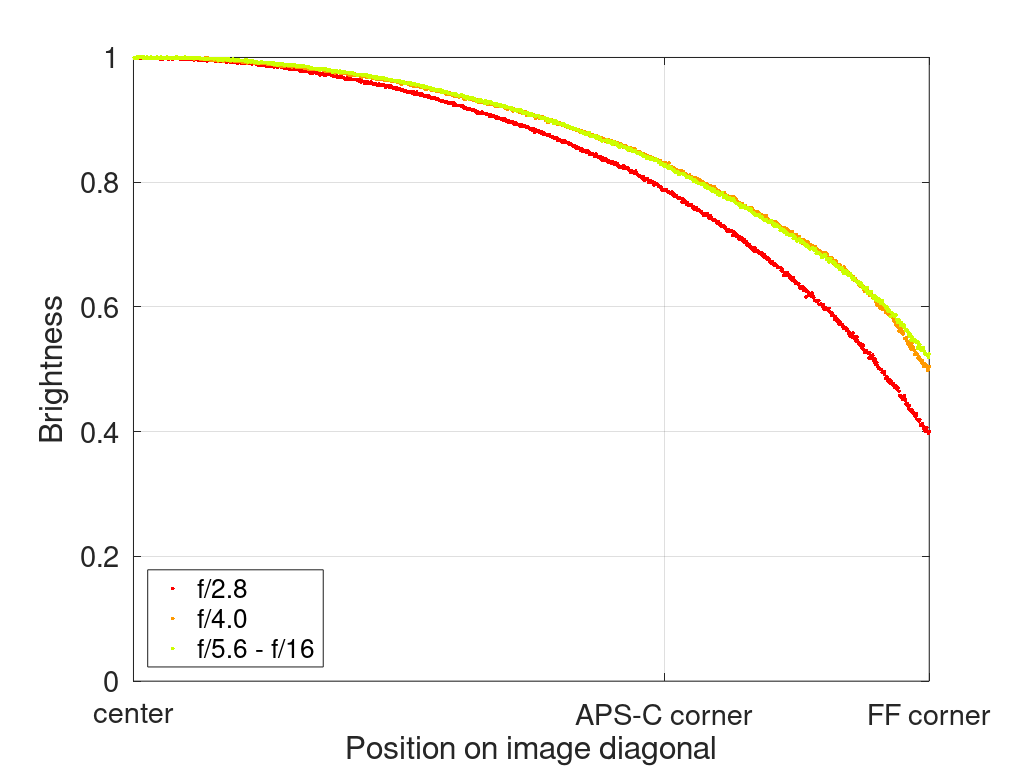
It is recommended to have a look at this article first to get an idea how this brightness graph works.
Sharpness
MTF Graphs
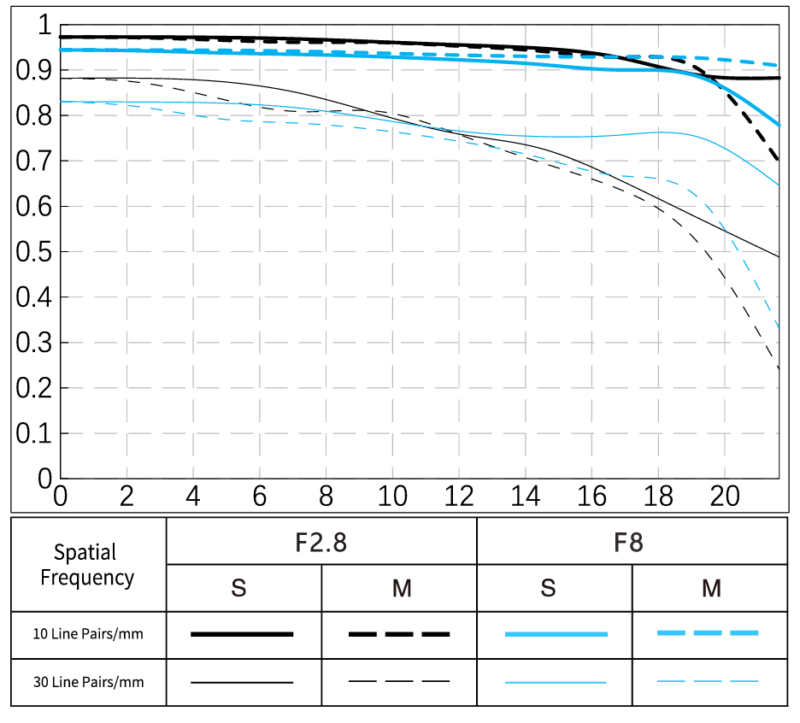
The MTF graphs promise very high contrast across the whole frame already at f/2.8. The resolution shows a drop towards the corners. Astigmatism also seems to be well corrected. Generally this performance looks very good for such a small lens.
Infinity (42mp Sony A7rII)
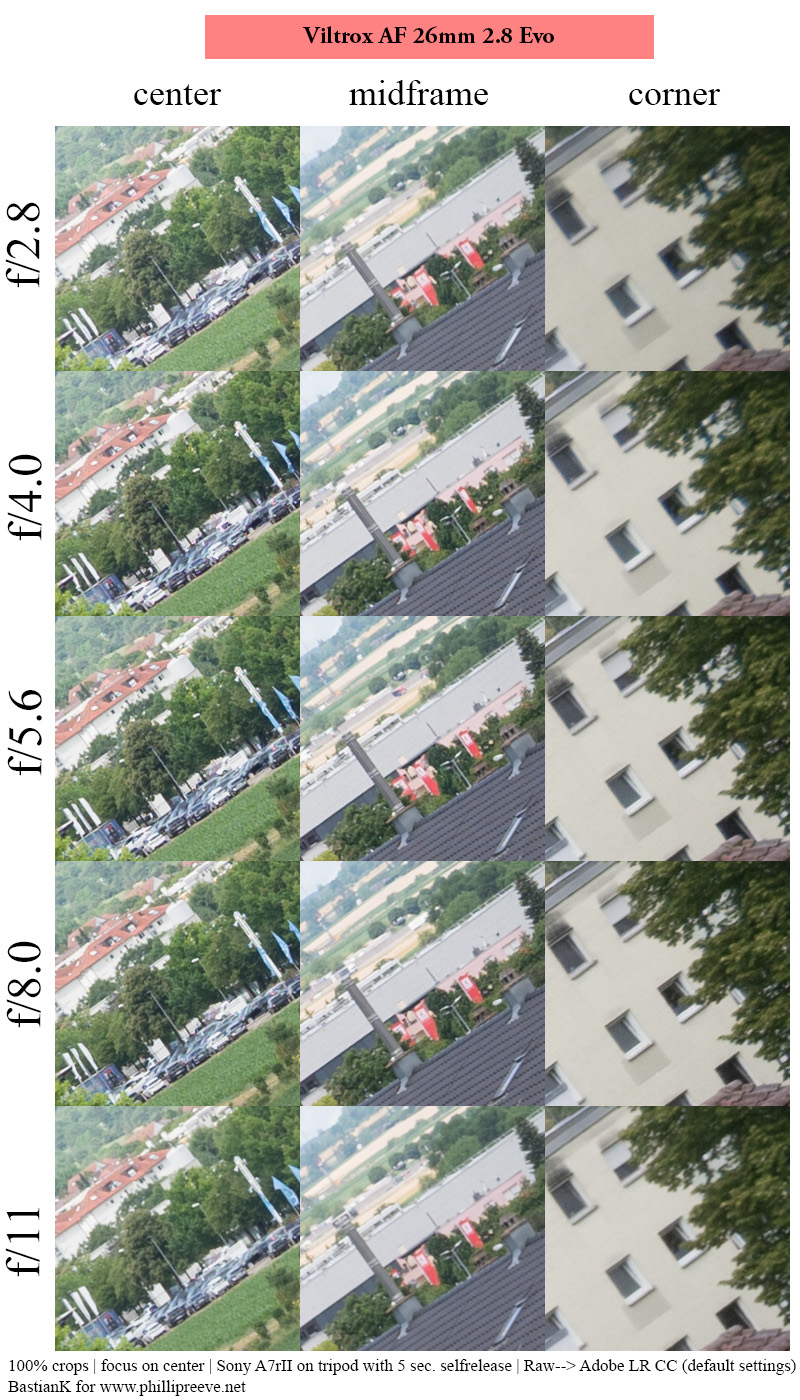
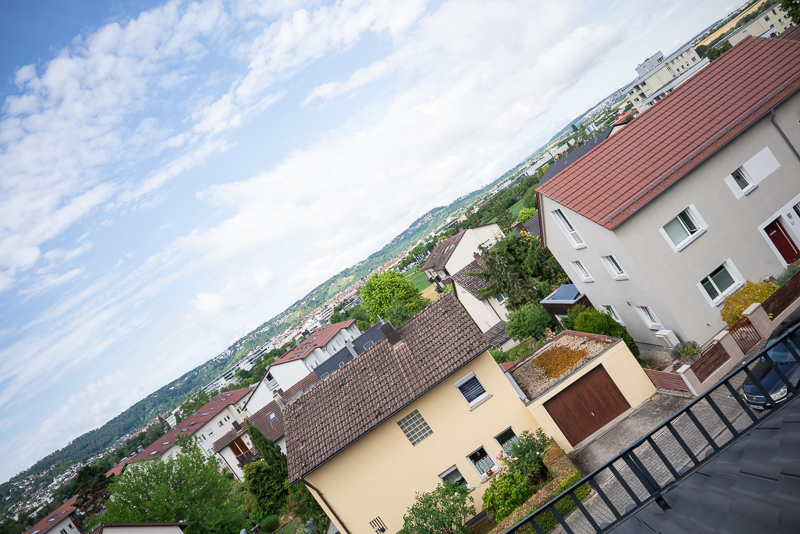
Now this performance is definitely a positive surprise for a pancake lens. The MTF graphs didn’t lie: most of the frame looks perfectly clean from f/2.8 with high contrast and only the corners benefit from stopping down. Peak performance is reached around f/5.6 to f/8.0 but I wouldn’t mind using this lens at f/2.8 if needed.
Compared to the Viltrox AF 28mm 4.5 Chip I would prefer this newer 26mm lens, as latest by f/5.6 it shows a more even performance. The Nikon Z 26mm 2.8 shows a very similar performance.
Close 0.2 m, 1:4.5 (42mp Sony A7rII)



Also here Viltrox took inspiration from the Nikon Z 26mm 2.8, as both lenses feature a minimum focus distance of 0.2 m – which is also a big improvement over the 0.32 m of the Viltrox AF 28mm 4.5 Chip.
The performance at the minimum focus distance is actually very good from the maximum aperture. Also field curvature is well corrected. With the maximum magnification of 1:4.5 this can almost be used as mild wide angle macro.
Flare resistance
Evaluating the performance in this category is always a difficult endeavour, as a slight change in scenario can alter the outcome significantly.
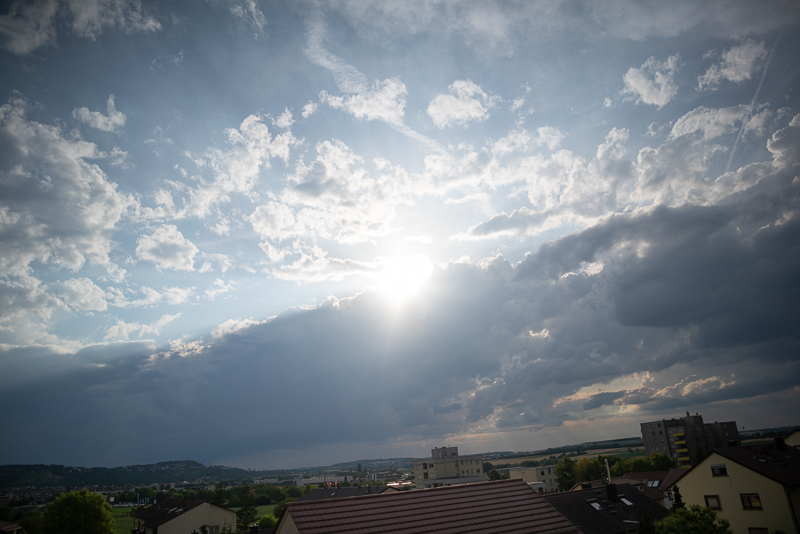
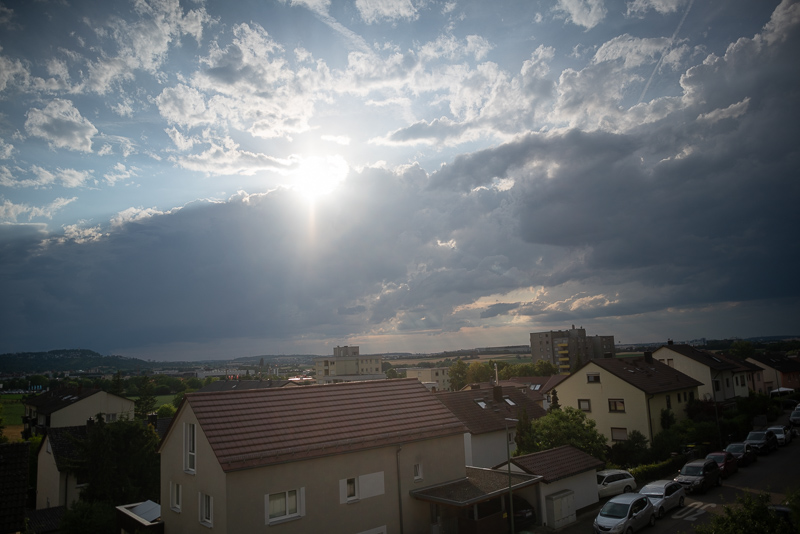
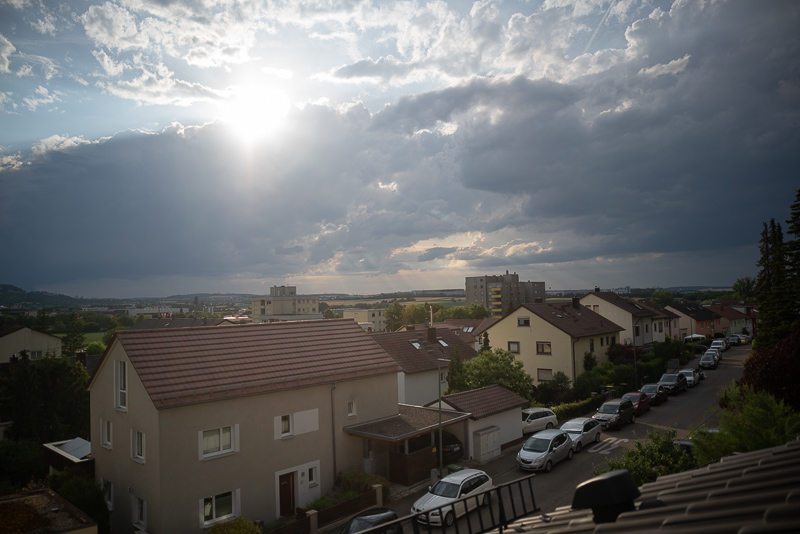
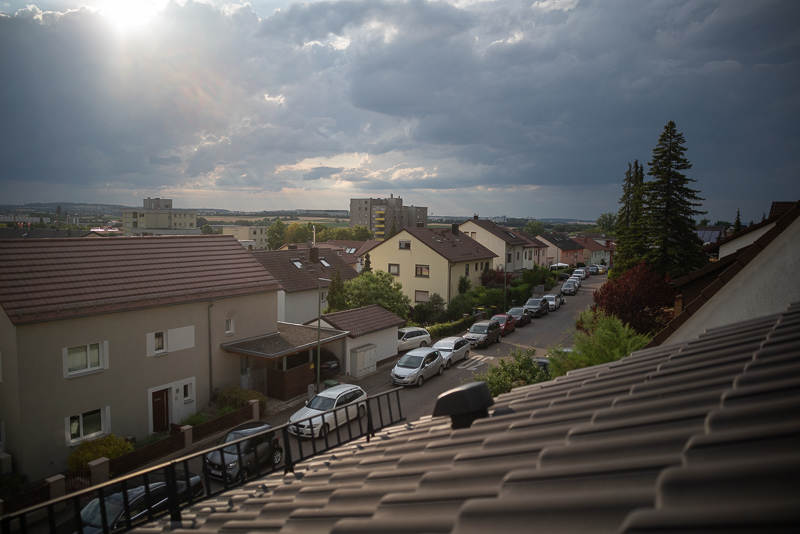
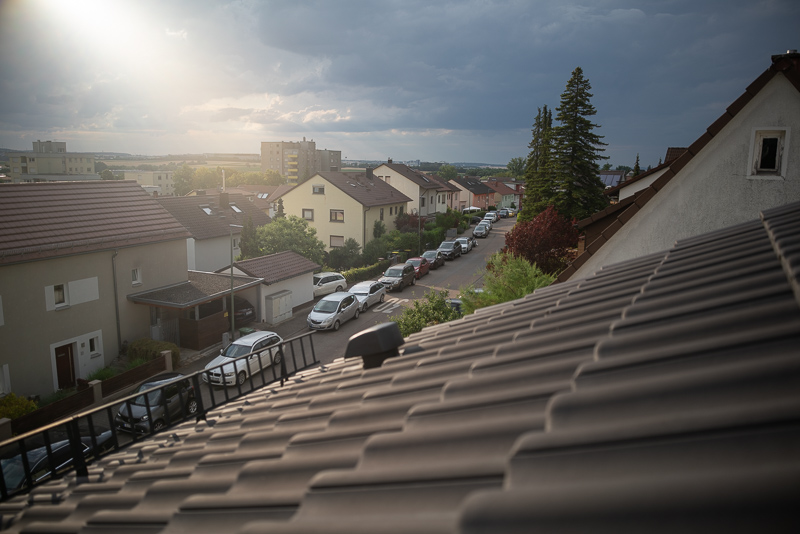
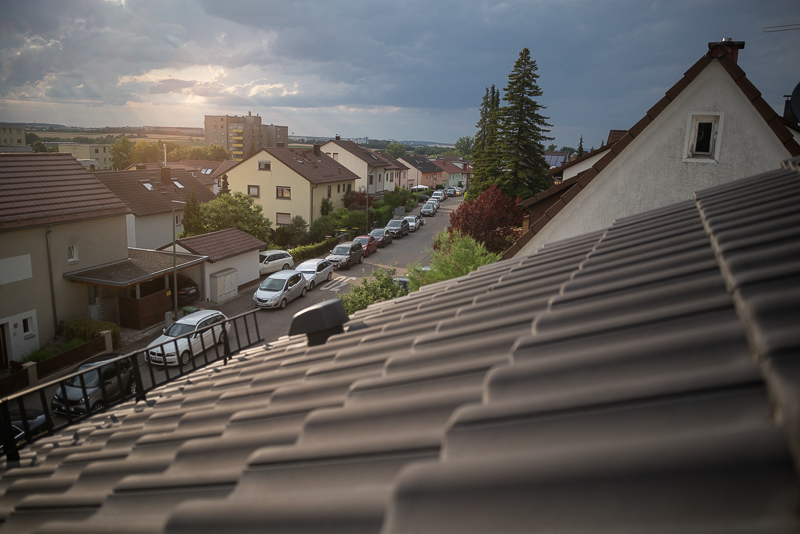
At the maximum aperture ghosting is almost non-existent, but veiling flare is a bit of a problem and it doesn’t matter whether the sun is inside or outside the frame. The hood also doesn’t help with this.

Sadly this can also be a problem in scenes like the one above.
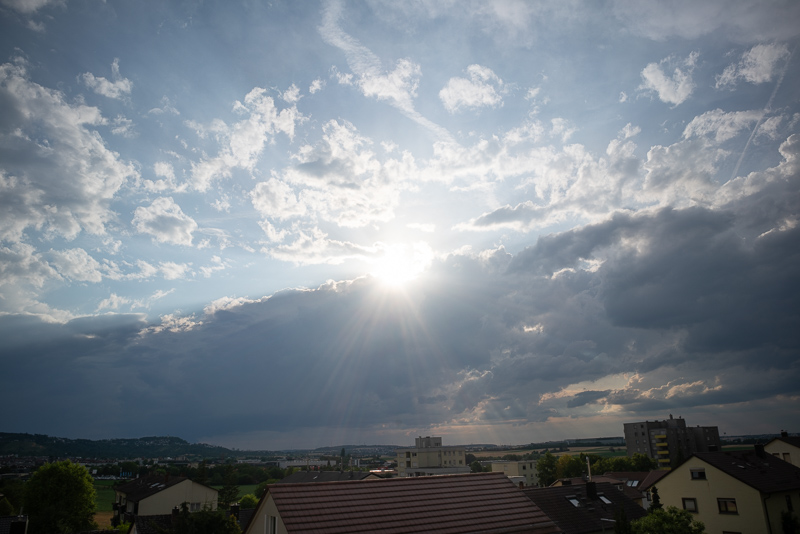
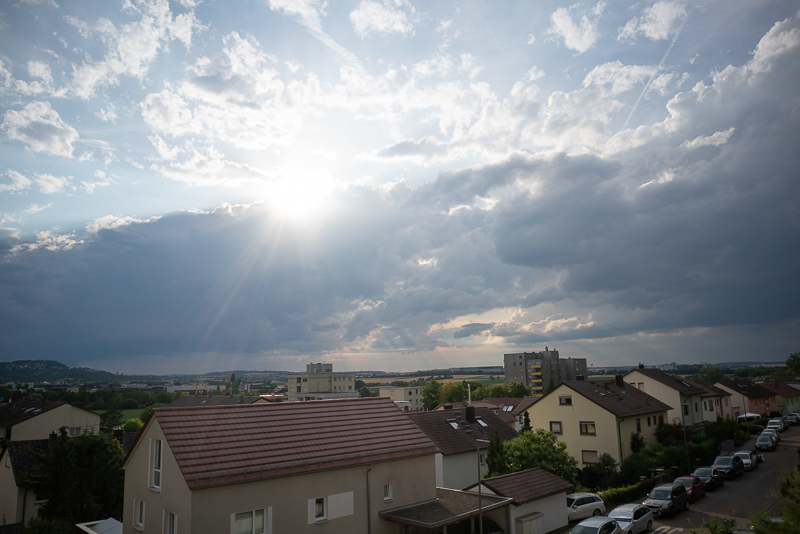
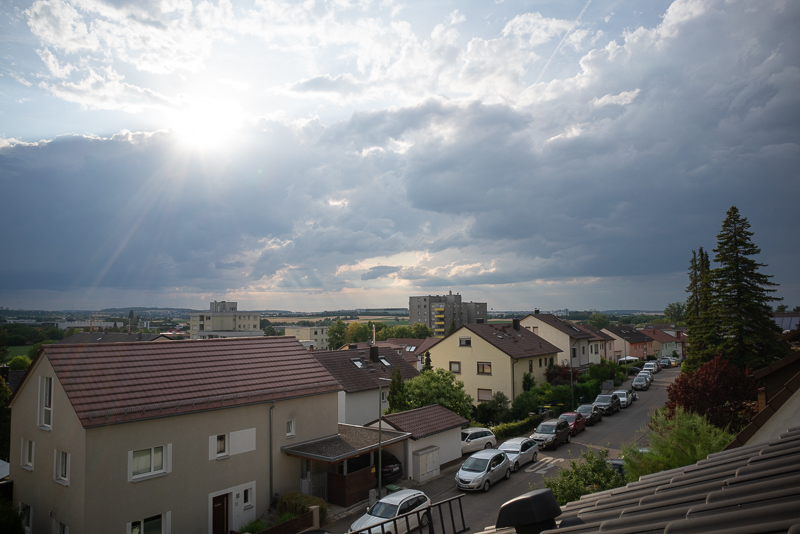
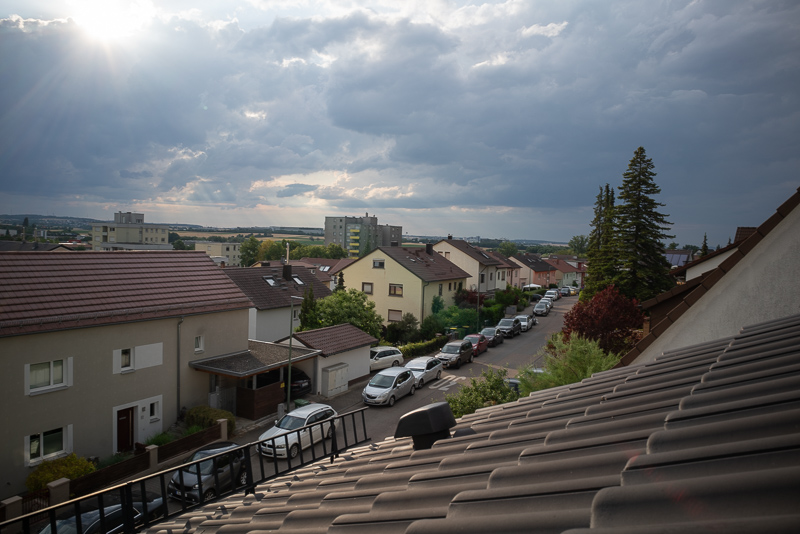
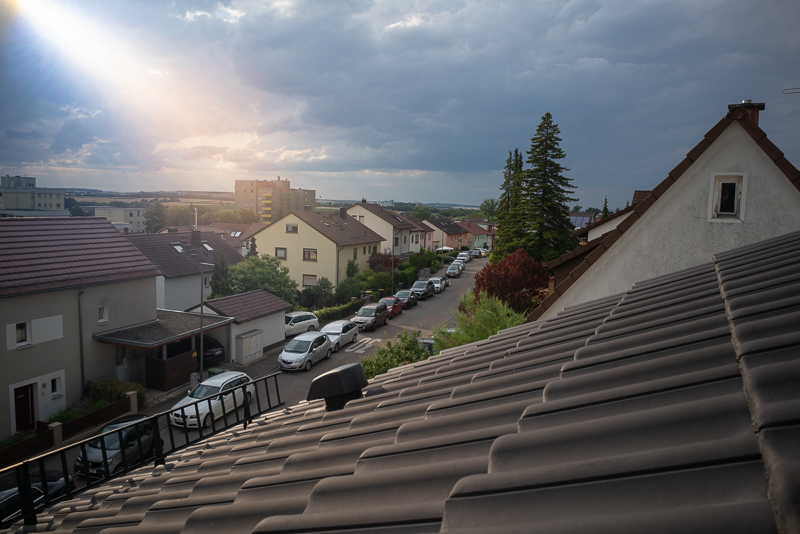
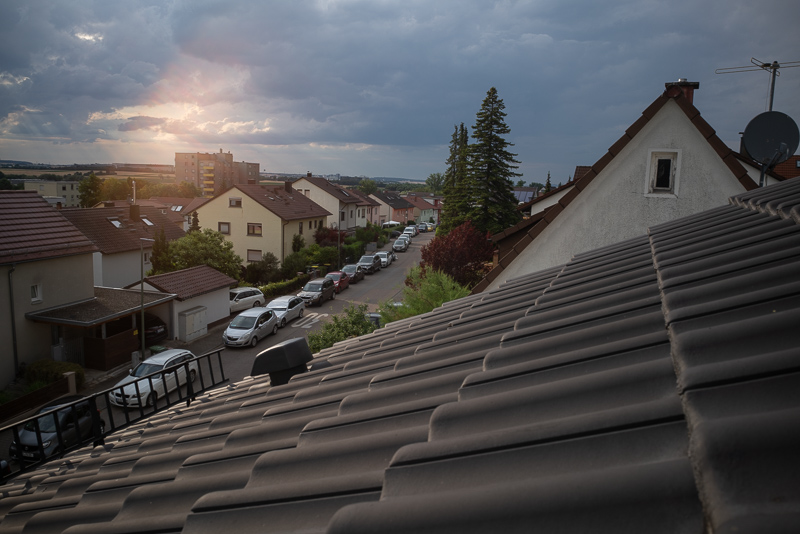
Luckily stopped down the veiling flare is much less of a problem.
When shooting in backlit scenarios it is still a good idea to check the viewfinder for unwanted artefacts when using this lens.
The Viltrox AF 28mm 4.5 Chip had even more problems here whereas the Nikon Z 26mm 2.8 has less issues.
Coma
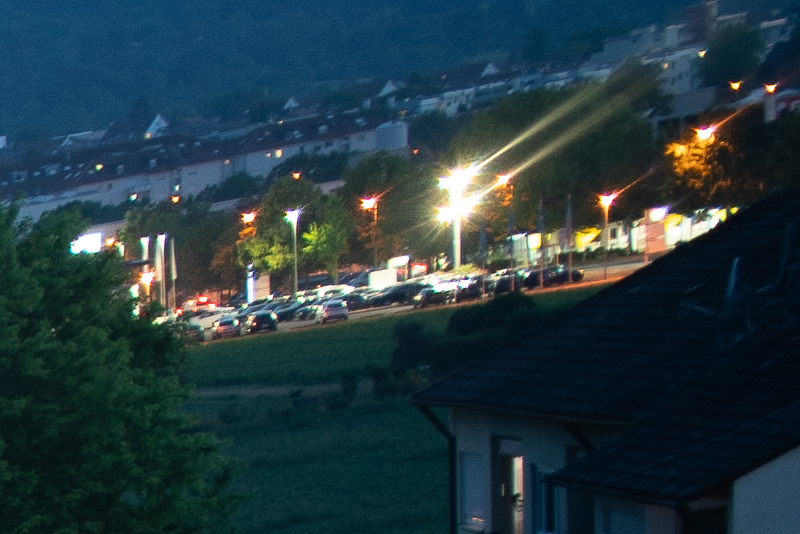
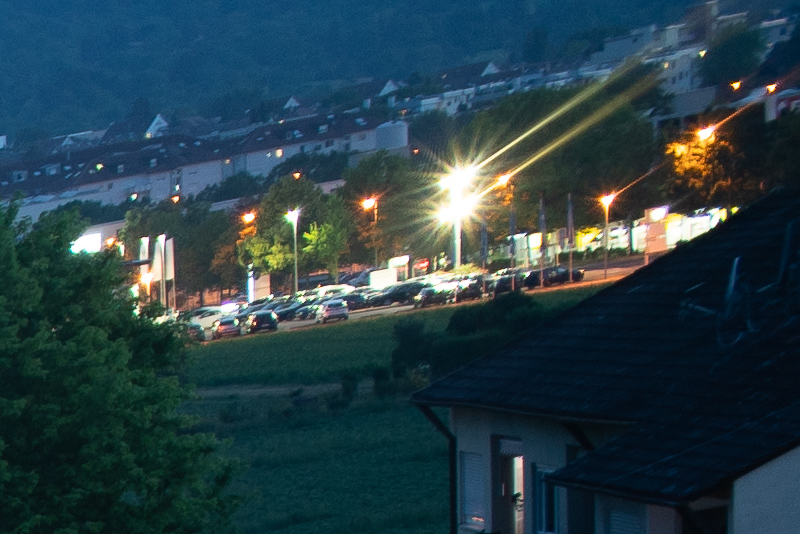
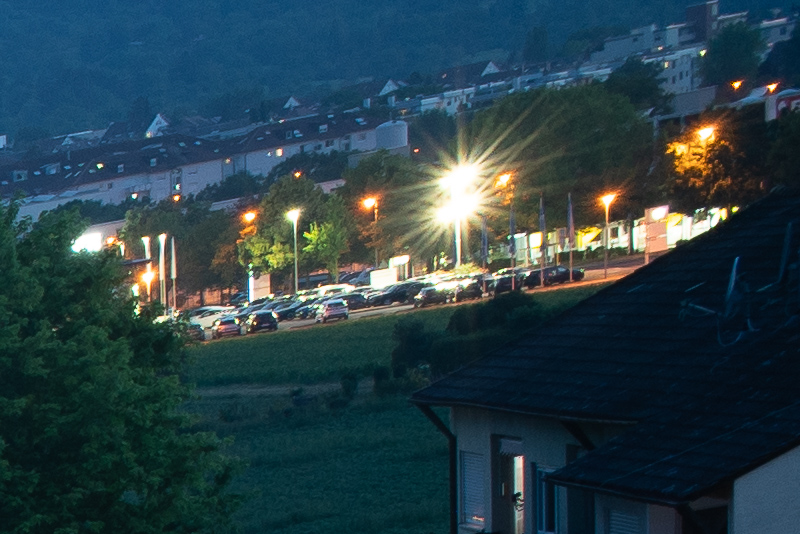
100% crops from extreme corner, focused on center, Sony A7rII
Generally Coma is corrected surprisingly well, we can only see minor artefacts around point light sources, but with one exception: point light sources close to the corners lead to rather distinct, radially oriented streaks. Stopped down to f/5.6 these artefacts are gone.
Distortion


This Viltrox AF 26mm 2.8 Evo shows mostly uniform barrel distortion which is easily corrected by dialing in +8 in Photoshop/Lightroom until the actual profile becomes available.
Bokeh

A maximum aperture of f/2.8 is not something to actually get excited about in a 26mm lens. There are a lot of zoom lenses that offer this combination after all. The compact 28mm M-mount lenses I reviewed usually had some issues with field curvature having a negative impact on the bokeh rendering. Is that also the case here?

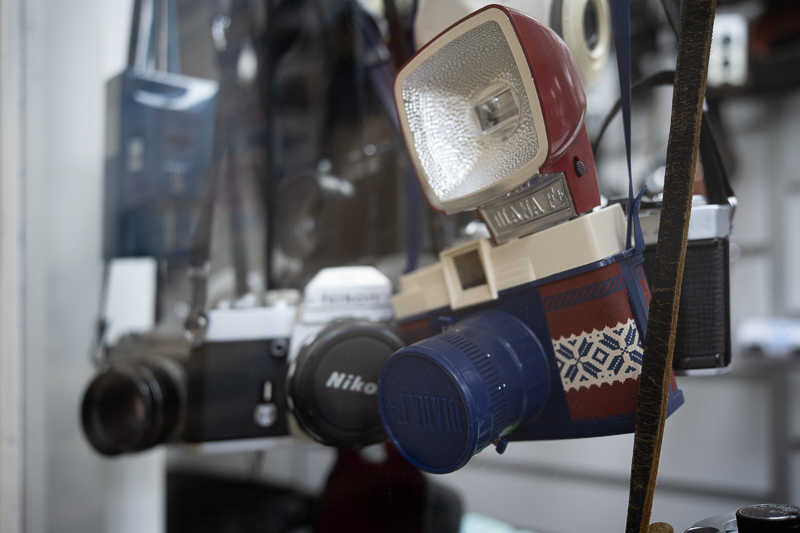

Close distances are where you will usually encounter some bokeh from this lens and the short minimum focus distance of 0.2 m surely helps with that. The bokeh looks very natural to me here, no weird field curvature our nervousness.

At mid distances the bokeh also looks surprisingly well behaved – much nicer than what I have seen from e.g. the Voigtländer VM 28mm 2.8 Color-Skopar.

At longer focus distances it obviously gets more difficult to create a shallow depth of field with these specifications. While this lens is not for those that are looking for the shallowest depth of field, it still shows a solid performance in this category and for a lens like this I find it very welcome when the out of focus areas do not draw unwated attention.
Sunstars
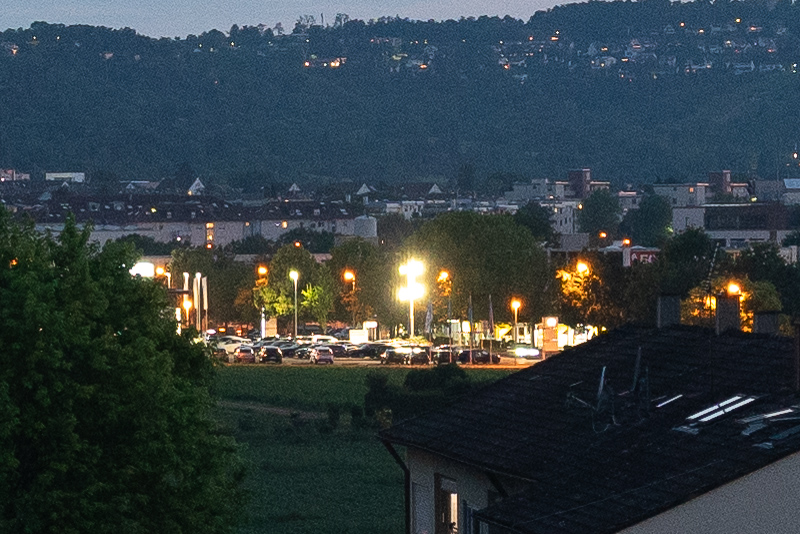
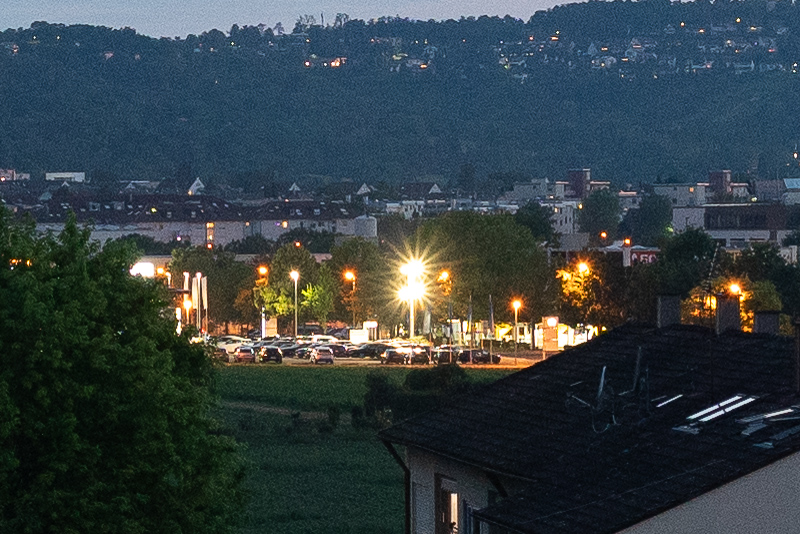
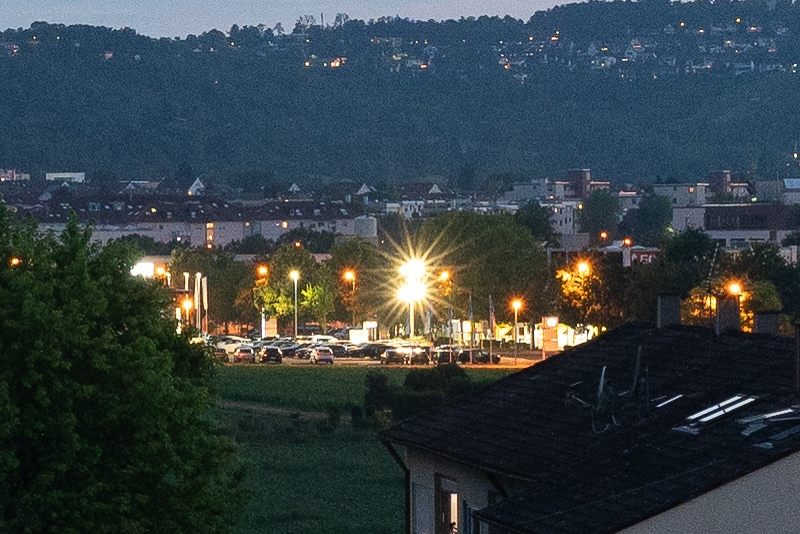
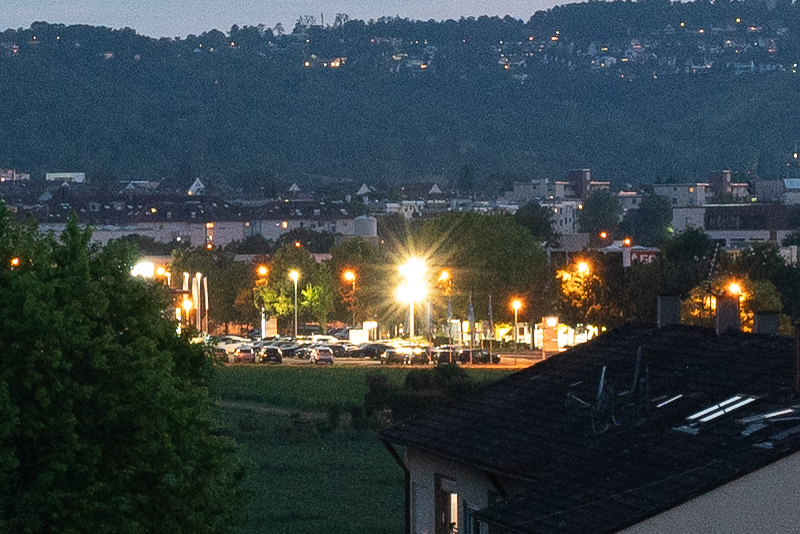
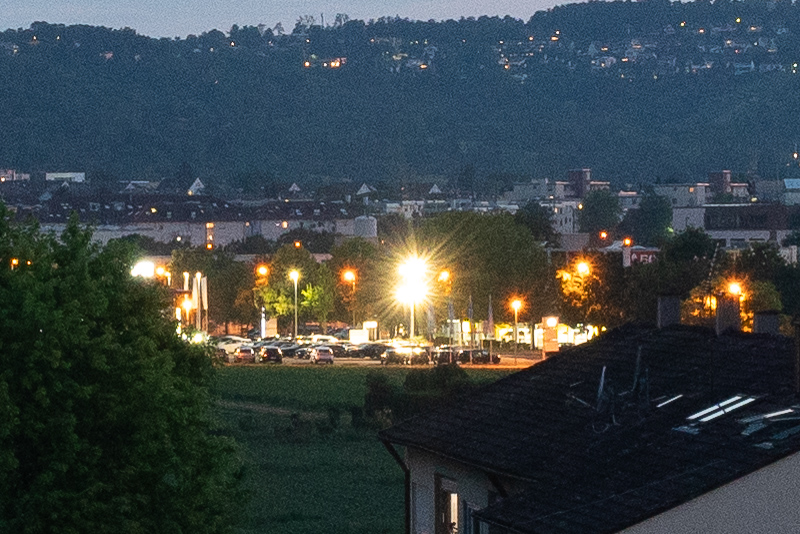
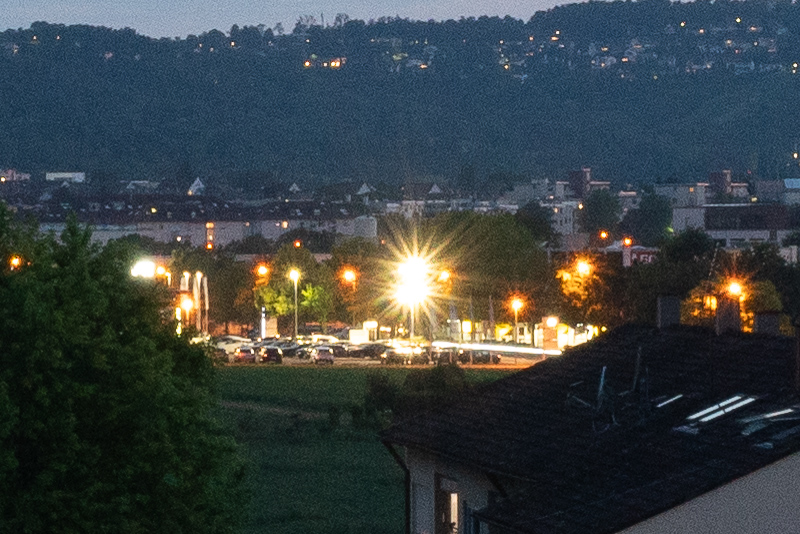
Interesting situation here: this lens’ sunstars look best at f/4.0 to f/5.6 and a bit mushy before and after that. This is a massive improvement over the Viltrox AF 28mm 4.5 Chip, which created huge and rather unsightly sunstars with its fixed aperture.
If you want to know more about sunstar rendering of different lenses have a look at this article.
Chromatic aberration
Lateral
Lateral CA are on a low level and nothing to worry about.
Longitudinal

Bokeh fringing isn’t really an issue and purple fringing is corrected perfectly.
Conclusion
good
|
average
|
not good
|
Usually these pancake lenses come with severe compromises that may be mechanical, optical or both at the same time. The Viltrox AF 28mm 4.5 Chip could not be focused manually, its aperture was fixed at f/4.5, it didn’t have a filter thread and it showed weird sunstar artefacts.
This Viltrox AF 26mm 2.8 is part of the “Evo” line and the previous lenses of that series showed very good performance across the board. Therefore I was a bit surprised a pancake lens also becamse part of that series.
There are still some minor compromises to be found here: at wider apertures veiling flare can be an issue and while the Coma correction is generally very good, strong light sources in the extreme corners have a strong streak until stopped down to f/5.6.
Resolution and contrast are very good at all distances and neither field curvature nor color aberrations are an issue though and the maximum magnification of 1:4.5 is a nice extra.
After having used this lens for a few weeks, I am happy to report that E-mount users finally have a pancake lens without severe compromises, similar to Z-mount users with their Nikon Z 26mm 2.8 – but at a lower price and with an aperture ring.
buy from manufacturer’s shop (use the code “PRNet” for 5% discount) | amazon.com | amazon.de | B&H | ebay.com | ebay.de (advertisement/affiliate links) for $299
Alternatives
E/Z-mount
Viltrox AF 28mm 4.5 Chip:
I already compared these lenses in most of the sections above. The “Chip” lens is still smaller and significantly cheaper, but personally I would prefer using this newer 26mm 2.8 lens for being simply a more versatile lens.
buy from manufacturer’s shop (use the code “PRnet” for 8% discount) | amazon.com | amazon.de | B&H | ebay.com | ebay.de (advertisement/affiliate links) for $99
E-mount
Samyang 24mm 2.8 AF:
Samyang calls the 24mm 2.8 tiny and it is still one of the smallest AF lenses, neither the optical performance nor the mechanical design fully convinced us though.
buy from Amazon.com | Amazon.de | ebay.com | ebay.de | B&H for $199 (advertisement/affiliate links)
Z-mount
Nikon Z 26mm 2.8:
These two lenses are very similar and I already compared them in most of the sections above. The Nikon lens has better flare resistance at f/2.8, lacks the aperture ring and it is about 50% more expensive, those are the main differences.
buy from amazon.com | amazon.de | B&H | ebay.com | ebay.de (advertisement/affiliate links) for $447 (new)
Nikon Z 28mm 2.8:
If you don’t really care that much about having the smallest lens possible (or if you regularly use filters, so would end up using the 26mm lenses with their hood anyway), the Nikon Z 28mm 2.8 offers similar performance for a little less money.
buy from amazon.com | amazon.de | B&H | ebay.com | ebay.de (advertisement/affiliate links) for $227 (new)
Sample Images

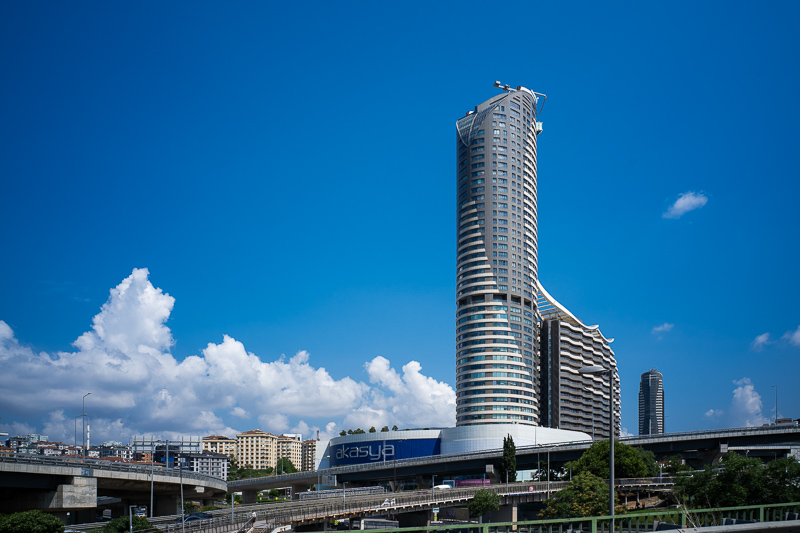








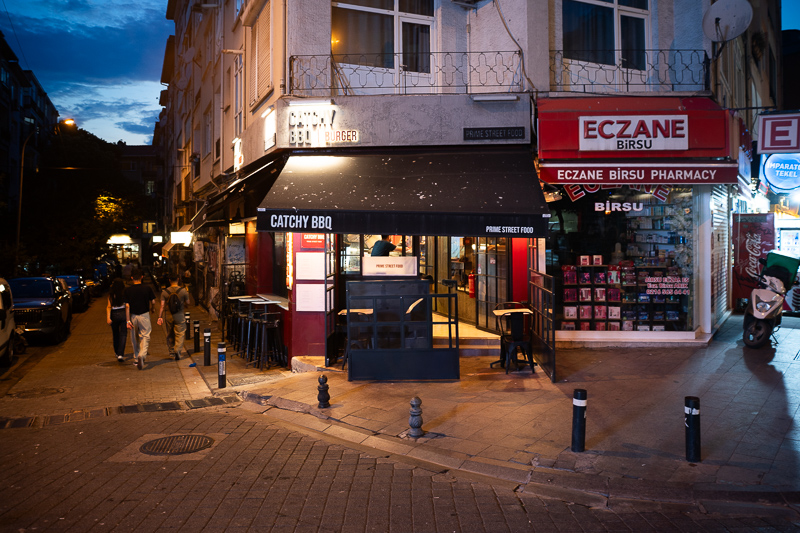

Most of the sample images in this review can be found in full resolution here.
Further Reading
- All Lens Reviews
- Review: Viltrox AF 16mm 1.8 Pro
- Review: Viltrox AF 35mm 1.2 LAB
- Review: Viltrox AF 85mm 1.4 Pro
- Review: Viltrox AF 135mm 1.8 LAB
Support Us
Did you find this article useful or just liked reading it? Treat us to a coffee!

 via Paypal
This site contains advertisement/affiliate links. If you make a purchase using any of the links marked as advertisement/affiliate links, I may receive a small commission at no additional cost to you. This helps support the creation of future content.


Latest posts by BastianK (see all)
- Prime Day Photoshop+Lightroom offer for Amazon Prime Members (EU/UK) | Update: also at B&H - October 7, 2026
- Review: Nikon AF-S 18-35mm 3.5-4.5G - October 7, 2026
- Review: Sigma 14mm 1.4 DG Art – World’s widest f/1.4 lens - September 26, 2026
How does it compare to the old Sony 28/2 lens in optical performance at f/2.8-5.6?
Viltrox:
smaller, less loCA, less distortion
Sony:
better Flare resistance, less vignetting
No significant differences in the other categories.
The dilemma is even more pronounced between a used Nikkor and a new Viltrox…
I think I can live with the wide open glare… Instant order, thanks for the timely review!
How it does compare to Sony 24 2,8 E? Thank you
Haven’t reviewed the 24mm 2.8G yet.
Viltrox is: smaller, cheaper, has less distortion.
Sony probably has better flare resistance and higher contrast/resolution.
Der Vergleich würde mich auch interessieren, da das Viltrox von der Größe und Brennweite her für Streetfotografie für mich geigenter wäre.
Easiest day 1 purchase ever for me. Many thanks for the review.
You are welcome!
What a fantastic little lens. And that magnetic lens cap!