Introduction
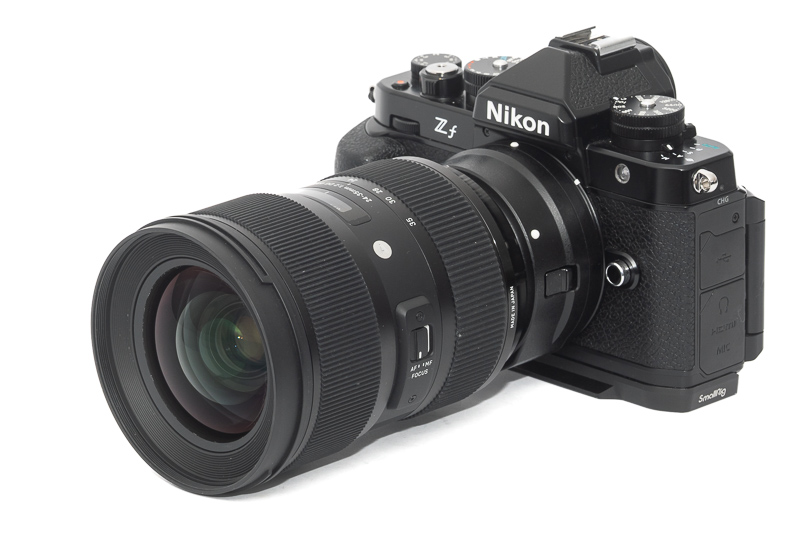
In the mirrorless world we start to see more f/2.0 zoom lenses, a trend that started with the Canon RF 28-70mm 2.0L USM and Sony built upon with their Sony FE 28-70mm 2.0 GM and the Sony FE 50-150mm 2.0 GM. What is easily forgotten here: it was actually Sigma who first made a fullframe zoom lens with a constant f/2.0 aperture – already in 2015 and for DSLRS – the Sigma 24-35mm 2.0 DG HSM Art. Let’s have a closer look!
Sample Images

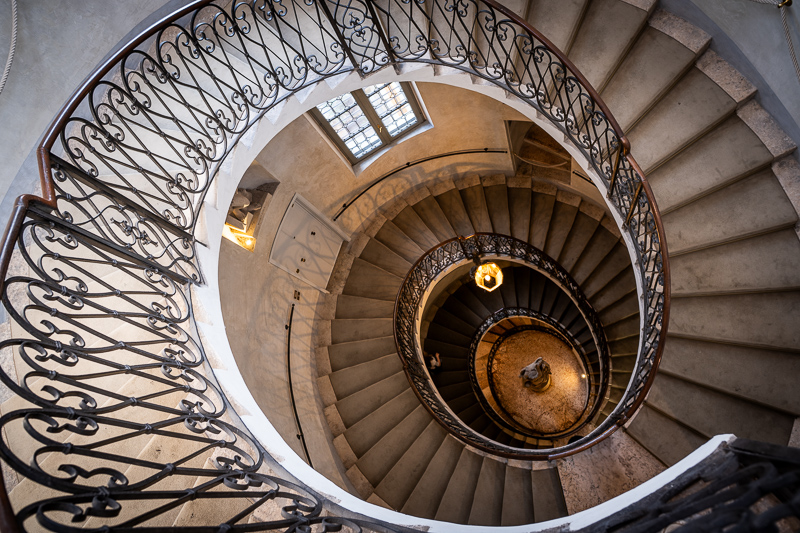



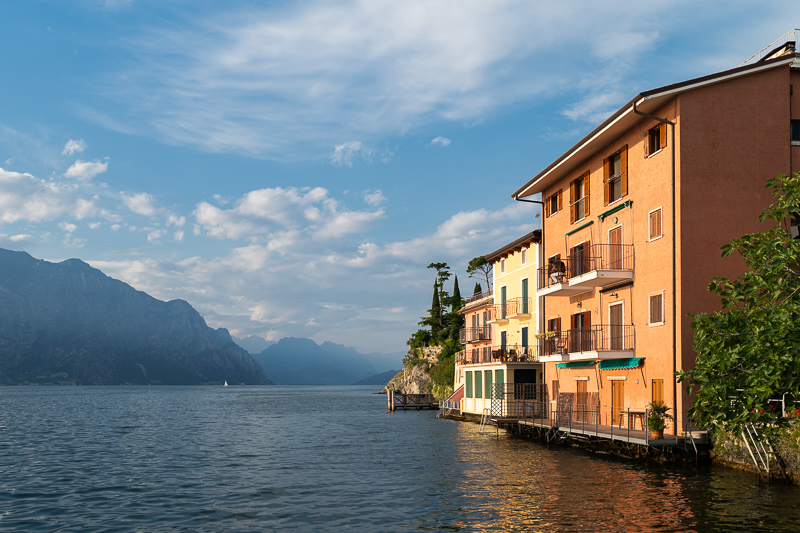
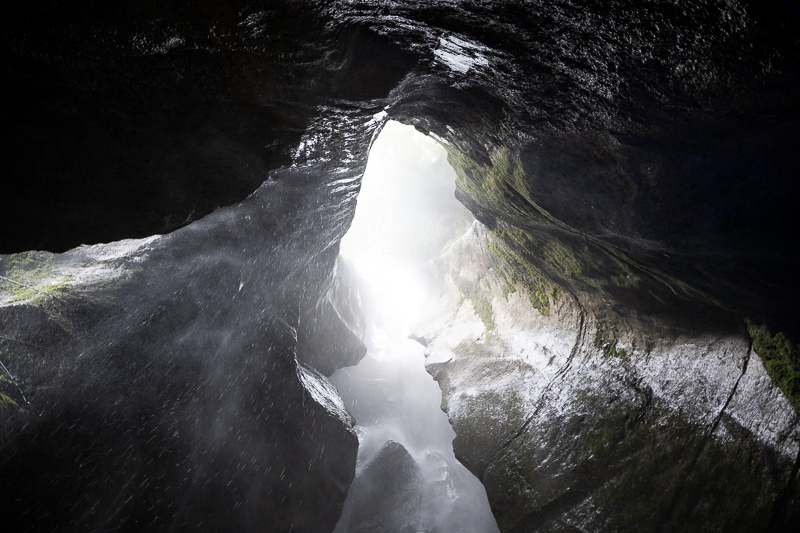
You can find most of the sample pictures in full resolution here.
Specifications
This Sigma 24-35mm 2.0 Art (F-mount version) has the following specifications:
- Diameter: 89 mm
- Field of view: 84.1° to 63.4° (diagonally)
- Length: 121 mm
- Weight: 944g (without hood[34g] and caps)
- Filter Diameter: 82 mm
- Number of Aperture Blades: 9 (rounded)
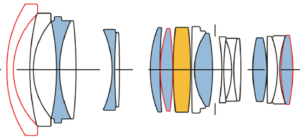
- Elements/Groups: 18/13
- Close Focusing Distance: 0.28 m
- Maximum Magnification: 1:5.9 at 24mm to 1:4.0 at 35mm (measured)
- Mount: F-mount, EF-mount, SA-mount
buy from amazon.com | amazon.de | ebay.com | ebay.de (advertisement/affiliate links) starting used at $450
Handling / Build Quality
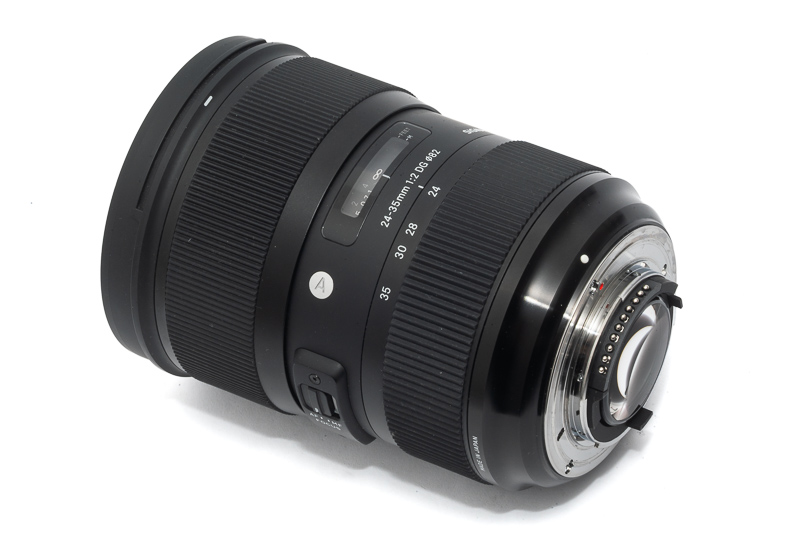
The Sigma DSLR designs still feature a physical distance scale which is good news to me, as coupled with the nice resistance of the focus ring this leads to a nice manual focus experience. The focus throw is a round 90° which is also acceptable.
The outside is made from the same high quality polycarbonate we already know from the other Sigma Global Vision lenses. I cannot tell you much about the long term reliablity or about the internal parts.
The lens further features an AF/MF switch but no other buttons and no aperture ring.
The zoom ring is situated closer to the camera and has markings for 35, 30, 28 and 24 mm. This is not a parfocal zoom, if you change the focal length, focus needs to be adjusted. Nothing moves externally when changing the focal length though, this is an internal zoom lens.
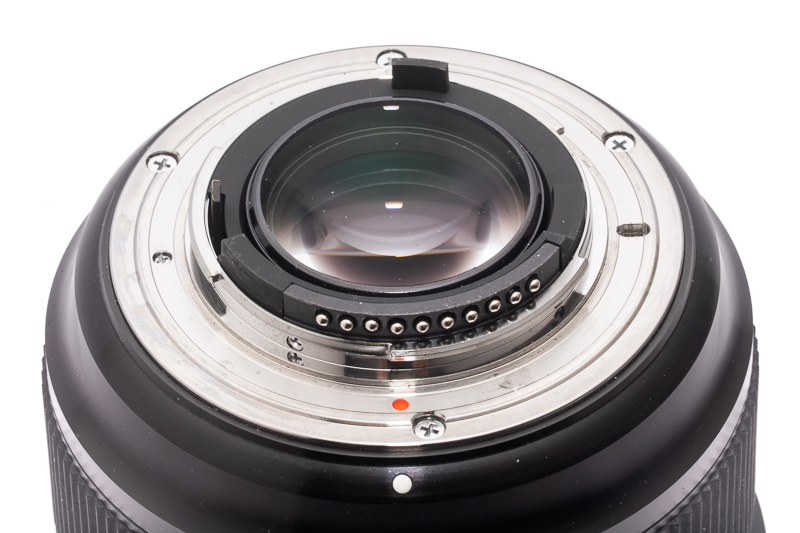
While Sigma’s E-mount lenses feature a rubber gasket this lens doesn’t.
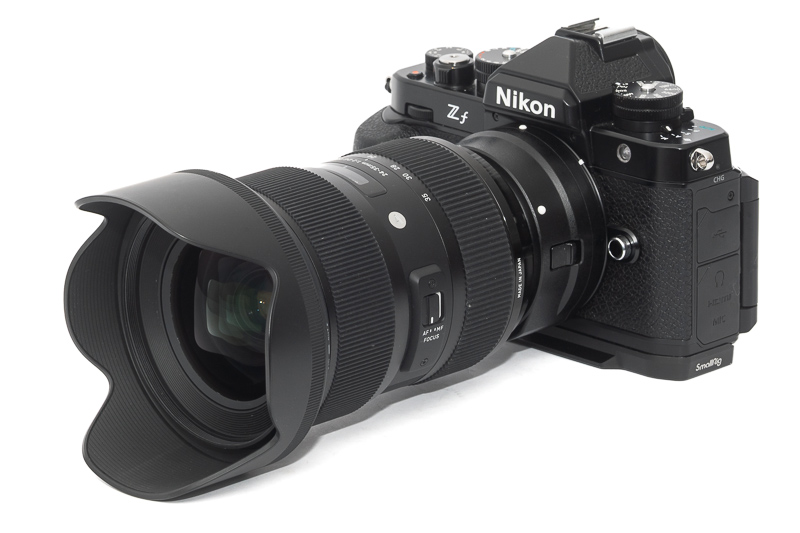
A bayonet type lens hood is also part of the package. It does not offer the same build quality as those from some of the other high quality Sigma primes from that era (e.g. Sigma 28mm 1.4 Art or Sigma 40mm 1.4 Art) as it is a simple polycabonate one piece hood without release button or rubber bumper.
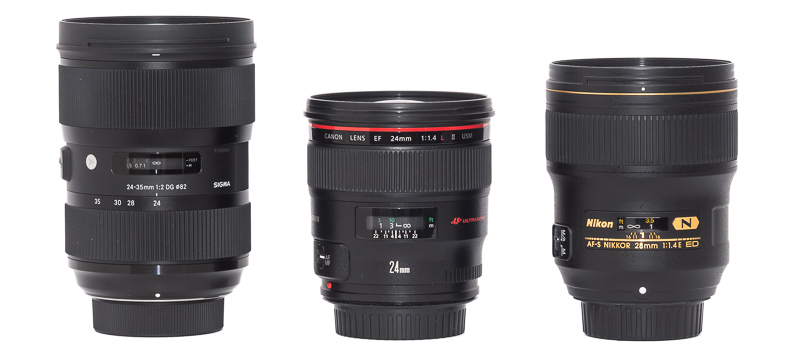
The Sigma 24-35mm 2.0 Art is by no means a small lens, as it is bigger and heavier than even the one stop faster higher end primes in this focal length range, as you can see here next to the Canon EF 24mm 1.4L II and the Nikon AF-S 28mm 1.4E. If it replaces two prime lenses for you (e.g. a 24mm and a 35mm) you may still save some weight in the end though.
Autofocus
I am not shooting sports or fast moving animals/humans so if you want to know if the lens is fast enough for this, or how it compares to other lenses in this segment, you may have to look for a different review with a more detailed assessment of this aspect.
The AF was always fast enough and accurate and it is also near silent. The latest designs with linear motors will surely be faster though.
Vignetting
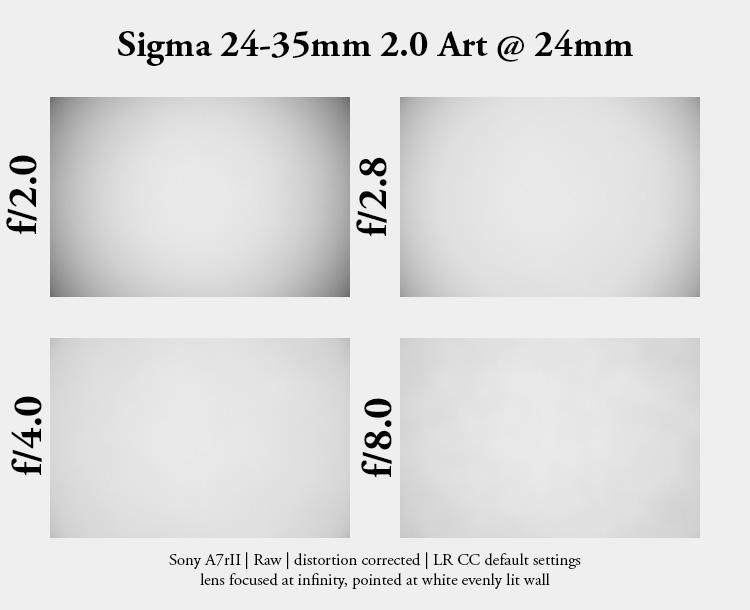
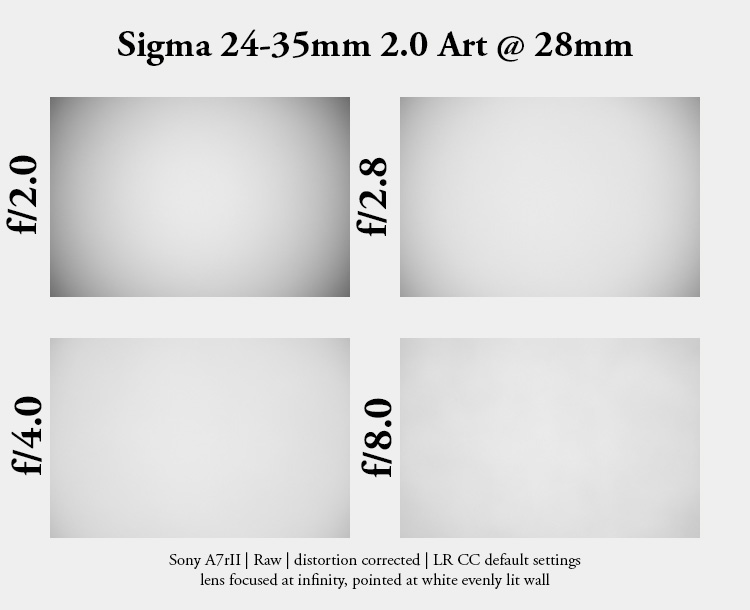
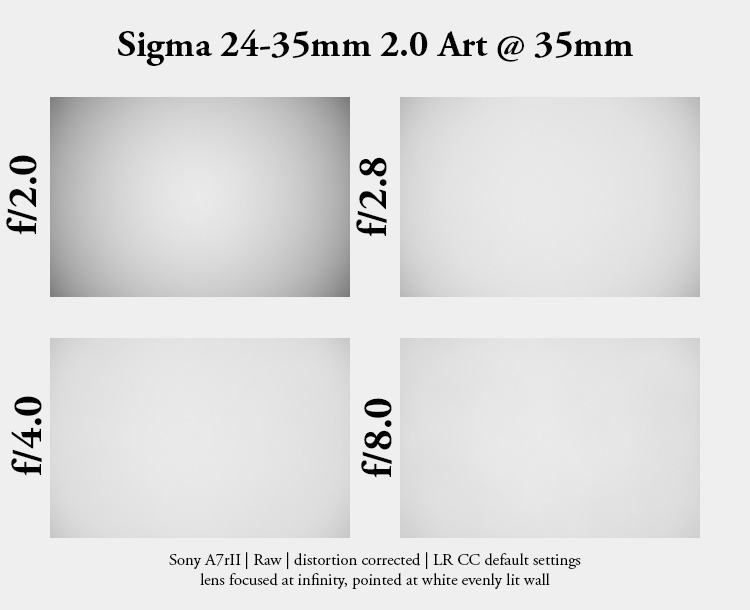
| 24mm | 28mm | 35mm | |
|---|---|---|---|
| f/2.0 | 2.6 EV | 2.5 EV | 2.3 EV |
| f/2.8 | 1.9 EV | 1.9 EV | 1.4 EV |
| f/4.0 | 1.3 EV | 1.2 EV | 1.0 EV |
| f/5.6 | 1.1 EV | 0.9 EV | 0.8 EV |
| f/8.0 - f/16 | 0.9 EV | 0.9 EV | 0.8 EV |
There are not a lot of surprises to be found here. The vignetting figures are similar to the fast primes in this segment and stopped down a bit better than what we are used to from the recent more compact mirrorless designs.
The vignetting figures are also highest at the 24mm end – which was to be expected.
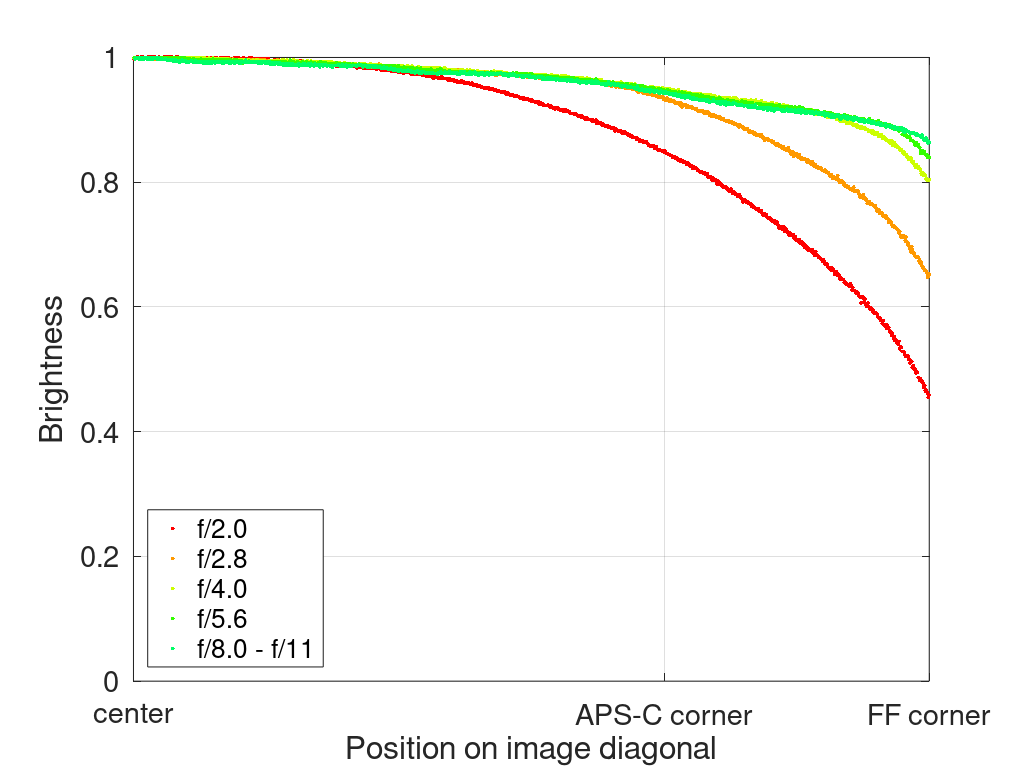
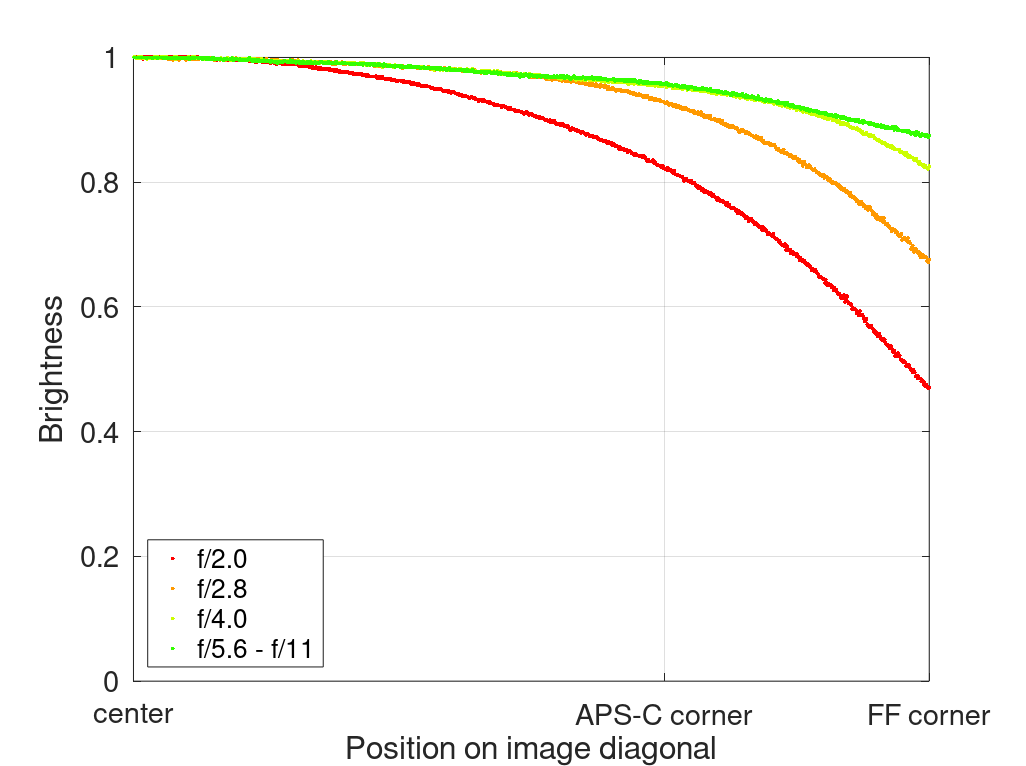
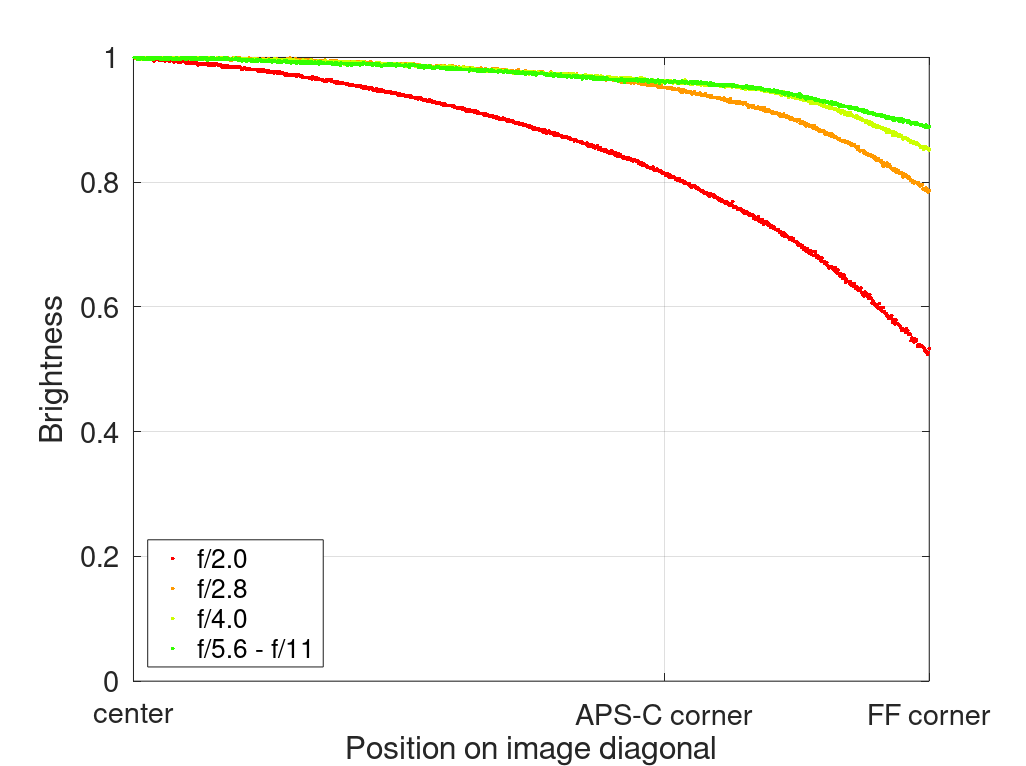
It is recommended to have a look at this article first to get an idea how this brightness graph works.
Sharpness
infinity (42mp Sony A7rII)
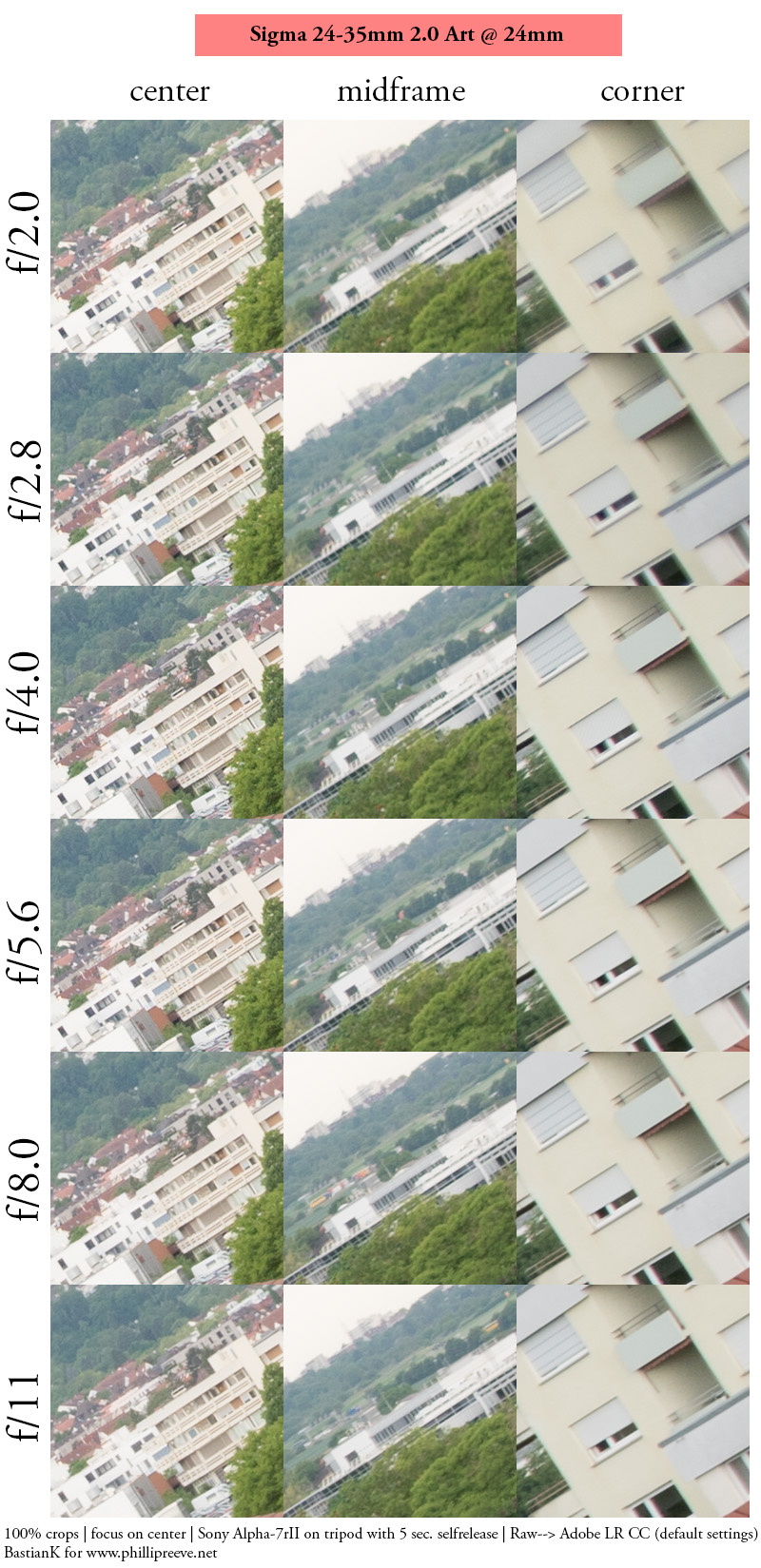
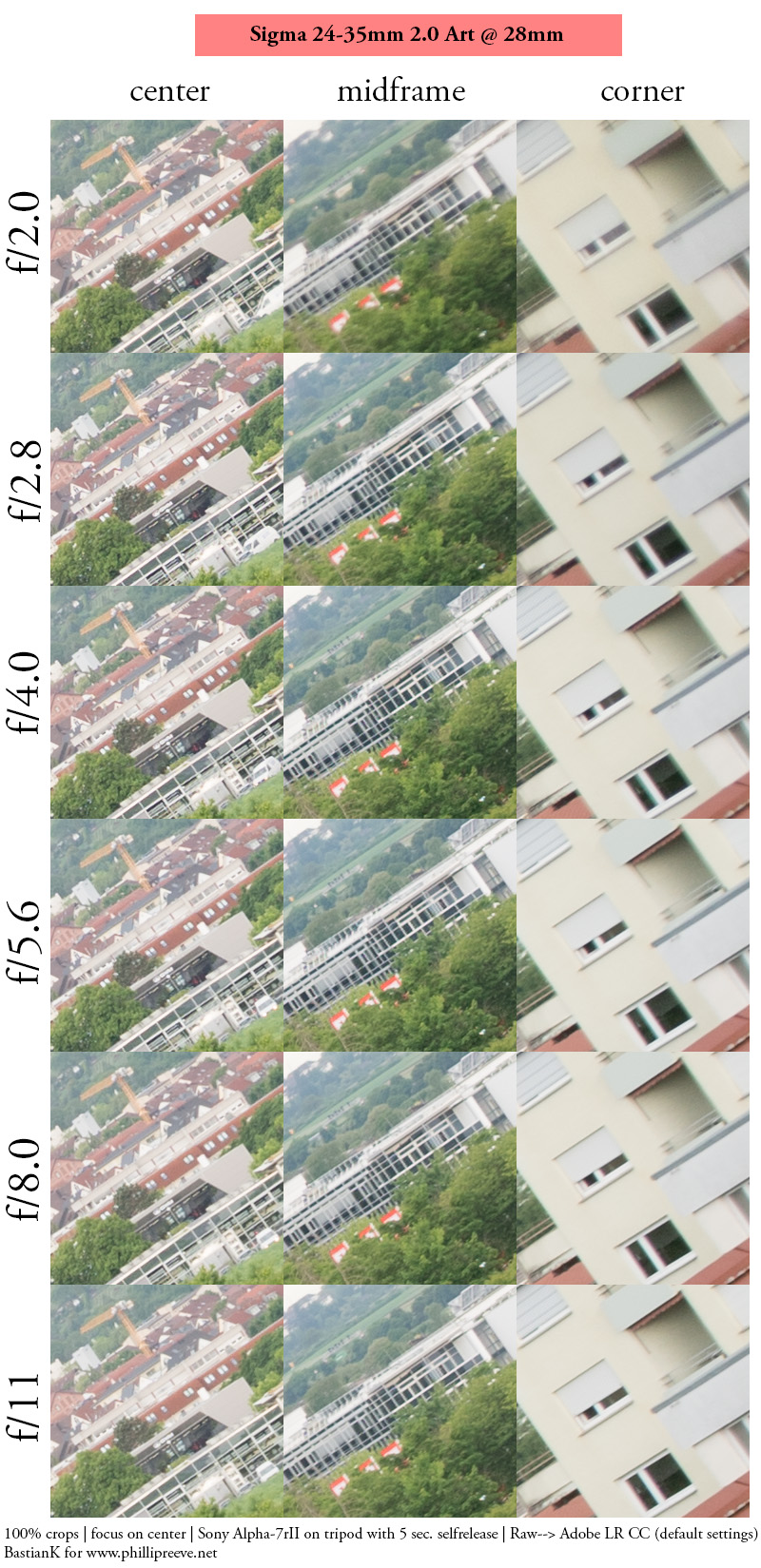
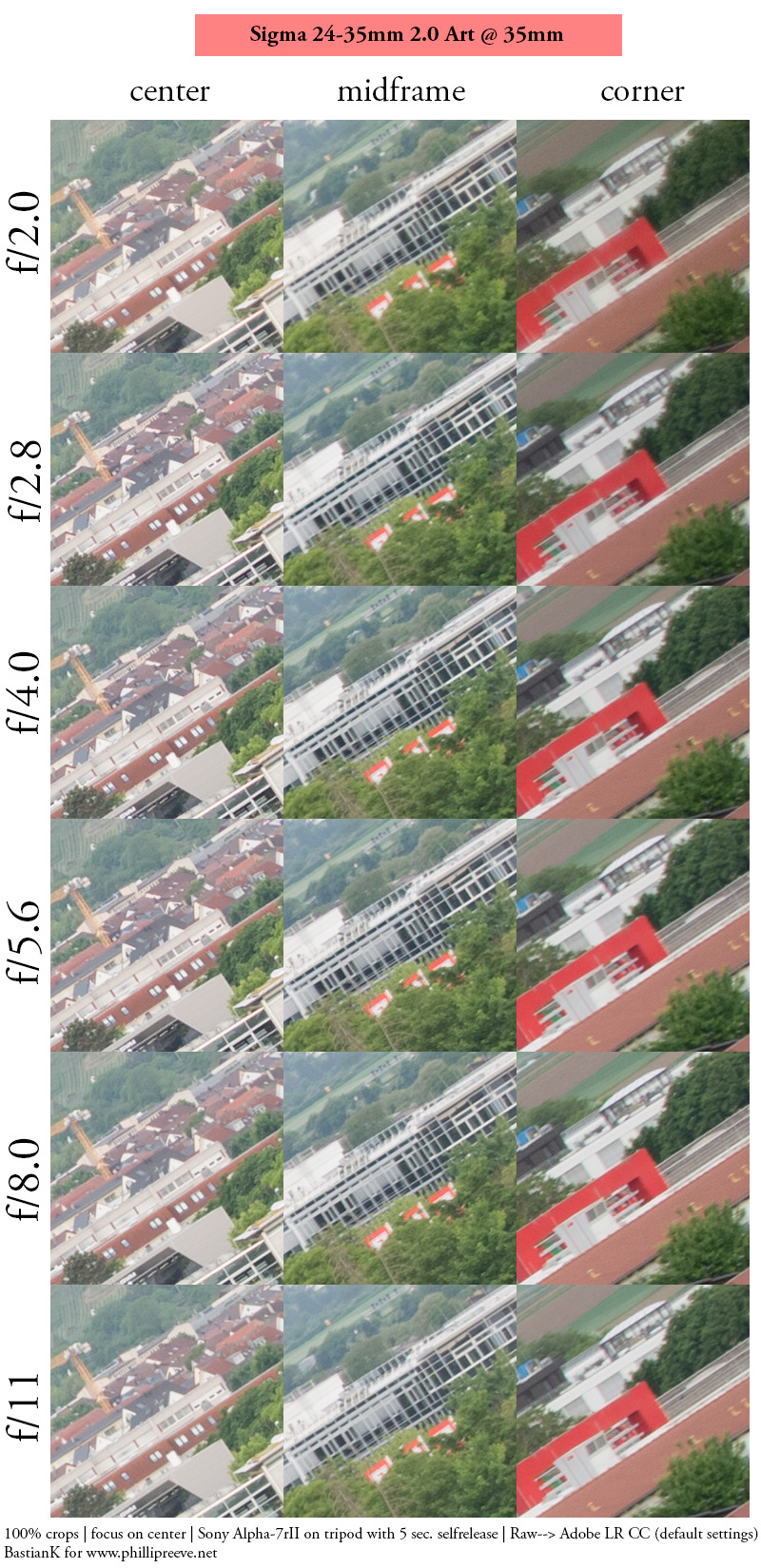
Generally this Sigma 24-35mm 2.0 Art shows an impressive performance in this category. In the center there is hardly something to complain about: it already looks good from f/2.0 at all focal lengths. Midzone and corners benefit from stopping down a bit. While the contrast is also high from f/2.0, stopped down the resolution increaes visibly.
Compared to the fast wide angle primes of the DSLR era this is a very good performance. When you have a look at my reviews of the Nikon AF-S 28mm 1.8G or Nikon AF-S 35mm 1.8G you will notice this Sigma zoom lens actually shows a better performance.
Keep in mind there is more variance with these zoom lenses compared to primes, so your sample of this lens might behave slightly different.
portrait distance (42mp Sony A7rII)
For portraiture it isn’t so important how flat the field is, it is more interesting to see what the sharpness is like when focused at different parts of the frame to take field curvature out of the equation.
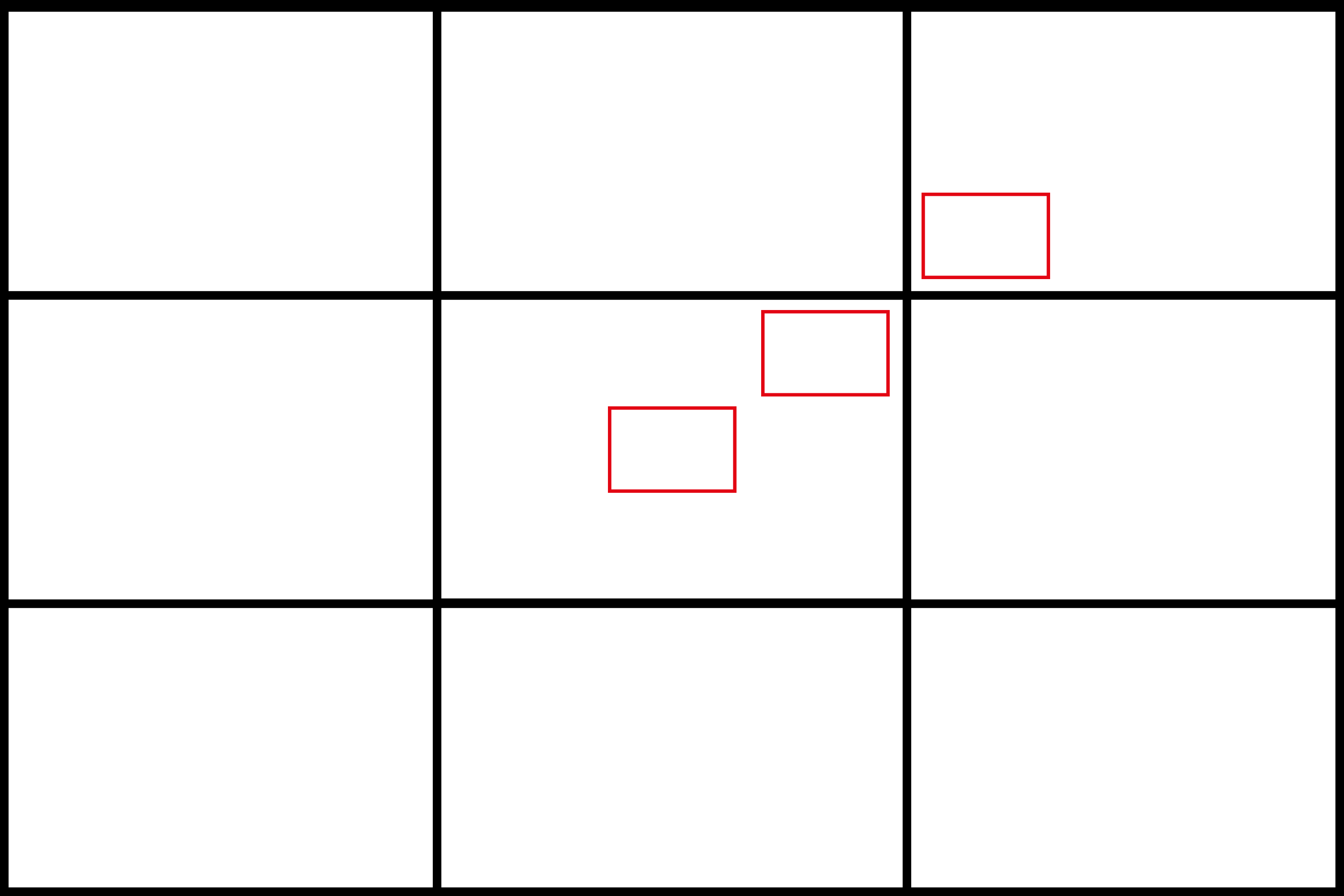
This is what I did here, I refocused for every shot and aperture to get the best possible result at different locations in the frame (center, inner midframe and outer midframe).
24mm
f/2.0 <————> f/2.8

35mm
f/2.0 <————> f/2.8



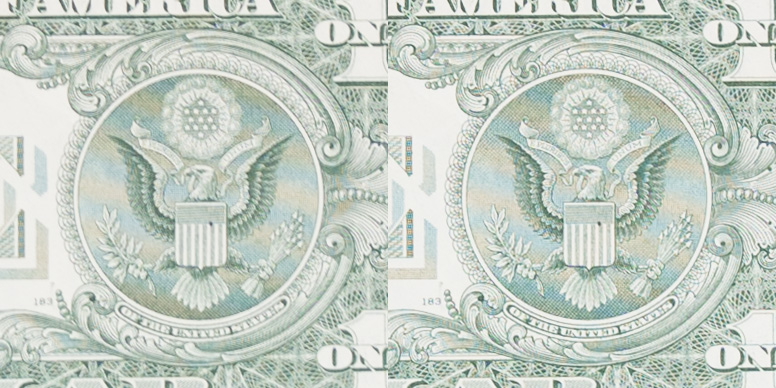
Also at portrait distances the sharpness is very good throughout most of the frame from f/2.0. We can see a slight softness (probably due to Astigmatism) when looking at the outer midframe area, but for typical portrait applications this will hardly leave something to be desired.
Again it makes sense to have a look at my reviews of the Nikon AF-S 28mm 1.8G or Nikon AF-S 35mm 1.8G which both again look worse than this Sigma zoom.
close (42mp Sony A7rII)
24mm




35mm




The biggest magnification is achieved at the 35mm end with 1:4.0, this already allows for nice close ups of small objects. At the 24mm lens it is roughly 1:6.0.
Also here we see a good performance, albeit it is stronger at 24mm than at 35mm. At 35mm stopping down to f/2.8 increases the contrast noticeably whereas it hardly makes a difference at the 24mm end. Also at close distances it matches the image quality of the prime lenses of its era.
Flare resistance
Generally, if you try hard and long enough, you can make almost any lens look bad in this category. Zoom lenses are often more prone to issues here, due to many air-glass surfaces and plenty of moving parts inside.
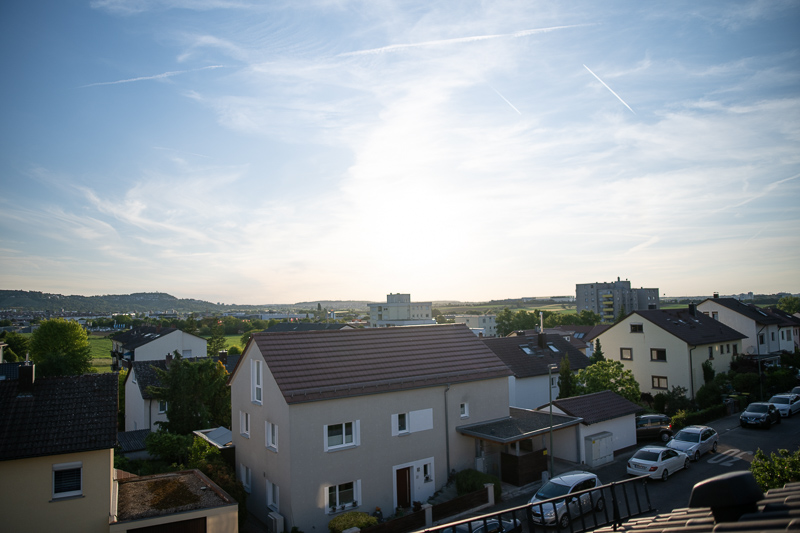
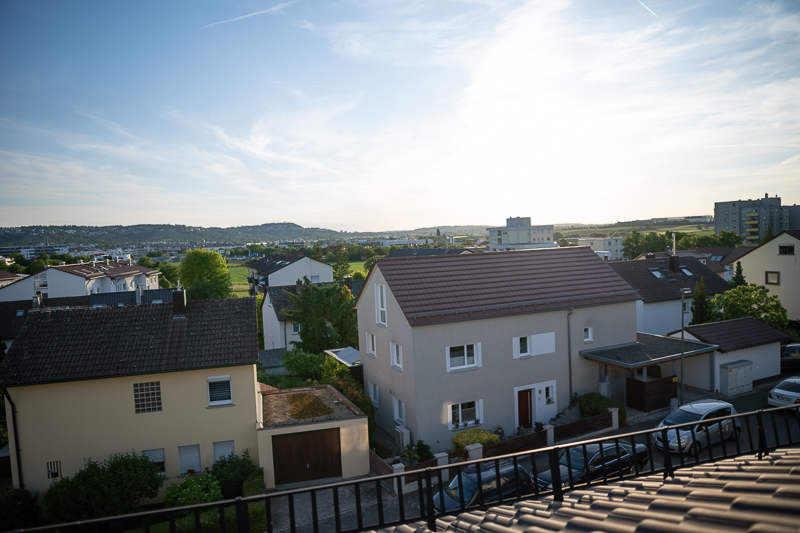
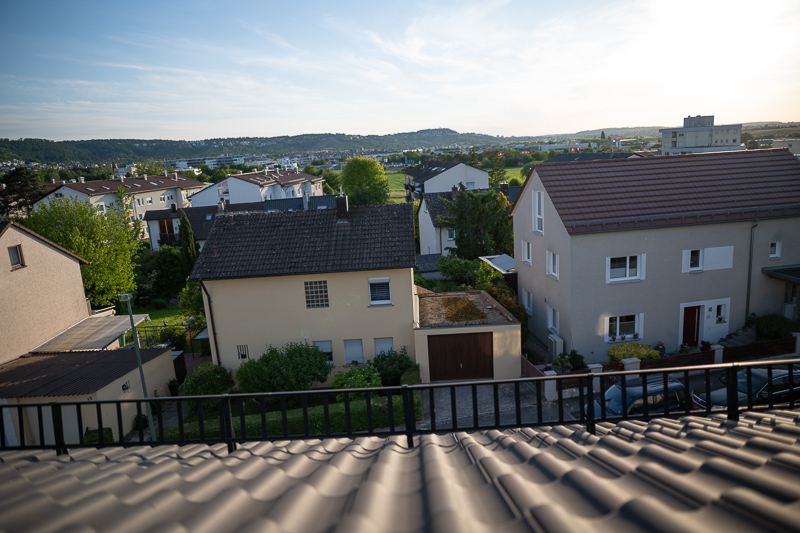
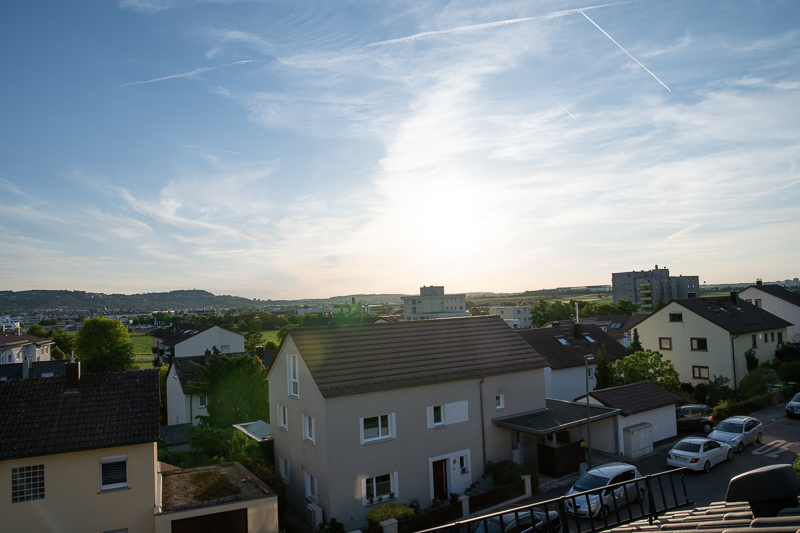
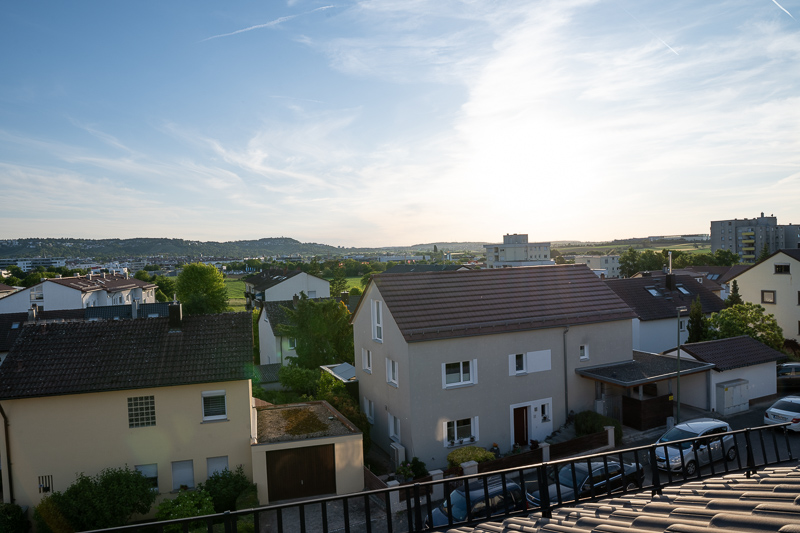
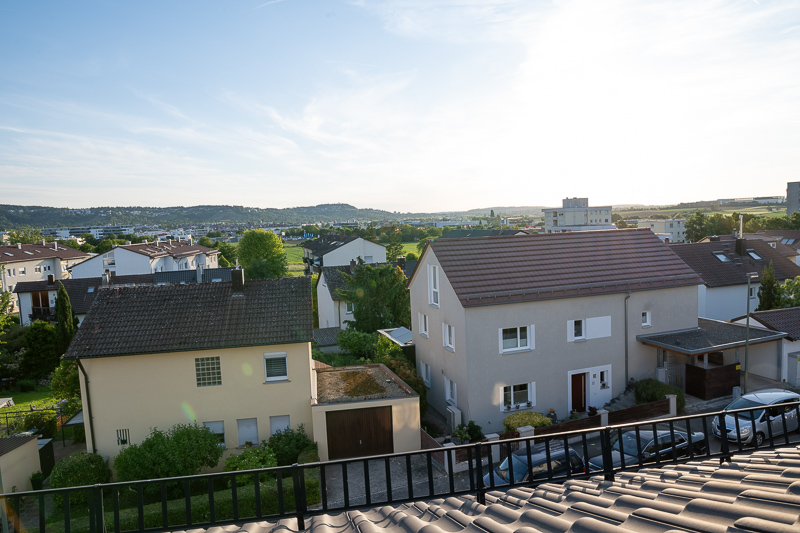
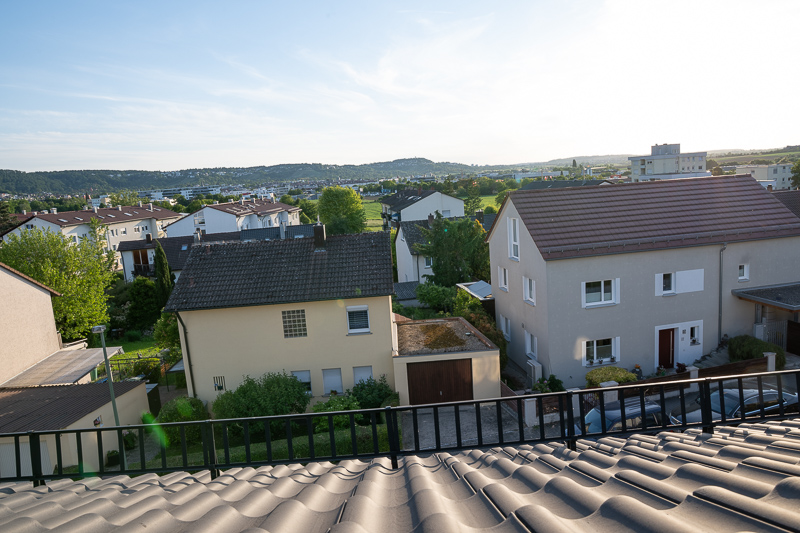
At the wide end when shooting at f/2.0 I hardly managed to create any distracting artefacts. Stopped down to f/11 we can see a line of ghosts which is rather typical for zoom lenses.
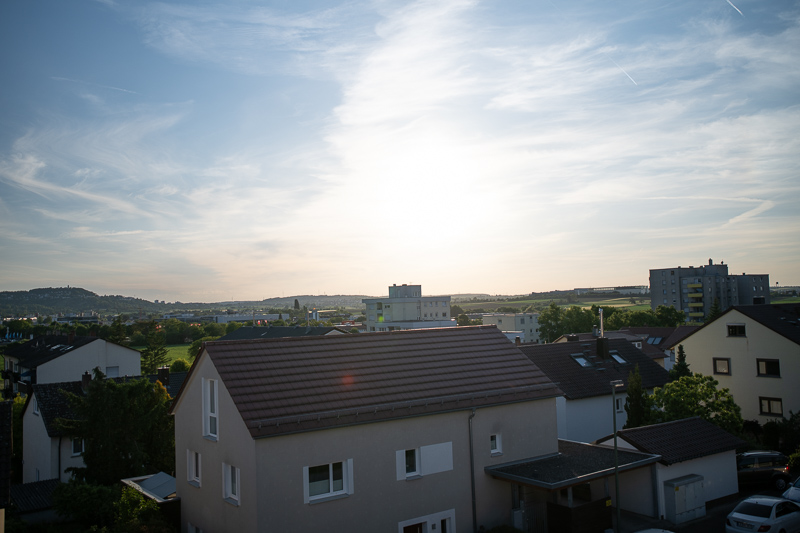
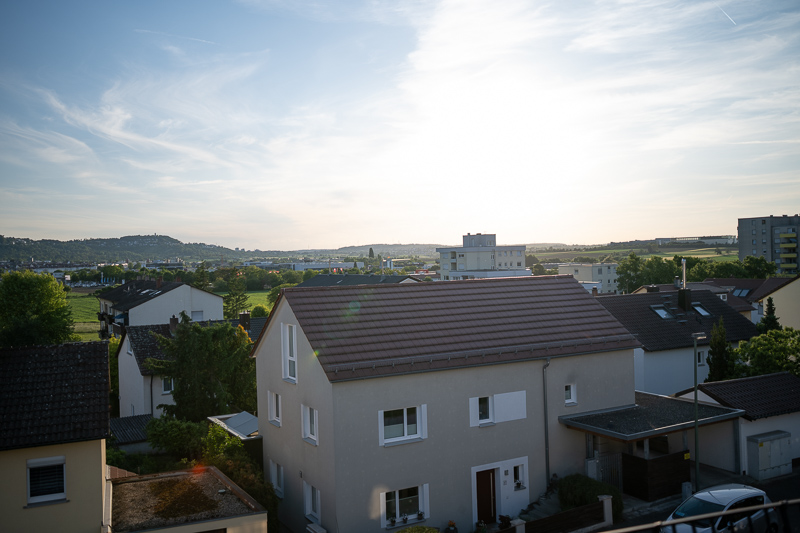
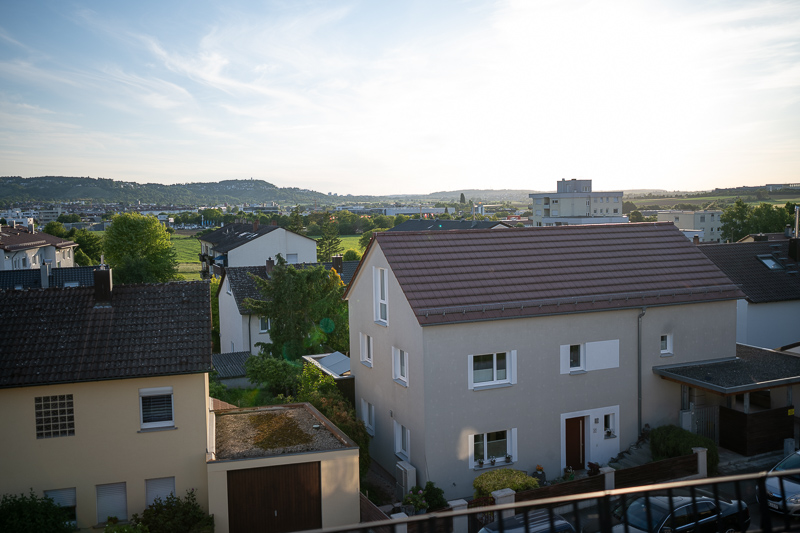
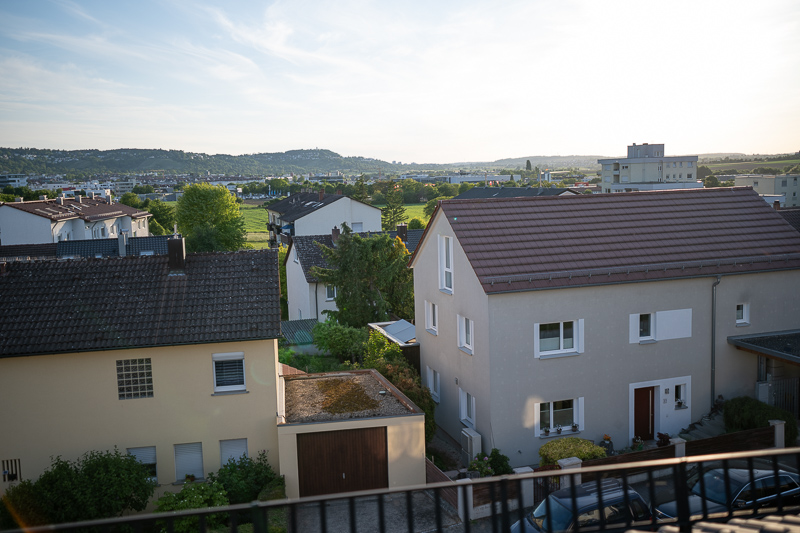
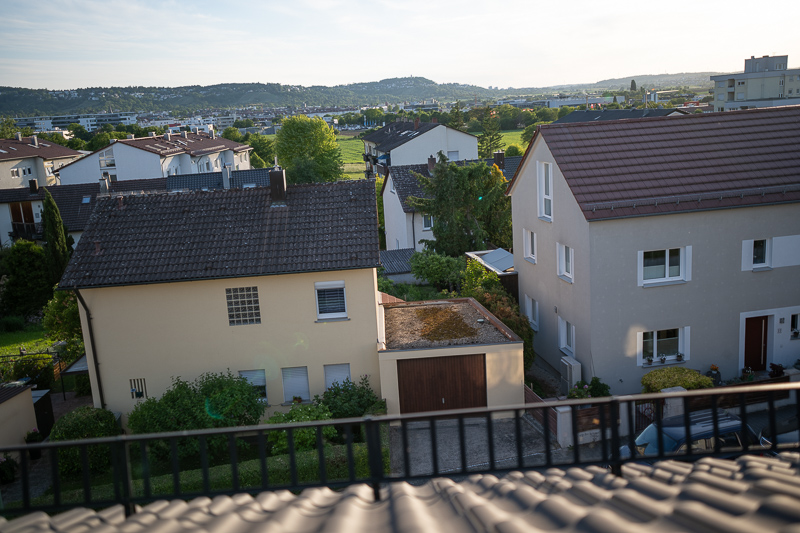
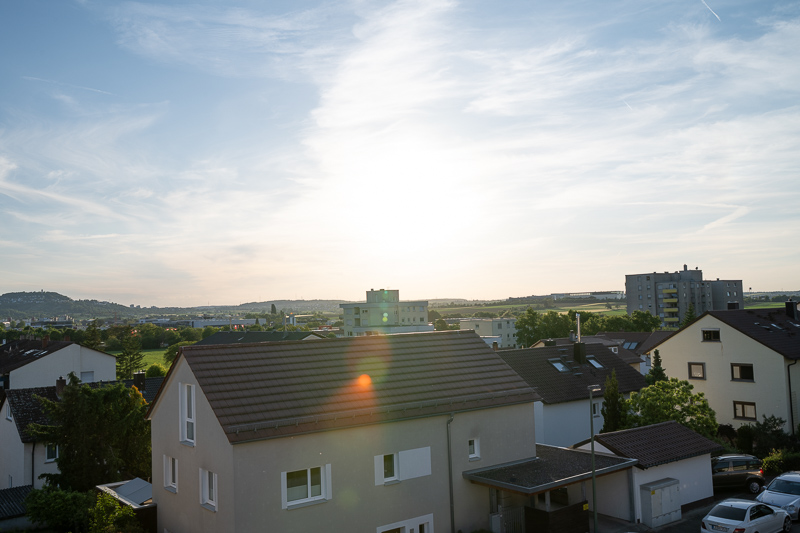
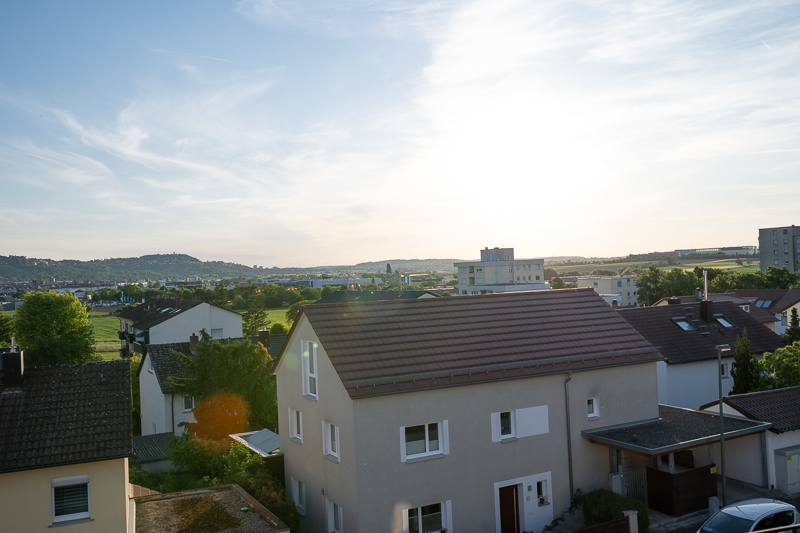
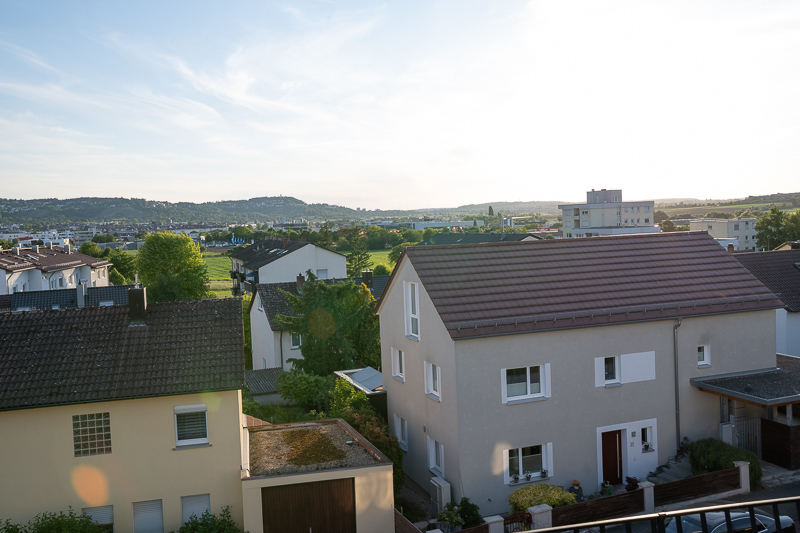
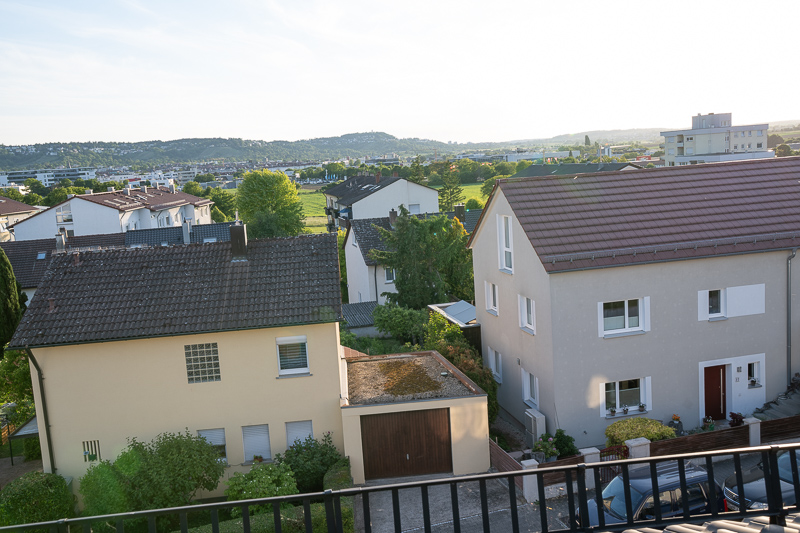
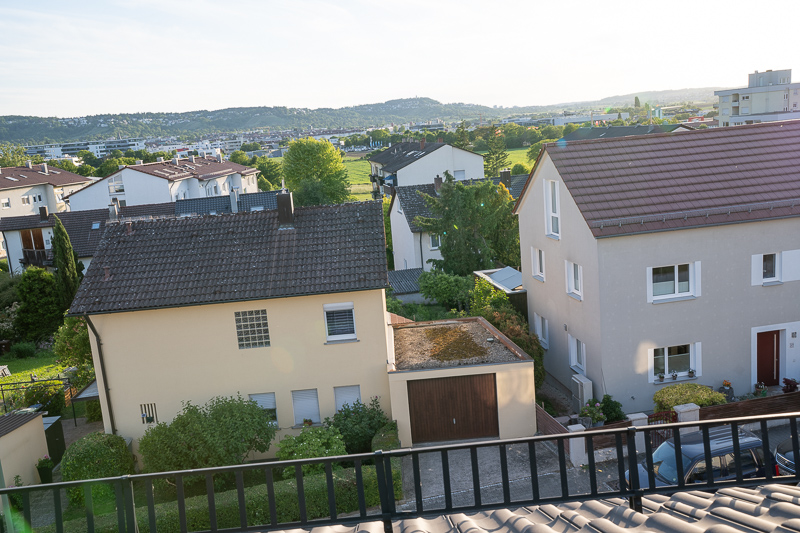
At the 35mm end those small ghosts appear more easily, also at wider apertures.
This Sigma 24-35mm 2.0 shows a solid performance in this category and in the field I did not encounter any issues with lens flares ruining my pictures. The latest zoom designs (e.g. the Sony FE 24-50mm 2.8 G) show an even better performance though.
Coma correction
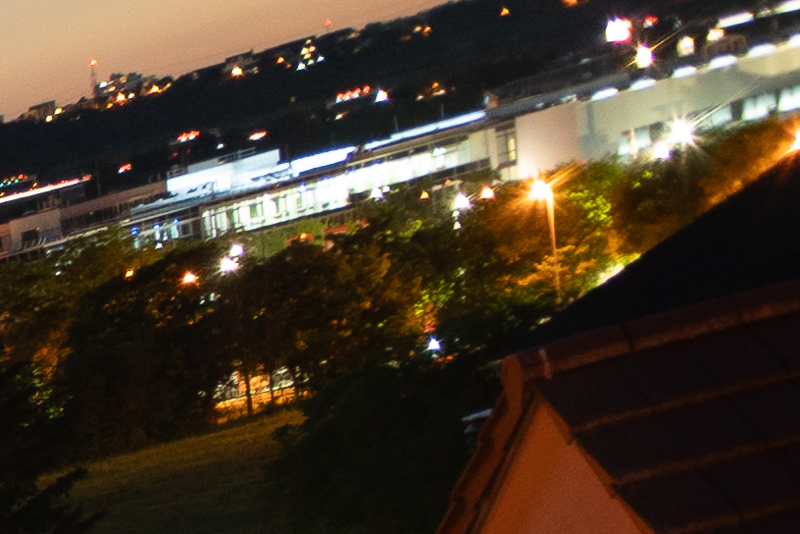
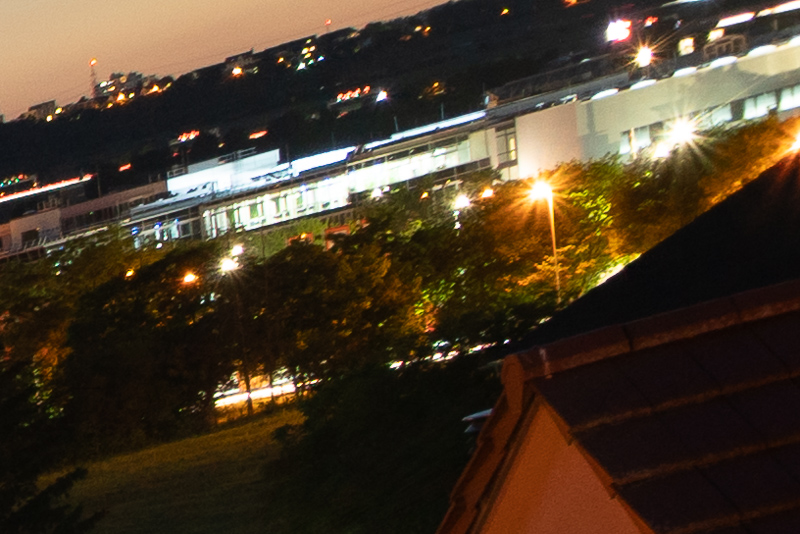
24mm
35mm
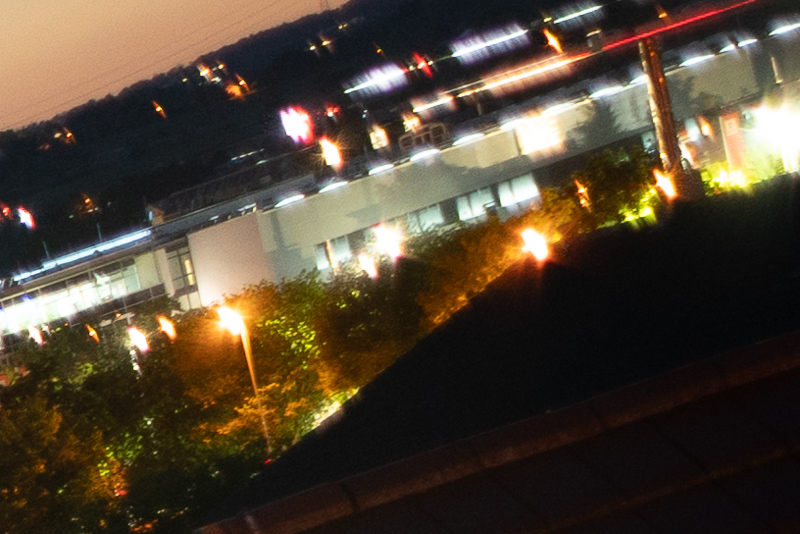
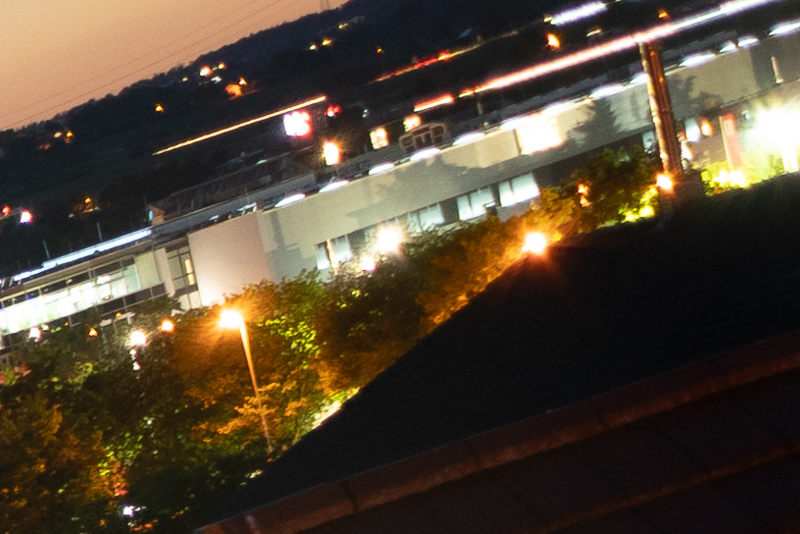
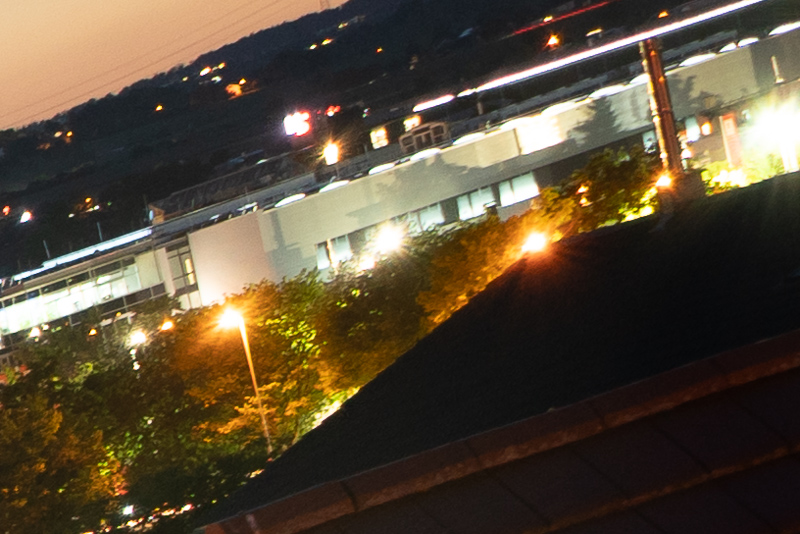
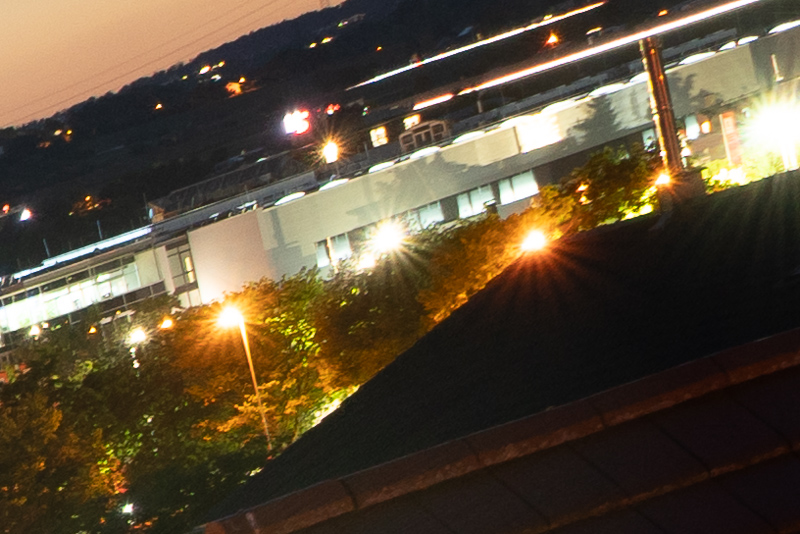
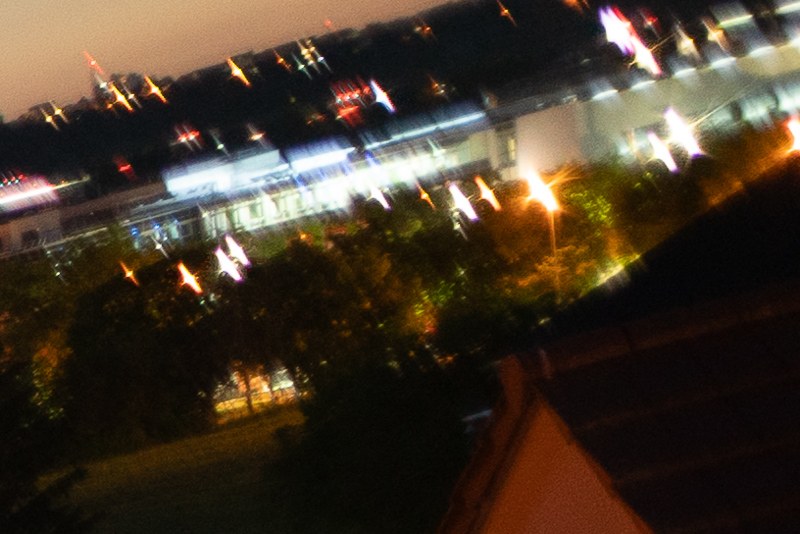
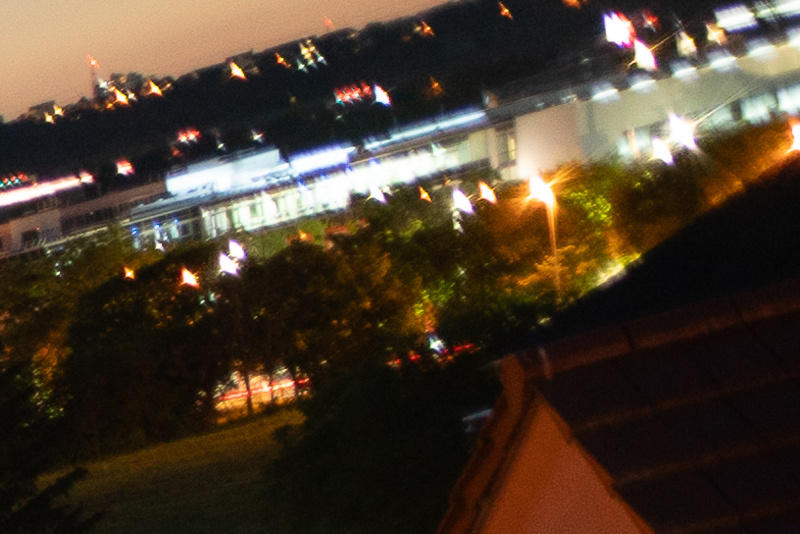
At 24mm and 35mm we can certainly see some Coma artefacts in the corners at wider apertures. For perfectly clean light points in the corners we need to stop down to f/5.6 at 24mm and f/4.0 at 35mm. The Sony FE 28-70mm 2.0 GM – despite its much bigger zoom range – looks much better at 28mm and f/2.0.
We have to keep in mind this Sigma lens has been designed during the DSLR era here it manages to rival or even outperform the primes of its time (e.g. Nikon AF-S 24mm 1.8G, Nikon AF-S 28mm 1.8G and Nikon AF-S 35mm 1.8G).
Distortion





Traditionally, standard zooms often have barrel distortion at the wide end that turns into pincushion distortion at the long end and that is exactly what is happening here.
The distortion is generally low (close to zero at the 28mm setting) and Lightroom also features a profile to correct this which I used for the pictures above.
Sunstars
24mm
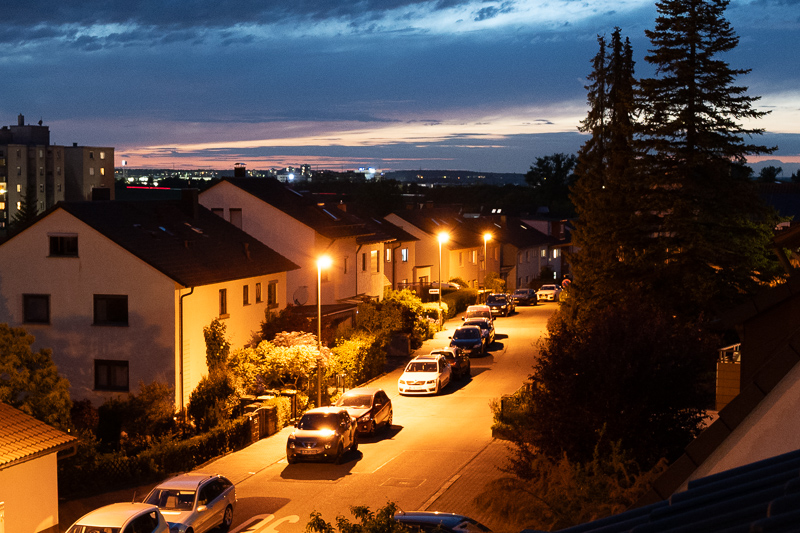
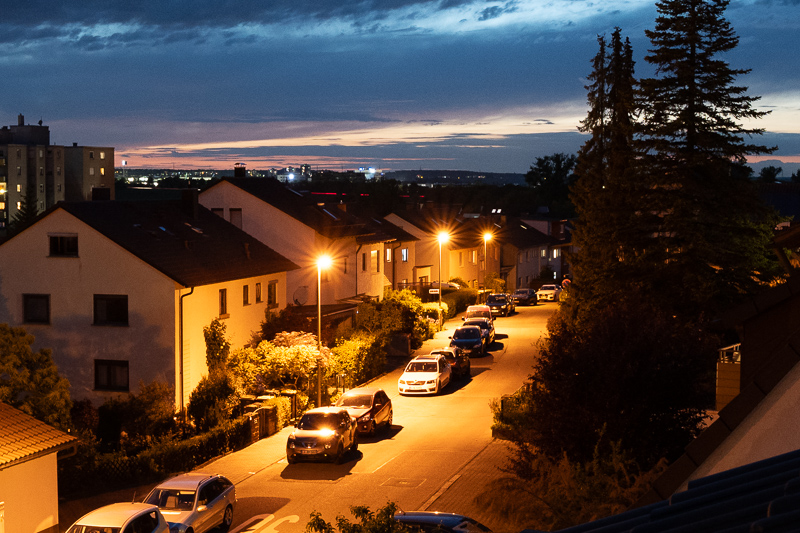
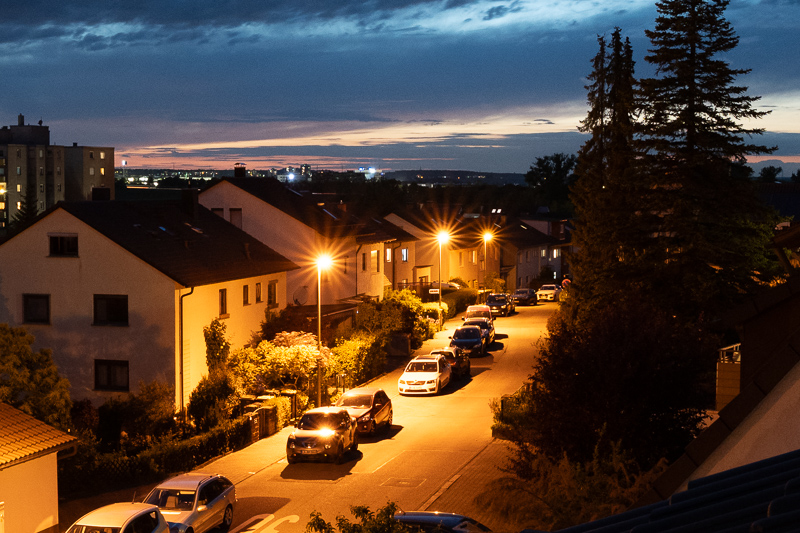
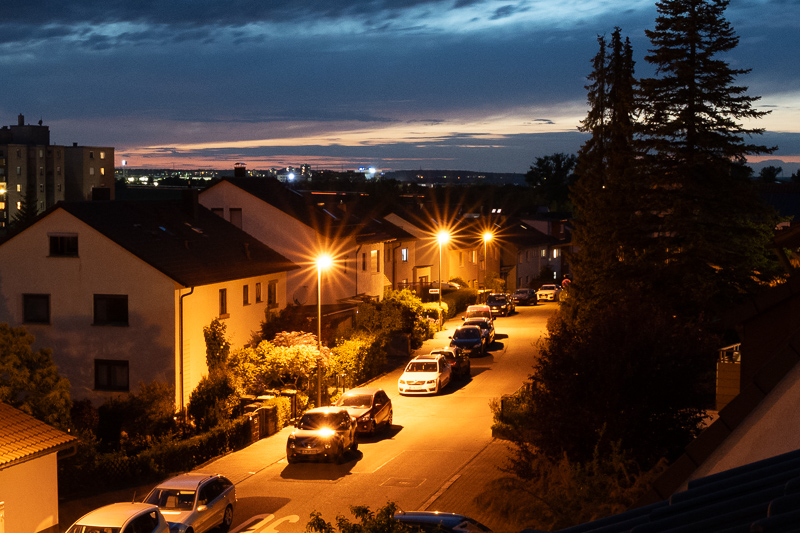
35mm
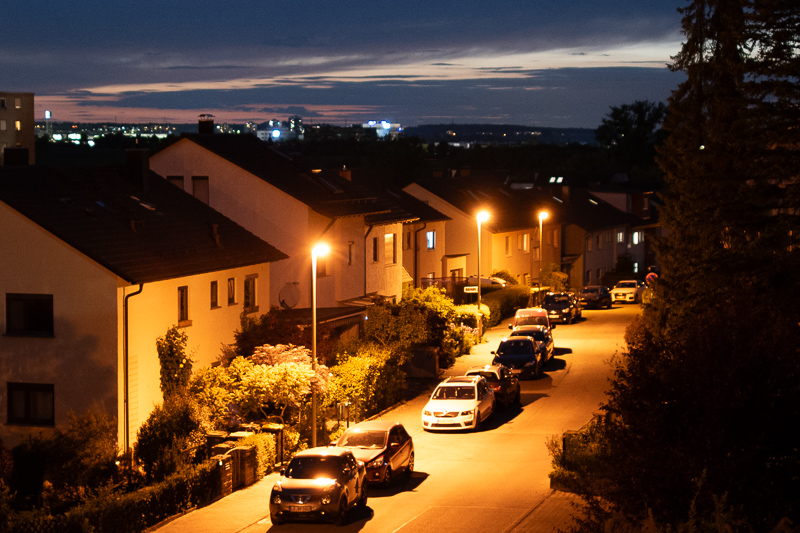
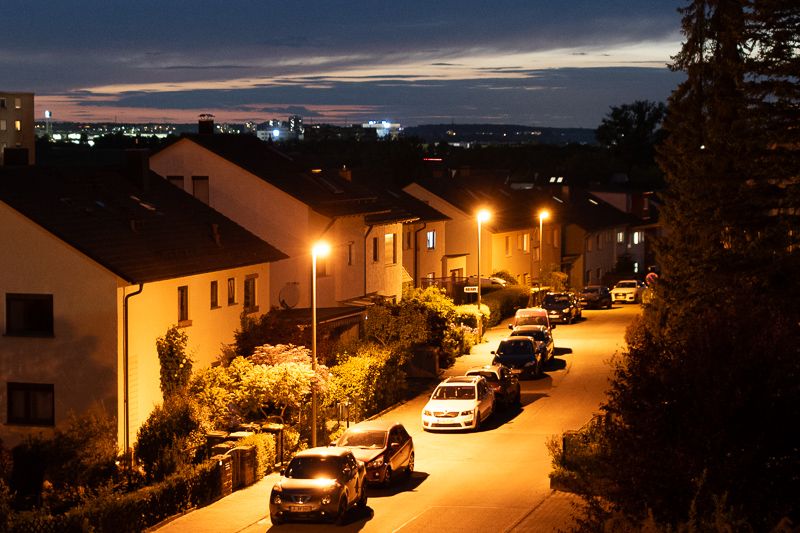
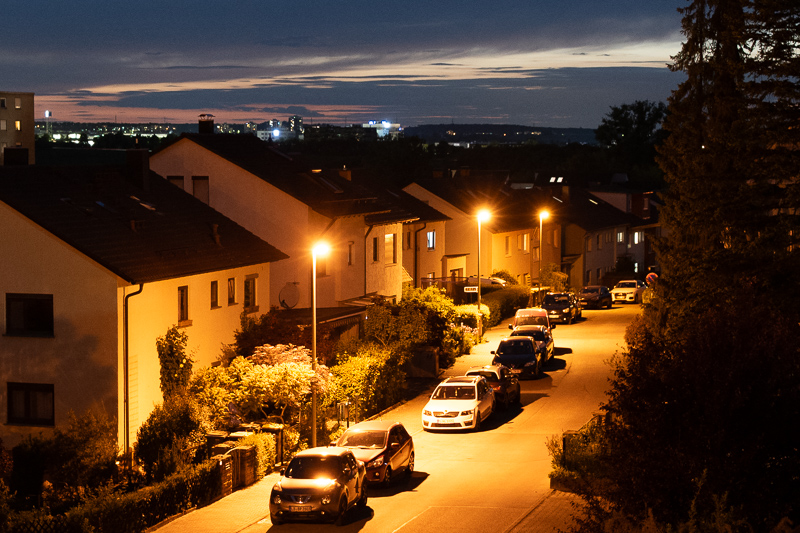
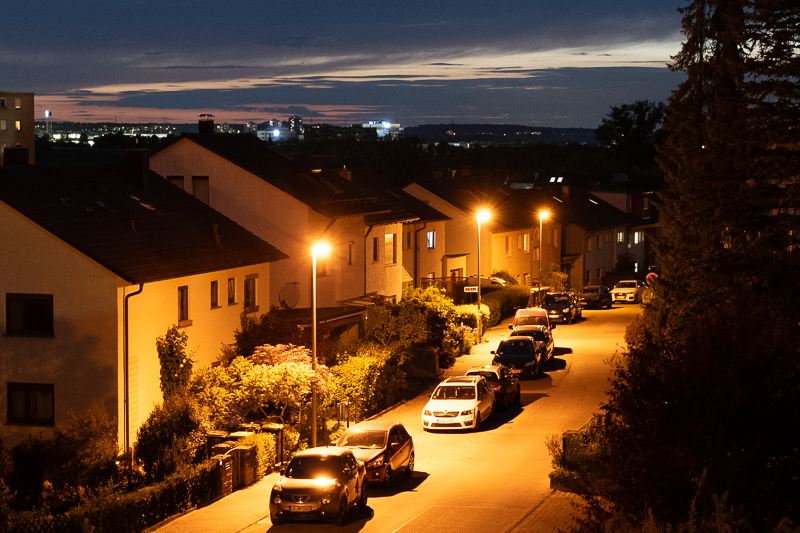
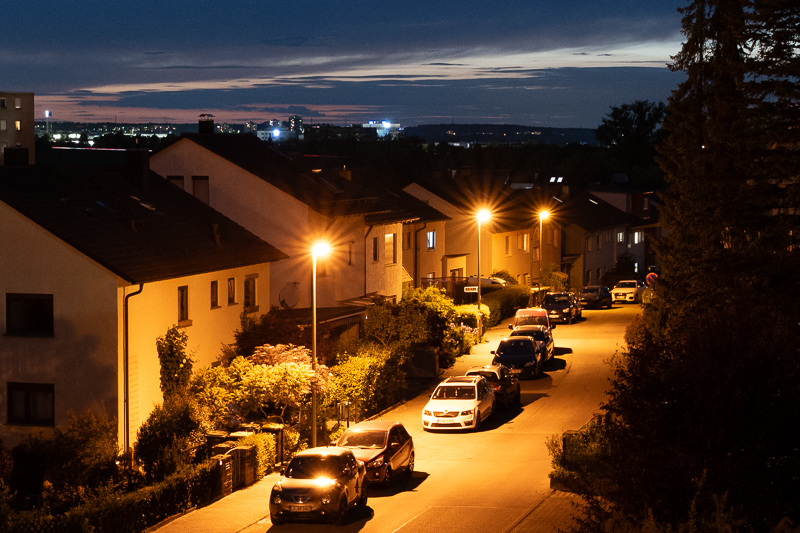
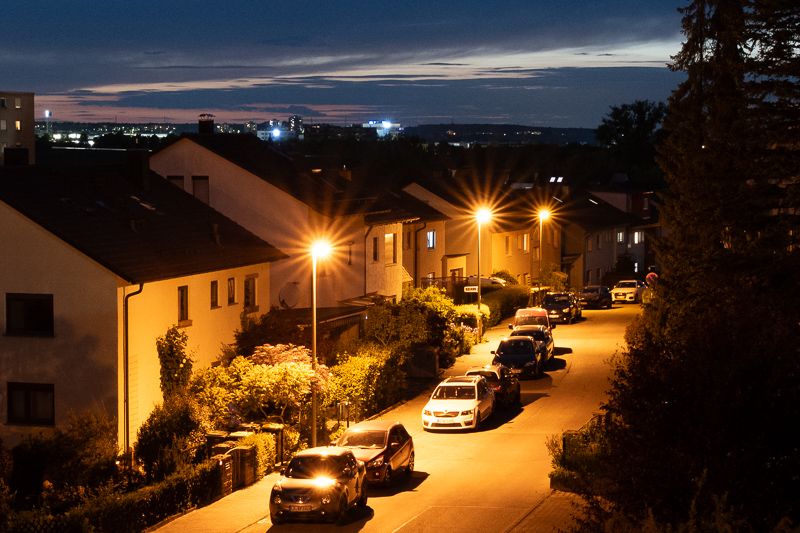
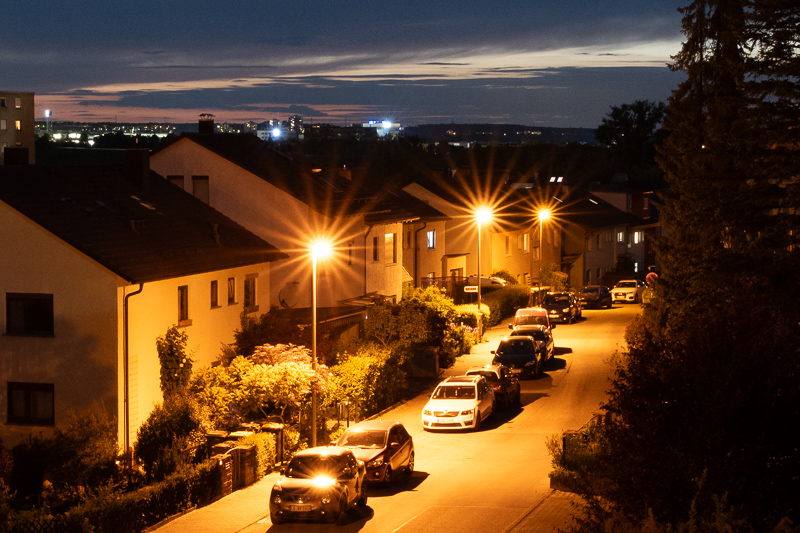
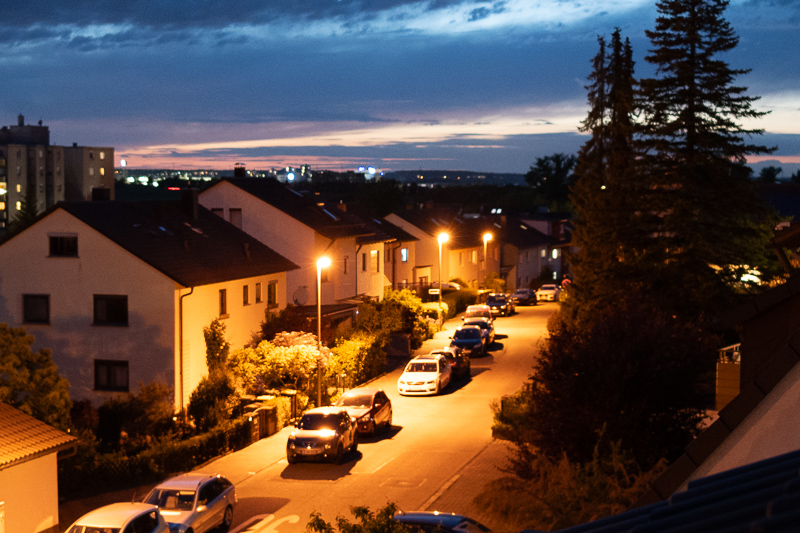
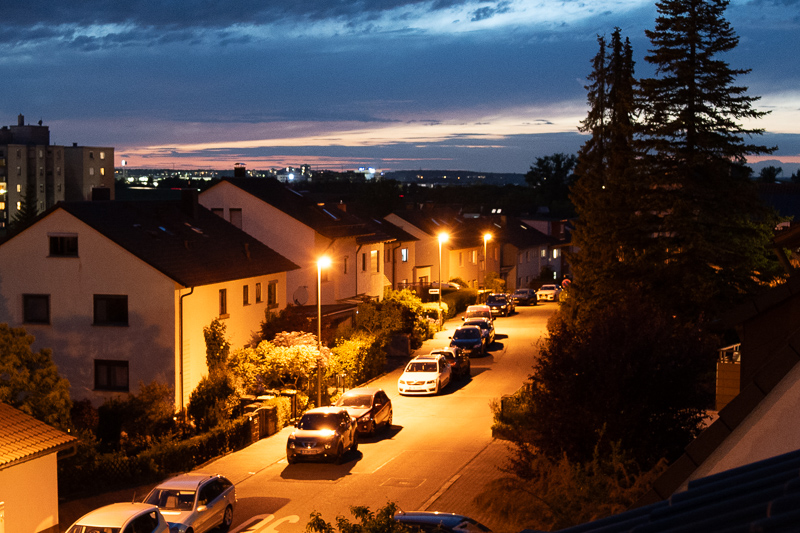
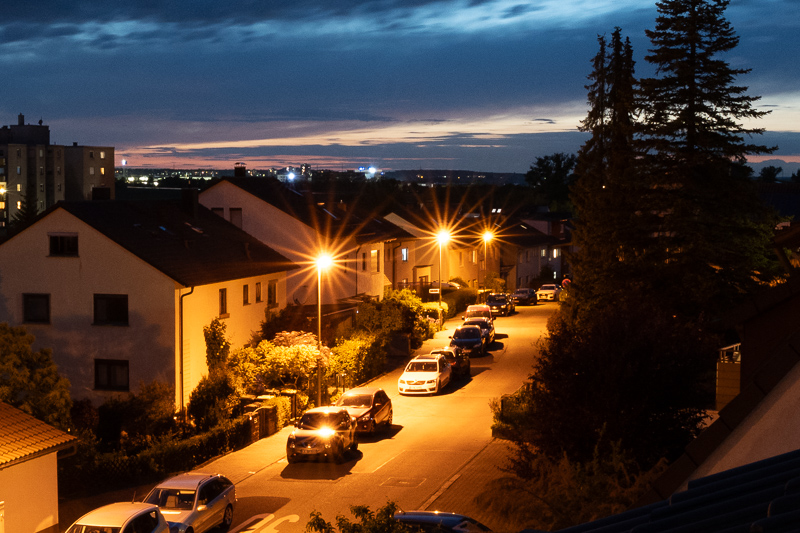
Sigma likes to use a higher number of rounded aperture blades (here 9) which are not the greatest option if you are looking for distinct sunstars. With the introduction of the Art series the alignment of the blades is generally good though, so at f/11 to f/16 this lens can create well defined 18-pointed suntars.
As this is a highly subjective topic may have a look at this article to see which kind of sunstars you prefer.
Bokeh

When you hear of an f/2.0 maximum aperture you may think this lens is a great choice for shallow depth of field photography, but we also need to consider the focal lengths here and with these wide angle lenses you need to be rather close to your subject to really blur the background.



In the scenes above I have been close to the subject and hence was able to create a shallow depth of field. Here we can also see that this lens creates a very nice bokeh: no outlining, smooth and undistracting – especially considering we are dealing with a wide angle lens.

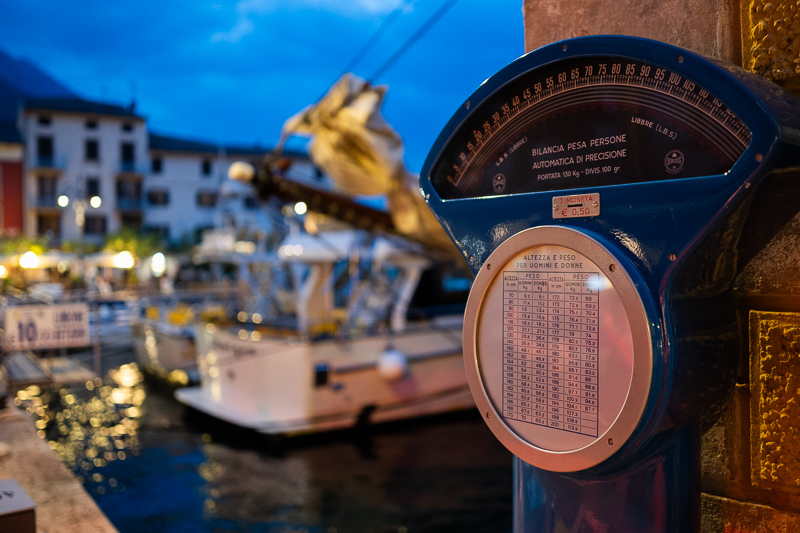


At longer focus distances you will only be able to create a very subtle bokeh with this lens.
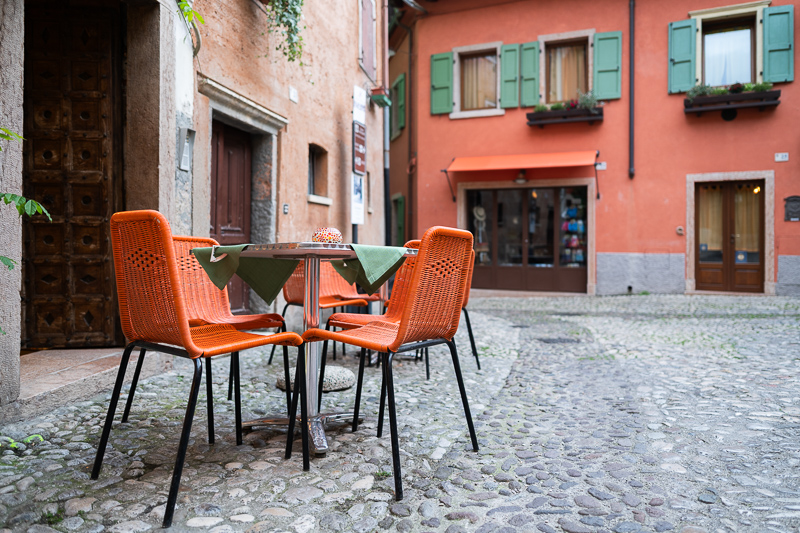
In terms of bokeh quality there is not a lot to complain here, as I regularly use 28 and 35mm lenses that are 1 to 2 stops faster, I did feel a bit limited by the f/2.0 maximum aperture though.
Chromatic aberrations
Lateral
24mm
35mm
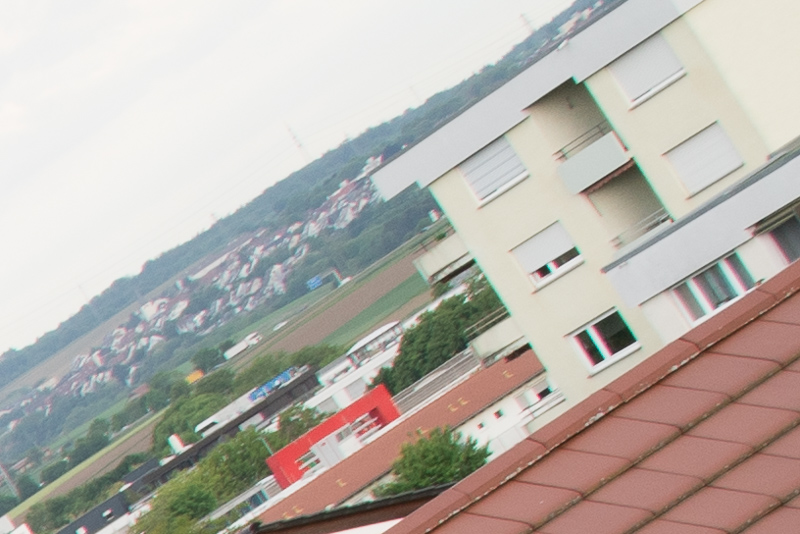
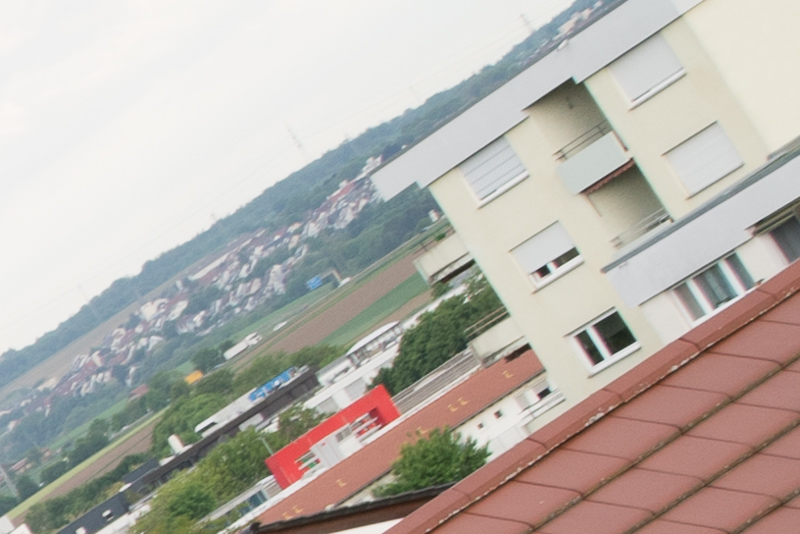
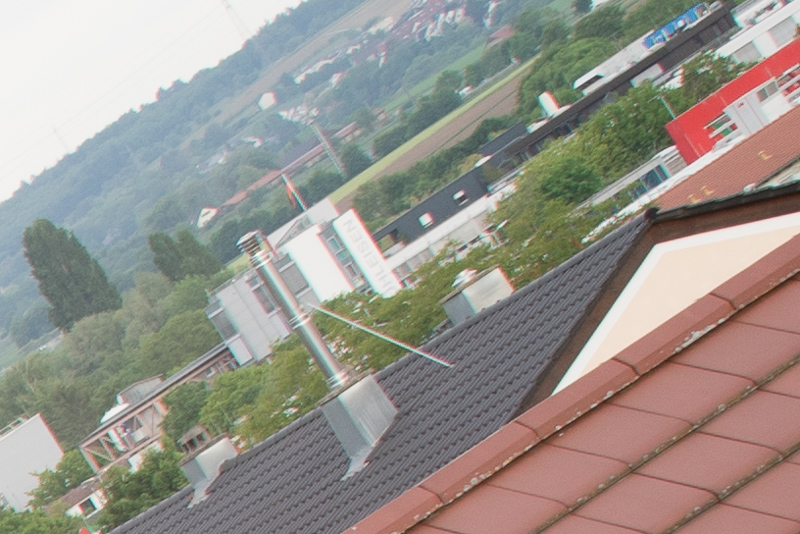
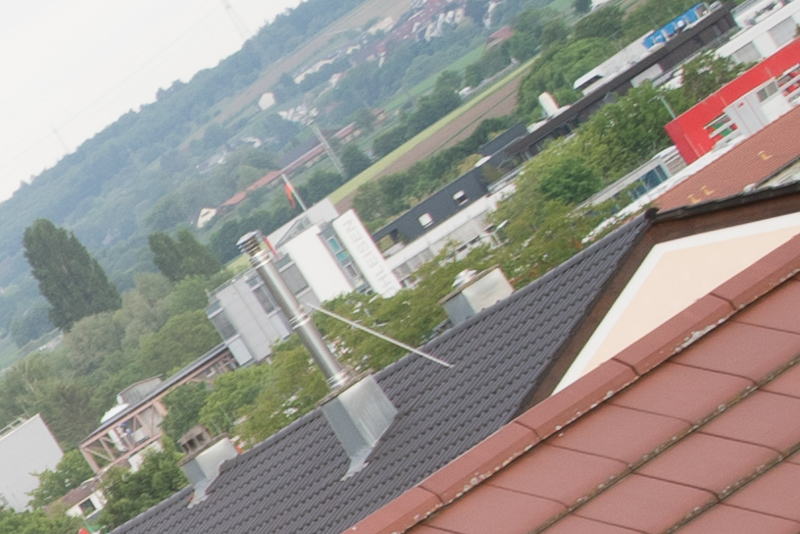
At both ends of the zoom range there are some lateral CA visible. On later Nikon F mount cameras and Z mount cameras this will already be fixed in camera for Jpegs. When shooting raw, the better raw converters like Lightroom can easily fix this with one click.
Longitudinal
24mm
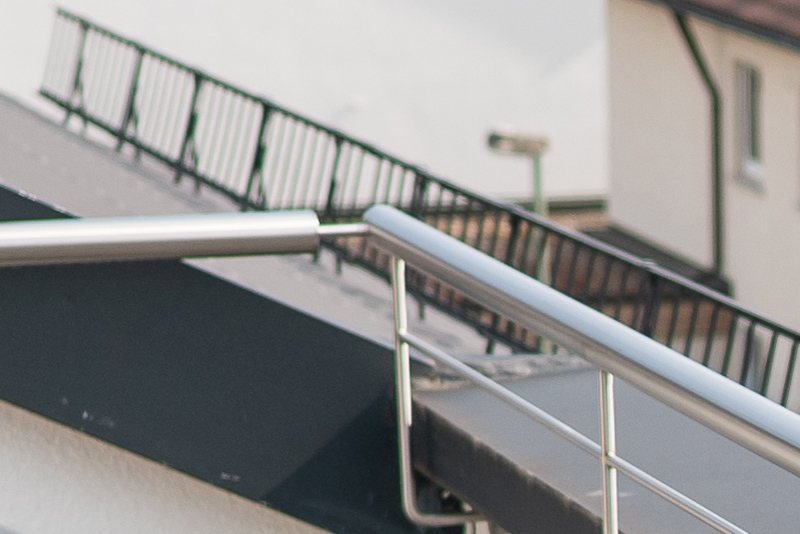
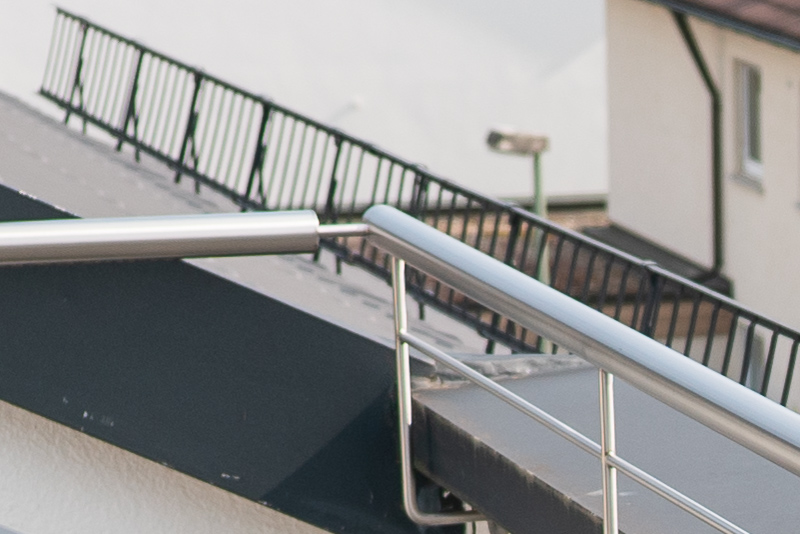
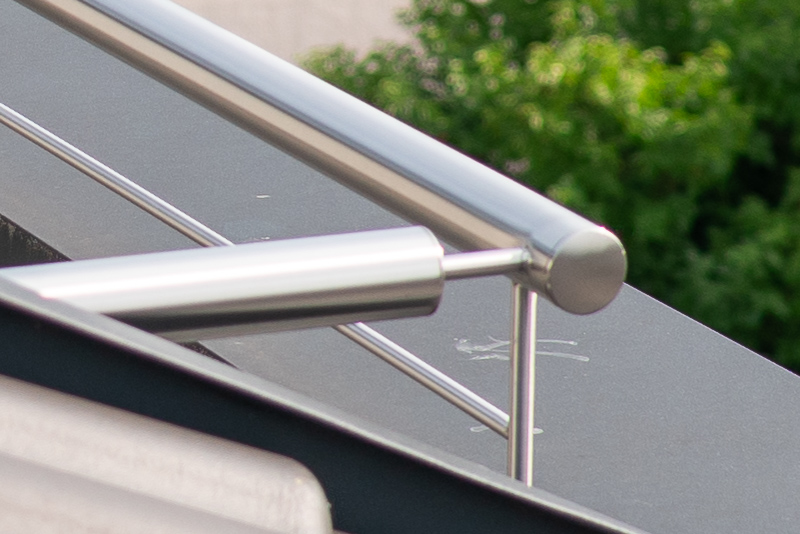
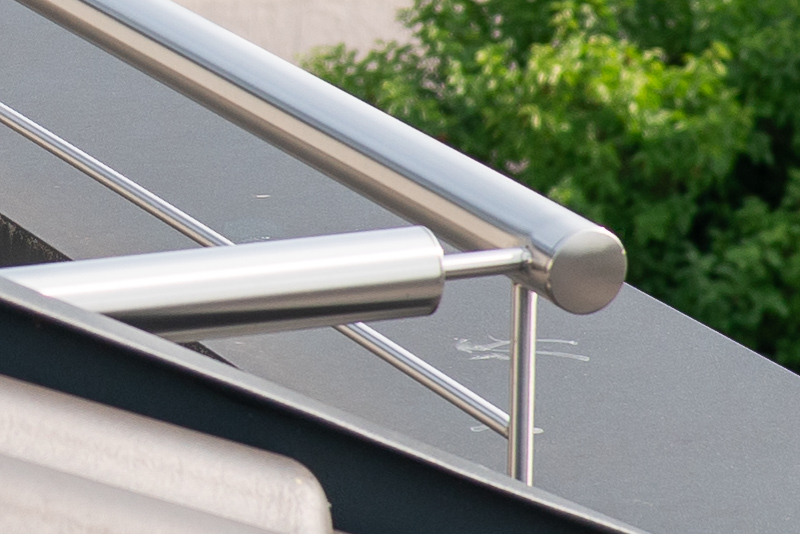
35mm


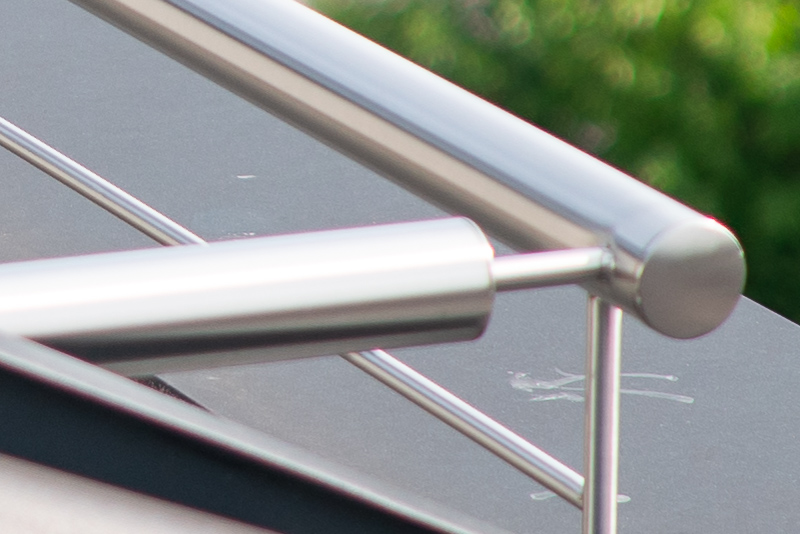
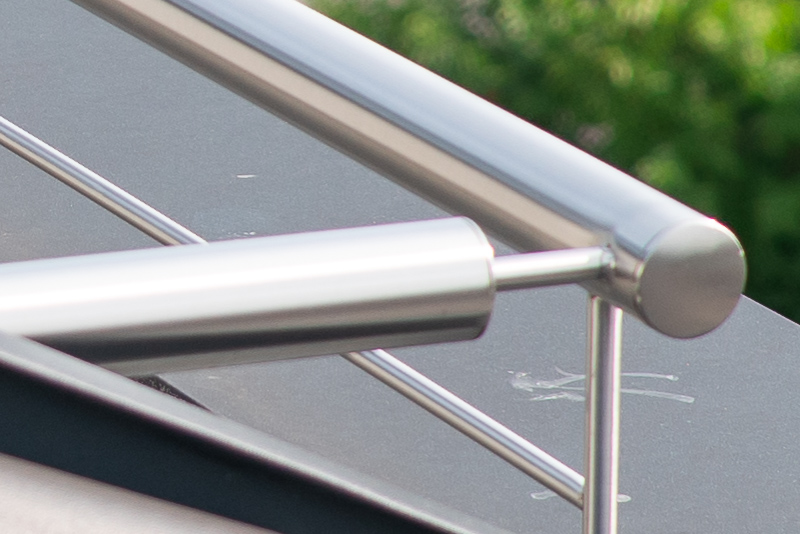
We can see a small amount of bokeh fringing at f/2.0 throughout the focal length range, stopped down to f/2.8 it is mostly gone.
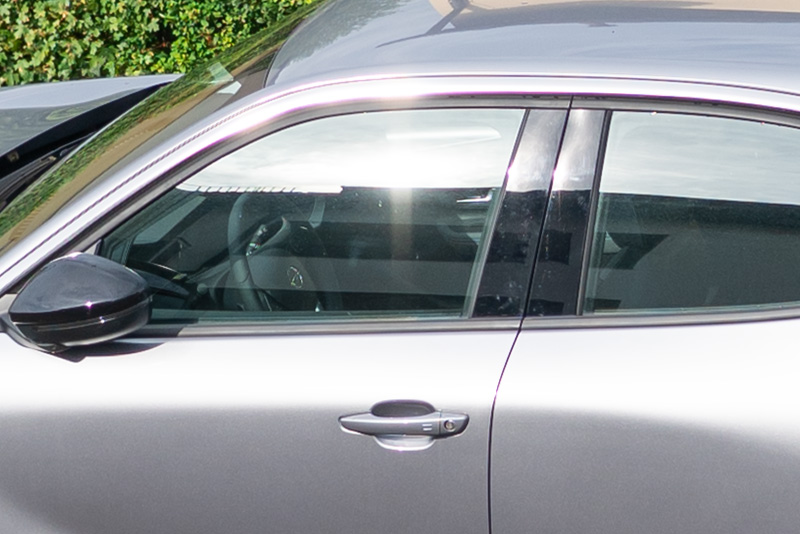
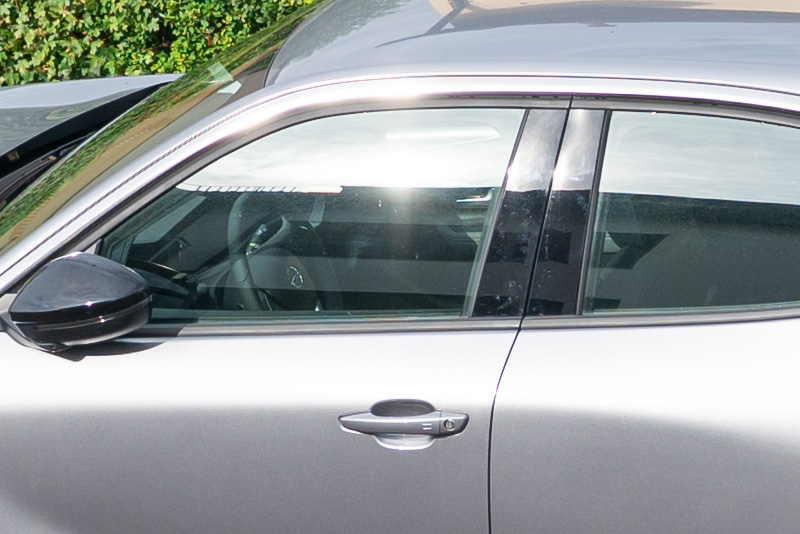
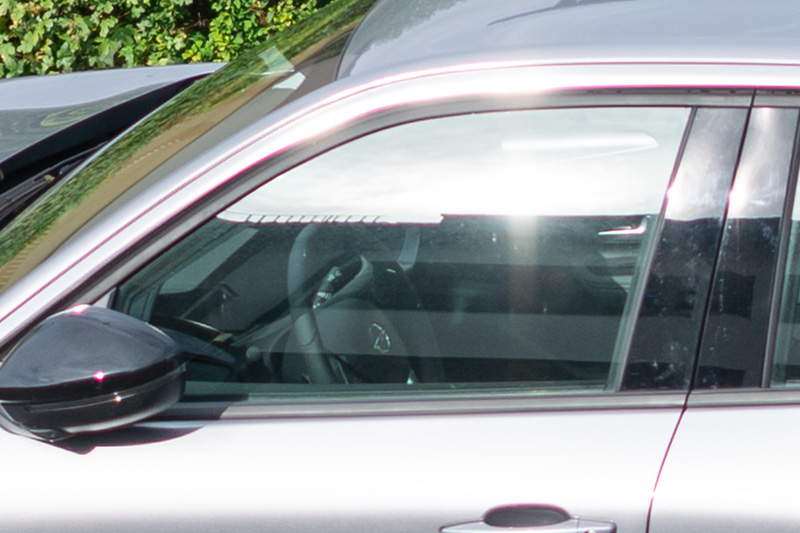

The situation is similar when it comes to purple fringing, here stopping down to f/2.8 is not enough at the 35mm end to get rid of it completely.
Also here the performance is similar to the prime lenses of its era, meaning actually better than I would have expected.
Conclusion
good
|
average
|
not good
|
Released in 2015, this Sigma 24-35mm 2.0 Art remains a unique offering to this day. Sigma has a bit of a history offering lenses with unique parameters and back in the 1980s to 2000s these often came with notable optical compromises. Looking at the table above, we can see this isn’t the case here. This zoom lenses matches the performance of the 24 to 35mm f/1.8 to f/2.0 primes of its time and in many cases even outperforms them.
The elephant in the room is the question, who this lens is for though. Many people will find the zoom range too limiting compared to the 24-70mm 2.8 lenses. Others may prefer an even faster prime like a 28mm 1.4 or a 24mm 1.4. After all, on a high resolution camera you can crop a 24mm 1.4 image to give the same look as a 35mm 2.0 lens.
At the end of the day, this Sigma 24-35mm 2.0 Art is a lens with good performance and without any outstanding flaws, but aimed at a rather narrow niché. If you are using a two camera setup for e.g. weddings or event photography this pairs nicely with a portrait tele, giving added flexibility for those situations a 35mm lens is not wide enough without having to change lenses.
buy from amazon.com | amazon.de | ebay.com | ebay.de (advertisement/affiliate links) starting used at $450
Alternatives
There is no direct competitor to this lens. We have the 24-70mm 2.8 zooms that offer a broader range but are one stop slower and we have the Sony FE 28-70mm 2.0 GM, that gives up the 24-27mm range in favour of the 36-70mm range. Sigma also released a mirrorless version, the Sigma 28-45mm 1.8 Art DG DN, which is a third of a stop faster and also offers a different zoom range.
When using a camera with a high megapixel count the 24mm 1.4 lenses are also an interesting alternative, as these can be cropped to give the same image as a 36mm 2.0 lens. So compared to this zoom lens you are one stop faster at the 24mm end while having less pixels at the 35mm end – depending on the applications you have in mind this can be a worthwhile tradeoff.
You can find many more of the recent E-mount lenses discussed in our Sony FE Guide.
Sample images
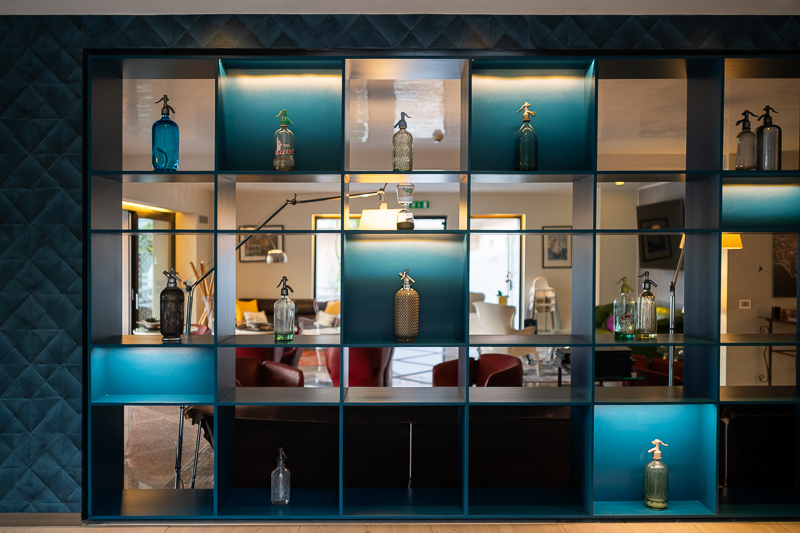
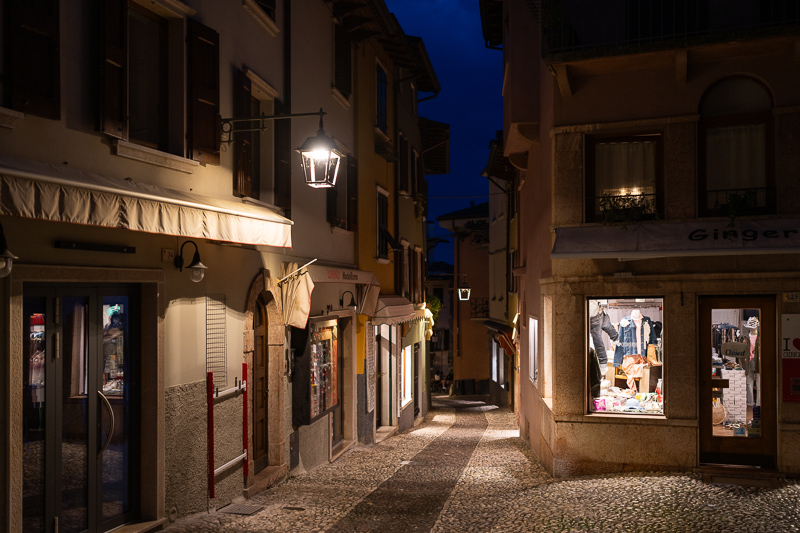
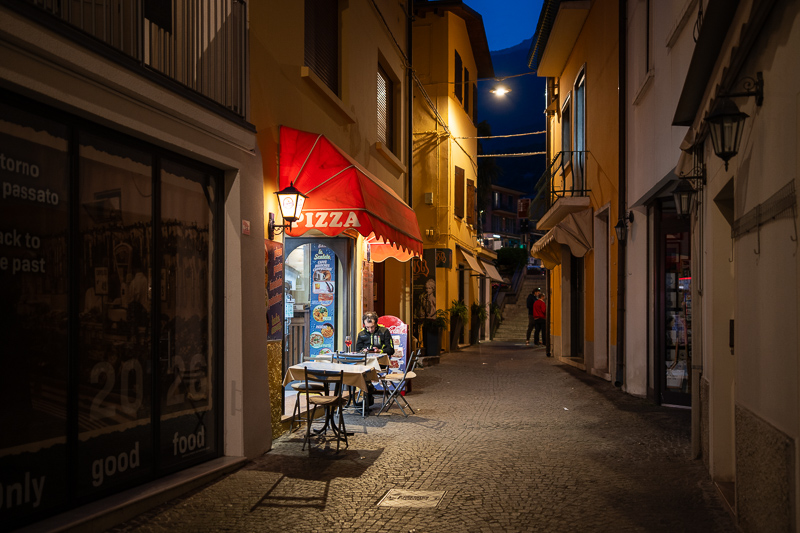
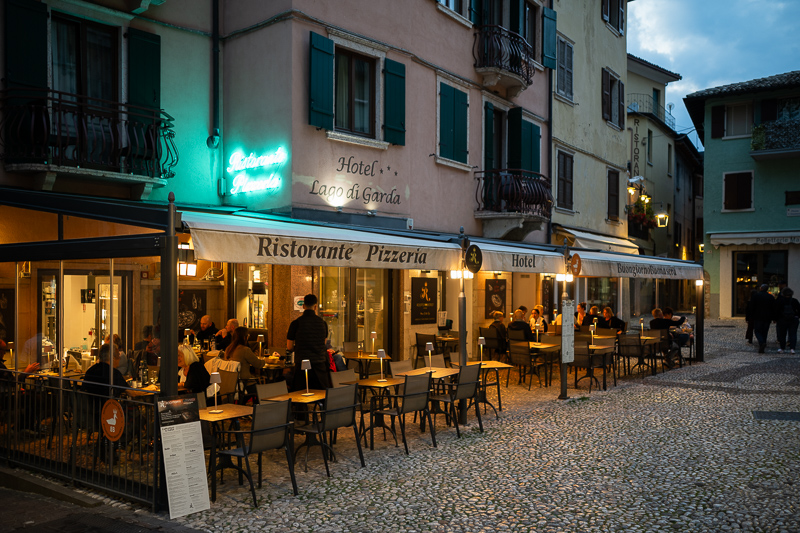
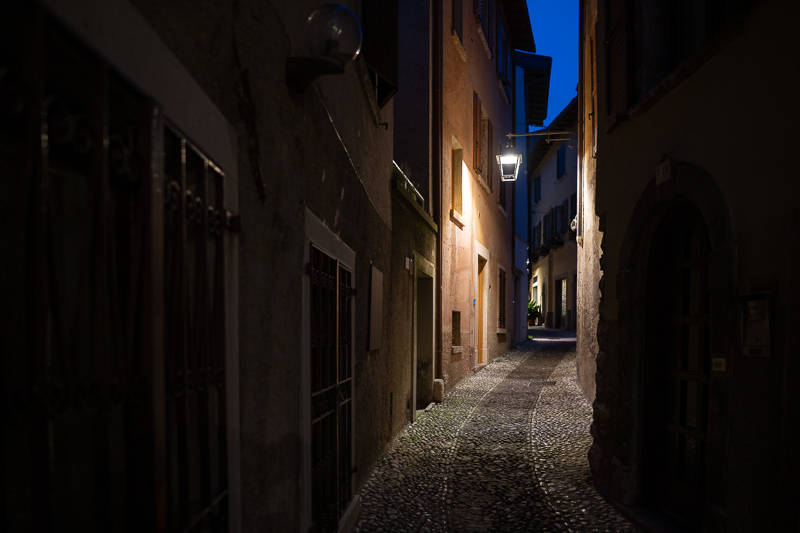
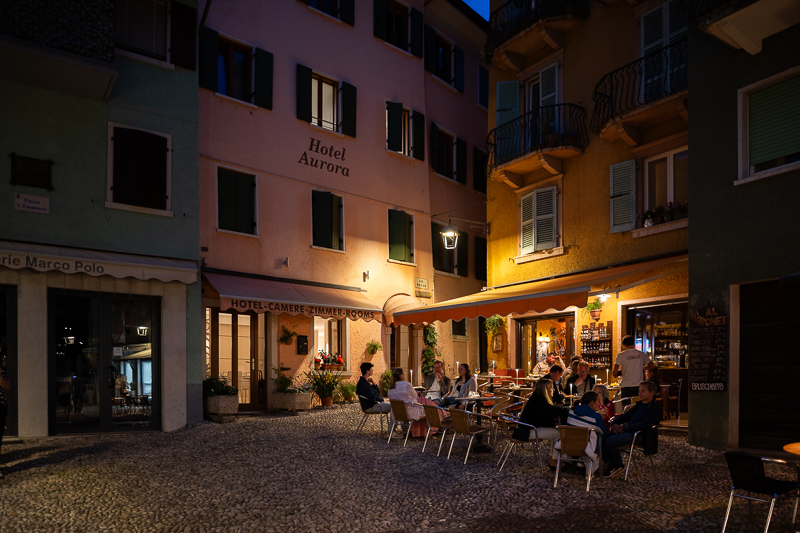
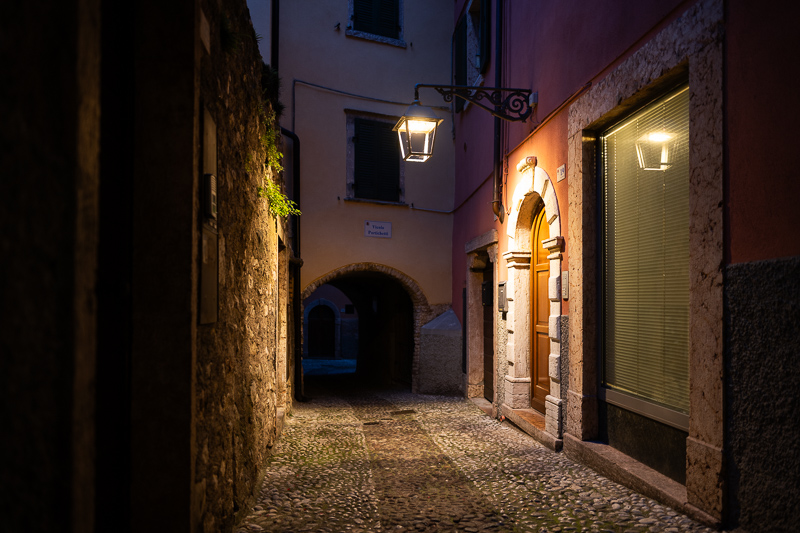

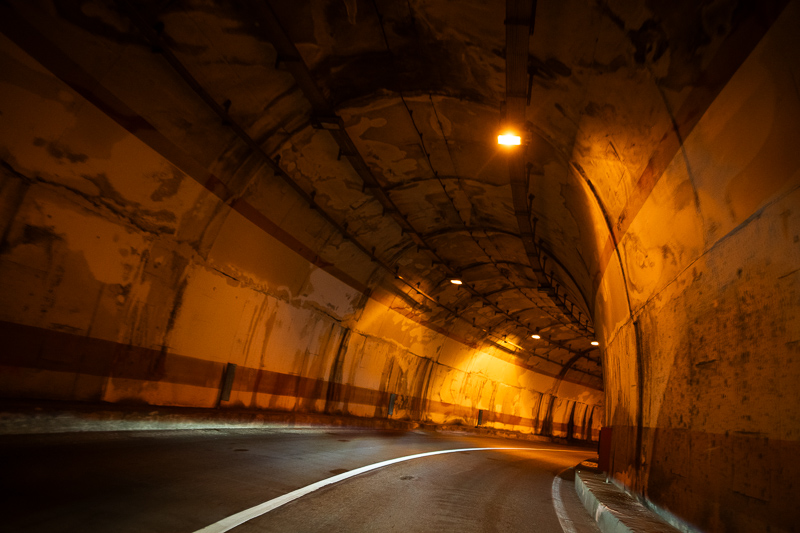
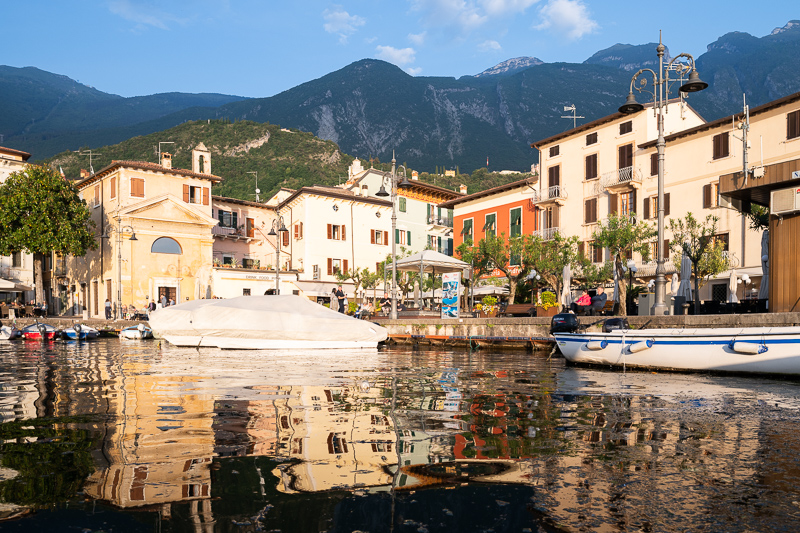

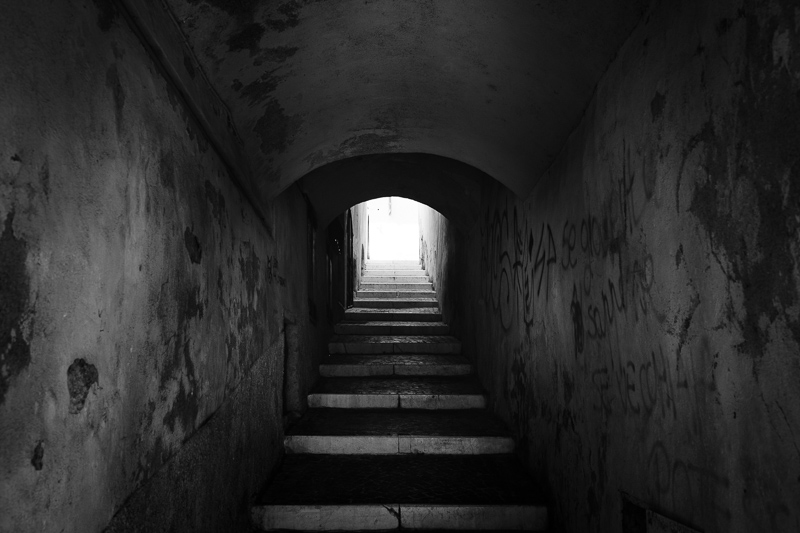
You can find most of the sample pictures in full resolution here.
Further Reading
- All Lens Reviews
- Review: Sony FE 12-24mm 2.8 GM
- Review: Sigma 35mm 1.2 Art DG DN
- Review: Sony FE 50mm 1.2 GM
- Discuss this review with our Discord community
Support Us
Did you find this article useful or just liked reading it? Treat us to a coffee!

 via Paypal
This site contains advertisement/affiliate links. If you make a purchase using any of the links marked as advertisement/affiliate links, I may receive a small commission at no additional cost to you. This helps support the creation of future content.


Latest posts by BastianK (see all)
- Analogue Adventures – Part 58: Adox Color Mission 200 C-41 - October 21, 2026
- Review: Nikon Z 35mm 1.2 S Nikkor - October 17, 2026
- Prime Day Photoshop+Lightroom offer for Amazon Prime Members (EU/UK) | Update: also at B&H - October 7, 2026
Thanks for the review. With such attractive and unique specifications, despite the caveats you mentioned, I’m surprised Sigma hasn’t yet offered an improved version for mirrorless cameras. Maybe sales weren’t satisfactory.
I guess they see their 28-45mm 1.8 as the mirrorless version.
I am not sure that one’s focal length range is more useful though.
And compared to the 28-70mm 2.0 lenses it doesn’t look that exciting today.
Also with a modern camera’s noise performance and tasteful amount of AI driven NR in LR, I’d always pick size and weight over speed with wide angle zooms, where bokeh is not a significant factor even at F2.
I find F2 more attractive with 28-70mm.
And thought I much prefer zooming to cropping in post (for mentally easier composing if nothing else), I’d still pick some 24mm F1.4 over this in the end.
Perhaps these F2 and below wide angle zooms mostly serve for PR, similar to some ultra fast 50mm lenses of the past.
I owned this lens for many years and it still is my favourite in my arsenal.
The limited zoom range is what makes it so interesting to me. The fact that you’re always in a wide range keeps the visual aspects of the photographs consistent and very attractive for documentary style work. Also for street photography if you’re not bothered by the weight.
Who is this lens for? For weddings photographers! Man, You have 24 and 35mm primes with f/2 aperture in one lens. Wide angle and standard focal lenght in one lens. It’s soooo convinient, and I wonder why Sigma didn’t update this gem into mirrorless version. You going to shoot weddings, and You take two cameras with You. One camera with Sigma 24-35/2, other with 85/1.4 and “sky is the limit”. I can’t imagine single scenario, where ANY wedding photographer in ANY circumstances, will felt that this lens will limit him in ANY way. I used to shoot weddings for living, and I had Sigma 24-35/2 for three years as my main lens – working horse. If I would back to business today, I would pick up this lens again, because there is no real alternative. Both Sigma 28-45/1.8, Canon 28-70/2 and Sony 28-70/2 starts from 28mm, which is deal breaker for me, as 28mm is not wide enough for my needs 🙂
As someone who shoots a lot of events, I totally agree. I own the Sony 28-70mm f/2 and I really feel restrained at times and I have to bring another camera with a 20mm prime attached.
Samyang showed a 20-50mm F2 prototype recently and plans to introduce it next year I guess. So the wider end is coming
This lens was the main cause for my switch to mirrorless cameras (Sony A9) a few years ago…
It was nice, and with unique parameters, but despite Reikan focal pro, I was totally unable to calibrate it properly on my D750, the focus was often slightly off. The ambiant temperature in particular seemed to impact the focus a lot. I decided that I was done with DSLR and bought my first A9. I never looked back since… The focus should be way more consistant on a mirrorless camera, but I didn’t keep the lens.
Thanks for the detailed review, Bastian. I used this lens way back with the Sony a7R2 and also found it to be of exceptional quality. The weight of the lens was actually what made me sell it then, because it didn‘t really match with the body and handling was not very pleasant.