Zeiss Milvus 25mm 1.4 via Sigma MC-11 on Sony A7rII
About a year after the release of the Zeiss Otus 28mm 1.4 Distagon – to the surprise of many – Zeiss released this Zeiss Milvus 25mm 1.4 Distagon. Almost as complex optical design, almost as big, almost as heavy, but “only” half the price – making it the most expensive lens of the Milvus lineup. What are you giving up in terms of performance compared to the 28mm Otus? Let’s try to find out in this review.
In 1979 Nikon released a lineup of cheaper manual focus lenses called “Series E” instead of “Nikkor”. Today we will have a closer look at the Nikon 50mm 1.8 Series E, probably the most popular lens of that series and definitely the smallest.
Sample Images
Nikon D800 | Nikon 50mm 1.8 Series E | f/4.0Nikon D800 | Nikon 50mm 1.8 Series E | f/8.0Nikon D800 | Nikon 50mm 1.8 Series E | f/4.0Nikon Zf | Nikon 50mm 1.8 Series E | f/1.8Nikon FM2n | Nikon 50mm 1.8 Series E | f/1.8 | Elite Chrome 200 | E-6
Martin recently reviewed Lomo’s replica of a Petzval lens. I commented, perhaps slightly snidely, that vintage Petzval lenses are still around, often for less money, and often with better centre sharpness – and certainly with a vast choice of models and thus rendition nuances.
Martin suggested I share my knowledge in an article. And like an inverse Spice Girl, one became two. This one seeks to introduce you to the weird magic of Petzval lenses and their widespread availability from old cinema film projectors. The next will look at adapting them, and indeed any old projection lens, to a modern-day camera.
So here we go, I guess.
All pictures were taken on full-frame evils: a Sony a7r2 and an a7cr. Some were cropped; all were adjusted for proper blacks and whites according to ancient darkroom principles. None had additional sharpening or aberration correction applied.
Sample Images
Meyer Görlitz Kinon Superior 50/2.2.Meopta Meostigmat 50/1.3, 617-inspired 1:3 crop out of 3:2 full frame image.Meyer Görlitz Kinon Superior 50/1.6 – A characteristic of Petzval lenses is the swirly bokeh, which also results in lentilesque distortion of highlights (some call it cat’s eyes; you’d need a pretty deformed cat to see that analogy).Meopta 50/1.3The Meyers date from the 1930s! This 50/1.6 cost someone 6 pound sterling in 1938, according to an old advert.
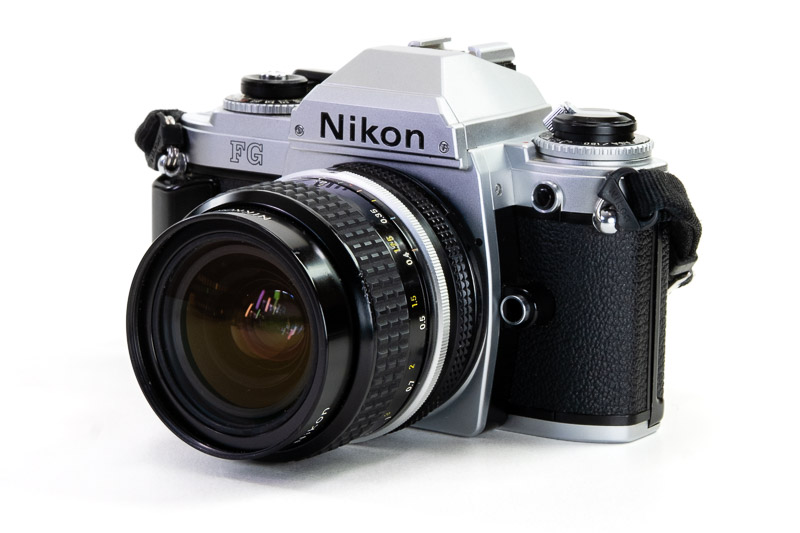
Today, I’m taking a look at a vintage classic — the Nikkor 24mm f/2 AI. With analogue photography making a strong comeback, old film-era lenses like this are getting attention again. Nikon first released it in 1977 as the AI version, followed by the AI-S in 1981 — same optical design, just refined mechanics. This lens was designed near the end of the era when Nikon still held absolute dominance in the professional segment.
For decades, this was Nikon’s fastest 24mm, holding that title until the AF-S 24mm f/1.4G came along in 2010. Even more impressive, Nikon kept producing it until 2005 and sold it as new until 2007 — nearly 30 years on the market. That’s a remarkably long run for any lens, but was it truly because of its performance, or something else? Let’s find out.
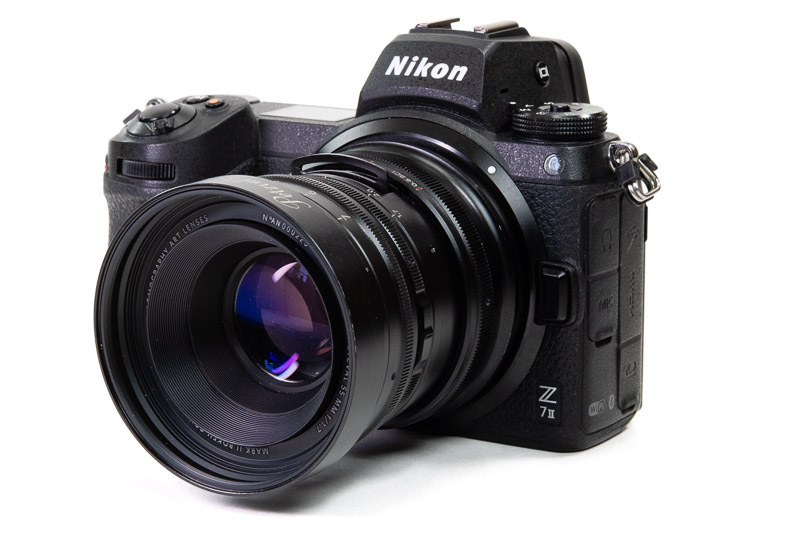
Inspired by a 19th-century design with a cult following, Lomography has brought the spirit of Joseph Petzval’s optics into the mirrorless era. Over the years, Lomography has released several lenses based on Joseph Petzval’s original 1840s optical designs. The Lomography Petzval 55mm f/1.7 Bokeh Control MKII is the company’s first Art Lens built specifically for full-frame mirrorless cameras. It’s a reimagining of the original design, aiming to replicate the aesthetic qualities of those early lenses: a sharp centre and wild, swirling bokeh that makes any merry-go-round effect fade in comparison.
I’ve reviewed other lenses that produce a somewhat similar effect — such as the Helios 40, Helios 44, and TTArtisan’s remake of the Carl Zeiss Biotar 75/1.5 — but in terms of effect, those are more like corrected versions of this lens, taming the aberrations that create its distinctive bokeh.
While I usually follow a standard testing procedure, you’ll see that there’s little point in doing so with this lens. After all, it’s not sharpness charts or corner performance that matter here—this is a lens about feel, character, and swirly chaos. So, this will be part review, part test—let’s dive in!
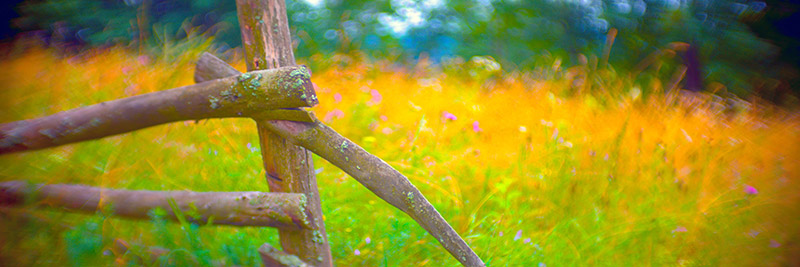
Nikon Zf | LOMOGRAPHY New Petzval 55mm 1.7 Bokeh Control Mark II | f/1.7 | BC7Nikon Zf | LOMOGRAPHY New Petzval 55mm 1.7 Bokeh Control Mark II | f/2Nikon Zf | LOMOGRAPHY New Petzval 55mm 1.7 Bokeh Control Mark II | f/1.7 | BC7Nikon Zf | LOMOGRAPHY New Petzval 55mm 1.7 Bokeh Control Mark II | f/1.7 | BC7Nikon Zf | LOMOGRAPHY New Petzval 55mm 1.7 Bokeh Control Mark II | f/1.7
Sony α | Leica M | Nikon Z/F New articles every week
This website uses cookies to improve your experience. We'll assume you're ok with this, but you can opt-out if you wish.AcceptRead More
Privacy & Cookies Policy
Privacy Overview
This website uses cookies to improve your experience while you navigate through the website. Out of these, the cookies that are categorized as necessary are stored on your browser as they are essential for the working of basic functionalities of the website. We also use third-party cookies that help us analyze and understand how you use this website. These cookies will be stored in your browser only with your consent. You also have the option to opt-out of these cookies. But opting out of some of these cookies may affect your browsing experience.
Necessary cookies are absolutely essential for the website to function properly. This category only includes cookies that ensures basic functionalities and security features of the website. These cookies do not store any personal information.
Any cookies that may not be particularly necessary for the website to function and is used specifically to collect user personal data via analytics, ads, other embedded contents are termed as non-necessary cookies. It is mandatory to procure user consent prior to running these cookies on your website.











 I tested this lens on a
  You can see this review as a
  Sample images in high resolution