Introduction
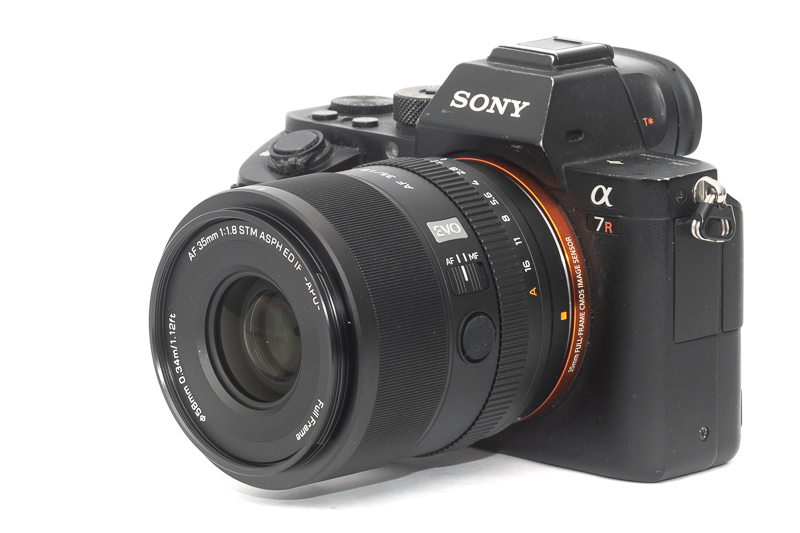
Not that long ago we reviewed the Viltrox AF 85mm 2.0 Evo – the first lens of the Evo series – and it turned out to be a very compelling lens; correcting most optical aberrations very well in a compact, affordable package. It didn’t take long for Viltrox to extend the lineup, so here is the Viltrox AF 35mm 1.8 Evo and this time Viltrox even added an “Apo” tag, hinting at even better optical performance. Did they design the ideal compact autofocussing 35mm lens? Let’s find out in this review.
Update May 4th: new sample pictures added
Sample Images

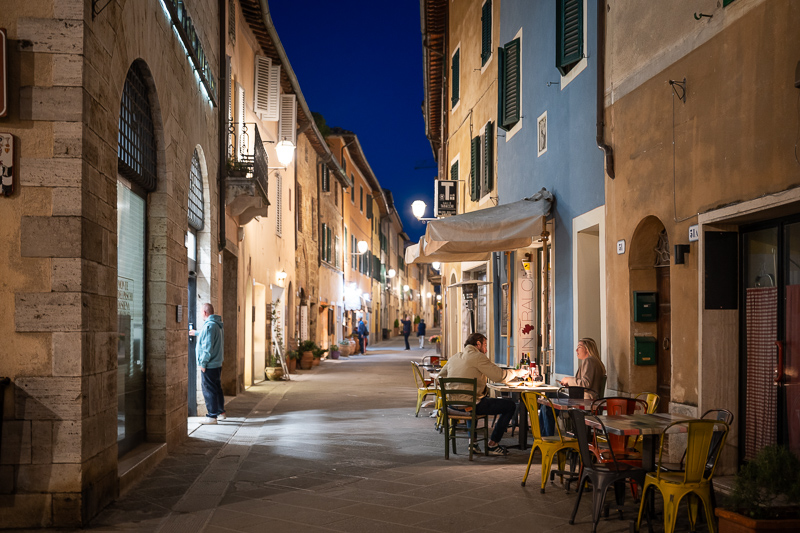

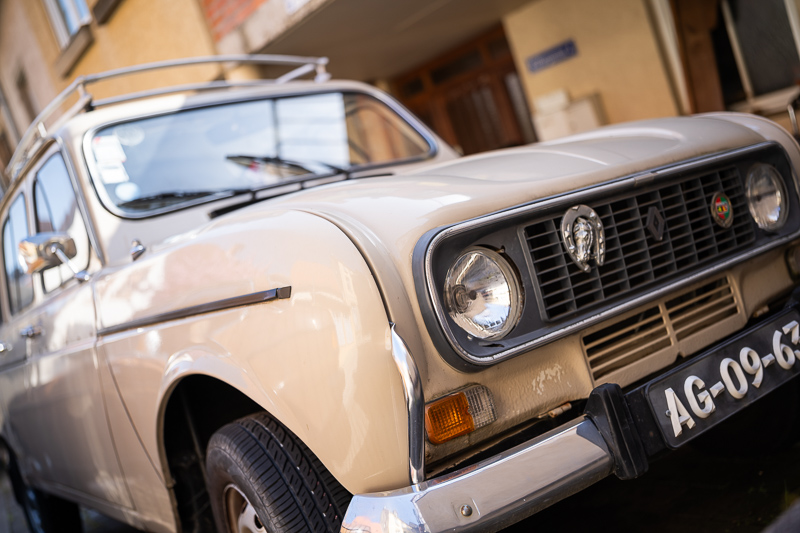
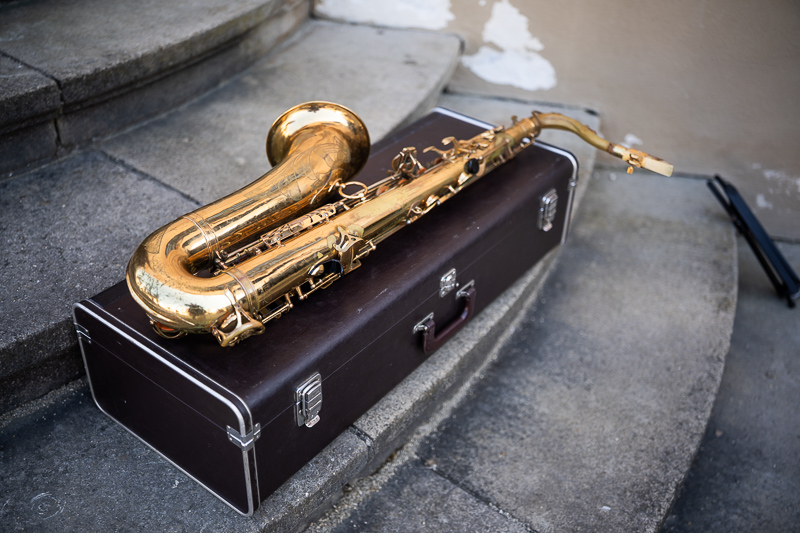

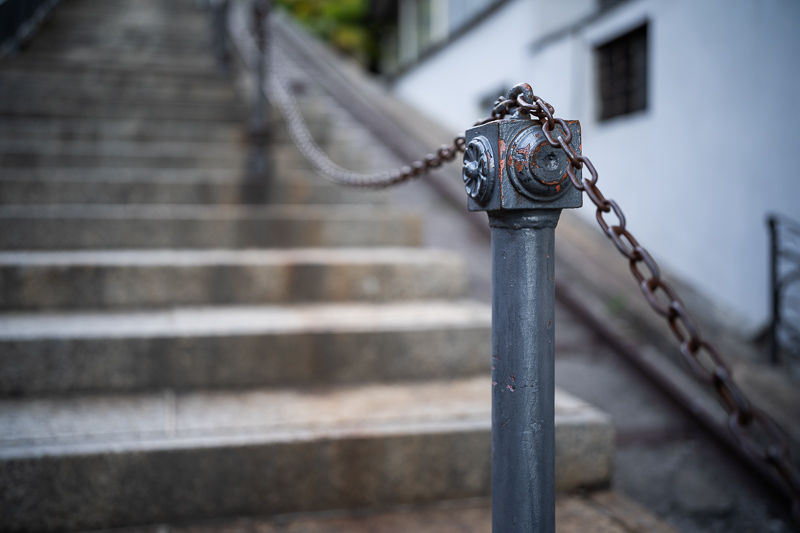


You can find many of the sample images in full resolution here.
Specifications / Version History
This is already Viltrox’ second 35mm 1.8 AF lens hence the “II” in its name. You can also easily tell them apart by this new one carrying “Evo” and “Apo” tags. Compared to its predecessor it is a completely new design and has the following specifications:
-
- Diameter: 69 mm
- Field of view: 63° (diagonally)
- Length: 76 mm
- Weight: 354g (without hood[25g], without caps)
- Filter Diameter: 58 mm
- Number of Aperture Blades: 9 (slightly rounded)
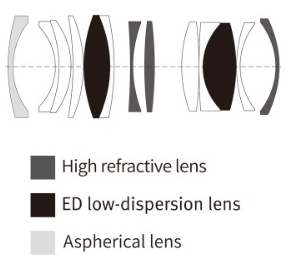
- Elements/Groups: 13/10
- Close Focusing Distance: 0.34 m
- Maximum Magnification: 1:6.7 (measured)
- Released: April 2026
- Mount: Sony FE, Nikon Z
buy from manufacturer’s shop (use the code “PRnet” for 5% discount) | amazon.com | amazon.de | B&H | ebay.com | ebay.de (advertisement/affiliate links) for $395
Disclosure
This Viltrox AF 35mm 1.8 II Evo was kindly provided free of charge by Viltrox for reviewing purpose prior to release. The first sample I received showed asymmetrical Coma artefacts so I asked for a second sample.
Handling/Build quality
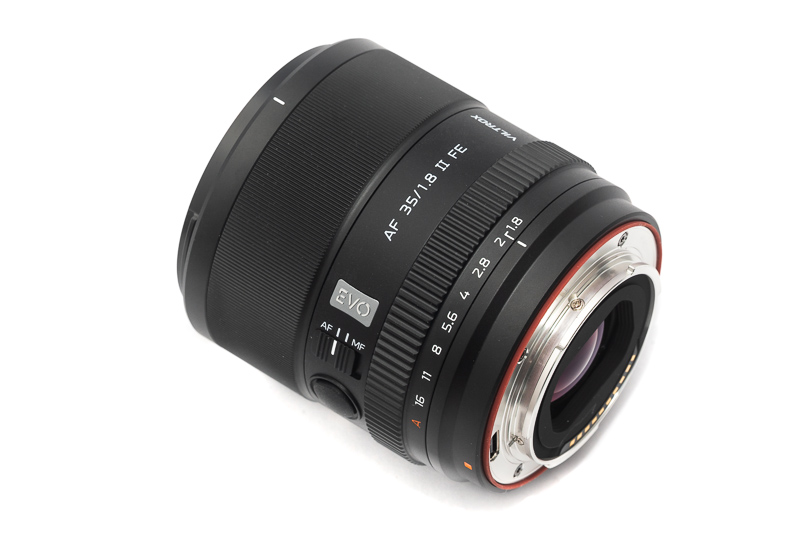
This Viltrox AF 35mm 1.8 Evo is the second lens of Viltrox’ Evo lineup and it handles just the same as the Viltrox AF 85mm 2.0 Evo. It features a dedicated de-clickable aperture ring similar in style and function to Sony’s GM and later G lenses, an AF/MF switch and a lens button.
The aperture ring has 1/3 of a stop click stops – which you can declick by using a lever on the right side of the lens.
You can also set the ring to “A”(utomatic) and let the camera choose the aperture value or to be able to use the camera dial to change the aperture value instead of using the aperture ring.
The focus ring has decent damping and a linear coupling. No matter how fast you turn the focus ring it takes a surprisingly long 360° from the minimum focus distance (0.34 m) to infinity.
When you turn your camera off the lens will remember the last focus position and will still be there when you turn the camera on again.
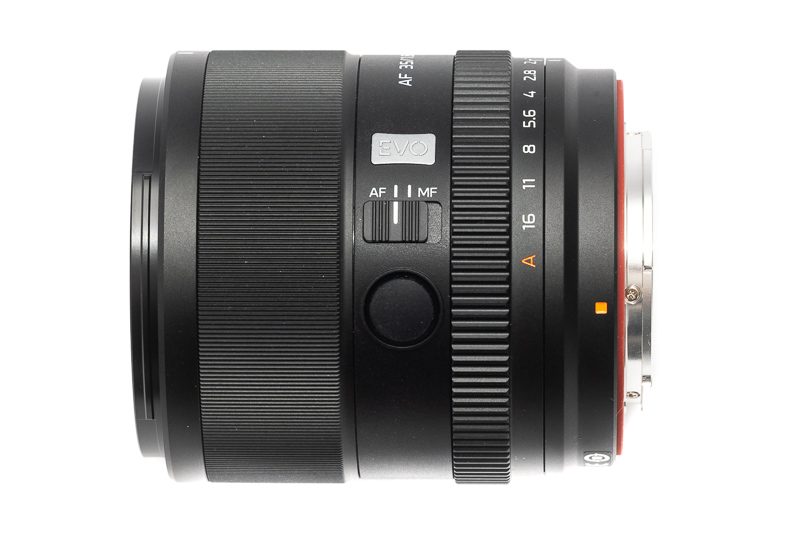
The dedicated aperture ring allows to preset the desired aperture when the camera is not turned on yet, which can save crucial time in the heat of the moment.
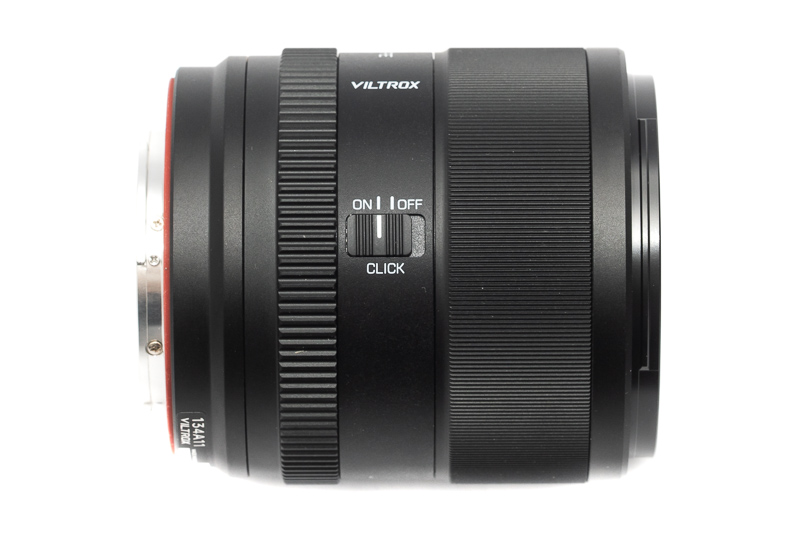
At the bayonet you can find a USB-C socket and a rubber gasket.
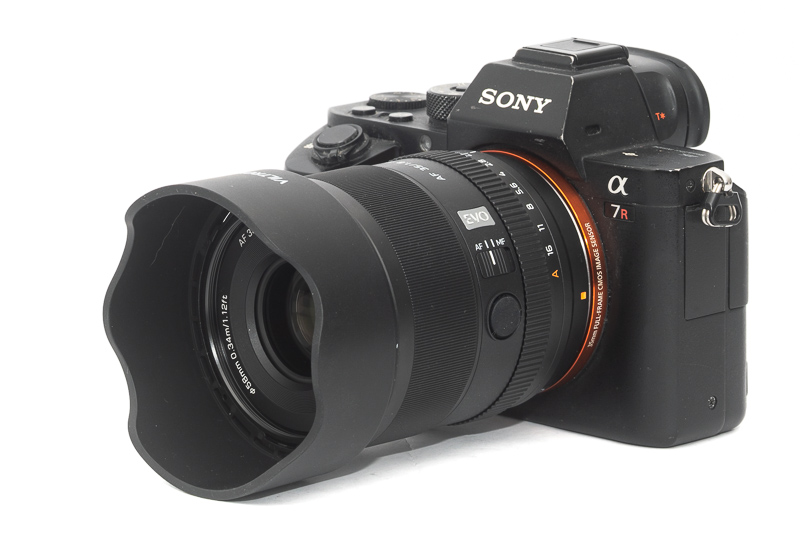
A plasticky bayonet style lens hood is also part of the package. It integrates nice into the design of the lens and can be attached reversed to take up less space.

Comparing the 35mm 1.8 Evo to the 85mm 2.0 Evo we see some minor differences which always leaves me wondering. They handle exactly the same though which is very welcome.
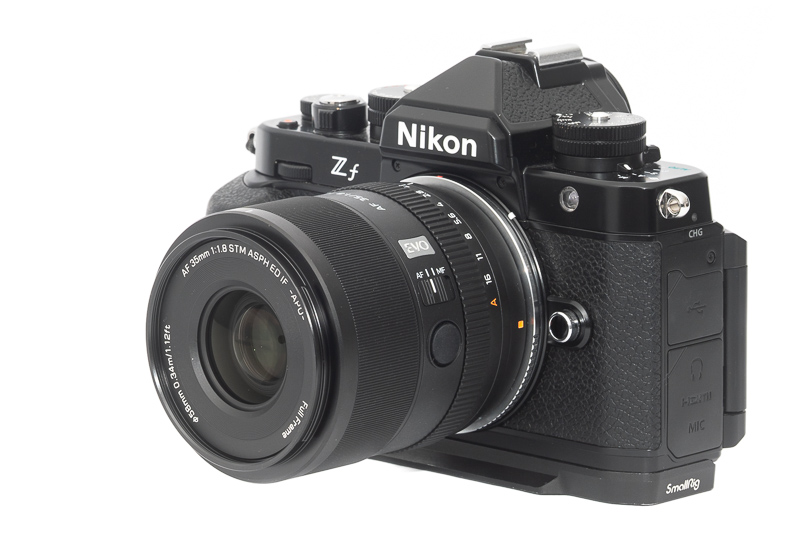
The E-mount lens worked well via the megadap ETZ21pro+ adapter on my Nikon Zf, but as there is a native Z-mount version I would recommend getting that one to use on your Z-mount camera.
AF performance
I am not shooting sports or fast moving animals/humans so if you want to know if the lens is fast enough for this, or how it compares to other lenses in this segment, you may have to look for a different review with a more detailed assessment of this aspect.
The AF is very fast and for normal use cases – especially portraiture – it certainly worked well.
Vignetting
light falloff
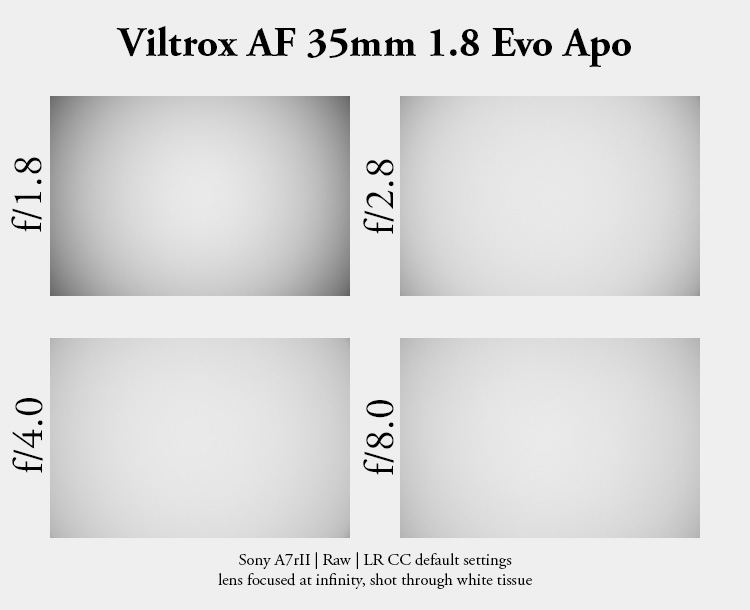
| f/1.8 | 2.7 |
| f/2.8 | 1.9 |
| f/4.0 | 1.7 |
| f/5.6 - f/16 | 1.5 |
A very typical performance in this category. The Voigtländer 35mm 2.0 Apo-Lanthar shows the same amount of vignetting within the margin of error. The Sony 35mm 1.8 FE shows similar vignetting figures at f/1.8, but slightly higher ones stopped down. The 7Artisans 35mm 1.8 AF and the Nikon Z 35mm 1.8 S show slightly lowerv values at all aperture settings.
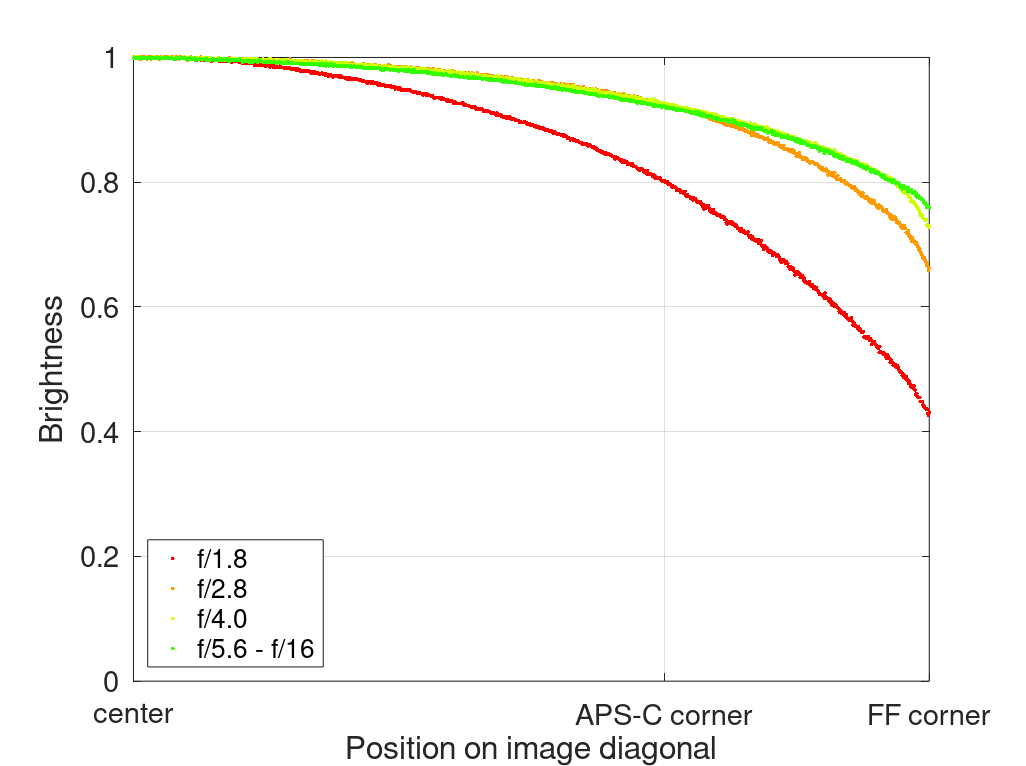
It is recommended to have a look at this article first to get an idea how this brightness graph works.
optical vignetting
Fast lenses usually show a noticeable amount of optical vignetting. Without going too much into technical details optical vignetting leads to the truncation of light circles towards the borders of the frame.
In the center of the frame almost every lens will render a perfect circle, but only lenses with very low optical vignetting will keep this shape in the corners.
So in the following comparison we move from the center (left) to the extreme corner (right) and see how the shape of the light circle changes.
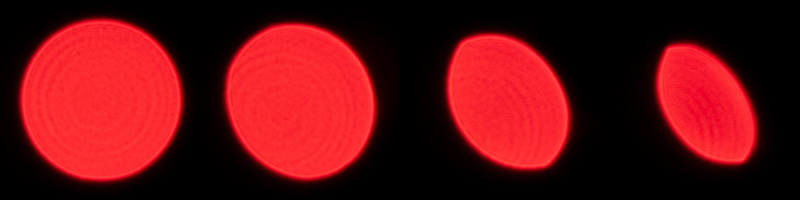
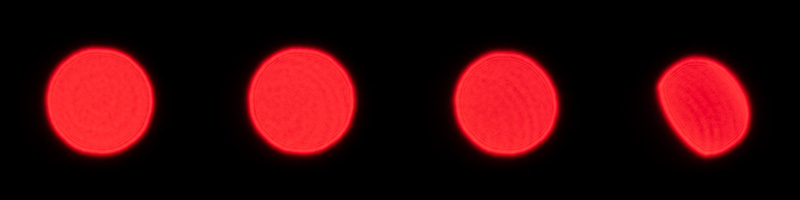
Also the optical vignetting amount looks average for a 35mm 1.8 lens.
The optical design features one aspherical element and onion ring structures are visible here.
Sharpness
Focus Shift
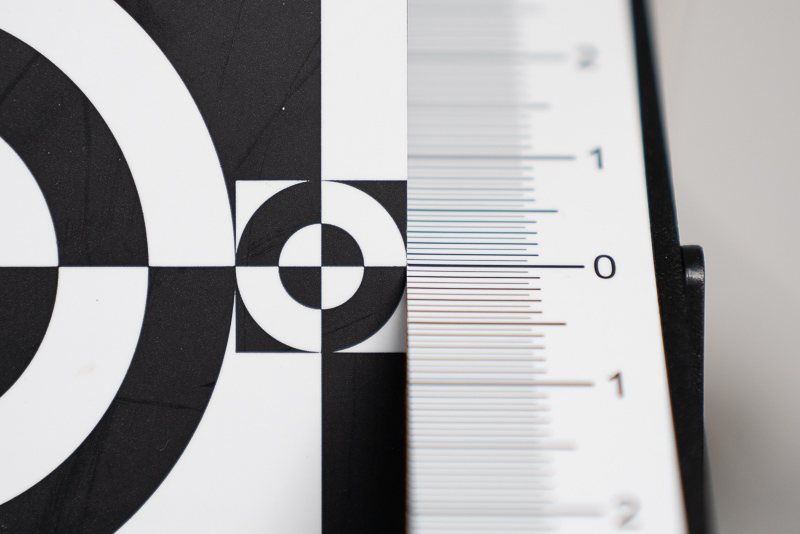
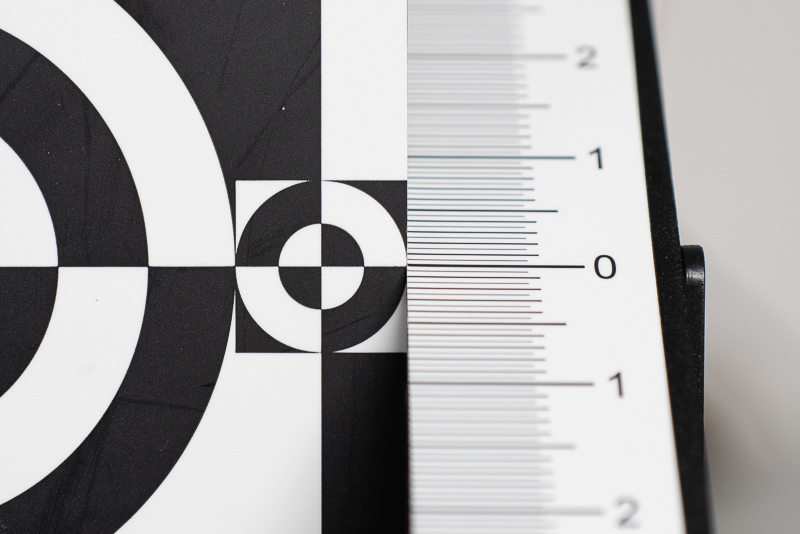
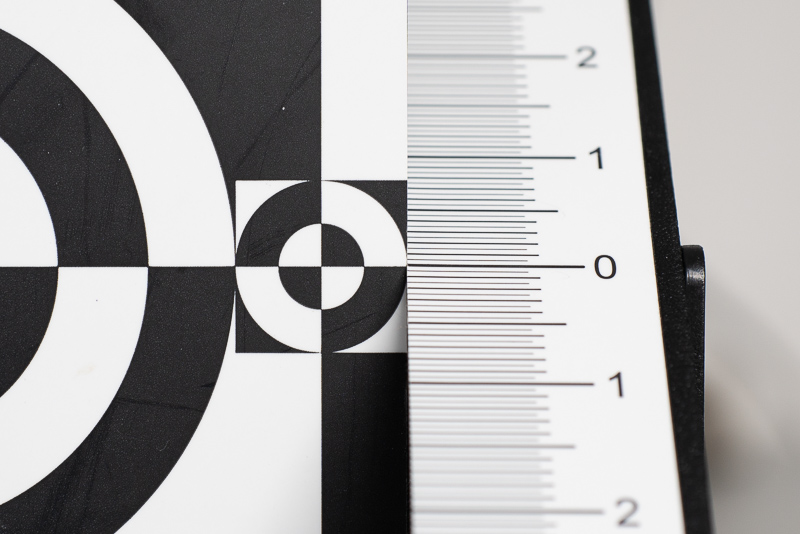
With some lenses on stopping down the focal plane shifts to the front or back, here I do not see any focus shift.
infinity (42mp Sony A7rII)
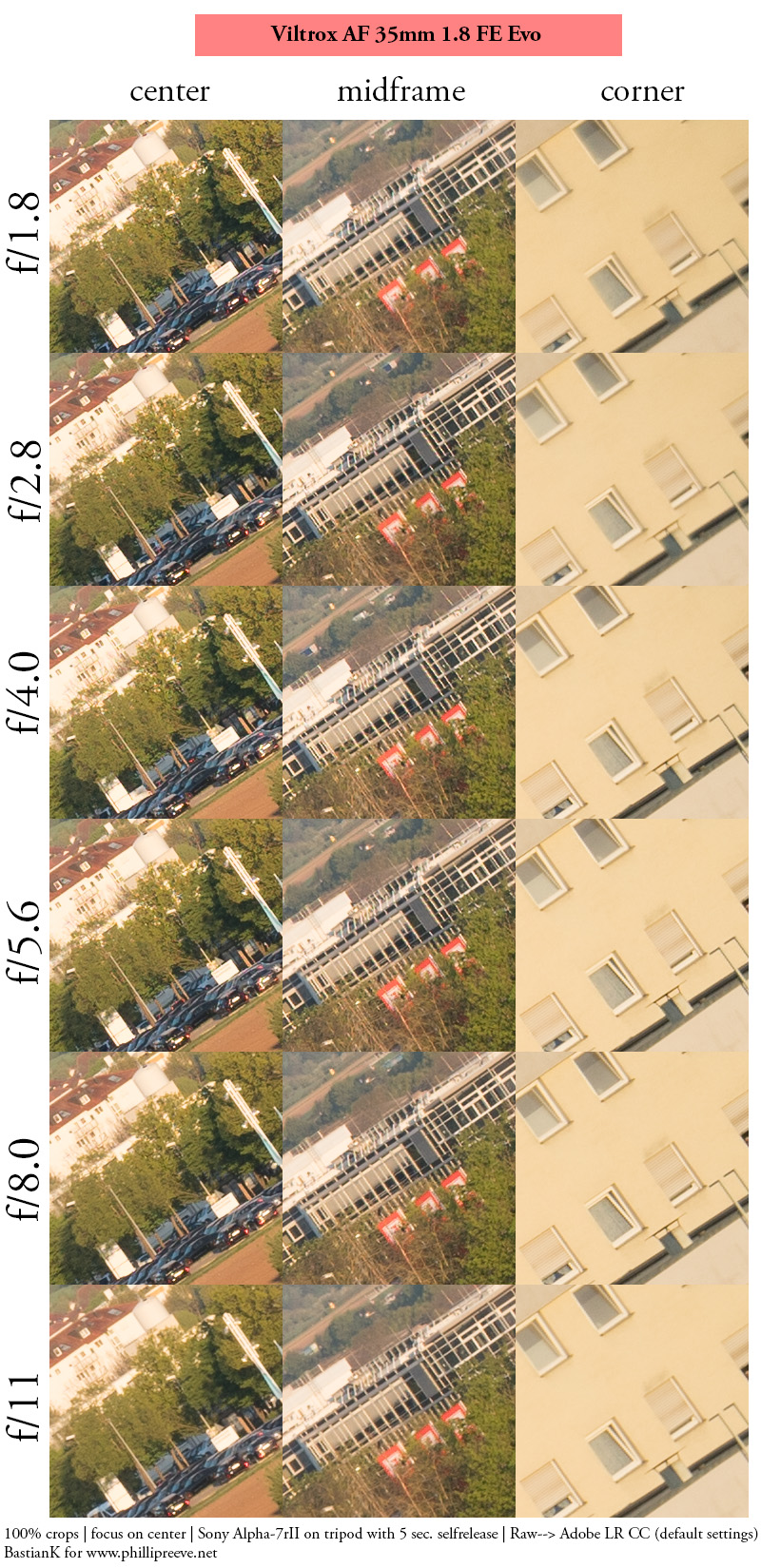
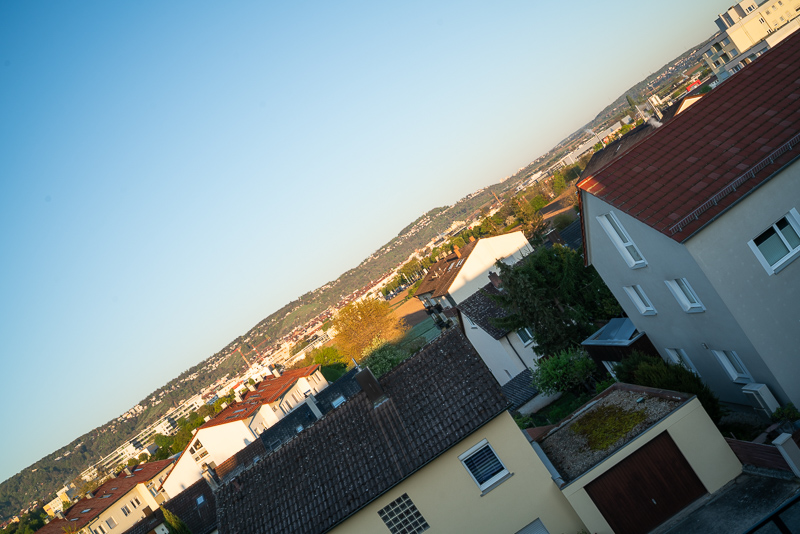
The performance at infinity is really good from f/1.8. In the midframe and corners stopping down to f/2.8 we can see a small gain in contrast and resolution, but I wouldn’t hesitate using this lens at f/1.8.
The Voigtländer 35mm 2.0 Apo-Lanthar looks even better here whereas the Nikon Z 35mm 1.8 S needs to be stopped down to f/5.6 for very good across frame sharpness.
The Sony 35mm 1.8 FE and the 7Artisans 35mm 1.8 AF are also solid performers but show a slight mid zone dip at f/1.8 to f/2.8 and also the corners demand stopping down a bit for best performance.
portrait distance (1.0 m, 42mp Sony A7III)
For portraiture it isn’t so important how flat the field is, it is more interesting to see what the sharpness is like when focused at different parts of the frame to take field curvature out of the equation.
This is what I did here, I refocused for every shot and aperture to get the best possible result at different locations in the frame (center, inner midframe and outer midframe).
Focus distance was roughly 1.0 m and the circle of the dollar bill is more or less the size of a human eye.
f/1.8 <————> f/2.8



At portrait distance this Viltrox 35mm 1.8 Evo shows am impeccable performance, creating Moiré everywhere in the frame from its maximum aperture.
The best performance I came across in a compact f/1.8 to f/2.0 35mm lens yet, outperforming the Voigtländer 35mm 2.0 Apo-Lanthar, the Nikon Z 35mm 1.8 S and many more.
close (0.34 m, 1:6.7, 42mp Sony A7rII)



Some 35mm lenses offer a maximum magnification around 1:4 whereas this Viltrox features a more moderate 1:6.7 magnification.
The performance is good, there is only a hint of softness at f/1.8 and from f/2.8 the performance hardly leaves something to be desired. The Voigtländer 35mm 2.0 Apo-Lanthar offers a similar magnification but is noticeably softer at f/1.8.
Flare resistance
As always evaluating flare is a complex matter since you can get any lens to look bad if you push it hard enough and a slight change of scenario can affect results a lot.
Flare resistance is still the category where most of the lenses from Chinese manufacturers struggle, but some of the Viltrox lenses showed an above average performance, so let’s find out if they manage to continue that trend.
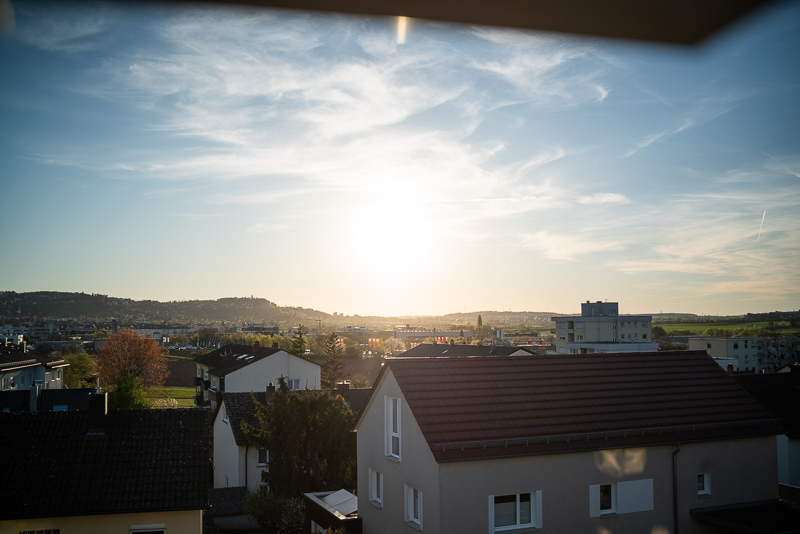
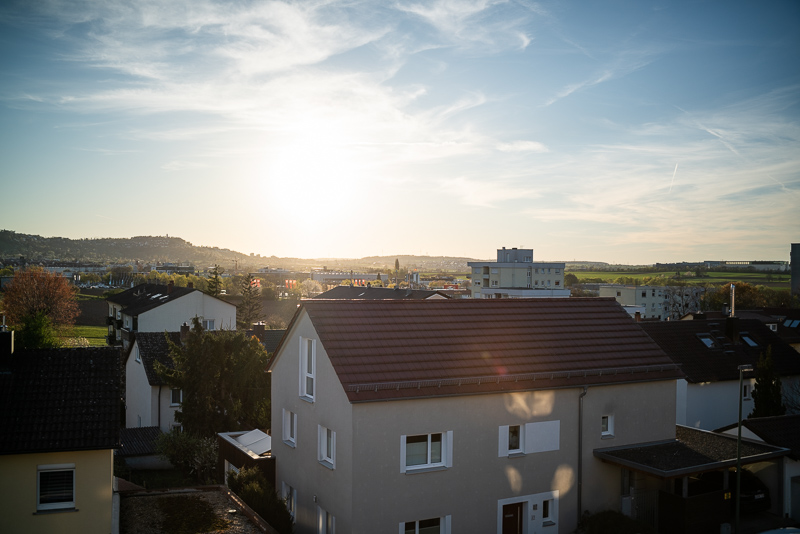
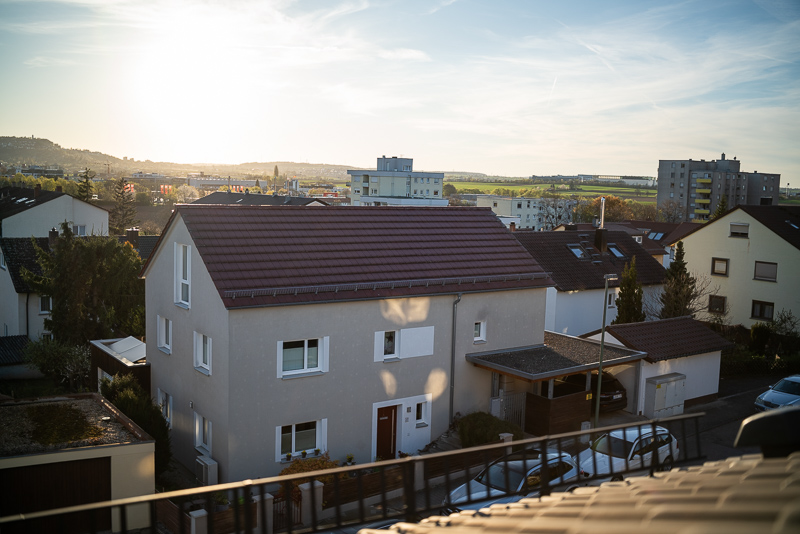
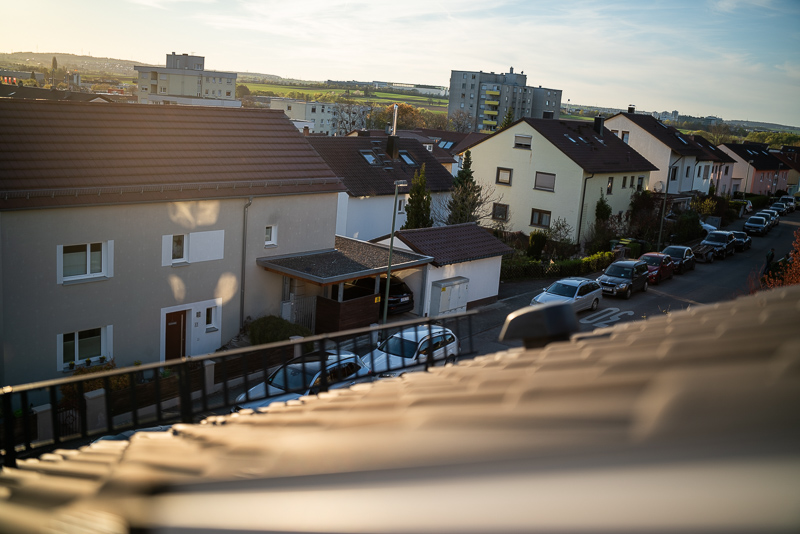
At the maximum aperture we hardly see any ghosts, only veiling flare with the sun in a specific spot just outside the frame is something to watch out for.
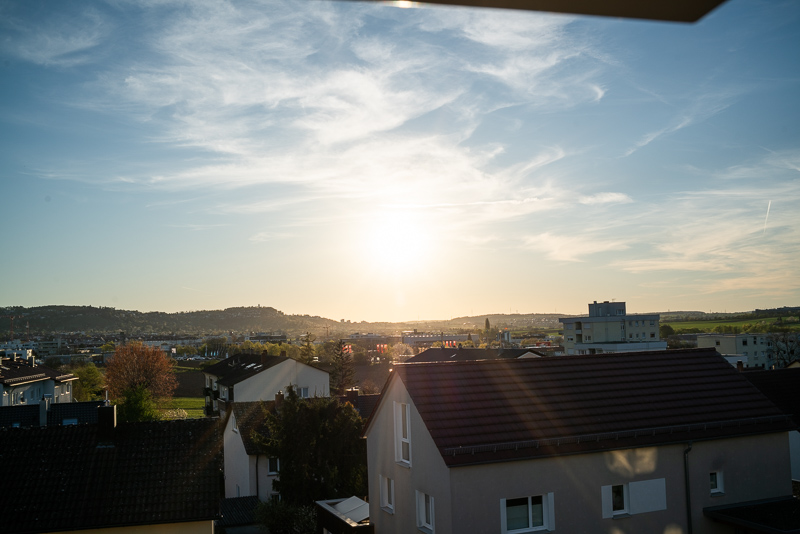
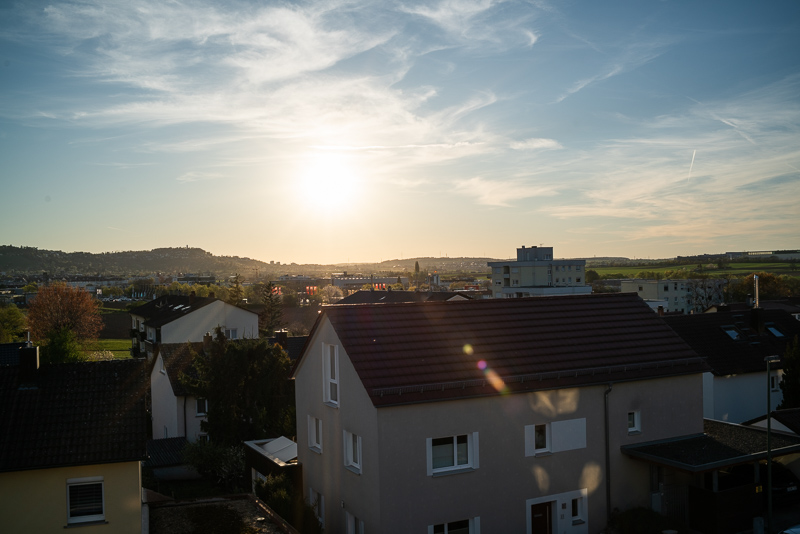
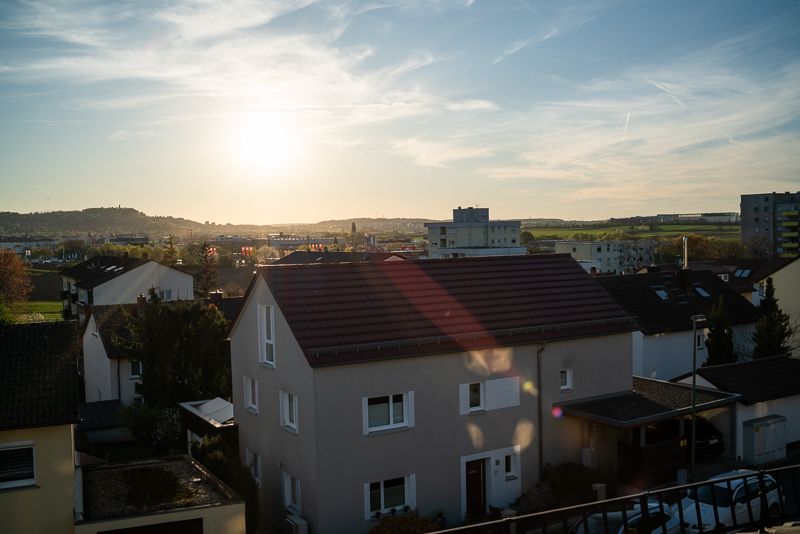
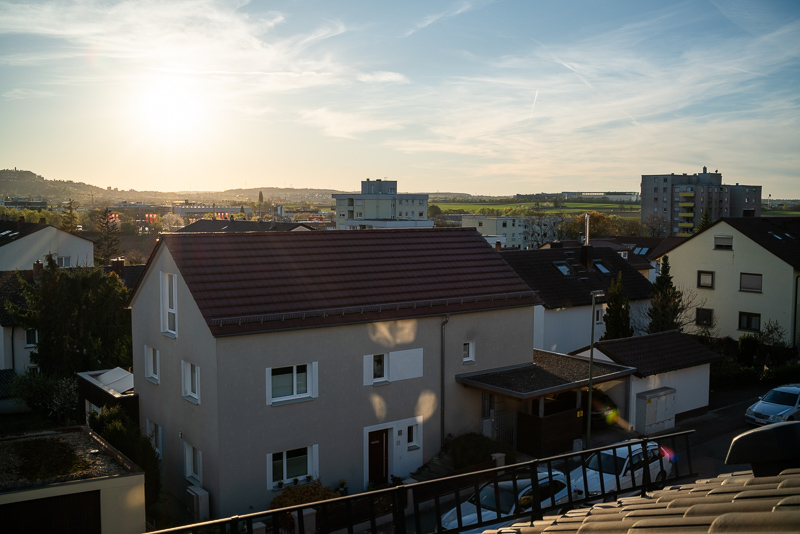
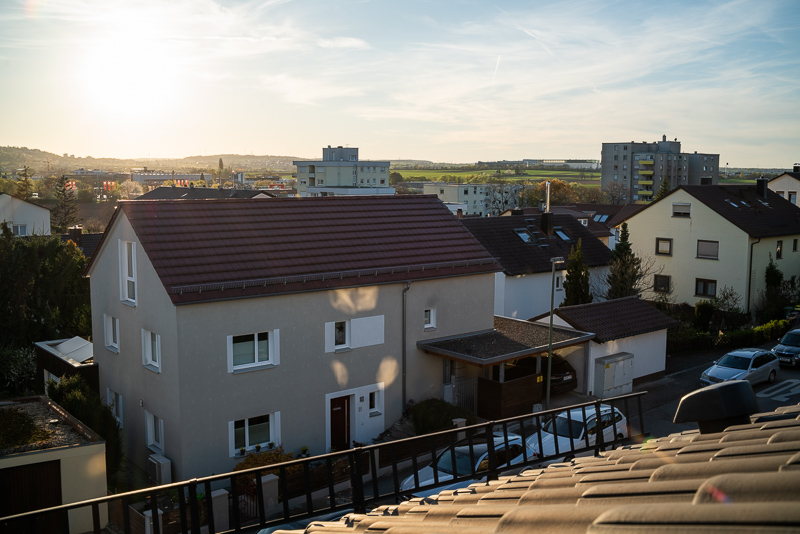
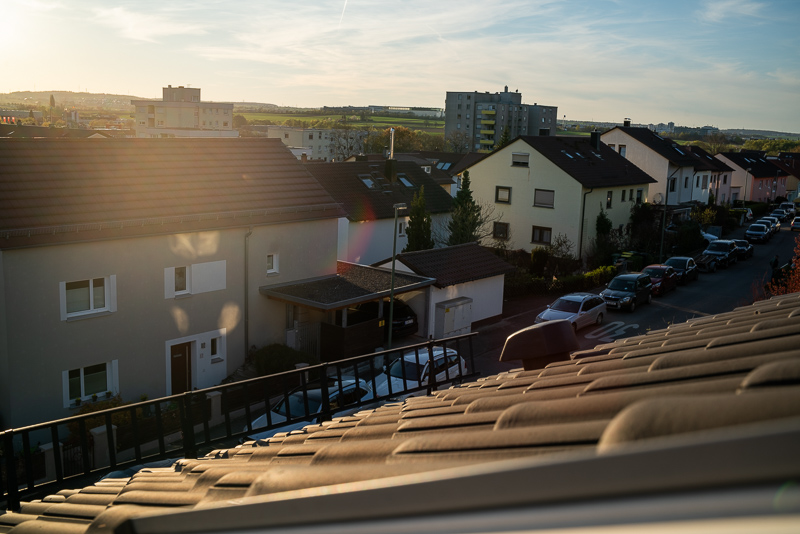
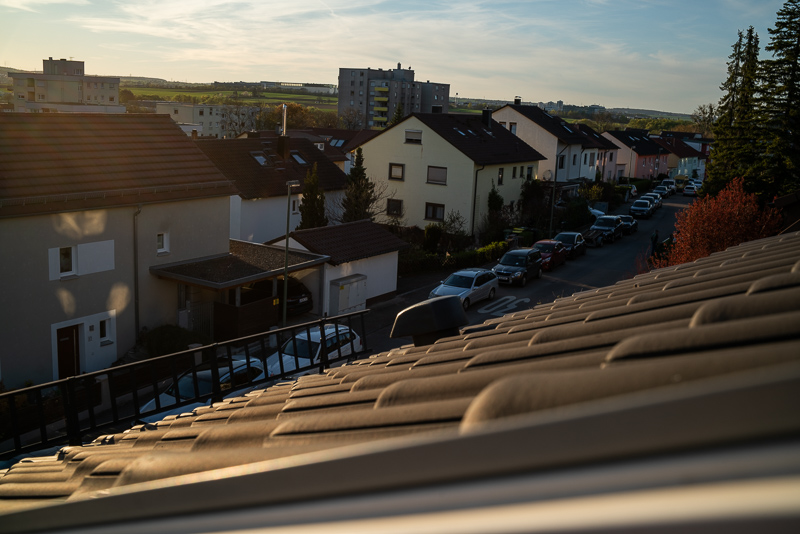
Stopped down the ghosts can be a little more obvious and the veiling flare is still there. These artefacts can still often be avoided by slightly reframing.
This is actually a good performance, better than the Voigtländer 35mm 2.0 Apo-Lanthar, Sony 35mm 1.8 FE and 7Artisans 35mm 1.8 AF, on par with the Nikon Z 35mm 1.8 S.
Coma
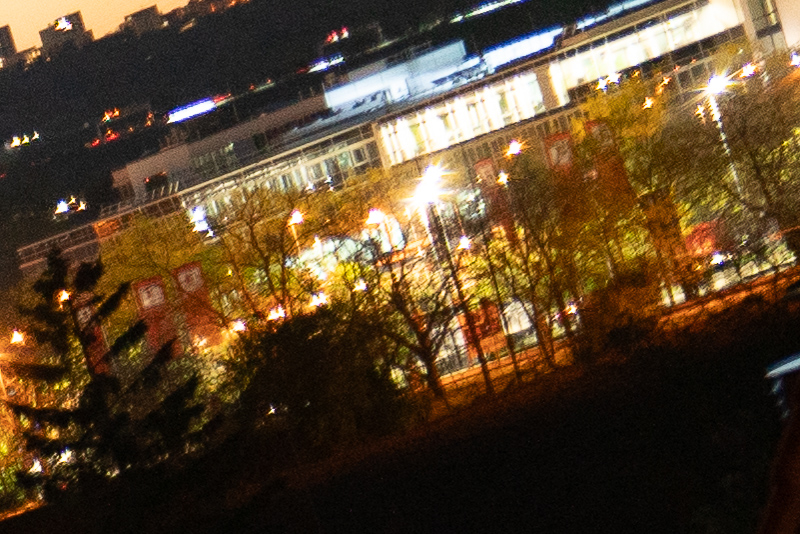
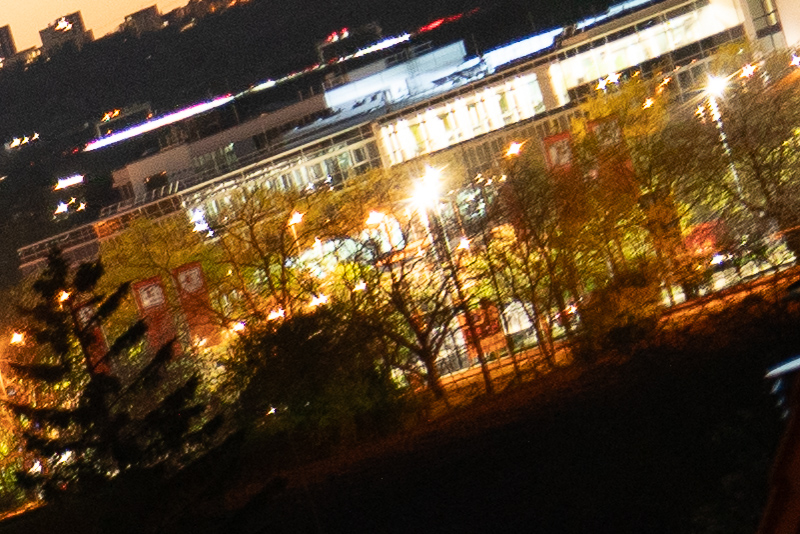
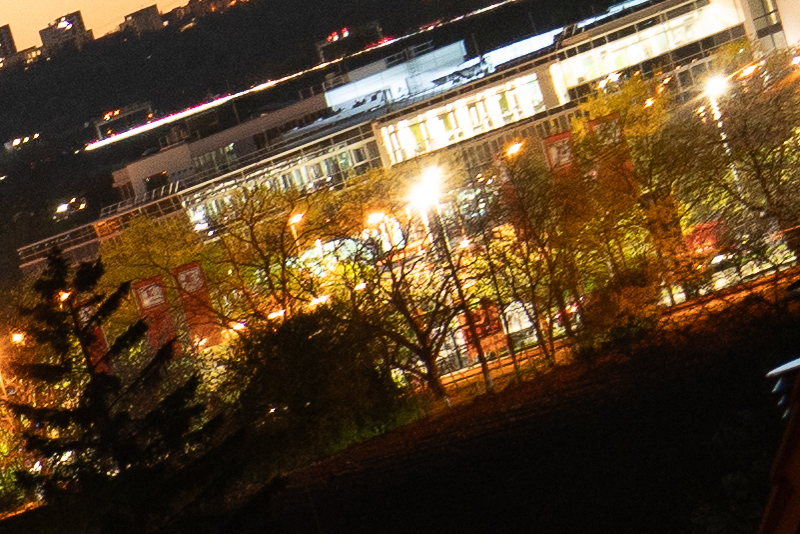
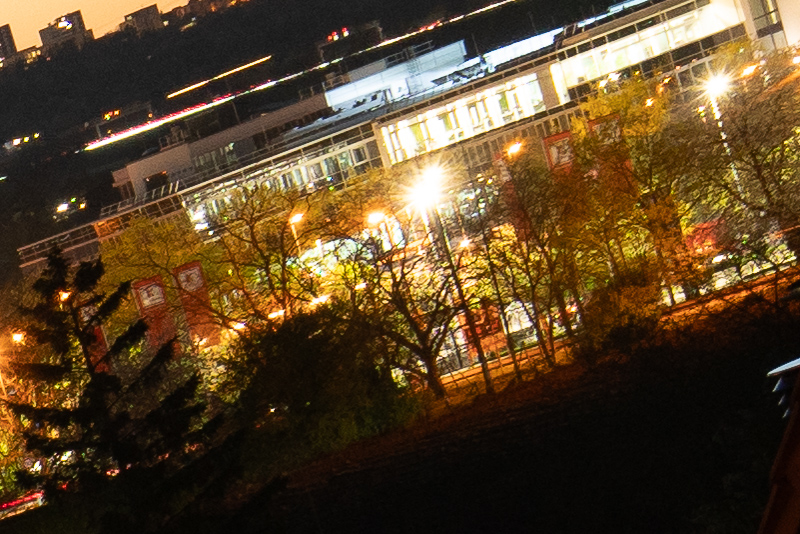
The Coma correction of this Viltrox lens is surely good and even shooting a blue hour cityscape at f/1.8 can be done without running into any issues with distracting artefacts.
This Viltrox clearly performs better than the Sony 35mm 1.8 FE here and similar to the Nikon Z 35mm 1.8 S. Among the 35mm f/1.8 to f/2.0 lenses the Voigtländer 35mm 2.0 Apo-Lanthar is the best performer I came across so far though, rendering almost perfect light points already at f/2.0.

Distortion
The Viltrox AF 35mm 1.8 Evo only shows a very low amount of distortion. For correcting it perfectly a lens specific profile is needed though. As Lightroom/CameraRaw features profiles for most Viltrox lenses I expect this one to be added soon.
Bokeh

As we have already seen in the previous sections, this Viltrox AF 35mm 1.8 Evo is a lens that corrects most optical aberrations very well, similar to the Voigtländer 35mm 2.0 Apo-Lanthar. These highly corrected lenses often create a harsher, busier bokeh, will that also be the case here?

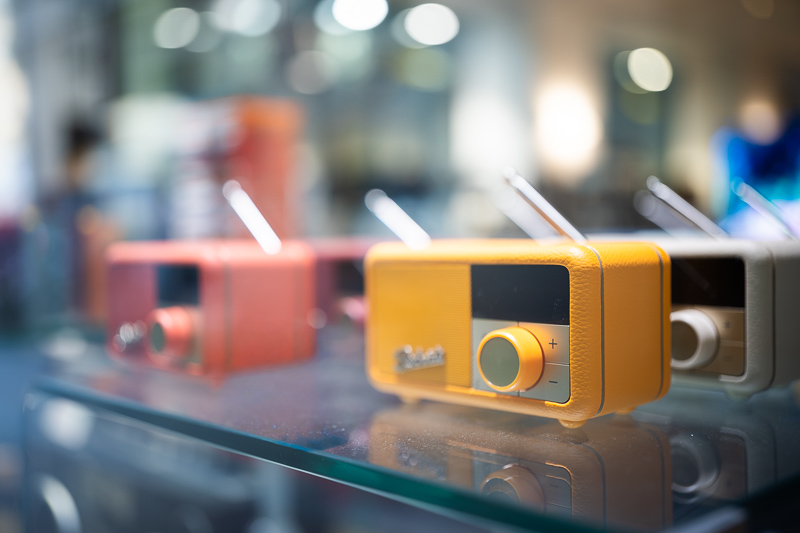

Due to its moderate maximum magnification this Viltrox 35mm 1.8 Evo is at a disadvantage here compared to closer focusing 35mm lenses. With small subjects it did in fact happen a few times that I wanted to get closer but couldn’t.
Already at close distances we can see that complex backgrounds are rendered in a harsh way.
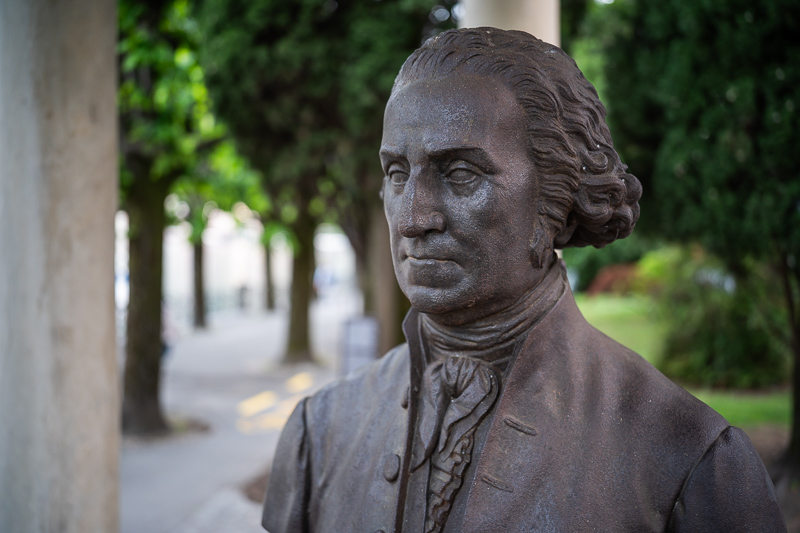


With the foliage in the background we again see a harsh and busy rendering whereas less complex backgrounds are rendered in a much nicer way.


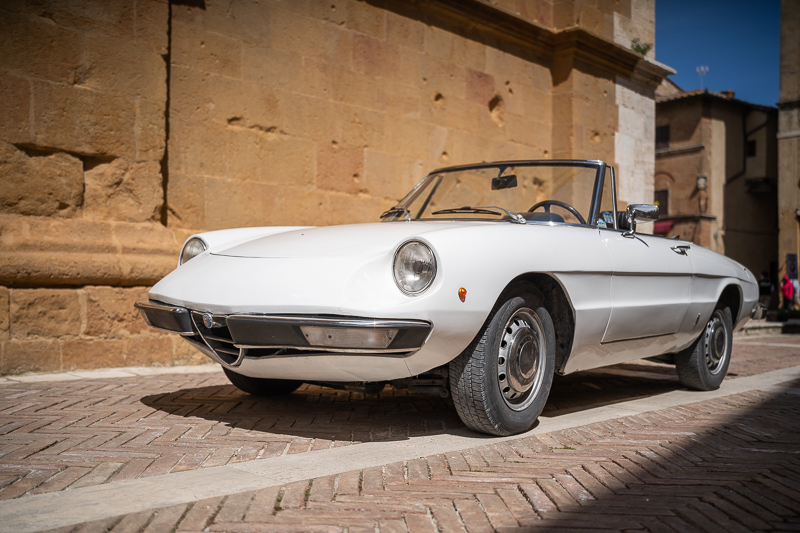
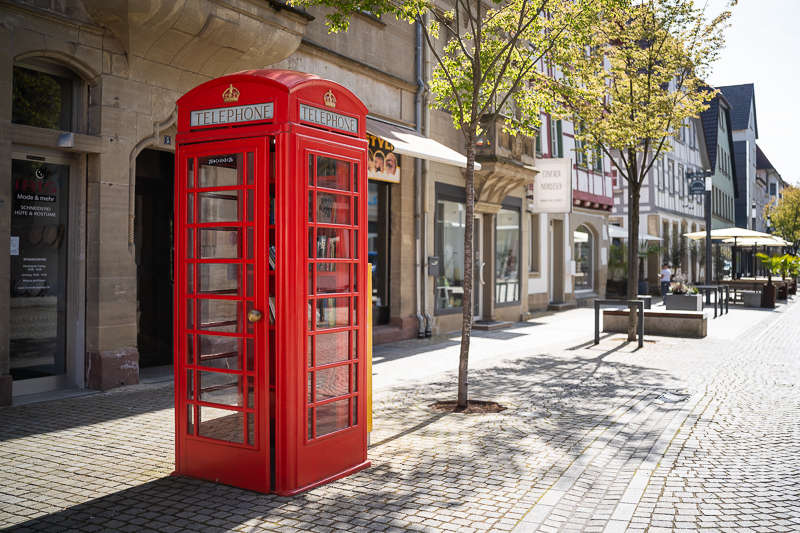

At longer focus distances the maximum aperture of f/1.8 is not sufficient anymore to create a shallow depth of field, if that is what you are after, you may want to have a look at a faster 35mm lens.
This lens creates a decent to good bokeh and without having done a direct comparison it looks less harsh and distracting than what I have seen from the Voigtländer 35mm 2.0 Apo-Lanthar.
Sunstars
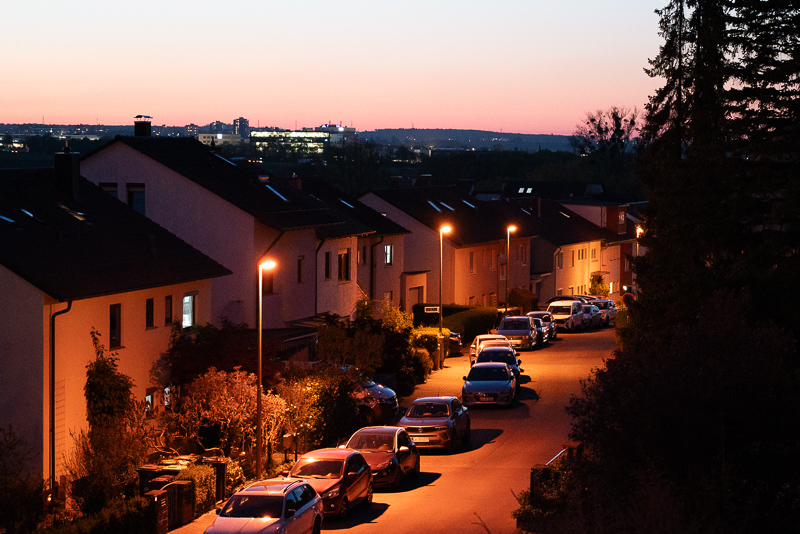
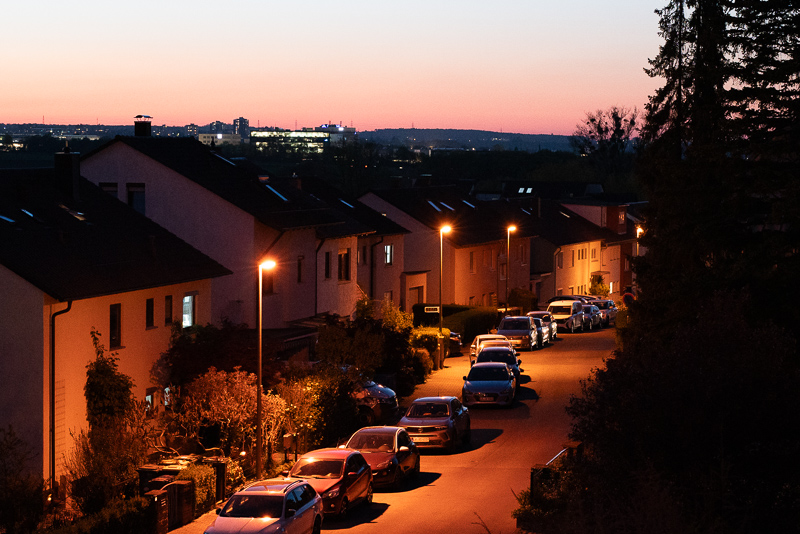
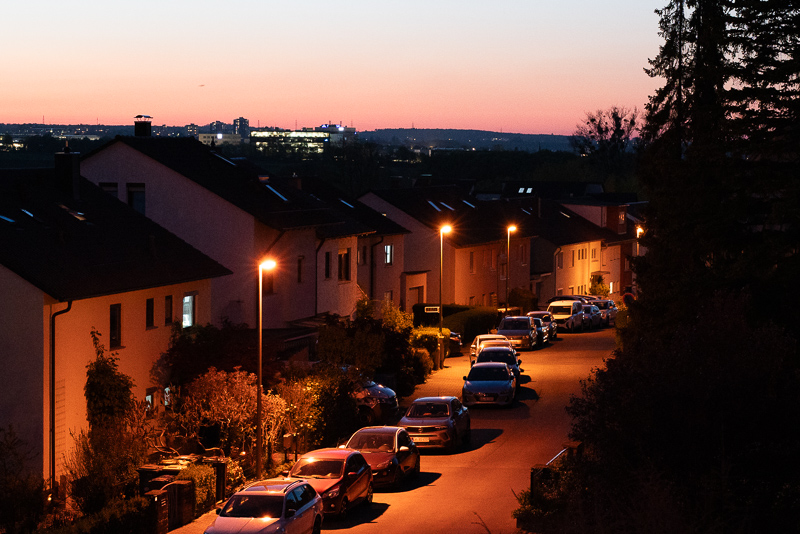
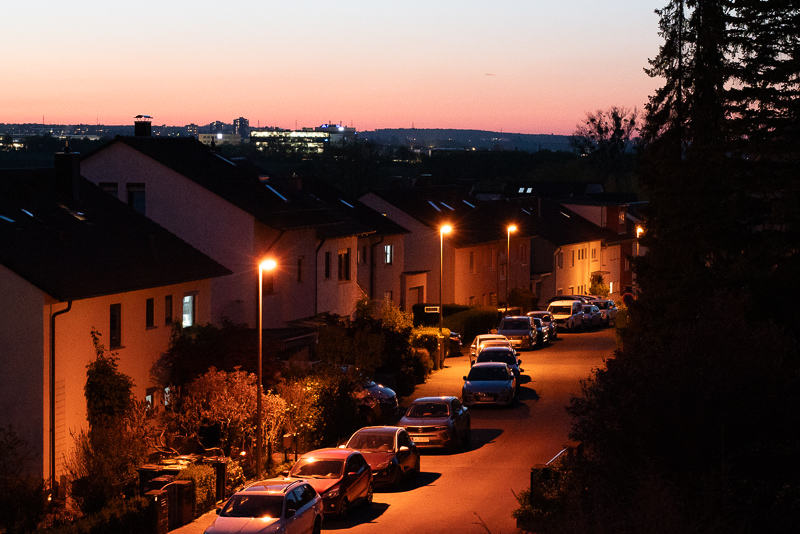
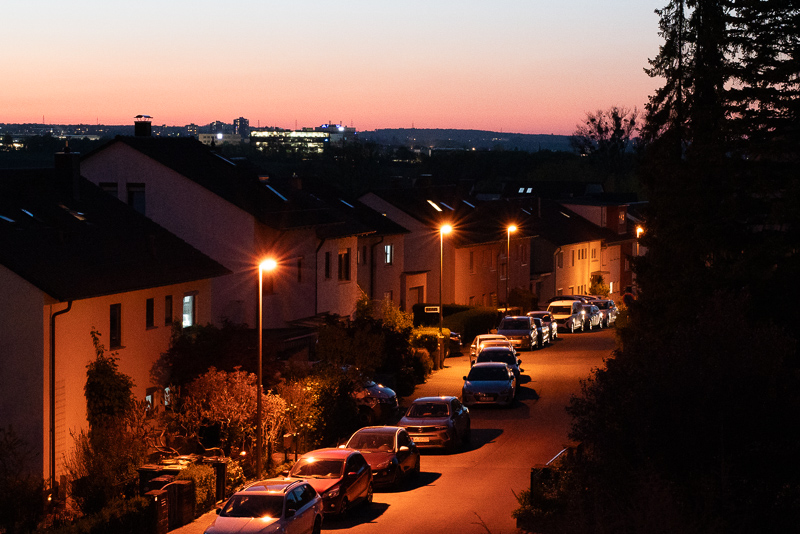
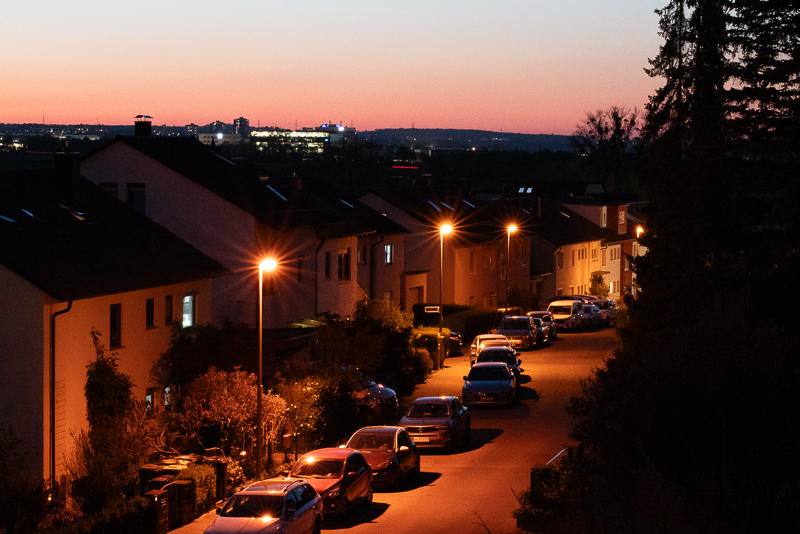

The Viltrox AF 85mm 2.0 Evo did not manage to create particularly nice sunstars. Here the situation is a little better, at least at f/11 the sunstars feature rays of even length.
If you want to learn more about this topic have a look at this article.
Chromatic aberration
lateral
I did not see any lateral CA from this lens.
longitudinal
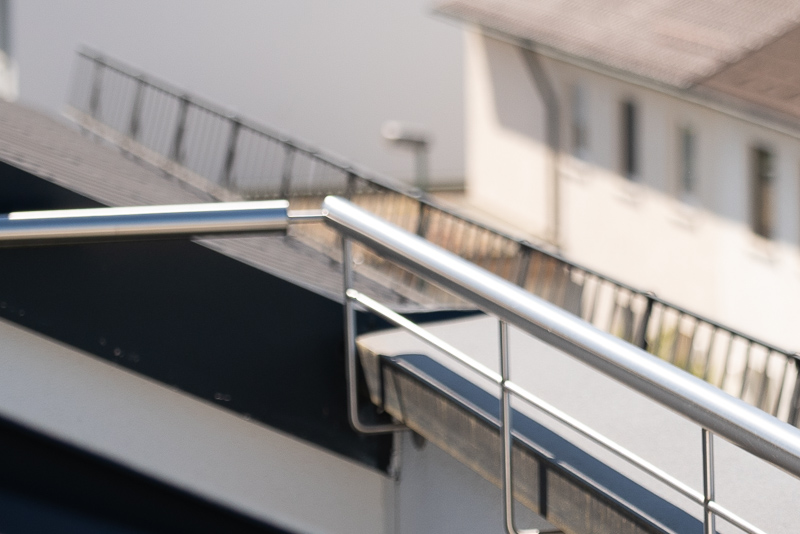
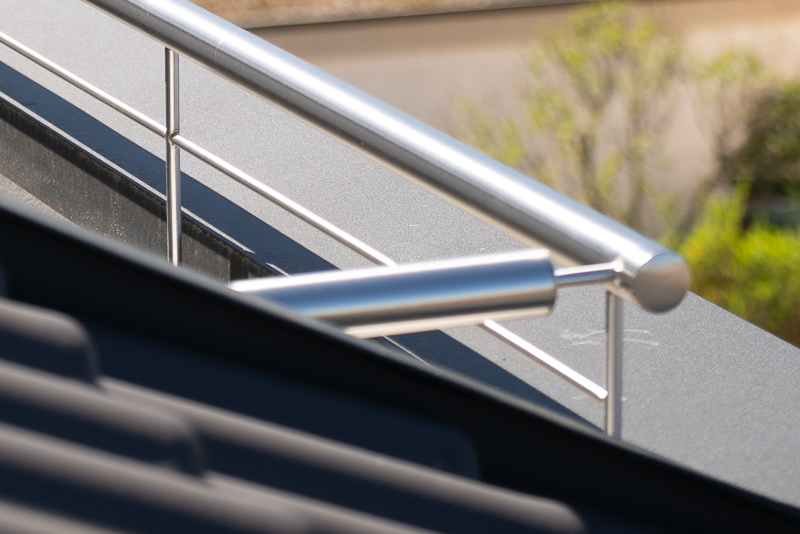
Viltrox made a big fuss about their superior color correction and even decided to put an Apo tag on this lens. This is highly deserved, I can neither see purple fringing nor bokeh fringing.

One of the best performances I have seen from a 35mm lens yet and also noticeably better than the Voigtländer 35mm 2.0 Apo-Lanthar.
Conclusion
good
|
average
|
not good
|
This Viltrox AF 35mm 1.8 Evo Apo is the second lens of Viltrox’ Evo lineup I reviewed and the table above looks very similar to that of the Viltrox AF 85mm 2.0 Evo. We are again dealing with a lens that comes without any outstanding flaws and I am still wondering how Viltrox could come to that point in such a short time.
The optical performance of this Viltrox lens is actually better than that of the highly regarded Voigtländer 35mm 2.0 Apo-Lanthar. While the Voigtländer performs a bit better at infinity with less Coma, this Viltrox lens outperforms it at portrait and closer distances and even corrects longitudinal CA way better – which should be the staple of the Apo-Lanthar lenses. Personally I think you can find 35mm lenses that create a nicer bokeh, but also here I prefer the Viltrox to the Voigtländer.
That alone would be enough to strongly consider this lens when looking for a compact, high performing 35mm lens and this is before we take into account it not only offers autofocus – contrary to the Voigtländer lens – but it also costs less than half.
buy from manufacturer’s shop (use the code “PRnet” for 5% discount) | amazon.com | amazon.de | B&H | ebay.com | ebay.de (advertisement/affiliate links) for $395
Alternatives
You can find a lot of potential alternatives in our Guide to 35mm fullframe lenses for E-mount. I will still mention some of the more obvious alternatives here.
Voigtländer 35mm 2.0 Apo-Lanthar (E/Z-mount):
I already compared these two lenses in all the sections above. Pick the Voigtländer if you want a manual focus lens and care about a metal casing and distinct sunstars. For everyone else this Viltrox is a better choice.
buy from B&H | ebay.com | ebay.de (advertisement/affiliate links) for $899
Nikon Z 35mm 1.8 S (Z-mount):
Nikon’s latest 35mm 1.8 lens. Despite being part of the higher end S series lenses this one does leave a bit to be desired and does not perform on the same level as most of the other S series lenses. I would rather get this Viltrox lens, but check out Martin’s review if you see something that I don’t.
buy from amazon.com | amazon.de | B&H | ebay.com | ebay.de (advertisement/affiliate links) for $696
Sony FE 35mm 1.8 (E-mount):
In the Sony world this is also a bit of a lower end 35mm lens despite its comparably high price therefore I find it a bit hard to recommend.
buy from amazon.com | amazon.de | B&H | ebay.com | ebay.de (advertisement/affiliate links) for $748
Sigma 35mm 2.0 DG DN Contemporary (E-mount):
I haven’t reviewed the Sigma 35mm 2.0 personally yet. The other Sigma iSeries primes I reviewed didn’t really knock it out of the park for me due to some CA issues and massive distortion in raw files.
buy from amazon.com | amazon.de | B&H | ebay.com | ebay.de (advertisement/affiliate links) for $719
7Artisans 35mm 1.8 AF (E/Z-mount):
Another affordable 35mm 1.8 AF lens from China. A solid performer, but sadly it has some flare resistance issues. It also doesn’t perform as well at portrait and close distances as this Viltrox lens.
buy from amazon.com | amazon.de | B&H | ebay.com | ebay.de (advertisement/affiliate links) for $299
Sample Images
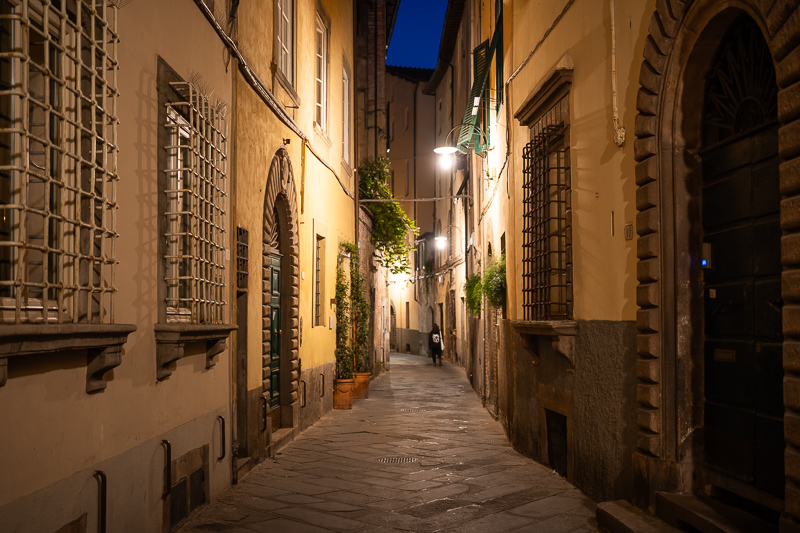
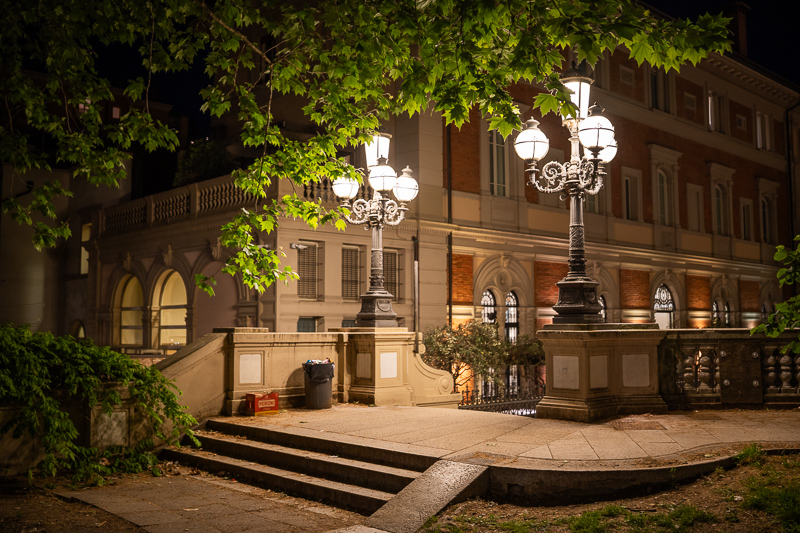




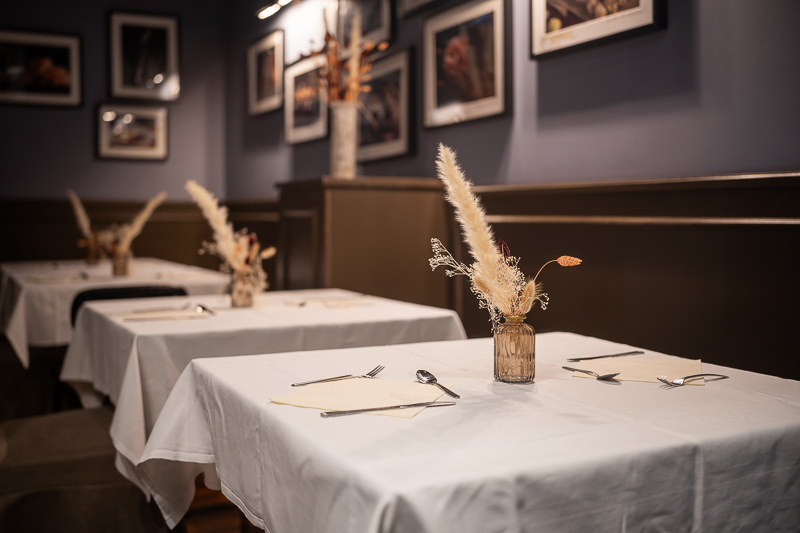







You can find many of the sample images in full resolution here.
Further Reading
- Review: Laowa 10mm 2.8 AF
- Review: Sony FE 16mm 1.8 G
- Review: Songraw 50mm 1.2 Moonlit
- Review: Sigma 135mm 1.4 DG Art
- How to: Taking environmental Portraits
Support Us
Did you find this article useful or just liked reading it? Treat us to a coffee!

 via Paypal
This site contains advertisement/affiliate links. If you make a purchase using any of the links marked as advertisement/affiliate links, I may receive a small commission at no additional cost to you. This helps support the creation of future content.


Latest posts by BastianK (see all)
- Prime Day Photoshop+Lightroom offer for Amazon Prime Members (EU/UK) | Update: also at B&H - October 7, 2026
- Review: Nikon AF-S 18-35mm 3.5-4.5G - October 7, 2026
- Review: Sigma 14mm 1.4 DG Art – World’s widest f/1.4 lens - September 26, 2026
Kvalitná recenzia a v rýchlom čase po uvedení, veľká vďaka za Vašu prácu. Ešte spraviť zaujímavý 21 EVO a vzniklo by zaujímavé trio 21, 35 a 85. Je super ako sa rýchlo posúva vývoj týchto objektívov, vždy ma trochu zamrzí jedine, že si nedali záležať trochu aj na tých sunstar, keby použili aspoň 12 lamolovú clonu, neviem. Ináč dlho ste už nespravili svoje odporúčania tímu čo aktuálne nosíte.
English Translation:
Quality review and in a short time after the launch, many thanks for your work. Make an interesting 21 EVO and it would be an interesting trio of 21, 35 and 85. It’s great how quickly the development of these lenses is moving, I always get a little annoyed that they didn’t care a little about the sunstar ones, if they used at least a 12-blade aperture, I don’t know. Otherwise, you haven’t made your recommendations to the team for a long time, what are you currently wearing.
mein Exemplar kommt an der A7R II mit dem AF-C Modus nicht klar. Starken Pumpen, und ziemlich laut. An der A6400 passiert das nicht.
Wow, pretty impressive. As is the pace in wich Viltrox releases lenses overall.
Martin and you seem busy enough, but if you do want to test the Sigma 35mm F2 you mention please let me know. I’d happily send it over, together with the Sigma 20 and 65mm F2 if you want. I’ll handle shipping costs. Thanks you two for all these reviews!
Where are you located?
Spain, Sagunto next to Valencia.
Hi Bastian, I am still using the Samyang 35 1.8 now and I think it is light weight and sharp. Do you think this Viltrox 35 1.8 EVO is better the Samyang? And I saw Samyang launched a new 35mm 1.8 P lens, see if you will review that lens too. =]
As a Samyang 35mm f/1.8 owner, I was about to second your question, but then I realized that even if the Viltrox is a bit better in terms of quality, I wouldn’t trade it for the Samyang’s weight and size. I’m satisfied with its quality and would only consider switching for significantly better bokeh.
It seems that a few years ago Viltrox sold their souls to the devil to be blowing the competition out of the water like this
I think ‘selling their soul’ is a bit of a disservice to the incredible engineering teams. The progress comes from real, sustained effort. I’m excited to see what they do in the next five years; the innovation coming out of China is just getting started
Amazing review!
Interesting glass.
Would really like to see review on the new Sigma 35mm F1.4 DG II ART!
Thank you so much!
After your review of the EVO 85, I bought it…, but here I hasitate.
How does it compare (sharpness, aberations, handling to the small, but very snappy Sony 40mm f2.5 G lens that I also bought after your review and like very much.
I’m more a 50mm user, where you like 35mm.
Thank you.
Handling same.
Aberrations Viltrox better.
Sharpness Sony a little better.
Having previously bought a Viltrox 85 2.0 A EVO (which really impressed me), I bought the 35, hoping it would manage to replace both the Voigtländer 35 2.0 and the Sigma 35 2.0 (or at least the Sigma, if I couldn’t bear living without sunstars). After decentering tests, which gave some strangely inconsistent results, I shot hundreds of images with the three 35s. Result: at least my sample of the Viltrox had more CA than the other two, corner sharpness at full aperture, while still good, wasn’t better than the others, I couldn’t see any real difference in bokeh between the lenses and no real difference in “pop”, contrast & color either, comparison made more difficult by the fact that the Viltrox consistently underexposed a little bit. So, while still high level results, this sample disappointed expectations and is going back. Might try a second one (fear of shops blacklisting me).
Thank you for a great review. It is clear that Viltrox can design lenses that excel in their optical qualities and surely their competition is taking notice of this as I am. I am intrigued by this 35 F1.8 but I will wait to learn more about its reliability. I recently purchased the Viltrox 85 1.4 after reading a review and I have been very impressed by its optical performance too, but I have experienced reliability issues that I am trying to work out.
Thank you.
“Viltrox can design lenses that excel in their optical qualities and surely their competition is taking notice of this”
Nikon sure did ^^
My copy delivered yesterday is decentered. I am returning it to B&H for a replacement.
My second copy is perfect. Glad I returned the first one.
Also I added a Marumi Achromat 200 (+5 diopter) filter and experimented with close focus on small wildflowers, and as it should, the results were excellent.
The plastic hood will not accommodate stacked filters. I’ve substituted a B+W collapsible rubber hood with 58mm rear and front threads, and on the front threads I’ve added a magnetic adapter ring for my K&F Nano+ magnetic filters.
Great review. Very thorough with excellent examples. Thank you
Great review. I had this lens for a week, and totally agree with your assessment. It is a highly functional lens, with virtually no optical shortcomings. While it is also metal body, it doesn’t feel as nice as the my 85/1.4 Pro for some reasons.
Do you find this suitably compact versus the Sony 35mm GM? I own the GM but I have been considering opting for a smaller 35mm instead because I generally shoot more with smaller lenses.
I suppose the big question is which compact 35mm ~1.8 do you recommend? Does the Viltrox beat Sony 35mm FE 1.8, Sigma i35 f2 and Samyang?
I’m thrilled you managed to get this review out so quickly. You’re one of my favourite websites for lens reviews.
The Viltrox is noticeably smaller and lighter than the GM. Whether that difference matters to you, only you can decide.
Among the compact 35mm 1.8 lenses this is the one I would get.
Versus the Sony 35mm 1.8 it is an easy win. Sigma I didn’t ty myself, but going by the other two Sigma iSeries lenses I have used I would again be picking the Viltrox.
Same dilemma here. I would prefer a smaller lens but I love the the GM and think I may come to regret it if I swap.
Argh… I tested 3 samples of the Z-version 35mm evo with no luck 😯
The first one was heavily decentered.
The second one had an AF failure (pumping all the way)
The last one last week was unsharp in the upper half.
Maybe I’m unlucky but now I’m going to let it be…
Sad to hear that. Apparently production and logistics are optimal, but not quality control.
I think the bokeh is probably good enough for me. Tempted.