Introduction

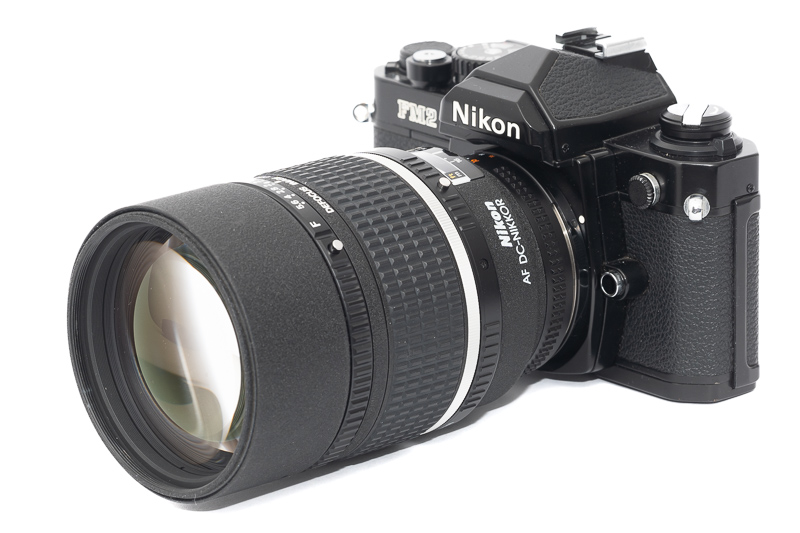
At the beginning of the 1990s Nikon released two special portrait lenses featuring a “Defocus Control” mechanism, which allows you to make the bokeh smoother or harsher. This Nikon AF-D 135mm 2.0 DC is the longer of the two DC lenses and in this review I will tell you how it works and if it is still a useful portrait lens today.
Sample Images






Most of the sample images in this review can be found in full resolution here.
Specifications / Version History
Nikon released their first manual focus 135mm 2.0 lens in 1975. Released in 1990 the Nikon AF 135mm 2.0 DC was their first and only 135mm AF lens for the F-mount. In 1995 this lens has been updated to the “D” standard, transmitting distance information for more accurate flash exposure. This is a review of one of the later AF-D versions. Its full specifications are:
- Diameter: 79 mm
- Length: 120 mm
- Weight: 775g (measured)
- Field of view: 18° (diagonally)
- Filter Diameter: 72 mm
- Number of Aperture Blades: 9 (rounded)
- Elements/Groups: 7/6 + rear protection filter

- Close Focusing Distance: 1.1 m
- Maximum Magnification: 1:6.8 (measured)
- Mount: Nikon F
buy from ebay.com | ebay.de | B&H (advertisement/affiliate links) starting at $550
History
As for many exotic lenses, Nikon has a history page specifically dedicated to this Nikon AF-D 135mm 2.0 DC. It is a good idea to have a look at this article, if you want to learn more about this lens: Nikkor – The Thousand and One Nights – No. 32: Nikon AF-D 135mm 2.0 DC.
Bokeh, at least to some degree, is a subjective matter. You also cannot have both at the same time: a very smooth background and a very smooth foreground bokeh.
Because of that, Nikon’s engineers came up with the idea of creating a lens where the photographer can easily adjust the bokeh rendering to match his taste and/or the scene at hand. This is what the “Defocus Control” allows you to do.
Both these DC lenses have been expensive special purpose lenses when they were released, so not that many have been made – around 47.000 of this 135mm 2.0 and 34.000 of the 105mm 2.0.
Handling / Build Quality
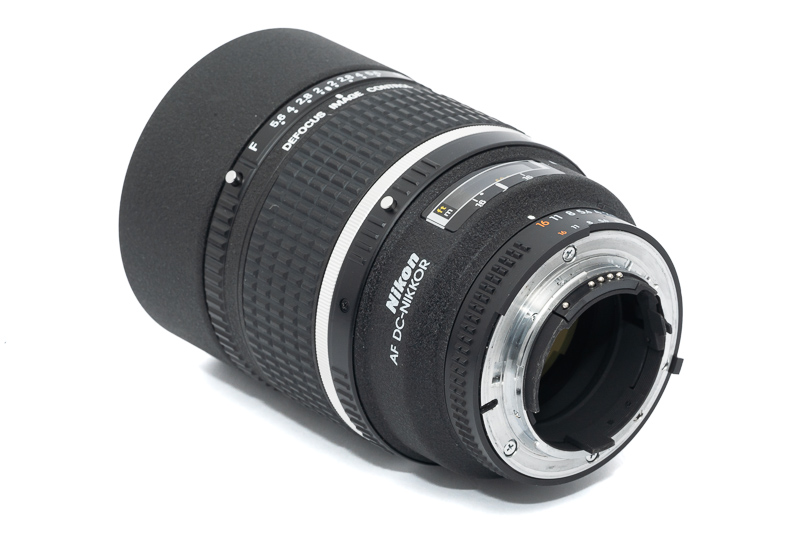
The general build quality matches the other higher end AF-D lenses like the Nikon AF-D 28mm 1.4 and AF-D 85mm 1.4 and obviously also the Nikon AF-D 105mm 2.0 DC.
The focus ring rotates about 120° from the minimum focus distance of 1.10 m to infinity. The manual focus experience is nicer compared to the Nikon AF-D 85mm 1.4 as here there is no slack when changing the direction of rotation.
The aperture ring is situated towards the rear of the lens and features equidistantly spaced full-stop click stops. As is typical for Nikon’s lenses it has more of a short throw.
The rear element is interestingly just a flat protection filter and not an actual part of the optical design. This might be the reason these DC lenses do not suck in nearly as much dust as the Nikon AF-D 85mm 1.4. From what I have read, only these later “D” versions feature this protective rear element though.
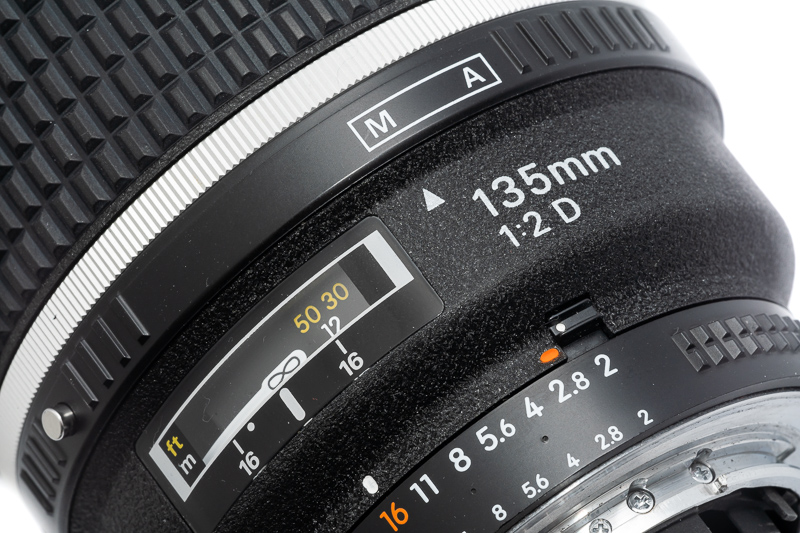
There is also the AF/MF ring-switch, to detach the focus ring from the helicoid when using an AF camera. These ring switches are prone to breaking though, so better treat them carefully.
The outer casing of the lens seems to be made from mainly metal and a few high quality polycarbonate parts, markings are engraved and filled with paint.
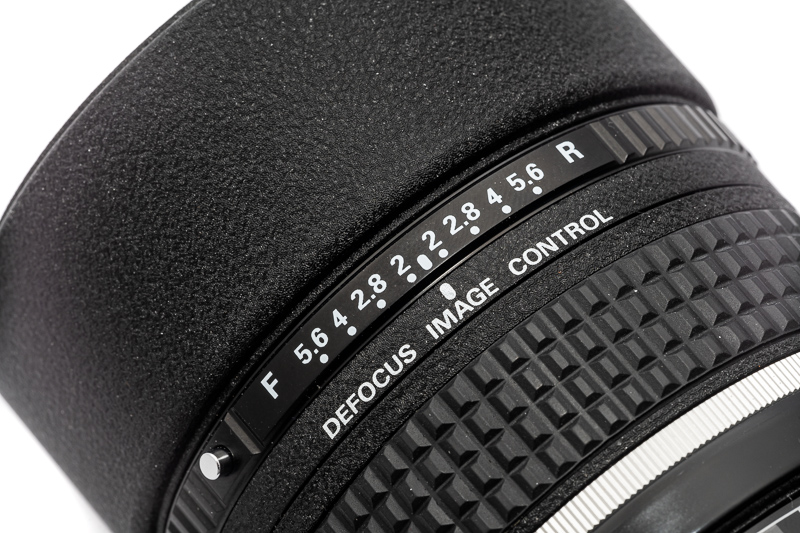
Between lens hood and focus ring you can find the Defocus Control ring. Similar to the AF/MF ring-switch you have to hold down that little button to change its setting. It has click stops at all the markings.
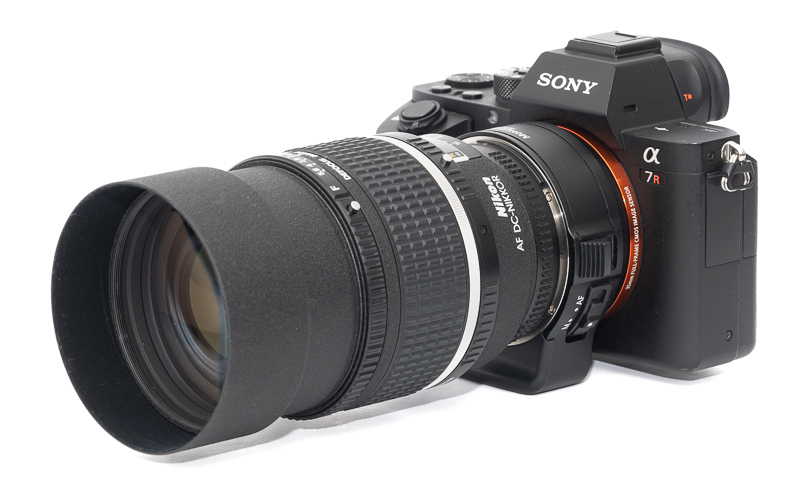
This lens features a short retractable hood. A longer hood would offer more protection, but being bulkier many people would also simply leave it at home. Personally, I greatly prefer this design over that Nikon AF-D 85mm 1.4‘s screw-in hood which is super bulky, cannot be mounted reversed for transport and scratches/bends easily. That being said, this 135mm lens would have surely benefitted from a longer hood.
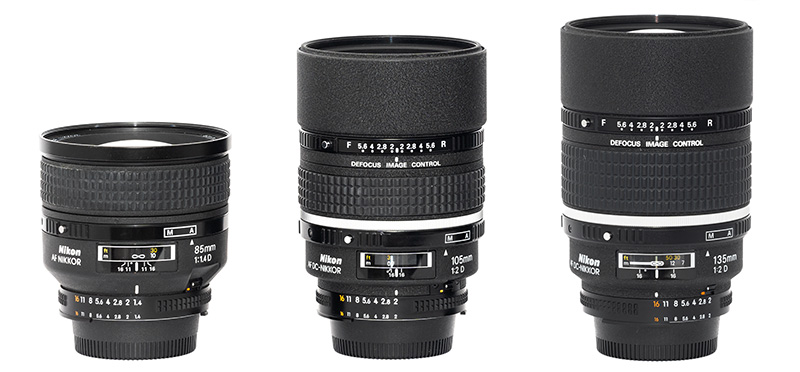
This Nikon AF-D 135mm 2.0 DC looks almost the same as the Nikon AF-D 105mm 2.0 DC. They use many shared parts and it is only the focus ring which is longer, leading to a slightly increased overall length.
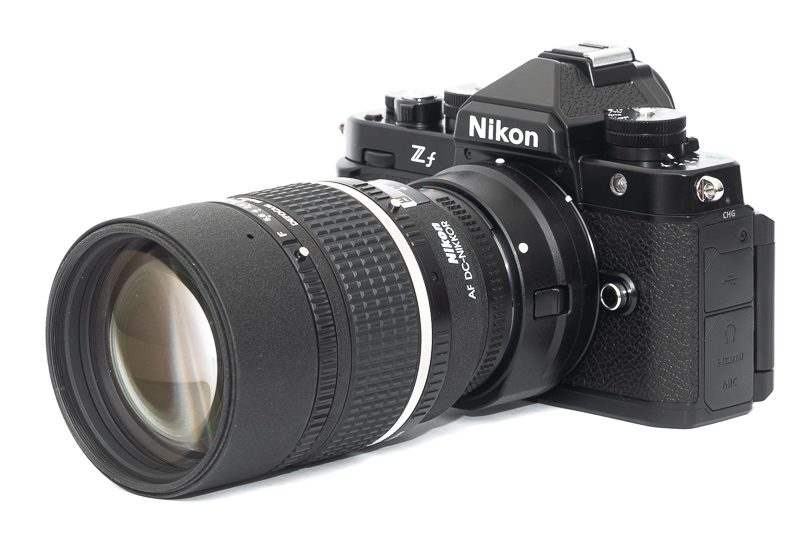
This AF lens relies on a motor in camera for the auto focus to operate and not all Nikon SLRs support this. The Nikon FTZ adapters also don’t, so on Z-mount cameras this will be a manual focus lens.
Sony users can make use of the Monster LA-FE2 adapter though, which will allow the autofocus to work on Sony E-mount cameras (have a look at the vignetting section though).
Defocus Control
Probably the main attraction of this lens is the “Defocus Control”. But what is it and how does it work?
In addition to the focus and aperture rings this lens features an additional “Defocus Image Control” ring. By turning this ring you change the position of the second lens group as is highlighted in the following diagram:

Changing the position of that lens group leads to either an overcorrection (“F”) or undercorrection (“R”) of the spherical aberration. I already reviewed one other lens with that feature: the MS-Optics 135mm 2.4 Aporis. Its mechanics are cruder, but it functions just the same.
You can see the ring has markings (and click stops) that correlate with the aperture stops from f/2.0 to f/5.6. Now the general idea of these markings are: as long as the number of the DC ring setting matches or is smaller than your aperture stop, there will not be a real impact on the image quality in the focal plane.
So, if you are shooting at f/2.0 you can set the DC ring to R2 for a slightly smoother background bokeh without hurting the sharpness in the focal plane. If you decide to set the DC ring to R5.6 you will encounter a massive loss of image quality in the focal plane though.
To better understand this feature I prepared the following pictures for you:











From this series you can see that when the lens is set to f/2.0, the F2 and R2 settings are good to use and I think in case of this 135mm lens also the F2.8 and R2.8 settings. Beyond that the focal plane becomes noticeably softer.
Also keep in mind: whenever you change the setting on the DC ring you need to refocus.
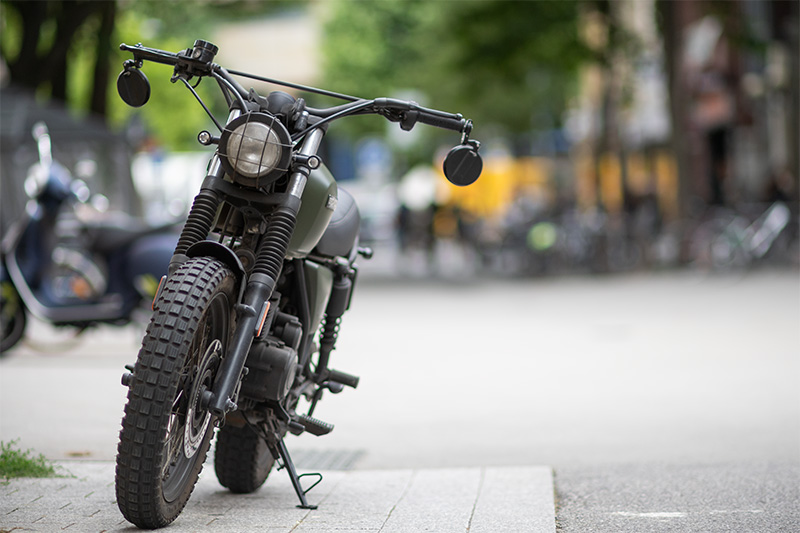
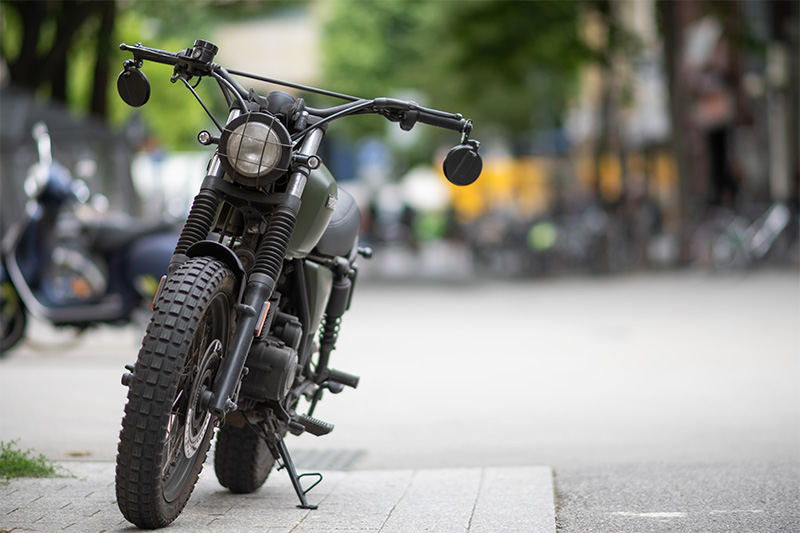

Compared to the neutral setting R2 and R2.8 do yield smoother bokeh and I often used these settings with this lens.



How visible/obvious the effect is depends a lot on the scenery and the distant relations as well. In the scenes with the statue and the bike I see a big difference in terms ob background rendering between the neutral and the R2.8 setting. In the scene with the orange mannequin above it hardly makes a difference, it is just that the focal plane is softer at R2.8.
How useful is the DC feature? Generally being able to adjust the bokeh rendering to your liking is a nice option to have, but this is one more thing to take care of in the field. I think in most cases I would pick one setting based on what I am looking for and stick with that one throughout the shooting.
Most of the testing was done with the lens set to its neutral/zero position, my favorite rendering when shooting at f/2.0 was with the ring set to R2.0 or R2.8 though. You find the information which setting was used in the captions.
Vignetting
Light falloff
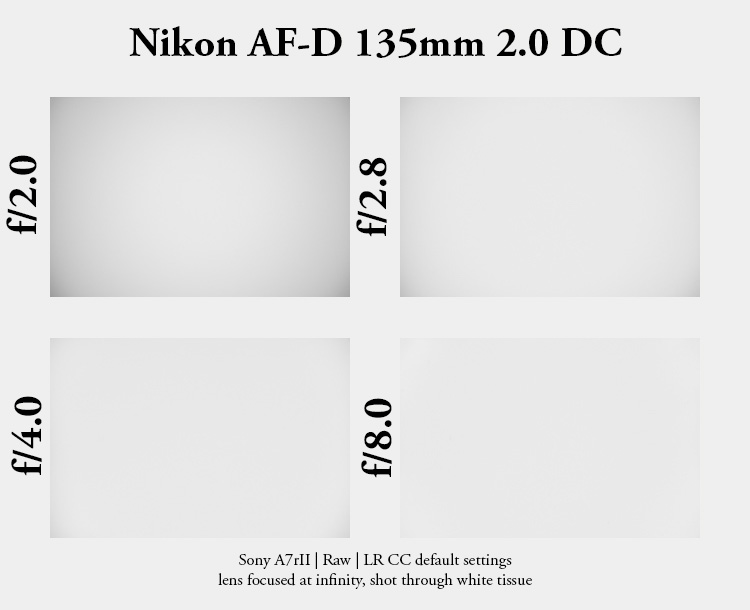
| f/2.0 | 1.7 EV |
| f/2.8 | 1.0 EV |
| f/4.0 | 0.7 EV |
| f/5.6 | 0.4 EV |
| f/8.0 | 0.2 EV |
| f/11- f/16 | 0 EV |
The vignetting figures of this Nikon 135mm 2.0 DC are very typical for a 135mm 2.0 lens. The Canon EF 135mm 2.0L USM , the Samyang 135mm 2.0 and the Sony FE 135mm 1.8 GM show just the same amount at shared apertures,
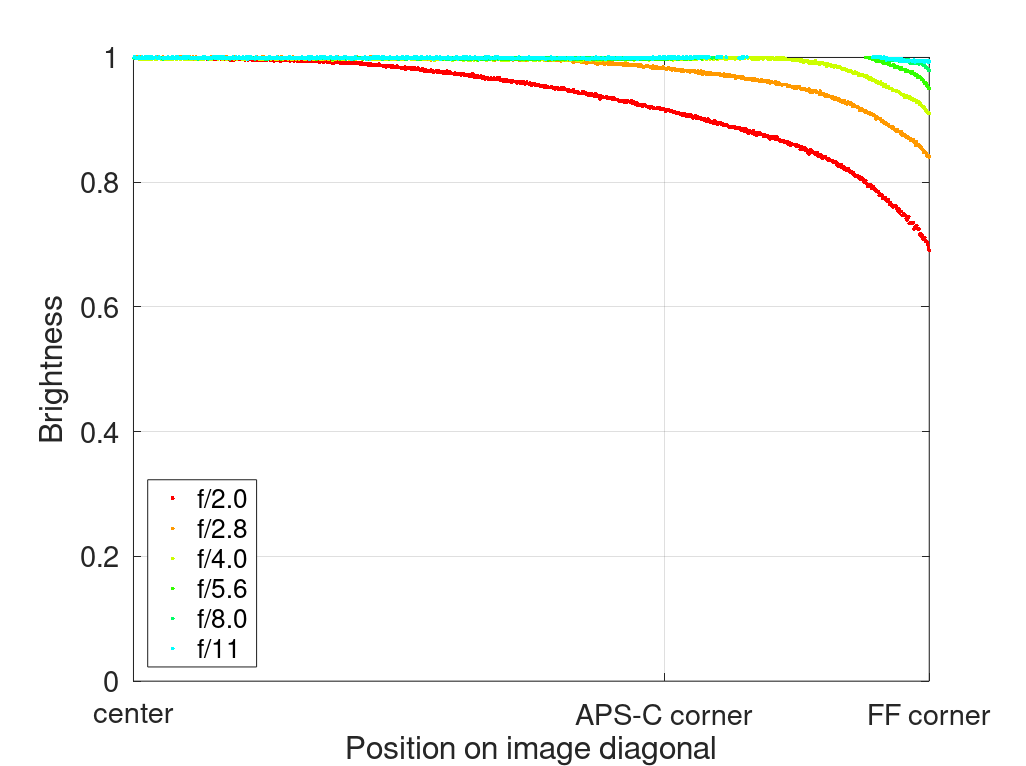
It is recommended to have a look at this article first to get an idea how this brightness graph works.
Using this lens on a Sony camera I noticed another issue: the opening of the Monster LA-FE2 adapter does not seem to be big enough for this lens, leading to black corners. When having the IBIS turned on this makes things even worse.
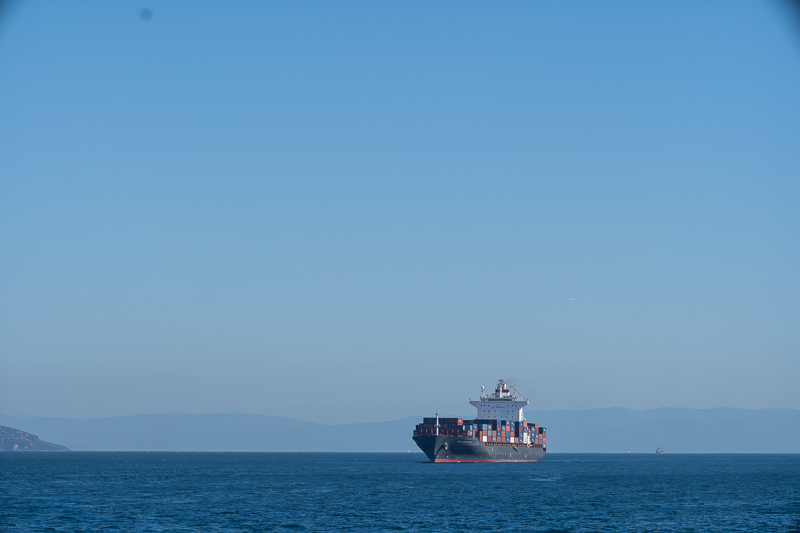
On a Nikon Z camera via the FTZ adapter no such thing happens.
Optical vignetting
Fast lenses usually show a noticeable amount of optical vignetting, especially so the compact ones. Without going too much into technical details optical vignetting leads to the truncation of light circles towards the borders of the frame.
In the center of the frame almost every lens will render a perfect circle, but only lenses with very low optical vignetting will keep this shape in the corners.
So in the following comparison we move from the center (left) to the extreme corner (right) and see how the shape of the light circle changes.



Also the amount of optical vignetting is typical for a lens with these parameters. The situation is definitely better here compared to the Nikon AF-S 105mm 1.4E and very similar to the Nikon AF-D 105mm 2.0 DC.
Sharpness
MTF Graphs
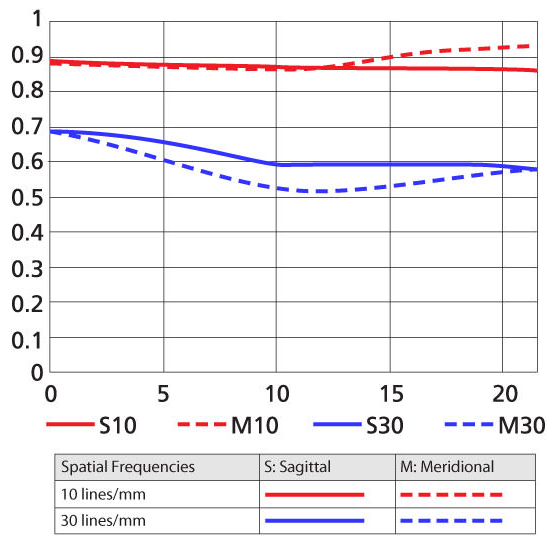
Nikon’s MTF graphs promise a good across frame performance at infinity with a flat field and very little falloff towards the corners. Today’s fast 135mm lenses show even more impressive figures here though.
Focus shift



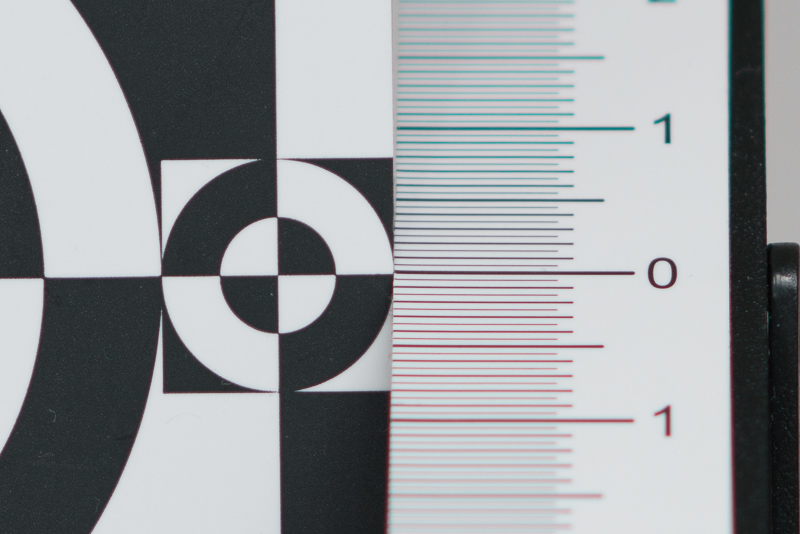
While the Nikon AF-D 105mm 2.0 DC was almost free of focus shift I can definitely see a small amount here. If you shoot a lot around f/4.0 this might be something to watch out for at closer focus distances.
We do see a rather high amount of bokeh fringing here though, typical for Nikon’s fast lenses of that era.
Infinity (42mp Sony A7rII)
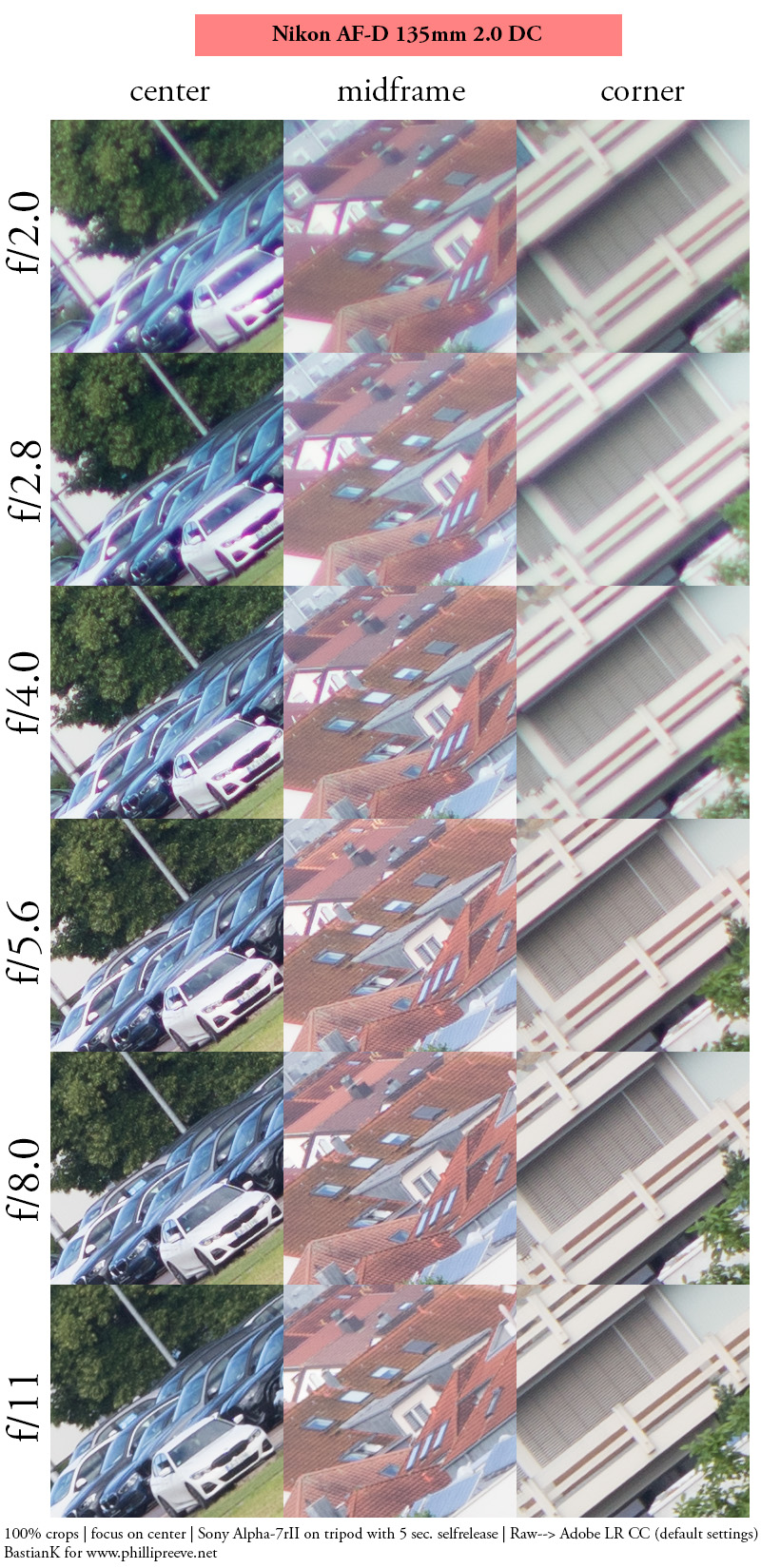
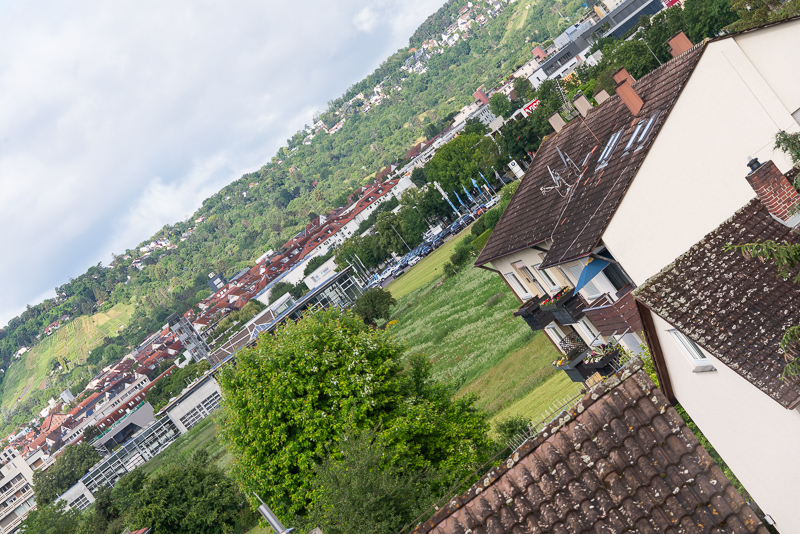
While resolution and contrast are generally good at f/2.0, the strong color aberrations spoil the picture a bit. It really takes stopping down to f/8.0 to completely get rid of them.
Some of you may point out that this lens has not been designed for infinity shooting and I agree with that, but at the same time there is e.g. the Canon EF 135mm 2.0L from 1996 which shows an impeccable performance also at infinity. And we are not even talking about the latest 135mm 1.8 lenses here, that show a stronger performance at f/1.8 than this lens does at any aperture setting.
Portrait 3.0 m (42mp Sony A7rII)
For portraiture it isn’t so important how flat the field is, it is more interesting to see what the sharpness is like when focused at different parts of the frame to take field curvature out of the equation.

We will be looking at 100% crops from the 42mp Sony A7rII.
f/2.0 <—> f/2.8



The trend continues at portrait distances. Just like the Nikon AF-D 105mm 2.0 DC, this 135mm 2.0 DC is not perfecly color corrected at f/2.0 and also a bit soft, but astigmatism is low, that makes it easier to focus. Stopped down to f/2.8 it shows a good performance everywhere in the frame.
Also here the latest 135mm 1.8 lenses perform visibly better.
Close 1.1 m, 1:6.8 (42mp Sony A7rII)




The maximum magnification of 1:6.8 is nothing special for a 135mm lens. The Canon EF 135mm 2.0L offers 1:5, the Sony FE 135mm 1.8 GM even offers 1:4.
The lens is a bit soft at f/2.0 and we still see slight color aberrations until stopped down to f/5.6. Also here not only the new lenses but also the Canon EF 135mm 2.0L USM from 1996 show noticeably better performance.
Flare resistance
Fast short tele lenses rarely do well in this category and neither the Nikon AF-D 85mm 1.4 nor the Nikon AF-D 105mm 2.0 DC did particularly well here.






Stopped down – no matter whether a strong point light source is located inside or outside the frame – either frame filling veiling flare or huge ghosts can appear.

At the maximum aperture these ghosts are slightly less obtrusive, but they are still there.

The extendable hood is also a bit short for a 135mm lens. So even with it fully extended, I often encountered veiling flare like in the sample above.
I found this 135mm 2.0 DC to perform a bit worse than the Nikon AF-D 105mm 2.0 DC, probably because the front element of the 105mm lens is more recessed.
Coma
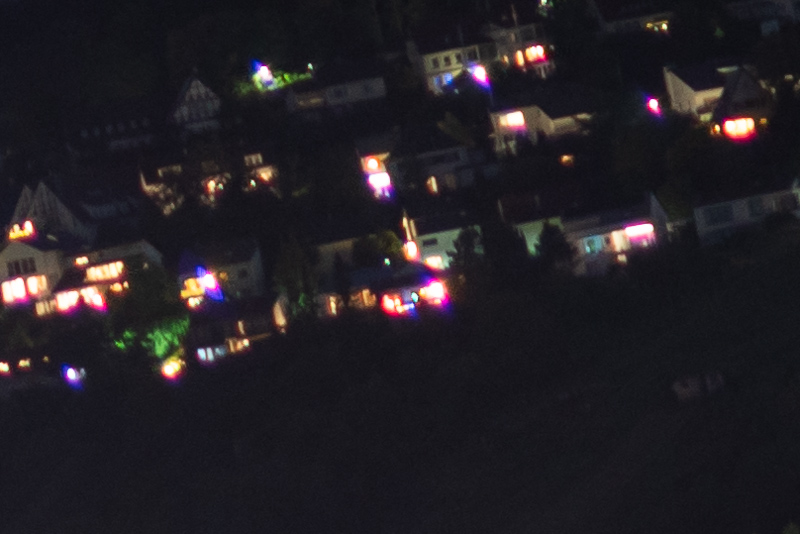
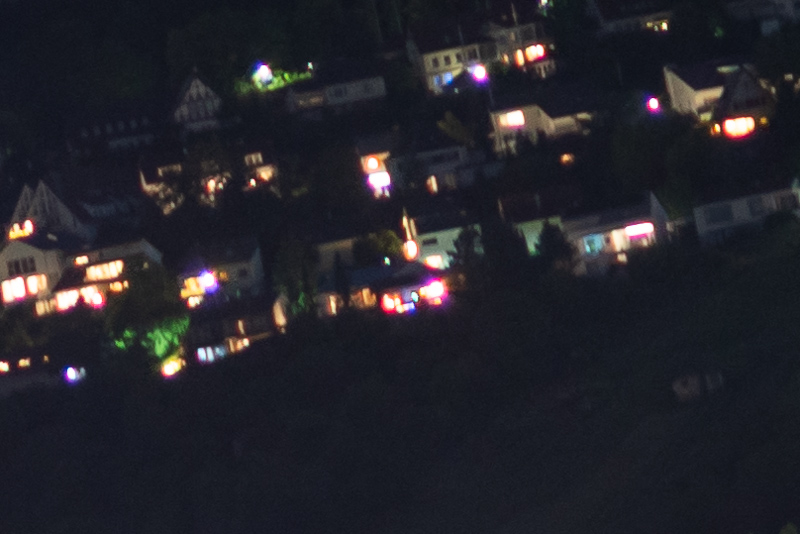
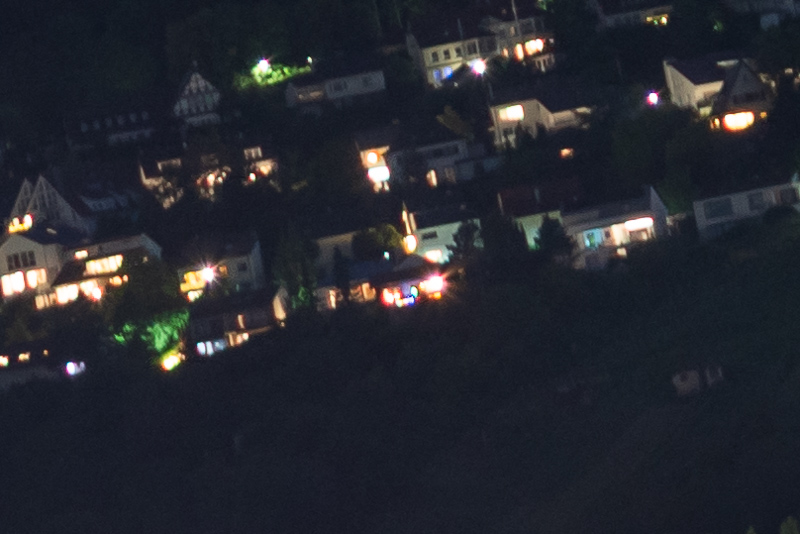
100% crops from extreme corner, focused on center, Sony A7rII
This Nikon AF-D 135mm 2.0 DC produces a low amount of Coma at its widest aperture. This isn’t something with the potential to ruin any portrait pictures, but also here we should keep in mind that the more recent fast 135mm lenses – and also the Canon EF 135mm 2.0L USM from 1996 correct this aberration (near) perfectly.
Distortion
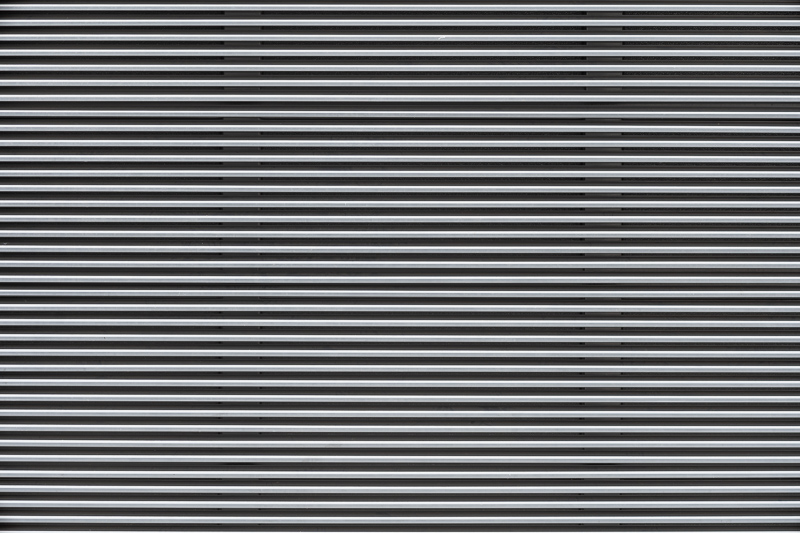
The Nikon AF-D 135mm 2.0 DC does not have any field relevant distortion. Lightroom does have a correction profile, but I don’t see what it could be needed for.
Bokeh

The Nikon AF-D 135mm 2.0 DC has actually been designed with the performance in this category in mind. When it comes to the evaluation of the performance here the Defocus Control adds another variable that makes things way more complicated though, therefore I recommend to have a look at the Defocus Control section first if you haven’t done that already.
Close Distance




Generally I found this lens to create a pleasing bokeh, already with a neutral defocus setting. I often used the R2 and also the R2.8 setting for slightly smoother backgrounds.
Mid Distance




Shooting this lens at f/2.0 with an R2 defocus setting leads to a very pleasing out of focus rendering also at medium distances and with complex backgrounds, as can be seen from the samples above.
Long Distance




At longer focus distances I often found the background bokeh a bit too nervous at the neutral DC setting at f/2.0. Here I greatly preferred R2 or even R2.8.
Ignoring the Defocus Control I think the bokeh rendering is very typical for Nikon’s lenses of the late 80s and 90s. Not super smooth as the most recent lenses but still more appealing than many of the fast lenses of previous generations. At the R2 to R2.8 setting I quite like the results from this lens.
Sunstars
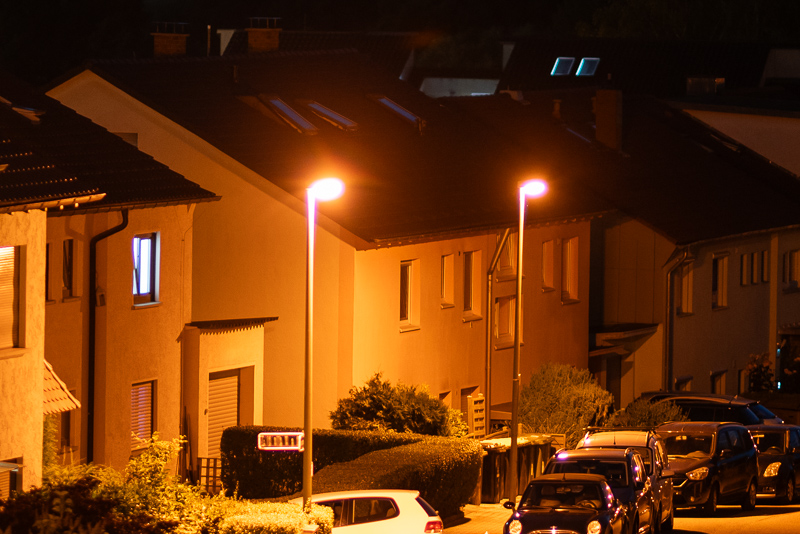
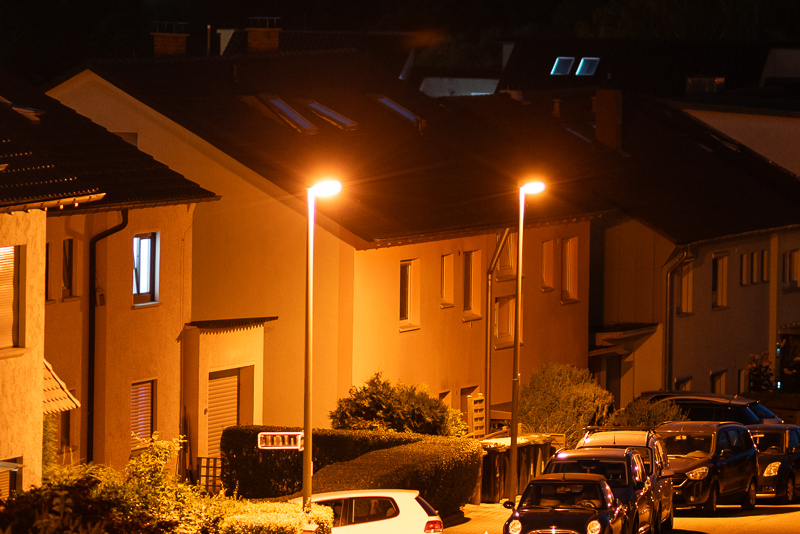
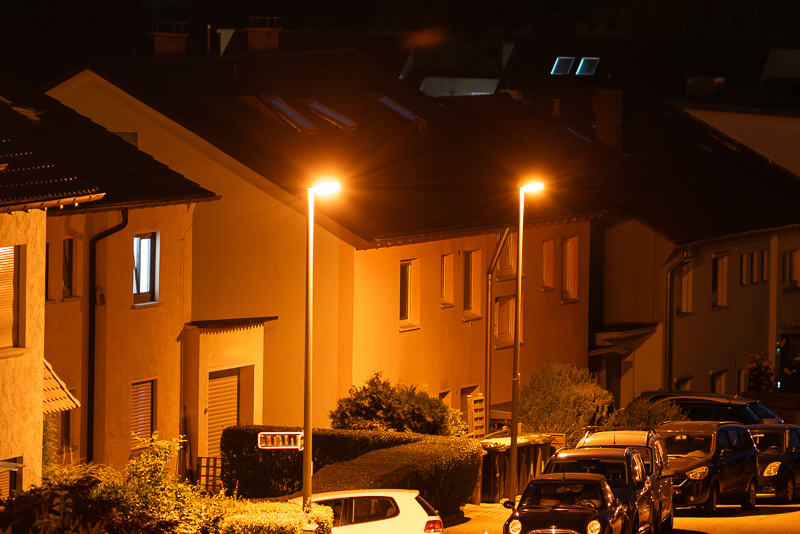
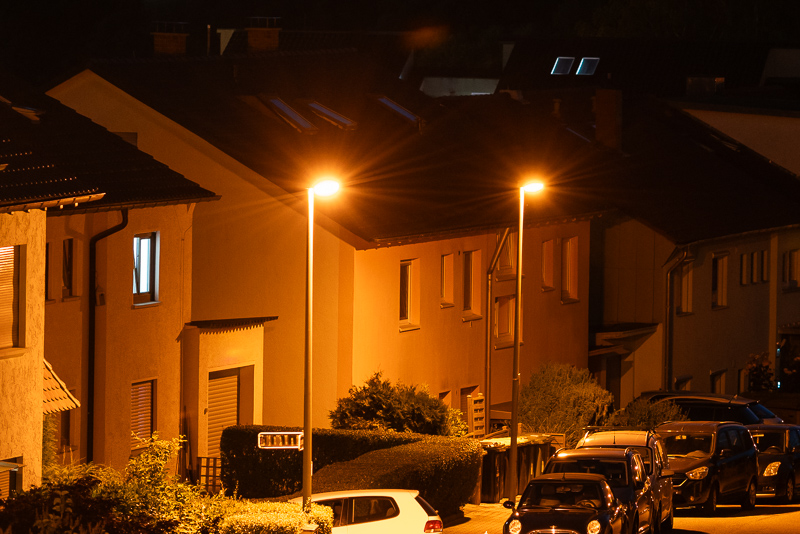
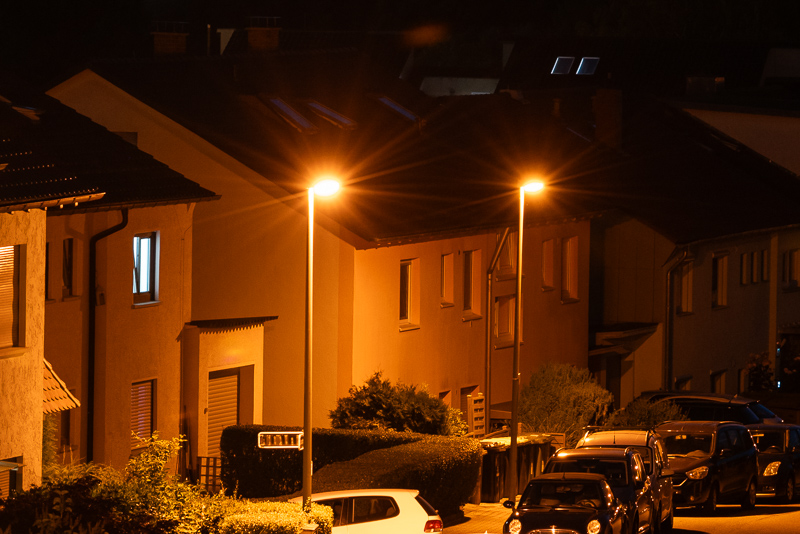
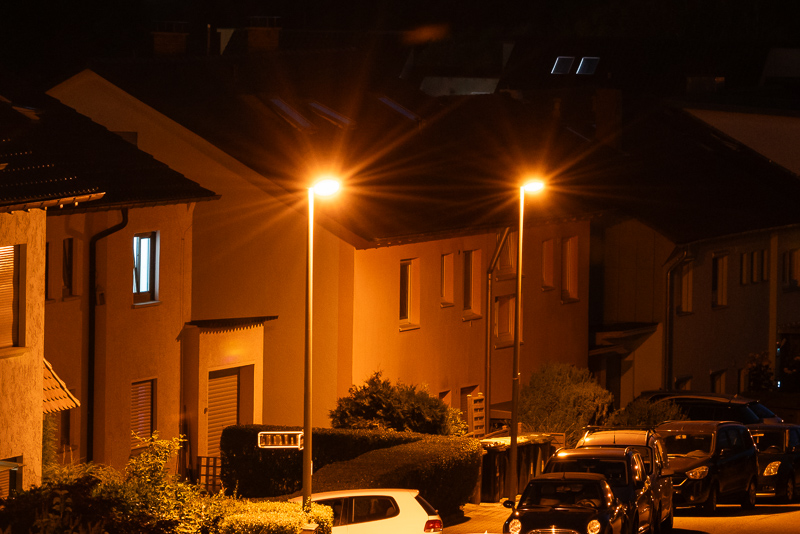
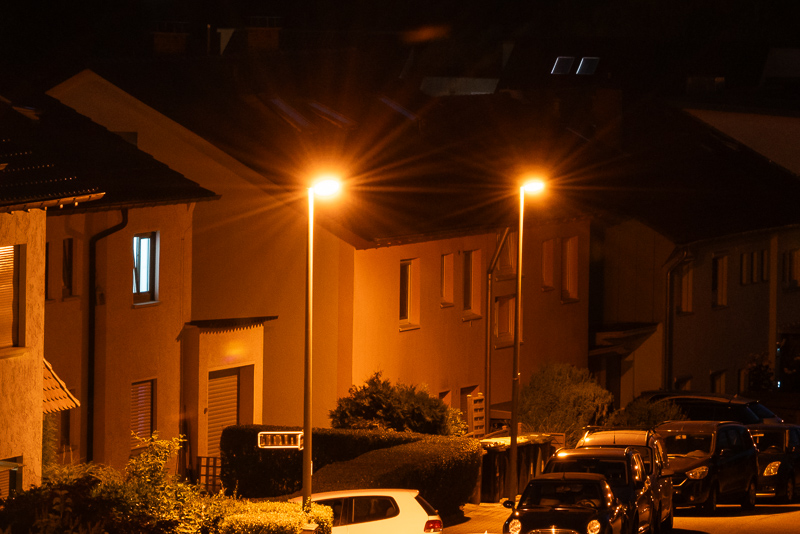
This 135mm 2.0 DC features an aperture diaphragm made of 9 rounded aperture blades. Similar to all the Nikon AF-D 85mm 1.4 samples I tried, the alignment of the blades isn’t perfect, so we cannot create distinct sunstars at any aperture. As this is a portrait lens by design I am happy Nikon chose to go with rounded blades nevertheless.
If you want to know more about sunstar rendering of different lenses have a look at this article.
Chromatic aberration
Lateral


The lack of special glass makes itself felt here, as there is a medium amount of lateral CA. Still easy to correct in a RAW developer, so nothing to worry about.
Longitudinal



If you already read one of my other reviews of a fast Nikon lens you probably already know how this will play out: this lens produces strong longitudinal CA at the maximum aperture. Maybe even very strong is the word we should use, as stopping down to f/4.0 is not sufficient to get rid of this aberration.


The sample above shows how bad things can get with this lens.
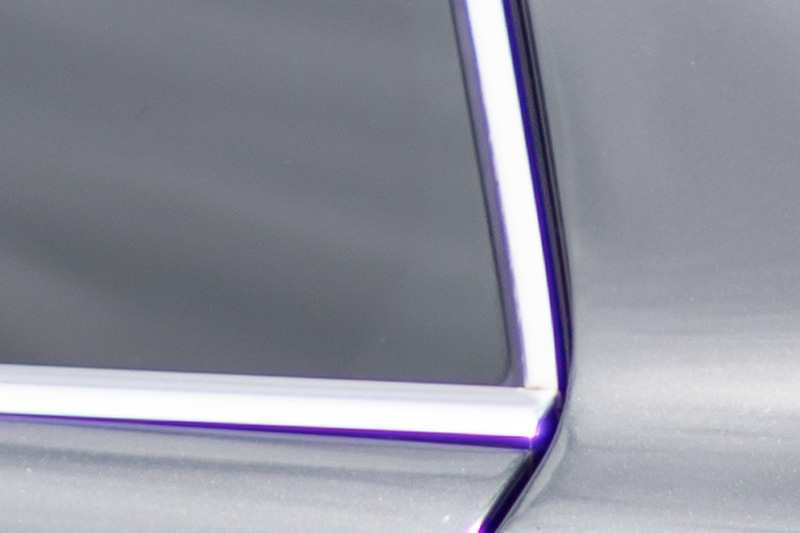
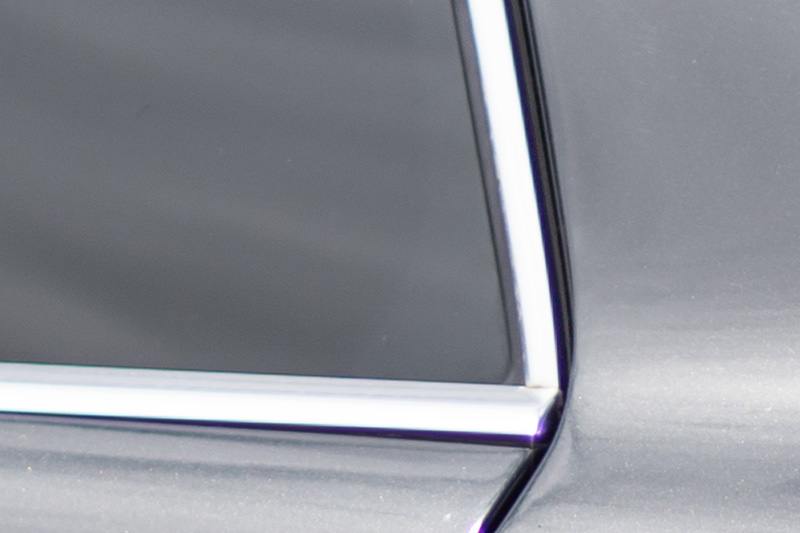
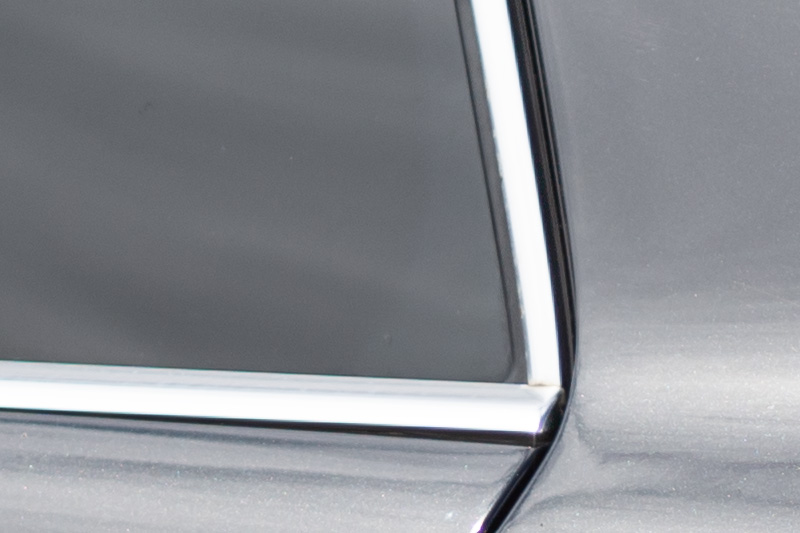
Interestingly, when it comes to purple fringing, the situation is a lot better, as this is mainly an issue at f/2.0 and stopping down to f/2.8 is already sufficient to get rid of it.
Conclusion
good
|
average
|
not good
|
Among Nikon users, I never had the feeling this AF-D 135mm 2.0 DC was a wildly popular lens. The defocus control made this a bit of an obscure lens many people didn’t really understand. On analogue cameras there must have also been a much steeper learning curve – you couldn’t fully see the impact of changing the defocus setting in the field after all. This was also by no means a cheap lens, so I think by 1995 many people went with the Nikon AF-D 85mm 1.4 instead.
And then, from 1996, there was the Canon EF 135mm 2.0L USM. It may not have a defocus control, but its bokeh rendering is still amazing out of the box and at the same time that Canon lens is better corrected in pretty much every way and and featured a modern USM drive long before Nikon released their first AF-S lens. Apparently Nikon still made this 135mm 2.0 DC lens in low quantities until 2020, but fact is – from a technological point of view – it was already outdated in 1996.
But let’s not only talk about numbers, this is a portrait lens first and foremost, so how do the pictures come out? Thanks to the defocus control you can choose between a smoother modern and a harsher “vintage” rendering whenever you like and I am pretty sure everyone will be able to find a satisfying setting here. I am not a huge fan of some of today’s perfectly corrected lenses for portrait applications, so I am glad we still have this option.
I also doubt we will be seeing another defocus lens again soon, so if this is something of interest to you, this lens can still be a very interesting option.
buy from ebay.com | ebay.de | B&H (advertisement/affiliate links) starting at $550
Alternatives
Nikon made two DC lenses, this 135mm is the longer one of the two. They generally perform very similar, this 135mm obviously has the bigger entrance pupil, the 105mm has a bit better flare resistance. There is also the rare MS-Optics 135mm 2.4 M-mount lens that features a similar mechanism. Interestingly that exotic boutique lens corrects longitudinal CA way better than this Nikon lens.
There are of course plenty of portrait lenses in the 85-135mm range without a defocus control. You can find a few examples of those in our Guide to 85-135mm portrait lenses.
Sample Images

















Most of the sample images in this review can be found in full resolution here.
Further Reading
- All Lens Reviews
- Review: Laowa 35mm 0.95 Argus
- Review: Sigma 50mm 1.4 EX
- Review: Canon EF 135mm 2.0L USM
- Bokeh Explained
Support Us
Did you find this article useful or just liked reading it? Treat us to a coffee!

 via Paypal


Latest posts by BastianK (see all)
- Prime Day Photoshop+Lightroom offer for Amazon Prime Members (EU/UK) | Update: also at B&H - October 7, 2026
- Review: Nikon AF-S 18-35mm 3.5-4.5G - October 7, 2026
- Review: Sigma 14mm 1.4 DG Art – World’s widest f/1.4 lens - September 26, 2026
Interesting lens!
It looks like longitudal aberations examples are in the opposite order.
You are right, thanks!
Checkout the LA-FZ1 adapter
This is the case when a DSLR camera is bought again because of a lens, even though i already have a Z )) I spent a long time looking for a good DC lens, but I still prefer the 105mm lens because it is shorter and more convenient for me. I also have a 85mm f/1.4d lens. They work great on the d780, and there are no problems with front and back focus in live view. They also don’t miss on the f90x (unlike my 80-200 f/2.8 mkii). As a result, I’ve assembled an excellent set of fixed lenses with a beautiful pattern (I also have a Tamron 35mm f/1.4 and a Nikkor 50mm f/1.8g). My favorite lens is the 85mm, primarily due to its size, but the 105mm dc lens produces stunning images and the most beautiful bokeh.
The most obvious and simple way to show what exactly the DC does to the bokeh is to take a frame that is obviously out of focus to get the bokeh circles, and then turn the DC ring, and then it will immediately become clear what exactly this DC does to the bokeh. In general, I would say that on r2 and r2.8, we get a blur that is like a stop (or so) more, while maintaining the actual aperture value of f/2 and f/2.8
Interesting. I’ve checked my 105mm dc, there are no problems with long-range sharpness at all, and at f/4 the edges are even better than the 105mm f/2.8 micro D. Although it looks like the 105mm micro is clearly brighter, the t-stop is in favor of the 105 micro
Despite this lens’ technical flaws, and the irony of this being a site that tests equipment and therefore draws attention to those flaws, you’ve produced some great shots with it — reinforcing the point that the photographer’s eye is the most important piece of equipment!
Very nice maritime-themed shots. Personally, I’ve never used the DC version, but I love operating its predecessor – the 135/2 Ai(S). It surely is also plagued by CA but still.
FYI this article seems to be missing a link to the https://phillipreeve.net/blog/review-nikon-105mm-2-0-af-dc-nikkor/ one, and vice versa.
This review (and the lens) shows nicely that spherical aberration is a design choice rather than a design flaw.
You show very well that both over- and under-correction have their virtues, but very different looks in the images – some look like old Canon Teles, which were rather over-corrected, some more Leica-like.
A nice lecture in how optical design influences image looks, and why it’s also a matter of taste and fashion. What people preferred in the 1990s, and what in the 2020s.
if you had to choose just one between the 85 1.4 afd, 105 2 dc, and 135 2 dc…which would you choose and why? 🙂
The 105mm 2.0 DC.
The 85mm 1.4D is almost unusable without its huge screw-in lens hood,
the built in hood of the 105mm 2.0 DC makes the difference here.
The downside of adjusting the bokeh with spherical aberration is that you can optimise either the background or the foreground, but not both. You also lose significant sharpness in the focus plane.
However, the effect of slightly softer bokeh due to brightness fall-off near the edge of the bokeh circle is universally loved. I really wonder why there aren’t STF/APD light lenses where only the very outer circle of the bokeh gets this slight brightness taper, perfectly simulating spherical aberration without the downsides and with only a negligible amount of light loss compared to normal STF lenses.
The Canon 85mm f/1.2 DS proves that, with two STF-coated surfaces, this effect works well even for lenses with significant cat’s eye, as the fall-off can be introduced on the constricting elements instead of the aperture plane. It’s a real missed opportunity for the industry so far.
Some people love soft focus lenses for certain applications, and may even like this sharpness loss for glamour shots or whatever. Now, I’m not sure how this loss of sharpness looks compared to a specialized soft focus lens in direct comparison, but what I’ve learned so far is that each niche finds its connoisseur.
Speaking for myself, I’m not a fan of mentioned STF look (I like it in some samples, but generally I’d find it boring). When it comes to tastes, we’re all so different beings.
Speaking of this lens (I enjoyed reading the review), for a moment I thought to myself that maybe I’d find it interesting. But aberrations are too much (usually spherical aberrations at least somewhat mask chromatic ones), and I wouldn’t mind better infinity performance, this being a specialist lens or not. Having no hope of AF if I buy a Z mount camera is another bummer, as it renders it is less than ideal portraiture lens too in these modern times.
If I saw a great deal on eBay, maybe. But then, it’s more practical to satisfy with a lens that offers interesting rendering by default and doesn’t suffer from the same compromises. I’m sure that, like Bastian, I’d simply find and use my favourite settings 90% of the time anyway. Either that or ruin my shots playing with that ring just because it’s there.
Well there are lenses that lean heavily into the spherical aberration. For example the Sigma 45mm F2.8 and they are generally loved. But as usual this comes with a lack of sharpness and terrible close up performance.
With my proposed approach you wouldn’t have to give anything up. Still the same sharpness, still the same contrast, just slightly less pronounced bokeh edges.
tengo los el 105 y el 135 comprados a precio de oportunidad y la verdad son lentes con una nitidez incleible