Introduction
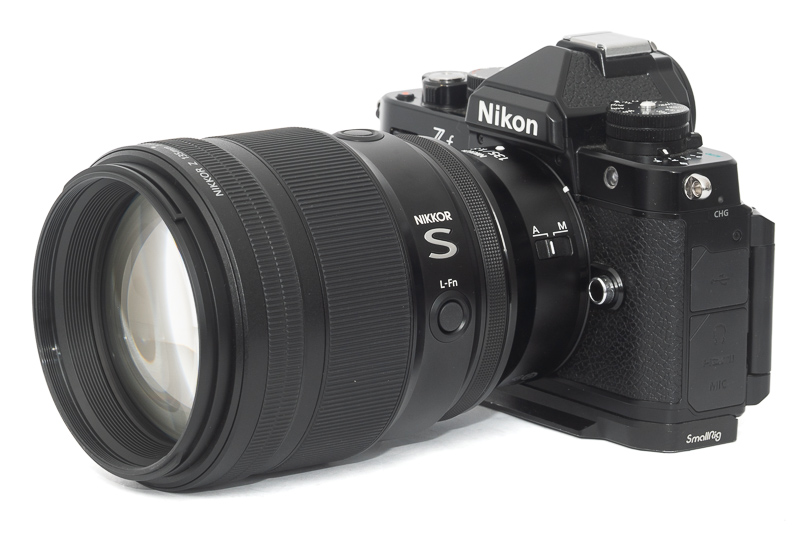
While many of the higher end lenses released these days often feel like “more of the same” and maybe even a bit interchangeable, Nikon’s engineers had a clear concept in mind when designing this Nikon Z 135mm 1.8 S Plena. It doesn’t happen often that Nikon awards one of their lenses with a name, so this Plena must be something special, right?
Sample Images


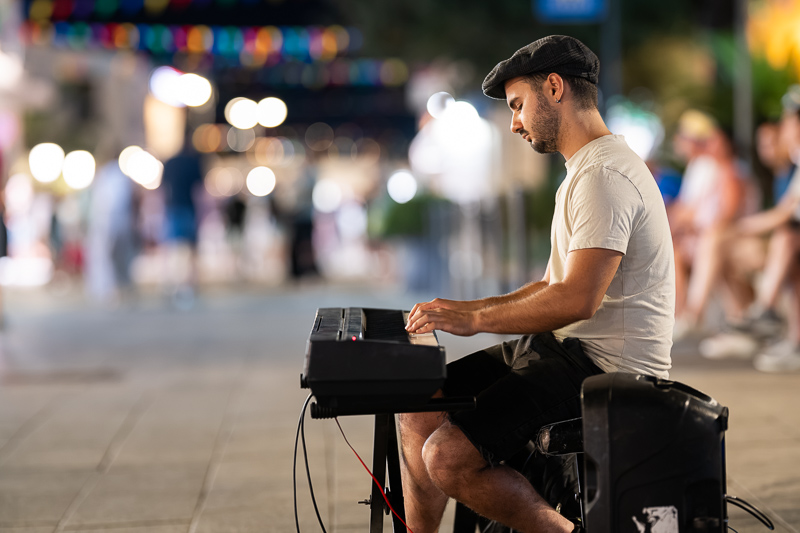


You can find many of the sample images in full resolution here.
Specifications
This Nikon Z 135mm 1.8 S Plena Nikkor has the following specifications:
-
- Diameter: 98 mm
- Field of view: 18°10′ (diagonally)
- Length: 140 mm
- Weight: 998g (without hood[65g], without caps)
- Filter Diameter: 82 mm
- Number of Aperture Blades: 11 (rounded)
- Elements/Groups: 16/14
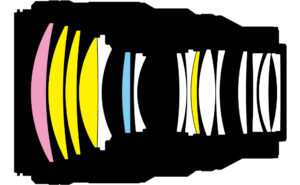
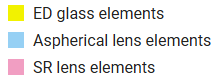
- Close Focusing Distance: 0.82 m
- Maximum Magnification: 1:4.9 (measured)
- Released: October 2023
- Mount: Nikon Z
buy from amazon.com | amazon.de | ebay.com | ebay.de | B&H (advertisement/affiliate links) for $2597
The Story of the Plena
Nikon actually posted “The Story of the Plena” on their EU websites and you can find the english version here. In addition to that written story, there is also a video series to be found on Youtube.
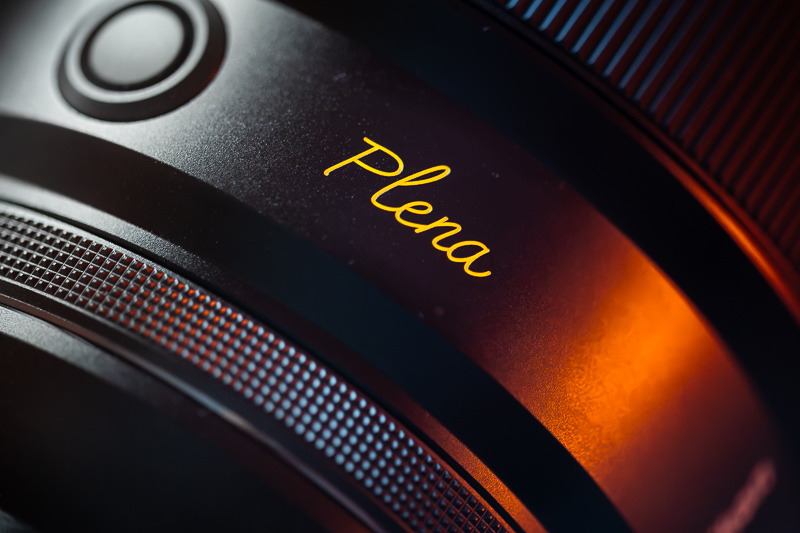
After the two “Noct” lenses, this is only the second time (to my knowledge) that Nikon awarded a lens with an official nickname, so what is so special about this 135mm 1.8 lens? After all: there have been plenty of lenses sharing those specifications already.
The idea behind this lens was to minimize the optical vignetting. If you are a regular reader here you are surely aware: defocused points of light usually get smaller (truncated) towards the corners of the frame and sometimes even take on weird shapes like “cat’s eyes”.
How strong the optical vignetting is, is sadly not something you can find out by having a look at the specifications sheets, so if you care about that, you need to rely on reviews (like mine) that have a look at this aspect.


To me personally, a low amount of optical vignetting is very important when it comes to fast portrait lenses, as I find a high amount of it rather distracting and unnatural looking. This was also my main point of criticism of the Nikon AF-S 105mm 1.4E.
I once asked an optical designer what it would take to create an f/2.0 tele lens without optical vignetting and he said: get an f/1.4 lens and stop it down to f/2.0, because you would need elements so big to get rid of the optical vignetting, you could just build a faster lens instead.
Nikon’s engineers had a different opinion on this. They tried to optimize the optical as well as the mechanical design of this 135mm 1.8 Plena lens with the aim to reduce the optical vignetting while still keeping the lens reasonably sized. In the marketing material mentioned above, they claim they were able to do this because of the big opening of the Z-mount. Now don’t get me wrong: for more than 90% of the lenses it doesn’t matter whether they are being designed for the Z-mount or the narrower E- or L-mount, but when designing lenses with extreme specifications – like the Nikon Z 58mm 0.95 S Noct-Nikkor or a 135mm 1.8 with low optical vignetting – it can actually make a big difference.

In this review we will find out if Nikon’s engineers succeeded, and to do so I will also compare this Nikon Z 135mm 1.8 S Plena designed for the Z-mount to the faster Sigma 135mm 1.4 DG Art designed for the narrower E-mount, so we can see for ourselves which approach created the 135mm lens with the more pleasing bokeh rendering.
Handling/Build quality
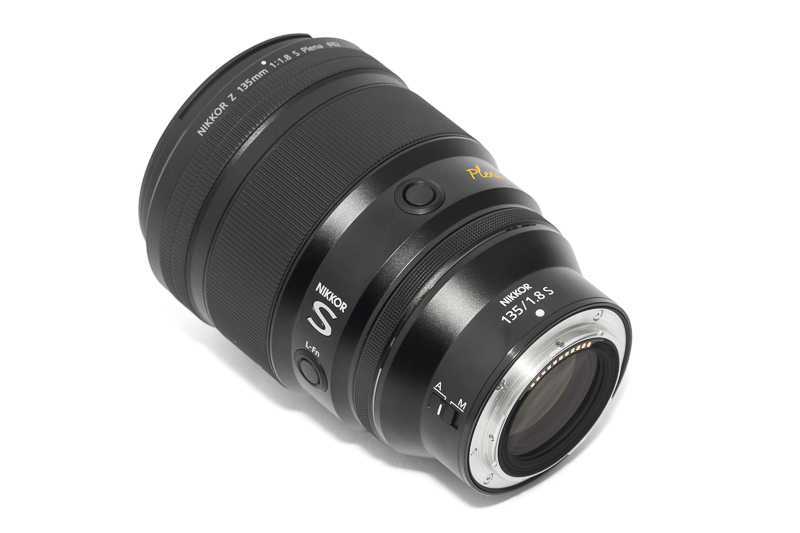
This Nikon Z 135mm 1.8 S Plena features a build very similar to Nikon’s more recent f/1.2 lenses like the Nikon Z 85mm 1.2 S and the Nikon Z 35mm 1.2 S.
The choice of materials is very much typical for Nikon’s Z-mount lenses. It does feel like there are more metal parts under the polycarbonate casing compared to cheaper lenses like the Nikon Z 50mm 1.4, but generally these differences are not huge.
The focus is by wire and if your camera is set to standard values it takes 180° of rotation from the minimum focus distance of 0.82 m to infinity. This did surprise me a bit, as I found the Nikon Z 35mm 1.2 S to not be as accurate in that regard.
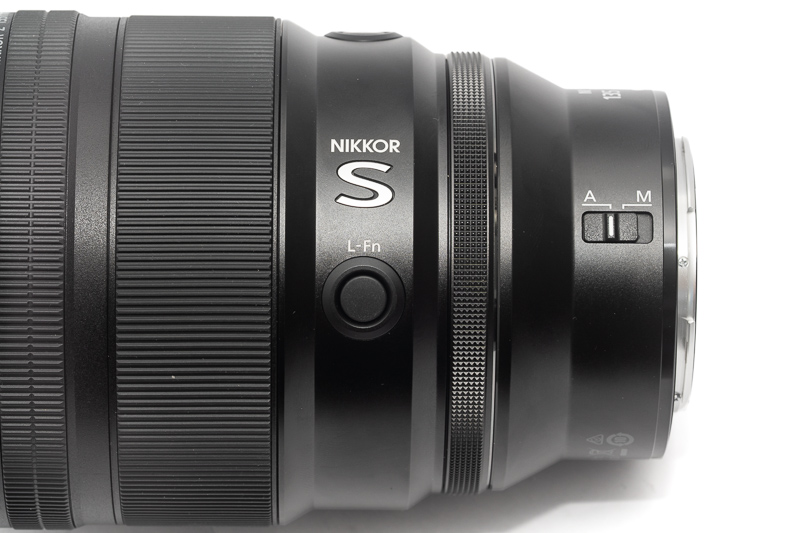
We have two radially oriented “L-Fn” lens buttons, the control ring and close to the bayonet an AF/MF switch. I find that switch to be in a bit of an uncomfortable position and prefer where Nikon placed those on their AF-S lenses. I am also generally not a huge fan of that control ring and would have preferred a dedicated aperture ring as we see it from many other manufacturers like e.g. Sony, Sigma and Viltrox.
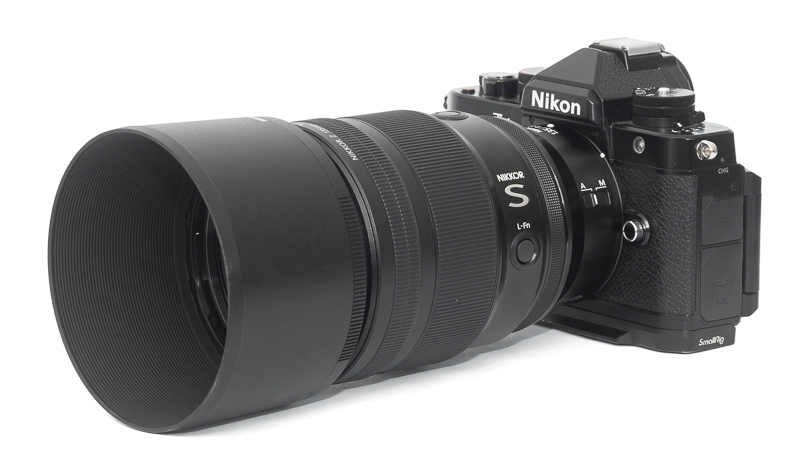
A bayonet style hood is also part of the package. Interestingly it feels a bit sturdier than the one that came with the Nikon Z 35mm 1.2 S and it also has a small button that needs to be pressed to unlock it. The hood of the Sigma 135mm 1.4 DG Art feels sturdier though and that Sigma lens also comes with a detachable tripod foot which is not available for this Nikon lens.
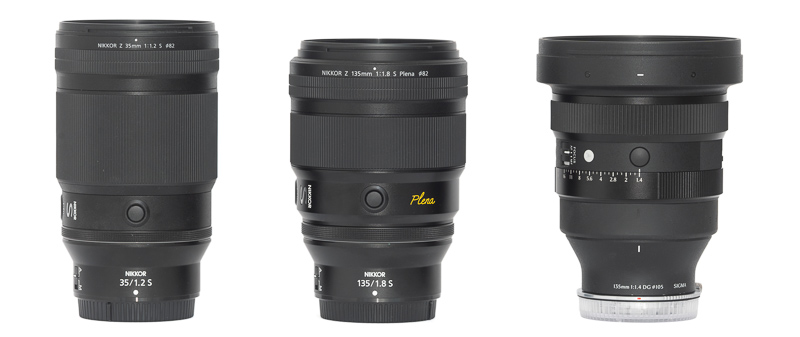
Size and weight of this Nikon Z 135mm 1.8 S Plena are average: very similar to the Sony FE 135mm 1.8 GM and Canon RF 135mm 1.8 L IS USM, a bit heavier than the Samyang AF 135mm 1.8 FE, a bit lighter and smaller than the Viltrox AF 135mm 1.8 LAB FE. The Sigma 135mm 1.4 DG Art needs a bigger front element for that f/1.4 maximum aperture, as can be seen from the picture above.
AF performance
I am not shooting sports or fast moving animals/humans so if you want to know if the lens is fast enough for this, or how it compares to other lenses in this segment, you may have to look for a different review with a more detailed assessment of this aspect.

During the DSLR era the higher end f/1.4 primes were significantly slower than the f/2.8 zooms. According to Nikon’s marketing material back in the day, the faster primes were designed to be more accurate (and they have to be compared to the f/2.8 zooms) whereas the f/2.8 zooms were optimized for speed.
The gap has been closed a bit and the Z primes I tried are definitely faster than the F-mount AF-S G/E primes, but this 135mm is not as blazingly fast as the higher end zooms or even older super tele primes like the Nikon AF-S 200mm 2.0G IF-ED VRI.
For portrait work this lens hardly leaves something to be desired and even the dog jumping around in the sea worked reasonably well, but if AF speed is the most important aspect to you, you might be happier with e.g. the Nikon Z 70-200mm 2.8 VR S II and I also found the Sigma 135mm 1.4 DG Art to focus a bit faster, even when attached to a Z-mount camera via the megadap ETZ21pro+ adapter.
Vignetting
light falloff
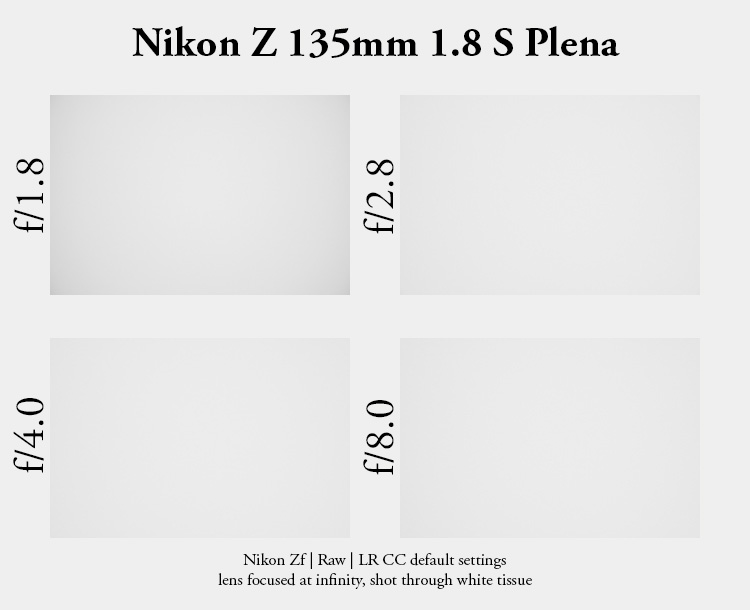
| f/1.8 | 1.0 EV |
| f/2.8 | 0.4 EV |
| f/4.0 - f/16 | 0.3 EV |
The vignetting figures are very low, but then high vignetting isn’t really a problem in 135mm lenses to begin with. This Nikon Z 135mm 1.8 S Plena has about a 0.5 EV advantage over other 135mm 1.8 lenses at its maximum aperture which is surely welcome.
The Sigma 135mm 1.4 DG Art showed 1.1 EV in my tests when stopped down to f/2.0, very similar to the 1.0 EV at f/1.8 we see here. Stopped down to f/2.8 this Nikon has a small advantage again, stopped down further all these lenses have very low, hardly noticeable vignetting.
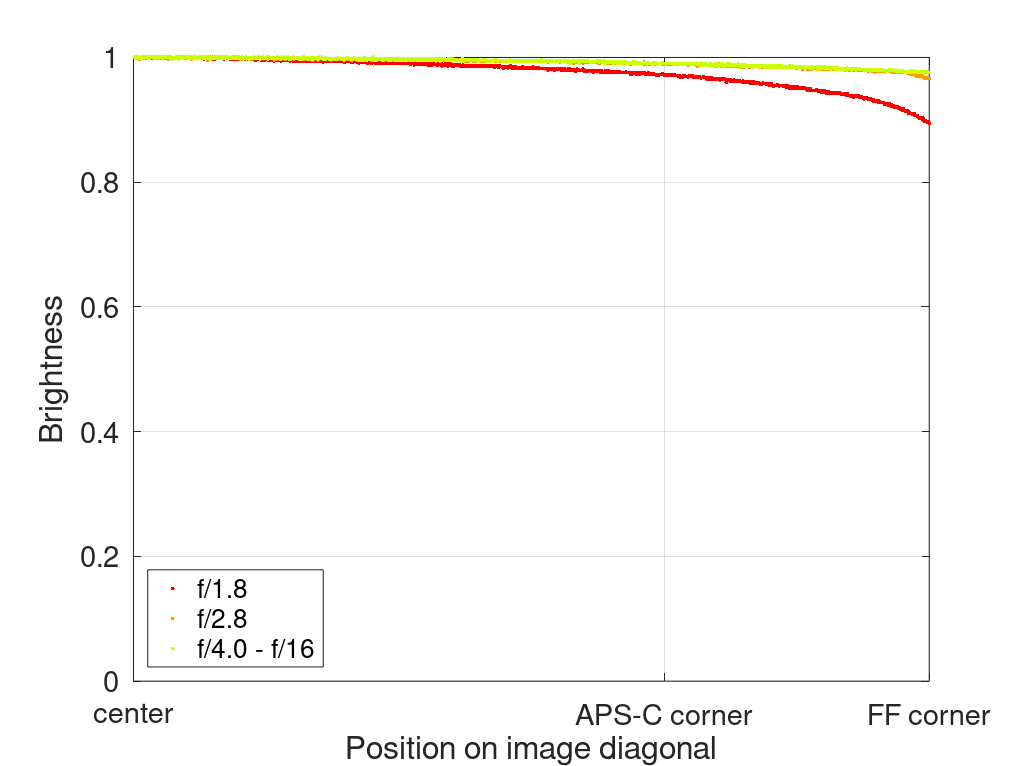
It is recommended to have a look at this article first to get an idea how this brightness graph works.
optical vignetting
Fast lenses usually show a noticeable amount of optical vignetting. Without going too much into technical details optical vignetting leads to the truncation of light circles towards the borders of the frame.
In the center of the frame almost every lens will render a perfect circle, but only lenses with very low optical vignetting will keep this shape in the corners.
So in the following comparison we move from the center (left) to the extreme corner (right) and see how the shape of the light circle changes.


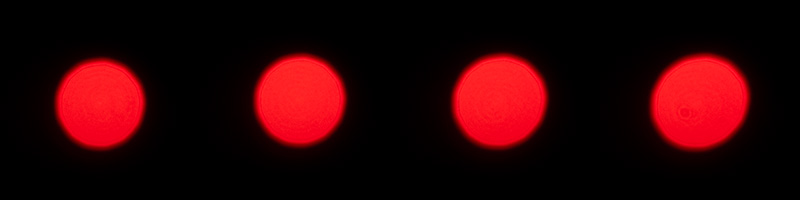

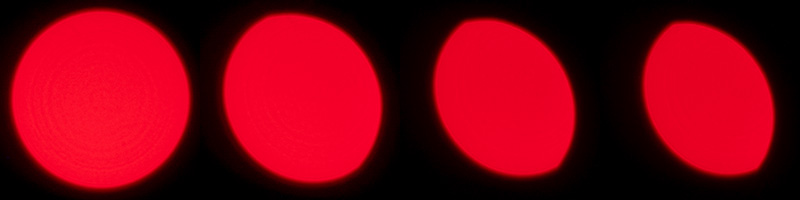
I shot the Nikon Z 135mm 1.8 S Plena and the Sigma 135mm 1.4 DG Art side-by-side and with a test target it was ensured they are both focused at exactly the same distance (2.1 m) so that the sizes of the circles are directly comparable between these two lenses.
In this category the Nikon Z 135mm 1.8 S Plena should excel and in fact it does: of all the fast portrait lenses I ever reviewed it is the one that shows the lowest amount of optical vignetting at its maximum aperture and it does have visibly less than any other 135mm 1.8 lens. Not zero though: we still see a tiny amount of truncation in the corners at this focus distance.
If it wasn’t for the Sigma 135mm 1.4 DG Art, this section would end now with nothing but praise for Nikon’s engineers, but the Sigma does exist, so we should have a look how they compare.
At f/1.4 the Sigma does have stronger optical vignetting than the Nikon at f/1.8, but I was always wondering how they compare at shared apertures. If we compare them at f/1.8, the circles in the corner are actually similarly sized – the Nikon does create a nicer, rounder shape here though. Stopped down to f/2.8 they look practically identical. The Sigma obviously has the advantage of the f/1.4 maximum aperture, creating noticeably stronger blur over most of the frame.
We will continue this discussion in the bokeh section, where we will compare these lenses in the field.
Sharpness
MTF-Graphs
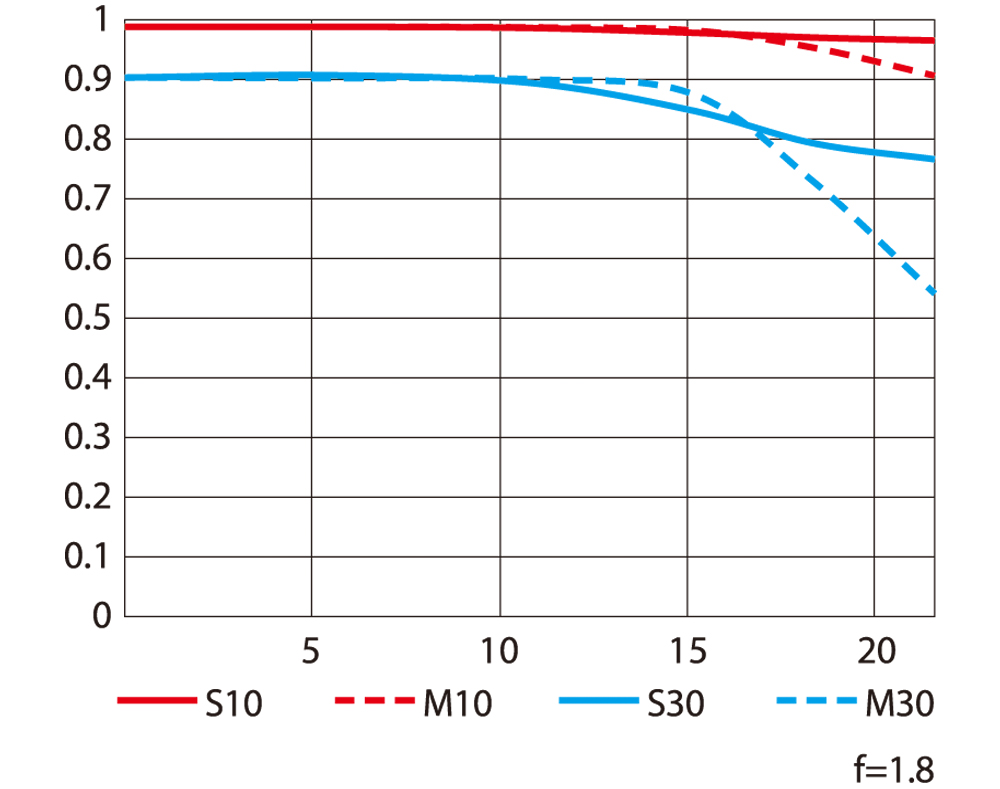
According to these graphs, at infinity we should expect very good performance at f/1.8 with only a minimal drop in contrast (red lines) and a maybe noticeable drop in resolution (blue lines) in the corners.
The closest lens in terms of specifications in Nikon’s lineup is probably the Nikon AF-S 105mm 1.4E from 2016. Being 7 years older it doesn’t come as much of a surprise that this 135mm 1.8 lens easily outperforms in on paper, but let’s see how it performs in the real world in the following sections.
Focus Shift
On mirrorless cameras focus shift isn’t an issue anymore, because they usually focus at working aperture. I still checked and I didn’t see any.
infinity (24mp Nikon Zf)
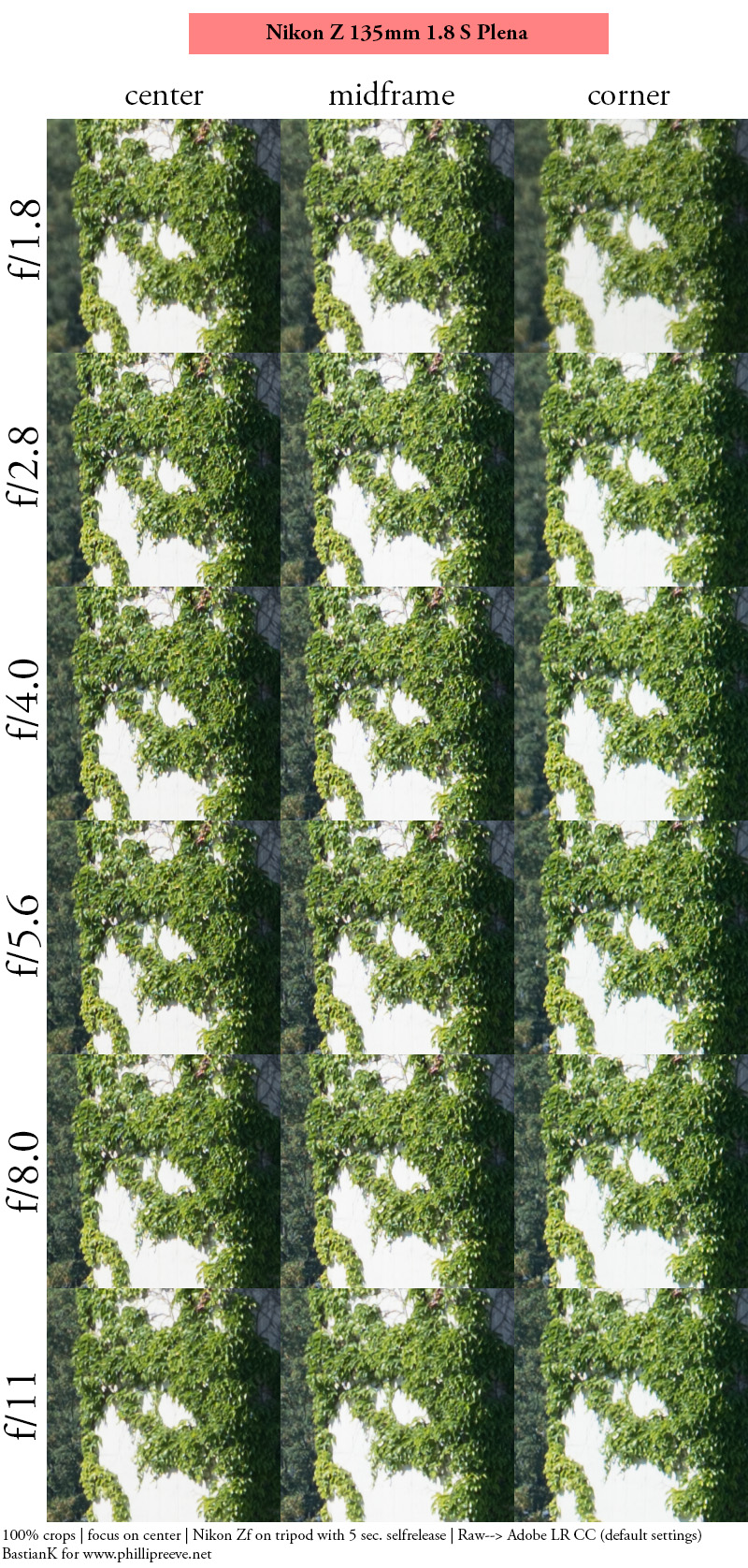
I found this lens to not be as contrasty at f/1.8 as it is stopped down to f/2.8 or further. The Sigma 135mm 1.4 DG Art and the Viltrox AF 135mm 1.8 LAB FE showed a very similar performance at their maximum aperture with the Sigma having a slight advantage at f/2.0 over the other lenses at their maximum f/1.8 aperture setting. The Sony FE 135mm 1.8 GM also looking very good from f/1.8, slightly better than the other f/1.8 lenses.
Heat haze and vibrations can have a big influence with lenses like this.
portrait distance (3.0 m, 24mp Nikon Zf)
For portraiture it isn’t so important how flat the field is, it is more interesting to see what the sharpness is like when focused at different parts of the frame to take field curvature out of the equation.
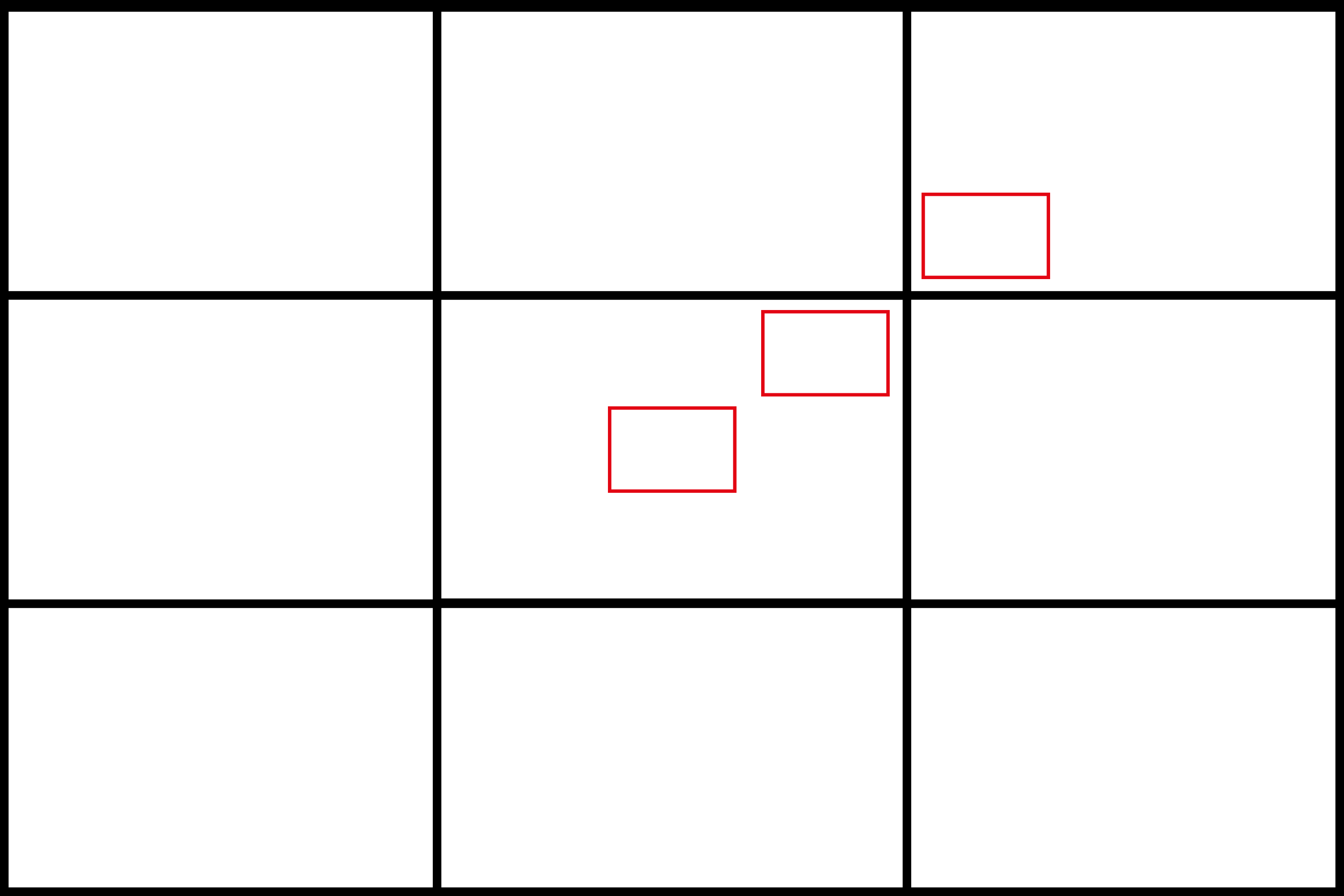
This is what I did here, I refocused for every shot and aperture to get the best possible result at different locations in the frame (center, inner midframe and outer midframe).
Focus distance was roughly 3.0 m and the circle of the dollar bill is more or less the size of a human eye.
f/1.8 <————> f/2.8



Also at portrait distances I see a slight difference between f/1.8 and f/2.8. The slight softness at f/1.8 might actually be a benefit for portraiture though.
Compared to its competitors the situation here is very similar to infinity: Sigma 135mm 1.4 DG Art and the Viltrox AF 135mm 1.8 LAB FE showed a very similar performance at their maximum aperture with the Sigma having a slight advantage at f/2.0 over the other lenses at their maximum f/1.8 aperture setting.
close (0.82 m, 1:4.9, 24mp Nikon Zf)



The Sony FE 135mm 1.8 GM, Samyang AF 135mm 1.8 FE and Viltrox AF 135mm 1.8 FE LAB all offer a maximum magnification of 1:4.0 whereas the Sigma 135mm 1.4 DG Art has a bit of a weak spot only offering 1:6.4 and also being a bit weaker at f/1.4 to f/2.0.
With its 1:4.9 magnification this 135mm 1.8 Plena sits inbetween, in terms of performance it hardy leaves something to be desired at close distances though.
Flare resistance
As always evaluating flare is a complex matter since you can get any lens to look bad if you push it hard enough and a slight change of scenario can affect results a lot.
Fast tele lenses haven’t been exactly great performers in this category with only a few exceptions (like the Sigma 135mm 1.4 DG Art).
In the feature list of this lens, Nikon mentions no less than three different coatings supposed to improve the performance in this category. So nothing can go wrong here, right?
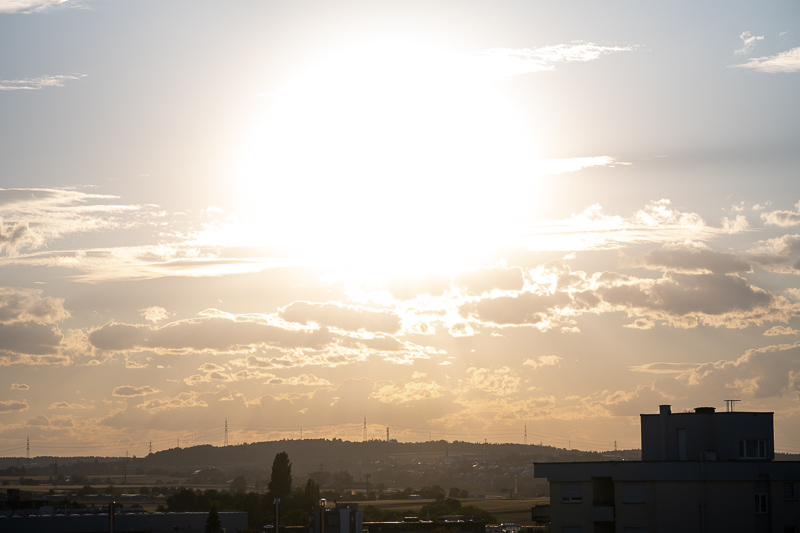


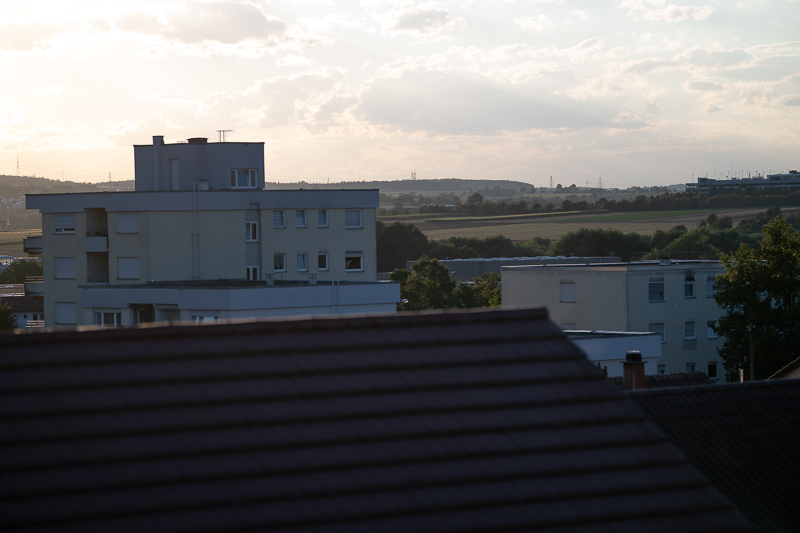
At the maximum aperture only specific positions of the sun lead to artefacts and even veiling flare isn’t much of an issue.


Stopped down the situation is very similar with essentially the same small ghost appearing with the same position of the light source in the frame.
Going by these staged scenarios, this is one of the better performances I have seen from a fast tele lens.
Coma
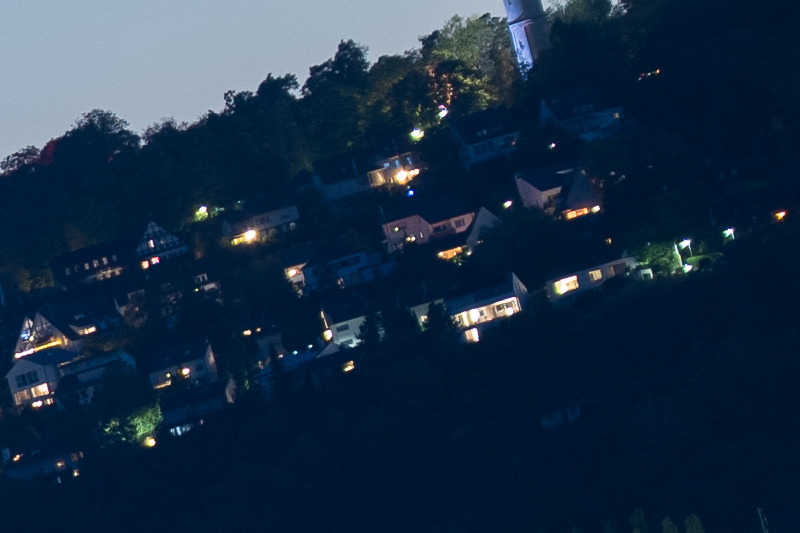


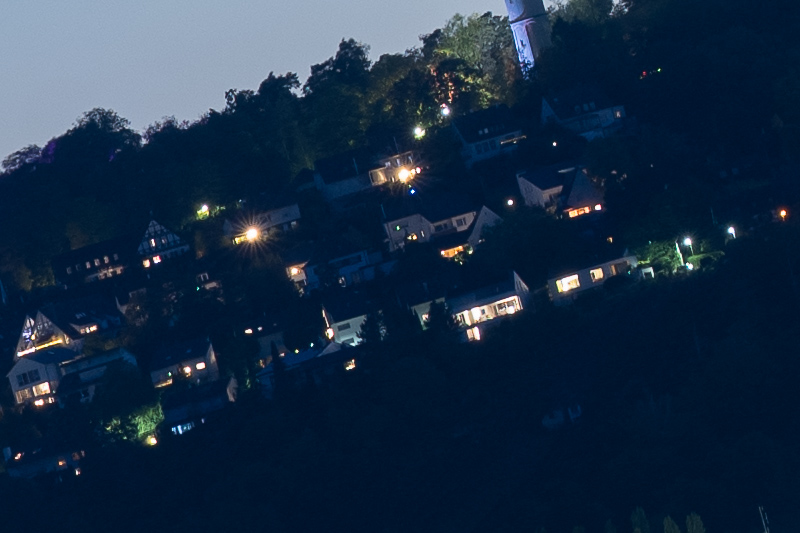
All the modern fast 135mm full-frame lenses perform really well in this category and the Nikon Z 135mm 1.8 S Plena is no exception.
Distortion
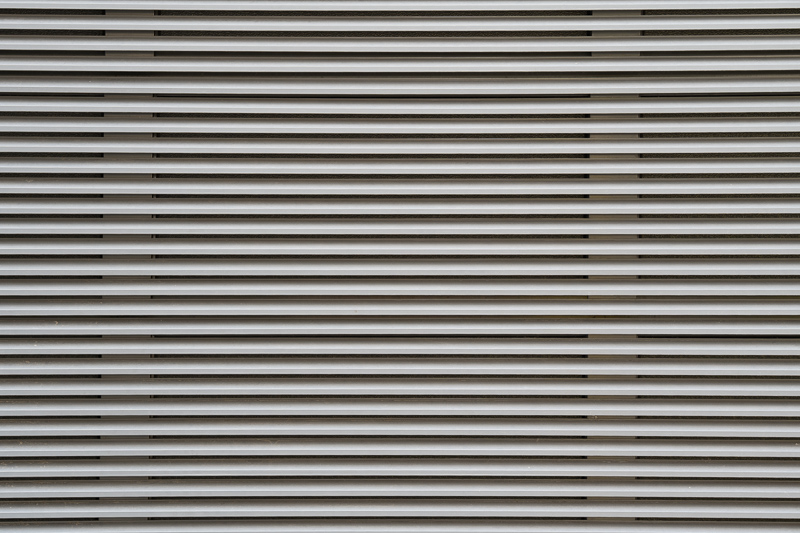

The Nikon Z 135mm 1.8 S Plena shows some mostly uniform pincushion distortion. Correction profiles are available, in Adobe LR/PS you can also dial in -4 to correct this. The Sigma 135mm 1.4 DG Art showed stronger pincushion distortion (needs -7 to correct) whereas the Sony FE 135mm 1.8 GM and the Viltrox AF 135mm 1.8 LAB only show very little distortion.
Bokeh

The unique sales point of this lens is the low optical vignetting supposed to lead to a more natural and homogeneous background bokeh, so that is what we will focus on in this section.
Close distance




At close distances we definitely see the low optical vignetting to great effect and this is an advantage over the other 135mm 1.8 lenses.
Medium distance


At mid distances this still holds true, but complex backgrounds are being rendered a bit more nervous than I prefer.
Long distance




Long focus distances are actually where these fast tele lenses can shine, as they still allow for a decent amount of subject separation even with the main subject being farther away. The point light sources are indeed being rendered nicely, but complex backgrounds look a bit busier than I like to see.
At the end of this section we will see how this Nikon lens compares to the faster Sigma 135mm 1.4 DG Art.
Brenizer/Bokehpanoramas

Thanks to its low (optical) vignetting this lens is also a very good choice for Brenizer/Bokehpanoramas.
Compared to: Sigma 135mm 1.4 DG Art
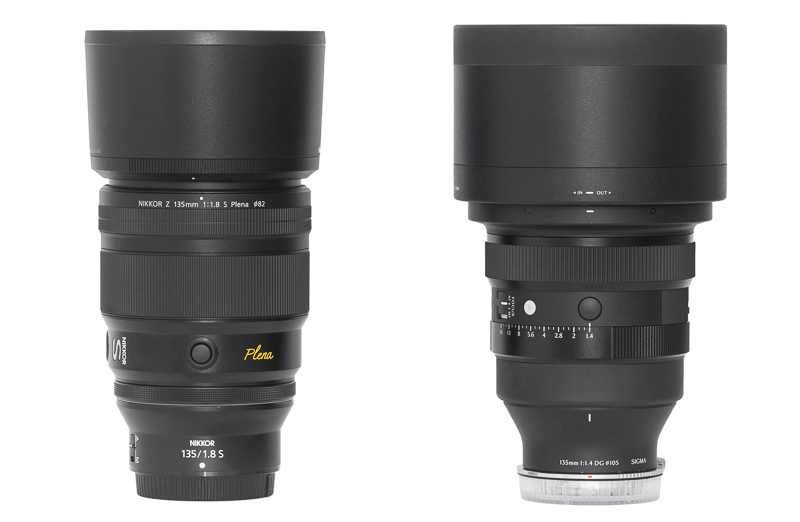
The Sigma 135mm 1.4 DG Art is one of the craziest lenses Sigma ever released and you can read everything you need to know about it in my review. Let’s find out who creates the nicer bokeh: the faster Sigma or the optimized-for-low-optical-vignetting Nikon.
Scene 1: Forest Close Distance



Scene 2: Forest Close Distance






Scene 3: Forest Mid Distance





Scene 4: Forest Mid Distance



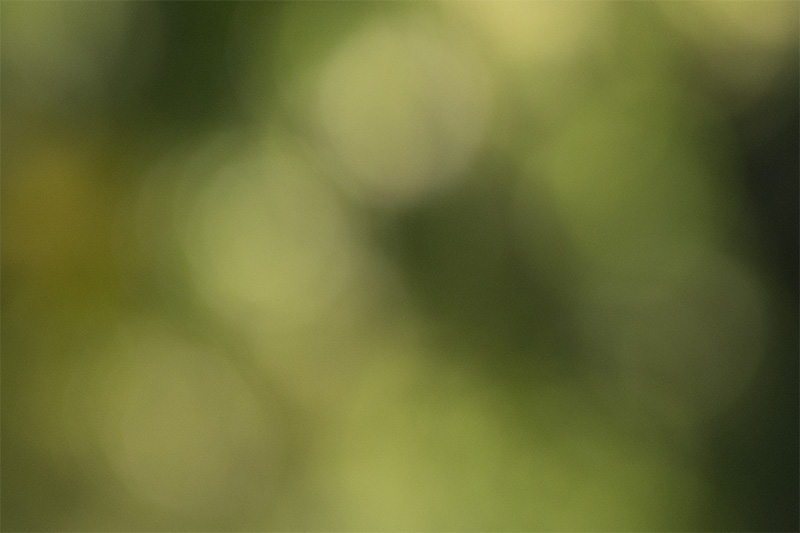
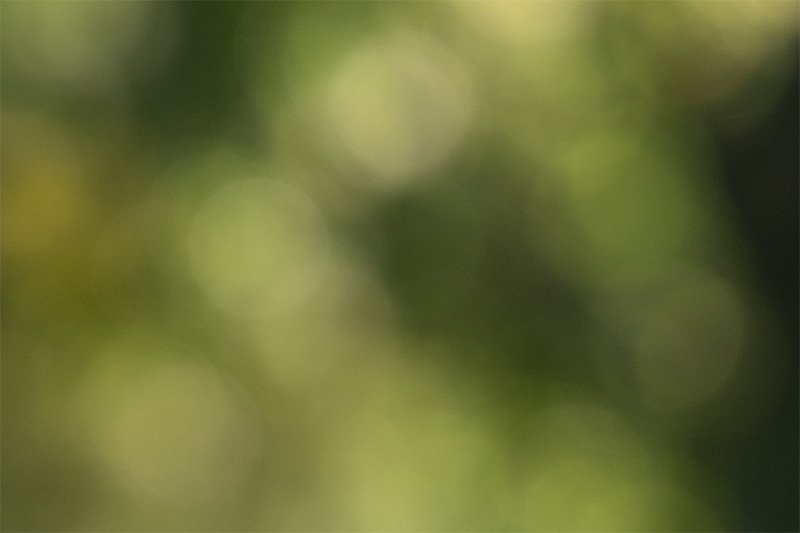
Scene 5: Forest Mid Distance






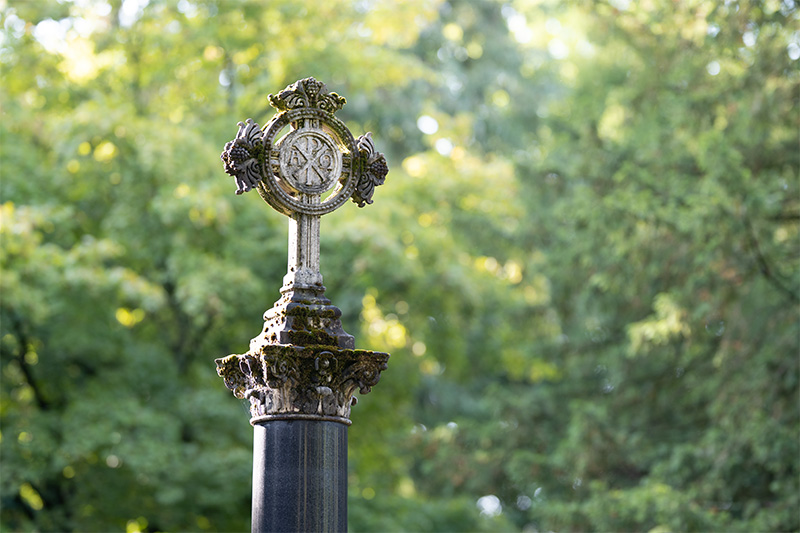
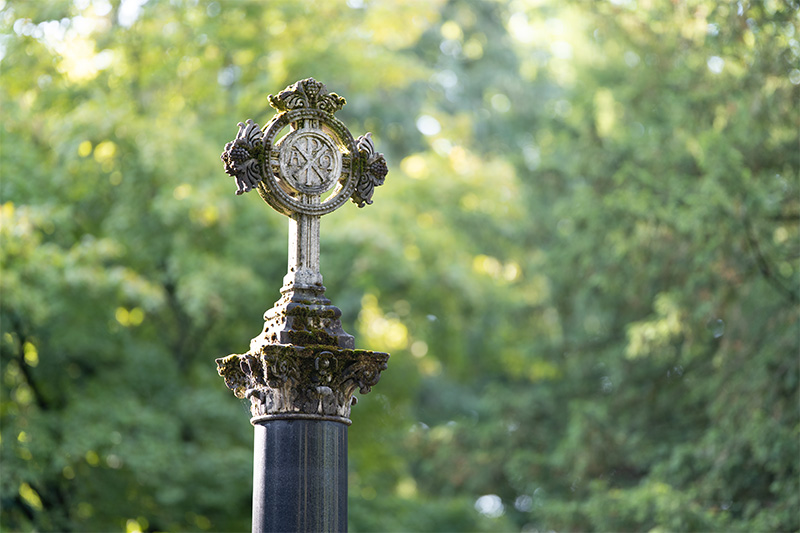
Scene 6: Forest Long Distance
Scene 7: City Lights Close Distance



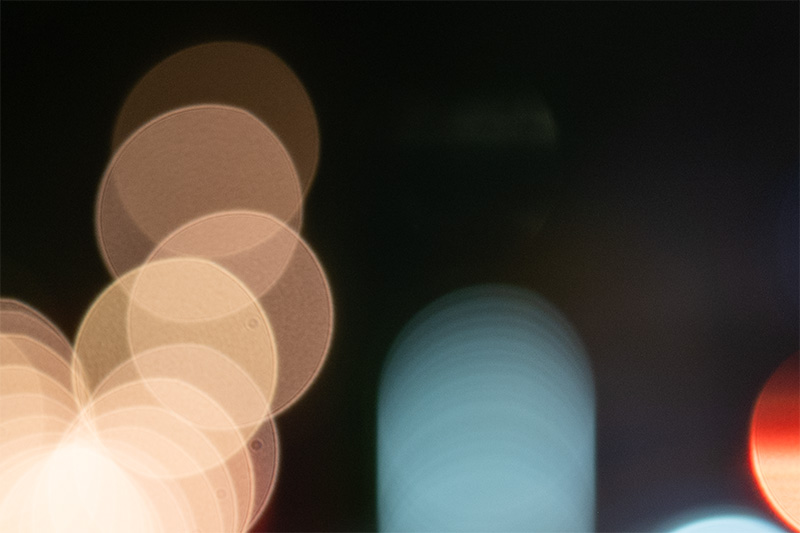
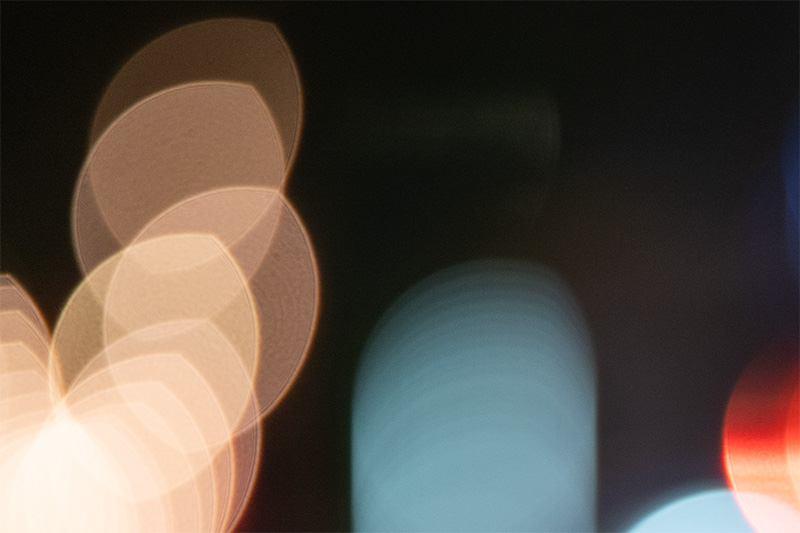
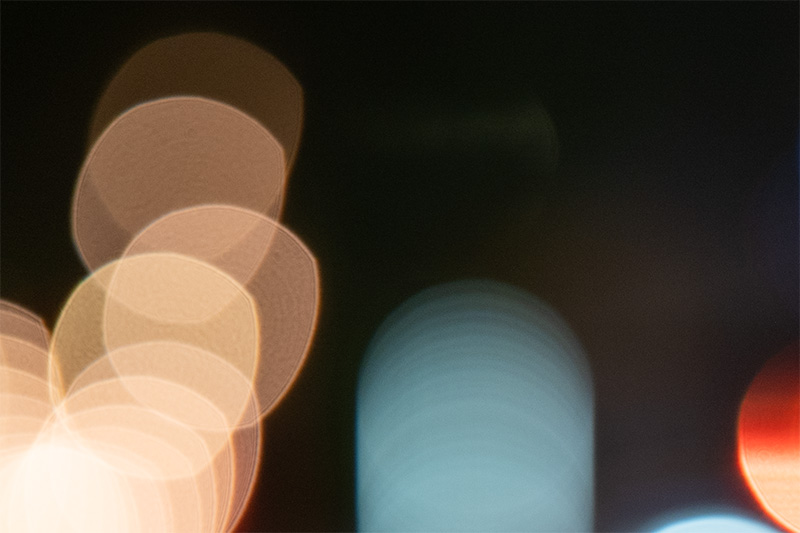
Scene 8: City Lights Mid Distance






Scene 9: City Lights Long Distance
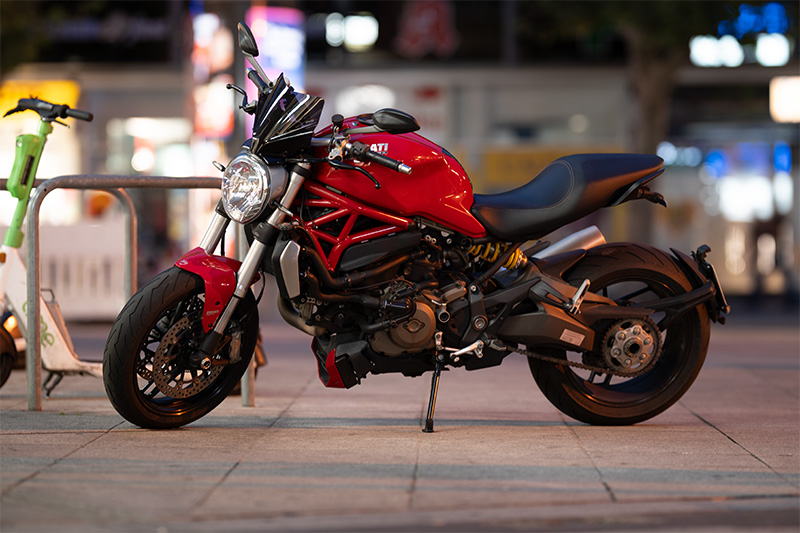
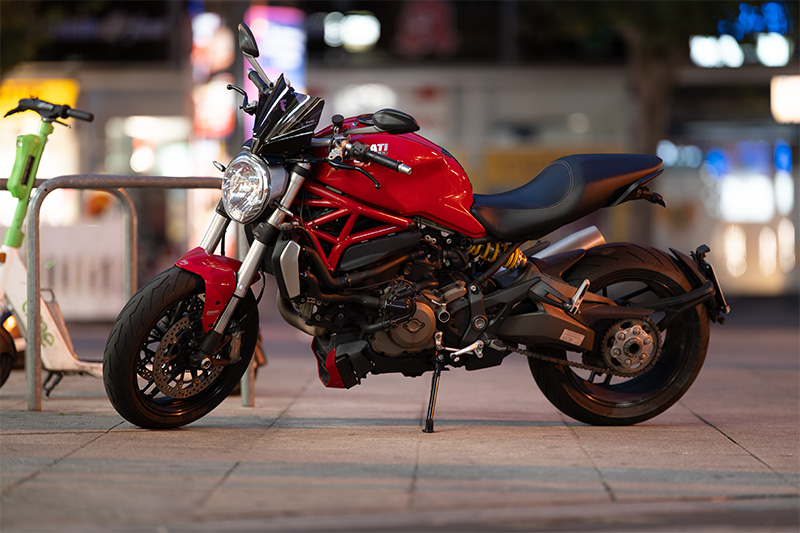
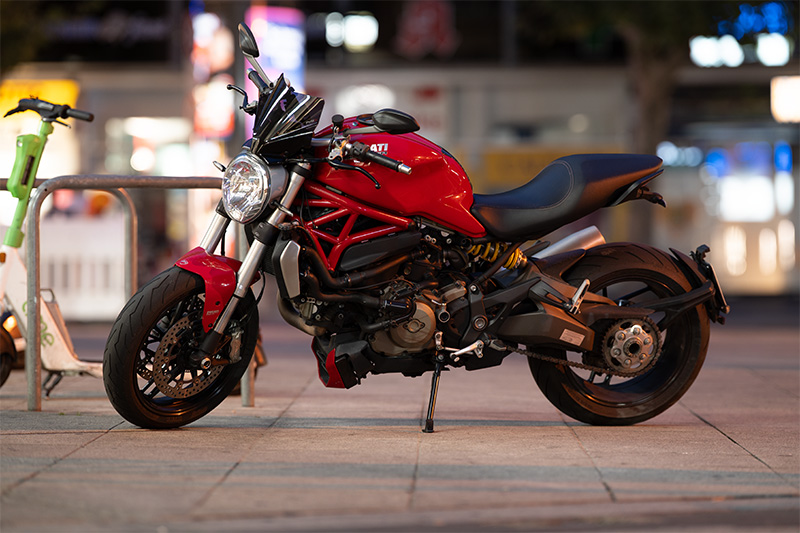


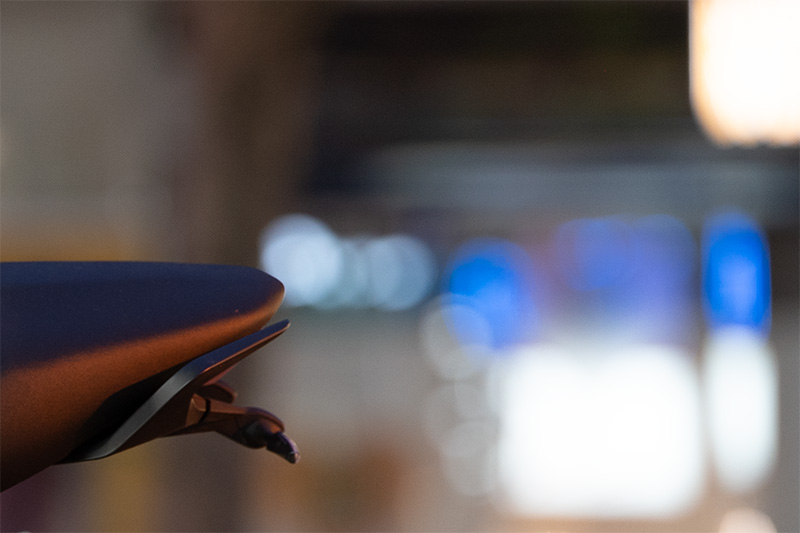
Observations
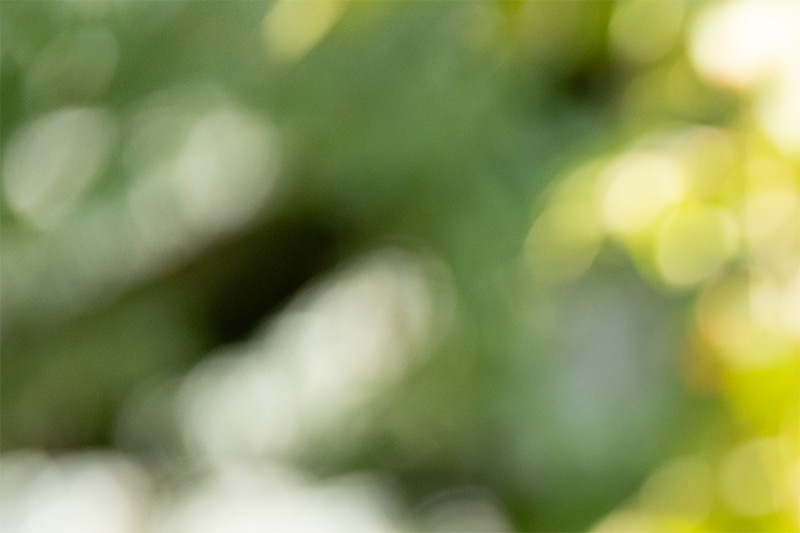
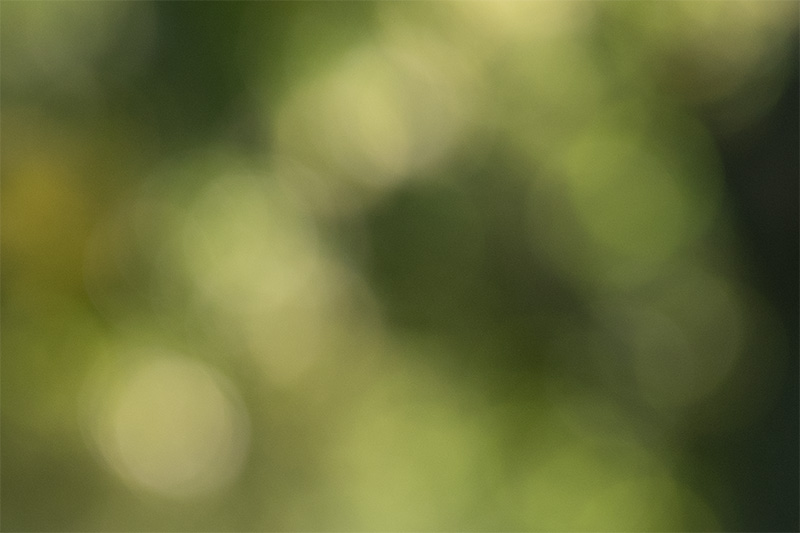
Let us first compare the Nikon to the Sigma with both lenses set to f/1.8. In Scenes 3 and 7 the Nikon does create rounder highlights in the corners, but as can be seen in Scene 5, 7, 8 and 9 they are not necessarily bigger.
If we look at the center of the frame the Sigma actually looks a tiny bit smoother to me, but not enough to get excited about. Those differences are so minor, they wouldn’t be visible without a direct comparison.
Looking at the pictures as a whole, only in Scenes 3 and 7 I see the Plena having a slight advantage compared to the Sigma lens when stopped down to f/1.8. I see no relevant differences in terms of contrast and resolution.
Now if we compare both lenses at their maximum aperture, the Sigma’s faster f/1.4 setting makes a huge difference in many of the scenes, creating noticeably stronger blur compared to the slower Plena.
I Scenes 3, 5 and 7 we could argue that the Plena creates rounder highlights in the corners, but for me personally that doesn’t outweigh the huge differences in the central part of the frame and the generally smoother rendering of the Sigma lens.
Sunstars


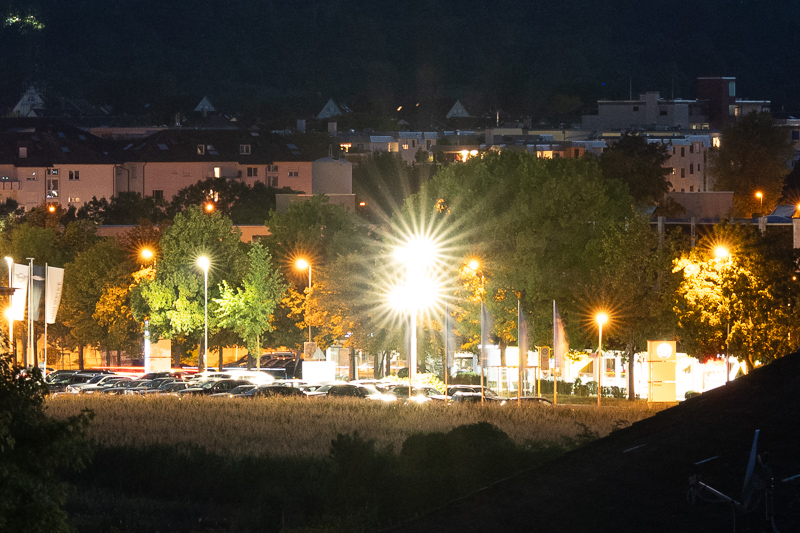


Nikon chose 11 rounded aperture blades, just as Viltrox and Sony did for their 135mm 1.8 lenses. Similar to the Viltrox AF 135mm 1.8 FE LAB I reviewed, also here the alignment of the blades isn’t very exact though, so the sunstars look a bit frayed unless stopped down to f/11, better f/16. However, I don’t think many people will be primarily using a 135mm 1.8 for blue hour architecture shooting, so that shouldn’t really be an issue. The Sigma 135mm 1.4 DG Art with its 13 rounded aperture blades creates even less well defined sunstars.
If you want to learn more about this topic have a look at this article.
Chromatic aberration
lateral
The Nikon Z 135mm 1.8 S Plena features a built-in lens correction profile for lateral CA that will be recognized and automatically applied in most raw converters.
longitudinal

While most of Nikon’s AF-S era lenses had some issues in this category, that is not the case here: this lens is perfectly corrected and if there was an Apo tag on this lens, it would be well deserved.
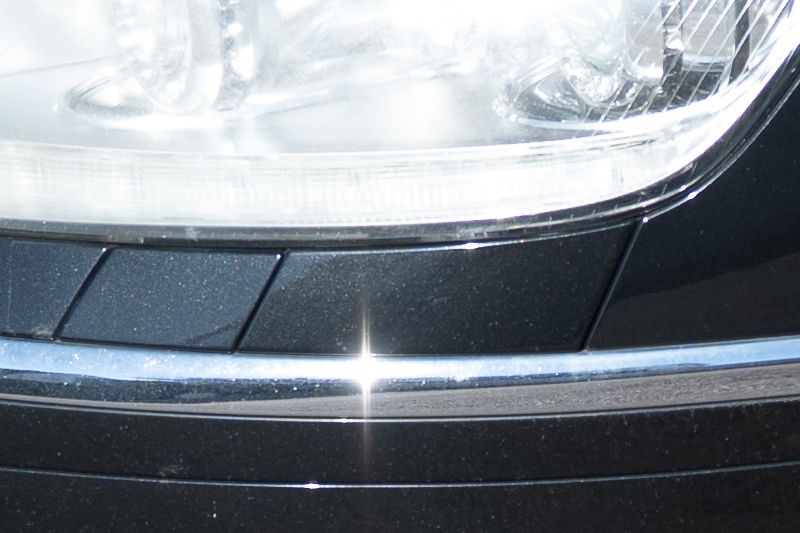
That being said, all the modern fast 135mm lenses perform similarly well here.

Conclusion
good
|
average
|
not good
|
Nikon made the promise of very low optical vignetting with this “Plena” lens and they delivered on that promise. Compared to all the other 135mm 1.8 lenses this is a clear advantage leading to visibly more natural and homogeneous bokeh.
Looking at the table above it also becomes obvious this is generally a well rounded lens without any outstanding flaws – except for its steep price of course – and I am pretty sure whoever buys this lens will be very happy with the results coming from it.
Not taking its price into account, this Nikon Z 135mm 1.8 S Plena would be my clear choice among all the 135mm 1.8 lenses, as I highly value that low optical vignetting.
However, the faster Sigma 135mm 1.4 DG Art is the more impressive 135mm lens in my opinion. Stopped down to f/1.8 it almost matches the low amount of optical vignetting of this Plena lens while at the same time it offers a very impressive f/1.4 setting, able to create a look that demanded taking a bokeh panorama with a 200mm 2.0 lens not that long ago. This leads me to an important note to Nikon’s engineers: if you make a Plena lens, make sure it is the fastest lens in class.
buy from amazon.com | amazon.de | ebay.com | ebay.de | B&H (advertisement/affiliate links) for $2597
Alternatives
Z-mount
Viltrox AF 135mm 1.8 LAB:
The Viltrox AF 135mm 1.8 LAB is a good performer and a bargain compared to this Nikon Plena lens, but compared to other current 135mm 1.8 lenses it is simply too big and heavy.
buy from manufacturer’s shop | Pergear | Amazon.com | Amazon.de | ebay.com | ebay.de | B&H (advertisement/affiliate links) for $899
7Artisans AF 135mm 1.8 MAX:
The 7Artisans 135mm 1.8 Max is now the cheapest 135mm 1.8 AF lens and it performs much better than you might expect. It doesn’t manage to outperform this Nikon Plena lens, it doesn’t offer its signature low optical vignetting but for the ~$700 it is more than capable.
buy from manufacturer’s shop | Amazon.com | Amazon.de | ebay.com | ebay.de | B&H (advertisement/affiliate links) for $689
E-mount
Sigma 135mm 1.4 DG Art:
This is my fast 135mm lens of choice these days as already mentioned before.
buy from Amazon.com | Amazon.de | ebay.com | ebay.de | B&H (advertisement/affiliate links) for $1899
Sony FE 135mm 1.8 GM:
Sony’s own 135mm 1.8 is a nearly flawless lens. Sharpness and AF are top level in terms of bokeh rendering it is no match to this Plena or the aforementioned Sigma lens though.
buy from amazon.com | amazon.de | ebay.com | ebay.de | B&H (advertisement/affiliate links) for $1599
Samyang 135mm 1.8 AF:
This is by far the lightest of the 135mm 1.8 mirrorless designs and one of the cheapest. A good alternative if you don’t care so much about the optical vignetting, but be sure to also check out the 7Artisans 135mm 1.8 Max.
buy from amazon.com | amazon.de | ebay.com | ebay.de | B&H (advertisement/affiliate links) for $799
Sample Images






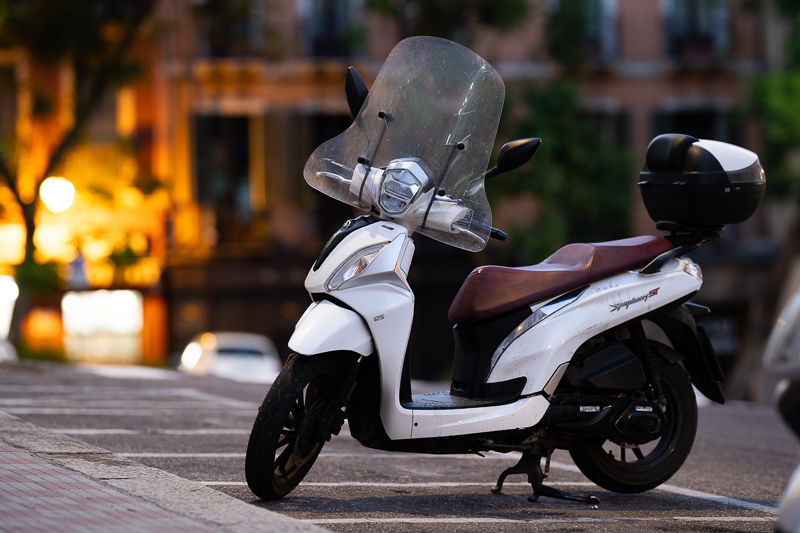





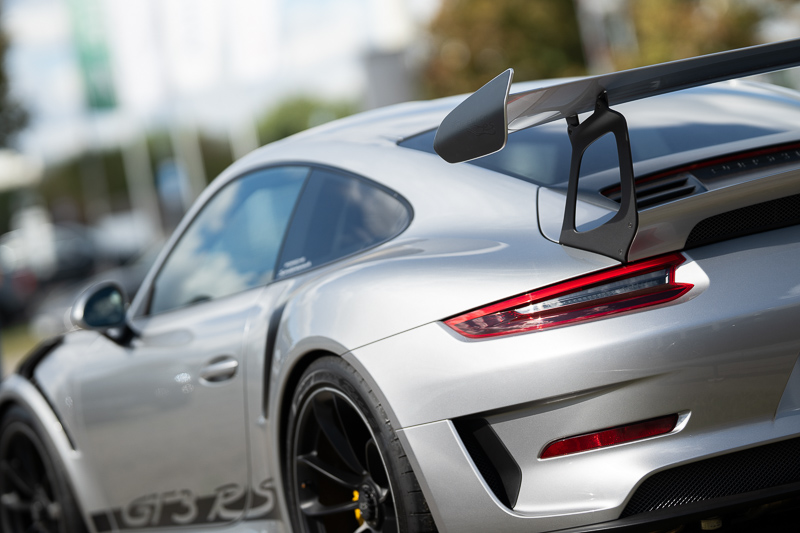

You can find many of the sample images in full resolution here.
Further Reading
- Guide to 85-135mm Portrait lenses
- Review: Nikon Z 35mm 1.2 S Nikkor
- Review: Nikon Z 58mm 0.95 S Noct-Nikkor
- Review: Laowa AF 200mm 2.0 C-Dreamer
- Bokeh explained
Support Us
Did you find this article useful or just liked reading it? Treat us to a coffee!

 via Paypal
This site contains advertisement/affiliate links. If you make a purchase using any of the links marked as advertisement/affiliate links, I may receive a small commission at no additional cost to you. This helps support the creation of future content.


Latest posts by BastianK (see all)
- Review: Nikon Z 135mm 1.8 S Plena - September 23, 2026
- Review: Light Lens Lab 35mm 1.4 Aspherical “11873” - September 19, 2026
- Analogue Adventures – Part 57: Bern - September 9, 2026
Great review, the bokeh comparison part especially!
The Sigma looks in most scenes more pleasing to my eyes even at 1.8 setting. The difference is almost negligible, but there is a very slight shift in contrast and/or exposure and color balance which is maybe the source of the feeling. Sigma looks more neutral or even colder, but I like the result more anyway. Despite the clearly rounder bokehballs in the corners with the Plena. One has to decide if hauling the 300g heavier and bulkier(105 mm vs 82 mm filter thread) Sigma is woth it. For me it is. And the significantly lower price is one of the reasons too.
Nikon has produced outstanding lens anyway. I am most impressed by today’s lenses aberations control. It used to be be a very special lens treat to a degree when you can not spot any trace of it. Not long ago. And now even Chinese producers are able to make lenses like that. The progress has gone a long way in a short time. 🙂
I share your points of view here 🙂
First true direct comparison between these two.
Onece again, great job!
Personally I prefer some characters on the lens when shooting wide open, swirly bokeh, cat eye, etc.
On the Sigma lens you have Plena when stopped down to f1.8 and wide open you get some nice extra separation plus “character” (cat eye) but still with superb optical quality.
But if you want lighter lens Plena is the way to go.