Introduction

This is a review of Nikon’s latest fast wideangle lens and how it performs on Sony’s A7 series. It may come as quite a surprise, as I usually prefer using (and reviewing) rangefinder lenses on my A7s.
Sample Images


This is a review of Nikon’s latest fast wideangle lens and how it performs on Sony’s A7 series. It may come as quite a surprise, as I usually prefer using (and reviewing) rangefinder lenses on my A7s.


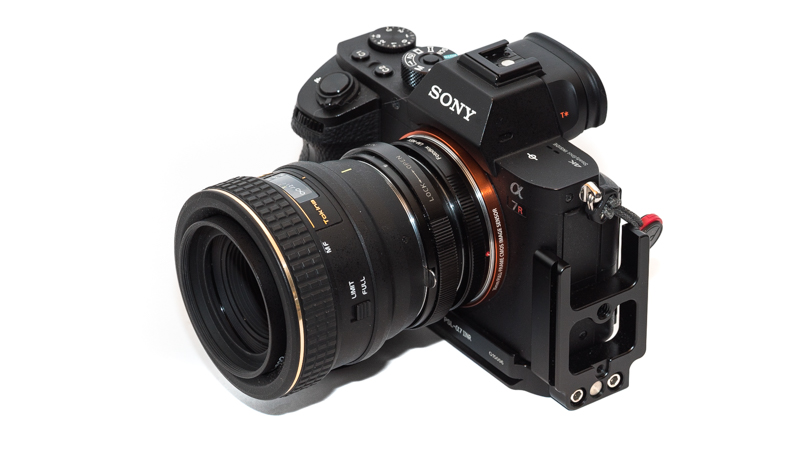
In this short article I will explain how to adapt Nikon G lenses (which do not feature an aperture ring) to Sony A7 series cameras.
Update 05/18/17: thoughts on Rayqual adapter added
Continue reading How to adapt Nikon G lenses to Sony A7 cameras

The specs of the Carl Zeiss Sonnar 2.8/90 sound great: Small, cheap, it’s from Zeiss so it should be very sharp and with the right adapter it even offers AF on the a7II! So how will it actually perform? Read on if you want to know.
Thanks to Uwe for loaning me the lens and Techart adapter for this review!


Continue reading Review: Zeiss Sonnar 2.8/90 T* on Sony a7II
Since the introduction of the Contax Distagon 2.8/21 in the early 1990’s, the 21mm lenses from Zeiss have a long and glorious history of being some of the best wide angle lenses in the world. While the Loxia 2.0/35 and the Loxia 2.0/50 are refined ZM-Designs, the Zeiss Loxia 2.8/21 is the first Loxia lens that features a new optical design. Lets have a look if the Loxia 2.8/21 can keep the heritage alive.
31/05/17 Update by Bastian: I have been using this lens regularly for a year now and Jannik asked me if there is anything I would like to contribute to his review, so I added a few notes and sample images.


| Diameter | 63mm |
|---|---|
| Length | 40mm |
| Filter Thread | 55mm |
| Weight | 245g |
| Max. Magnification | 1:6.6 |
| Close Focusing Distance from the sensor | 45cm |
| Close Focusing Distance from the front of the lens | 36 |
| Number of aperture blades | 6 |
| Elements/ Groups | 7 |
Price: (July 2016): about 50€ in good condition at ebay.de or $ at ebay.com (affiliate links).
Minolta made three optically different 1.4/50 lenses.
For more technical details visit the Minolta SR lens index.
Builts quality is very good, only the name plate and aperture ring are made from plastic, the rest is made from metal.
All in all it is a rather small lens and it balances very well on the Sony a7. The original lens shade is made from plastics, has a decent size and isn’t too bulky. Because the front element is rather exposed I would recommend using it.
The focusing ring travels around 100° from 45cm to 1m and a further 60° to infinity. The focusing has just the right amount of resistance but it is a bit small (8mm) for my taste.
The aperture ring has half stops from f/2.0 to f/16 and no stop between f/1.4 and f/2.0.


You can find many more samples in this flickr set.
These results are based on the use with a Sony Alpha 7.


Minolta MC 1.2/58: Quite a bit smoother bokeh and 8, not just 6 aperture blades make it a superior lens when bokeh is important. Sharpness is similar, the 1.4/50 might be a tad better. It also costs about 6 times as much and is nearly 150g heavier.
Minolta MC 1.7/55: Not as sharp at wider apertures but it has nicer bokeh and is a bit smaller.
Minolta MD 2/50: Worse bokeh but it is sharp across most of the frame from f/2, very small and only weights half of the MC 1.4/50. This is reflected in the build quality though. It is also free of lateral CA and distortion which the 1.4/50 is not.
Zeiss C/Y Planar 1.4/50: The Planar has more effective coatings which results in a much better flare resistance and higher contrast at wider apertures. The Minolta is a lot cheaper though.
Canon nFD 1.4/50: The Canon is quite a bit sharper at f/1.4 and f/2 but and it doesn’t feel nearly as solid. Price is similar.
Zeiss Loxia 2/50: A modern lens which is sharp across the frame from f/2 with high contrast and exif transmission. Bokeh is the only real weakness I found. Oh an the price of course.
Sony FE 1.8/55 ZA: The Sony is super sharp from f/1.8 and it has much smoother bokeh. Manual focus is a pain in the a** though and it is expensive.
A typical 1.4/50 lens: Rather soft wide open, good for portraits by f/2, excellent by f/2.8 but it needs to be stopped down to f/8 for landscapes.

f/2.8 or maybe f/2.4
f/4 – very good sharpness with a notable drop in the far corners


Further Reading
For more Minolta lenses check out my Minolta list.
To learn about manual lenses in general this beginners guide might be helpful.
This site contains affiliate links. If you make a purchase using any of the links marked as affiliate links, I may receive a small commission at no additional cost to you. This helps support the creation of future content.