Introduction
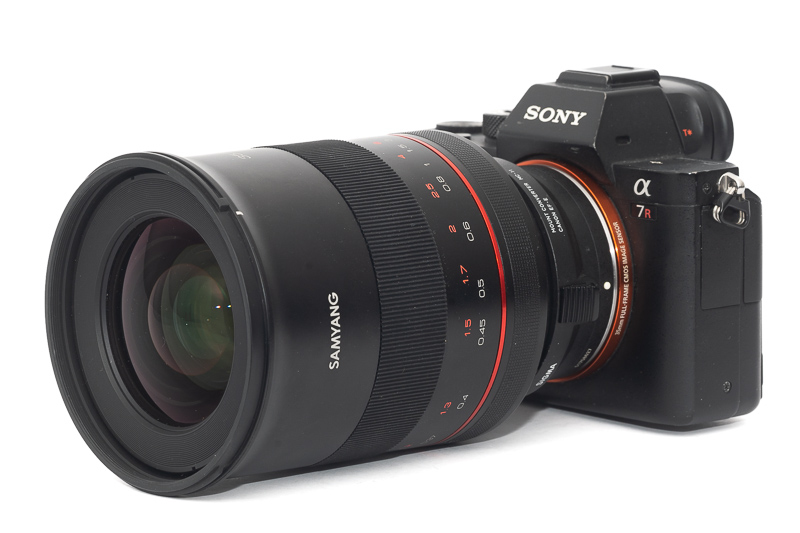
In 2019 Samyang relesased this Samyang 35mm 1.2 XP. At that time, I honestly didn’t care much about it, because Sigma also released their Sigma 35mm 1.2 Art DG DN mirrorless design, which actually offered AF, making it a more sensible choice. This Samyang 35mm 1.2 XP is one of only two fullframe 35mm 1.2 lenses for EF-mount (or any (D)SLR mount actually) though, reason enough to have a closer look at it.
Sample Images




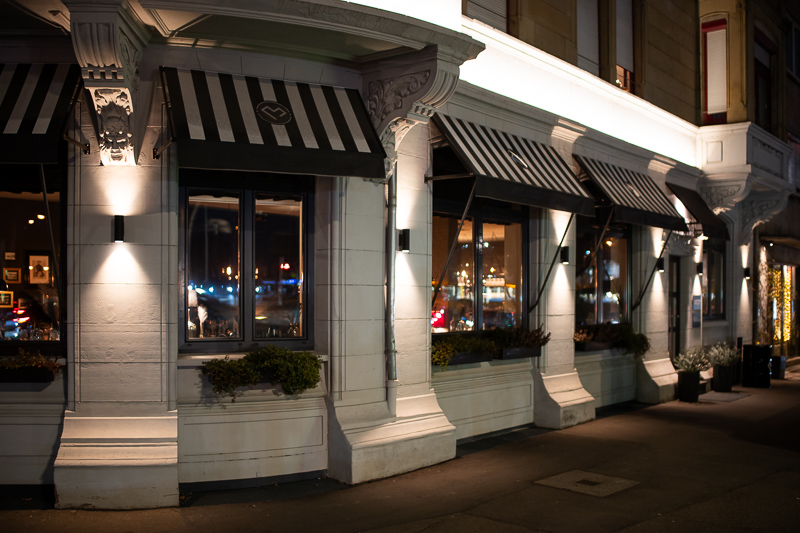

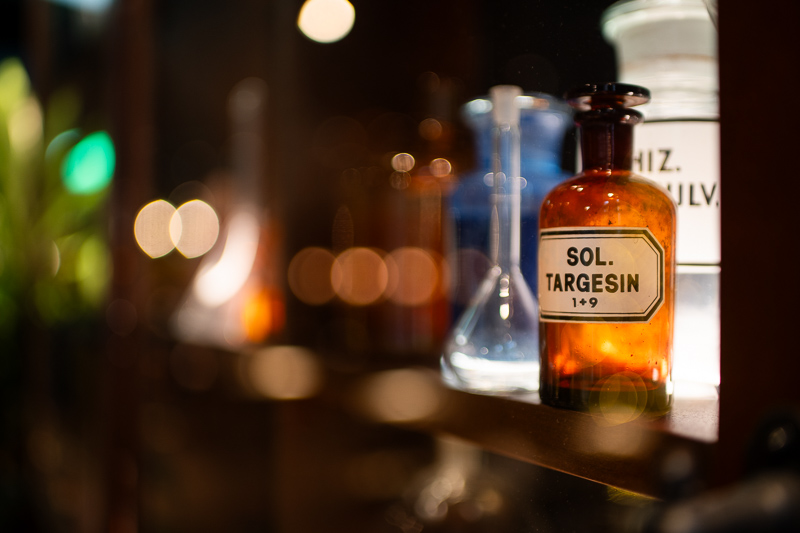

Most of the sample images in this review can be found in full resolution here.
Specifications
This Samyang 35mm 1.2 XP has the following specifications:
-
- Diameter: 93 mm
- Field of view: 64.5° (diagonally)
- Length: 117 mm
- Weight: 1103g (without hood[55g] and caps)
- Filter Diameter: 86 mm
- Number of Aperture Blades: 9 (rounded)
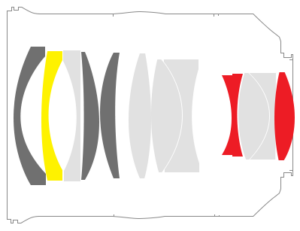
- Elements/Groups: 12/10

- Close Focusing Distance: 0.34 m
- Maximum Magnification: 1:6.1
- Mount: Canon EF
you can buy this lens from amazon.com | amazon.de | B&H | ebay.com | ebay.de (advertisement/affiliate links) for about $799
Handling/Build quality
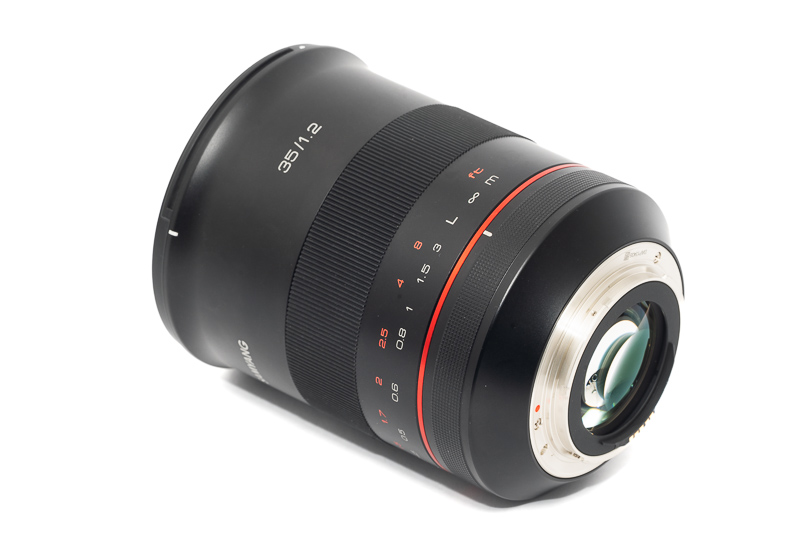
If you had a look at my revies of the other Samyang XP lenses like the Samyang 50mm 1.2 XP and the Samyang 10mm 3.5 XP before, you will spot many similarities here.
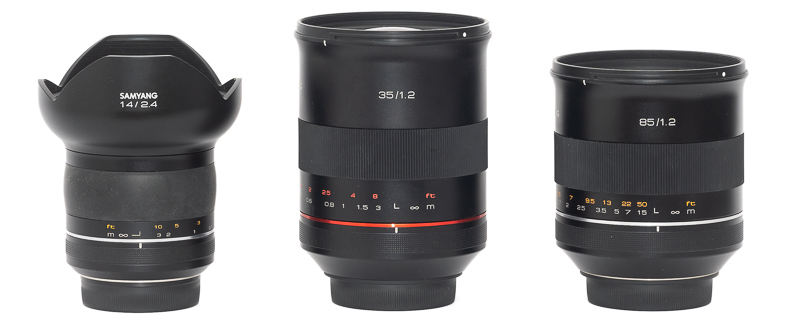
The outer design of the XP series lenses resembles that of the Zeiss Otus, Milvus and Batis lenses and the big rubberized focus ring is the only manual control we have. It turns a little over 180° from the minimum focus distance of 0.34 m to infinity and has a nice, high resistance.
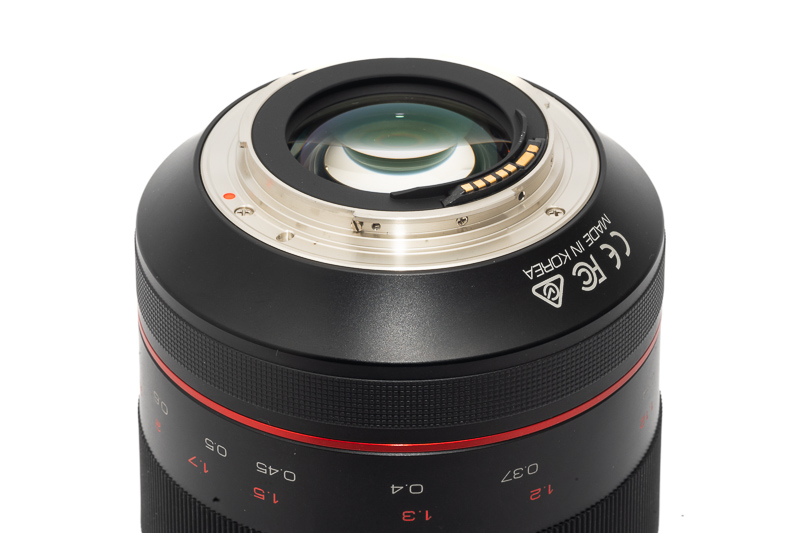
This is an EF-mount lens with electronic contacts and electronically controlled aperture diaphragm.

Also a bayonet style hood is part of the package. The build quality is a bit better compared to the cheaper Samyang lenses like the Samyang 18mm 2.8 AF FE.
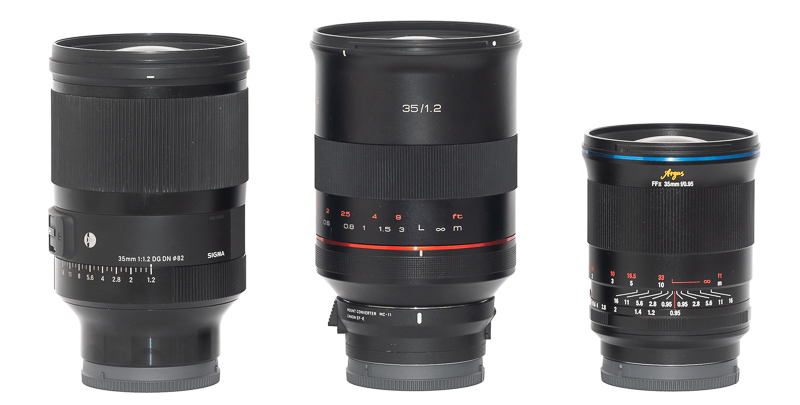
I added the Sigma MC-11 EF->E mount adapter on top, that way we can see this Samyang is actually bigger than the Sigma 35mm 1.2 Art DG DN. The Laowa 35mm 0.95 Argus – despite being faster – is significantly smaller.
On my Sony cameras I tried the lens with the Sigma MC-11 as well as the metabones MK IV and it generally worked well with both of them. The metabones adapter allows for focusing with working aperture in its advanced mode, which can be an advantage. On the Sony cameras this lens does show a bit higher vignetting though and the adapter might be the reason for that.

On the Nikon Zf I also tried it with the Megadap EFTZ21 adapter and that did not go well. The Exif data are not transmitted correctly, creating bogus focal length and aperture values. The lens is officially supported by the Fringer EF-NZ (II) adapters though and here it worked flawlessly.
Vignetting
light falloff
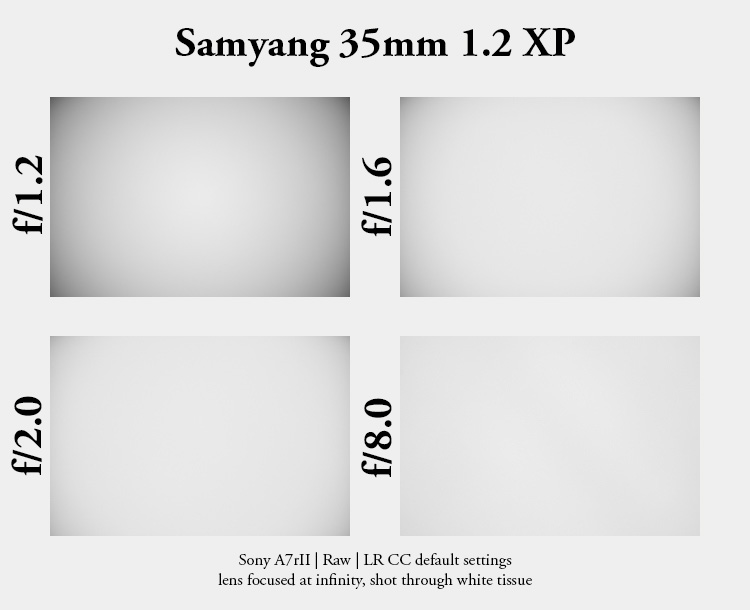
| A7rII + Sigma MC-11 | Zf + Fringer | |
| f/1.2 | 2.9 EV | 2.5 EV |
| f/1.6 | 2.0 EV | 1.8 EV |
| f/2.0 | 1.6 EV | 1.4 EV |
| f/2.8 | 0.7 EV | 0.7 EV |
| f/4.0 - f/16 | 0.4 EV | 0.4 EV |
The vignetting figures I see here are very similar to those from the Sigma 35mm 1.2 Art DG DN and Laowa 35mm 0.95 Argus at wider apertures. Stopped down this Samyang lens shows about half a stop less vignetting though.
The small Voigtländer VM 35mm 1.2 III shows a bit higher vignetting at f/1.2 and a lot more stopped down.
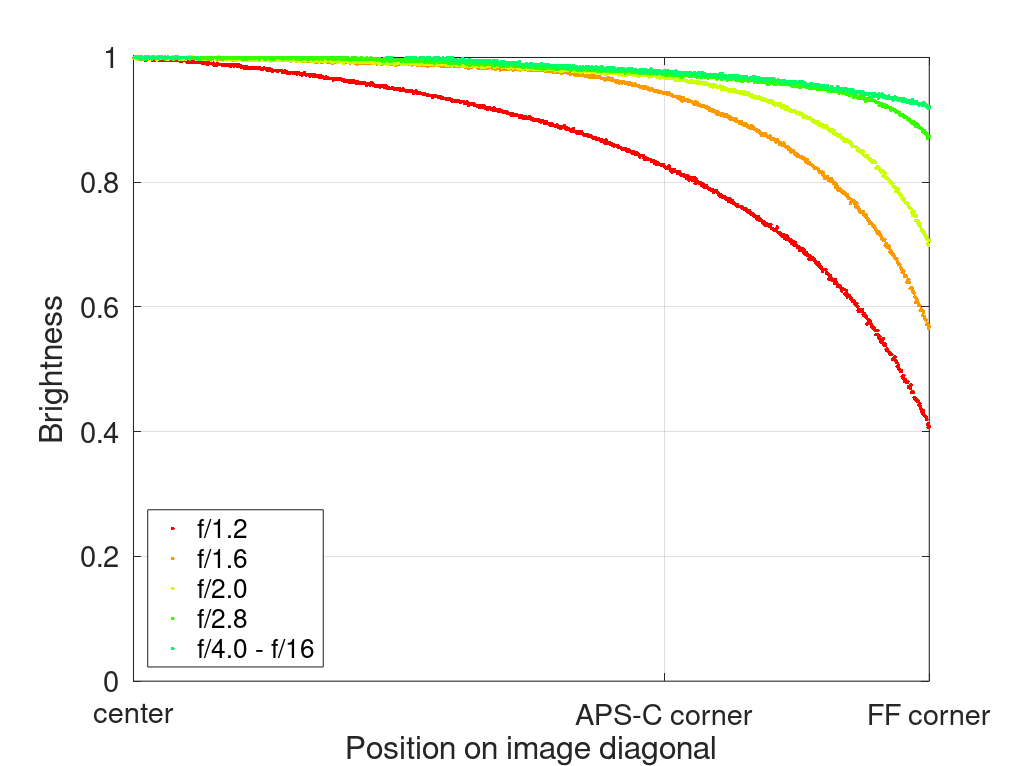
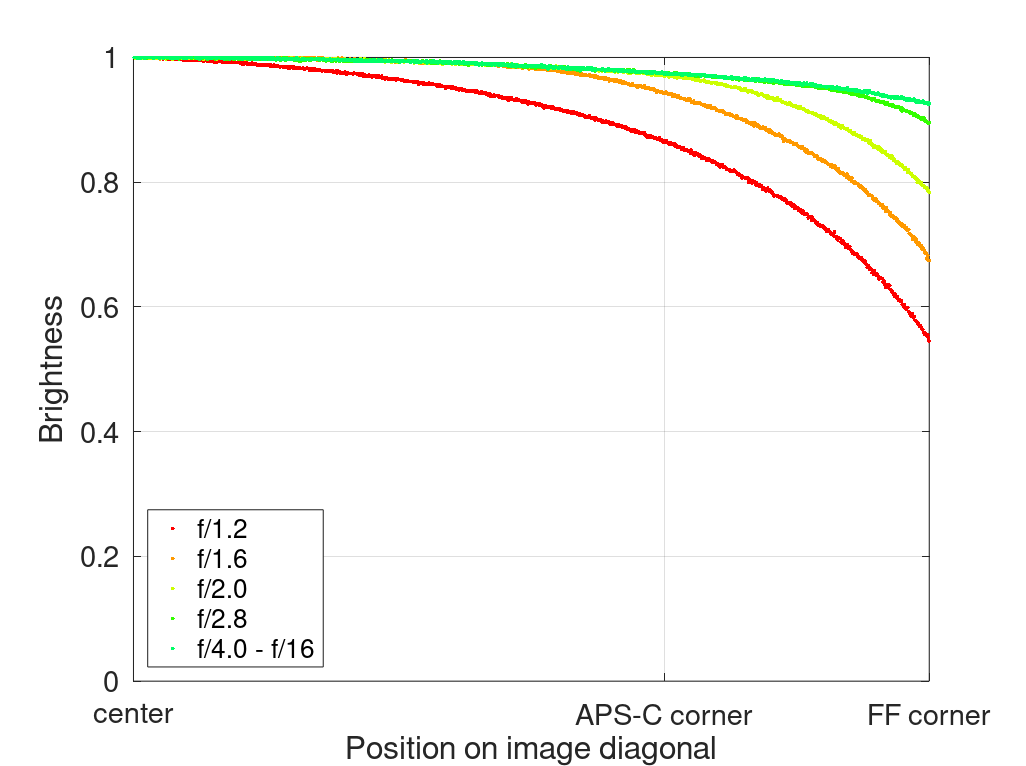
I noticed this lens showing a bit darker corners on my Sony cameras compared to the Nikon Zf, the narrow E-mount might be the reason for that.
It is recommended to have a look at this article first to get an idea how this brightness graph works.
optical vignetting
Very fast lenses often show optical vignetting. Without going too much into technical details optical vignetting leads to the truncation of light circles towards the borders of the frame.
In the center of the frame almost every lens will render a perfect circle, but only lenses with very low optical vignetting will keep this shape in the corners.
So in the following comparison we move from the center (left) to the extreme corner (right) and see how the shape of the light circle changes.
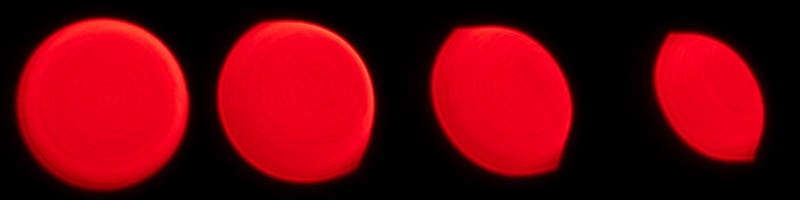
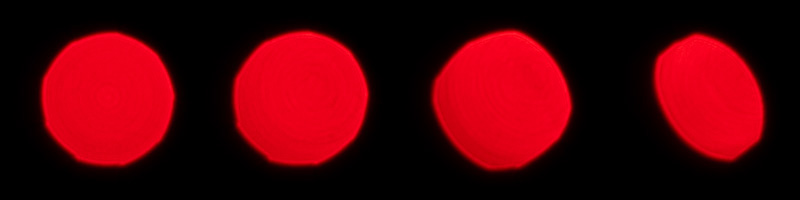
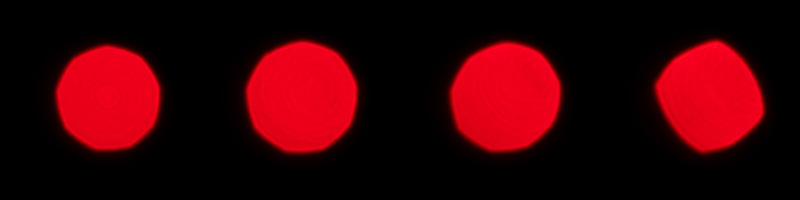
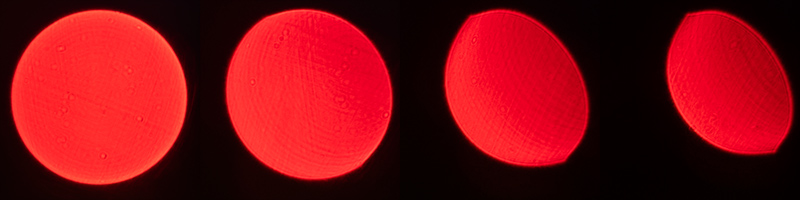
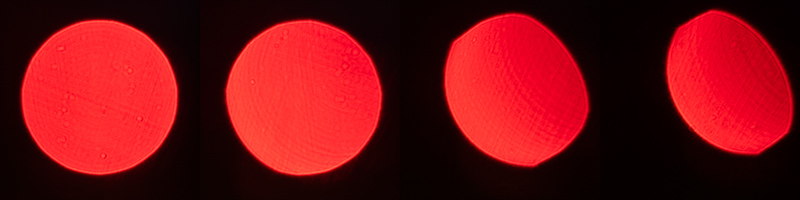
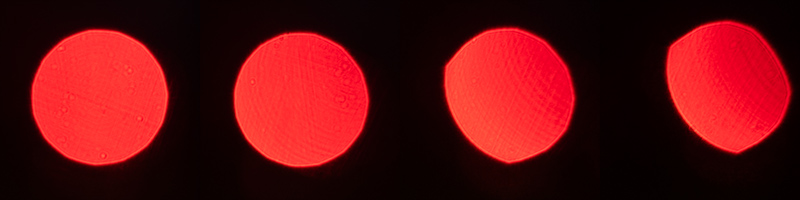
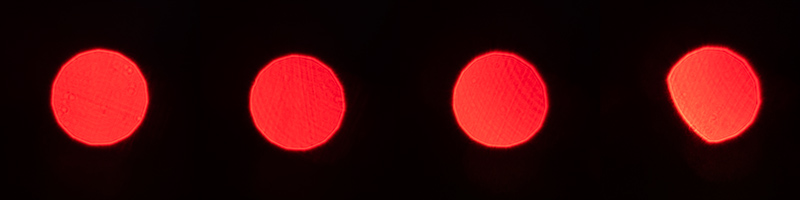
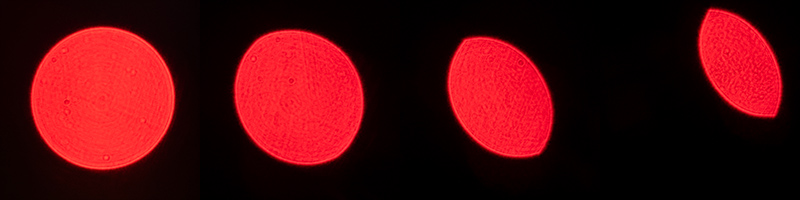
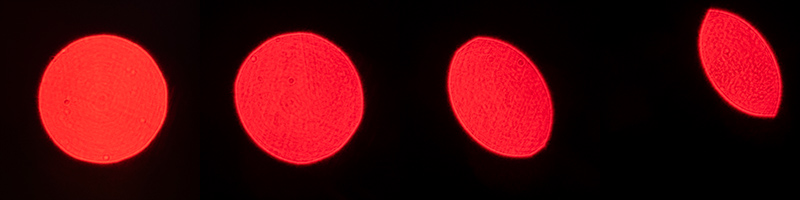
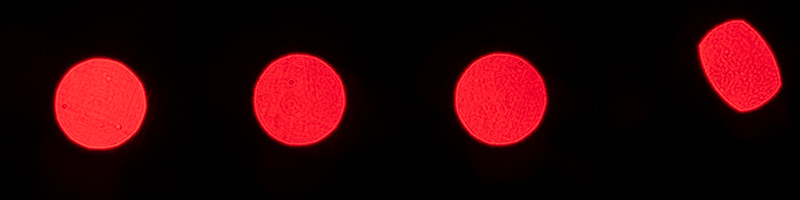
I did not shoot these lenses side-by-side, so the sizes of the cirlces are not directly comparable.
This Sigma 35mm 1.2 Art DG DN is a lens that shows high optical vignetting and it is easily the worst in that regard. Interestingly the Laowa 35mm 0.95 Argus shows a rather moderate amount. This Samyang 35mm 1.2 XP sits inbetween those two.
Sharpness
MTF Graphs
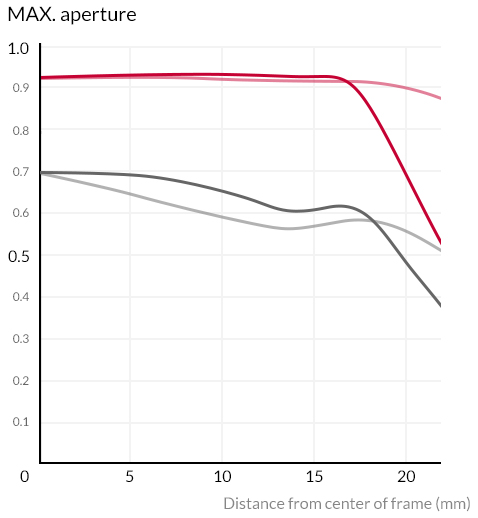
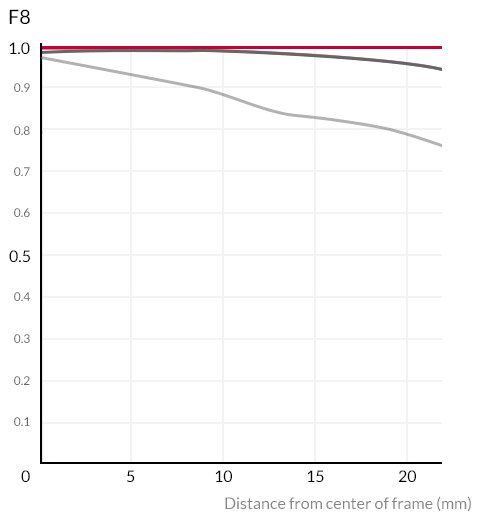
At f/1.2 the performance according to these graphs looks good, but not amazing. We also see a notable drop in performance close to the corners.
Stopped down to f/8.0 this lens should look very good across frame.
Focus shift
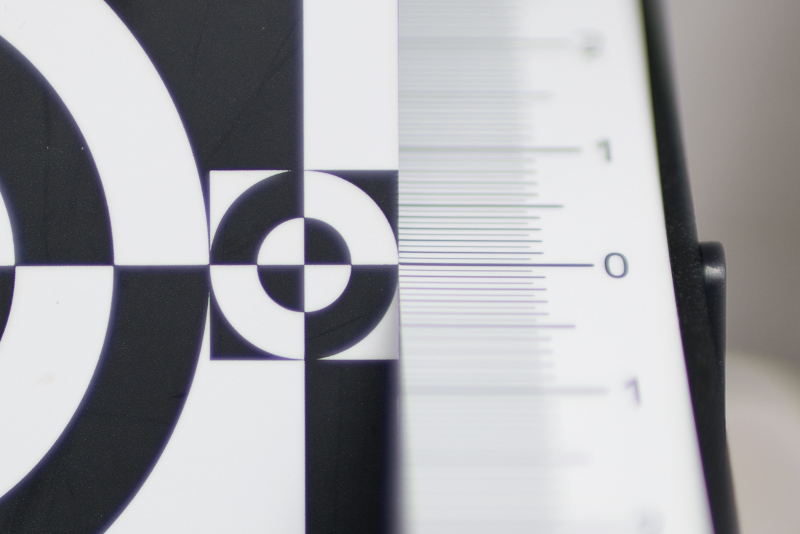
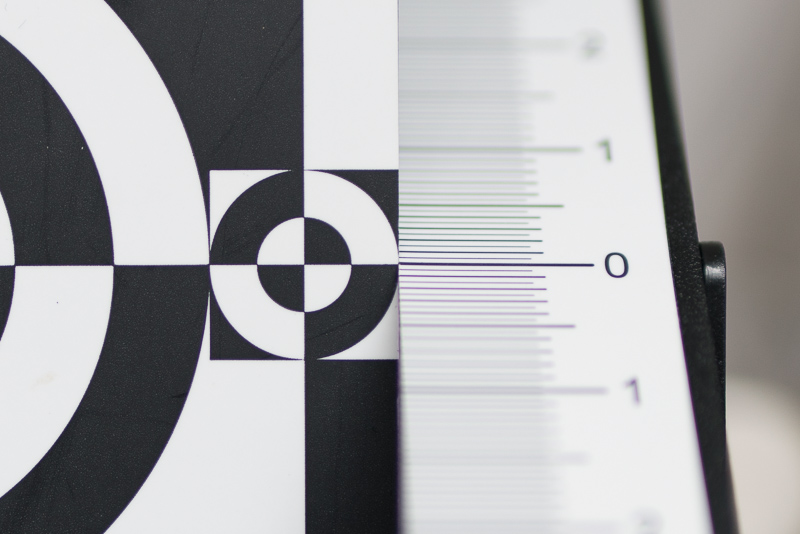
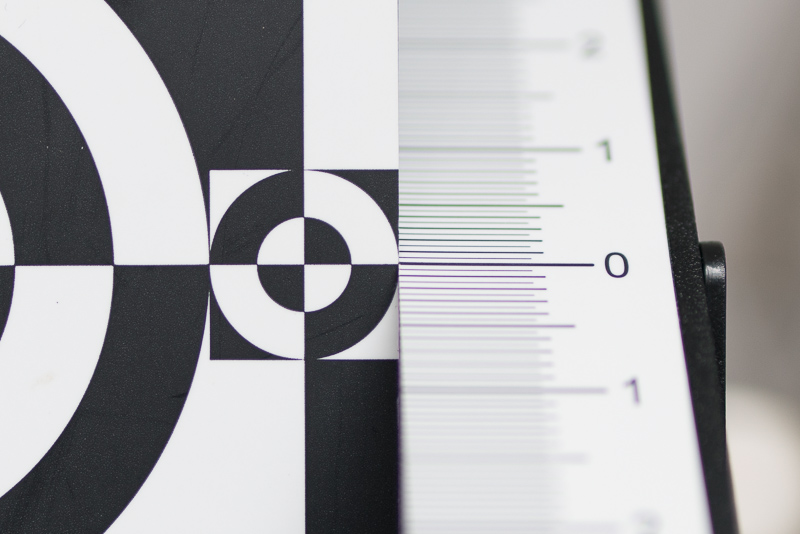
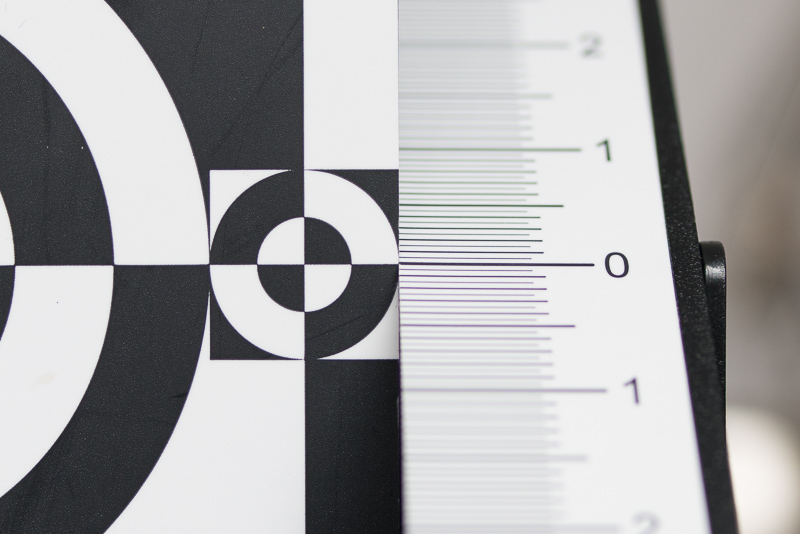
I do not see any field relevant focus shift here, we can already see that the lens is a bit soft at f/1.2 at these distances though.
infinity (42mp Sony A7rII)
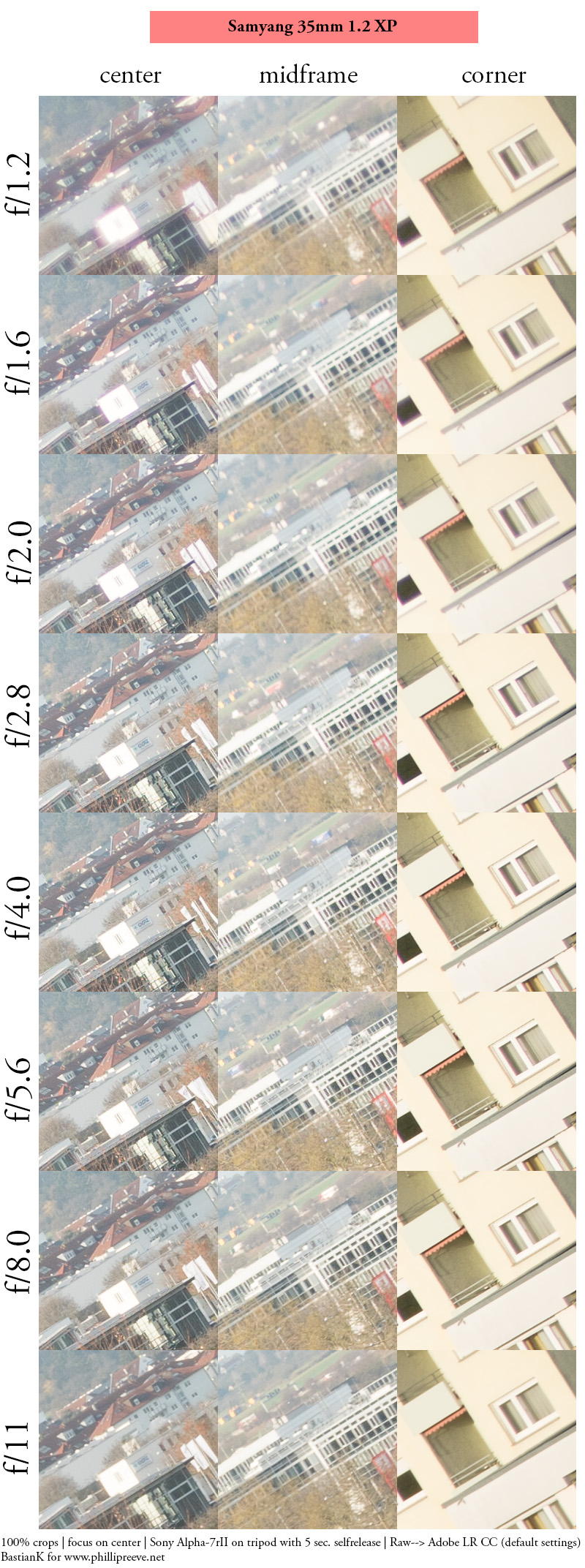

The performance at infinity at f/1.2 is not exactly impressive, when we compare it to the latest f/1.2 lenses. There is a notable amount of glow (spherical aberration) and also a bit of a midzone dip. The corners look surprisingly good though. This performance does not exactly match what we have seen in the MTF graphs.
Stopped down to f/5.6 or further this lens hardly leaves something to be desired though.
The Sigma 35mm 1.2 Art DG DN plays in another league here, it shows an impeccable performance from f/1.2. The Laowa 35mm 0.95 Argus shows a stronger midzone dip until stopped down to f/4.0, the corners never look as good as from the Sigma or this Samyang, but still more than usable in the f/8.0 to f/11 range.
portrait distance 1.0 m (42mp Sony A7rII)
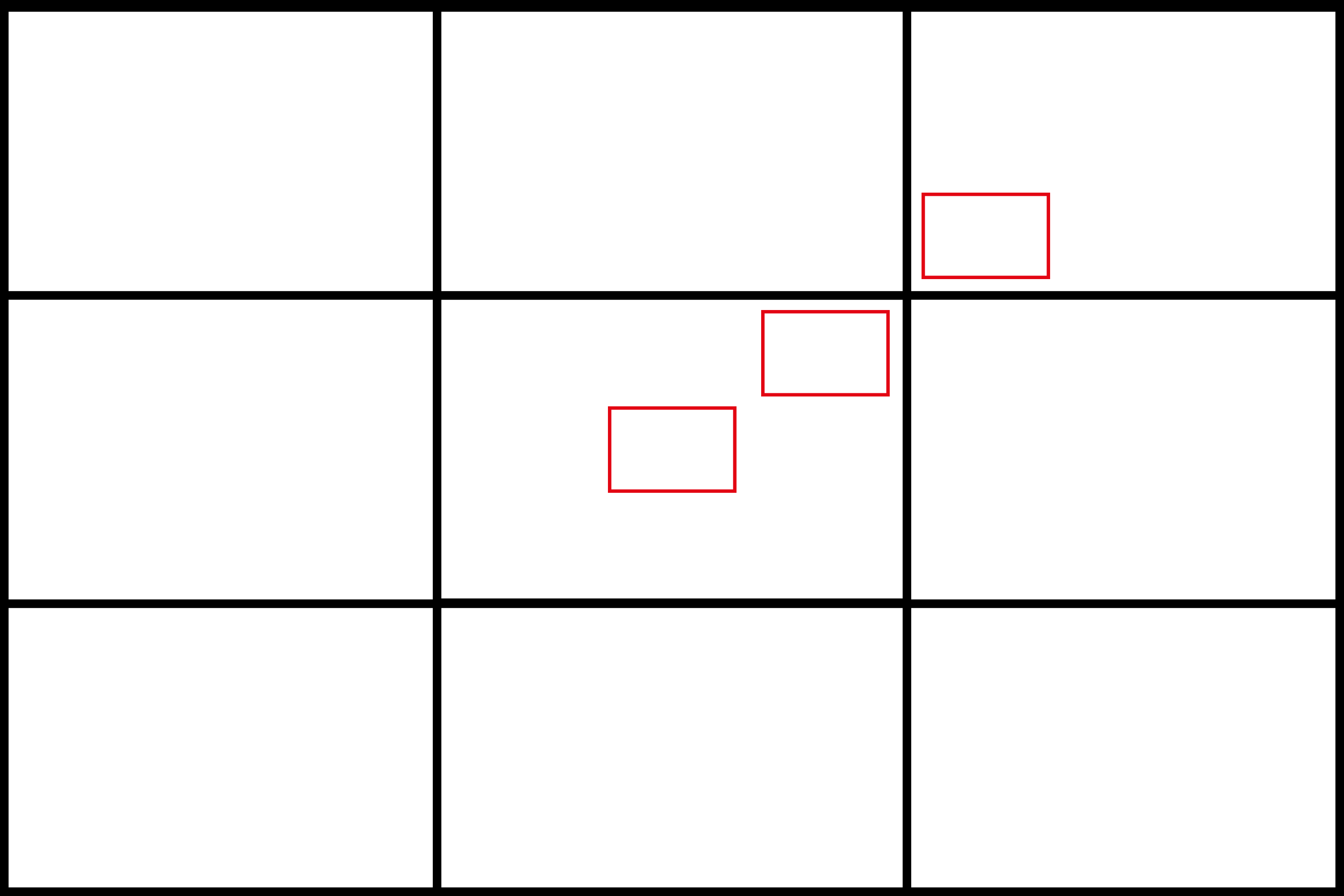
I refocused for every shot and aperture to get the best possible result at different locations in the frame (center, inner midframe and outer midframe).
The circle of the dollar bill is more or less the size of a human eye.
f/1.2 <—> f/2.0


The optical structure of this Samyang 35mm 1.2 XP consists of 12 elements whereas the Laowa 35mm 0.95 Argus features 14 and the Sigma 35mm 1.2 Art DG DN even 17.
What we can see clearly here: those 12 elements were apparently not enough to properly correct this lens for usage at f/1.2. While Astigmatism is low (which wasn’t the case for the Samyang 50mm 1.2 XP), so is the contrast. The Sigma 35mm 1.2 Art DG DN performs on a whole different level, already at f/1.2 that Sigma lens looks better everywhere in the frame than this Samyang lens. In the center and midframe also the Laowa 35mm 0.95 Argus easily outperforms this Samyang lens. At the end of the day the performance of this Samyang 35mm 1.2 XP at portrait distances is more comparable to the compact Voigtländer VM 35mm 1.2 III.
Having used all three of Samyang’s f/1.2 XP lenses, this 35mm is the softest and actually that was somewhat to be expected.
close 0.34 m, 1:6.1 (42mp Sony A7rII)





The trend continues at close distances. The Sigma 35mm 1.2 Art DG DN focuses closer and actually performs better at the same time.
The Laowa 35mm 0.95 Argus sadly only focuses down to 0.5 m, the price to be paid for its comparably compact size.
Flare resistance
The other fast 35mm lenses I have used so far didn’t show a great performance in this category. The Sigma 35mm 1.2 Art DG DN and the Laowa 35mm 0.95 Argus are some of the few lenses where I always use the hood to at least get rid of some of the artefacts and the Voigtländer VM 35mm 1.2 Nokton III is also one of the worse modern Cosina lenses.

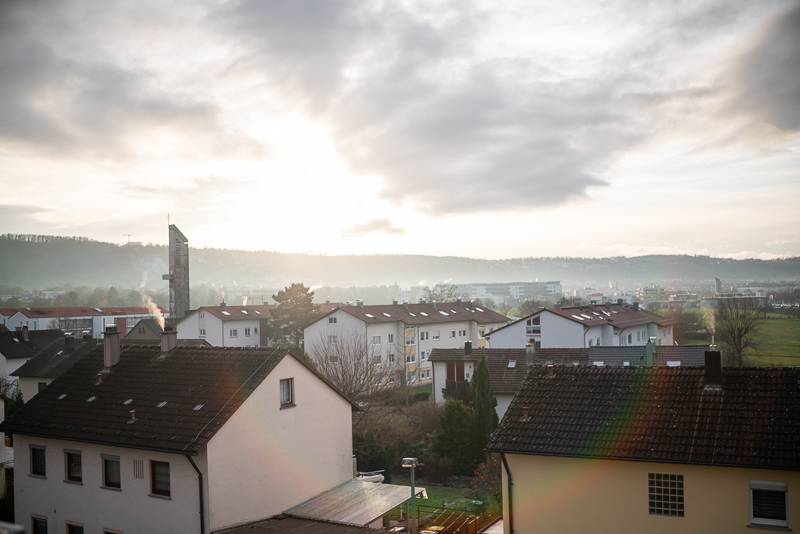
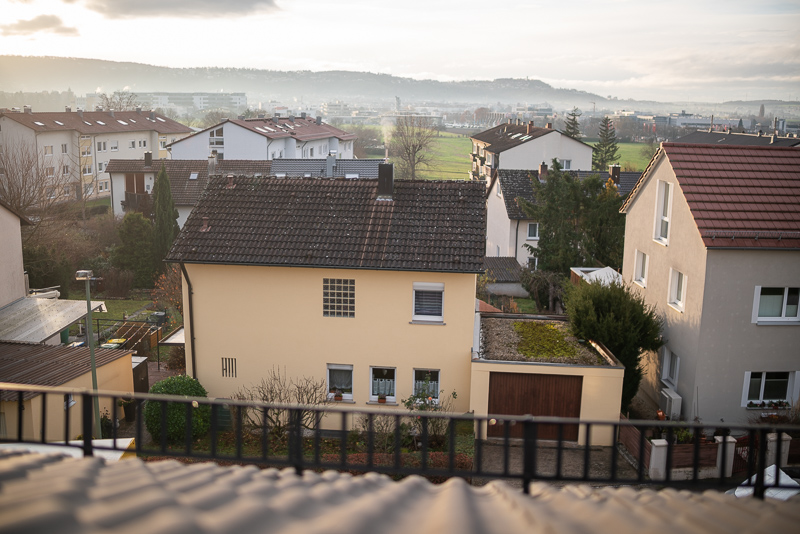
I wish I wasn’t right. With a strong point light source in the frame these rainbow ring flares are common visitors at f/1.2. I also encountered these frequently in the field at night.
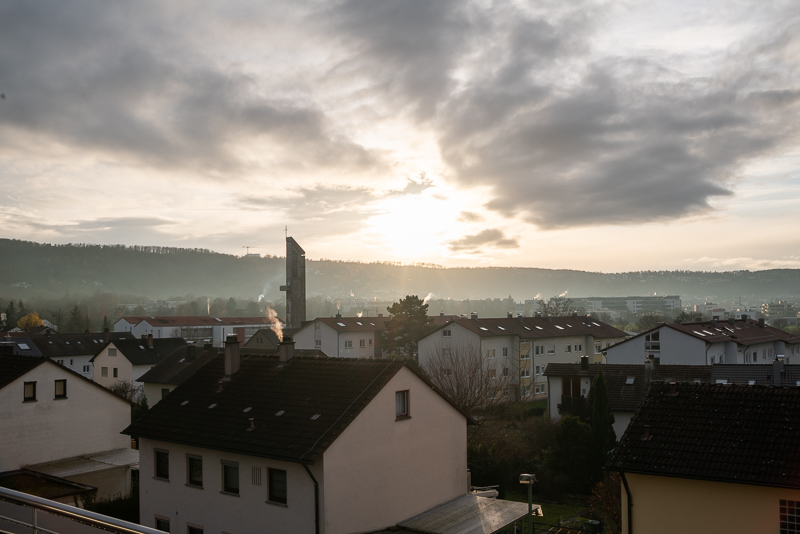
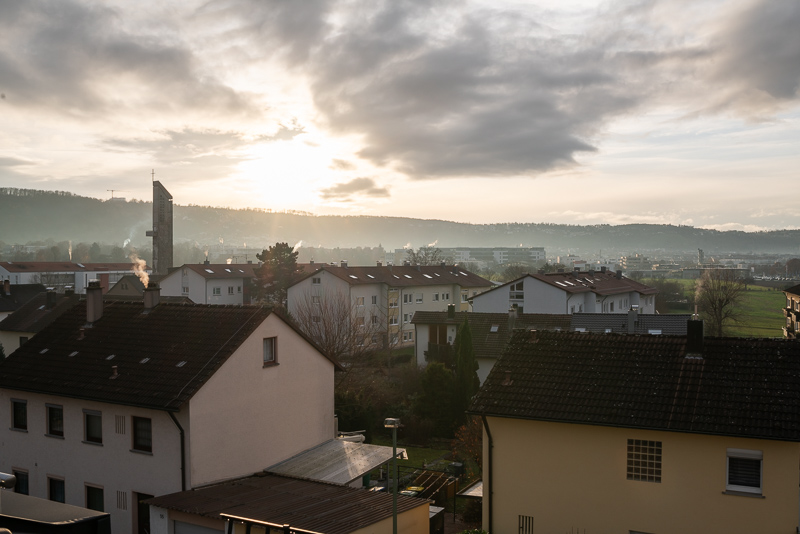
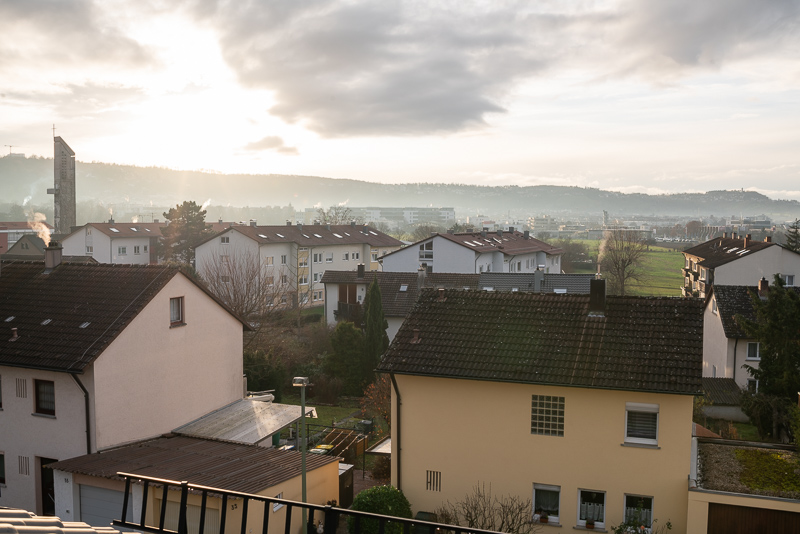
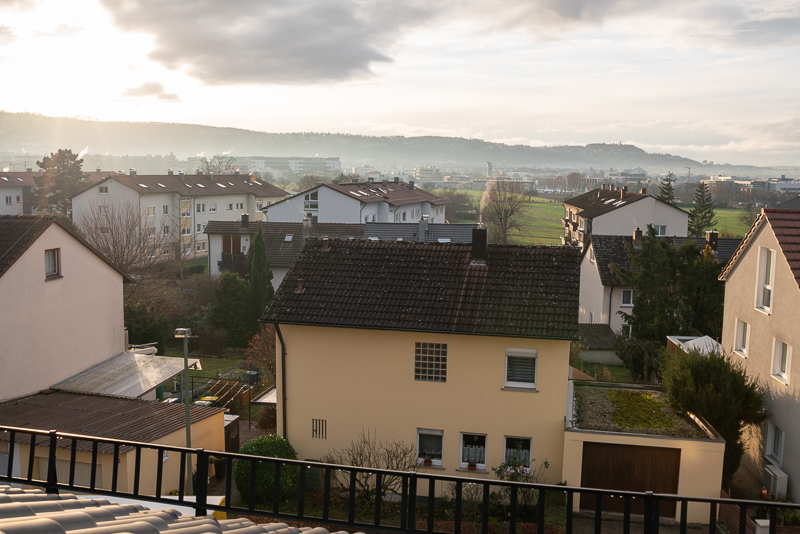

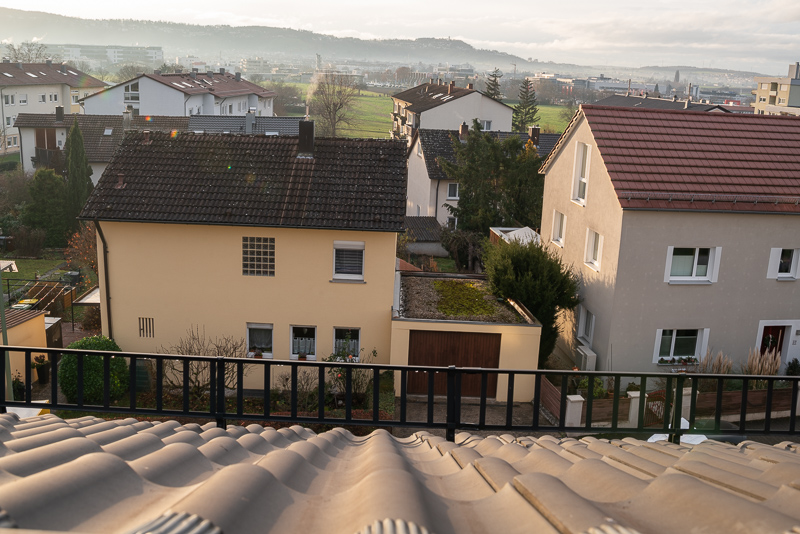
Stopped down the situation is a bit better, but when looking closely we can still artefacts here and there that lower the contrast.
Without having done an extensive comparison (which would cost me hours with a lot of cursing involved) I say this is a bit worse than what I have seen from the Sigma 35mm 1.2 Art DG DN and the Voigtländer VM 35mm 1.2 Nokton III and a bit better than the Laowa 35mm 0.95 Argus.
Coma
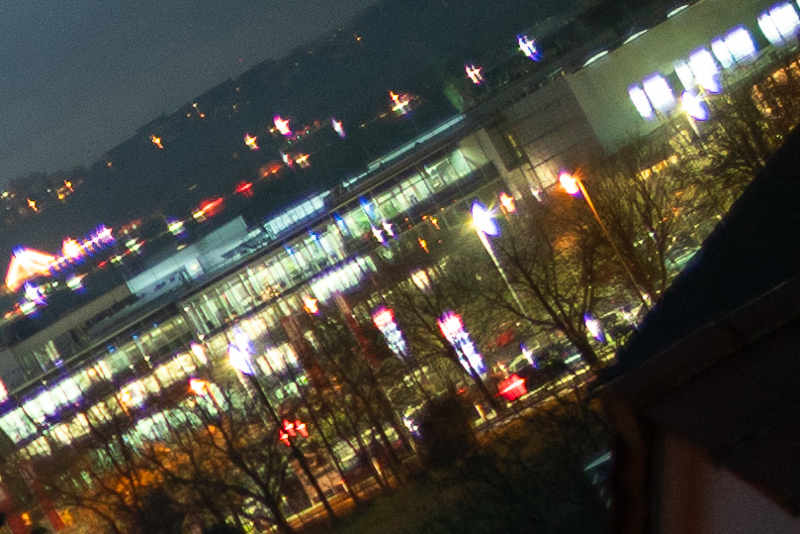
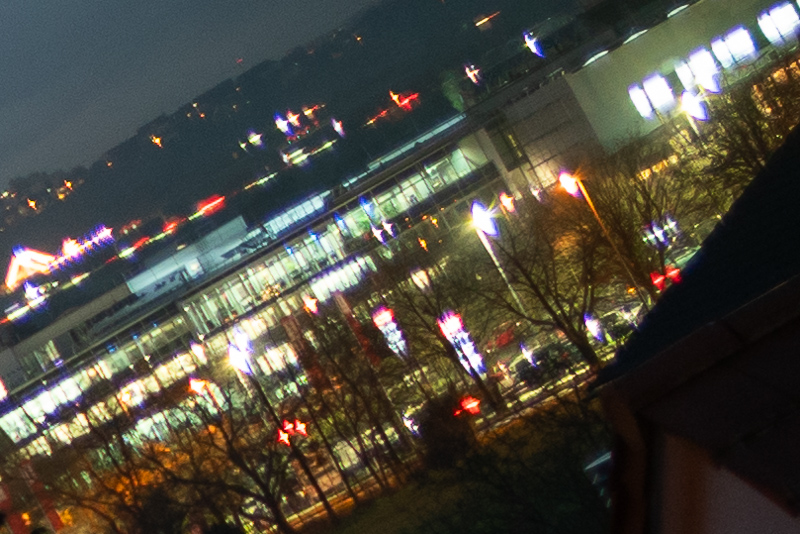

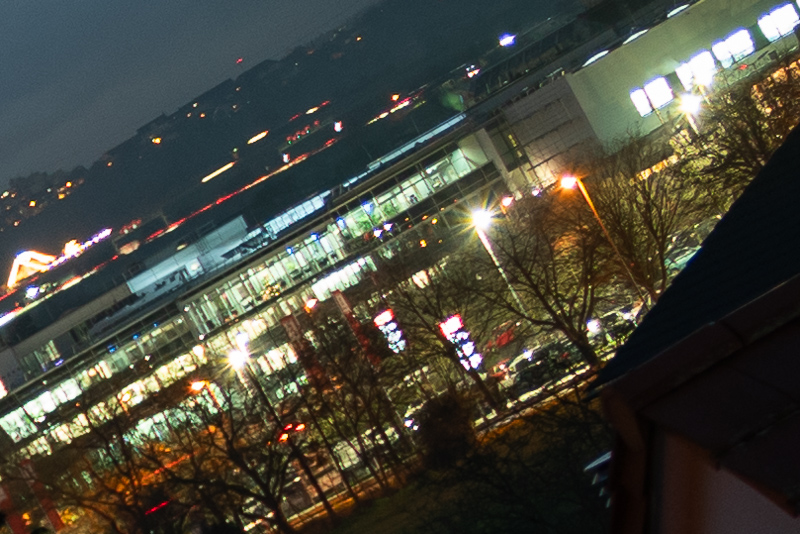
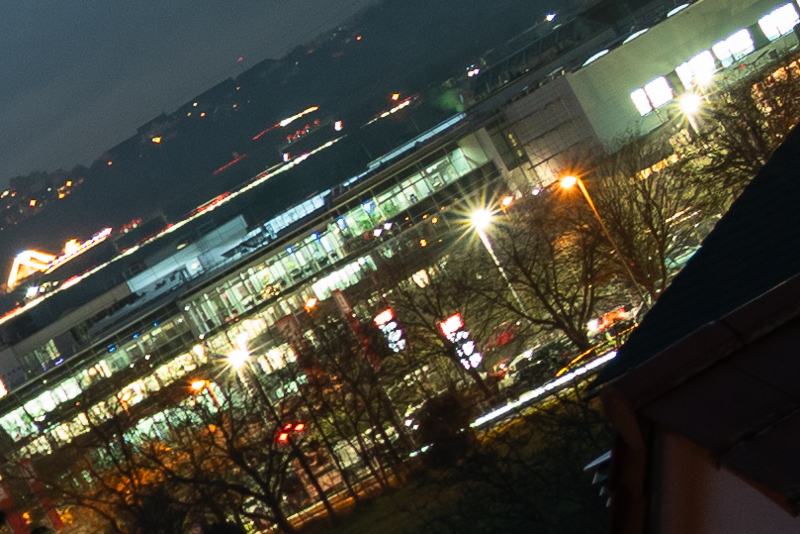
In every review of a Samyang lens I say this: their optical engineers usually put a lof of effort into correcting Coma effectively. When it comes to 35mm f/1.2 lenses this is no easy task though.
The artefacts this Samyang 35mm 1.2 XP produces at f/1.2 are a bit smaller when we compare them to the Laowa 35mm 0.95 Argus at f/0.95 and f/1.2 and bigger than those from the Sigma 35mm 1.2 Art DG DN at f/1.2. Latest by f/2.8 all of these are pretty much free of Coma though.
Distortion
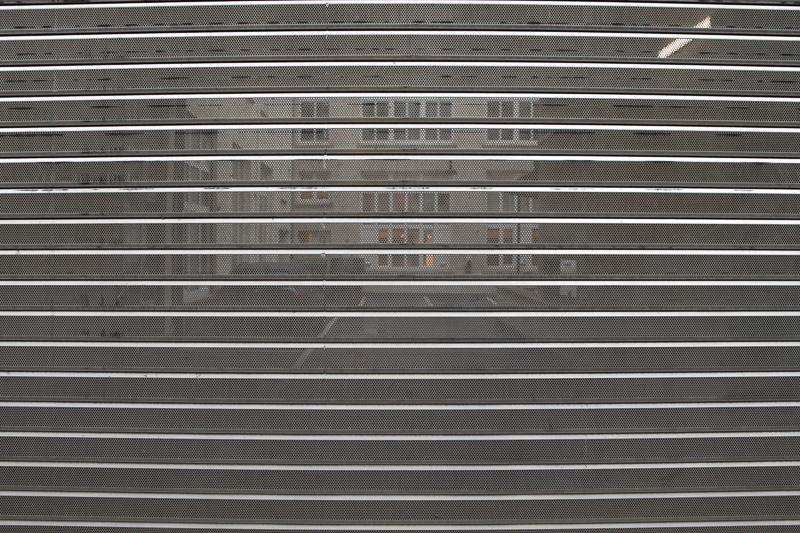

The Sigma 35mm 1.2 Art DG DN features rather strong (but luckily uniform) barrel distortion for a 35mm lens. This Samyang 35mm 1.2 XP has similar distortion characteristics, needing a +7 in Photohop/Lightroom to mostly get rid of it. There is no dedicated correction profile for this lens availabe.
Bokeh
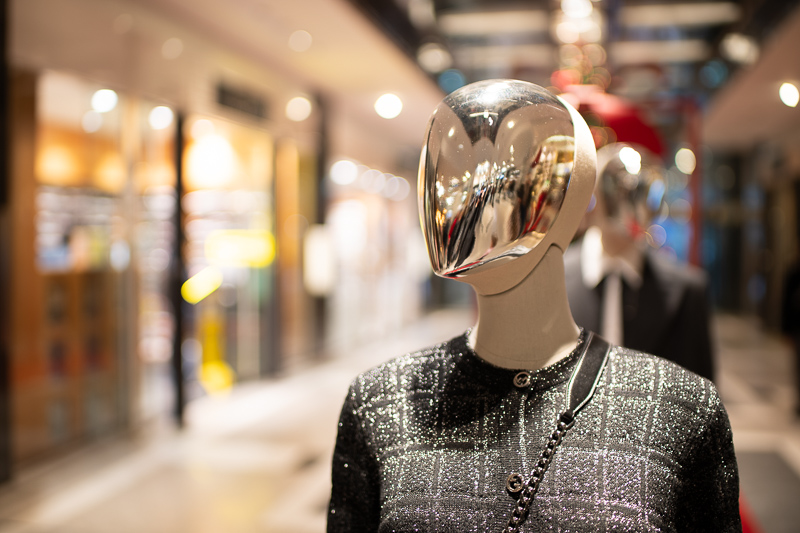
I have used almost all the 35mm lenses faster than f/1.4 by now and I care a great deal about their bokeh rendering, so let’s have a closer look.
Close Distance



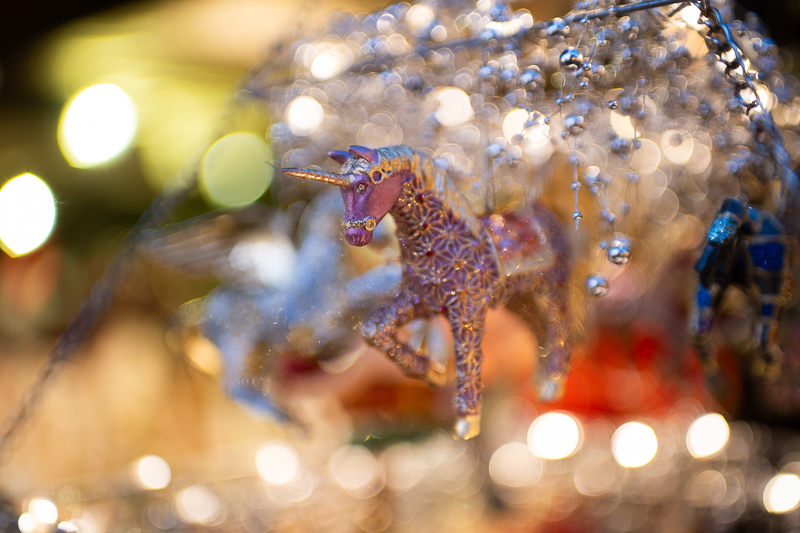

Most lenses draw a nice bokeh in close focus scenarios and this mostly holds true for this Samyang 35mm 1.2 XP as well. However, in the last sample above – taken at the minimum focus distance – I was negatively surprised by the busy bokeh with a lot of oulining.
Mid Distance


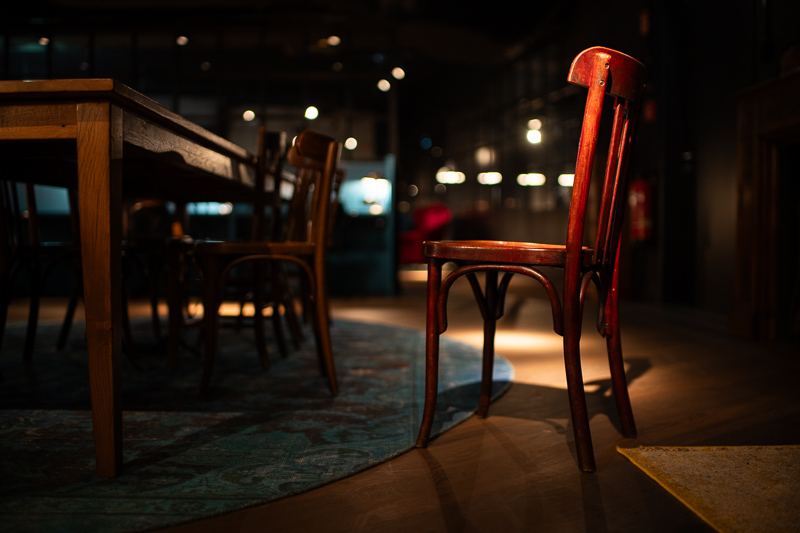
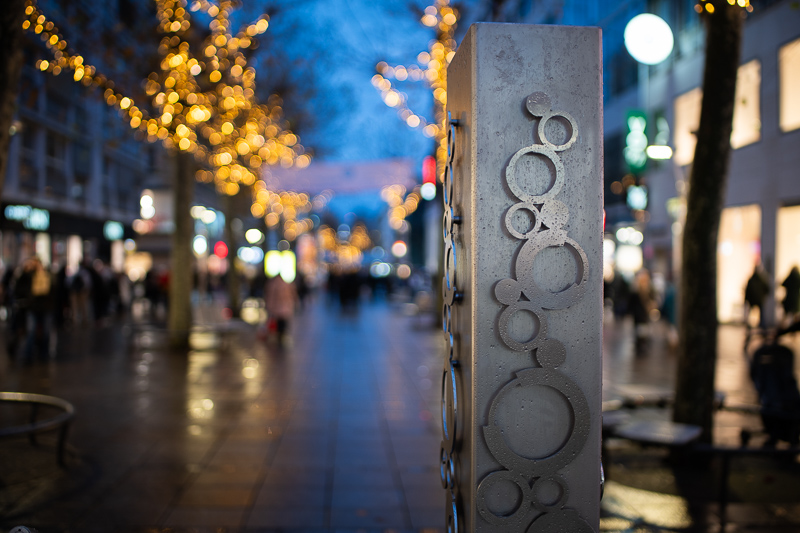
Compared to the Sigma 35mm 1.2 Art DG DN, this Samyang 35mm 1.2 XP is a bit soft at f/1.2 (as I have already shown in the previous sections). Compared to the Sigma 35mm 1.2 Art DG DN this makes the subject stand out less at f/1.2 and it also makes focusing a bit harder. While I never had problems manually focusing the Laowa 35mm 0.95 Argus, here it was often more challenging.
Long Distance




At long focus distances this Samyang 35mm 1.2 XP also renders a pleasing, undistracting background.
So generally, I do think this lens does render a pleasing bokeh in most situations, but at the same time I would prefer the Sigma 35mm 1.2 Art DG DN or the Laowa 35mm 0.95 Argus.
Sunstars
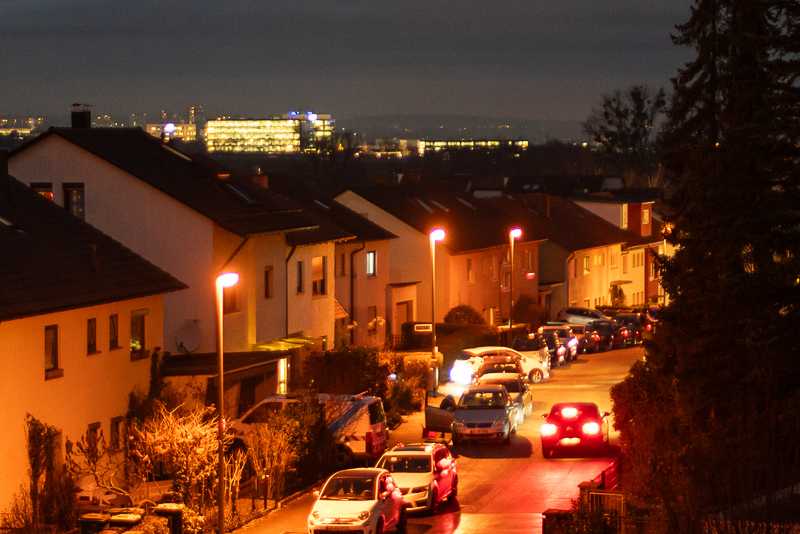
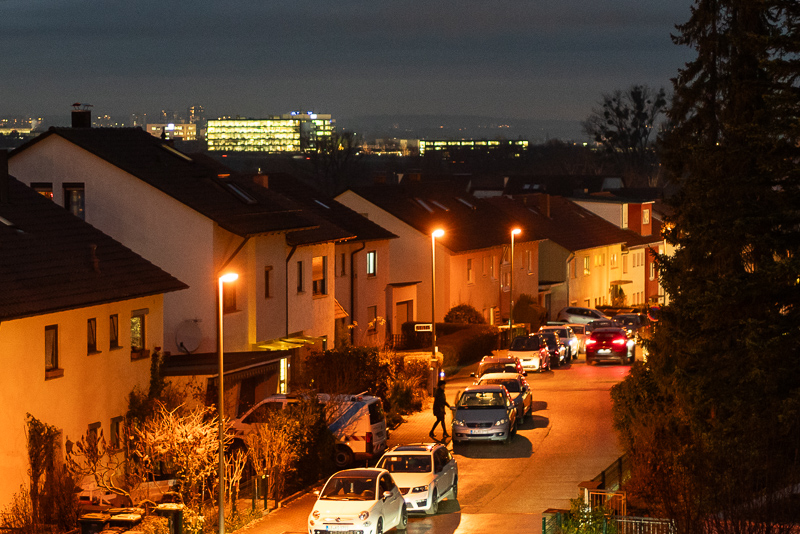
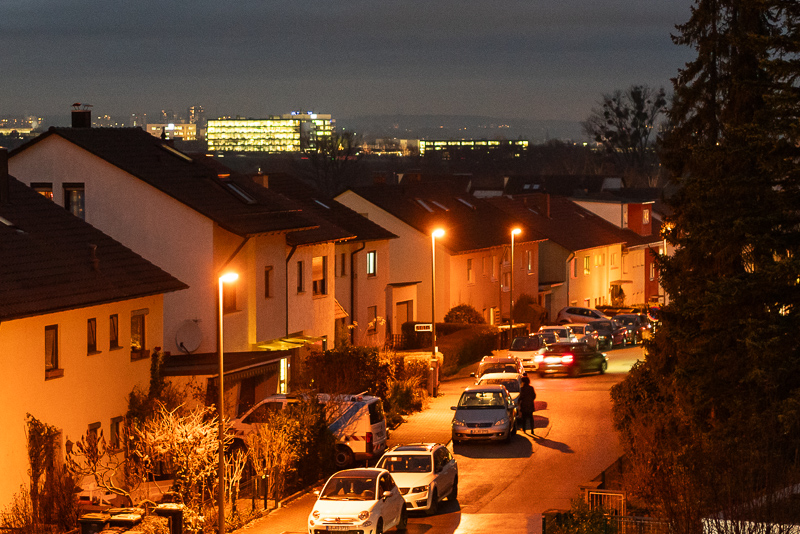
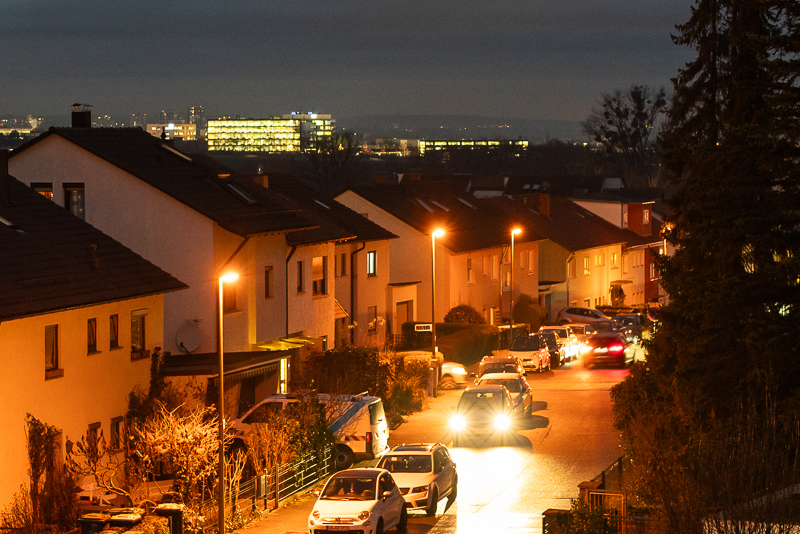
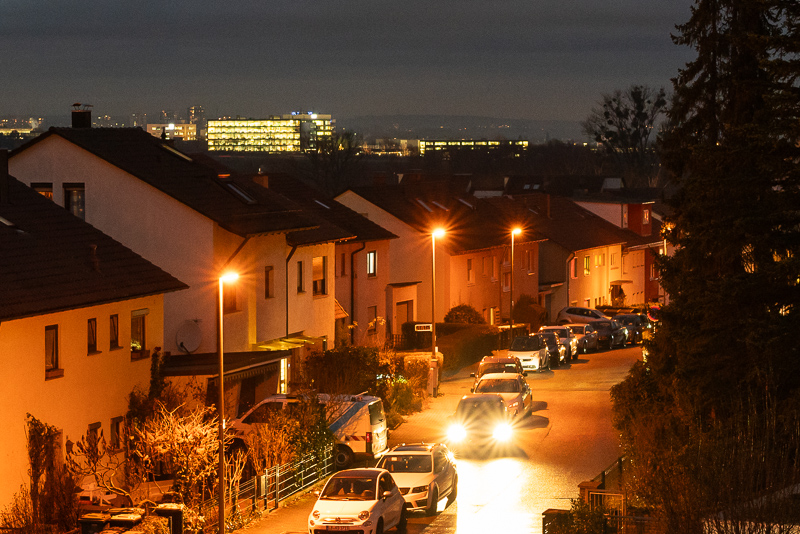
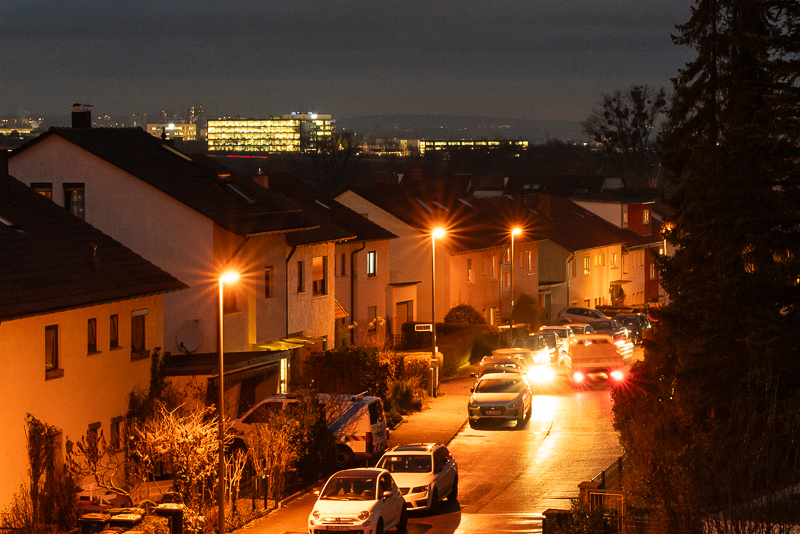
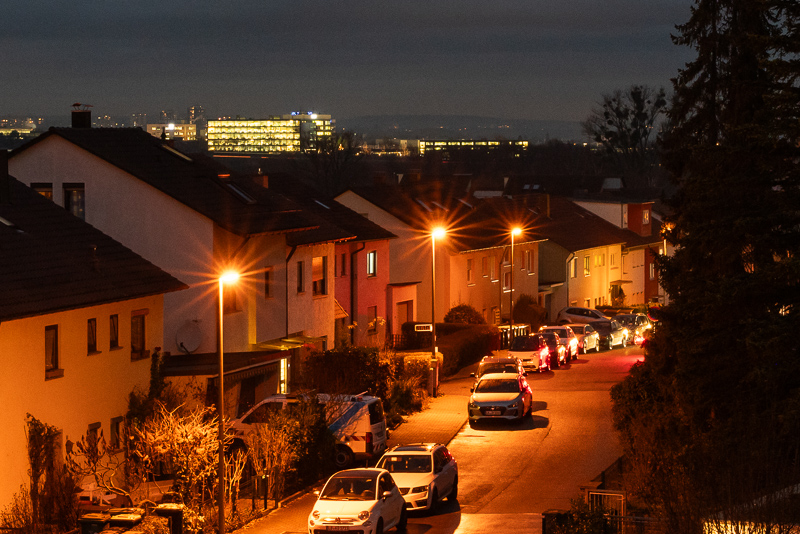
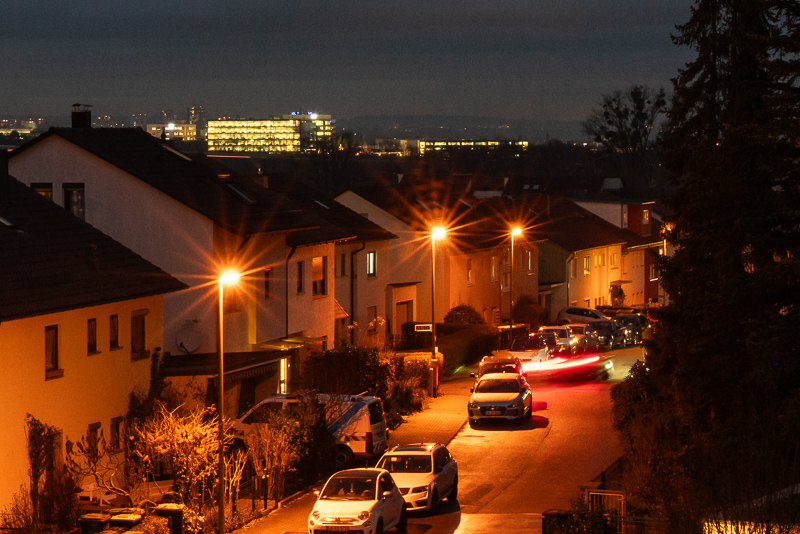
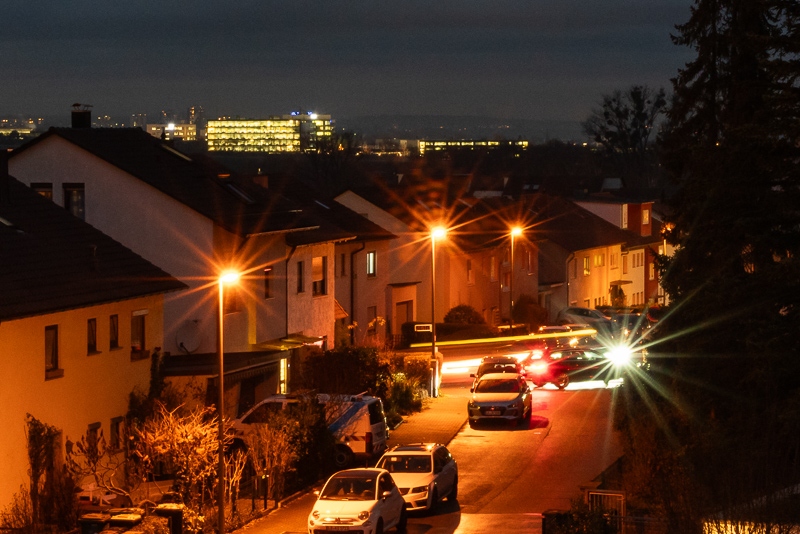
Unlike correcting Coma, sunstar rendering has never been a high priority for Samyang and also this Samyang 35mm 1.2 XP creates sunstars with rays of uneven length and spacing, not something to write home about. Most people will be interested in this lens for environmental portraiture though, where this doesn’t really matter.
If you want to know more about sunstar rendering of different lenses have a look at this article.
Chromatic aberration
lateral
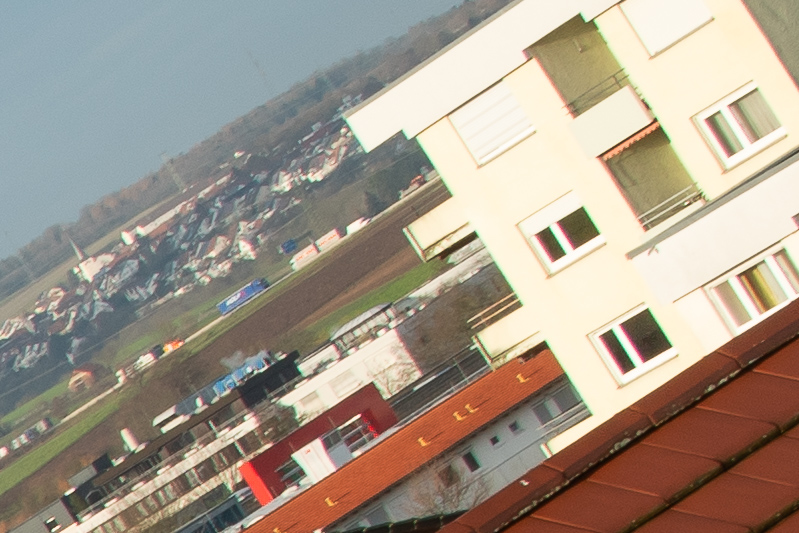
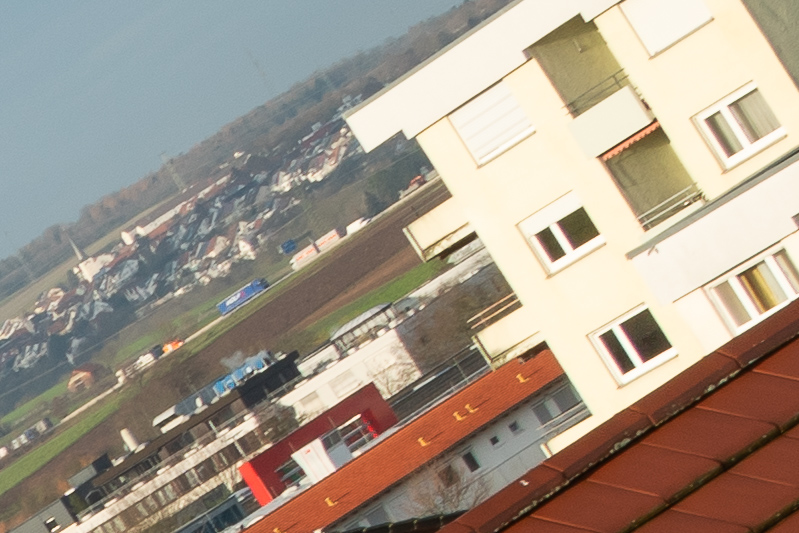
This Samyang 35mm 1.2 XP exhibits a medium amount of lateral CA, which is easily corrected in post.
longitudinal

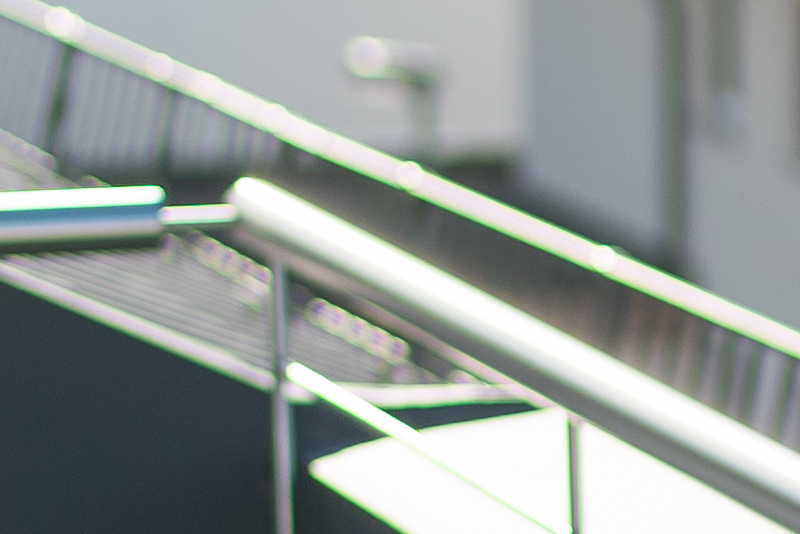
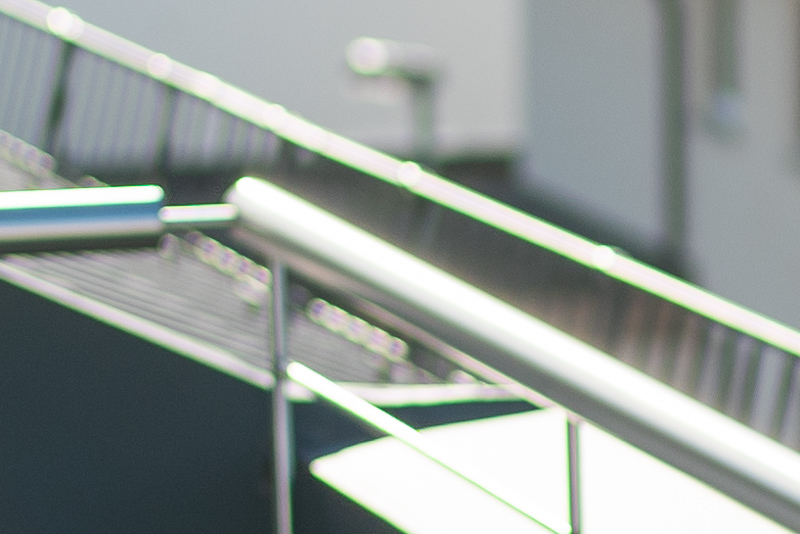
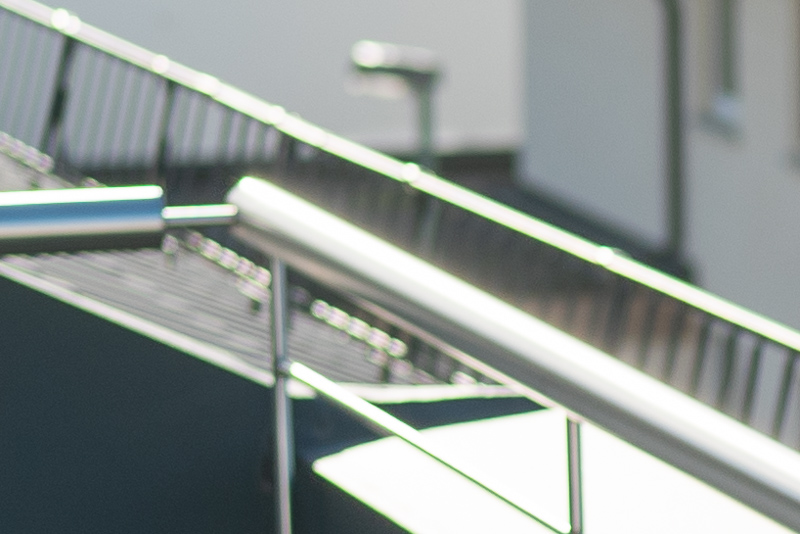
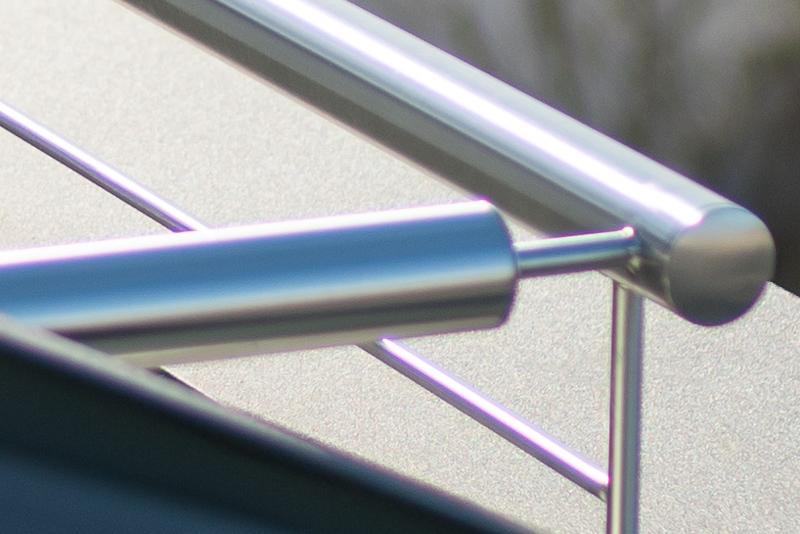
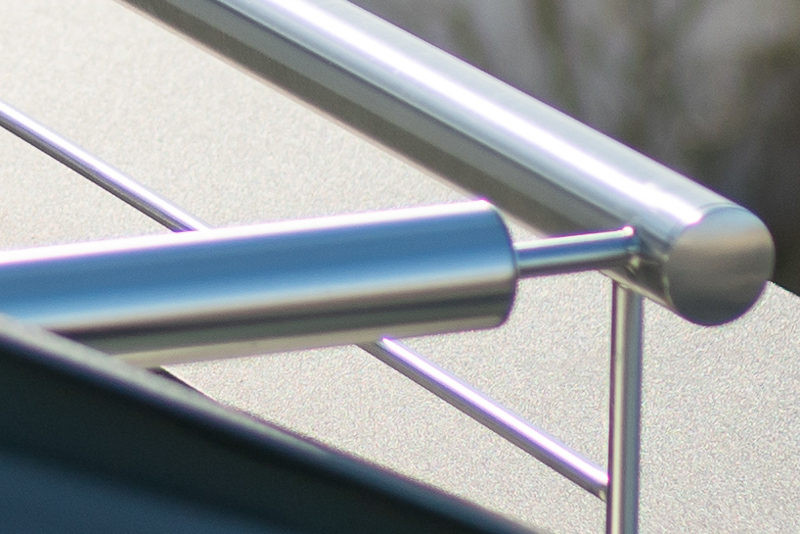
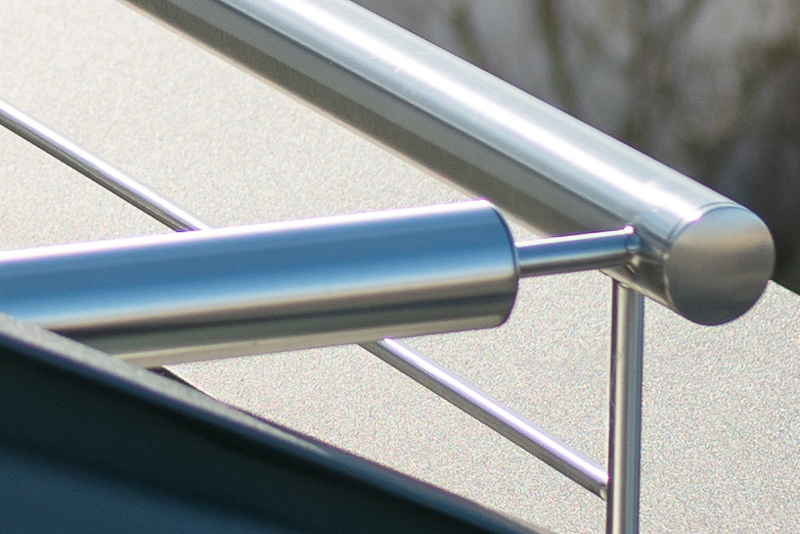
Sony A7rII | Sigma MC-11 | Samyang 35mm 1.2 XP | 100% crops
While the Sigma 35mm 1.2 Art DG DN showed an above average performance in this category the same cannot be said about this Samyang 35mm 1.2 XP, as we see pretty strong bokeh fringing at f/1.2 to f/2.0 and it still isn’t gone at f/2.8.
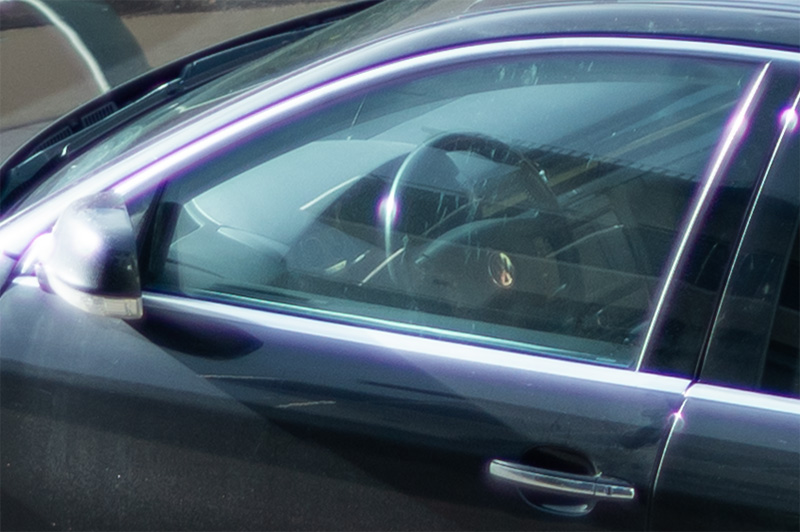


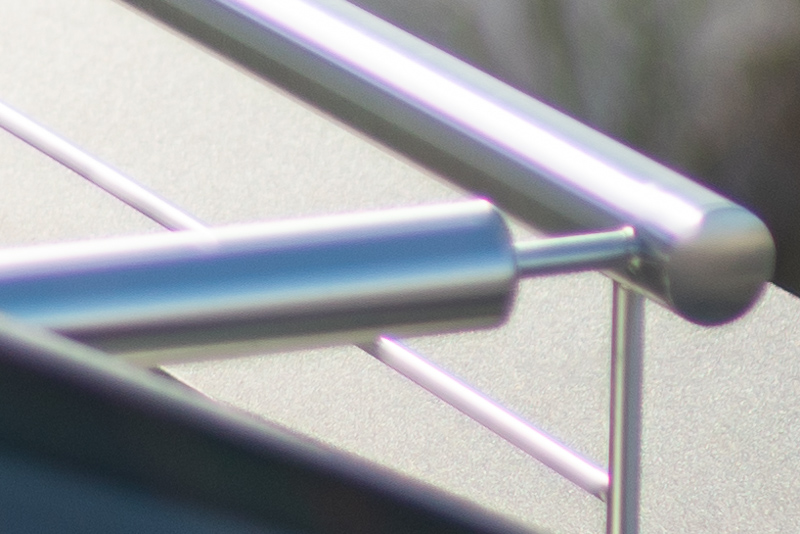
Sony A7rII | Sigma MC-11 | Samyang 35mm 1.2 XP | 100% crops
The Sigma 35mm 1.2 Art DG DN corrected purple fringing perfectly, also that is not the case here. At f/1.2 this aberration is a bit masked by shperical aberration, but at f/1.6 to f/2.0 it goes pretty strong.
Conclusion
good
|
average
|
not good
|
Let us first applaud Samyang for actually making a 35mm with a maximum aperture of f/1.2 for the Canon EF mount, as it is not like there are a lot of options available.
As with most of these XP series lenses, also here the timing was pretty bad though, as only shortly after Sigma released their Sigma 35mm 1.2 Art DG DN, a lens, that does not only performs better in almost every regard, but also brings capable autofocus to the table.
Taking into account the adapter needed to use this Samyang lens on a mirrorless camera, it is pretty much the same size as the Sigma 35mm 1.2 Art DG DN. The difference is, that Sigma could use that additional space for more elements, leading to significantly better performance.
If you are using a mirrorless camera anyway and you are okay with a manual focus lens also be sure to check out the Laowa 35mm 0.95 Argus, the fastest 35mm fullframe lens.
These days, I think this lens is mainly for those that are still rocking a camera with EF-mount, yet are okay with manually focusing a lens like this – which isn’t a lot of fun with the late DSLRs.
you can buy this lens from amazon.com | amazon.de | B&H | ebay.com | ebay.de (advertisement/affiliate links) for about $799
Alternatives
I will only talk about the most notable 35mm lenses which are faster than f/1.4 here. You can find many more 35mm discused in our 35mm guide.
Viltrox AF 35mm 1.2 FE LAB:
My current choice for a 35mm 1.2 lens for mirrorless cameras thanks to offering better flare resistance, less optical vignetting and being smaller than the Sigma 35mm 1.2 Art DG DN (next entry).
buy from manufacturer’s shop (use the code “BK3512LAB5” for 5% discount) | Pergear | amazon.com | amazon.de | B&H | ebay.com | ebay.de (advertisement/affiliate links) for $999
Sigma 35mm 1.2 Art DG DN:
I already compared these two lenses in all of the sections above. The Sigma simply is the better lens and it offers autofocus on top of that. The only reason to get this Samyang 35mm 1.2 XP is if it really needs to be an EF-mount lens.
buy from amazon.com | B&H | ebay.com | ebay.de (advertisement/affiliate links) for about $1499 (new) or starting at $750 (used)
Laowa 35mm 0.95 Argus:
If you don’t need autofocus and you are using a mirrorless camera, I also see the Laowa 35mm 0.95 Argus as the better lens. It is even faster and a lot smaller, making it more manageable. In terms of optical performance I see the Laowa slightly ahead, but that also depends a bit on what you are looking for.
buy from the manufacturer’s homepage | ebay.com | B&H (advertisement/affiliate links) for $649
Voigtlander 35mm 1.2 SE:
The Voigtlander 35mm 1.2 SE is noticeably smaller and lighter but also features a simpler optical design than all the aforementioned lenses. If you are looking for a lens to use on an E or Z-mount camera be sure to get the shortlived, already discontinued E-mount version. The Leica M-mount version is still my fast 35mm lens of choice in the M-mount world.
buy from amazon.com | amazon.de | B&H | ebay.com for $699 (advertisement/affiliate links)
Sample Images
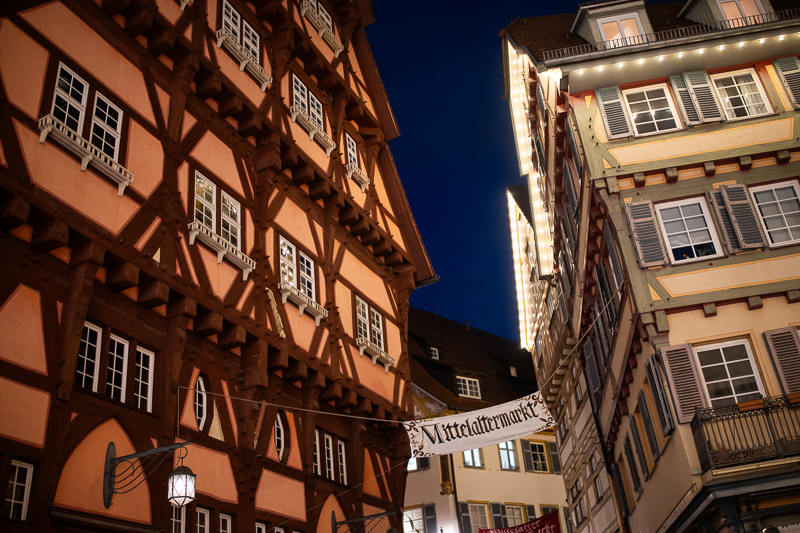



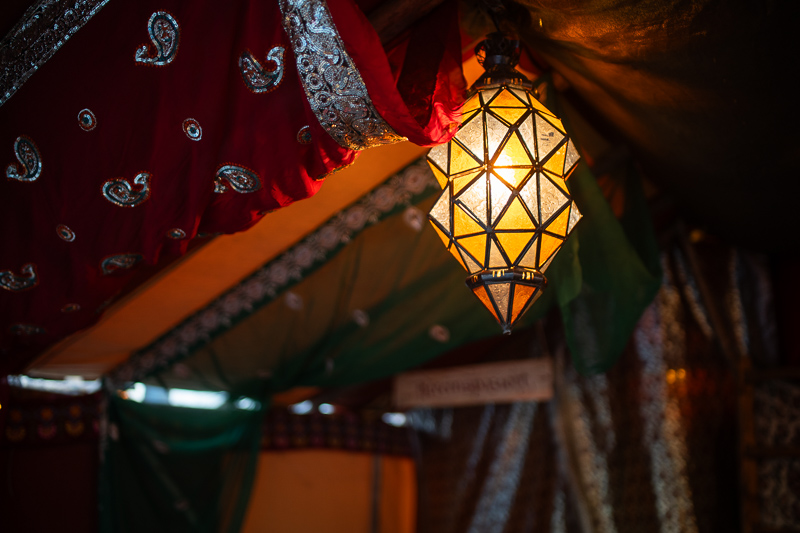
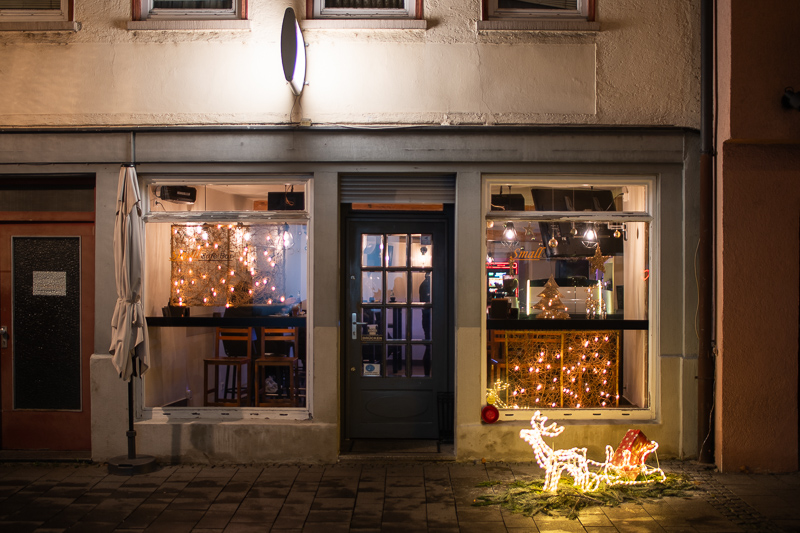









Most of the sample images in this review can be found in full resolution here.
Further Reading
- Sony FE lenses: Our comprehensive and independent guide
- Sony FE lenses: Our guide to portrait lenses from 85 to 135mm
- Review: Laowa 28mm T1.0 Cine
- Review: Voigtländer VM 50mm 1.0 Nokton
- Review: Canon EF 85mm 1.2L USM II
Support Us
Did you find this article useful or just liked reading it? Treat us to a coffee!

 via Paypal
This site contains advertisement/affiliate links. If you make a purchase using any of the links marked as advertisement/affiliate links, I may receive a small commission at no additional cost to you. This helps support the creation of future content.


Latest posts by BastianK (see all)
- Review: Light Lens Lab 35mm 1.4 Aspherical “11873” - September 19, 2026
- Analogue Adventures – Part 57: Bern - September 9, 2026
- Review: Sony FE 28-60mm 4.0-5.6 - September 5, 2026
Samyang & Sigma: 1,1 kg
VIltrox: 900g
Laowa: 800g. => f/0.95
—
Voigt VM2: 500g
Voigt SE: 400g
Voigt VM3/4: 300g
Nc